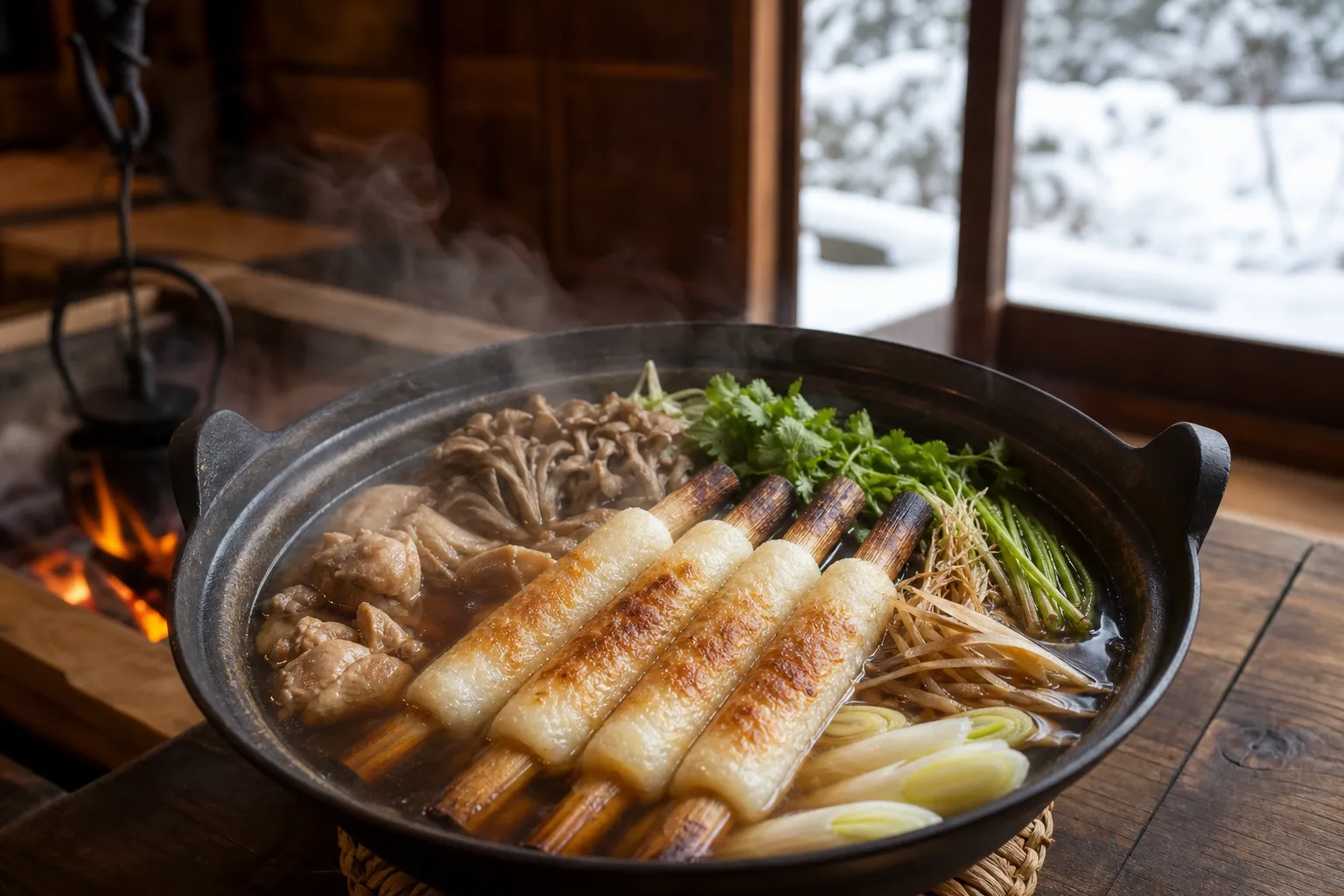
It was snowing sideways when I came in off the street, and someone put a bowl in front of me, and the steam went straight up my cold nose — chicken, soy, burnt-rice sweetness — and I made a sound I'm not proud of. Then I bit into the toasted rice and felt my whole spine unclench.
Share this dish


Pounded rice toasted onto cedar sticks, then dropped into a clear chicken hot pot until it drinks the broth. Akita in a bowl, and it tastes like coming in from the snow.
🍜 Planning a food trip to Akita?Add this dish to my Food Trip →
 Add this dish to my Food Trip →
That toasted rice on a stick is kiritanpo: cooked rice, pounded until it's half-mochi, molded around a cedar skewer and grilled until the outside goes golden and crackly. By itself it's a snack. Dropped into a clear Akita chicken hot pot until it swells and drinks the broth — that's kiritanpo-nabe, and that's the one that fixes a winter.
A mountain-country dish, born tired and hungry
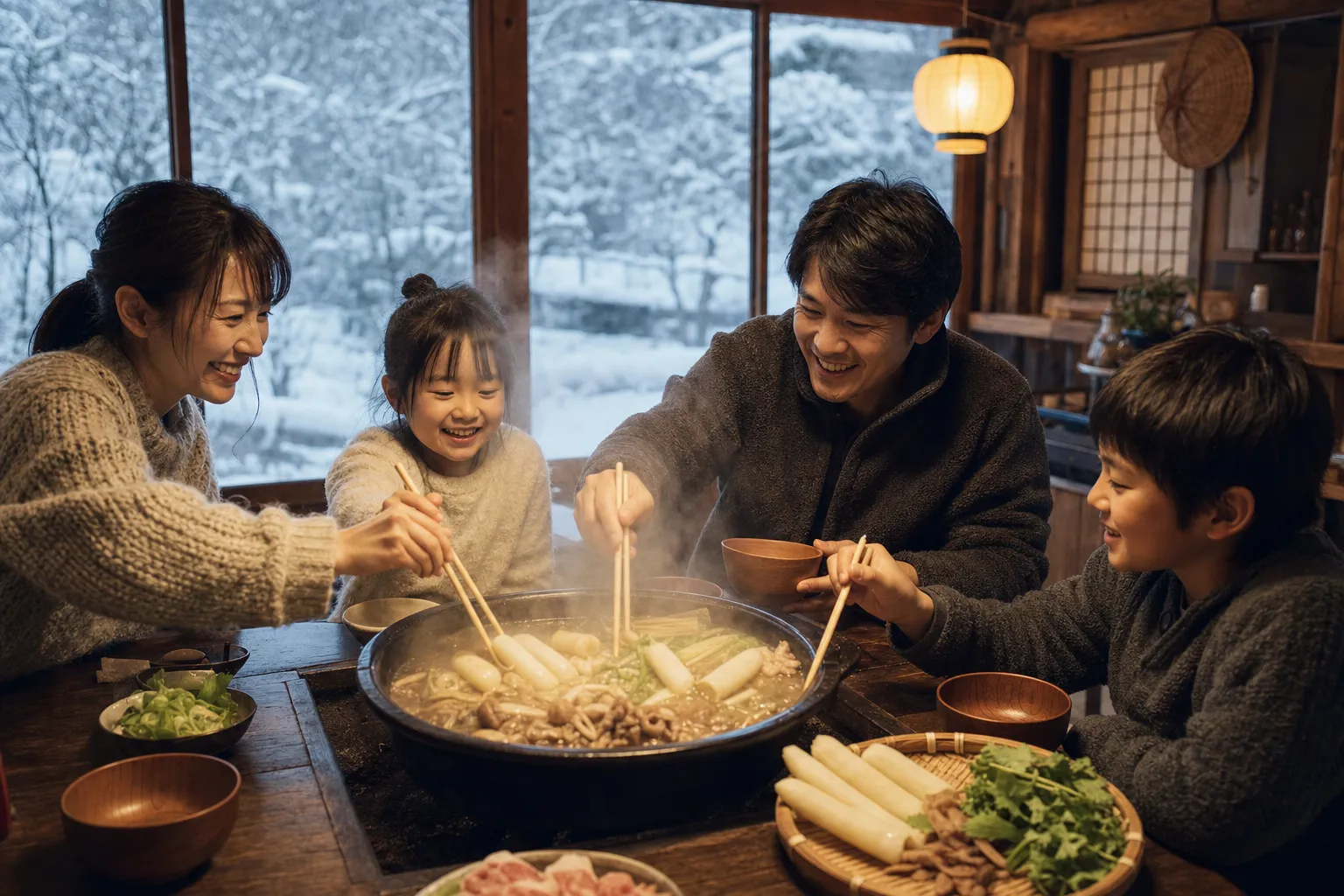
Kiritanpo comes from the mountains of northern Akita, around Ōdate and Kazuno, and the origin story everyone tells is a working one: matagi (winter hunters) and woodsmen mashed leftover rice onto sticks, toasted it over the fire, and carried it into the cold to drop into a pot of whatever they had. The name supposedly comes from tanpo, a padded sheath for a spear tip — which is exactly what a fat rice cylinder on a stick looks like, so I believe it completely.
What makes the nabe sing is that the broth isn't shy. The real thing uses Hinai-jidori, one of Japan's great free-range chickens, for a clear soup with serious backbone, plus maitake mushrooms, burdock shaved thin, long green onion, and — non-negotiable in Akita — seri, Japanese parsley pulled up roots and all. The roots go in too. They taste like the ground in the best way. I find that detail oddly moving: a dish that refuses to waste the part most places throw out.
Why the rice is the whole point
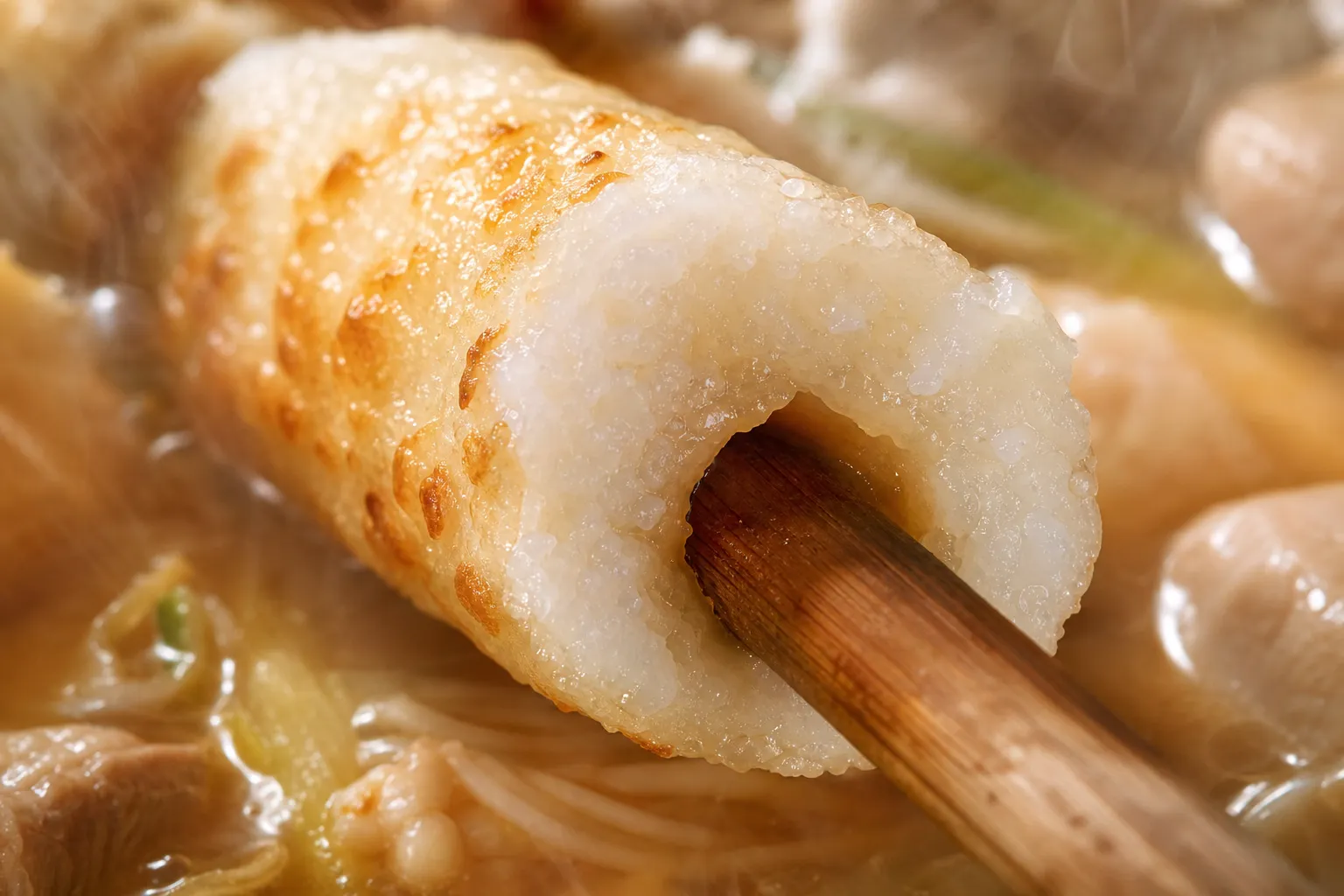
Here's the magic and it's all about texture. The rice is pounded only halfway to mochi — so it holds its shape but the grain is still there, somewhere between rice and dumpling. Toasting it gives the outside a thin, faintly bitter, crackly skin. Then the pot does its work: the cylinder soaks up broth from the cut ends inward, going soft and savory on the outside while the core stays a little firmer.
So one piece gives you three things at once — crackly toasted skin, broth-soaked savory body, chewy rice center. Fish it out at the right moment and it's perfect; leave it too long and it surrenders into the soup, which honestly is also delicious, just messier. I ate around the whole pot and then drank the broth straight from the bowl. No regrets. The seri roots were the best part and I will not be taking questions.
How it's made
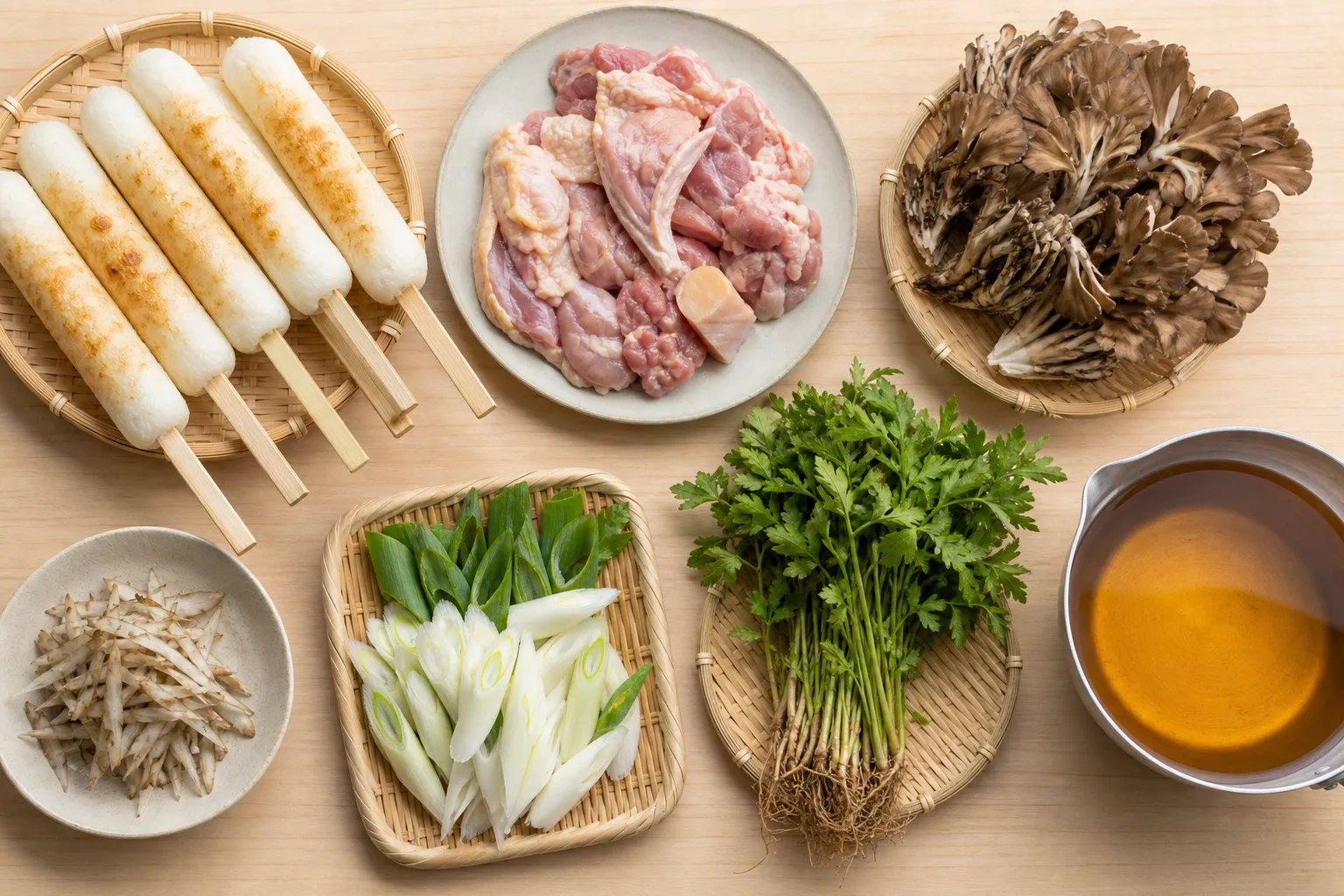
- Cook short-grain rice slightly firm, then pound it until it's about half-mashed — sticky but still grainy
- Mold the rice around a cedar stick into a long cylinder and grill over heat until the surface is golden and crackly
- Build a clear broth from chicken (ideally Hinai-jidori), simmered to a clean savory base seasoned with soy and sake
- Add maitake mushrooms, shaved burdock (gobō), and long green onion; simmer
- Cut the toasted kiritanpo off the stick into thick pieces, add to the pot, and let them drink the broth for a few minutes
- Finish with seri (roots and all) just before eating, so it stays bright
Before you go — get the word and the timing right
Your questions, answered honestly
"Is kiritanpo the rice stick, or the hot pot?" — Both, and that trips people up. Kiritanpo is the toasted rice cylinder. Kiritanpo-nabe is the hot pot built around it. Order the nabe if you want the full experience; you'll also see grilled kiritanpo brushed with miso (miso-tsuke-tanpo) as a snack, which is great too.
"Is it spicy?" — Not at all. It's clean, savory, chicken-and-soy comfort. One of the gentlest hot pots in Japan for a first-timer.
"What's the green stuff I shouldn't skip?" — Seri (Japanese parsley), often served with its roots. Akita people are passionate about the roots. Eat them. They're earthy and aromatic and they make the bowl.
"Best season?" — Autumn into deep winter, when it's cold and seri and maitake are in season. It exists year-round in specialty spots, but it belongs to the snow.
What the staff will ask you
| You'll hear | Romaji | Meaning | Just say |
|---|---|---|---|
| 何名様ですか? | Nanmei-sama desu ka? | "How many people?" | Futari desu (two) — or your number |
| 鍋はおひとり用にしますか? | Nabe wa ohitori-yō ni shimasu ka? | "Individual hot pot, or to share?" | Wakete kudasai (split it) or issho de (together) |
| セリは入れて大丈夫ですか? | Seri wa irete daijōbu desu ka? | "Okay to add the seri?" | Hai, onegaishimasu — yes please |
To order, just say "Kiritanpo-nabe kudasai" (きりたんぽ鍋ください) — "Kiritanpo hot pot, please."
Where to eat it
- Ōdate & Kazuno, northern Akita — the mountain home of kiritanpo; specialty restaurants and inns here treat it as the local treasure it is. Best with Hinai-jidori chicken.
- Akita City — izakayas and kyōdo-ryōri (local cuisine) restaurants around the station serve kiritanpo-nabe, especially in the colder months. Check hours and whether it's seasonal before you go.
- Akita-themed izakayas in Tokyo & Osaka — a reliable way to try it off-season; many feature kiritanpo and Hinai-jidori. Quality varies, but it's a real taste of the dish.
Soul Score
Local Roots5/5
First-Timer Friendly4/5
Adventure Level3/5
Comfort Level5/5
Travel Worthy4/5
These scores are one obsessed eater's gut feeling — not a verdict. A low number isn't a bad mark, just a different kind of adventure.
Know someone planning Japan?
← All Articles
Local Food · Akita, Akita
Still hungry?
Eat more from Akita
Local FoodAkita
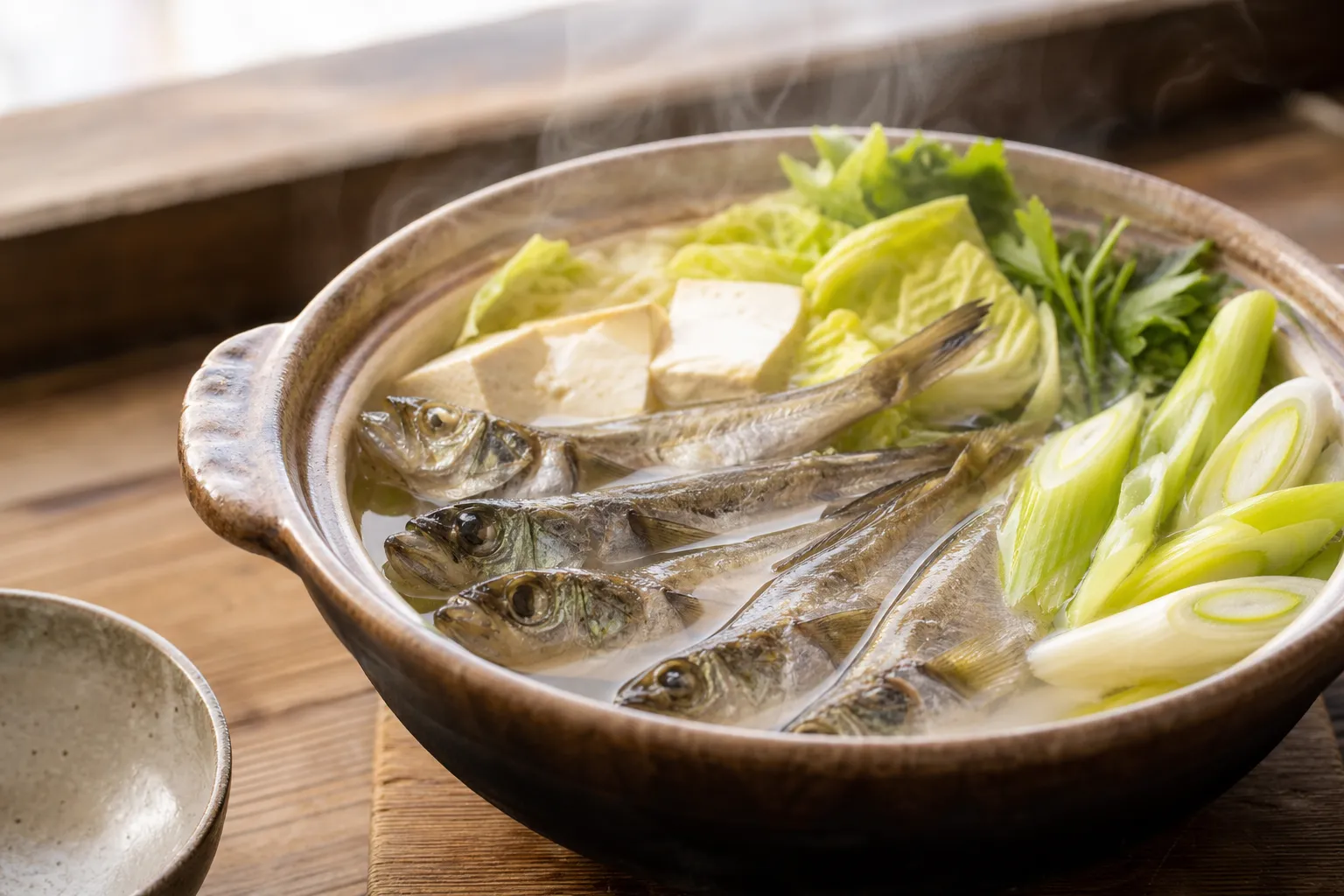
Shottsuru-nabe (しょっつる鍋)
Winter in Akita means a clear pot bubbling with whole silvery fish and one funky, ancient fish sauce doing all the heavy lifting — and it lifts.
July 5, 2026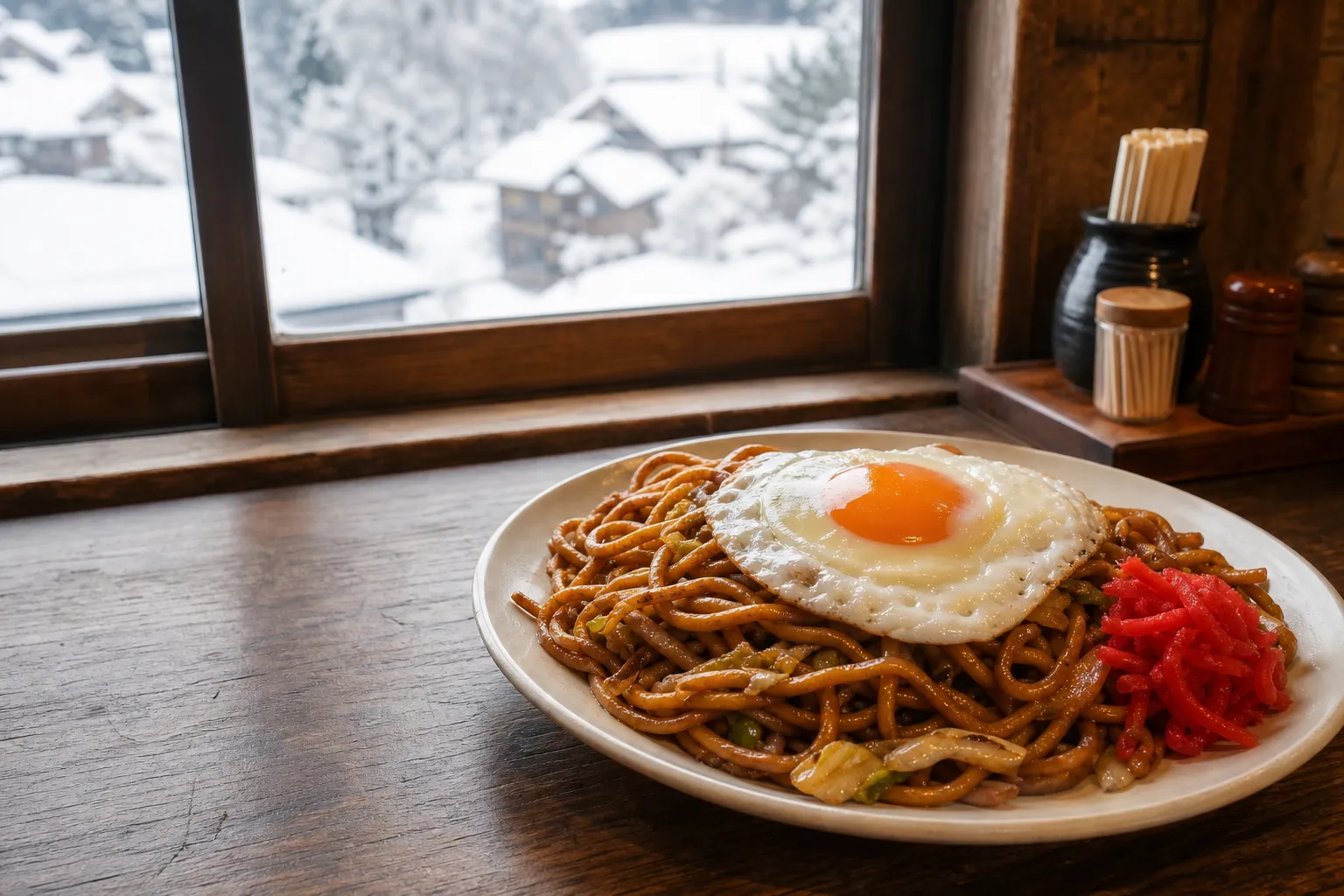
Local FoodYokote, Akita
Yokote Yakisoba (横手やきそば)
A fried egg cracked whole on top of a plate of yakisoba, a pile of red pickles on the side — and suddenly regular yakisoba looks unfinished. Akita's snow country did this one on purpose.
July 5, 2026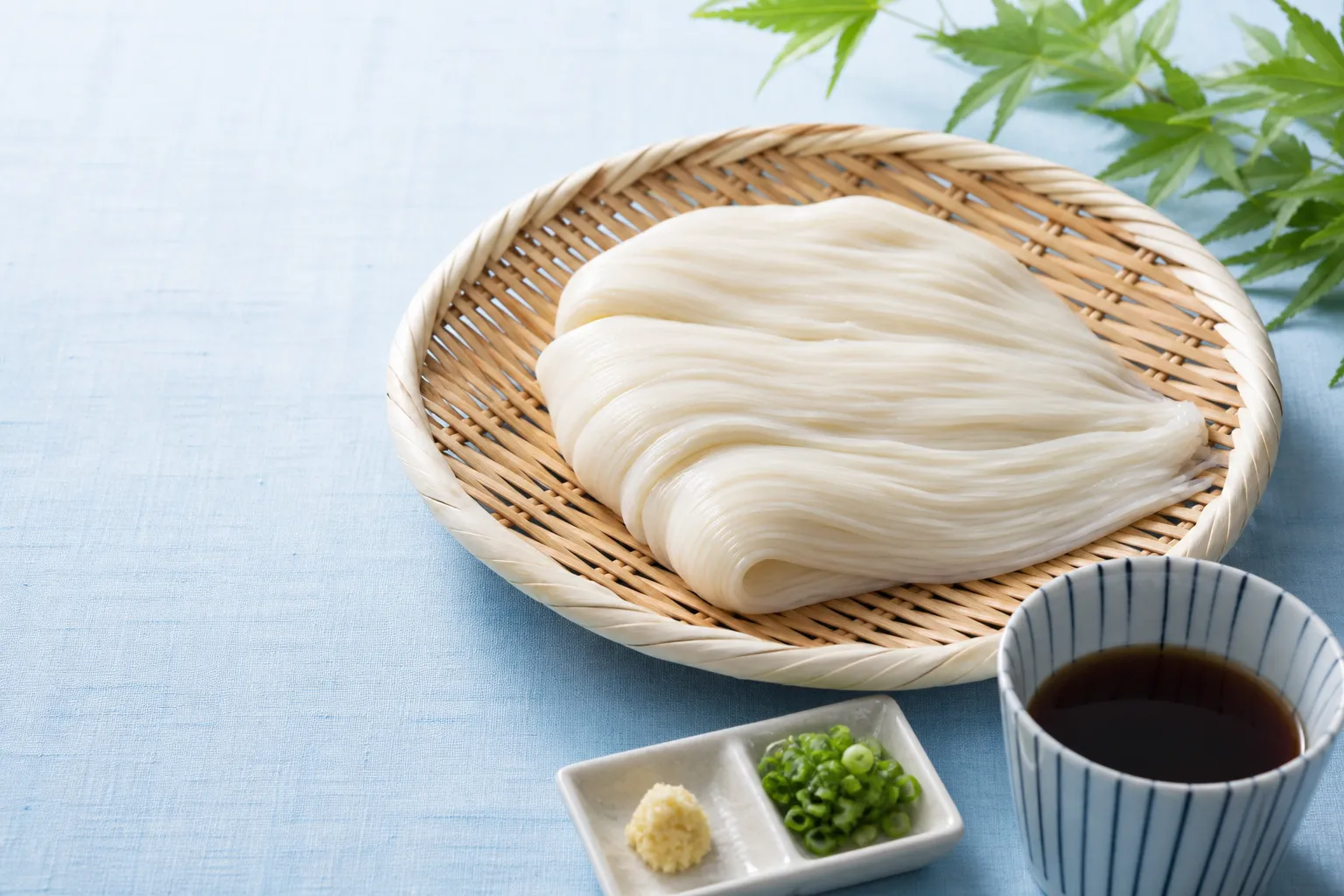
Local FoodYuzawa, Akita
Inaniwa Udon (稲庭うどん)
Udon so thin and silky it slips down before you've decided to chew. Three hundred years of hand-pulling, served cold with a dark dipping sauce. The most elegant noodle in Japan.
June 27, 2026