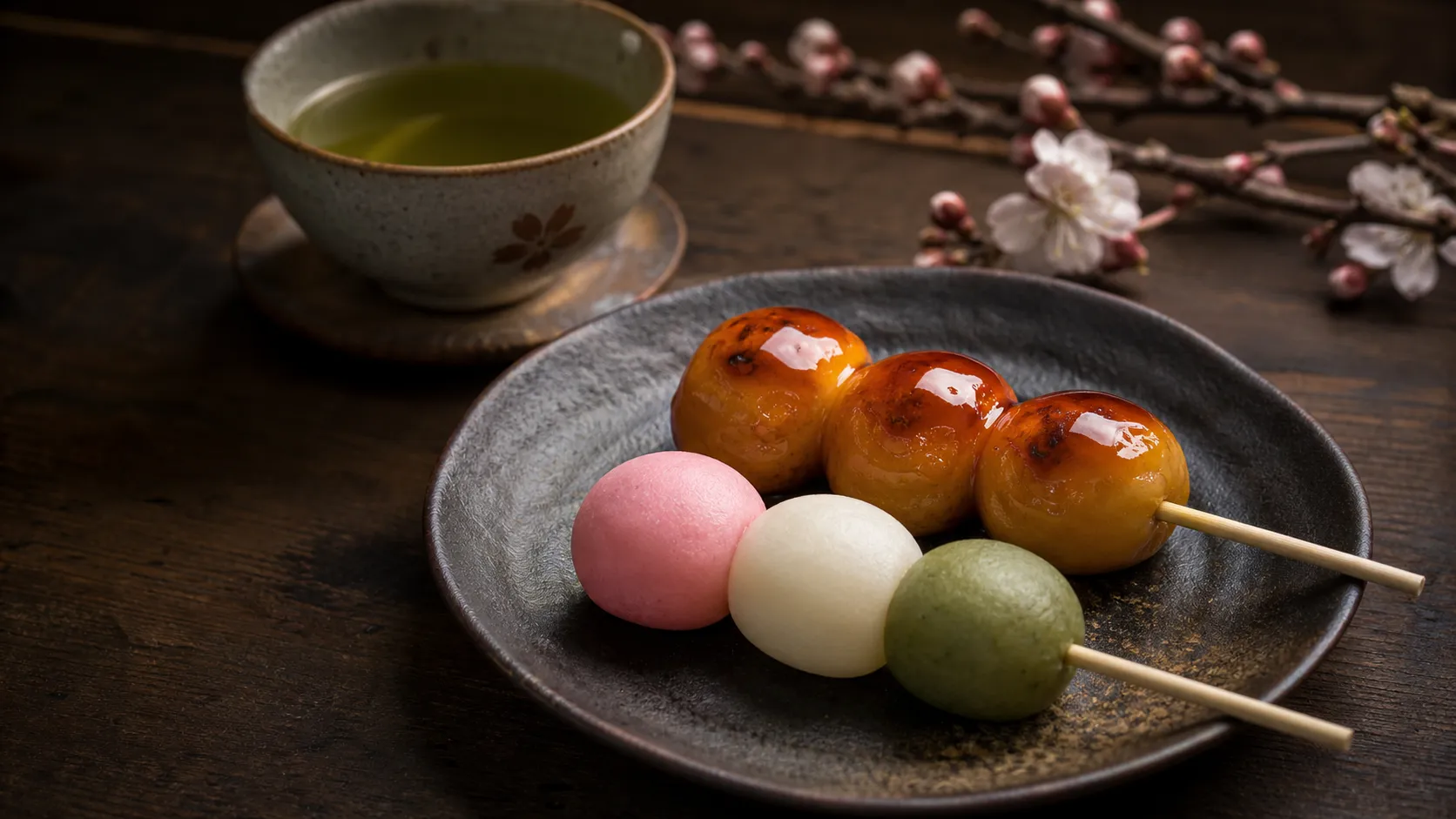
Three or four little chewy spheres on a stick, and somehow that's it — that's the whole thing that's been quietly making this country happy for centuries. I bought a skewer of mitarashi dango from a shrine stall, took one bite of that glossy sweet-soy glaze, and got straight back in line before I'd even finished it.
Share this dish


Chewy little rice-flour balls on a skewer, glazed with sweet-savory soy or topped with red bean. The everyday teatime dumpling — cheap, chewy, and seasonally beloved across Japan.
🍜 Planning a food trip to Japan?Add this dish to my Food Trip →
 Add this dish to my Food Trip →
Dango (団子) are small, round dumplings made from rice flour, boiled until chewy and threaded onto a bamboo skewer — usually three or four to a stick. They're one of the most everyday, affordable, and beloved sweets in Japan, sold at tea houses, shrines, festivals, and convenience stores alike. The texture is the appeal: soft, dense, and pleasantly mochi-mochi chewy, carrying whatever glaze or topping they're dressed in.
The two you'll meet most: mitarashi dango, glazed in a glossy, sweet-and-savory soy sauce that's the real star, and anko dango, topped with sweet red bean paste. There's a whole rainbow beyond that, but those two are the gateway.
Skewered sweets with deep roots
Dango has been eaten in Japan for centuries, tied closely to seasons, festivals, and shrine visits. The famous hanami dango — pink, white, and green on one skewer — is eaten under the cherry blossoms in spring, while tsukimi dango (plain white balls stacked in a pyramid) are offered at the autumn moon-viewing. There's even a saying, "hana yori dango" — "dumplings over flowers" — meaning substance over spectacle (i.e., snacks matter more than the view).
That seasonal, ritual side makes dango more than a snack — it's woven into the Japanese calendar.
Why mitarashi is the one to try first
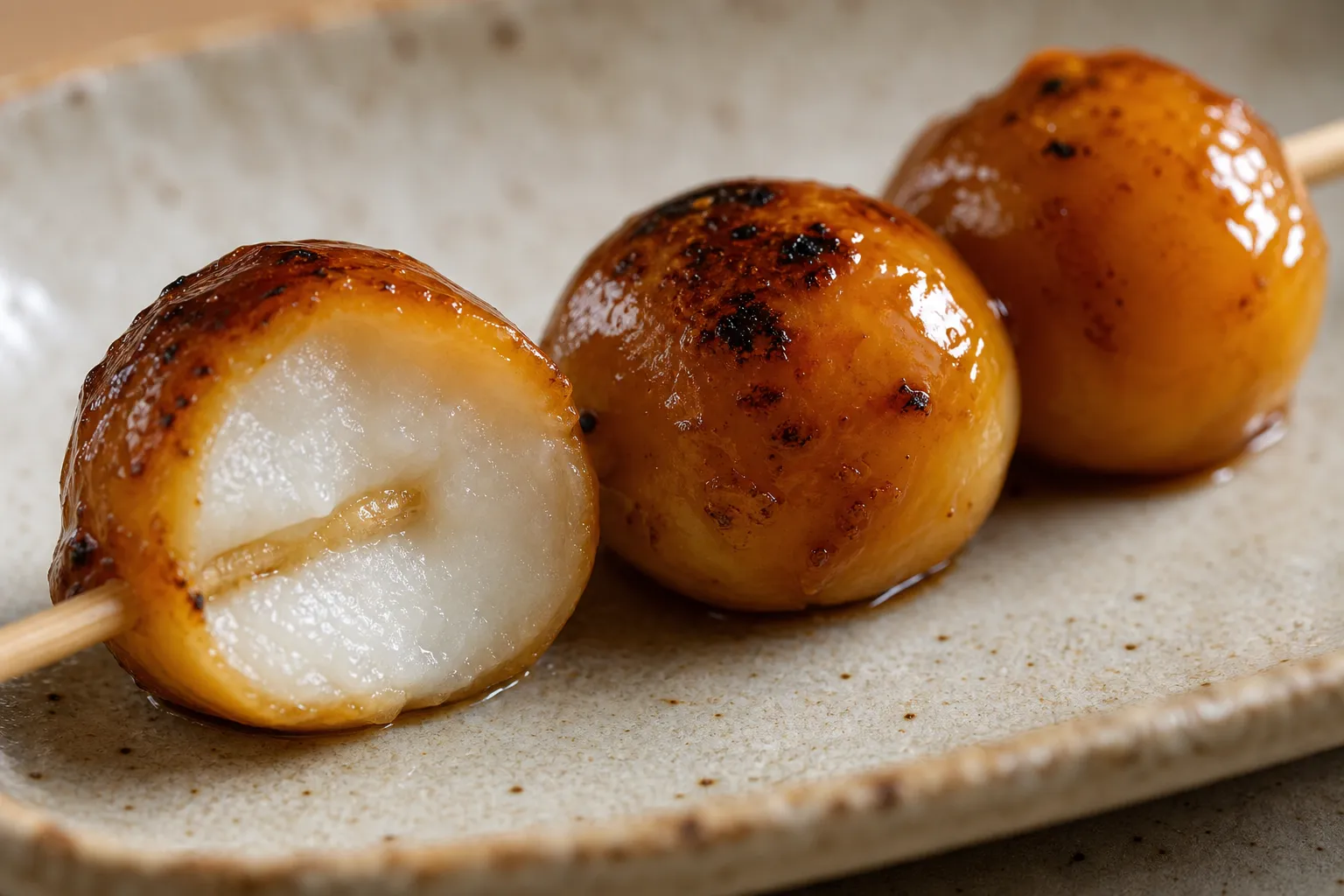
If you try one dango, make it mitarashi: the dumplings are lightly grilled, then coated in a thickened glaze of soy sauce, sugar, and starch that's simultaneously sweet, savory, and glossy — the sauce caramelizing slightly against the warm, chewy dumpling. It's the perfect sweet-salty bite, and the warm grilled version is irresistible.
Anko dango (red bean), kinako dango (dusted with sweet roasted soybean flour), and goma (sesame) are all lovely too — but mitarashi is the crowd-winner.
How it's made
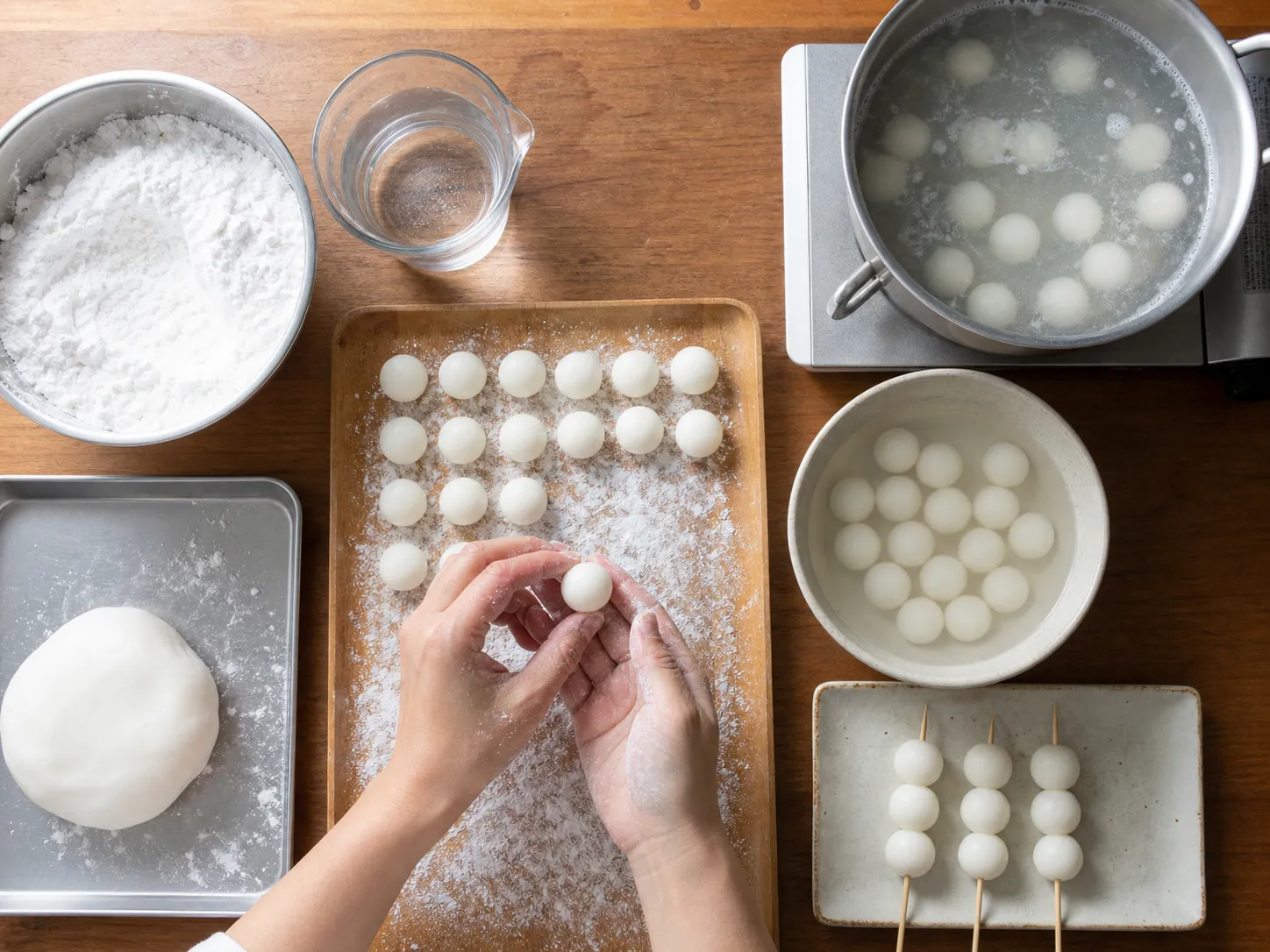
- Mix rice flour (joshinko/shiratamako) with water into a smooth dough
- Roll into small balls and boil until they float and turn chewy
- Cool in water, then thread 3–4 onto a bamboo skewer
- For mitarashi: lightly grill, then coat in a simmered soy-sugar-starch glaze
- For anko: top with sweet red bean paste; for kinako: dust with sweet soybean flour
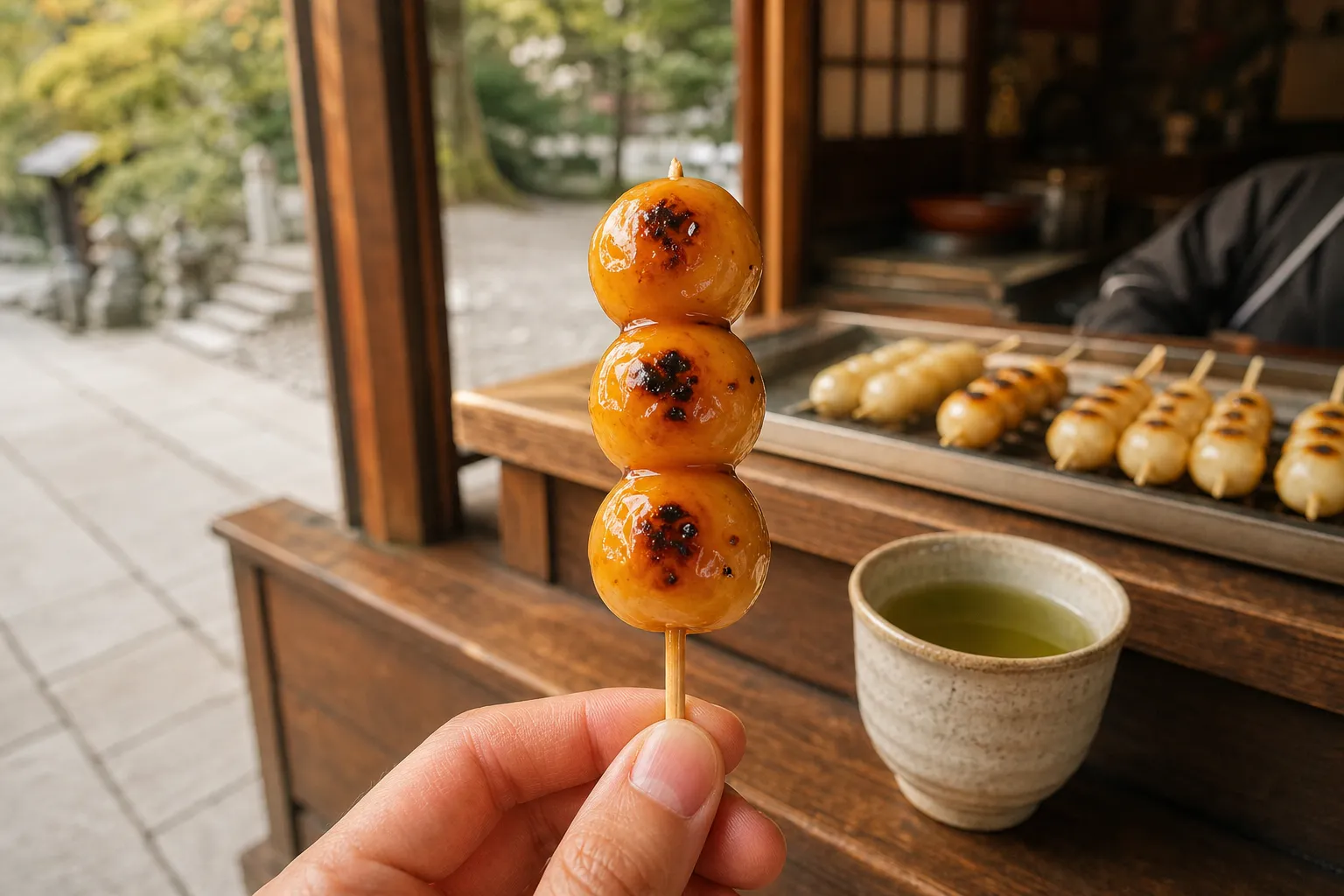
Before you go — pick your skewer
Your questions, answered honestly
"Mitarashi or anko first?" — Mitarashi — the sweet-savory soy glaze is the most addictive and the most "wait, this is amazing" for newcomers. Then try anko or kinako.
"What's hanami dango?" — The three-color (pink/white/green) skewer eaten during cherry-blossom season. It's about the look and the season more than wild flavor — but it's iconic and adorable.
"Sweet or savory?" — Dango sits in between, especially mitarashi (sweet and savory). It's a gentle, not-too-sugary treat — great with green tea.
"Where's it cheapest/best?" — Tea houses near temples and shrines, festival stalls, and wagashi shops. Convenience stores carry decent everyday packs too.
What the staff will ask you
| You'll hear | Romaji | Meaning | Just say |
|---|---|---|---|
| どの団子にしますか? | Dono dango ni shimasu ka? | "Which dango?" | Mitarashi kudasai (mitarashi, please) |
| 何本にしますか? | Nan-bon ni shimasu ka? | "How many skewers?" | Ni-hon kudasai (two, please) |
| 温めますか? | Atatamemasu ka? | "Shall I warm it?" | Hai, onegaishimasu (yes please) |
To order, just say "Mitarashi dango ni-hon kudasai" (みたらし団子二本ください) — "two mitarashi dango skewers, please."
Where to eat it
- Tea houses near temples & shrines (Kyoto, Kamakura, Asakusa) — the classic setting, often freshly grilled.
- Festival stalls — warm mitarashi off the grill is a festival staple.
- Convenience stores & supermarkets — cheap everyday packs.
Grilled and warm is best — especially mitarashi straight off the fire.
Soul Score
Local Roots5/5
First-Timer Friendly5/5
Adventure Level3/5
Comfort Level5/5
Travel Worthy3/5
These scores are one obsessed eater's gut feeling — not a verdict. A low number isn't a bad mark, just a different kind of adventure.
More food guides
Know someone planning Japan?
← All Articles
Sweets & Snacks · Nationwide
Still hungry?
You might also like
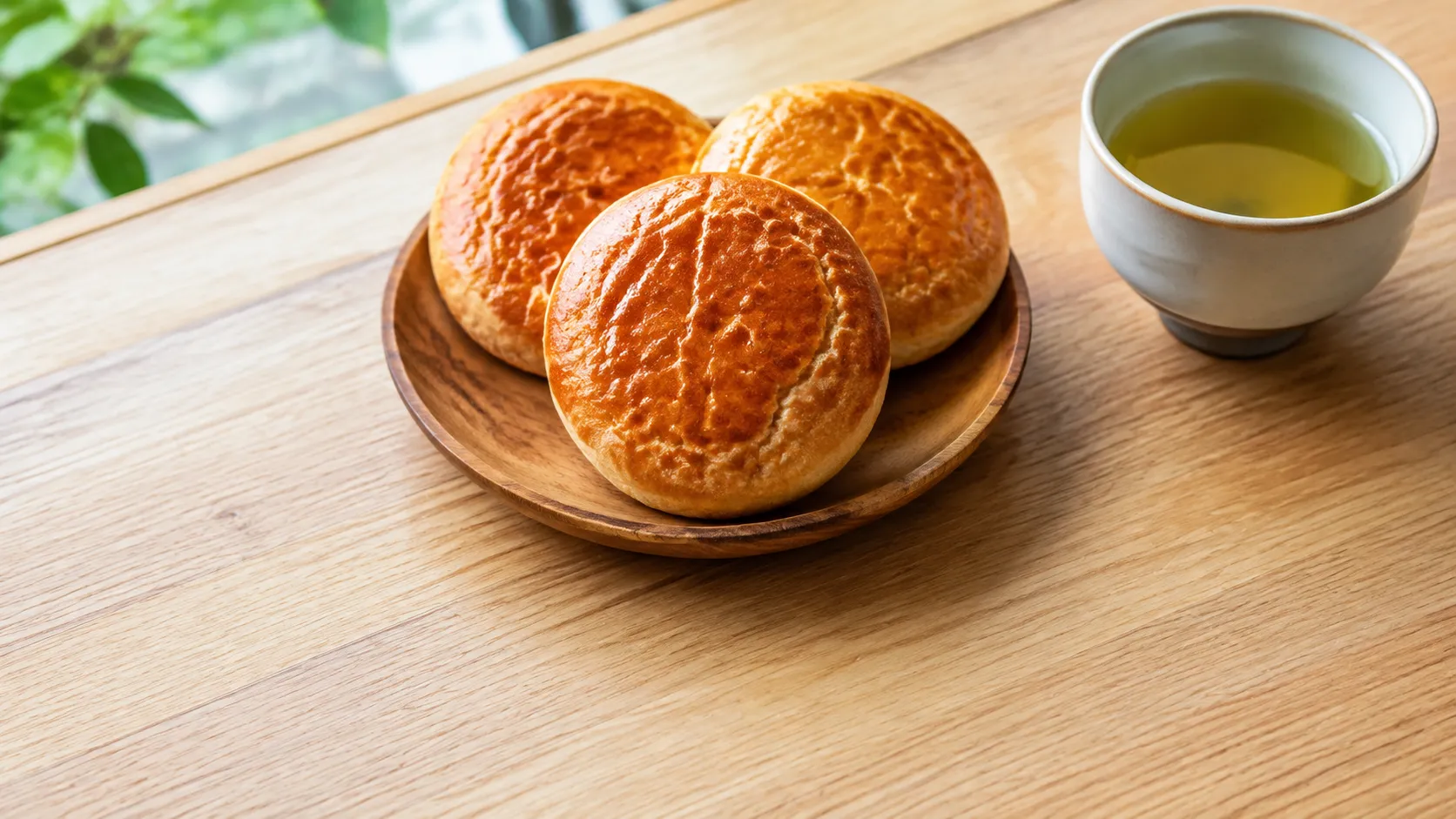
Sweets & SnacksSaga
Maruboro (丸ぼうろ)
It looks like the most boring biscuit in Japan. Then you bite it and it's soft, and honey-warm, and about four hundred years of Portuguese sailors arrive all at once.
September 2, 2026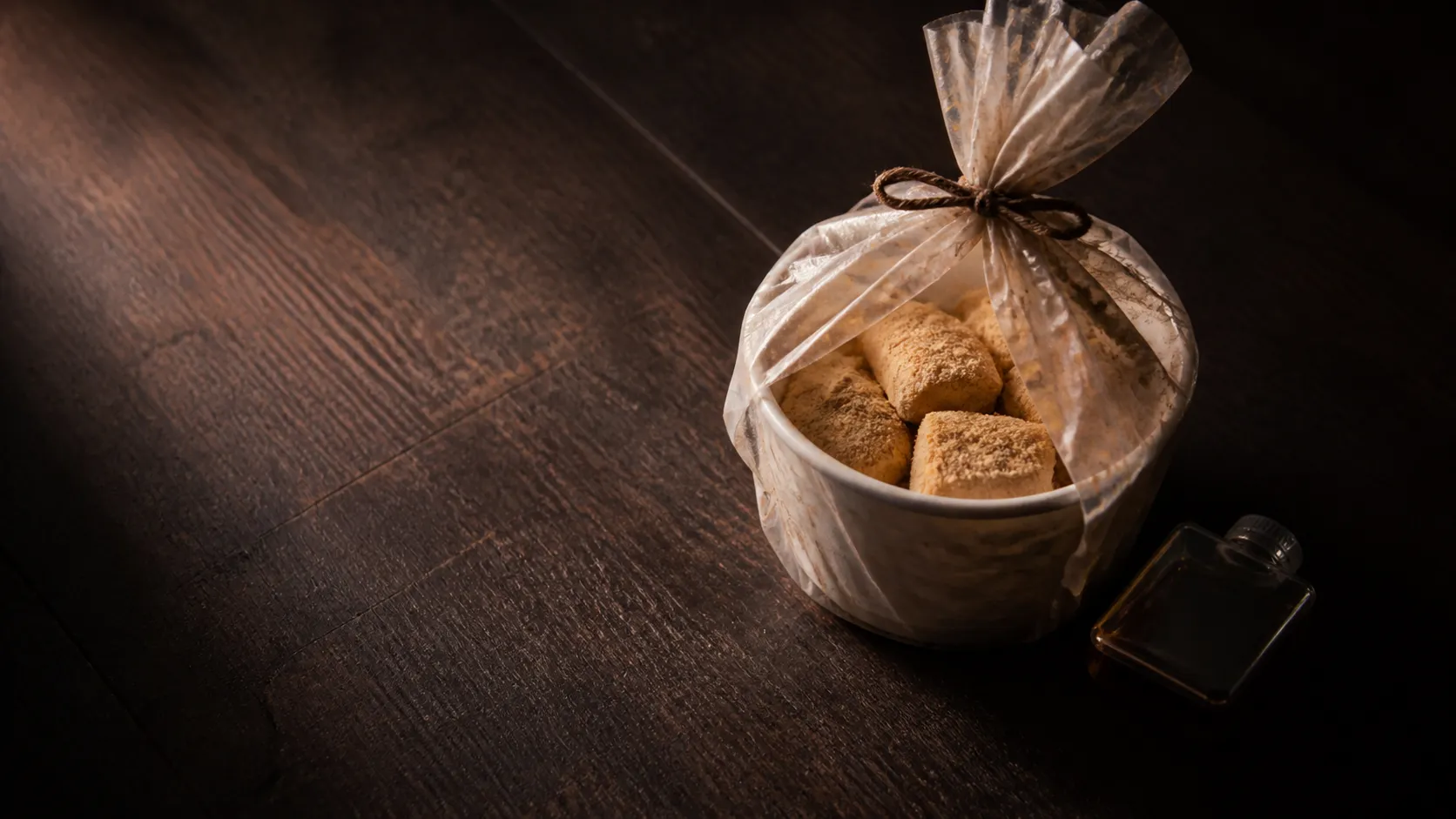
Sweets & SnacksYamanashi
Shingen Mochi (信玄餅)
There is a correct way to eat this and I did not know it, so I made a mess in front of several Yamanashi locals who were extremely kind about it and absolutely watching.
September 2, 2026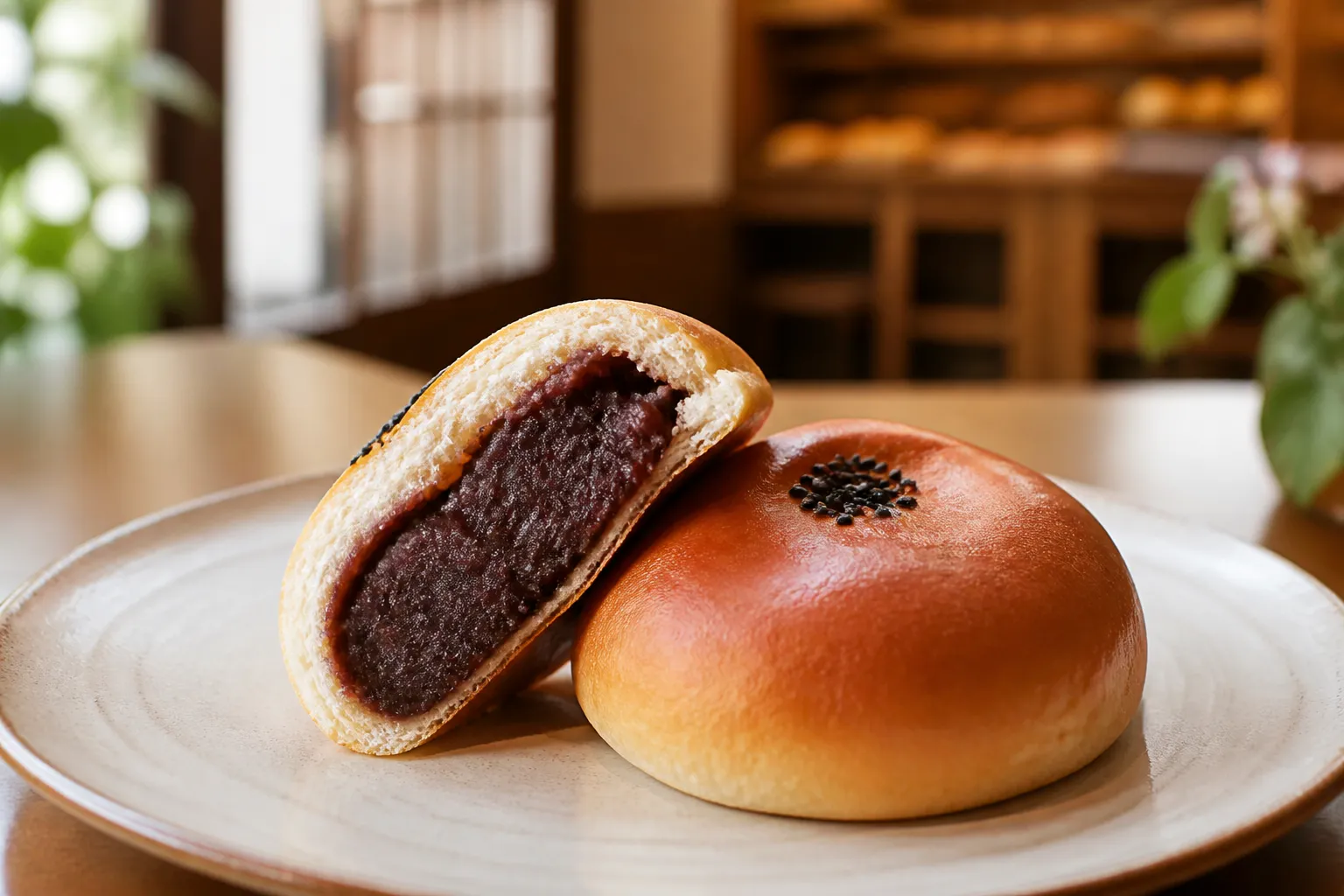
Sweets & SnacksTokyo
Anpan (あんパン)
A soft little bun, one bite in, and suddenly it's dense, dark, sweet red bean all the way through — the bread that talked 1870s Japan into eating Western-style bread at all.
July 27, 2026