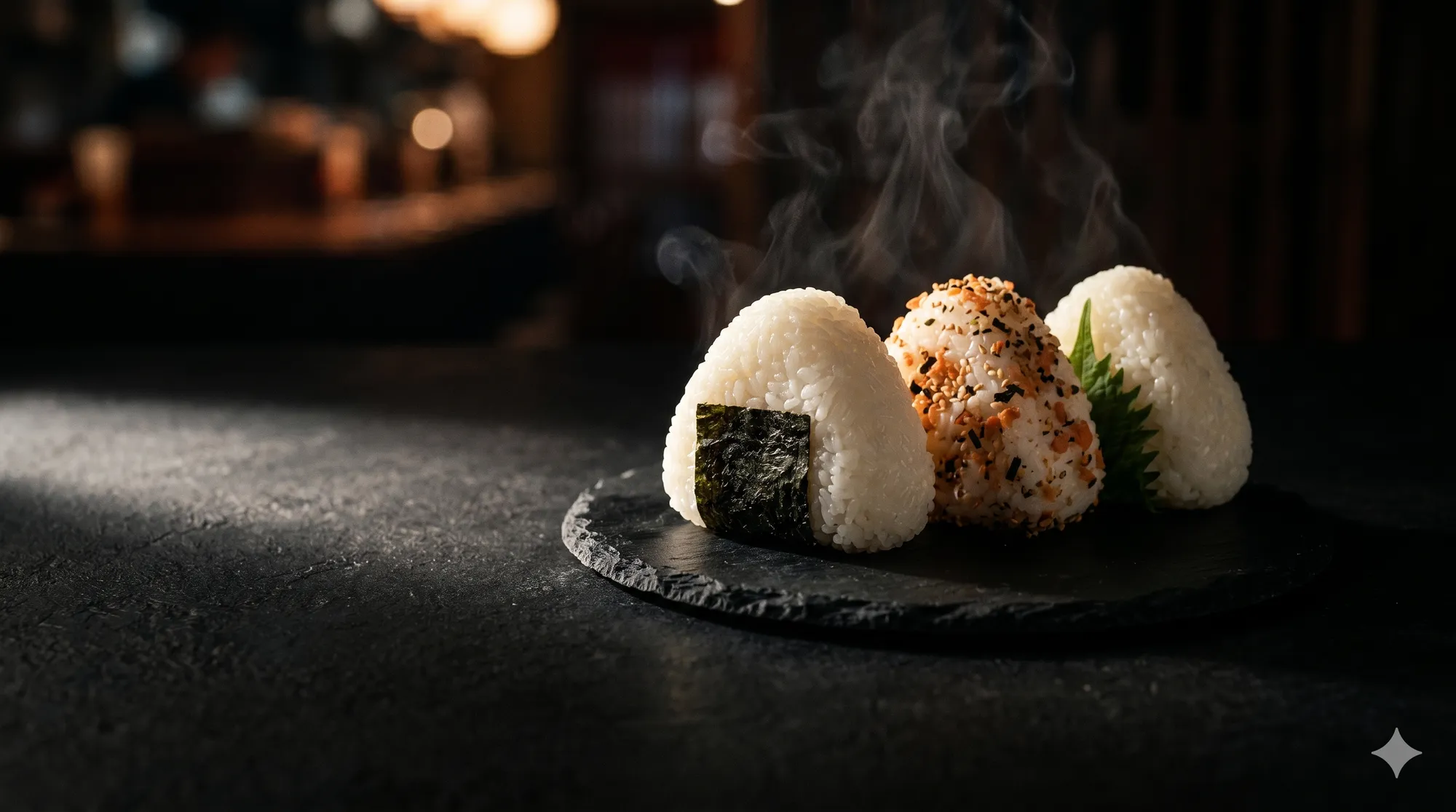
Rice, a little salt, something savory hidden in the middle, a wrap of crisp nori. That is the entire pitch — and I once ate one on a freezing train platform at six in the morning and felt genuinely, completely taken care of. No other food in Japan does this much with this little.
Share this dish


A triangle of rice with a savory surprise in the middle, wrapped in crisp seaweed. The perfect portable snack, the soul of the bento, and the single best ¥150 you can spend in a convenience store.
🍜 Planning a food trip to Japan?Add this dish to my Food Trip →
 Add this dish to my Food Trip →
The onigiri (おにぎり) is, no exaggeration, one of the great quiet pleasures of the country: a portion of rice — usually pressed into a triangle — with a savory filling tucked in the center and a sheet of crisp nori seaweed wrapped around it. That's it. And yet a good one, eaten warm on a train platform or a mountain trail, is pure comfort. It's the food Japanese people grew up on — made by mom, packed in lunches, and grabbed by the millions every day from convenience stores.
Don't dismiss the konbini version, either. Japan's convenience-store onigiri is a small miracle of engineering: the nori is kept in a separate compartment so it stays crispy until you pull a clever little tab that wraps it around the rice fresh. Fillings range from salty plum to grilled salmon to creamy tuna-mayo. It's the perfect cheap meal-on-the-go.
Travel food since the samurai
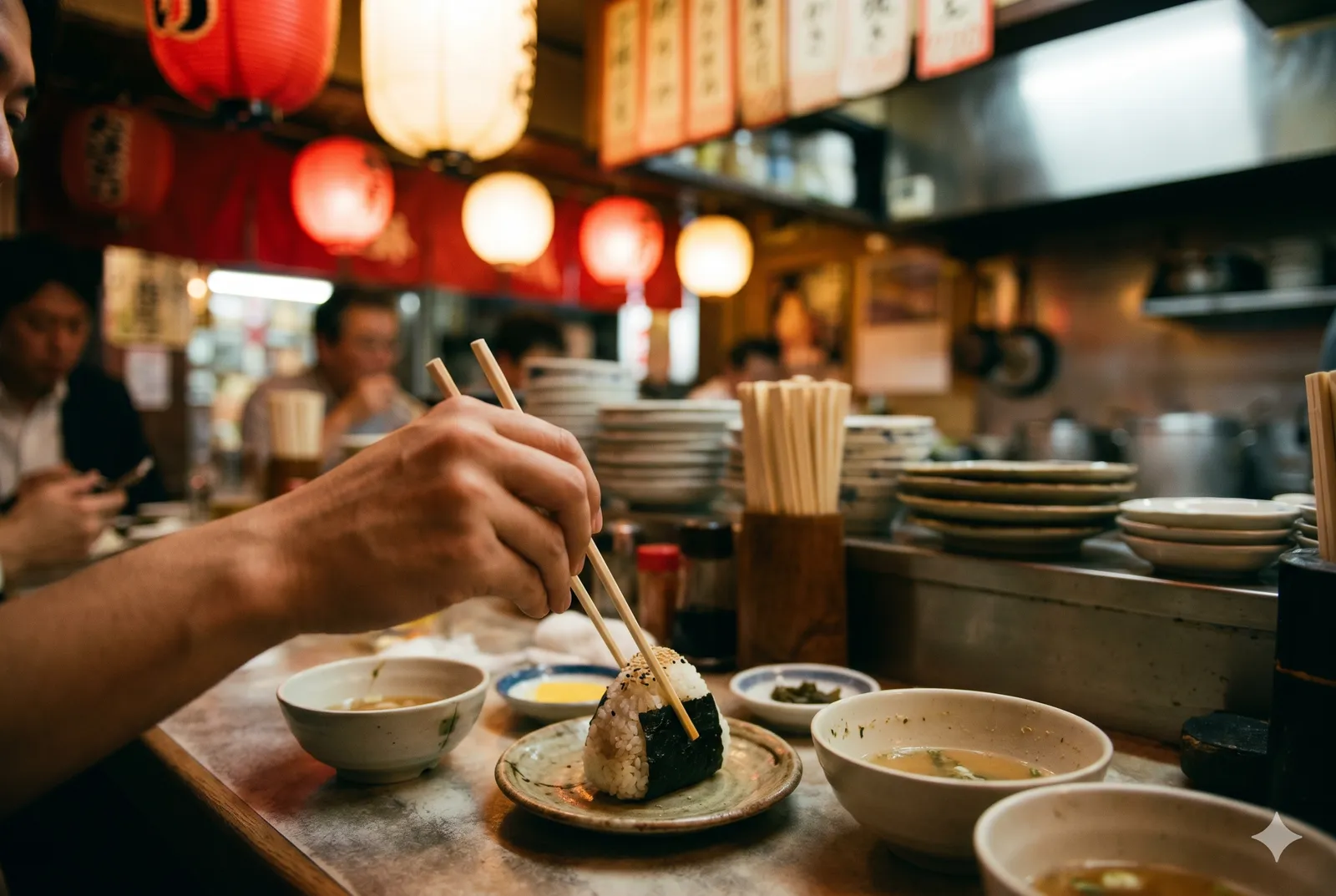
Onigiri is ancient. Pressed rice balls were carried by travelers, farmers, and soldiers for centuries precisely because they're portable, filling, and keep well — the original packed lunch. Salt on the surface and acidic or salty fillings (like umeboshi, pickled plum) helped preserve them before refrigeration.
That practicality made it timeless. Today it's everything from a lovingly hand-shaped home snack to a high-tech convenience-store product, and recently a global darling — onigiri shops are opening in cities worldwide.
Why the simple ones are the best ones
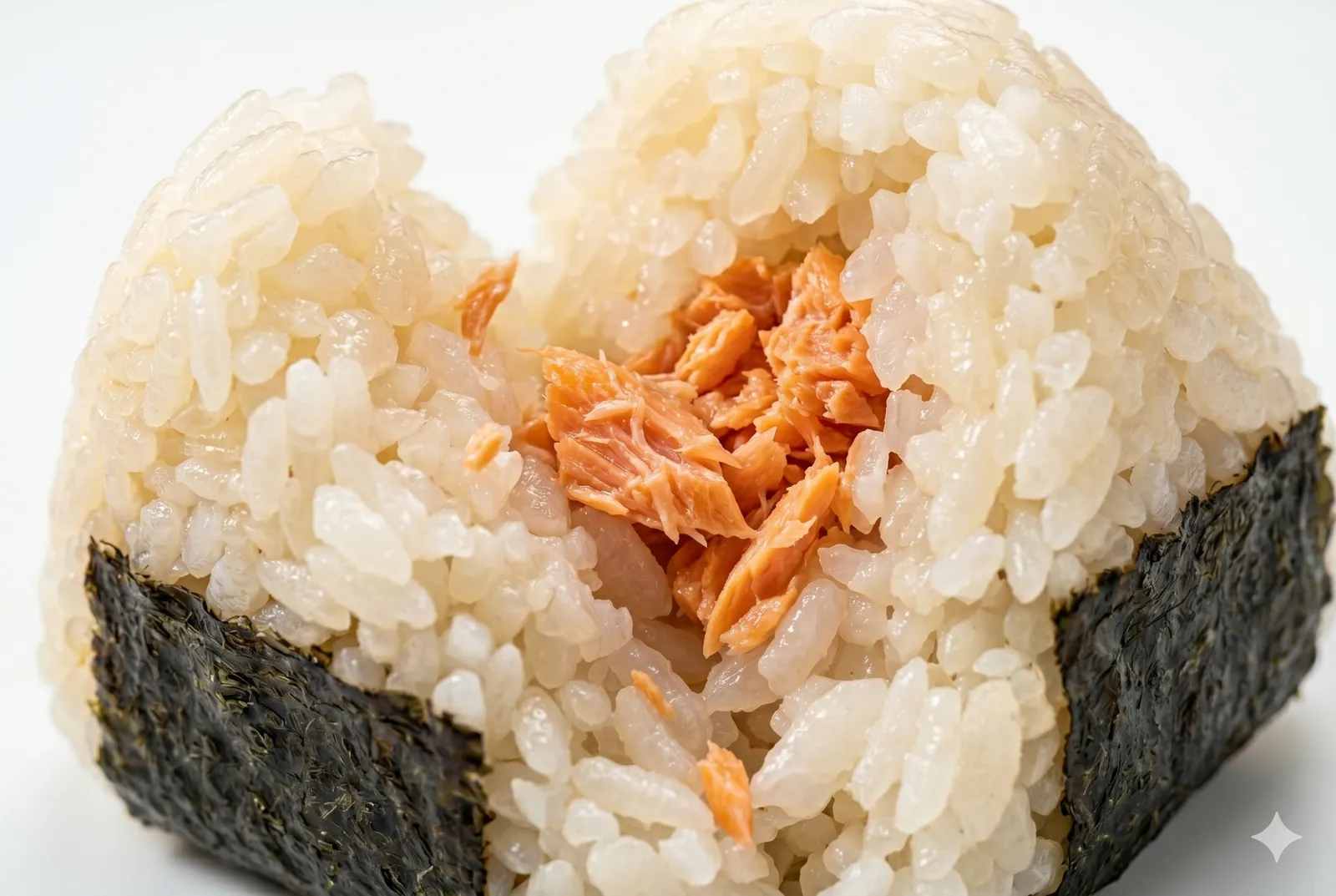
The whole point of onigiri is restraint: good rice, a touch of salt, crisp nori, and one well-chosen filling. The contrast is everything — warm soft rice against crackly seaweed, plain rice against a punchy salty center.
Classic fillings tell you what Japan loves: umeboshi (sour-salty pickled plum), sake (grilled salmon), tuna-mayo (the crowd favorite), okaka (bonito flakes with soy), kombu (simmered kelp), and mentaiko/tarako (spicy/salted cod roe). There's also yaki-onigiri — a rice ball brushed with soy and grilled until crispy and caramelized.
How it's made
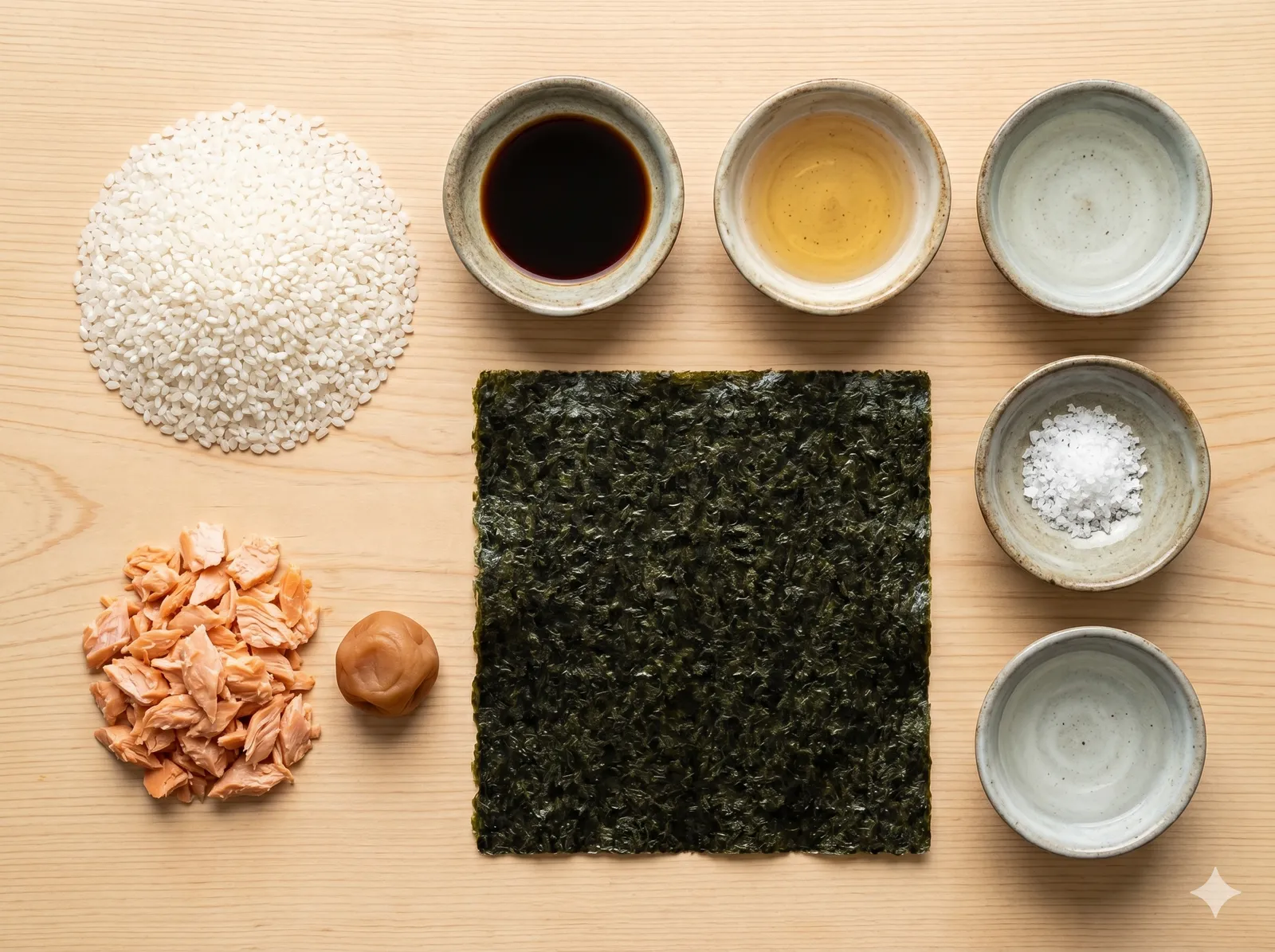
- Cook short-grain Japanese rice and let it cool slightly so it holds together
- Wet your hands and rub with a little salt
- Place a scoop of rice in your palm, press a filling into the center
- Shape into a triangle (or ball/cylinder) with gentle, firm presses
- Wrap with a strip of nori seaweed just before eating so it stays crisp
Before you go — crack the konbini code
Your questions, answered honestly
"How do I open the convenience-store wrapper?" — There's a numbered system (1-2-3) printed on the package. Pull tab ①down the middle, then pull ② and ③ to slide the plastic out — the nori wraps the rice automatically, staying crisp. It feels like a magic trick the first time.
"Which filling should I try first?" — Tuna-mayo (sea-chicken) is the beloved gateway. Sake (grilled salmon) is a safe classic. Brave souls should try umeboshi — intensely sour and salty, very traditional.
"Is it warm?" — Convenience stores will ask if you want it heated (atatamemasu ka?). Onigiri is usually fine at room temp, but warmed rice is lovely. Up to you.
"Onigiri vs sushi?" — Totally different. Sushi rice is vinegared; onigiri rice is plain (sometimes lightly salted). Onigiri is a snack/meal, not a delicacy — and that's the charm.
"Where do I eat it?" — Anywhere — it's designed to be portable. A station bench, a park, a shinkansen seat. Peak travel food.
What the staff will ask you
| You'll hear | Romaji | Meaning | Just say |
|---|---|---|---|
| 温めますか? | Atatamemasu ka? | "Shall I heat it?" | Hai (yes) / Sono mama de (as is) |
| お箸は付けますか? | Ohashi wa tsukemasu ka? | "Want chopsticks?" | Daijōbu desu (I'm fine, no) |
| 袋はご利用ですか? | Fukuro wa goriyō desu ka? | "Need a bag?" | Onegaishimasu (yes) / Iranai desu (no) |
At a specialist shop, just point and say "Kore hitotsu kudasai" (これ一つください) — "one of these, please."
Where to eat it
- Any convenience store (7-Eleven, Lawson, FamilyMart) — astonishingly good and ¥120–250. The easiest great snack in Japan.
- Onigiri specialty shops — hand-made-to-order with premium rice and fillings; Onigiri Bongo (Tokyo) is a famous one.
- Department-store food halls (depachika) for fancy, beautifully-made versions.
Convenience stores are everywhere and open 24h — onigiri is your reliable cheap meal anytime, anywhere.
Soul Score
Local Roots4/5
First-Timer Friendly5/5
Adventure Level3/5
Comfort Level5/5
Travel Worthy3/5
These scores are one obsessed eater's gut feeling — not a verdict. A low number isn't a bad mark, just a different kind of adventure.
Know someone planning Japan?
← All Articles
Japanese Food · Nationwide
Still hungry?
More konbini gold
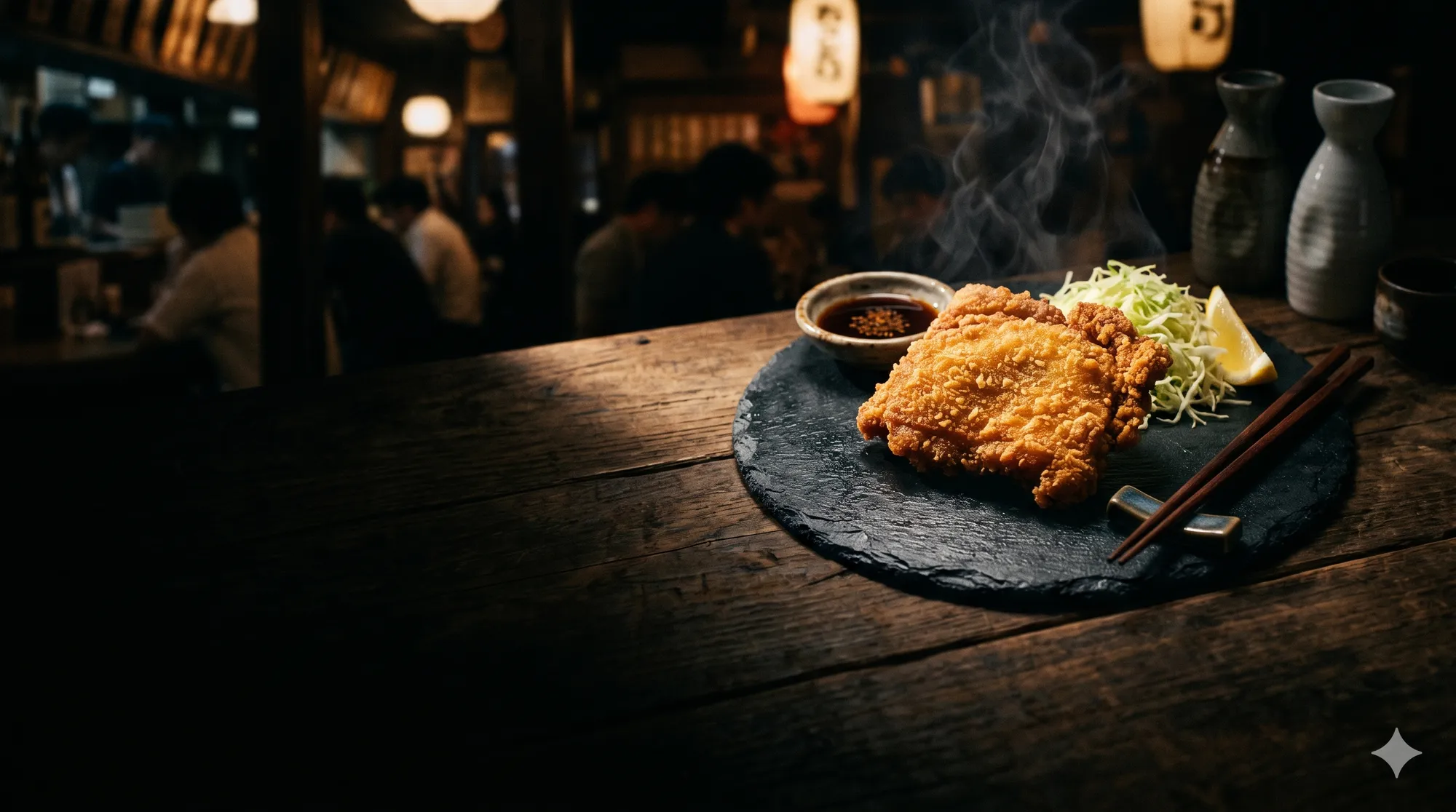
Convenience StoreNationwide
Famichiki (ファミチキ)
FamilyMart's hot-case fried chicken, and Japan's most democratic comfort food. Cheap, crispy, gushing-juicy, available 24/7 on every corner. Do not sleep on konbini chicken.
July 11, 2024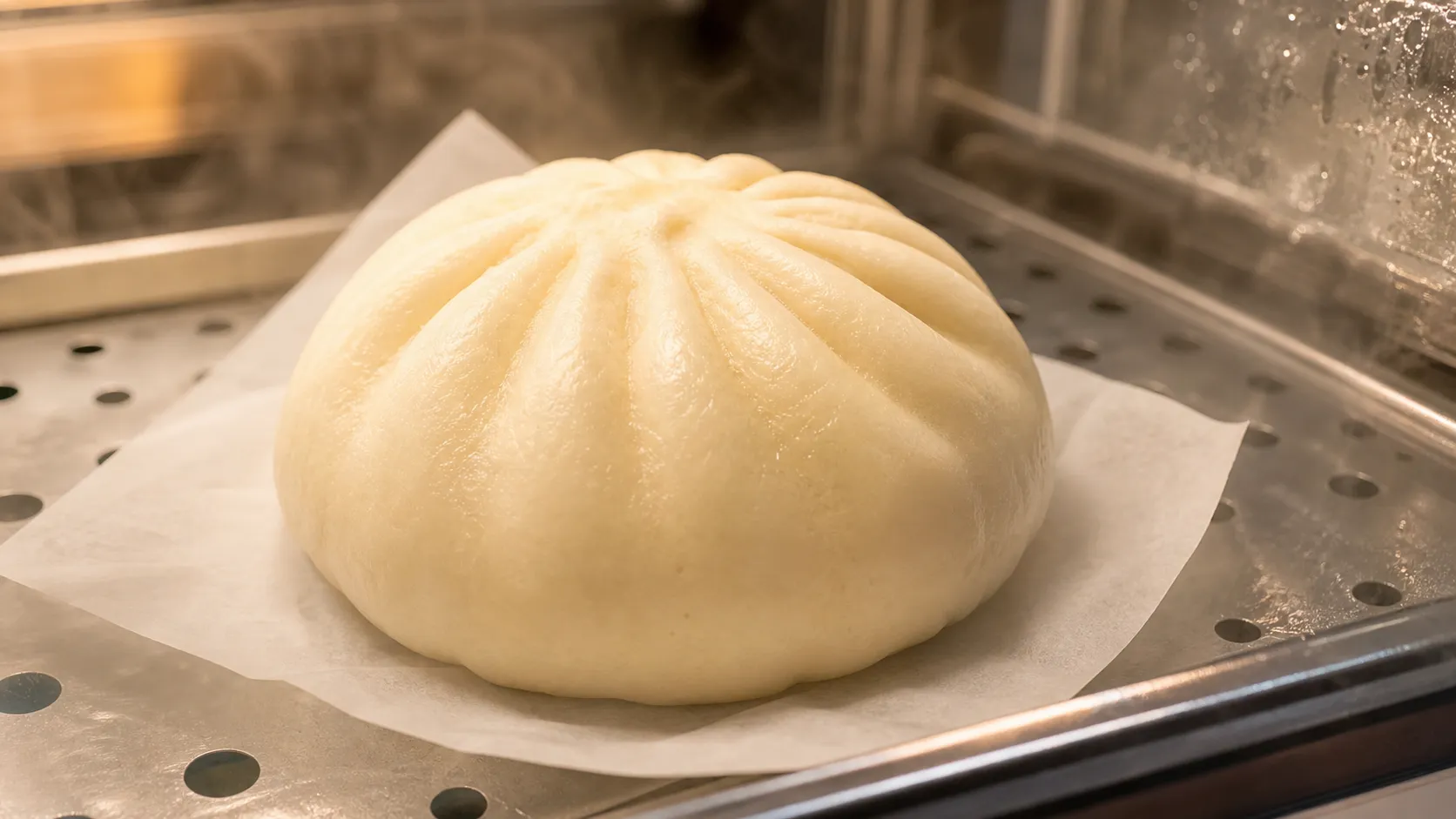
Convenience StoreNationwide
Nikuman (肉まん)
A fluffy steamed white bun stuffed with juicy seasoned pork — pulled hot from the convenience-store steamer on a cold day. Cheap, warming, and one of winter's small perfect pleasures.
June 20, 2026