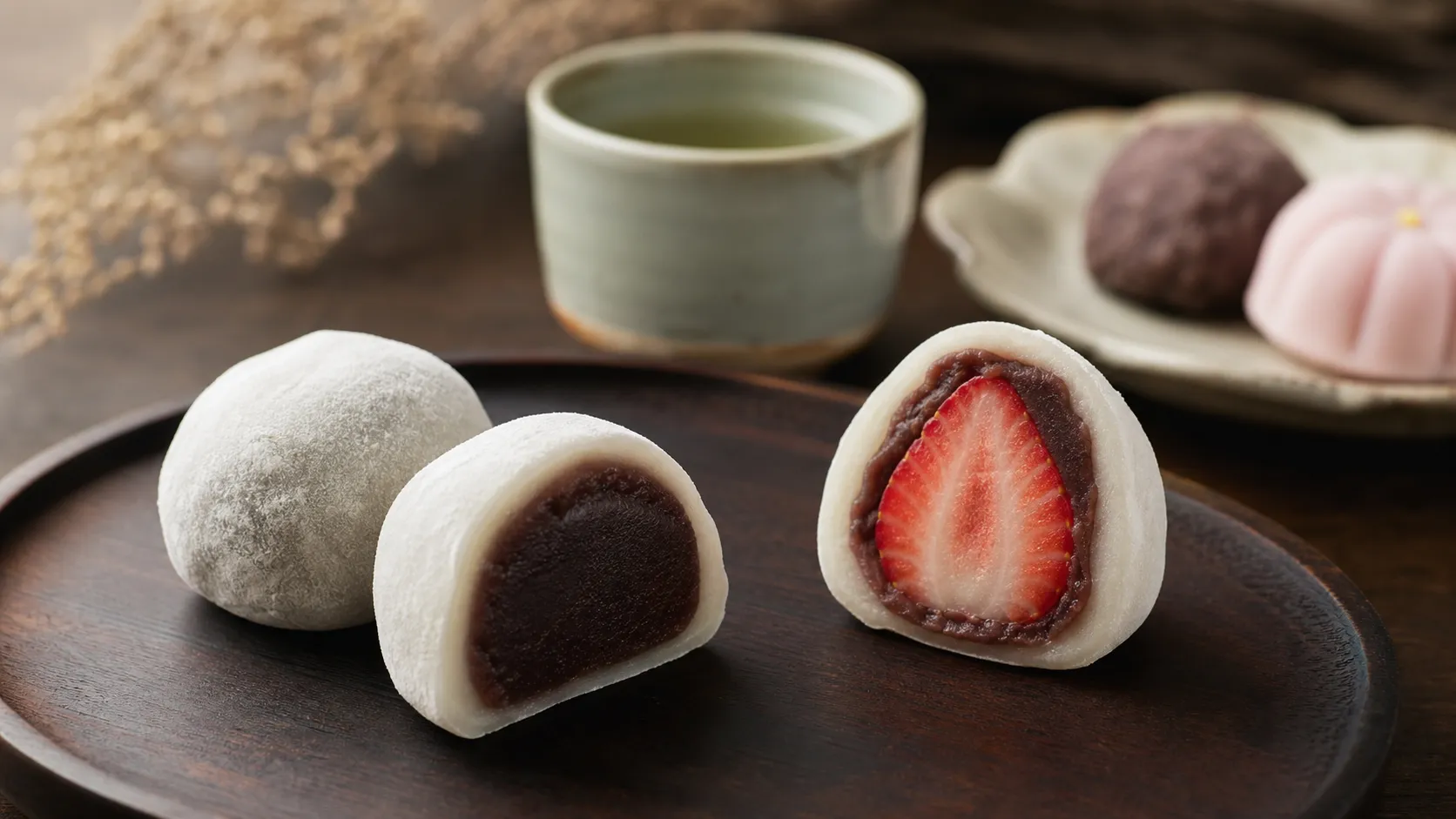
The mochi stretches. That's the moment. You bite down and the soft skin pulls back at you, slow and elastic, and then it gives — and there's a little dent where your thumb was holding it and a faint dusting of starch on your fingertips. This is the texture Japan built an entire obsession around, and it has a name: mochi-mochi.
Share this dish


A pillowy ball of soft, chewy mochi wrapped around sweet red bean paste — and sometimes a whole strawberry. Soft, stretchy, and quietly addictive: the essential Japanese mochi sweet.
Daifuku (大福) is the sweet that defines the whole mochi category — a soft, stretchy, faintly sweet rice-cake skin wrapped around a generous center of anko (red bean paste), dusted with a little starch so it doesn't stick to your fingers. The filling is smooth and gently sweet, the skin pulls and gives, and the whole thing is somehow both delicate and deeply satisfying.
The most famous modern variation, ichigo daifuku, tucks a whole fresh strawberry inside with the red bean — the tart juicy berry against the sweet beans and soft mochi is a genuinely brilliant combination, and a seasonal must.
A "great luck" sweet, centuries old
Daifuku dates back to the Edo period, evolving from earlier filled rice cakes. Its name means "great luck/fortune" (大福) — an auspicious, gift-worthy treat — and it became a staple of wagashi (traditional sweets) culture. The cheerful name and round, plump shape made it a fixture at celebrations and everyday teatime alike.
The strawberry version, ichigo daifuku, is a relatively modern (1980s) invention that became wildly popular and is now a beloved late-winter/spring seasonal treat.
Why the mochi texture is the whole point
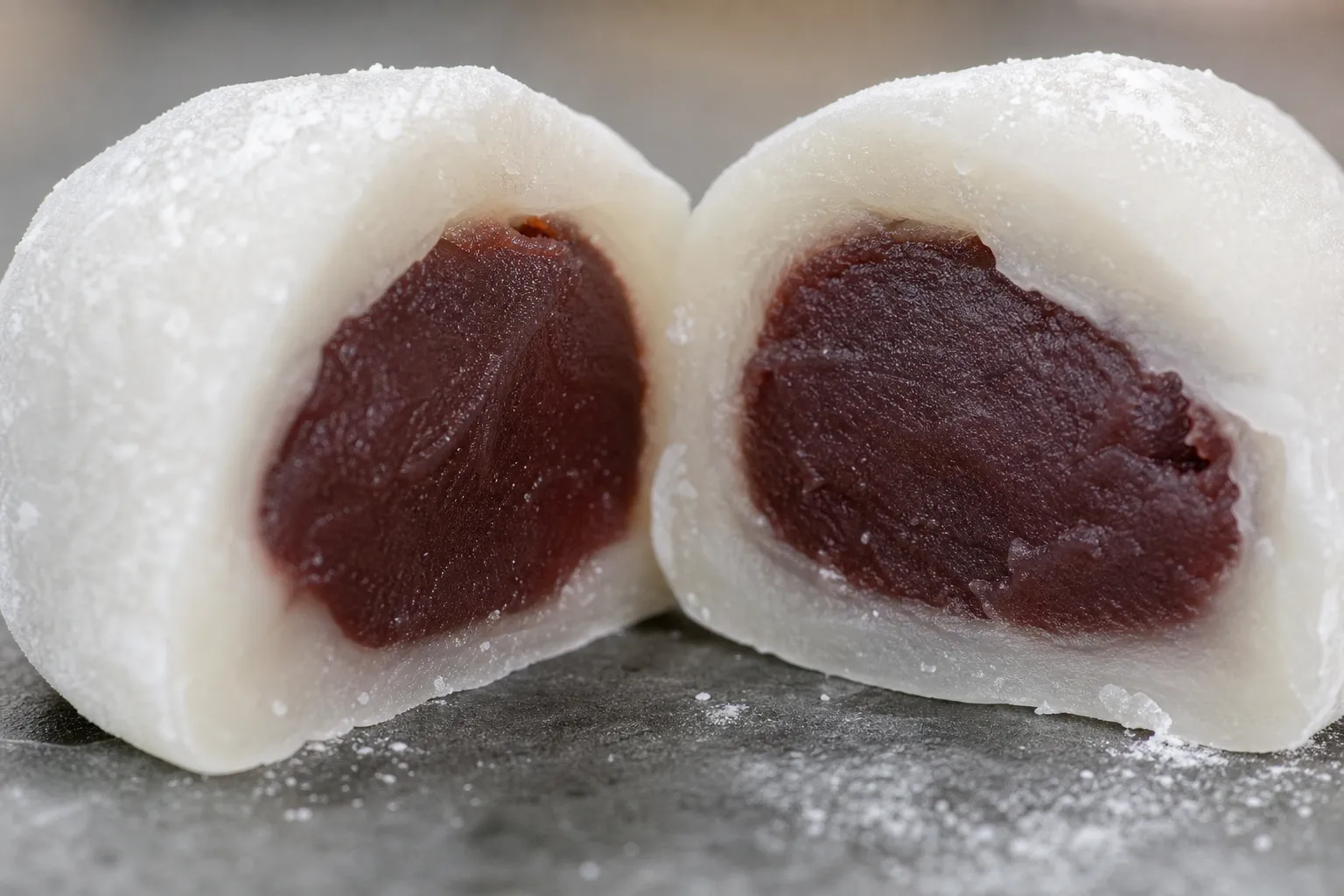
Daifuku lives and dies by its mochi — pounded glutinous rice that's soft, elastic, and stretchy. Freshly made, it's pillowy and tender; the magic is that mochi-mochi chew that springs back as you bite. (Because fresh mochi hardens over time, daifuku is best eaten the day it's made.)
Inside, the anko is smooth and not too sweet, balancing the neutral, gently sweet skin. Variations swap in white bean paste, custard, fruit, or even ice cream (yukimi style), but the soft-skin-meets-sweet-filling formula is eternal.
How it's made
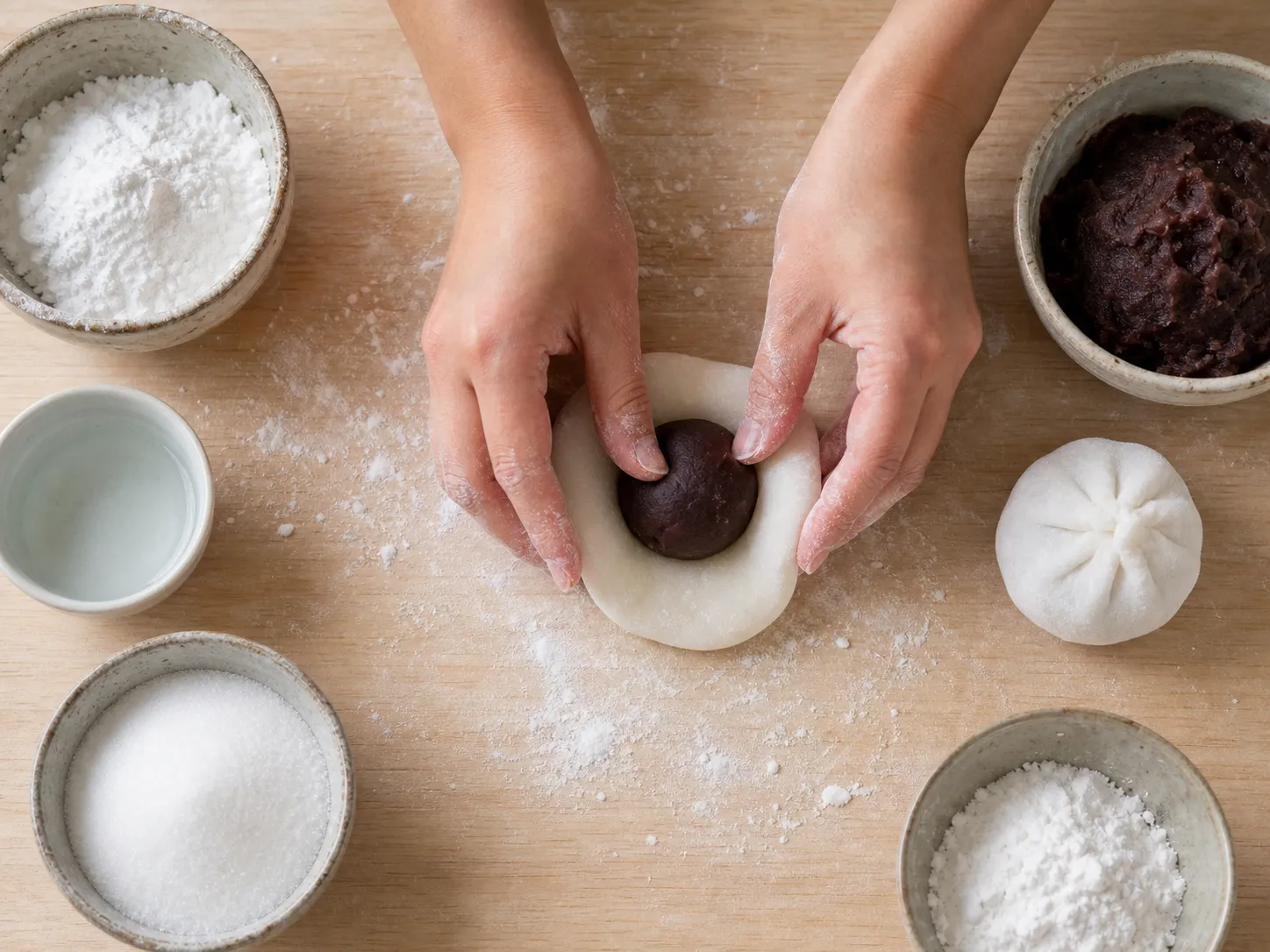
- Steam and pound glutinous rice (or cook shiratamako/mochi flour) into soft, stretchy mochi
- Dust a surface with potato or rice starch to prevent sticking
- Flatten a piece of mochi into a small round
- Place a ball of anko (and a strawberry, for ichigo daifuku) in the center
- Pinch and wrap the mochi around the filling, sealing it into a smooth ball
Before you go — eat it fresh
Your questions, answered honestly
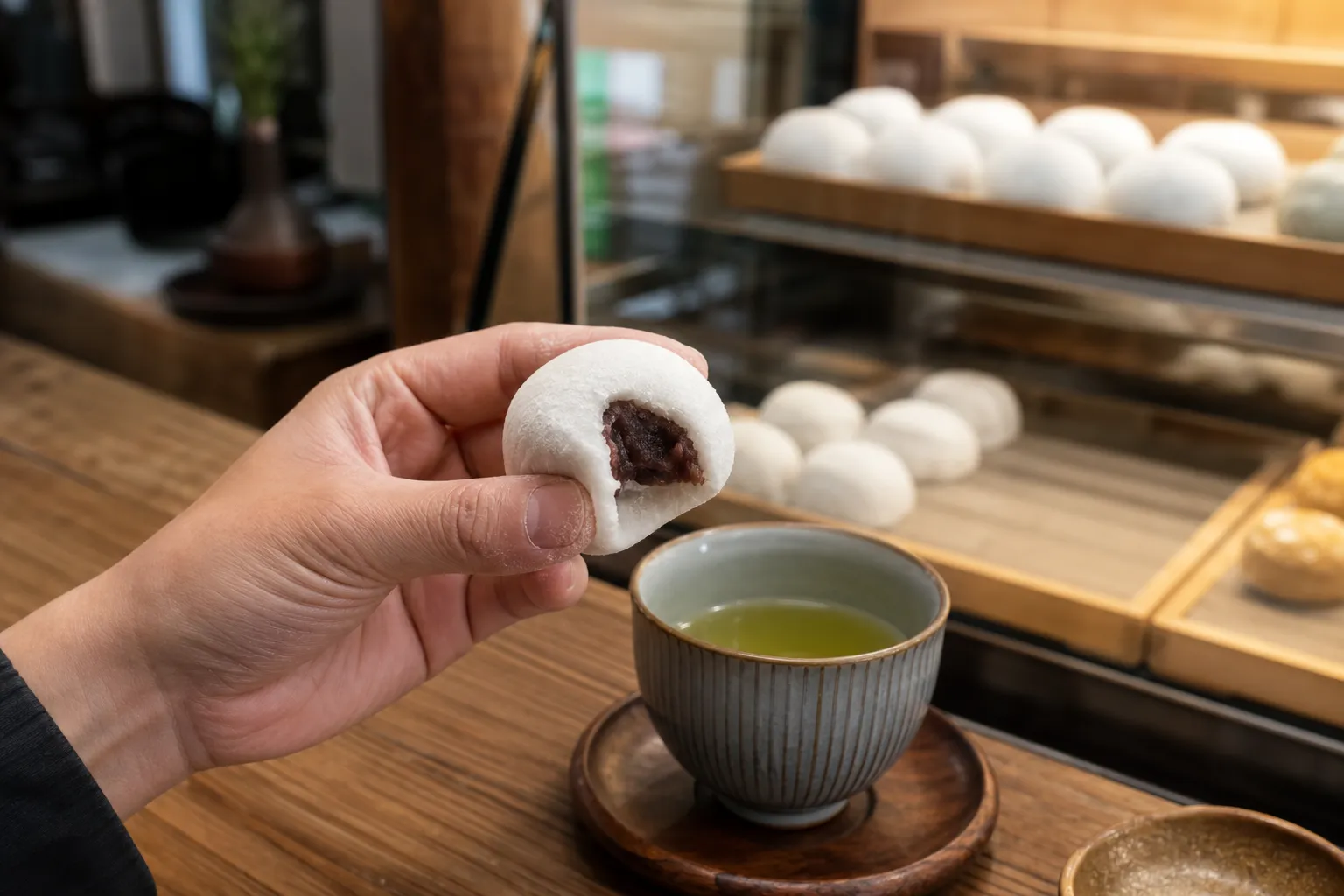
"Why does it have powder on it?" — That's starch (potato or corn) dusted on so the sticky mochi doesn't cling to your fingers. Totally normal — just bite in.
"Is mochi a choking hazard?" — Sticky mochi can be — take small bites and chew well, especially the chewier kinds. Daifuku is softer than grilled mochi, but don't wolf it down.
"Ichigo daifuku — worth it?" — Absolutely, and it's seasonal (mainly winter–spring). The fresh strawberry inside is a perfect tart-sweet contrast. Don't miss it if you see it.
"How fresh should it be?" — Same-day fresh is ideal — fresh mochi is at its softest. Specialist shops and depachika make it daily.
What the staff will ask you
| You'll hear | Romaji | Meaning | Just say |
|---|---|---|---|
| 何個にしますか? | Nan-ko ni shimasu ka? | "How many?" | Futatsu kudasai (two, please) |
| いちご大福もありますよ | Ichigo daifuku mo arimasu yo | "We also have strawberry daifuku" | Sore kudasai! (that one, please!) |
| 本日中にお召し上がりください | Honjitsu-chū ni omeshiagari kudasai | "Please eat it today" | Hai, wakarimashita (got it) |
To order, just say "Daifuku futatsu kudasai" (大福二つください) — "two daifuku, please."
Where to eat it
- Traditional wagashi shops — the best, softest, same-day mochi.
- Department-store food halls (depachika) — wide variety, including seasonal ichigo daifuku.
- Supermarkets & convenience stores for an easy everyday version.
Buy it the day you'll eat it — fresh mochi is soft mochi.
Soul Score
Local Roots5/5
First-Timer Friendly4/5
Adventure Level3/5
Comfort Level5/5
Travel Worthy4/5
These scores are one obsessed eater's gut feeling — not a verdict. A low number isn't a bad mark, just a different kind of adventure.
Know someone planning Japan?
← All Articles
Sweets & Snacks · Nationwide
Still hungry?
You might also like
Sweets & SnacksSaga
Maruboro (丸ぼうろ)
It looks like the most boring biscuit in Japan. Then you bite it and it's soft, and honey-warm, and about four hundred years of Portuguese sailors arrive all at once.
September 2, 2026
Sweets & SnacksYamanashi
Shingen Mochi (信玄餅)
There is a correct way to eat this and I did not know it, so I made a mess in front of several Yamanashi locals who were extremely kind about it and absolutely watching.
September 2, 2026
Sweets & SnacksTokyo
Anpan (あんパン)
A soft little bun, one bite in, and suddenly it's dense, dark, sweet red bean all the way through — the bread that talked 1870s Japan into eating Western-style bread at all.
July 27, 2026