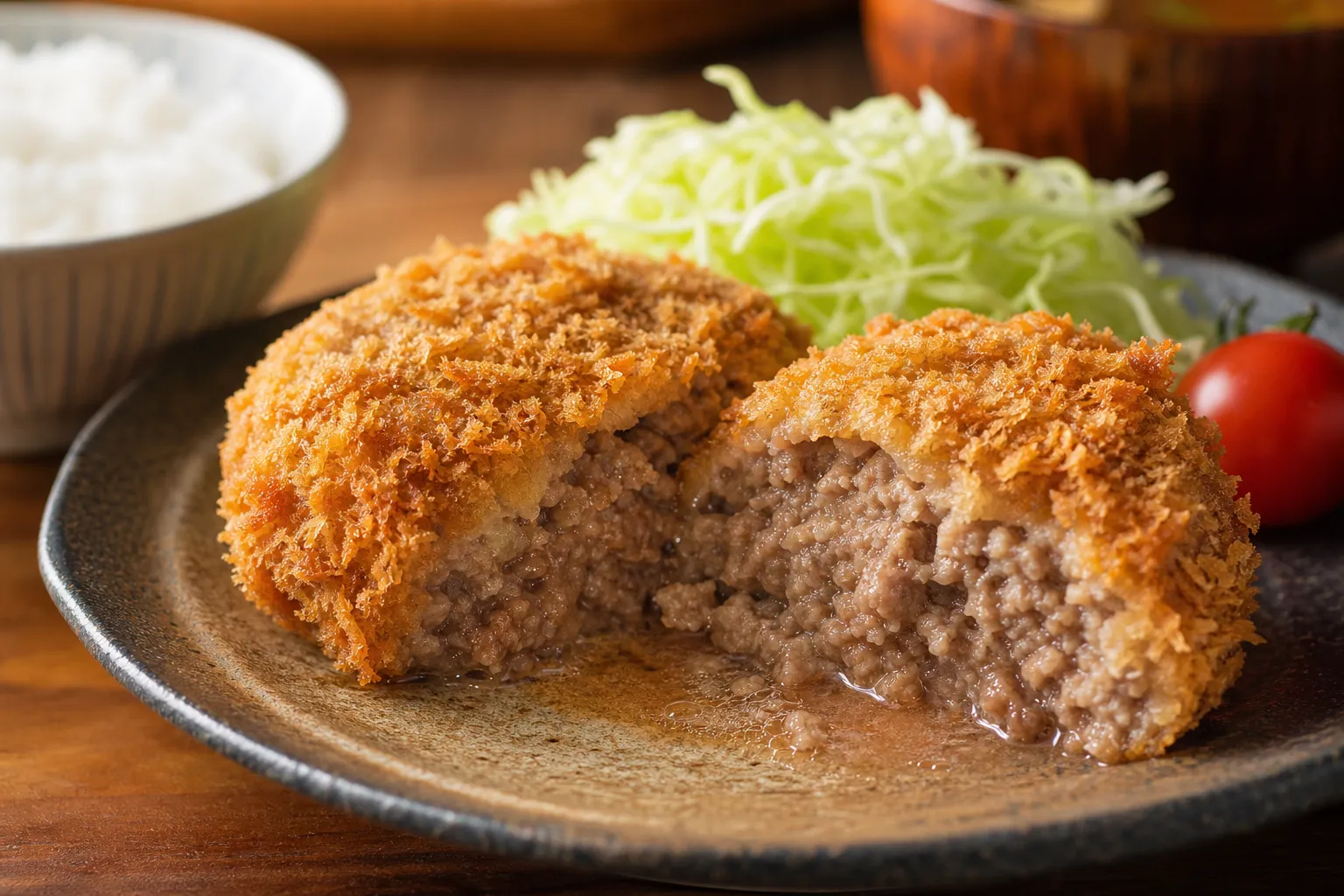
You buy it through a little window at a butcher shop, wrapped in a square of paper, still ticking with heat from the fryer. You mean to save it for later. You do not save it for later. You bite into it right there on the sidewalk, the panko crust shatters, and a hot rush of meaty juice runs straight toward your wrist — and now you're standing still on a street in Japan, holding a paper-wrapped patty, having a small religious experience. That's menchi-katsu, the best ¥300 you'll spend all day.
Share this dish


A deep-fried patty of seasoned minced meat in a crunchy panko shell that, when you bite it hot from a butcher-shop counter, gushes juice down your wrist and makes you forget you were walking somewhere.
Here's what it is: menchi-katsu (メンチカツ) is a patty of seasoned minced meat — usually a beef-and-pork blend with finely chopped onion — coated in flour, egg and panko breadcrumbs and deep-fried until the shell is deep-golden and crunchy and the inside stays juicy and tender. Minced meat, not a whole cutlet: that's what makes it menchi-katsu and not a tonkatsu (pork loin) or a cream korokke (béchamel). The name is a Japanese take on "mince," and it's one of the great everyday yoshoku fried foods.
Butcher-shop street food at its finest
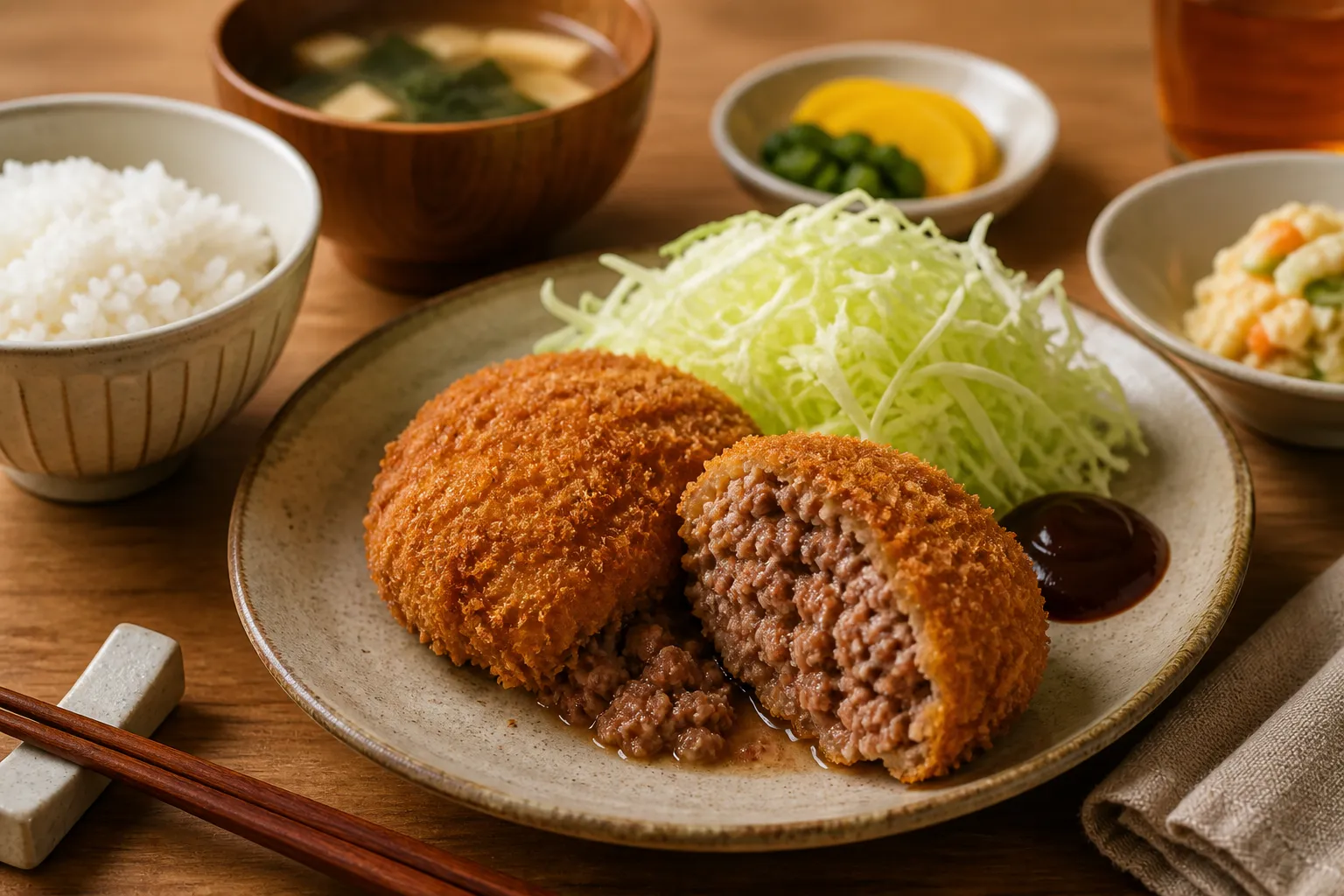
Menchi-katsu lives a double life. On one hand it's a proper yoshoku plate — served with rice, shredded cabbage and sauce at diners and family restaurants. On the other, and this is where my heart is, it's butcher-shop street food: neighborhood meat shops fry them fresh alongside their croquettes and sell them hot through the window for a few hundred yen, and a great one becomes a local landmark with a lunchtime line.
That butcher-shop tradition is one of the most delightful, under-the-radar things about eating in Japan. These aren't restaurants; they're meat shops that happen to run a small deep-fryer, and the menchi they turn out — made from good minced meat, fried to order — is often better than anything on a menu. I've planned entire neighborhood walks around a single famous butcher-shop menchi. No regrets. I'd do it again tomorrow.
What makes the eating experience so good
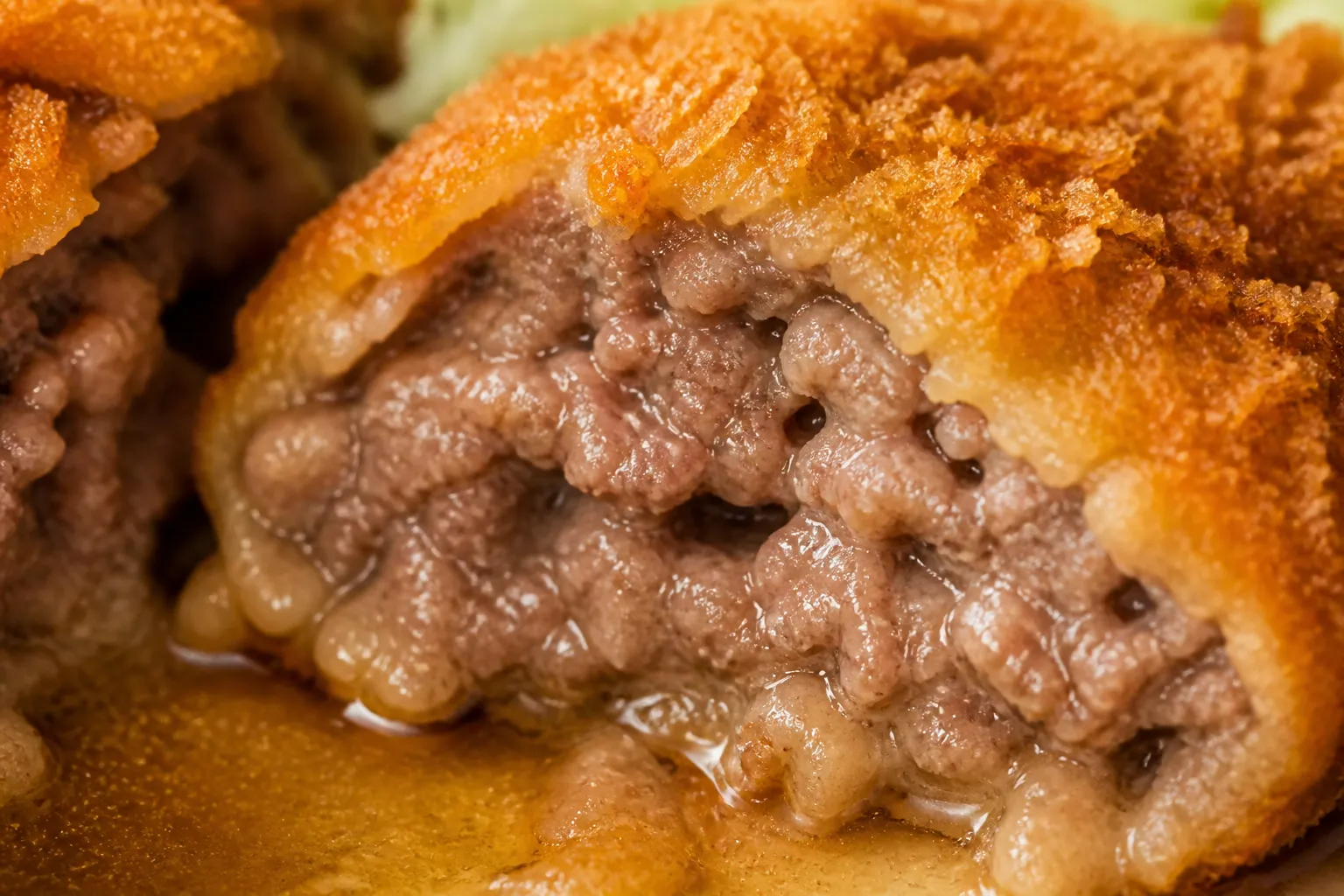
- The crust is coarse-panko crunchy, and it gives way to a juicy, tender, savory minced-meat interior — the crunch-to-gush ratio is the whole thrill
- Chopped onion inside turns sweet and holds moisture, so a good menchi is juicy, not dry
- The beef-pork blend gives it real, rounded meaty flavor — richer than an all-pork cutlet
- It's usually eaten with a swipe of tonkatsu sauce (or Worcestershire), whose tang cuts the richness
- Best of all, it's cheap and handheld — the ultimate walk-and-eat, buy-it-hot, ruin-your-appetite-for-lunch snack
How it's made
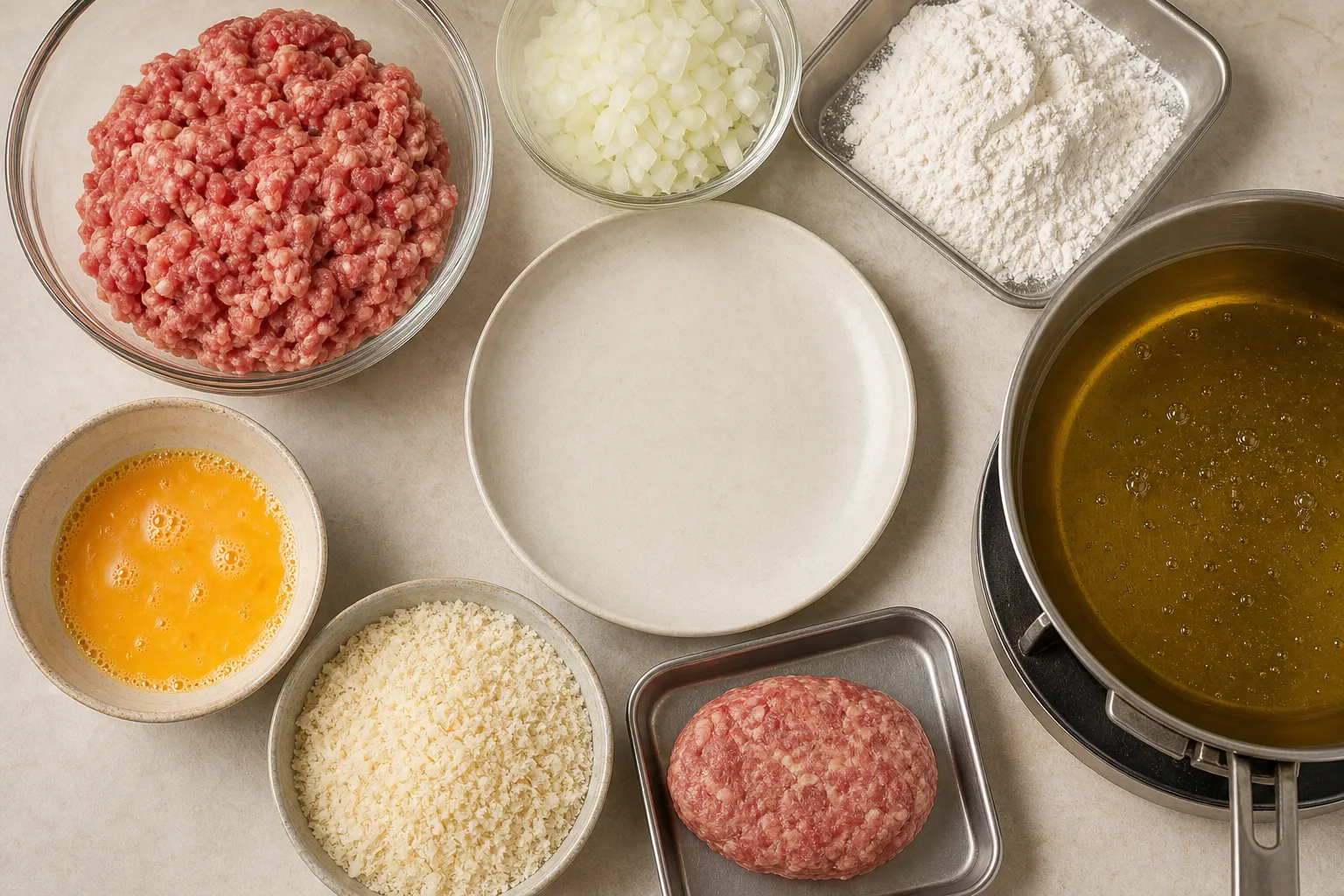
- Mix the meat. Combine minced beef and pork with finely chopped (often sautéed) onion, salt, pepper and seasonings; knead until it holds together and turns slightly sticky.
- Shape the patties. Form into rounds or ovals — not too thick, so they cook through while staying juicy.
- Bread them. Coat in flour, beaten egg, and coarse panko breadcrumbs for maximum crunch.
- Deep-fry. Fry in hot oil until deep golden and cooked through, with a crisp shell sealing in the juices.
- Serve hot, with sauce. On a plate with rice and shredded cabbage, or wrapped in paper straight from the fryer. Tonkatsu sauce on top. Eat immediately.
Kneading the meat until it's tacky is the quiet key — that's what gives menchi its cohesive, juicy bite instead of a crumbly one. Fry it fresh and eat it hot, and it's hard to beat.
Before you go — buy it hot from a butcher
Your questions, answered honestly
"What's the difference between this and tonkatsu?" — Tonkatsu is a whole pork loin cutlet — solid slabs of meat. Menchi-katsu is minced meat (usually beef and pork) formed into a patty — softer, juicier, more like a fried meatball or a crumbed hamburger. Same panko shell, different meat entirely. And korokke is potato; cream korokke is béchamel — menchi is the meaty one.
"Restaurant or butcher shop?" — Both are great, but if you can, buy one fresh from a butcher shop window. That's menchi in its natural, glorious habitat — fried to order, handed over hot, eaten on the street. Restaurant versions come with rice and cabbage and are lovely too.
"Will it really squirt?" — A good, hot, juicy one can absolutely send a jet of hot juice on the first bite. Lean forward, hold a napkin, and bite gently the first time. Consider it proof you got a good one.
"What sauce goes on it?" — Tonkatsu sauce (thick and tangy) is standard, sometimes just Worcestershire. At a butcher shop it's often pre-sauced or eaten plain; at a diner you'll get a bottle. A little dab of hot mustard is nice too.
What the staff will ask you
| You'll hear | Romaji | Meaning | Just say |
|---|---|---|---|
| 何個にしますか? | Nan-ko ni shimasu ka? | "How many pieces?" | Hitotsu kudasai (one, please) |
| ソースはおかけしますか? | Sōsu wa o-kake shimasu ka? | "Shall I put sauce on it?" | Onegaishimasu (yes, please) |
| 温かいものと冷たいもの、どちらにしますか? | Atatakai mono to tsumetai mono, dochira ni shimasu ka? | "Hot one or a cold one?" | Atatakai no de (the hot one, please) |
To order, just say "Menchi-katsu o kudasai" (メンチカツをください) — "Minced-meat cutlet, please."
Where to eat it
- Neighborhood butcher shops (nikuya) nationwide — the classic way: fried fresh and sold hot through the window, often next to potato korokke. A famous local one is worth seeking out.
- Department-store food halls (depachika) and delis — reliable spots for a freshly fried menchi to eat as a snack.
- Yoshoku diners and family restaurants — for the sit-down plate with rice, cabbage and sauce.
Butcher-shop frying times, sell-out hours and prices vary — the best ones can sell out, so go earlier in the day and check before you make a special trip.
Soul Score
Local Roots4/5
First-Timer Friendly5/5
Adventure Level3/5
Comfort Level5/5
Travel Worthy3/5
These scores are one obsessed eater's gut feeling — not a verdict. A low number isn't a bad mark, just a different kind of adventure.
Know someone planning Japan?
← All Articles
Japanese Food · Nationwide
Still hungry?
You might also like
Japanese FoodNationwide
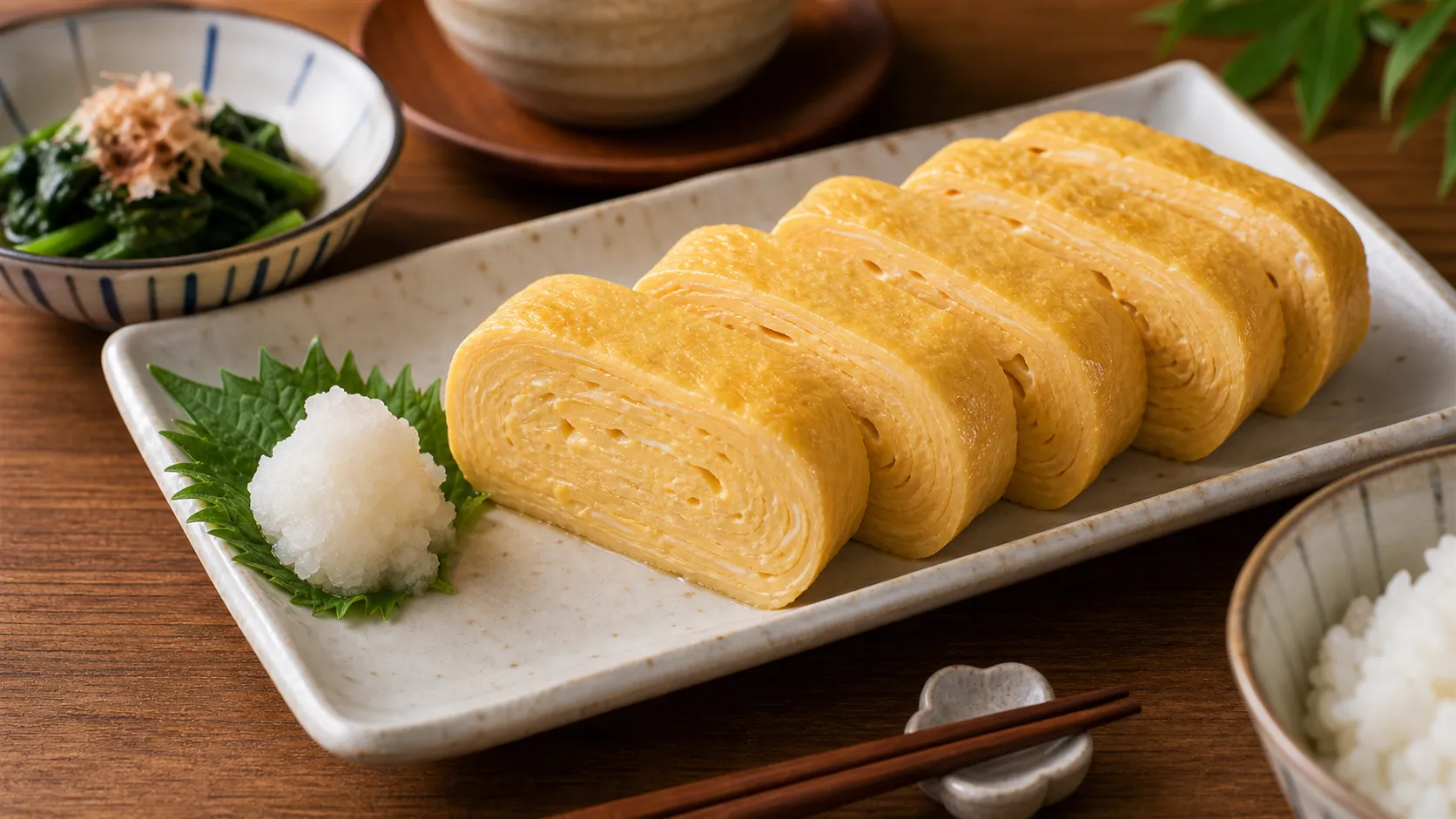
Dashimaki-tamago (だし巻き卵)
A rolled omelette so soft it almost trembles, layered fold over fold and soaked with dashi so that biting in releases a little warm rush of savory broth — the deceptively simple egg dish that Japanese chefs spend years perfecting.
July 11, 2026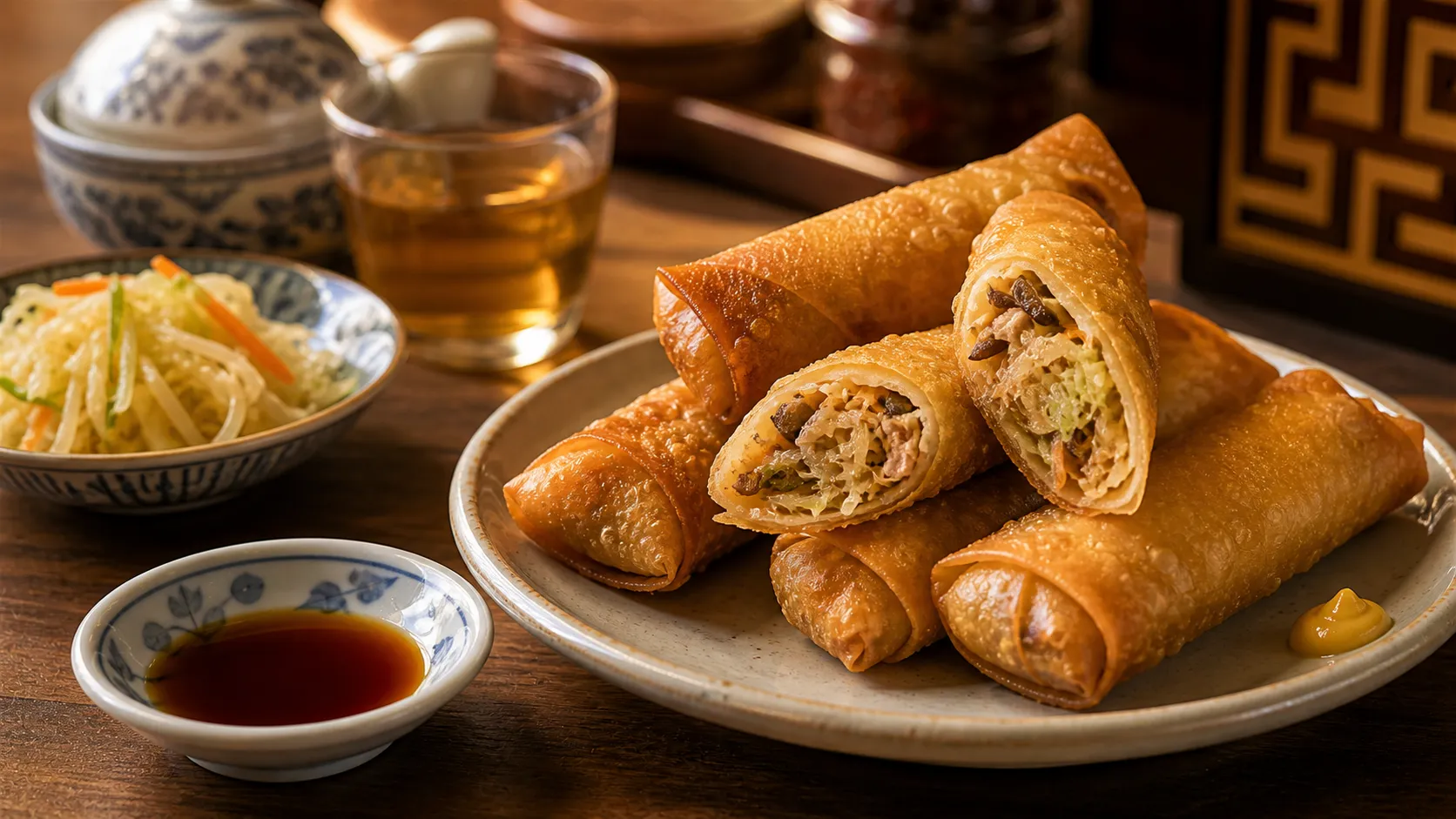
Japanese FoodNationwide
Harumaki (春巻き)
The Japanese spring roll — a shatteringly crisp golden tube that gives way to a hot, savory tangle of pork, cabbage and bamboo shoot, best eaten the second it's cool enough not to burn your mouth (you will not wait that long).
July 11, 2026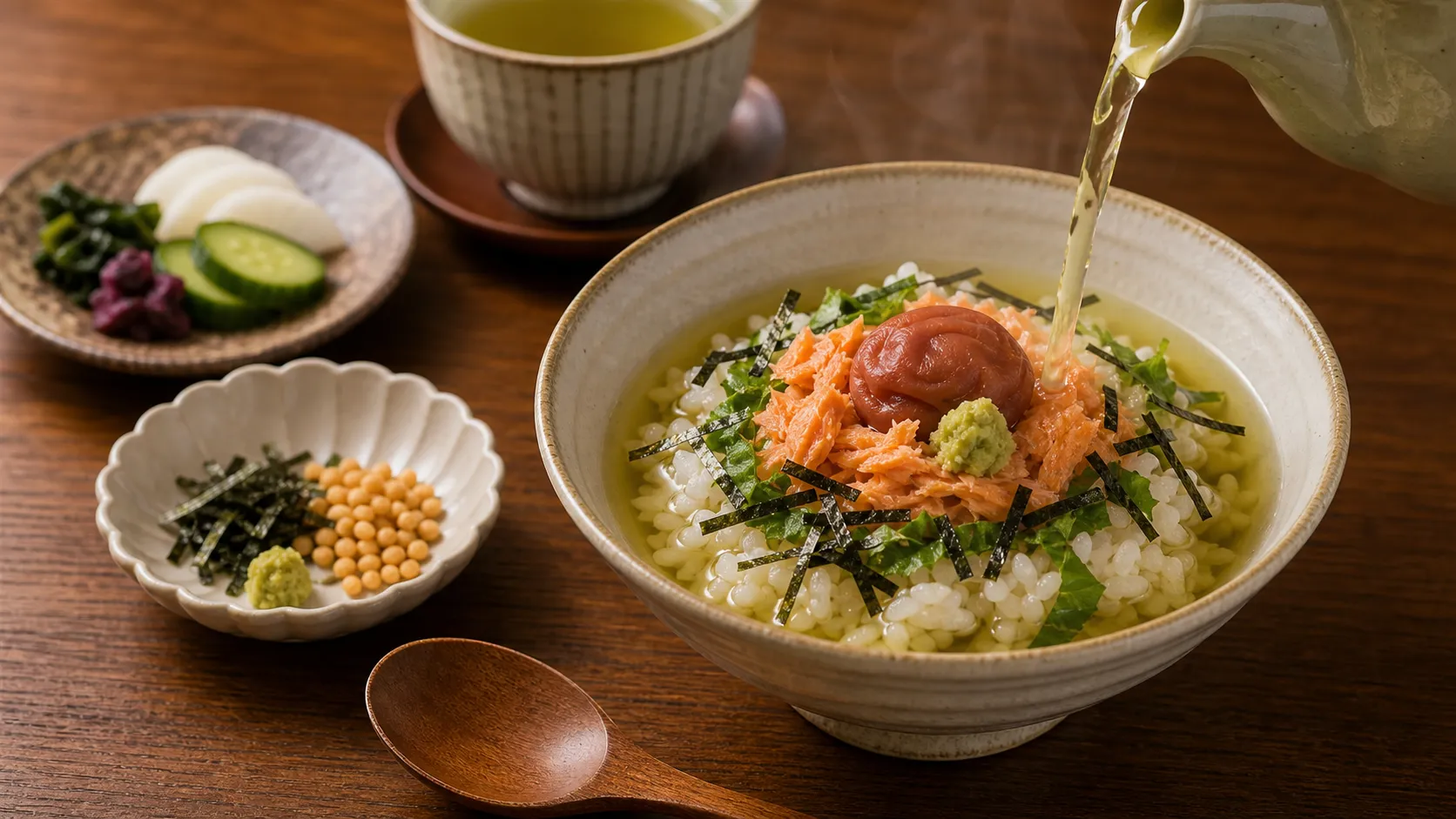
Japanese FoodNationwide
Ochazuke (お茶漬け)
Pour hot green tea or dashi over a bowl of rice, scatter something savory on top, and eat — the gentlest, most quietly restorative dish in Japan, the one you reach for late at night when you just need a warm bowl to make everything okay.
July 11, 2026