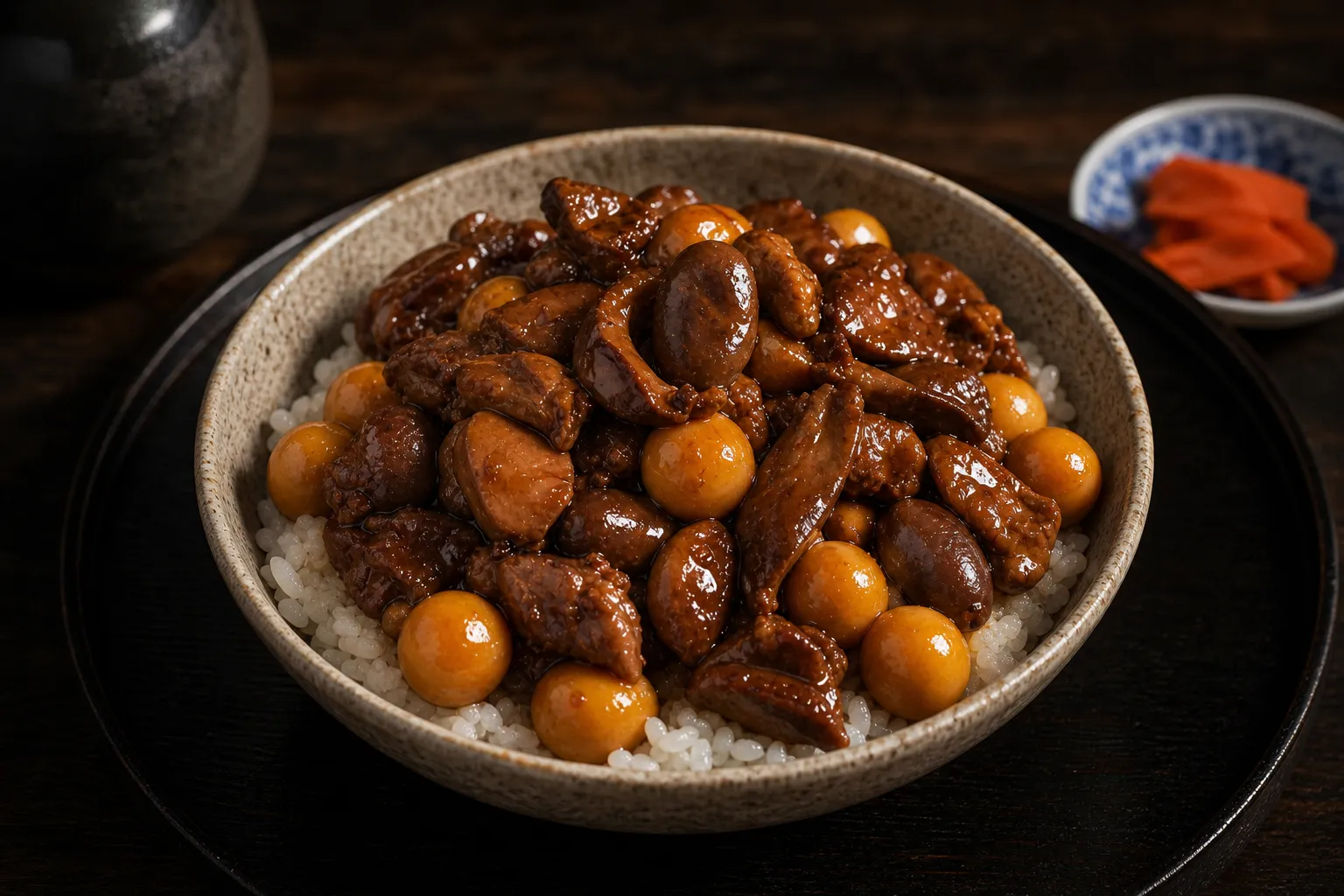
There are tiny golden spheres in this dish. Perfect, amber-colored, smooth little orbs clustered among the chicken livers and gizzards and hearts. They look like the most beautiful small potatoes you've ever seen. They are not potatoes. They are kinkan — unfertilized chicken eggs still in the yolk-forming stage, harvested from the hen before the shell develops, cooked in the sweet-salty tare until they're glossy and just barely set and rich in a way that makes you put your chopsticks down for a second.
Share this dish


B-1 Grand Prix champion from Yamanashi: chicken innards — liver, gizzard, heart, and unfertilized egg — simmered in a sweet-salty tare until glossy and deeply rich. One of Japan's great kept secrets.
🍜 Planning a food trip to Yamanashi?Add this dish to my Food Trip →
 Add this dish to my Food Trip →
I didn't know this was what I was eating when I ordered it. I'm glad I didn't know, because I ate three before I found out, and by then it was already one of my favorite things in Yamanashi.
Kofu torimotsu-ni (甲府鳥もつ煮) is the chicken offal dish that won the B-1 Grand Prix in 2010 — the fourth champion in competition history — and it deserved every vote. Chicken liver (rebā), gizzard (sunagimo), heart (hatsu), and kinkan (the unfertilized eggs), all simmered together in a sweet-salty soy and sake tare until the sauce reduces to a glossy, clingy glaze and everything inside is cooked through and deeply, completely flavored. It's served warm or at room temperature, usually over rice or alongside soba. It's one of the great unsung dishes of Japan, and for reasons I cannot fully explain, it's almost entirely confined to Kofu.
How Kofu made offal into art
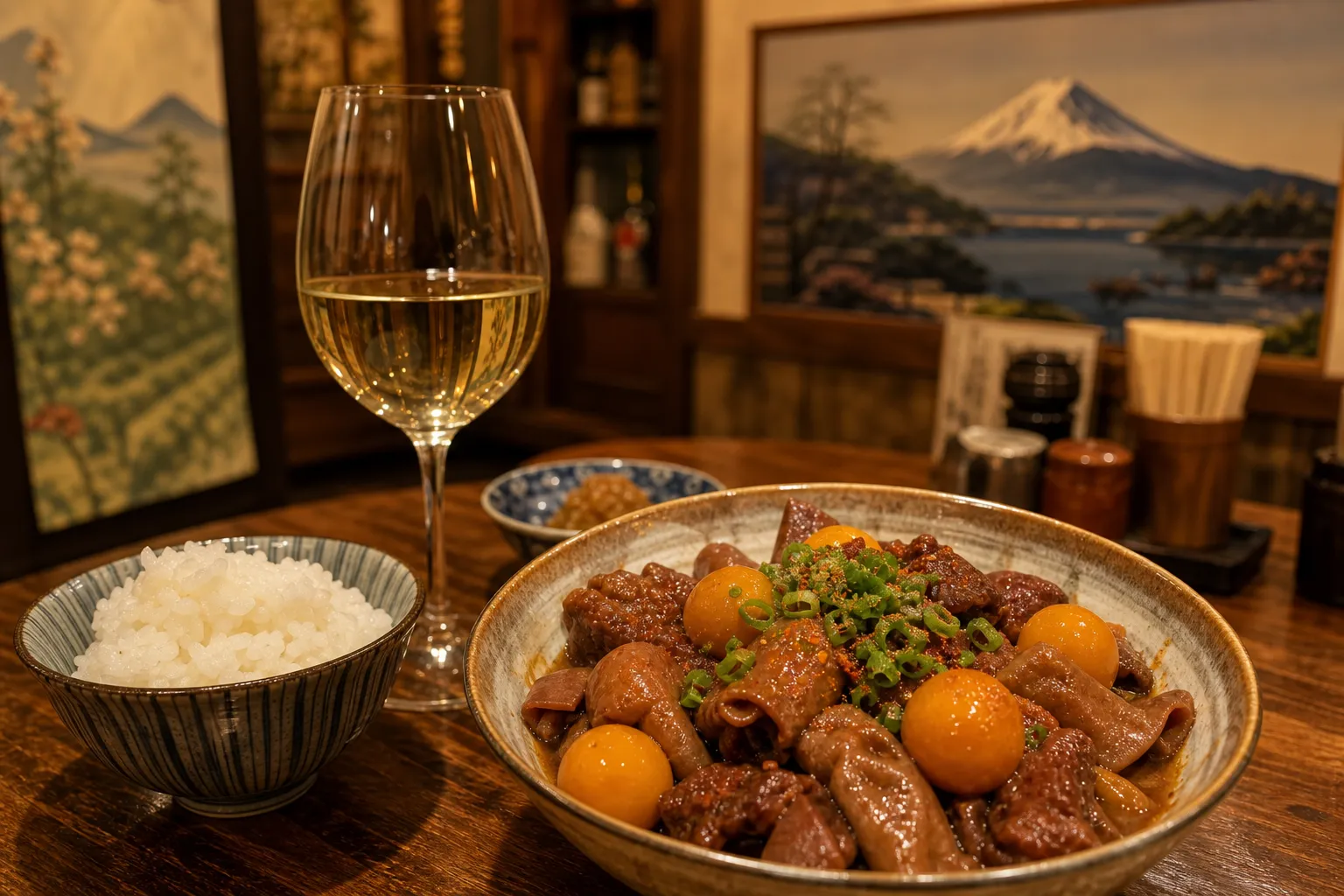
Torimotsu-ni has been a Kofu specialty since at least the postwar era — chicken offal was cheap and available, and Yamanashi cooks developed a preparation that transformed the raw funk of fresh innards into something refined: fast, high-heat cooking in a tare that's sweet enough to caramelize, salty enough to season through, and reduced enough to coat everything completely. The key is speed — torimotsu-ni uses fresh offal cooked quickly rather than the slow-braise approach of many offal dishes. The result is offal that's cooked through but not rubbery, sauced but not drowning, and finished with a glaze that makes every piece look like it's been lacquered.
The B-1 Grand Prix win in 2010 put Kofu on the culinary map in a new way — suddenly a dish that locals had eaten casually for decades was being sought out by food tourists from Tokyo. The reaction was universal: how did we not know about this.
What's in the pot
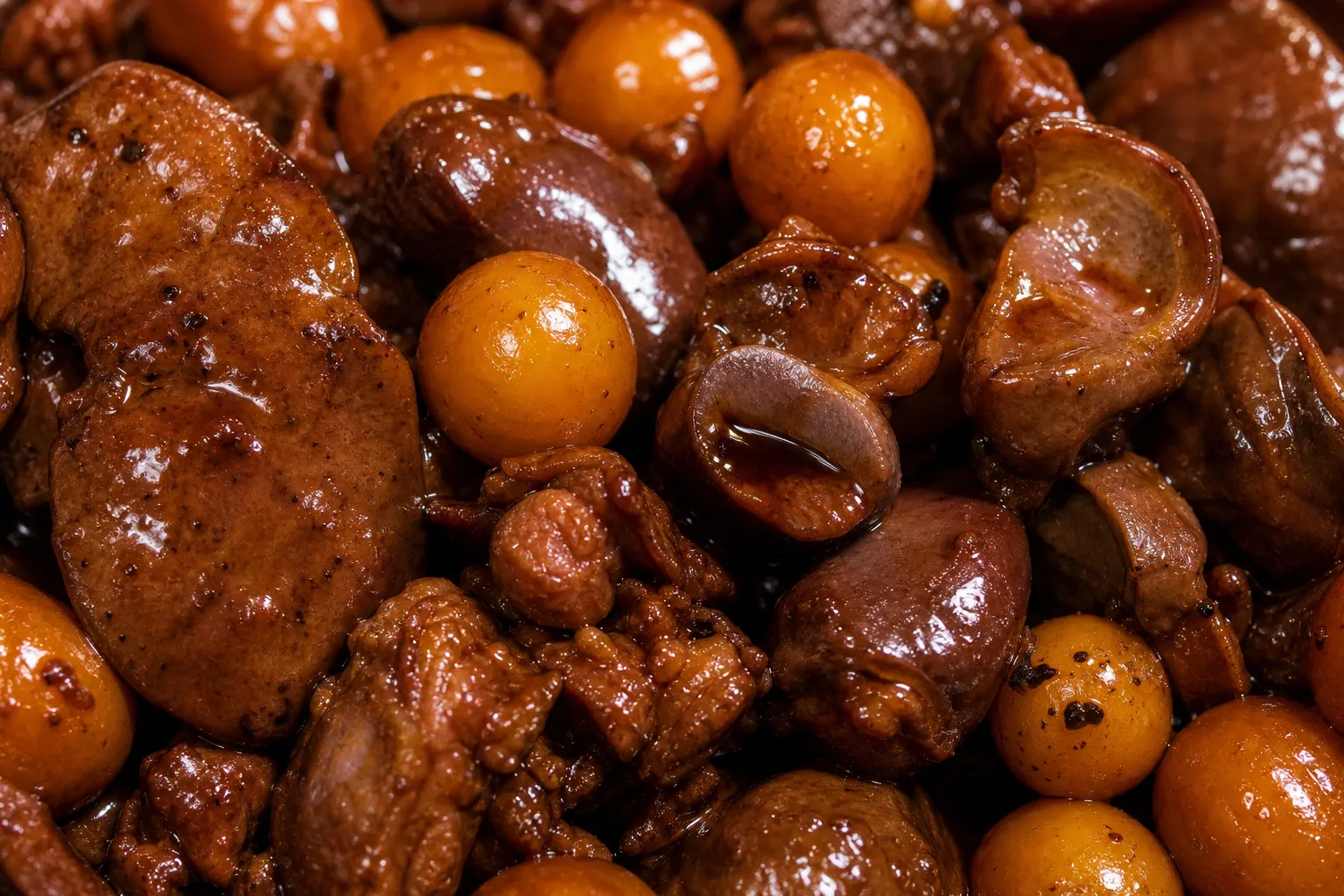
Rebā (レバー) — chicken liver. In torimotsu-ni it's cooked just past pink, rich and mineral and creamy in the center. Nothing like overcooked liver.
Sunagimo (砂肝) — gizzard. Dense, slightly chewy, with a clean savory flavor that takes the tare beautifully.
Hatsu (ハツ) — heart. Firm, meaty, the most "normal meat"-tasting of the group. Good entry point if you're nervous.
Kinkan (金柑) — the unfertilized egg, the treasure. Small, golden, smooth, set just enough to hold its shape. Rich without being heavy. If you eat only one thing in Kofu, eat these.
All four together in the same glossy, reduced sauce makes each component taste better than it would alone. The liver needs the sweetness. The gizzard needs the salt. The kinkan needs everything around it to make sense of what it is.
How it's made
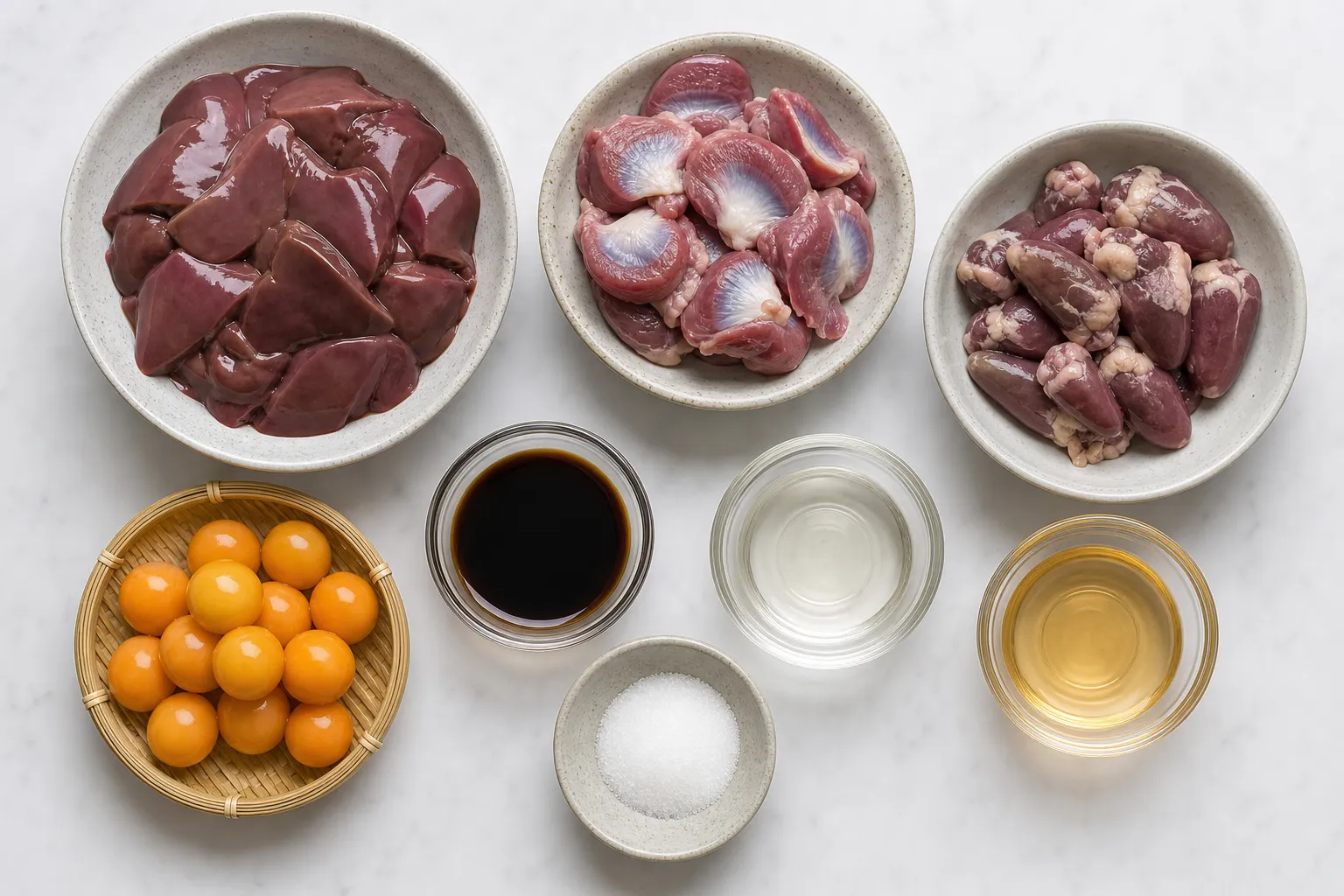
- Source fresh chicken innards — freshness is non-negotiable, the dish doesn't work with anything but
- Prepare the tare: soy sauce, sake, mirin, sugar — sweet-forward, designed to caramelize
- Blanch the offal briefly to remove impurities; drain
- Cook in a hot pan with the tare over high heat, tossing constantly — this is fast cooking, not slow braising
- Reduce the sauce until it coats every piece with a glossy glaze; serve immediately
Before you go — order over rice
Your questions, answered honestly
"What are the golden balls (kinkan)?" — Unfertilized chicken eggs, harvested before the shell forms. They're in the yolk stage — smooth, round, golden. They taste rich and slightly eggy, and their texture is like a very soft, set yolk. They're the most exciting part of the dish.
"Is the liver overcooked and rubbery?" — Not in a good torimotsu-ni. The high-heat, quick-cooking method keeps the liver just past pink — creamy in the center, not gray and dense throughout. The quality of the liver and the speed of cooking are everything.
"How sweet is it?" — Noticeably sweet — the tare is intentionally sweet-forward to caramelize on the offal and create the glaze. If you've eaten teriyaki sauce you know this flavor zone. It works.
"What do I eat it with?" — Over rice (gohan) is the classic. Some places serve it alongside soba, which is a Yamanashi move (hoto's neighbor).
What the staff will ask you
| You'll hear | Romaji | Meaning | Just say |
|---|---|---|---|
| ご飯と一緒にしますか? | Gohan to issho ni shimasu ka? | "With rice?" | Hai, onegaishimasu (yes please) |
| きんかんは入れますか? | Kinkan wa iremasu ka? | "Include the kinkan eggs?" | Hai, zehi (yes, please!) |
| 量はどうしますか? | Ryō wa dō shimasu ka? | "How much?" | Futsū de onegaishimasu (regular please) |
To order, just say "Torimotsu-ni kudasai" (鳥もつ煮ください) — "Torimotsu-ni, please."
Where to eat it
- Kōshū Torimotsu specialty shops, Kofu city — the B-1 Grand Prix promotion committee lists participating shops. Any member shop is cooking it properly.
- Izakayas throughout Kofu — torimotsu-ni appears on most izakaya menus in Yamanashi; it's everyday local food here.
- Pair with hoto — both are Yamanashi dishes, both are deeply local, and a Kofu meal of torimotsu-ni followed by hoto is one of the great regional food days available in Japan.
Yamanashi is easy from Tokyo — about 90 minutes by limited express. Combine torimotsu-ni, hoto, and Koshu wine in one day. You will not regret the trip.
Soul Score
Local Roots5/5
First-Timer Friendly3/5
Adventure Level4/5
Comfort Level4/5
Travel Worthy4/5
These scores are one obsessed eater's gut feeling — not a verdict. A low number isn't a bad mark, just a different kind of adventure.
Know someone planning Japan?
← All Articles
Local Food · Kofu, Yamanashi
Still hungry?
Eat more from Yamanashi
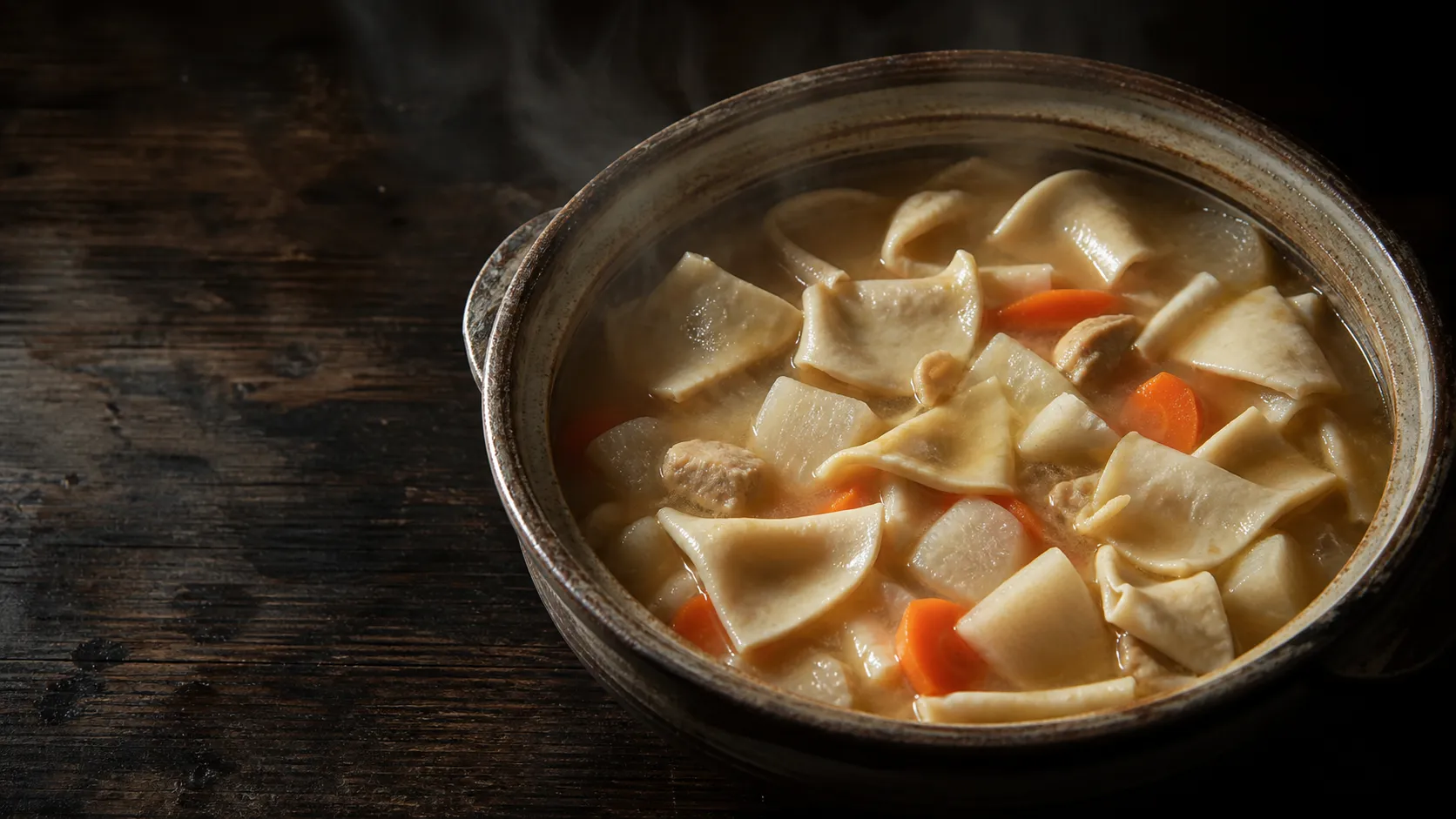
Local FoodFujikawa, Yamanashi
Mimi (みみ)
A grandmother in Fujikawa told me the little dough shapes in my soup were designed to scoop up good fortune, and then watched to make sure I ate every one of them.
September 2, 2026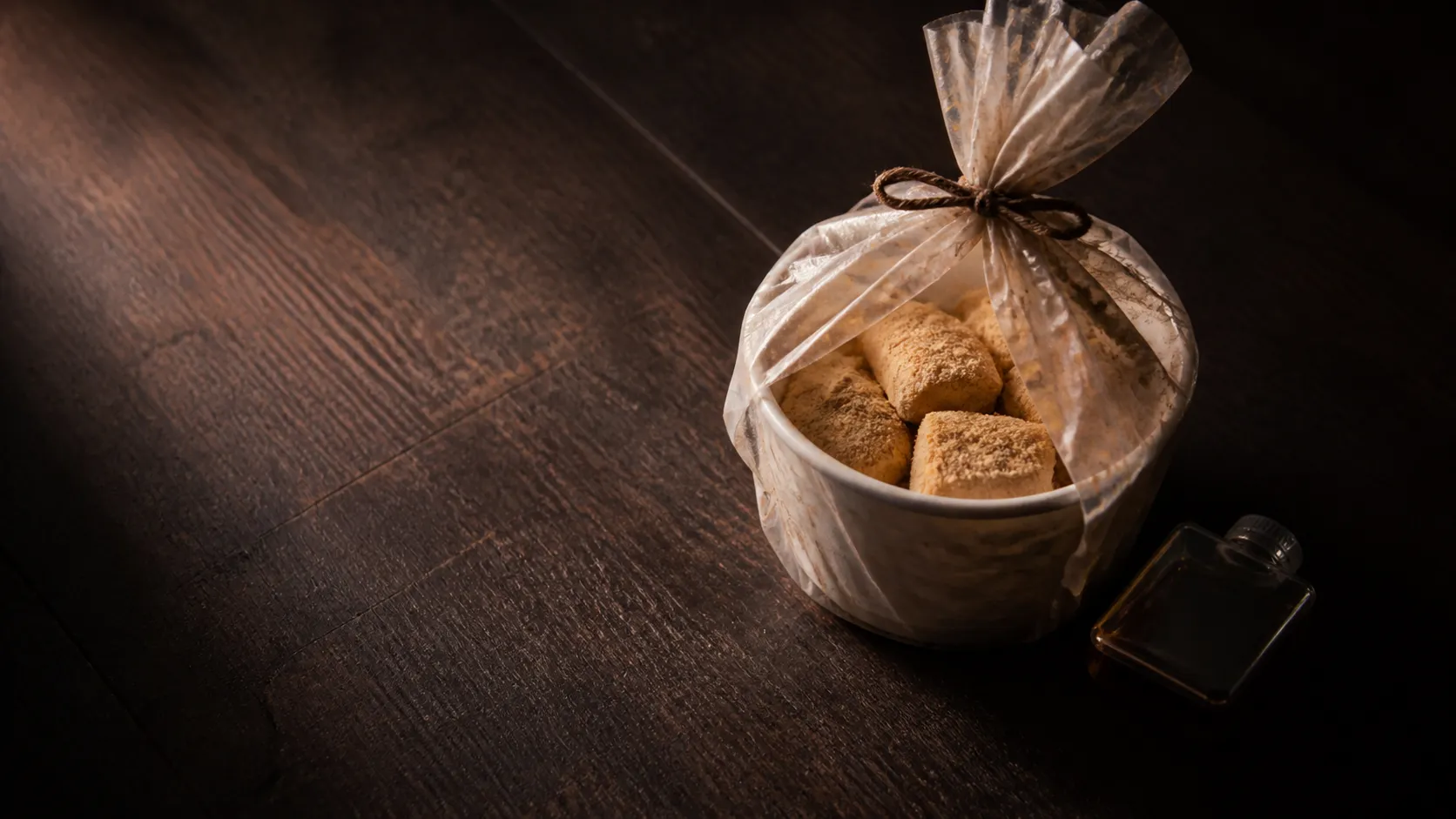
Sweets & SnacksYamanashi
Shingen Mochi (信玄餅)
There is a correct way to eat this and I did not know it, so I made a mess in front of several Yamanashi locals who were extremely kind about it and absolutely watching.
September 2, 2026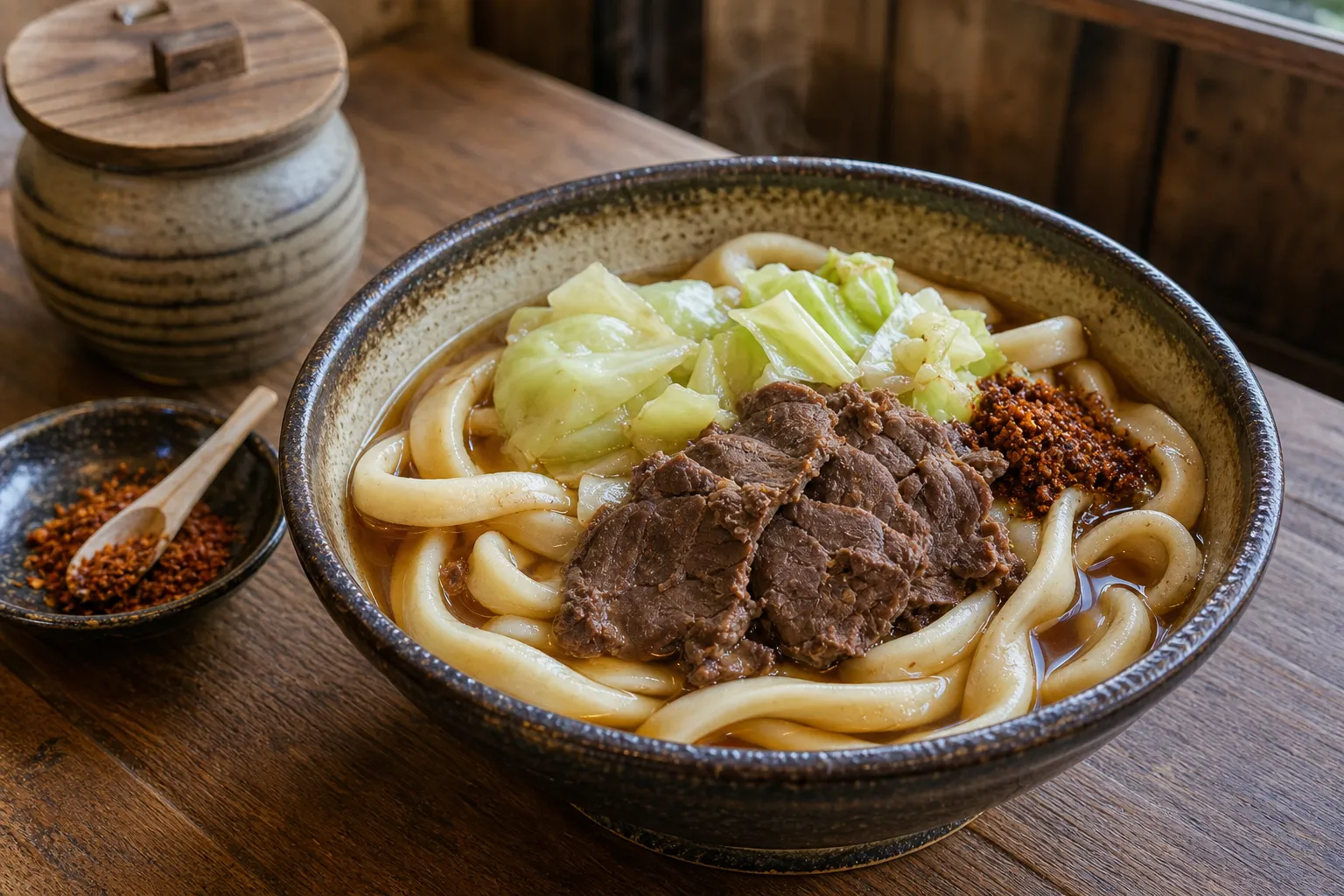
Local FoodFujiyoshida, Yamanashi
Yoshida Udon (吉田うどん)
The udon that fights back. Fujiyoshida's noodles are so thick and stubbornly chewy your jaw gets a workout — served in a soy-miso broth under a fiery red condiment you won't find anywhere else.
July 12, 2026