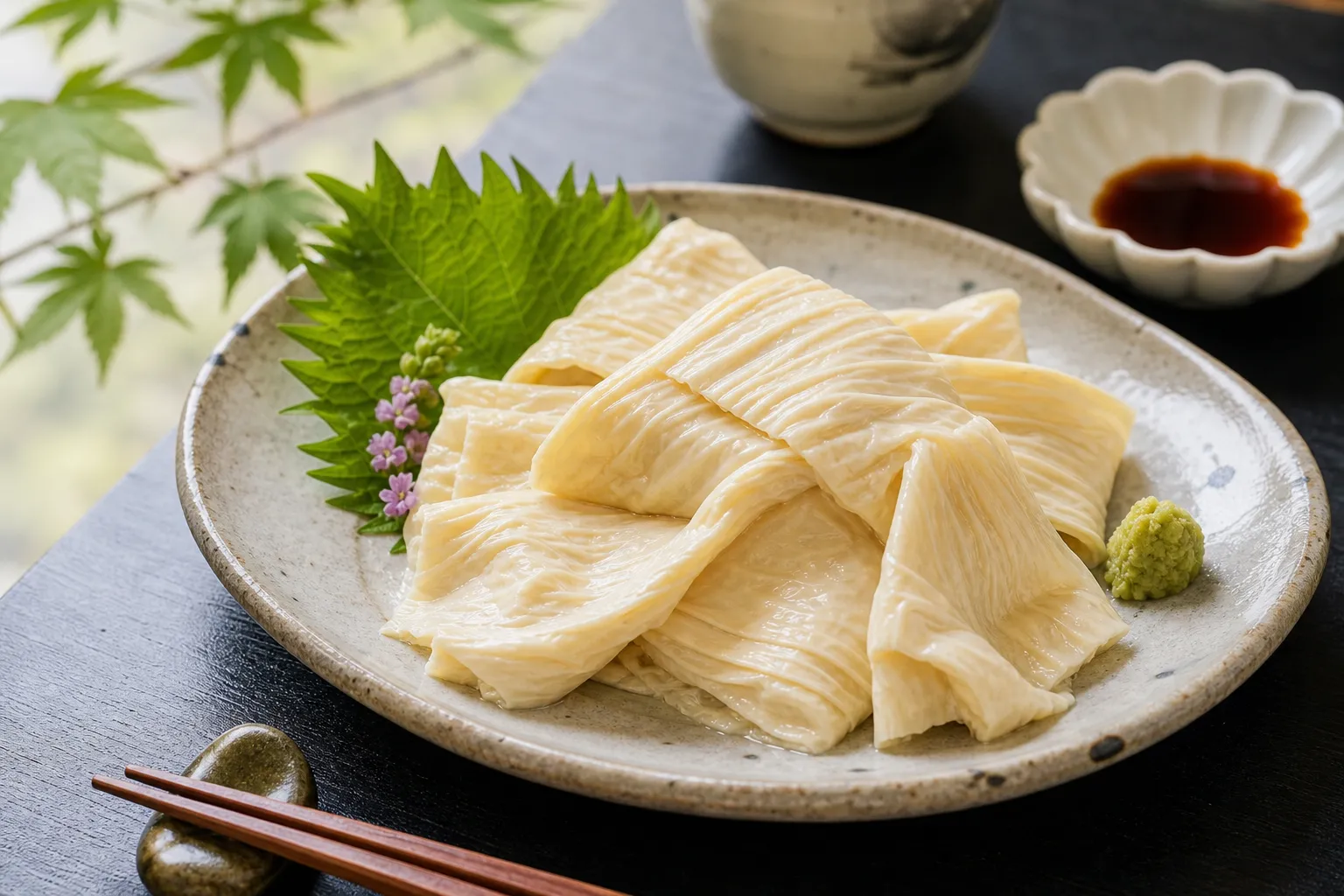
You lean over a shallow pan of gently steaming soy milk and, on its surface, a thin skin has quietly formed — pale, faintly wrinkled, silky. Someone slides a bamboo skewer under one edge and lifts, and the whole sheet comes away in a single trembling veil, draping like the finest silk. You dip it in a little soy and wasabi, and it's soft and warm and milky and barely there, and I promise you it is one of the most quietly astonishing things you can eat in Kyoto. That's yuba, and it is patience turned into food.
Share this dish


The delicate skin that forms on warm soy milk, lifted off in silky sheets and eaten with barely anything on it — Kyoto's quietest luxury, a food that tastes like patience itself.
🍜 Planning a food trip to Kyoto?Add this dish to my Food Trip →
 Add this dish to my Food Trip →
Here's what it is: yuba (湯葉) is the delicate skin that forms on the surface of heated soy milk — the same film that develops on warming milk, but from soybeans. That skin is carefully lifted off in sheets and eaten fresh (nama-yuba), soft and silky, or dried into keeping sheets. It is not tofu (which is soy milk curdled into a block) — yuba is the skin, lifted whole, and that distinction is the entire dish. Kyoto, with its deep temple-cuisine roots, is where yuba became an art.
Temple food that became a Kyoto treasure
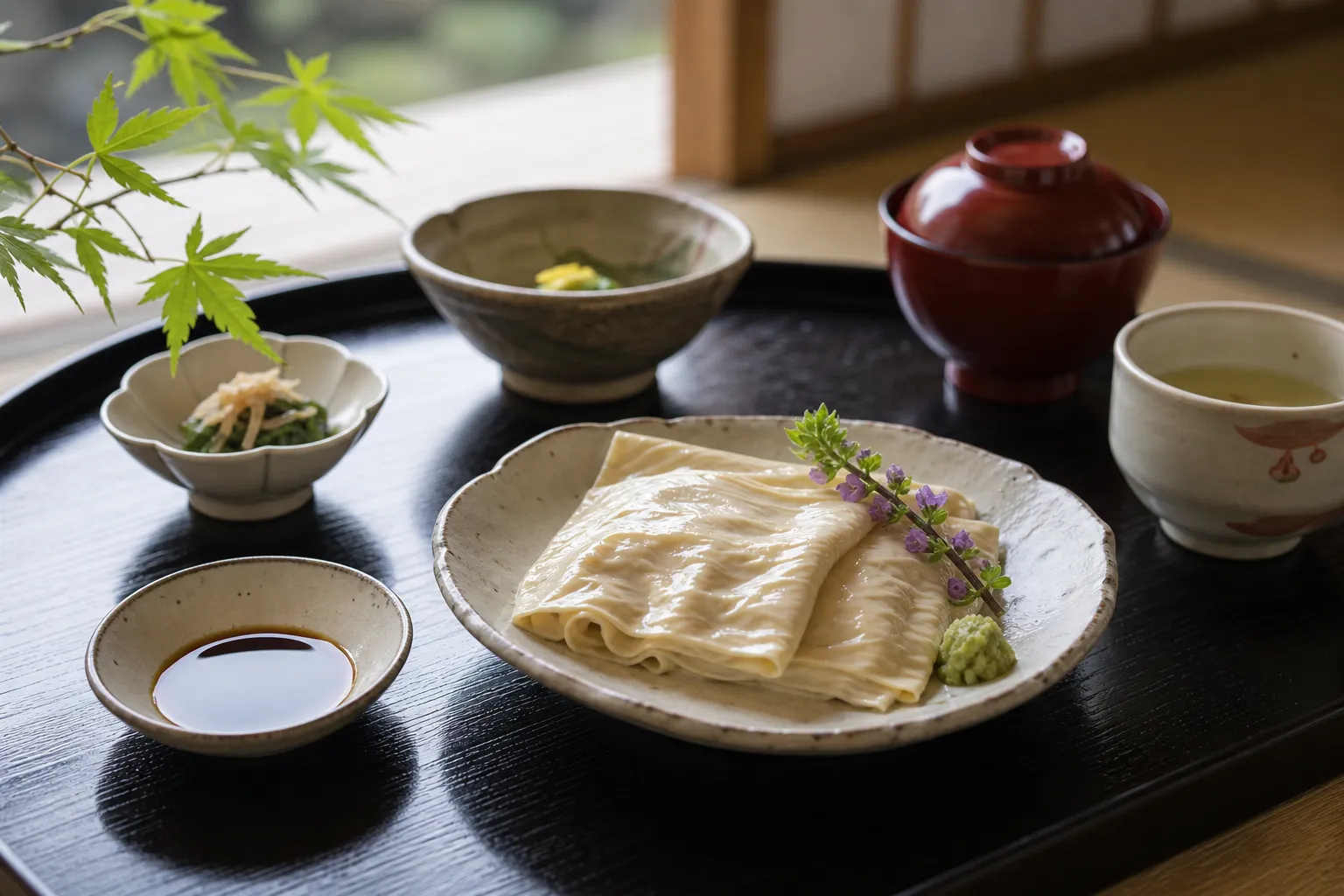
Yuba is bound up with shojin ryori — the Buddhist vegetarian temple cuisine — where soy was a crucial source of protein and richness in a diet without meat or fish. In Kyoto and around its temples, monks and cooks refined the making and eating of yuba into something genuinely elegant, and the city became famous for it. Today, a Kyoto meal built around yuba — as sashimi-style fresh sheets, simmered, or in a hot pot (yuba nabe) — is a classic refined experience, the kind of thing you plan a temple-district lunch around.
What moves me about it is how it embodies a whole aesthetic. Yuba asks you to slow down and notice something almost nothing — a milky skin, a whisper of sweetness, a texture like silk — and to find it beautiful. It's the opposite of loud food. In a world of flavor bombs, Kyoto built a delicacy out of restraint, and yuba is its purest expression. I find that deeply moving, and also delicious, which is a rare combination.
What makes the eating experience different
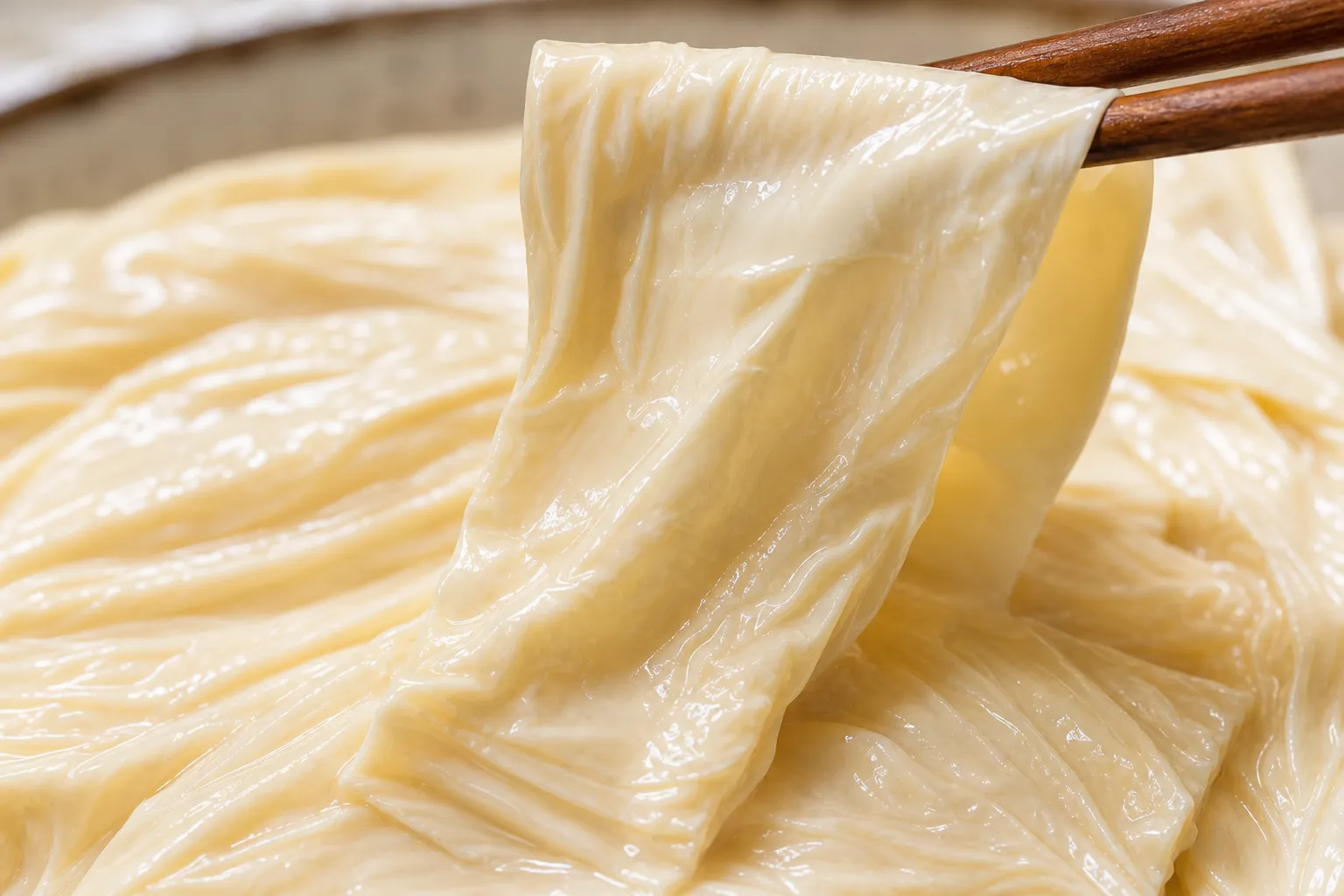
- Fresh yuba (nama-yuba) is impossibly silky and tender — it melts and slips on the tongue with a gentle soy-milk richness
- The flavor is subtle and pure: milky, faintly sweet, clean — meant to be tasted, not overwhelmed
- It's eaten with the lightest touch — a dab of soy and wasabi, a little dashi, or simmered gently — nothing that would drown it
- Dried yuba has a different, chewier character and is used in simmered dishes and hot pots
- The whole experience is about texture and quiet — it's contemplative food, a small ceremony as much as a bite
How it's made
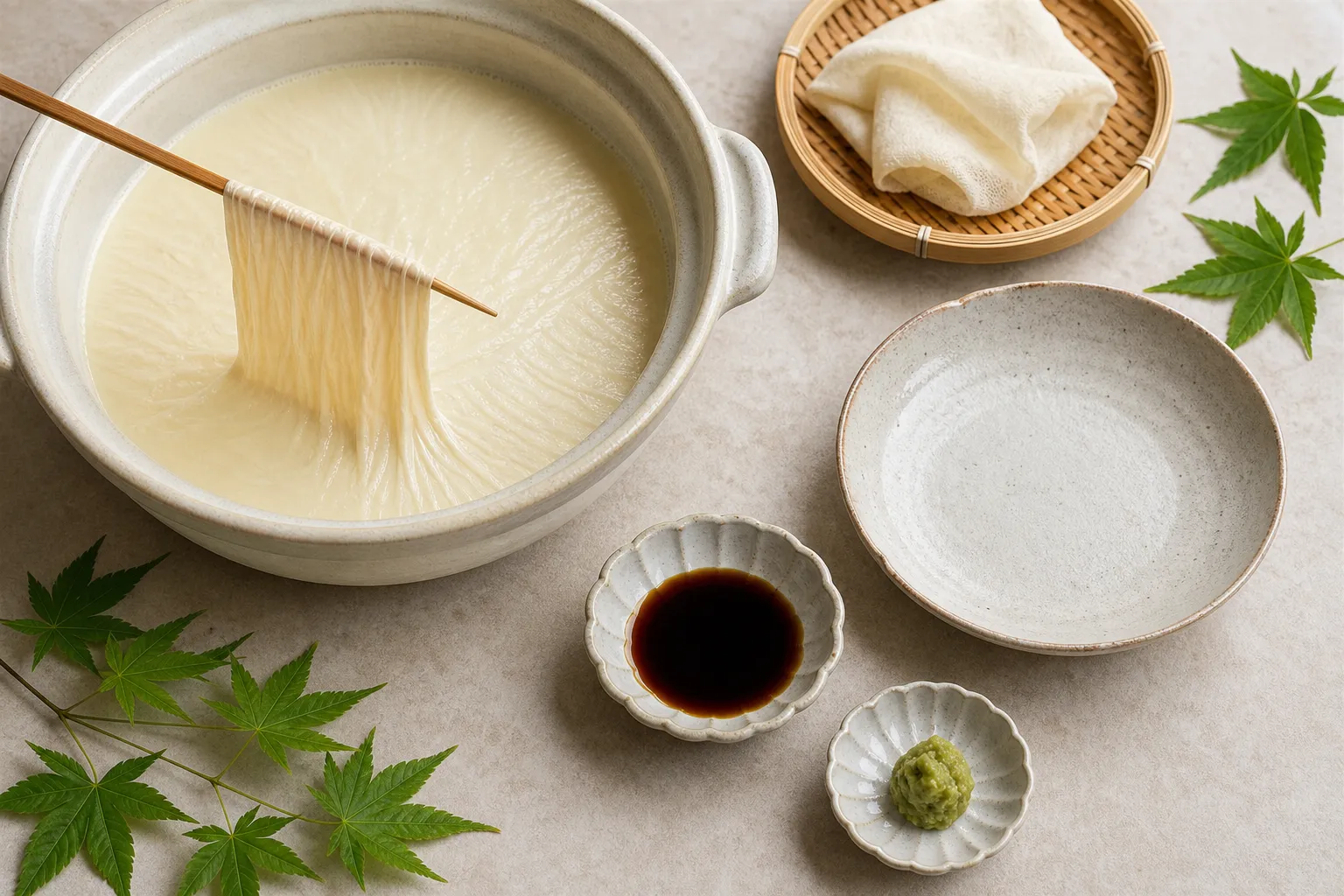
- Heat soy milk gently. Fresh soy milk is warmed in a shallow pan, kept just below a boil so a skin can form on the surface.
- Let the skin form. As the surface heats, a thin film of concentrated soy proteins and fats develops — this is the yuba.
- Lift it off. A skewer or thin rod is slid under one edge and the whole sheet is lifted away in a single delicate veil.
- Eat fresh or dry. Fresh yuba is served right away, silky and warm; sheets can also be hung and dried for keeping.
- Serve simply. Fresh yuba is eaten with a little soy and wasabi or dashi; dried yuba is rehydrated and simmered into dishes and hot pots.
It's a process of near-nothing — heat, wait, lift — and yet doing it well, sheet after perfect sheet, is a genuine craft. The whole dish is basically the reward for patience.
Before you go — slow down for it
Your questions, answered honestly
"Is this just tofu?" — No — and the difference matters. Tofu is soy milk curdled into a solid block. Yuba is the skin that forms on the surface of heated soy milk, lifted off whole. It's silkier, more delicate, and more prized than tofu. Same soybean origin, completely different food.
"It sounds bland — will I even taste it?" — It's subtle, not bland, and that's the point. Go in expecting a gentle, milky, faintly sweet flavor and an extraordinary silky texture, and you'll get it. If you're chasing bold flavor, this isn't the dish — but as a quiet, refined experience, especially fresh in Kyoto, it's special.
"How should I eat it?" — Fresh yuba: with a small dab of soy sauce and wasabi, or a little dashi — keep it light so you can taste the yuba itself. Don't drown it. In a yuba nabe hot pot or a simmered dish, just enjoy it as it comes.
"Where's the best place for it?" — Kyoto, especially the temple districts. Restaurants around the temples specialize in yuba (and its cousin, tofu) as part of refined, often vegetarian, Kyoto meals. A yuba lunch near a temple is a lovely, calm way to eat.
What the staff will ask you
| You'll hear | Romaji | Meaning | Just say |
|---|---|---|---|
| コースになさいますか? | Kōsu ni nasaimasu ka? | "Would you like the set course?" | Onegaishimasu (yes, please) |
| 生湯葉と湯葉料理、どちらがよろしいですか? | Nama-yuba to yuba-ryōri, dochira ga yoroshii desu ka? | "Fresh yuba or a cooked yuba dish?" | Osusume wa dore desu ka (which do you recommend?) |
| お飲み物はいかがですか? | O-nomimono wa ikaga desu ka? | "Anything to drink?" | O-cha o kudasai (green tea, please) |
To order, just say "Yuba o kudasai" (湯葉をください) — "Yuba, please."
Where to eat it
- Kyoto's temple districts — restaurants around the city's temples specialize in yuba and tofu as part of refined, often Buddhist-influenced, meals; a yuba course here is the classic experience.
- Traditional Kyoto restaurants and ryotei — yuba appears in kaiseki and refined set meals across the city.
- Kyoto yuba specialists and shops — some makers sell fresh and dried yuba to take home, and a few run their own small eateries.
Yuba is a refined Kyoto specialty usually served as part of a set or course; menus, prices and reservations vary, so check ahead, especially for a proper yuba meal.
Soul Score
Local Roots5/5
First-Timer Friendly3/5
Adventure Level4/5
Comfort Level4/5
Travel Worthy4/5
These scores are one obsessed eater's gut feeling — not a verdict. A low number isn't a bad mark, just a different kind of adventure.
Know someone planning Japan?
← All Articles
Local Food · Kyoto
Still hungry?
Eat more from Kyoto
Local FoodKyoto, Kyoto
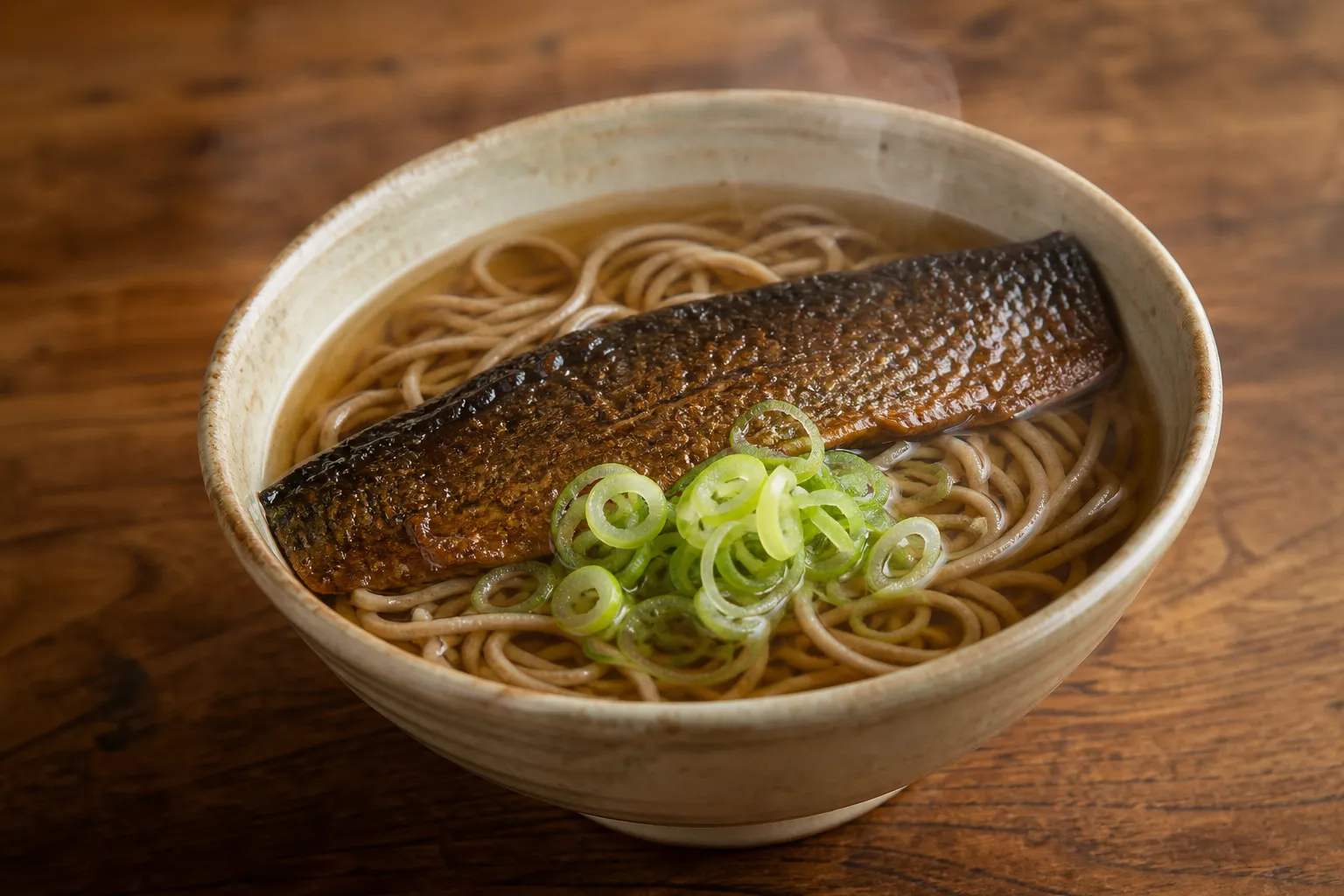
Nishin Soba (にしんそば)
A whole simmered herring, dark and glossy and sweet, sitting on top of hot soba in a clear Kyoto broth — a landlocked city's love letter to preserved fish, and one of the great comfort bowls of Japan.
July 12, 2026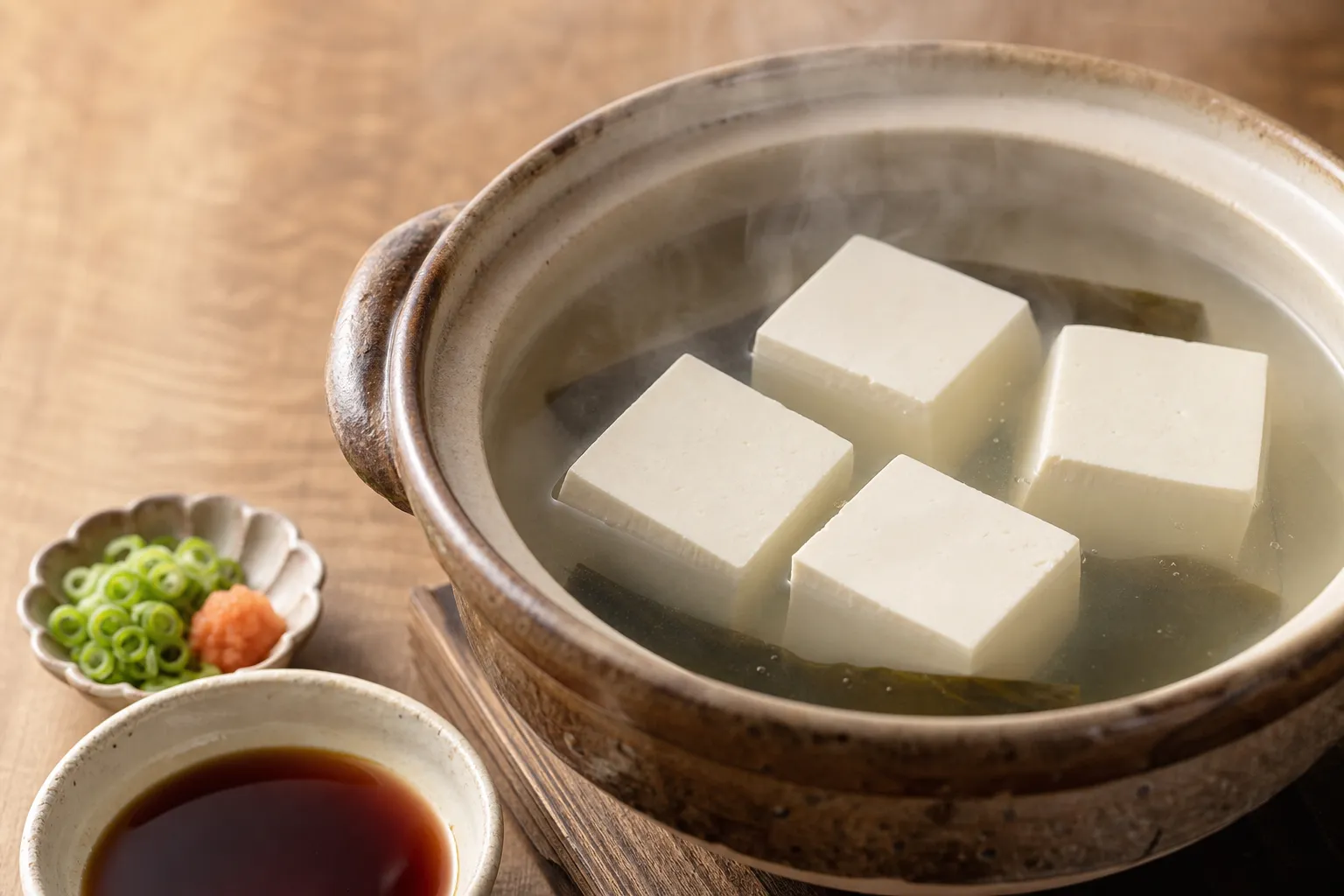
Local FoodKyoto
Yudofu (湯豆腐)
A pot of hot water, some blocks of tofu, and somehow that's the whole meal — and somehow that's exactly the point.
July 5, 2026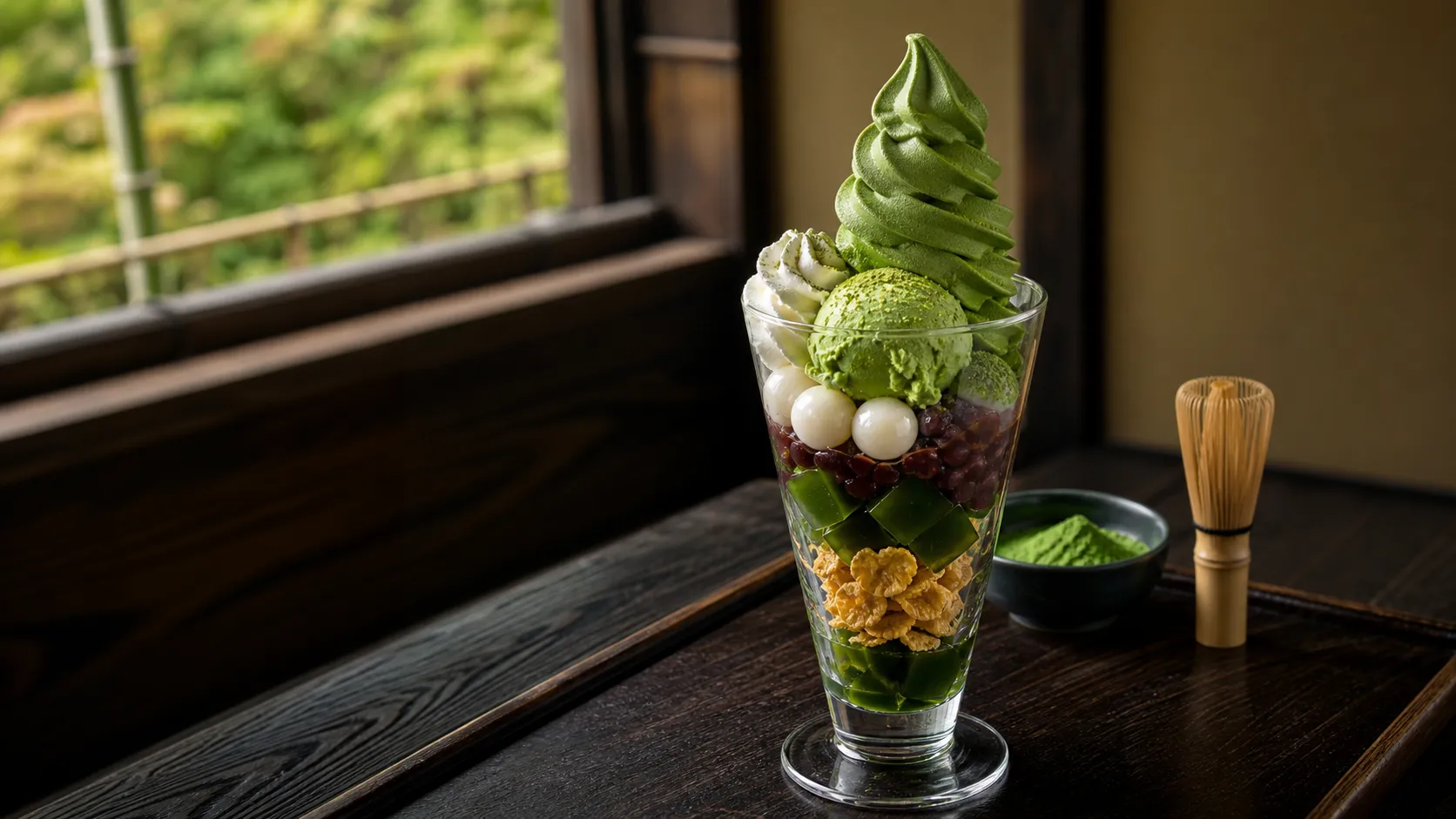
Sweets & SnacksKyoto / Nationwide
Matcha Parfait (抹茶パフェ)
A towering glass of matcha ice cream, soft serve, anko, shiratama mochi and crunchy cornflakes — Japan's most theatrical dessert, and a one-way ticket to matcha obsession.
June 20, 2026