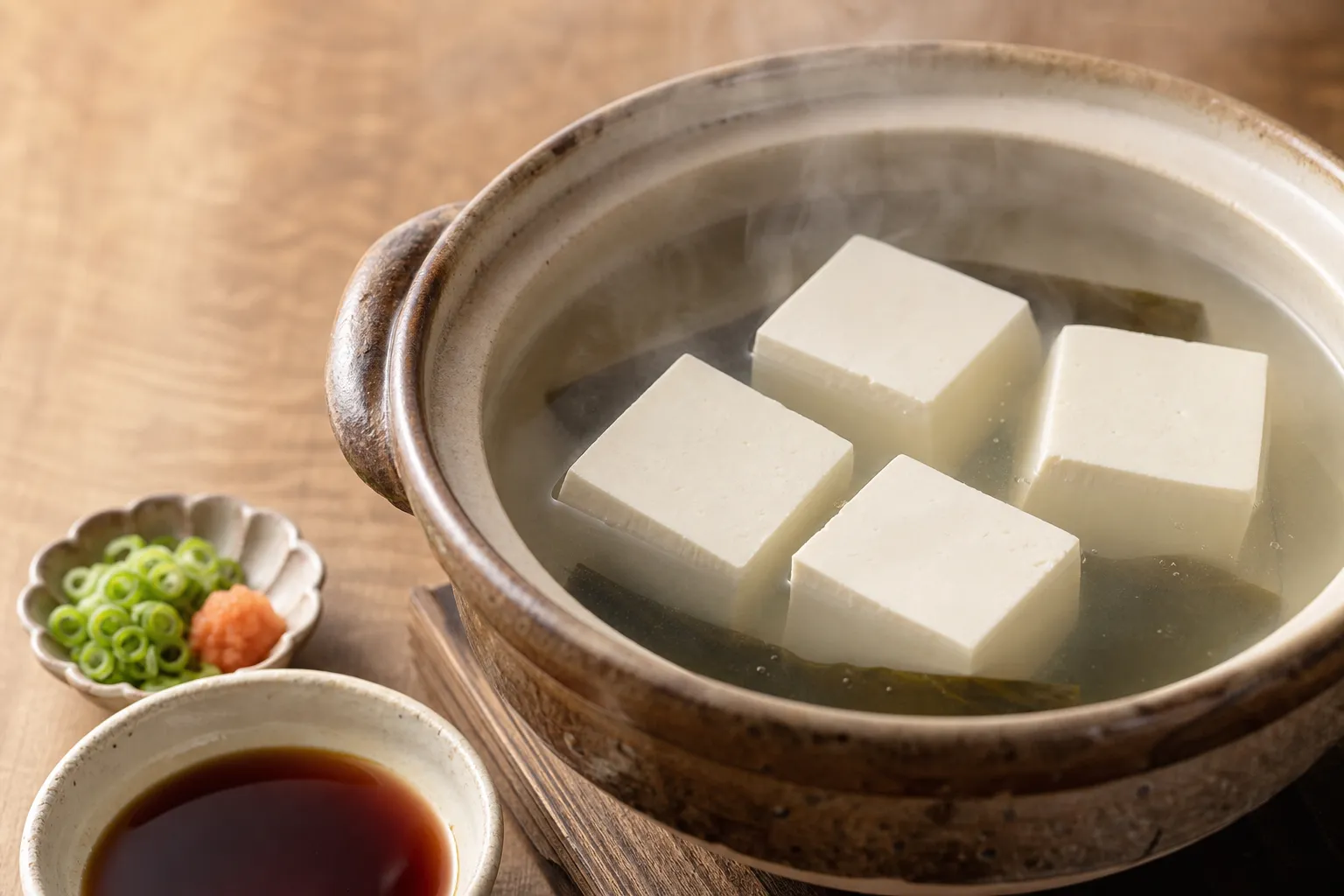
I sat in front of an earthenware pot of barely-simmering water with a few blocks of tofu floating in it, and for the first minute I honestly wondered if I'd been forgotten. No steam-billowing broth, no sizzle, no dramatic tableside flourish. Just a quiet, gentle plip of a bubble here and there. And then I lifted a piece of tofu out, dipped it in ponzu, and understood: this dish isn't quiet because nothing is happening. It's quiet because it doesn't need to shout.
Share this dish


A pot of hot water, some blocks of tofu, and somehow that's the whole meal — and somehow that's exactly the point.
🍜 Planning a food trip to Kyoto?Add this dish to my Food Trip →
 Add this dish to my Food Trip →
Yudofu is tofu, poached — that's the whole mechanism. Firm-but-soft blocks of tofu simmered gently in a light kombu (kelp) broth in a clay pot right at your table, then lifted out and dressed with a soy-citrus ponzu or a light soy dipping sauce, plus condiments like green onion, grated ginger, and shaved bonito flakes. It's Kyoto's most famous piece of shojin ryori — Buddhist temple cuisine — and it might be the most soul-settling thing I've eaten in this entire country.
A monk's meal that became Kyoto's cold-weather ritual
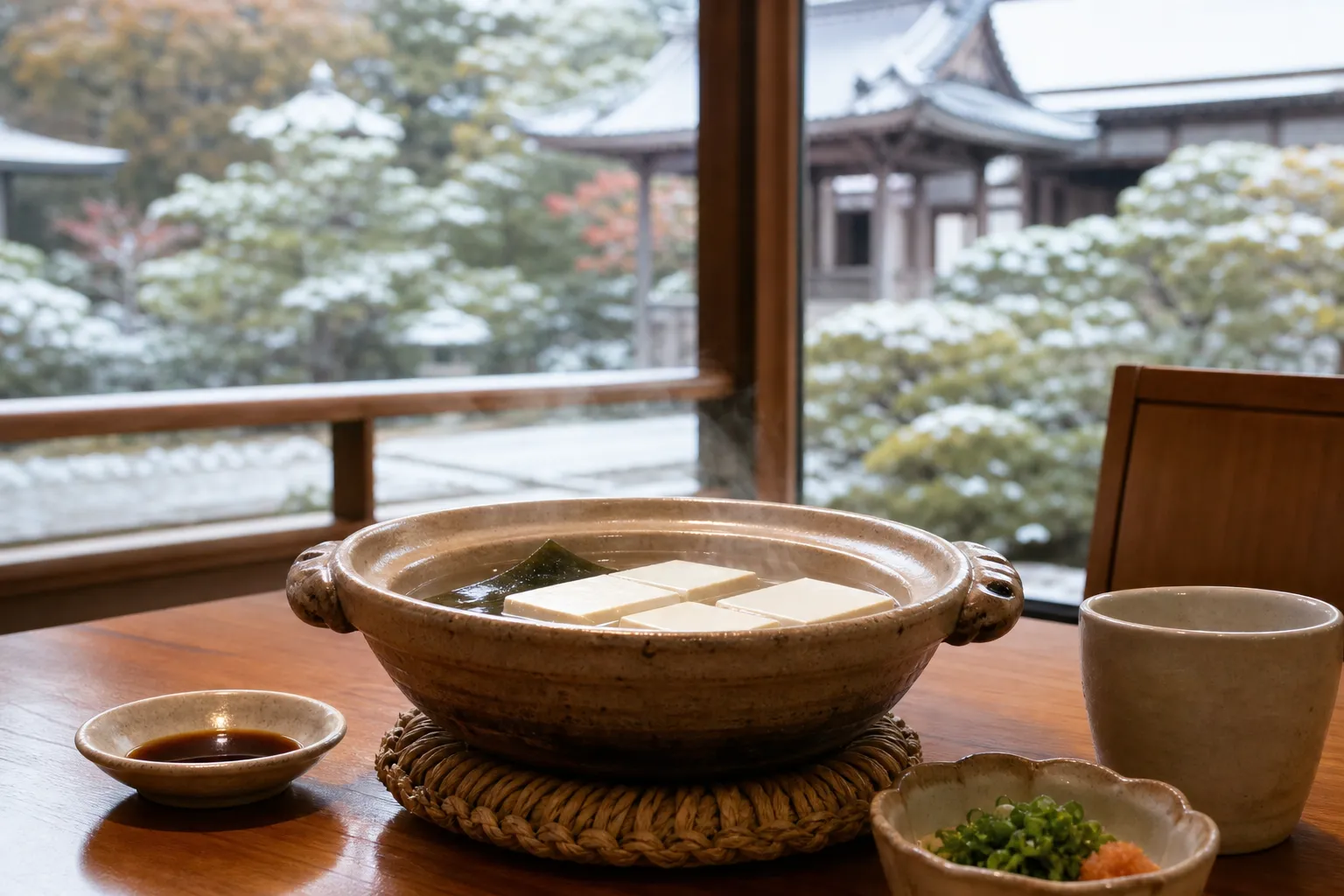
Yudofu grew up in the kitchens of Kyoto's Zen temples, where monks following shojin ryori — a meat-free, quietly disciplined style of cooking rooted in Buddhist practice — turned tofu into the centerpiece rather than the side dish. Kyoto's water has long been prized for making especially delicate, silky tofu, and the temple district around Nanzenji in particular built a whole culinary identity around it, with tofu restaurants clustered near the temple's gates for centuries.
What started as monastery food for quiet contemplation slowly became a beloved cold-weather meal for everyone in Kyoto, then a bucket-list dish for visitors. I find something quietly moving about that journey — a dish designed to be humble and unshowy became famous because it refused to try to impress anyone. It just kept being exactly, perfectly what it is.
Gentle on purpose — and that's the whole flavor
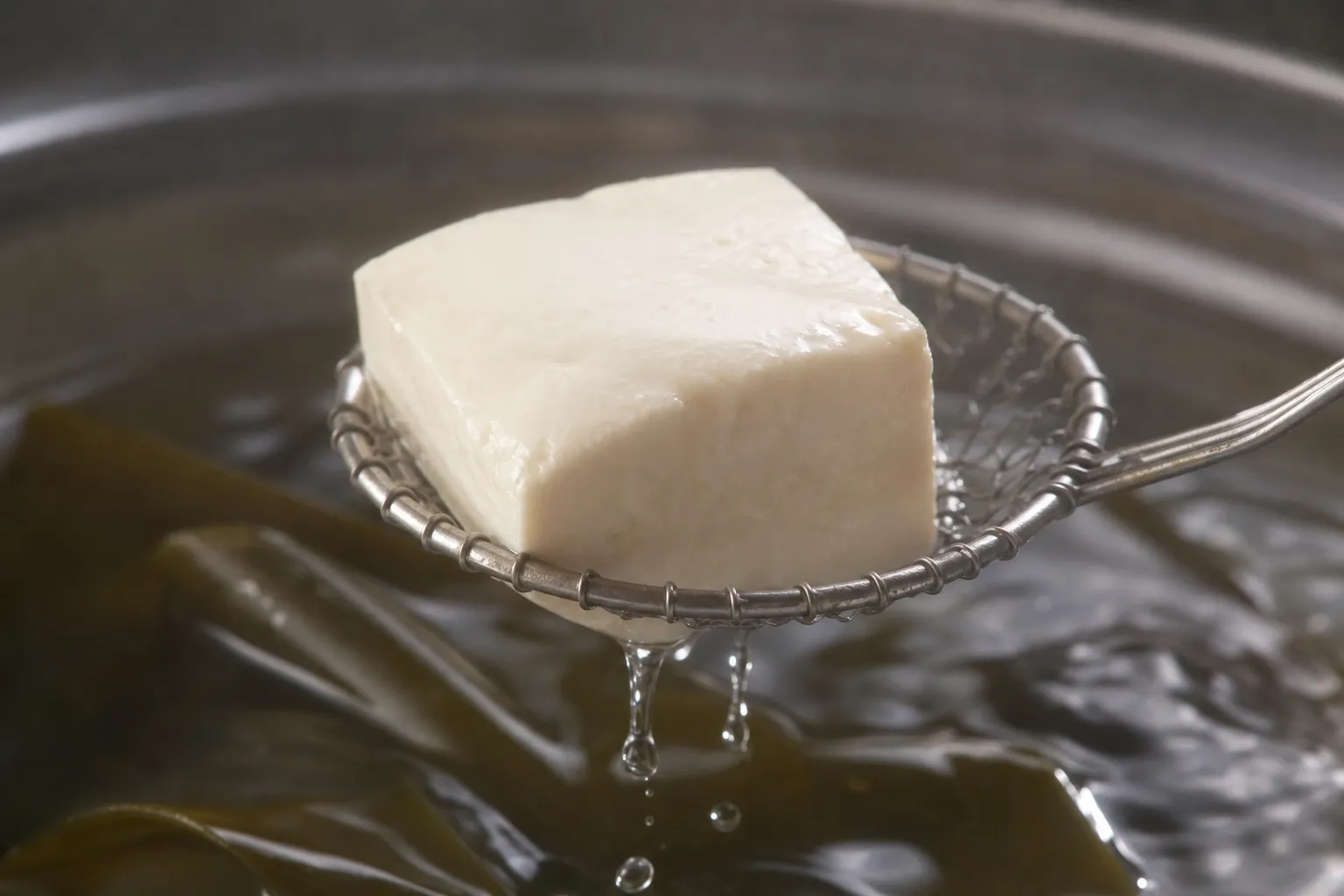
Don't come to yudofu expecting a flavor bomb — it isn't one, and that's not a flaw. The tofu itself, warmed through in kombu broth just enough to turn silky and custard-soft without falling apart, is the star; the broth barely seasons it at all. All the actual flavor happens after you lift the tofu out: a dip in ponzu (soy sauce brightened with citrus) or a light soy-based tare, a scatter of chopped scallion, a little grated ginger, maybe a flutter of katsuobushi shavings on top. Each bite is a tiny act of composition — you decide how much brightness, how much heat, how much umami to add to something that starts almost blank. I've come to think of it less as a dish and more as an invitation. I sat with that pot for nearly an hour and didn't mind one bit.
How it's made
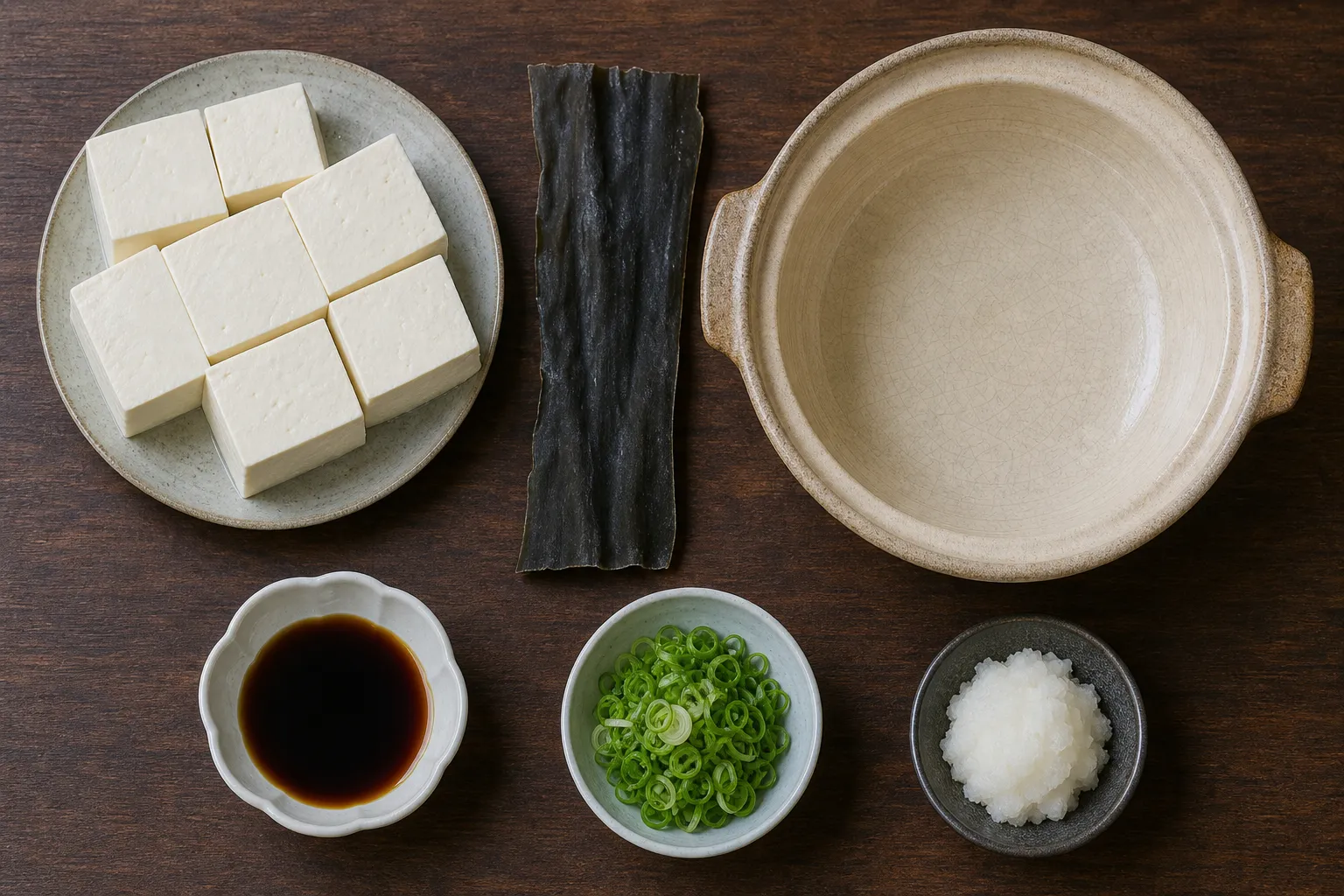
- Line a clay pot with a sheet of kombu (dried kelp) and add water
- Cut soft or silken tofu into thick blocks and lower them gently into the pot
- Warm the pot slowly at the table over a small burner — never a hard boil, just a gentle simmer
- Lift blocks out with a slotted spoon or ladle as they warm through
- Dip in ponzu or a light soy-based sauce, topped with scallion, grated ginger, and katsuobushi to taste
Before you go — slow down on purpose
Your questions, answered honestly
"Is this actually a full meal, or just a side?" — At a proper yudofu restaurant, it's usually served as a teishoku set — the tofu pot plus rice, pickles, and a few small seasonal side dishes — so yes, it's a complete, satisfying meal. As a standalone dish elsewhere, it can be lighter, more like a starter.
"Why does it taste so plain? Am I doing something wrong?" — Nothing's wrong. The broth is meant to be nearly flavorless — it's there to warm the tofu, not season it. All the flavor comes from your own dip and condiments, so don't be shy about loading up the ponzu.
"Do I eat straight from the pot or wait for it to be served?" — Usually you (or the server) lift pieces out of the simmering pot as you go, a few at a time, rather than ladling the whole thing into a bowl at once. It's meant to be eaten hot, piece by piece, over the course of the meal.
"Is this a vegetarian dish?" — The tofu and kombu broth are, but katsuobushi (bonito flakes) often used as a garnish or in the dipping sauce is fish-derived — ask for it without if that matters to you.
"Why is this the thing to eat in Kyoto specifically?" — Kyoto's soft, mineral-light water is famous for making unusually delicate tofu, and the city's deep temple culture (especially Zen Buddhism) elevated tofu cooking into an art form over centuries. It's less a snack here and more a small act of quiet ceremony.
What the staff will ask you
| You'll hear | Romaji | Meaning | Just say |
|---|---|---|---|
| お豆腐は絹ごしと木綿、どちらに? | Otōfu wa kinugoshi to momen, dochira ni? | "Silken or firm tofu?" | Kinugoshi de (silken) / Momen de (firm) |
| ポン酢とお醤油、どちらにしますか? | Ponzu to oshōyu, dochira ni shimasu ka? | "Ponzu or soy sauce?" | Ponzu de (ponzu) |
| お薬味はお使いになりますか? | Oyakumi wa otsukai ni narimasu ka? | "Will you use the condiments (scallion, ginger)?" | Hai, onegaishimasu (yes please) |
| 定食になさいますか? | Teishoku ni nasaimasu ka? | "Would you like the set meal?" | Hai, onegaishimasu (yes please) |
To order, just say "Yudofu teishoku kudasai" (湯豆腐定食ください) — "The yudofu set meal, please."
Where to eat it
- Nanzenji area, Kyoto — the spiritual home of yudofu, with tofu restaurants clustered around the temple's approach, many with centuries of history serving this exact dish.
- Okutan (奥丹) — a long-established Nanzenji-area yudofu specialist, often cited as one of the classic places to try it.
- Arashiyama, Kyoto — another temple district with well-known tofu restaurants, good if you're combining yudofu with a visit to the bamboo grove.
Many of these restaurants sit right at temple approaches and can be quite busy around lunch during peak travel seasons, so an early visit helps — hours and availability change, so check before you go.
Soul Score
Local Roots5/5
First-Timer Friendly4/5
Adventure Level3/5
Comfort Level5/5
Travel Worthy4/5
These scores are one obsessed eater's gut feeling — not a verdict. A low number isn't a bad mark, just a different kind of adventure.
Know someone planning Japan?
← All Articles
Local Food · Kyoto
Still hungry?
Eat more from Kyoto
Local FoodKyoto, Kyoto
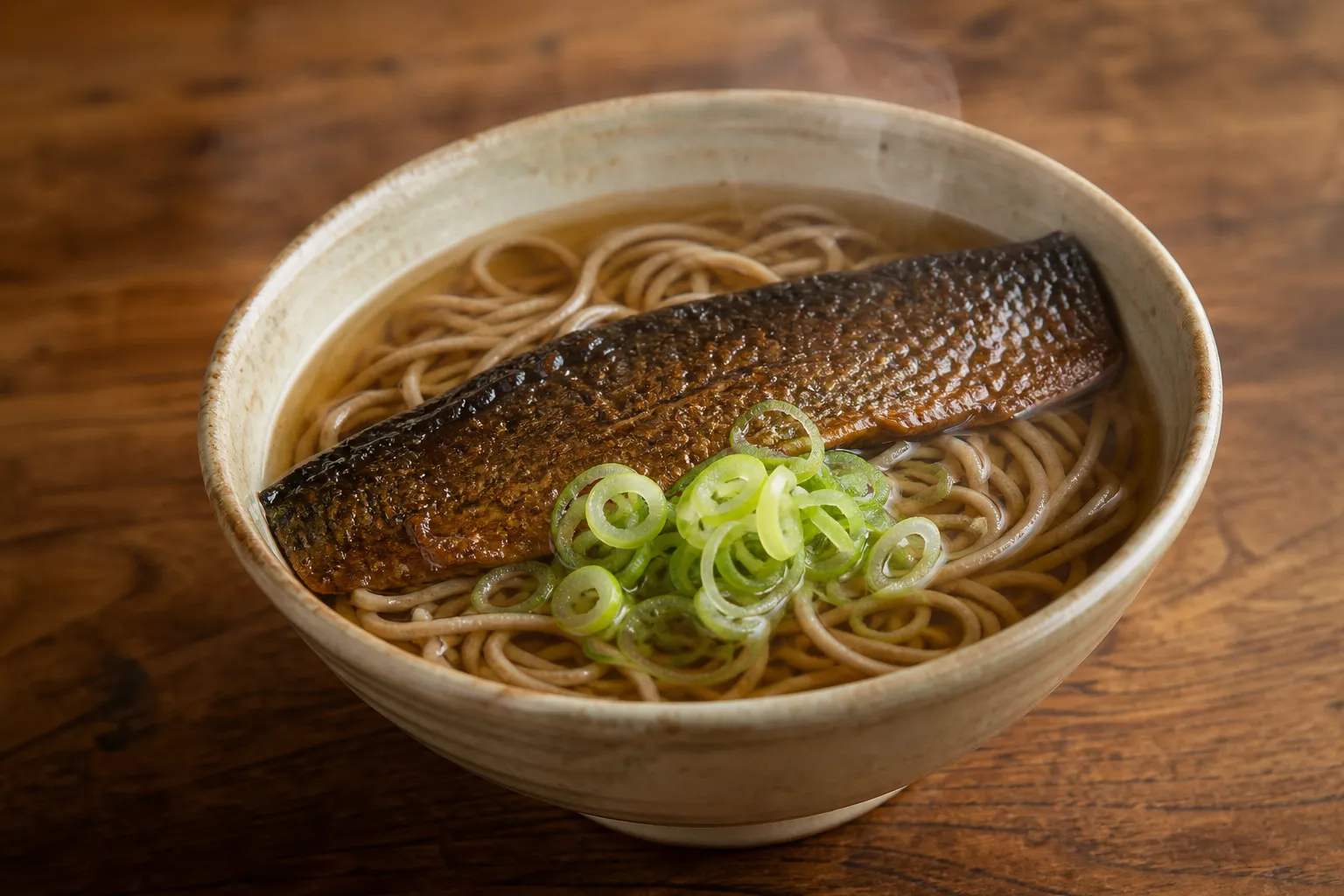
Nishin Soba (にしんそば)
A whole simmered herring, dark and glossy and sweet, sitting on top of hot soba in a clear Kyoto broth — a landlocked city's love letter to preserved fish, and one of the great comfort bowls of Japan.
July 12, 2026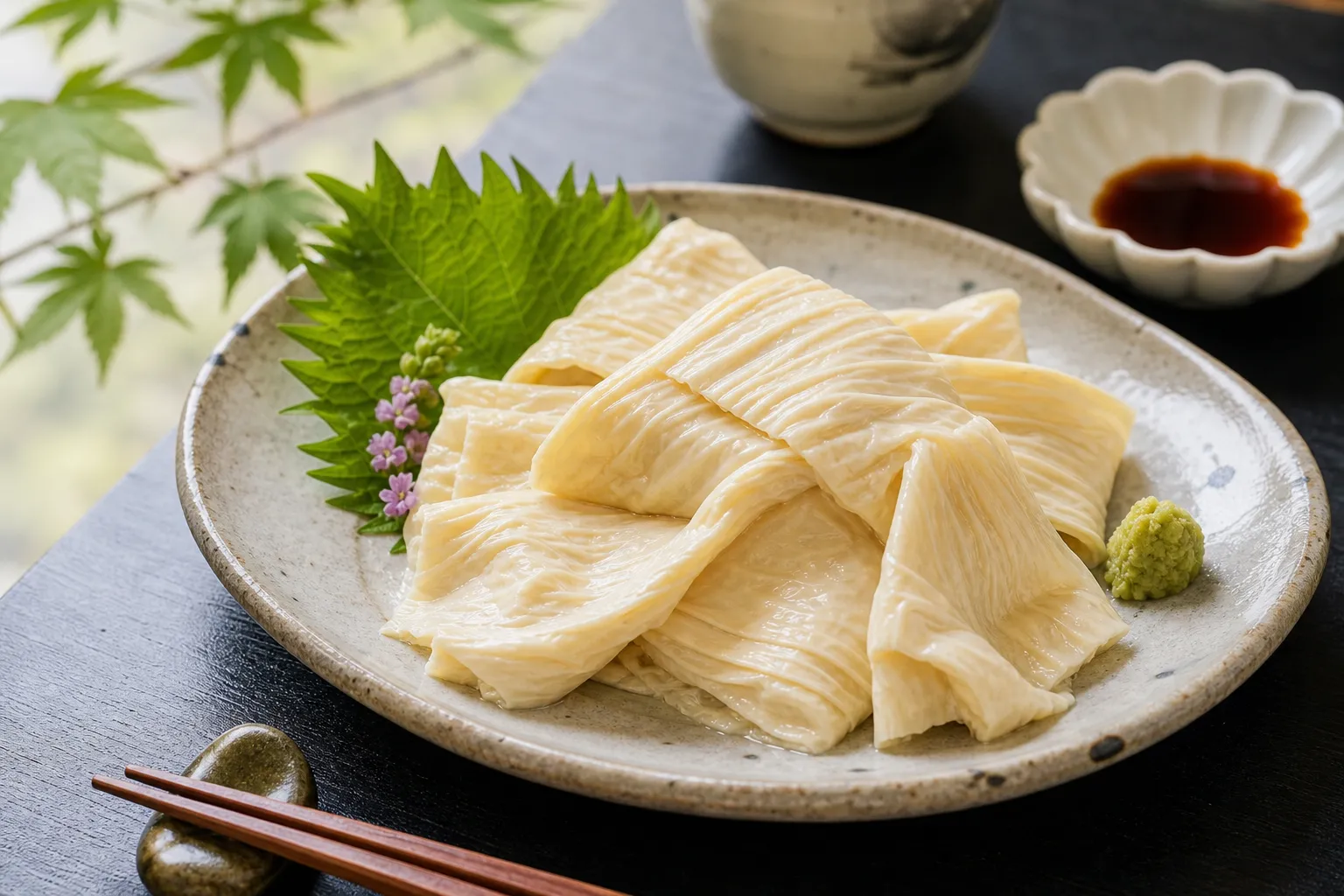
Local FoodKyoto
Yuba (湯葉)
The delicate skin that forms on warm soy milk, lifted off in silky sheets and eaten with barely anything on it — Kyoto's quietest luxury, a food that tastes like patience itself.
July 10, 2026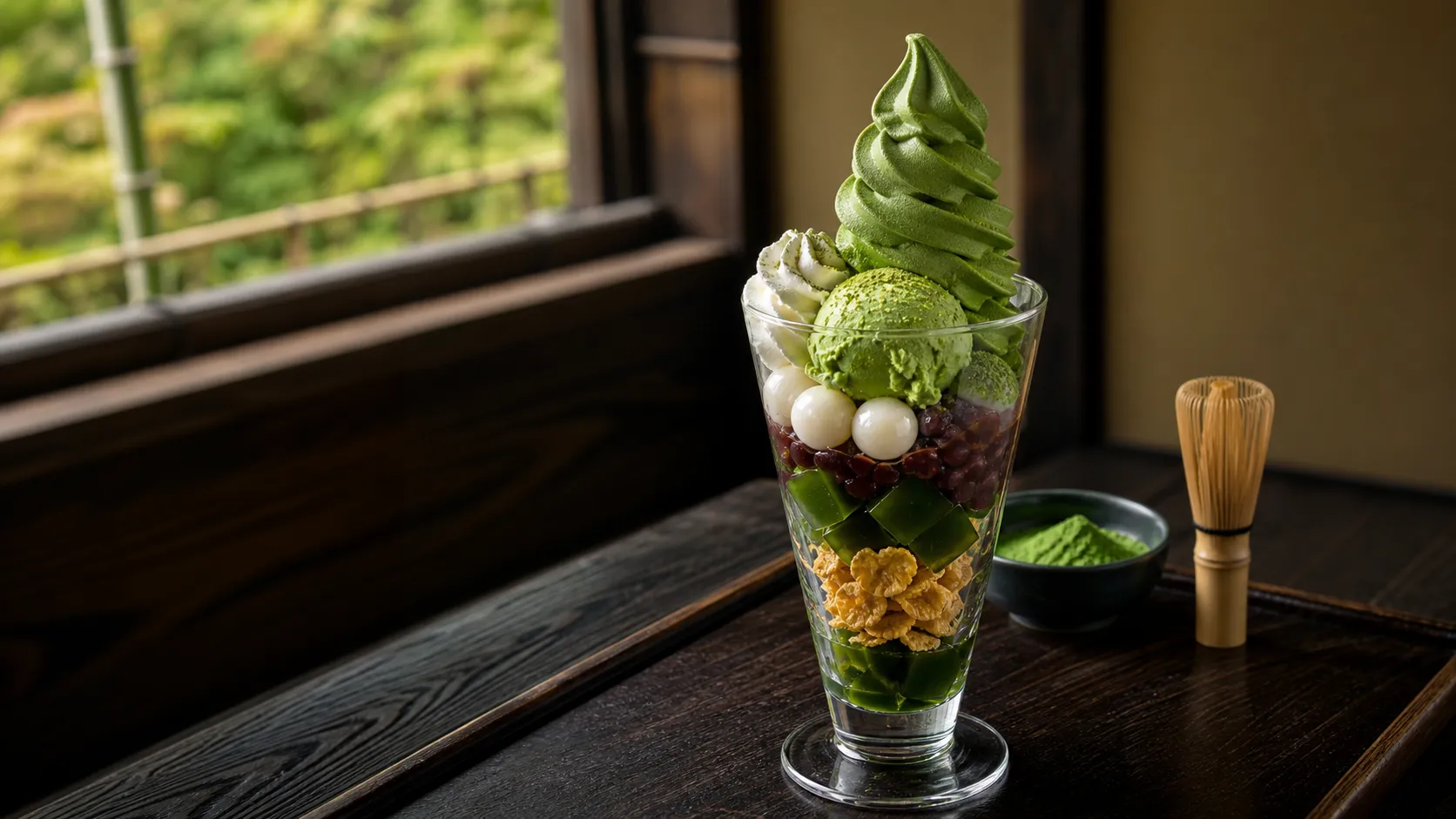
Sweets & SnacksKyoto / Nationwide
Matcha Parfait (抹茶パフェ)
A towering glass of matcha ice cream, soft serve, anko, shiratama mochi and crunchy cornflakes — Japan's most theatrical dessert, and a one-way ticket to matcha obsession.
June 20, 2026