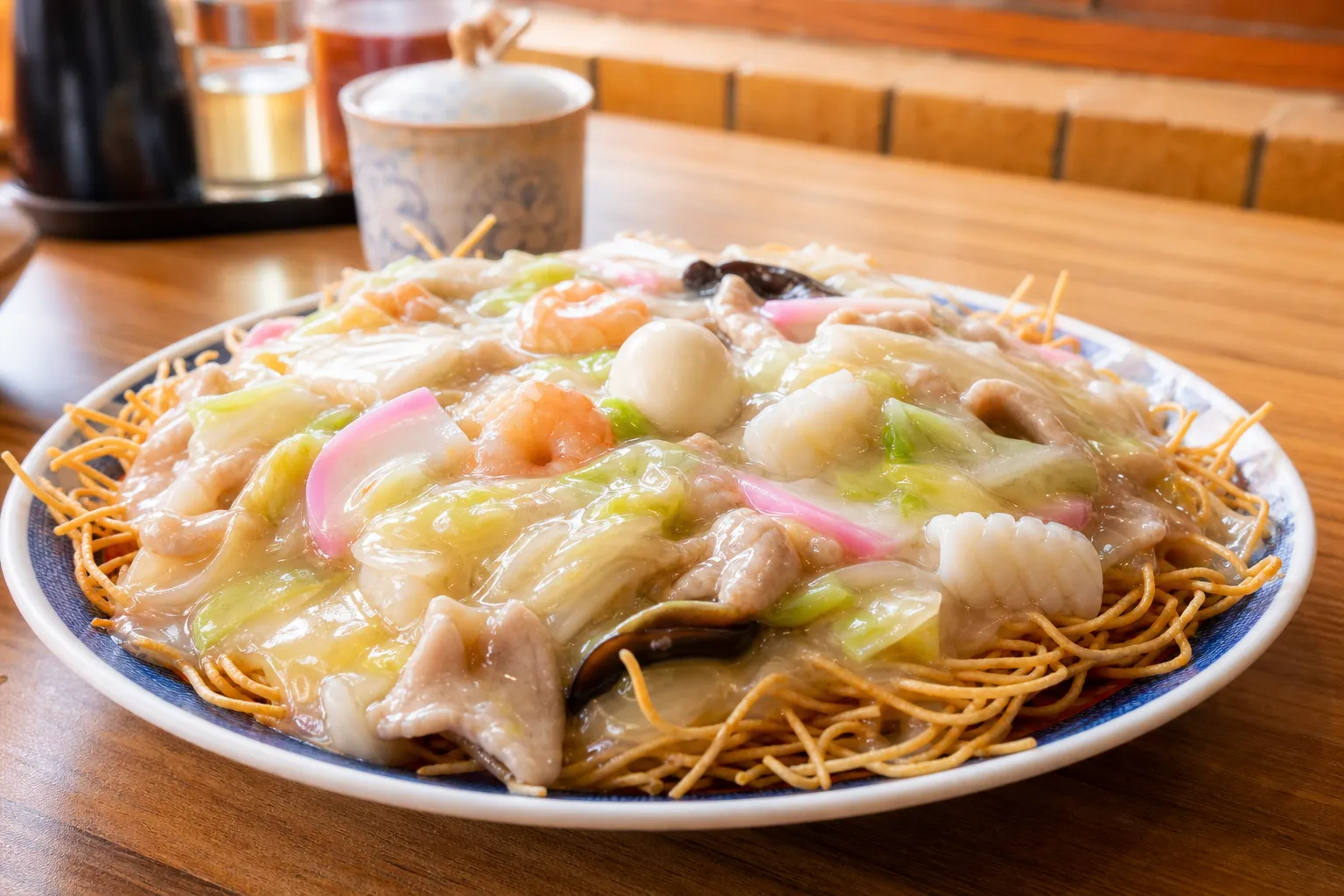
Crack. That's the sound the noodles make before the sauce even touches your tongue — a dry, brittle snap, like biting into a fried cracker that used to dream of being pasta. Then the glossy stir-fry underneath hits, warm and savory and soaking into the shards in real time, and the noodle goes from crunchy to chewy to gone before you've finished the bite. I have never eaten a noodle dish that changes texture while it's in my mouth. It rearranged something in my brain.
Share this dish


A mountain of noodles fried until they shatter like glass, then drowned in a sauce so glossy it looks lacquered. I attacked it with chopsticks and lost the first round.
🍜 Planning a food trip to Nagasaki?Add this dish to my Food Trip →
 Add this dish to my Food Trip →
This is sara udon (皿うどん) — literally "plate noodles" — Nagasaki's other great noodle export, standing in the shadow of its more famous sibling champon but honestly doing something more interesting. Where champon swims in soup, sara udon skips the broth entirely: thin noodles are deep-fried until crackling-crisp, piled onto a plate, then buried under a thick, glossy stir-fried topping of pork, seafood, and vegetables bound in a glossy ankake-style sauce. It's not soup. It's not quite fried noodles either. It's the noodle equivalent of a drum solo — showing off because it can.
Where Nagasaki's Chinatown noodles split in two
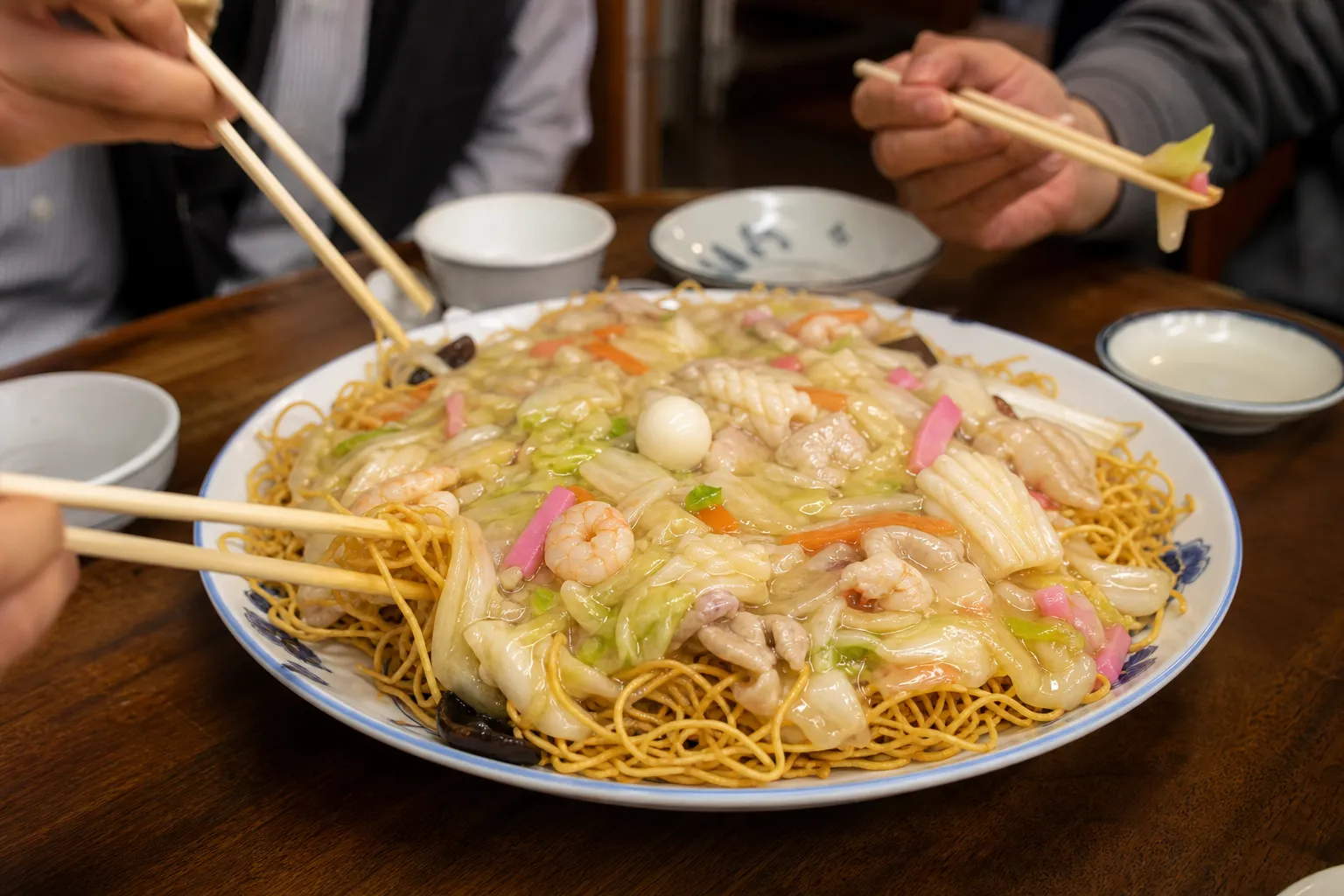
Both champon and sara udon trace back to the same kitchen story: Chinese immigrants in late-1800s Nagasaki, feeding hungry students cheaply and generously, folded regional Chinese cooking into local ingredients and invented a whole new food category almost by accident. Champon came first — everything simmered together in one big flavorful soup. Sara udon showed up as the practical sibling: same stir-fried topping, but ladled over noodles fried crisp enough to survive the trip without turning to mush, perfect for takeout and delivery runs across the port town.
I find that detail weirdly moving — this dish exists because someone needed a version of dinner that could survive a bicycle ride. Four generations later, tourists are still crunching through it in the same Chinatown alleys. Nagasaki people will argue with genuine passion about which restaurant's noodles fry up crispest, and I now understand why. I picked a side by the second plate. I will not be sharing which one.
The crunch-to-chew engineering that makes it work
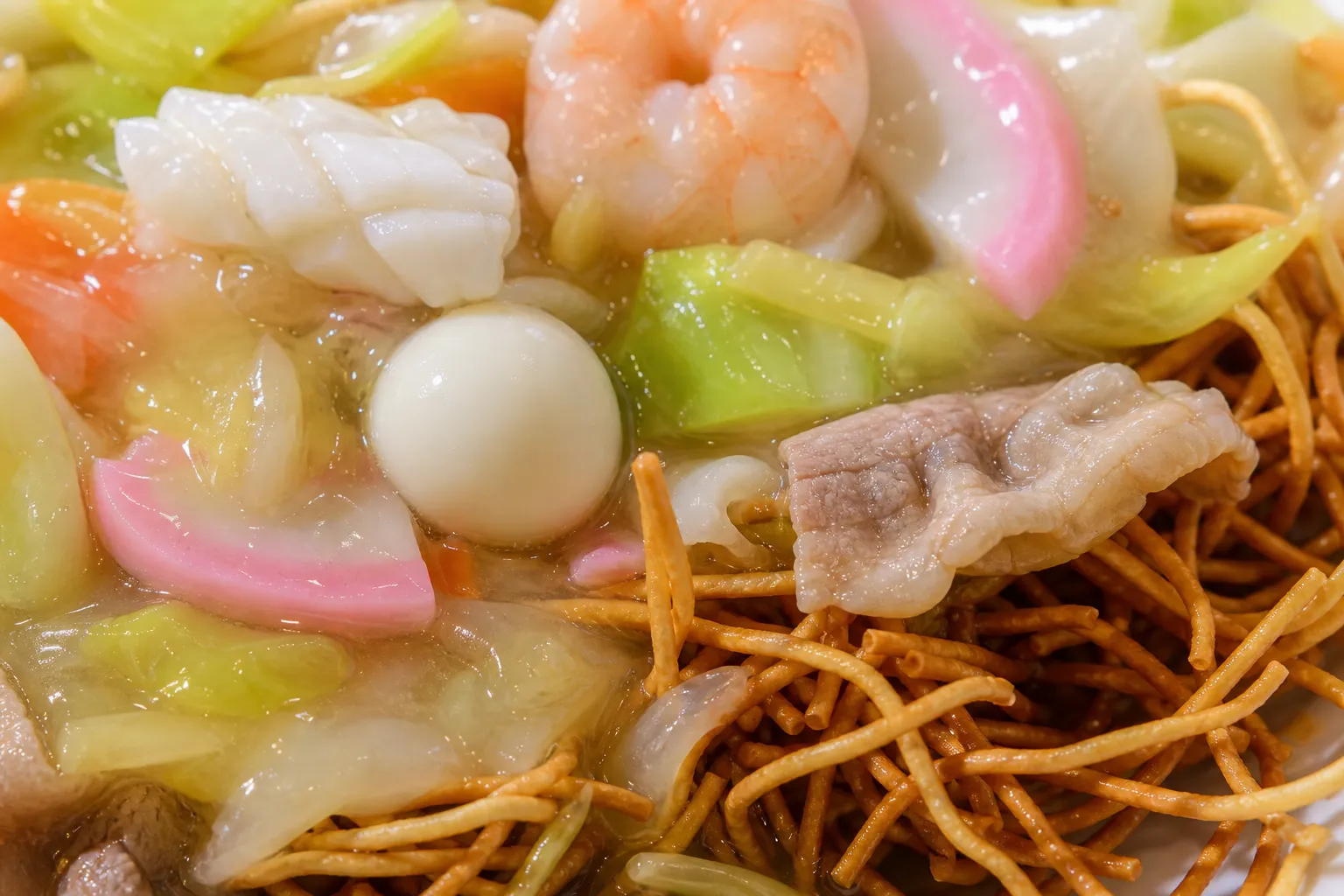
The genius is contrast, stacked on contrast. The noodles are pan-fried into a crisp, almost cracker-like nest — thin strands, deep-fried hard, holding their crunch even under a hot sauce. The topping is the opposite: soft shrimp, tender pork, plump squid, cabbage gone silky, all suspended in a thick, starch-glossed sauce that clings to everything instead of pooling at the bottom of the plate.
Pour that sauce over crispy noodles and you get a race against time — the noodles on top stay crunchy, the noodles that have been sitting in sauce for two minutes go soft and slurpy, and depending on where in the plate your chopsticks land, you get a completely different bite. Some people mix it fast to go all-soft; I did not. I ate the crunchy rim first like dessert-before-dinner and saved the soaked center for last. No regrets.
How it's made
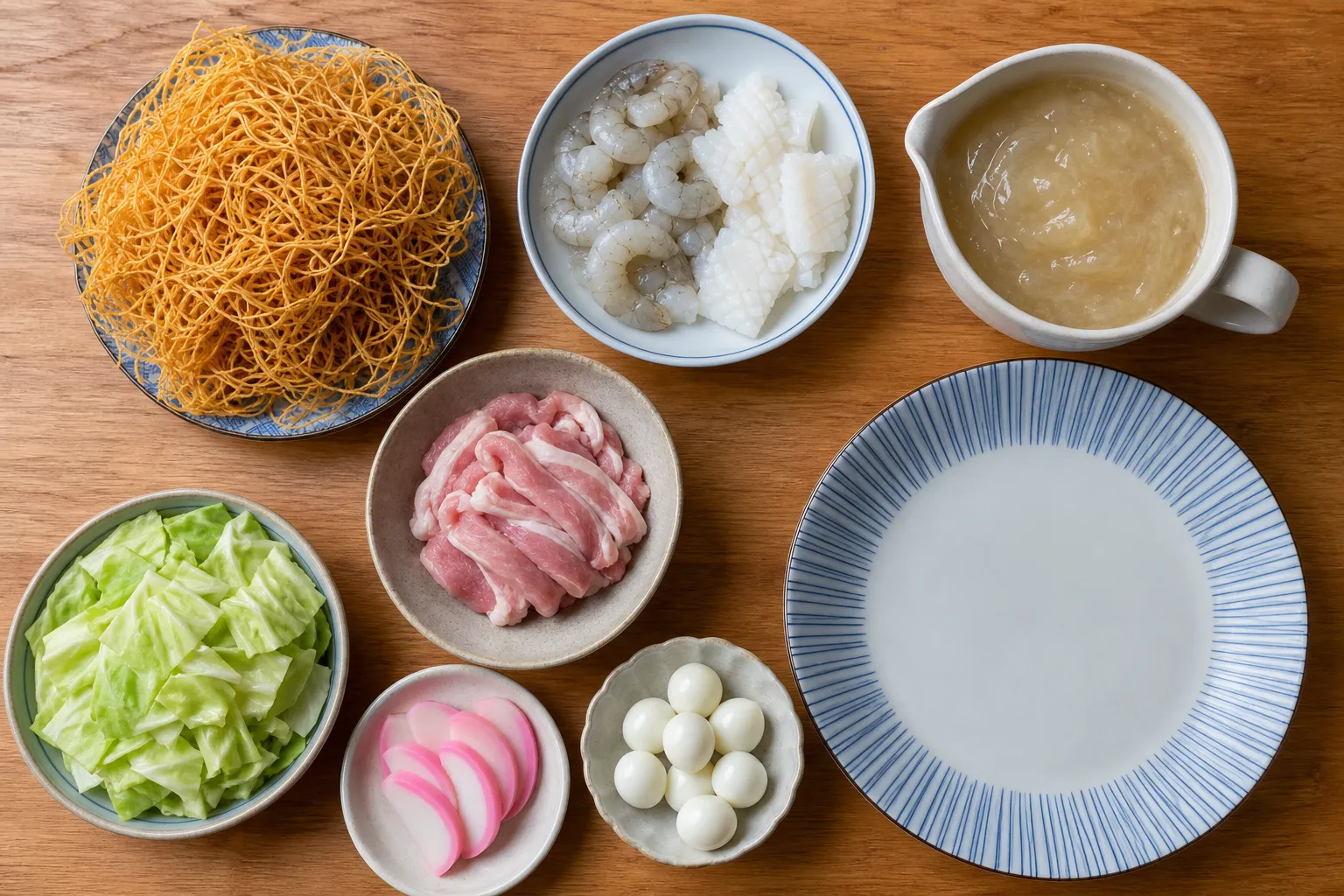
- Boil thin wheat noodles, then deep-fry them until crisp and golden, forming a crackly nest on a plate
- Stir-fry pork, shrimp, squid, and vegetables (cabbage, carrot, bean sprouts) in a hot wok
- Add pork or chicken stock and let everything simmer together briefly
- Thicken the mixture with a potato-starch slurry until it turns glossy and clings to a spoon
- Ladle the hot, thick topping generously over the fried noodles
- Serve immediately, before the noodles fully surrender their crunch
Before you go — for the noodle-curious
Your questions, answered honestly
"Is this the same as champon?" — No, and don't say that out loud in Nagasaki. Champon is a soupy noodle dish; sara udon uses the same-style topping but over deep-fried, crispy noodles with no broth. Related dishes, very different bite.
"Do I mix it up or eat around the plate?" — Either works. Mixing gives you a softer, more uniform noodle; eating the crispy edges first and the sauce-soaked center last gives you two textures in one meal. I'm firmly in the second camp.
"Is there a thick-noodle version too?" — Yes — some shops offer futomen sara udon with thicker, softer fried noodles instead of the classic thin, crackly kind. Ask if you want the other texture.
"Can I get it without seafood?" — Usually yes if you ask, though the seafood-pork combo is the classic and most restaurants build the sauce around it by default.
What the staff will ask you
| You'll hear | Romaji | Meaning | Just say |
|---|---|---|---|
| 太麺と細麺、どちらにしますか? | Futomen to hosomen, dochira ni shimasu ka? | "Thick noodles or thin noodles?" | Hosomen de (thin, classic crispy) / Futomen de (thick, softer) |
| お味変えは酢とソースをどうぞ | Oaji-gae wa su to sōsu wo dōzo | "Vinegar and Worcester sauce are there if you want to change the flavor" | Arigatō (thanks) — try a splash, it's traditional |
| 大盛りにしますか? | Ōmori ni shimasu ka? | "Want the large size?" | Futsū de daijōbu desu (regular is fine) |
To order, just say "Sara udon kudasai" (皿うどんください) — "Sara udon, please."
Where to eat it
- Nagasaki Shinchi Chinatown — the historic birthplace of both champon and sara udon; several long-running specialist restaurants sit within a few blocks of each other.
- Shikairo — one of the most famous champon/sara udon houses in Nagasaki, often credited as an originator of the dish, with a dining room overlooking the harbor.
- Kagetsu and other old Nagasaki restaurants — many historic Nagasaki eateries that serve shippoku cuisine also carry sara udon on the menu.
- Check before you go — hours and specific dishes change restaurant to restaurant; confirm current hours before making a special trip.
Soul Score
Local Roots4/5
First-Timer Friendly4/5
Adventure Level3/5
Comfort Level5/5
Travel Worthy4/5
These scores are one obsessed eater's gut feeling — not a verdict. A low number isn't a bad mark, just a different kind of adventure.
Know someone planning Japan?
← All Articles
Local Food · Nagasaki
Still hungry?
Eat more from Nagasaki
Local FoodSasebo, Nagasaki
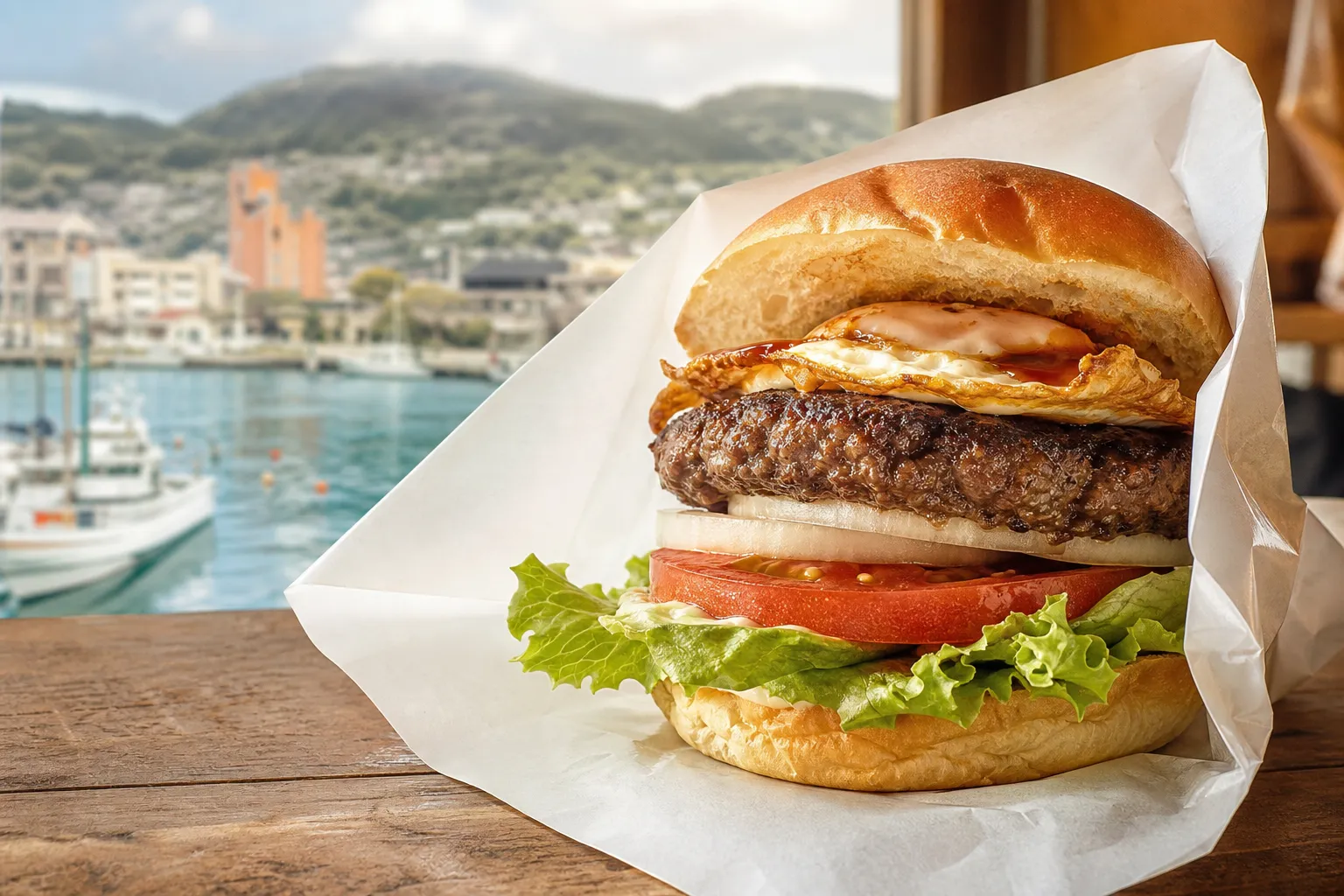
Sasebo Burger (佐世保バーガー)
It arrives the size of your face, wrapped in paper like a gift you didn't earn, and you will need both hands and possibly a moment alone with it.
August 2, 2026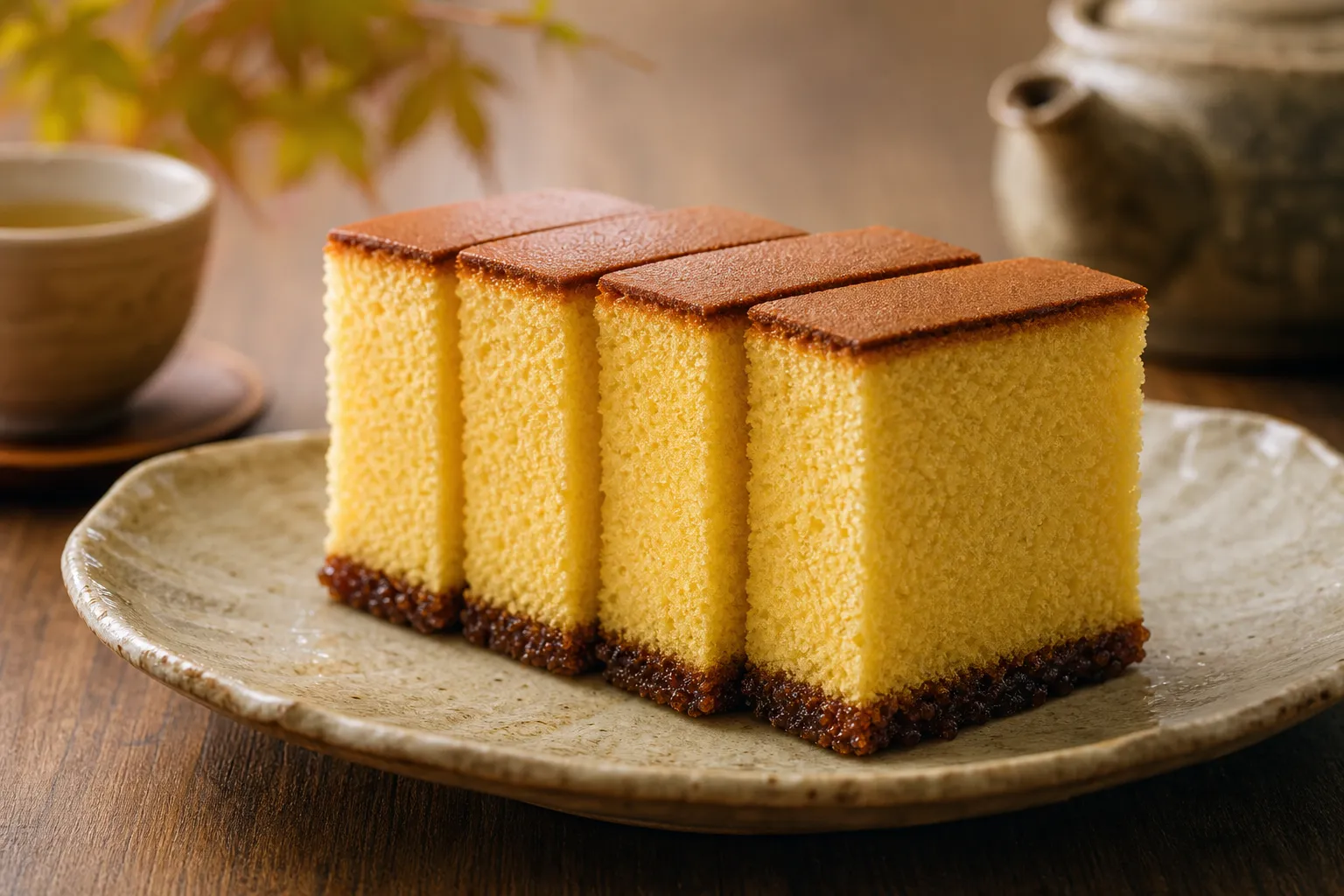
Local FoodNagasaki
Castella (カステラ)
The moment my teeth hit the bottom crust I felt those sugar crystals crunch — and I sat there in the Nagasaki shop grinning like I'd found treasure, because in a way I had.
July 5, 2026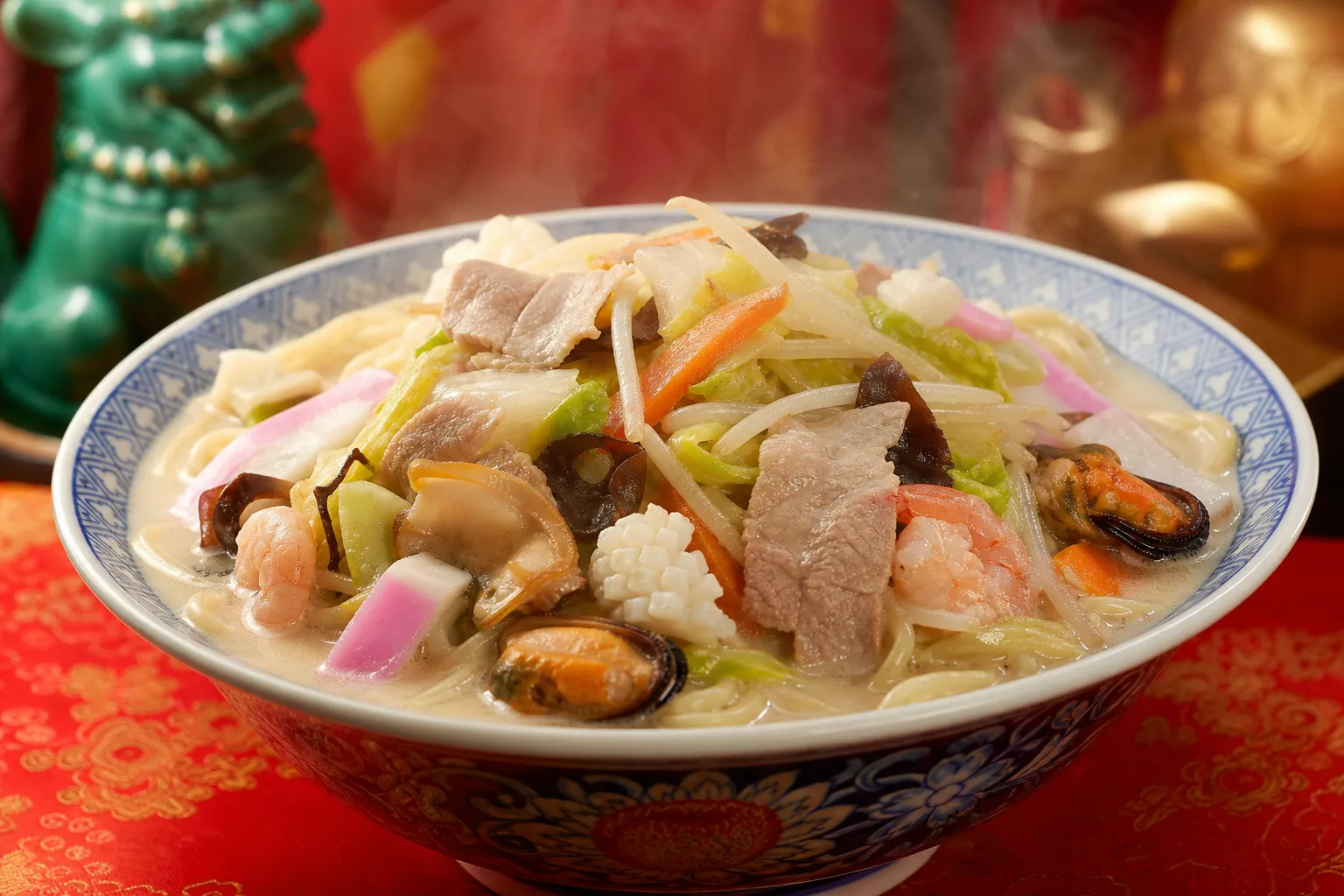
Local FoodNagasaki, Nagasaki
Nagasaki Champon (長崎ちゃんぽん)
Thick noodles in a milky pork broth buried under a stir-fried mountain of pork, squid, shrimp, cabbage, and fish cake — all cooked in one pan. Invented to feed broke students, perfected into one of Japan's great bowls.
June 26, 2026