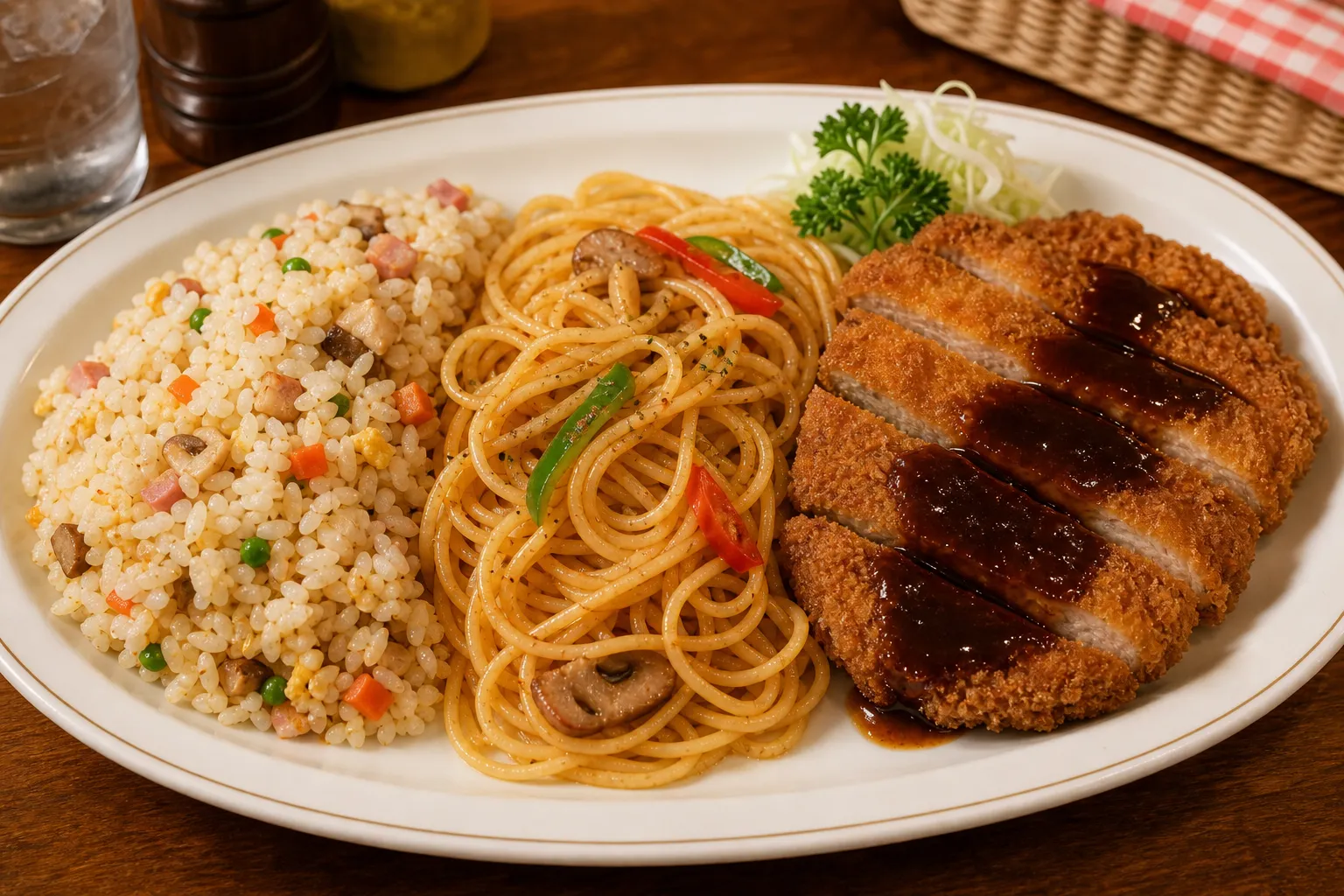
You ordered one thing. Three meals arrived.
Share this dish


A tonkatsu, a pile of pilaf, and a heap of spaghetti walk onto one plate. This is not a joke. This is Nagasaki's proudest yōshoku creation, and it is magnificent.
🍜 Planning a food trip to Nagasaki?Add this dish to my Food Trip →
 Add this dish to my Food Trip →
There's a tonkatsu. It's taking up a third of the plate, breaded and fried to deep golden, sauce already poured. Next to it: a mound of pilaf — rice cooked with butter and vegetables, slightly fragrant. And next to that, filling the remaining third: spaghetti. Seasoned. Present. On the same plate. As a side dish. As part of the meal. As if this is normal.
It is normal. In Nagasaki, this is completely, unremarkably normal.
Toruko raisu (トルコライス, "Turkish rice") is Nagasaki's defining yōshoku dish — Western-influenced Japanese cuisine taken to its most joyfully maximalist conclusion. All three components arrive together on one large oval plate, because the Nagasaki interpretation of a proper meal is "yes, and also that other thing, and that thing too." You eat them separately, you eat them together, you drag the spaghetti through the tonkatsu sauce, you mix the pilaf into whatever's happening on the plate. There are no rules. There is only more.
How a port city invented its own meal
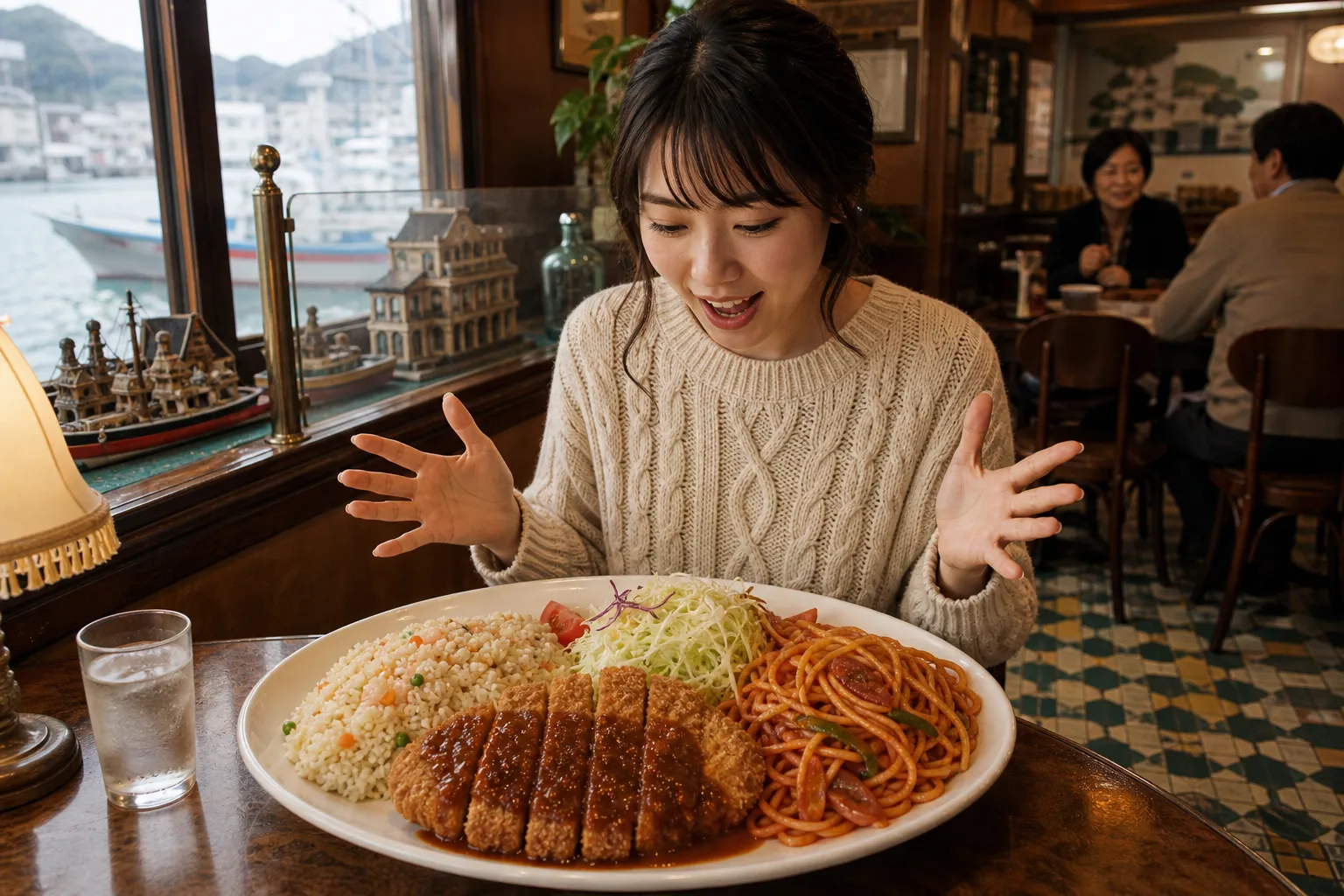
Nagasaki has been cosmopolitan longer than almost anywhere else in Japan. For most of the Edo period, it was the only city legally allowed to trade with the outside world — Chinese merchants, Dutch traders, Portuguese missionaries left traces in the food, the architecture, and the general cultural attitude. Champon (noodle soup with mixed ingredients), sara udon (crispy noodles), castella (sponge cake from Portugal) — Nagasaki's food has always been a negotiation between Japan and everywhere else.
Toruko raisu emerged from this tradition sometime in the postwar Showa era. The name's origin is cheerfully debated. One theory: Turkey sits geographically between Europe and Asia, making "Turkish rice" a metaphor for the dish that blends Eastern pilaf and Western pasta and Japanese tonkatsu. Another theory: the three components represent three nations — Japan, Italy, France — and some creative naming consultant in 1950 thought "Turkey" covered the middle ground. A third theory: the original dish was ordered by a Turkish customer at a Nagasaki café and the name stuck. Nobody knows. Nobody particularly cares. The dish is remarkable regardless of why it's called what it's called.
Why three-things-on-one-plate works
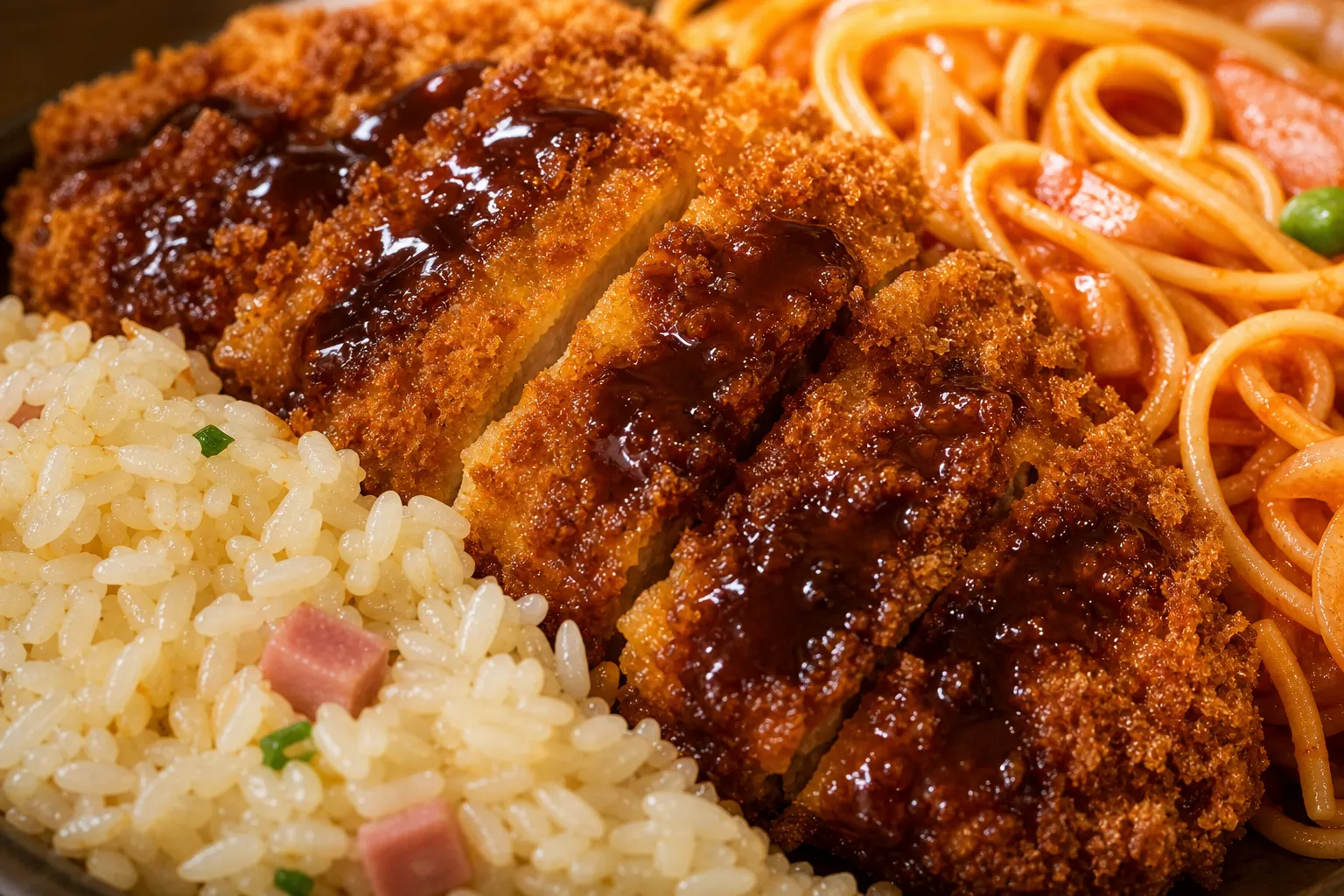
The genius of toruko raisu — if you're willing to call it that, and I am — is that the three components aren't competing. They're complementing.
The tonkatsu is the anchor: substantial, salty, with the richness of good fried pork. The sauce (Worcestershire-based, dark and slightly sweet) grounds everything else.
The pilaf provides comfort and texture contrast — softer than the pork, fragrant with butter, a bridge between the Japanese and Western elements on the plate. It absorbs the tonkatsu sauce beautifully if you let it drift over.
The spaghetti is the surprise that works. It's not elaborate — usually butter or a light tomato sauce — but it adds lightness and a different starch texture that breaks up the richness of the pork. You eat it and think: yes, this needs to be here.
The whole plate is large. Completing it is a mild achievement. Finishing it while planning to walk the port afterward is optimistic. This is Nagasaki's version of dinner.
How it's made
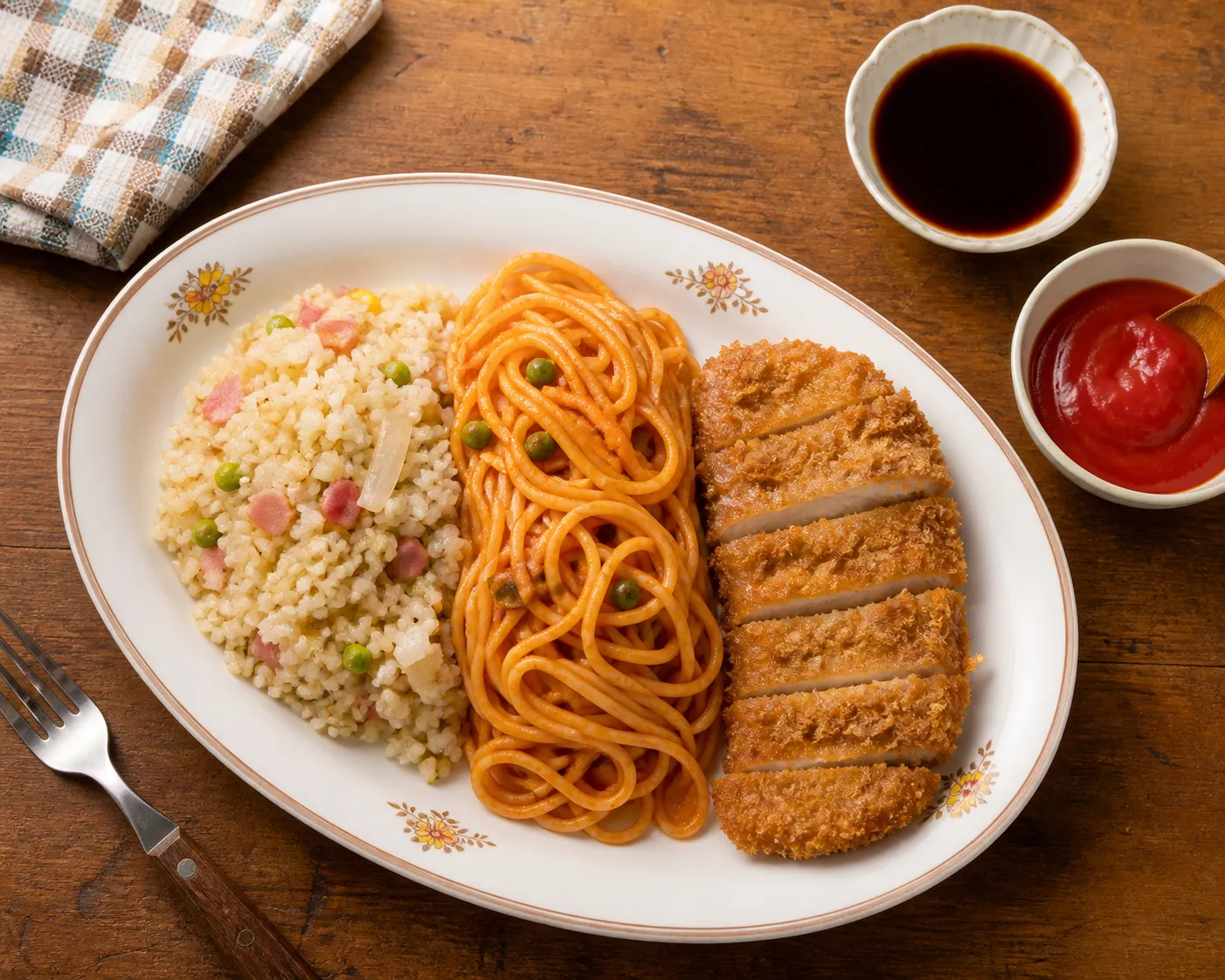
- Cook pilaf: sauté rice with butter, aromatics, and vegetables; steam until done
- Boil spaghetti; finish with butter or a simple tomato-based sauce
- Bread and fry pork cutlet (tonkatsu) until deep golden; let rest briefly
- Plate all three on one large oval plate — pilaf on one side, spaghetti in the center, tonkatsu on the other side
- Pour tonkatsu sauce over the pork; serve immediately
Before you go — commit to the plate
Your questions, answered honestly
"What does 'Turkish' mean here?" — Nothing, really. The name's origin is debated and no consensus exists. Don't think about Turkey; think about one plate, three things, Nagasaki.
"Which component should I eat first?" — Tonkatsu while it's hot and crispy. Then alternate. Then mix as you see fit. There's no wrong approach.
"Is it enough food?" — It is a lot of food. A regular toruko raisu is a full meal for most people. Some shops offer smaller sizes; ask if you're uncertain.
"Can I find this outside Nagasaki?" — Rarely. Toruko raisu is intensely local to Nagasaki — it's on almost every yōshoku menu in the city and almost invisible outside it. This is a strong argument for going to Nagasaki.
"What's yōshoku?" — Western-influenced Japanese cuisine developed from the Meiji era onward — dishes like omurice, hayashi rice, hamburger steak, curry rice. Toruko raisu is yōshoku taken to its fullest expression.
What the staff will ask you
| You'll hear | Romaji | Meaning | Just say |
|---|---|---|---|
| ソースはかけてよろしいですか? | Sōsu wa kakete yoroshii desu ka? | "Shall I put sauce on?" | Hai, onegaishimasu |
| サイズはどうしますか? | Saizu wa dō shimasu ka? | "What size?" | Futsū de onegaishimasu (regular) |
| パスタの種類はどうしますか? | Pasuta no shurui wa dō shimasu ka? | "Which pasta sauce?" | Omakase de onegaishimasu (chef's choice) |
To order, just say "Toruko raisu kudasai" (トルコライスください) — "Toruko raisu, please."
Where to eat it
- Tsuruchan (ツル茶ん) — Nagasaki's oldest Western-style café, claimed to have originated toruko raisu. Historic, atmospheric, a pilgrimage for food history.
- Yōshoku restaurants throughout Nagasaki — toruko raisu appears on almost every Western-style restaurant menu in the city. Walk the central shopping area and you'll find it everywhere.
- Dejima Wharf area — the historic trading post neighborhood has several restaurants serving it, and the setting (waterfront, Dutch-influenced architecture) matches the dish's international spirit perfectly.
Soul Score
Local Roots5/5
First-Timer Friendly4/5
Adventure Level4/5
Comfort Level5/5
Travel Worthy5/5
These scores are one obsessed eater's gut feeling — not a verdict. A low number isn't a bad mark, just a different kind of adventure.
Know someone planning Japan?
← All Articles
Local Food · Nagasaki
Still hungry?
Eat more from Nagasaki
Local FoodSasebo, Nagasaki
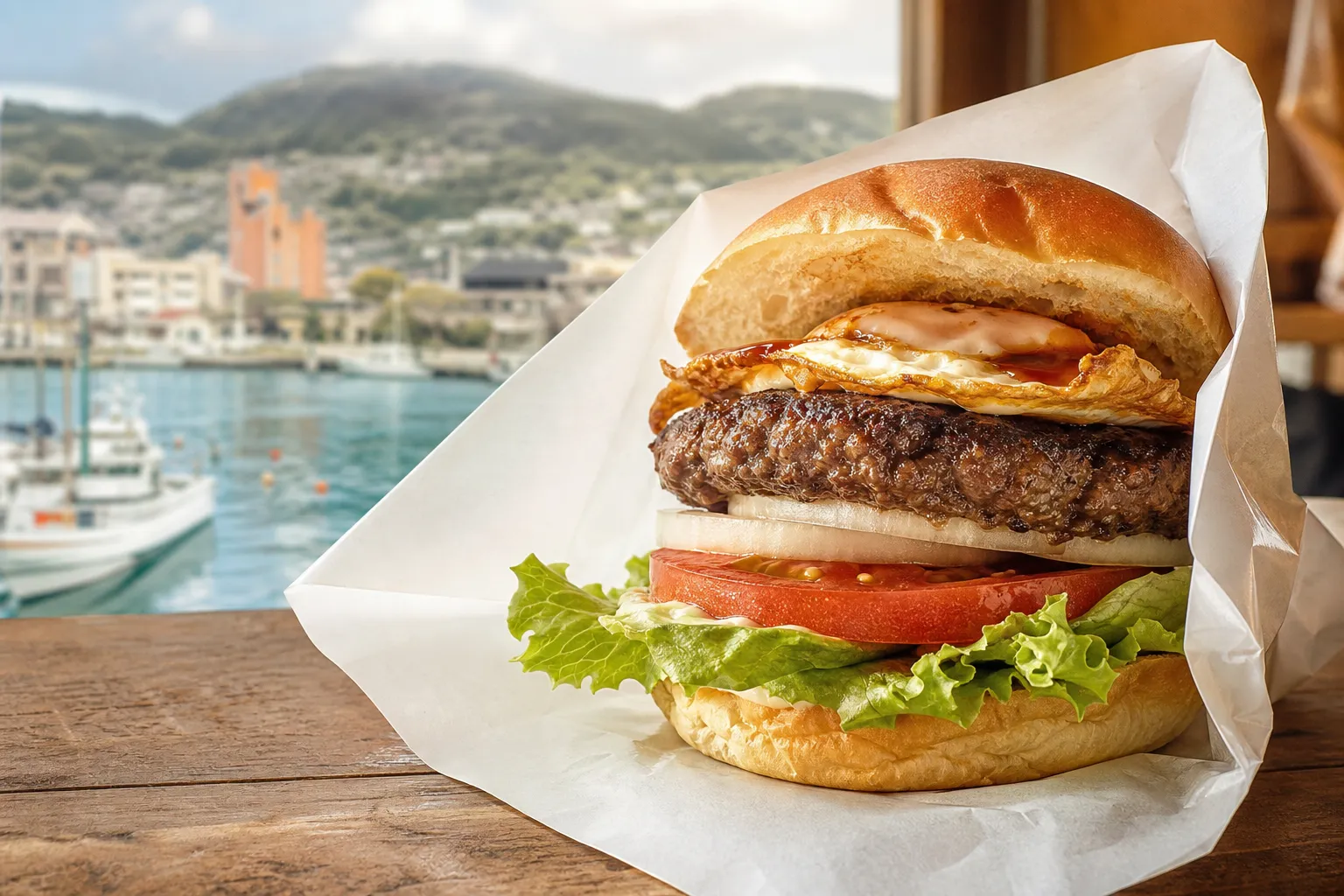
Sasebo Burger (佐世保バーガー)
It arrives the size of your face, wrapped in paper like a gift you didn't earn, and you will need both hands and possibly a moment alone with it.
August 2, 2026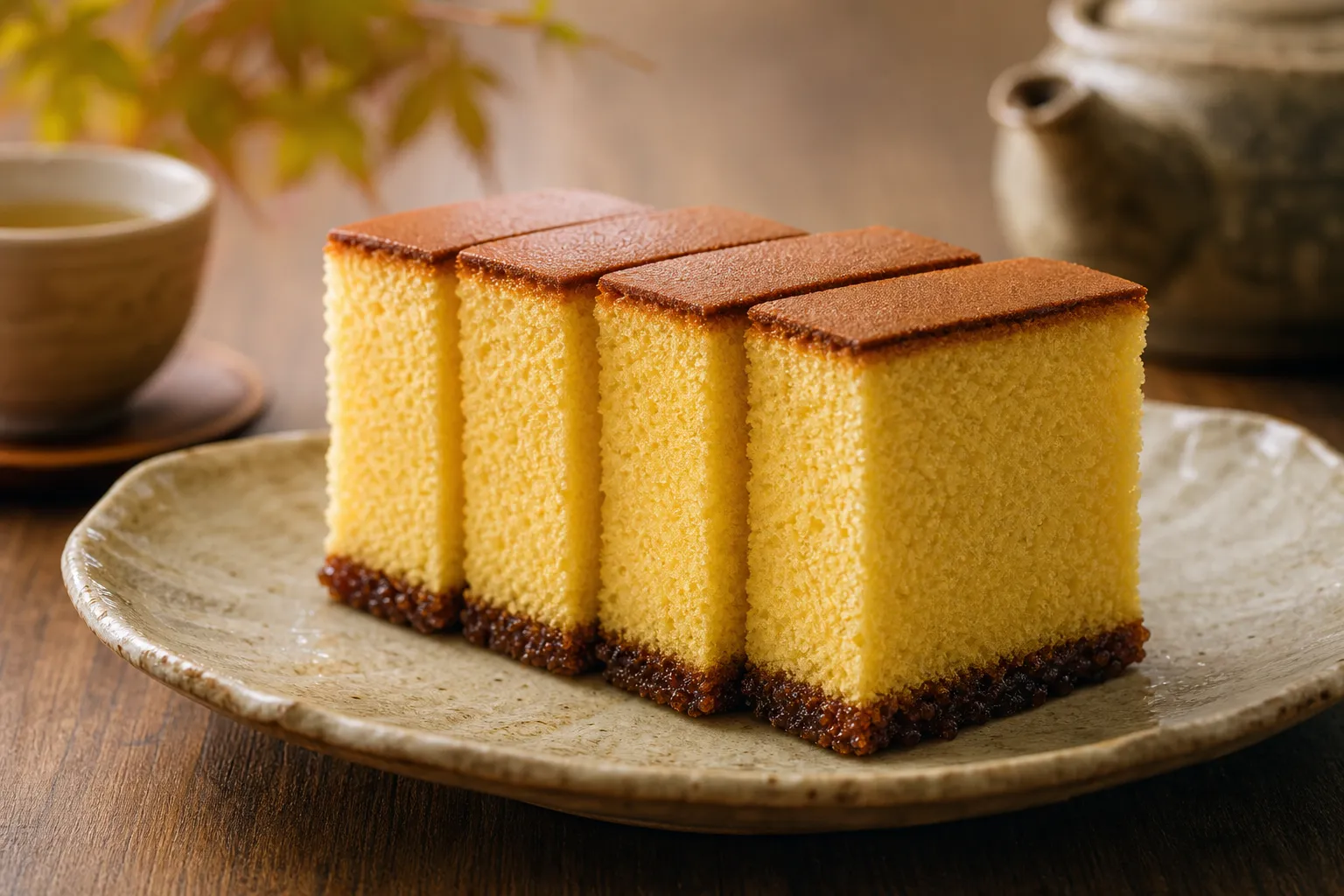
Local FoodNagasaki
Castella (カステラ)
The moment my teeth hit the bottom crust I felt those sugar crystals crunch — and I sat there in the Nagasaki shop grinning like I'd found treasure, because in a way I had.
July 5, 2026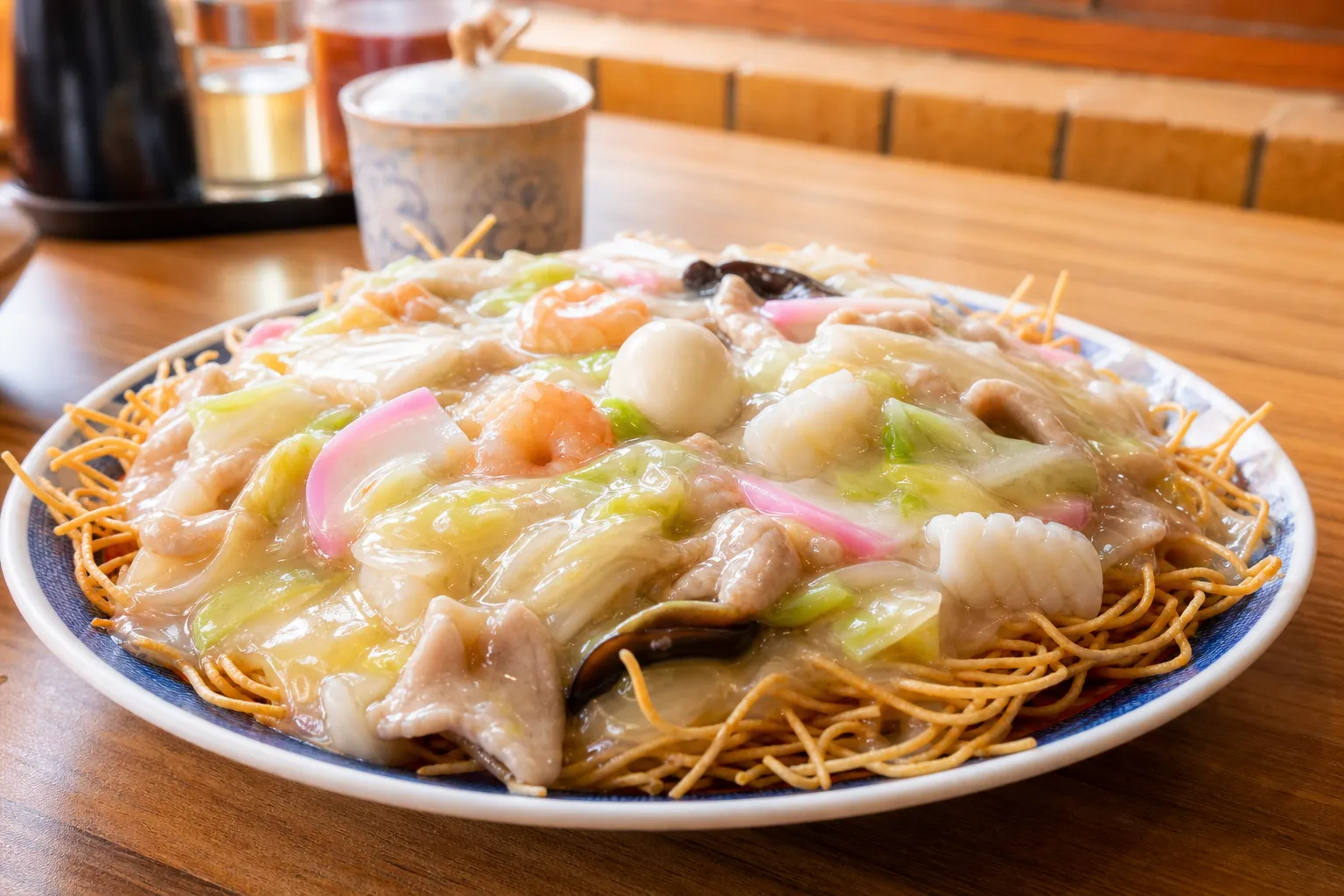
Local FoodNagasaki
Sara Udon (皿うどん)
A mountain of noodles fried until they shatter like glass, then drowned in a sauce so glossy it looks lacquered. I attacked it with chopsticks and lost the first round.
July 4, 2026