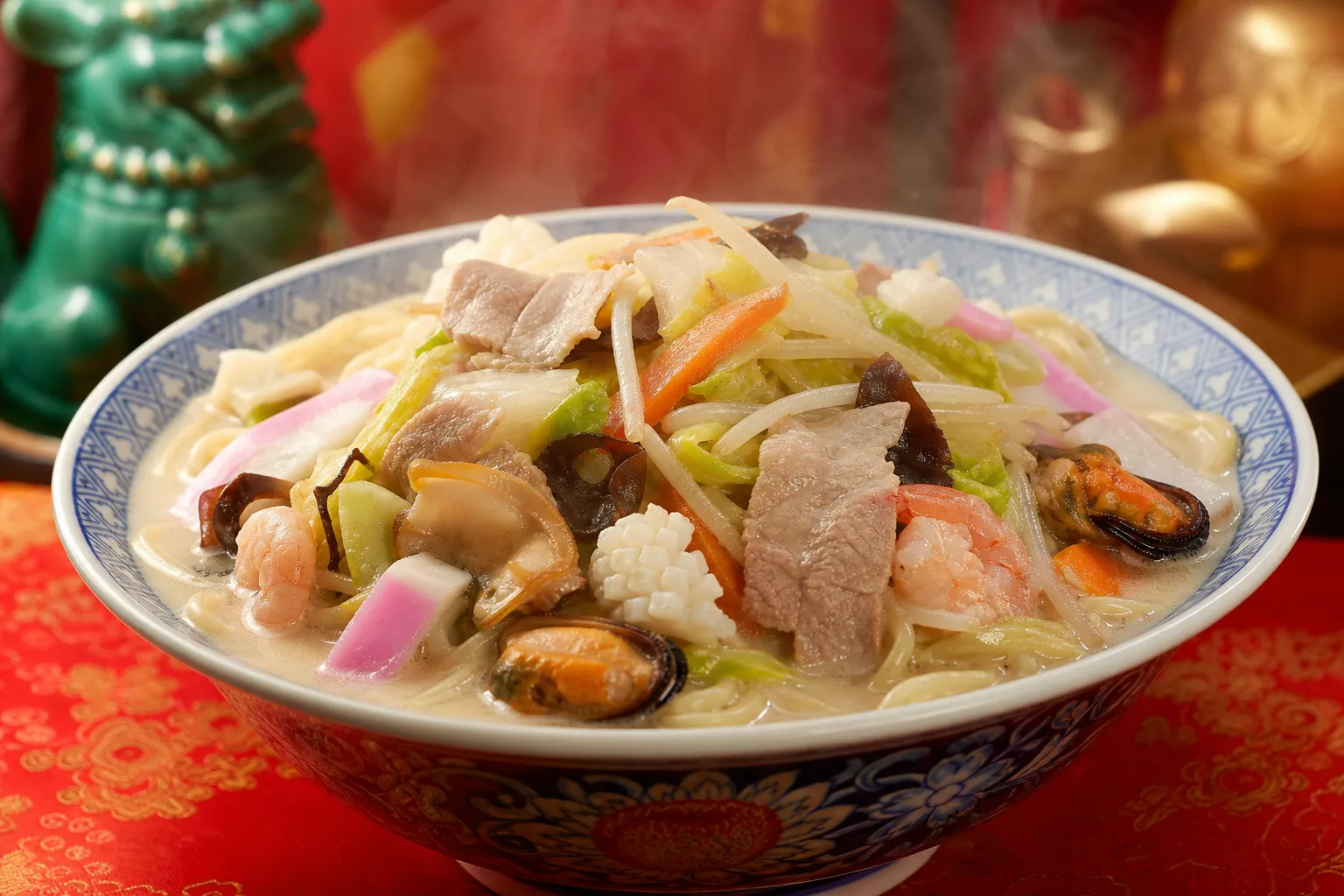
The bowl arrived and I genuinely could not see the noodles. There was a mountain in the way — pork and squid and shrimp and cabbage and pink-white fish cake and bean sprouts, all tangled and steaming on top of a broth the color of warm milk — and my first thought was not "how do I eat this" but "how do I deserve this."
Share this dish


Thick noodles in a milky pork broth buried under a stir-fried mountain of pork, squid, shrimp, cabbage, and fish cake — all cooked in one pan. Invented to feed broke students, perfected into one of Japan's great bowls.
🍜 Planning a food trip to Nagasaki?Add this dish to my Food Trip →
 Add this dish to my Food Trip →
This is champon, and the thing you need to know upfront is that it's all cooked together, in one pan, broth and all. That's not a shortcut. That's the whole genius. Everything trades flavor with everything else, and what you get is a bowl that's somehow rich, sweet, savory, and oceanic in the same spoonful.
Invented to feed hungry students
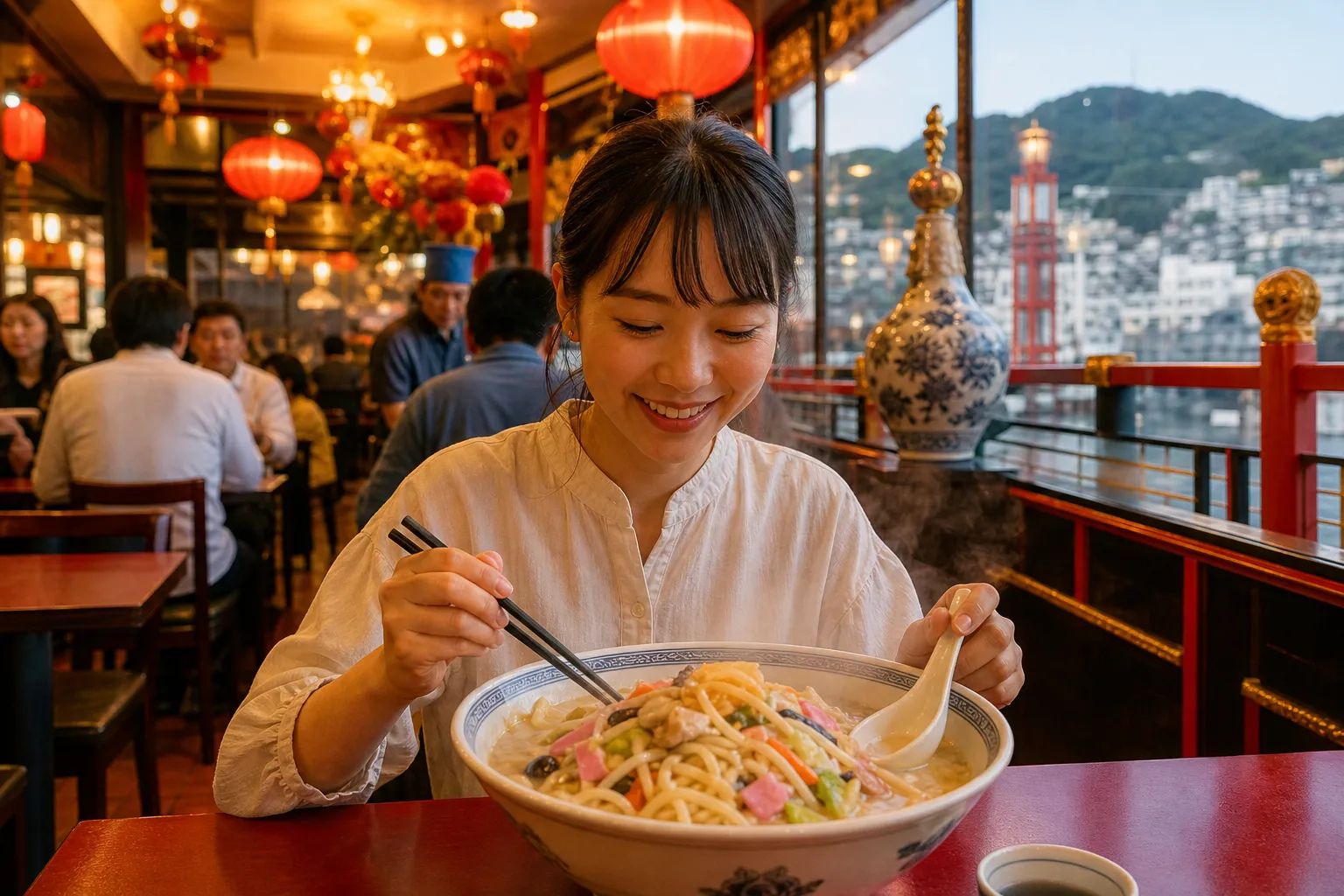
Champon was born in Nagasaki around the late 1800s, created by a Chinese restaurateur — the dish is widely credited to Shikairō (四海樓) in Nagasaki's Chinatown — who wanted to feed poor Chinese students cheaply and well. The solution was brilliant: pile in all the affordable odds and ends — pork scraps, seafood, vegetables — stir-fry them, then add noodles and a rich pork-and-chicken bone broth and cook the whole lot together in one pan. Filling, nourishing, generous, cheap. Exactly what a homesick, broke student needed.
I find the origin genuinely moving. The name itself is thought to come from a friendly greeting or the idea of "mixing things together," and that openness is baked into the food — champon is a dish about abundance and welcome, made by an immigrant community to take care of its own. It still tastes like that. A bowl of champon feels like someone deciding you should not, under any circumstances, leave hungry.
Why cooking it all in one pan changes everything
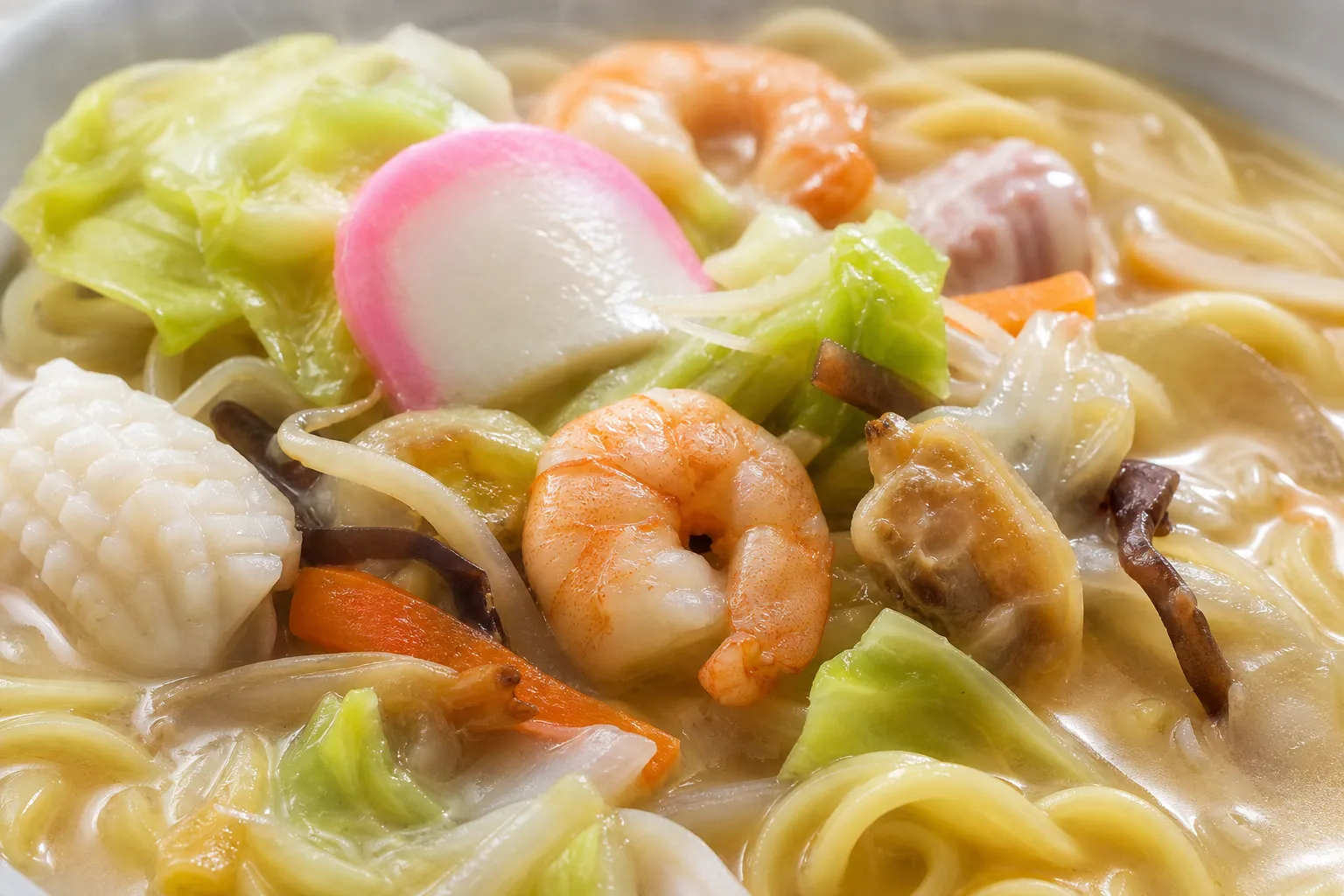
In most noodle soups, the toppings are added at the end, sitting politely on top. Champon throws that out. The pork, seafood, and vegetables are stir-fried first, then the broth and the thick, distinctive champon noodles go into the same pan and finish cooking together. The result: the shrimp and squid season the broth, the cabbage goes sweet, the pork fat enriches everything, and the noodles drink it all in.
The broth is milky and pale — pork and chicken bones simmered to a gentle creaminess, lighter and rounder than tonkotsu ramen. The noodles are thick and substantial, made to stand up to the loaded soup. It is, frankly, a complete meal in a single bowl: protein, vegetables, carbs, and a broth you'll want to drink to the bottom. (Pro tip locals know: leftover champon broth and a scoop of rice is its own quiet reward.)
How it's made
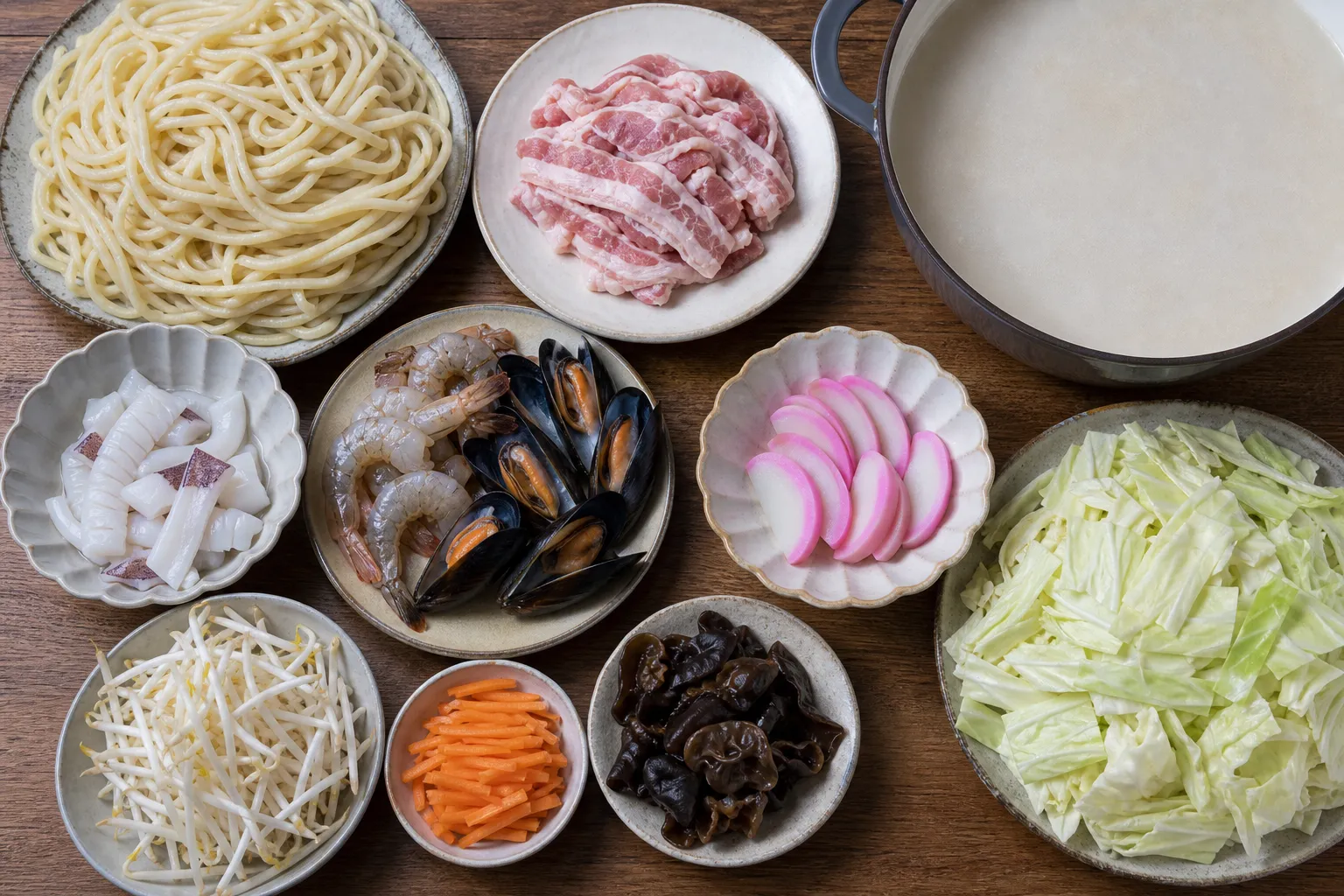
- Simmer a milky broth from pork and chicken bones
- Stir-fry pork, seafood (squid, shrimp, mussels), and vegetables (cabbage, bean sprouts, carrot, wood-ear) in a hot pan
- Add the milky broth and the thick champon noodles directly into the same pan
- Cook everything together so the flavors merge and the noodles absorb the broth
- Tip the whole loaded pan into a big bowl, kamaboko fish cake and all
- Serve immediately, steaming and generous
Your questions, answered honestly
"Is this just ramen with extra toppings?" — No — the defining difference is that everything is cooked together in one pan, broth included, rather than assembled at the end. That shared cooking is what makes the flavor. Also the broth is milky pork-and-chicken, not standard ramen soup.
"What's the difference between champon and sara udon?" — Same family, same Nagasaki roots. Champon is soupy with thick noodles; sara udon ("plate udon") is the dry version, with crispy or pan-fried noodles topped with a thick sauce. If you like one, try the other.
"Is it good for first-timers?" — Excellent. It's rich, savory, and full of recognizable ingredients — nothing intimidating, just a hearty, comforting bowl.
What the staff will ask you
| You'll hear | Romaji | Meaning | Just say |
|---|---|---|---|
| ちゃんぽんと皿うどん、どちらにしますか? | Champon to sara-udon, dochira ni shimasu ka? | "Champon or sara udon?" | Champon de — "champon, please" |
| 大盛りにしますか? | Ōmori ni shimasu ka? | "Large size?" | Futsū de or Hai if hungry |
| 麺は普通でいいですか? | Men wa futsū de ii desu ka? | "Regular noodles okay?" | Hai, onegaishimasu |
To order, just say "Champon kudasai" (ちゃんぽんください) — "Champon, please."
Where to eat it
- Nagasaki Chinatown (Shinchi) — the heart of champon; multiple long-running Chinese-Japanese restaurants serve it, in the district where the dish was born.
- Shikairō (四海樓), Nagasaki — the restaurant most often credited with inventing champon; it even houses a small champon museum. Check current hours and waits.
- Ringer Hut, nationwide — a Nagasaki-champon chain found across Japan; not the artisan version, but a reliable, genuinely tasty way to try it if you can't reach Nagasaki.
Soul Score
Local Roots5/5
First-Timer Friendly5/5
Adventure Level3/5
Comfort Level5/5
Travel Worthy4/5
These scores are one obsessed eater's gut feeling — not a verdict. A low number isn't a bad mark, just a different kind of adventure.
Know someone planning Japan?
← All Articles
Local Food · Nagasaki, Nagasaki
Still hungry?
Eat more from Nagasaki
Local FoodSasebo, Nagasaki
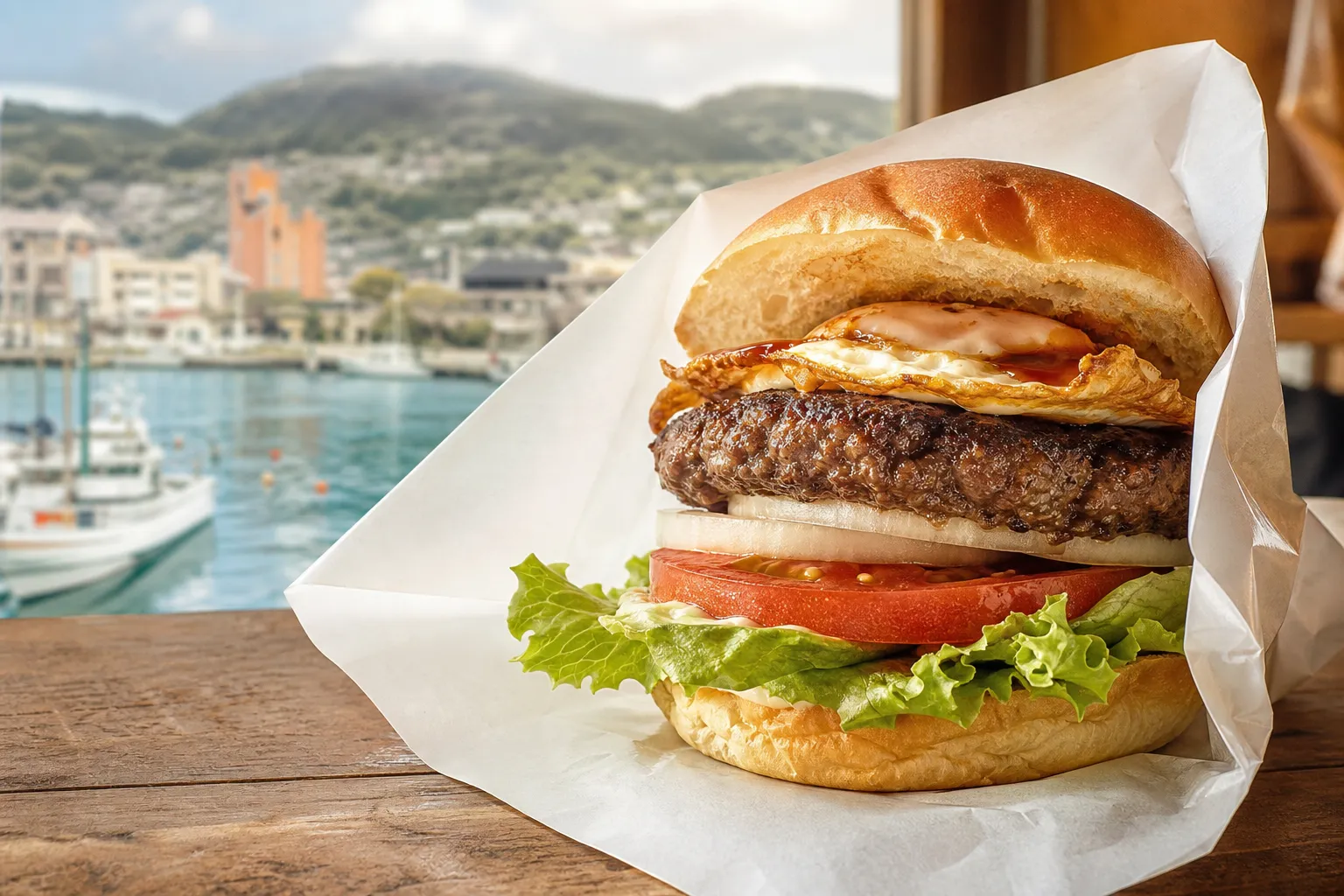
Sasebo Burger (佐世保バーガー)
It arrives the size of your face, wrapped in paper like a gift you didn't earn, and you will need both hands and possibly a moment alone with it.
August 2, 2026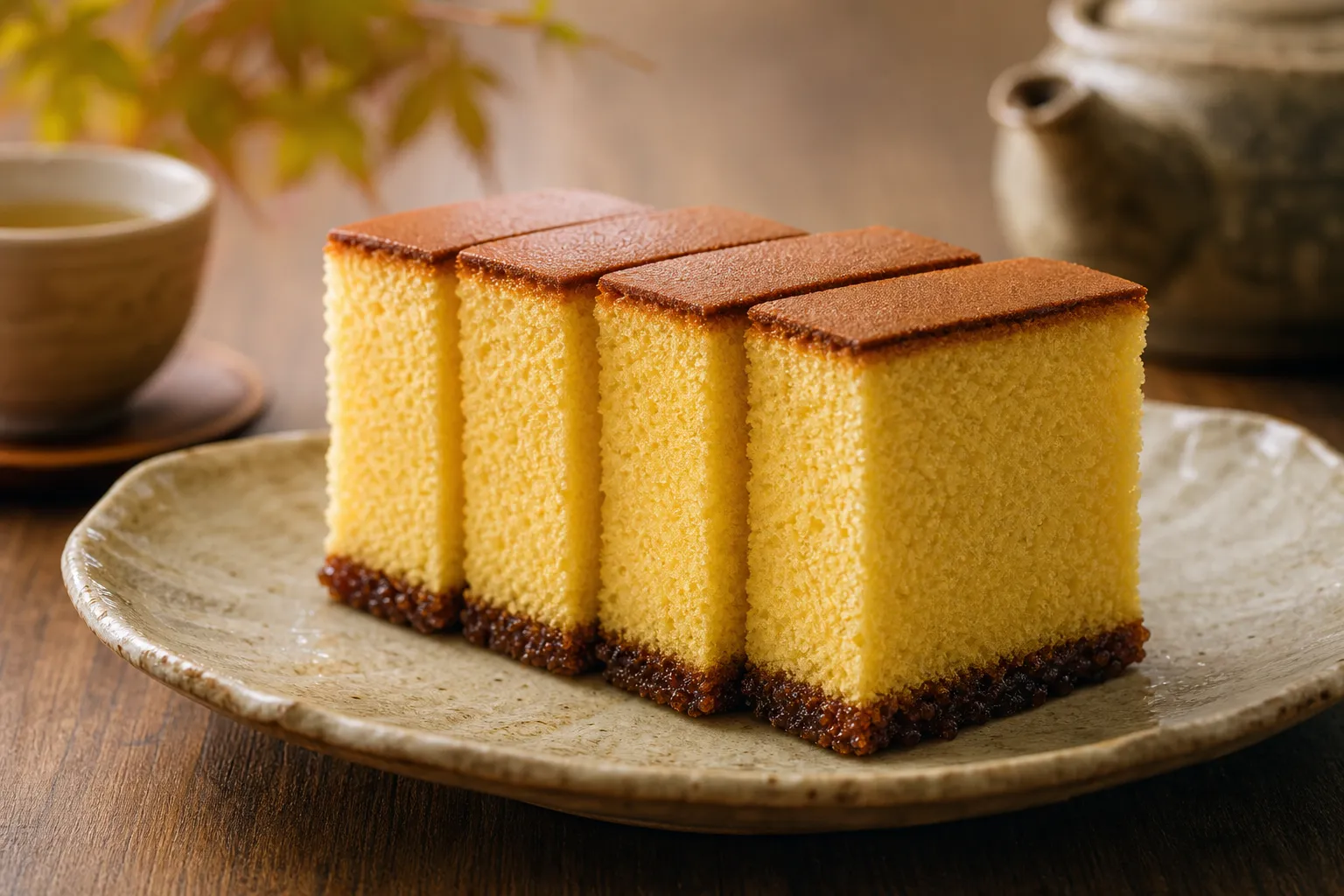
Local FoodNagasaki
Castella (カステラ)
The moment my teeth hit the bottom crust I felt those sugar crystals crunch — and I sat there in the Nagasaki shop grinning like I'd found treasure, because in a way I had.
July 5, 2026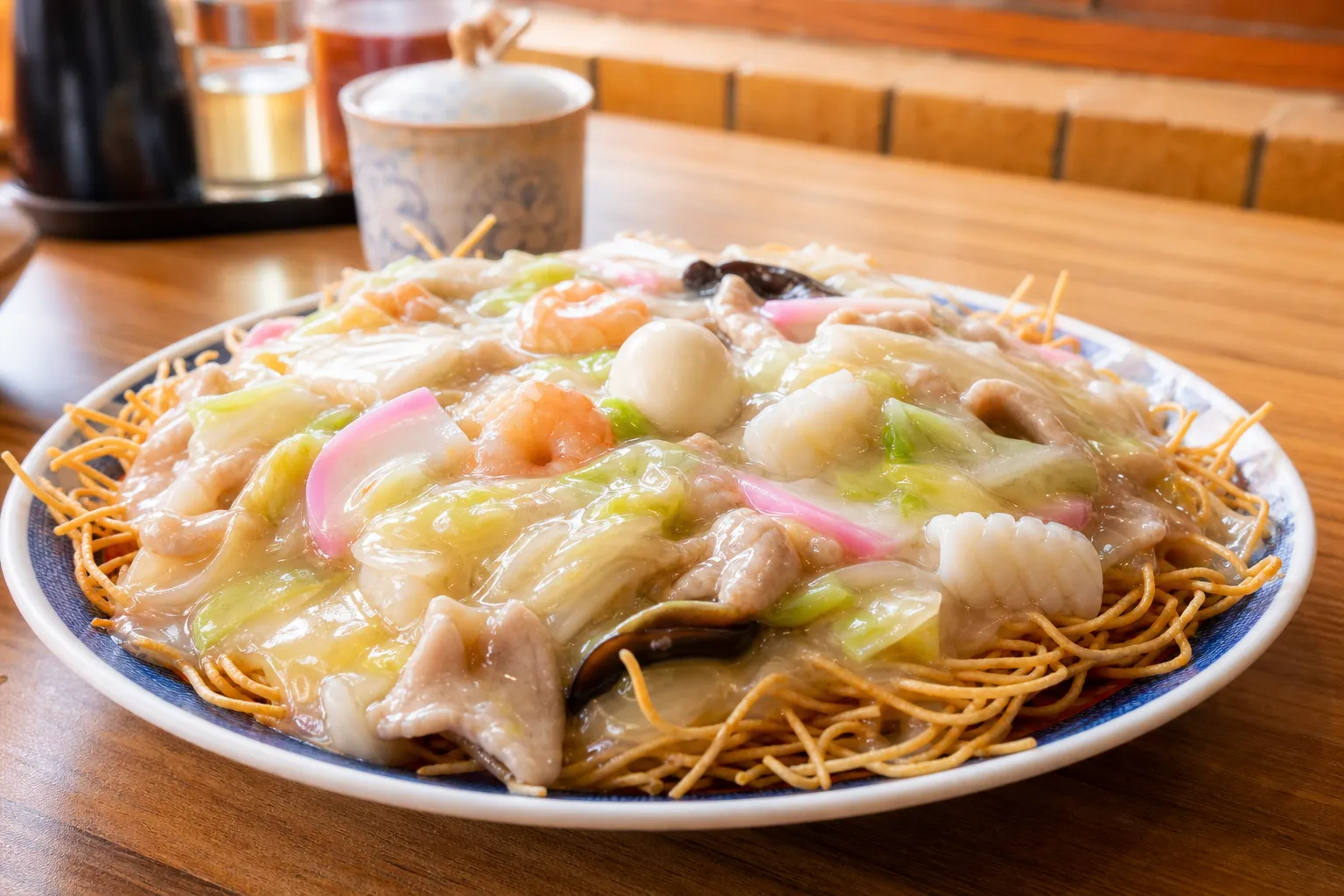
Local FoodNagasaki
Sara Udon (皿うどん)
A mountain of noodles fried until they shatter like glass, then drowned in a sauce so glossy it looks lacquered. I attacked it with chopsticks and lost the first round.
July 4, 2026