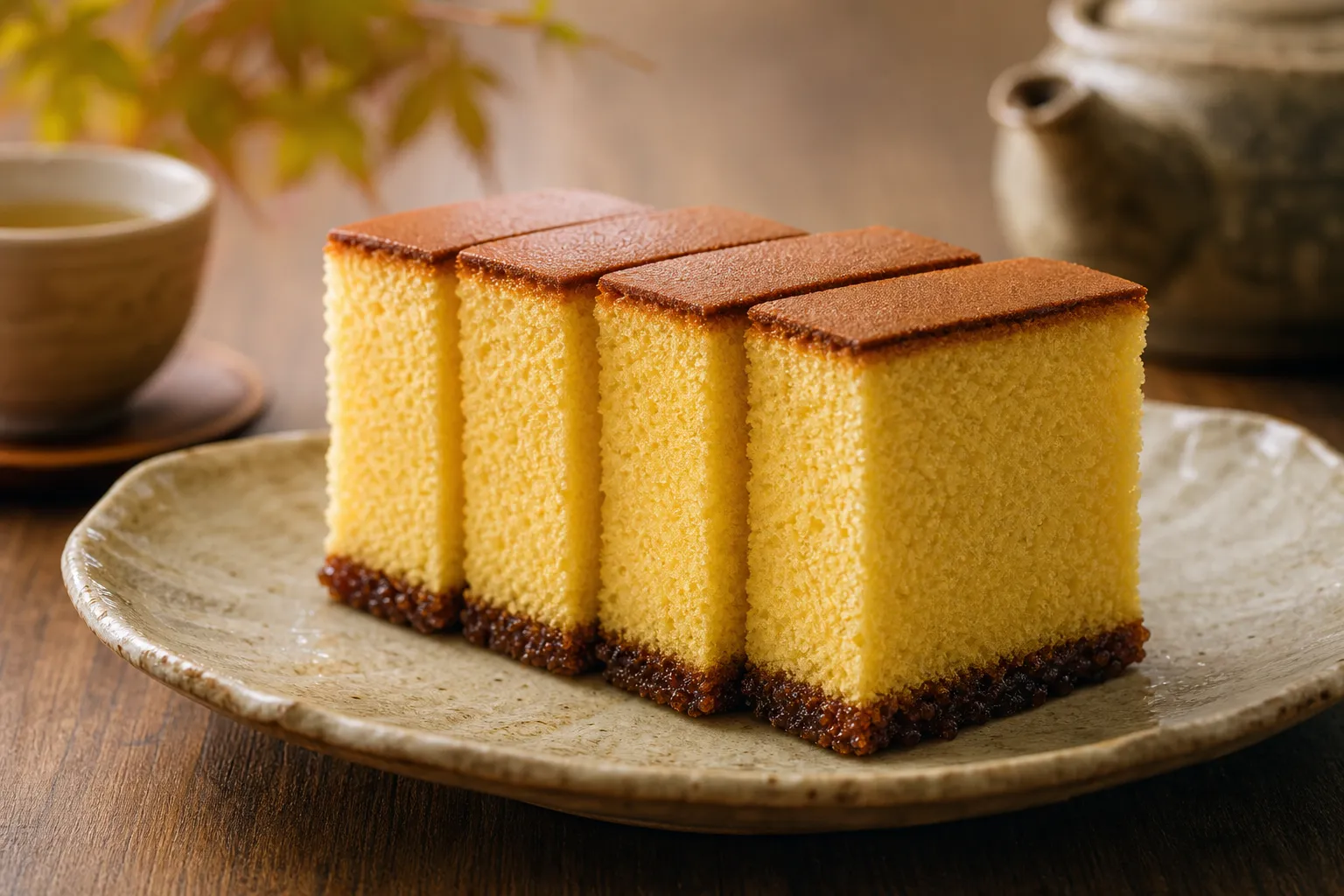
I bit into it expecting airy, forgettable sponge cake — the kind that comes free with hotel coffee — and instead my teeth sank into something moist, almost custardy, and then hit a bottom crust that crackled with sugar crystals. I stopped mid-chew. I looked at the little rectangular bar in my hand like it had lied to me in the best possible way. Then I ate the whole thing standing up at the counter, which is not how you're supposed to eat souvenir cake, and I did not care.
Share this dish


The moment my teeth hit the bottom crust I felt those sugar crystals crunch — and I sat there in the Nagasaki shop grinning like I'd found treasure, because in a way I had.
🍜 Planning a food trip to Nagasaki?Add this dish to my Food Trip →
 Add this dish to my Food Trip →
This is castella (カステラ, kasutera), and the first thing to understand is that it is much older and much stranger than it looks. That humble yellow bar is a 16th-century fossil — a cake Portuguese missionaries and traders brought to Nagasaki over 400 years ago, when Nagasaki was Japan's one window to the outside world. The name comes from Pão de Castela, "bread from Castile." It landed, it stayed, and over four centuries Japanese confectioners quietly perfected it into something the original Portuguese would barely recognize: denser, moister, with that signature layer of coarse zarame sugar sunk into the base. It is a foreign cake that became completely, deeply Japanese.
A cake that sailed in on a Portuguese ship and never left
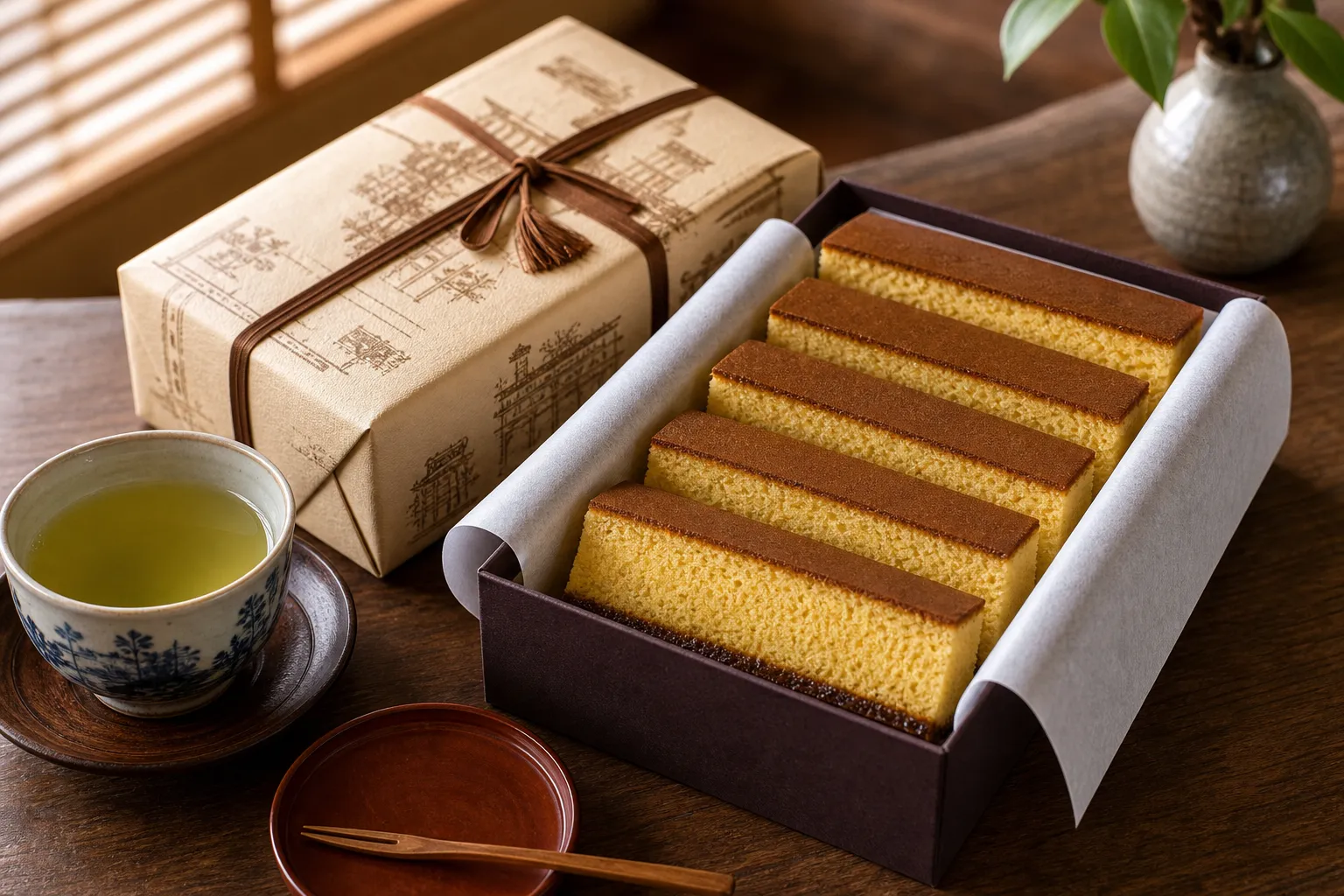
Picture Nagasaki in the 1500s: the only port where Europeans were allowed, a tight little world of traders, priests, and the smell of something baking that nobody in Japan had smelled before. Sugar was rare and precious. Eggs, flour, sugar, whipped into a batter and baked in a box — this was borderline miraculous technology. Castella stuck around partly because sugar was so valuable; it became a luxury gift, a thing you gave to people who mattered.
I find that history almost unreasonably charming. Most "traditional" Japanese sweets lean on rice and red bean. Castella is the one that shows up with a European passport and a 400-year visa. Nagasaki's old confectioners — some of them founded in the 1600s and still operating — treat their recipes like heirlooms, and honestly, standing in one of those shops, you feel it. This isn't a cake. It's a survivor.
Why the good stuff ruins you for the cheap stuff
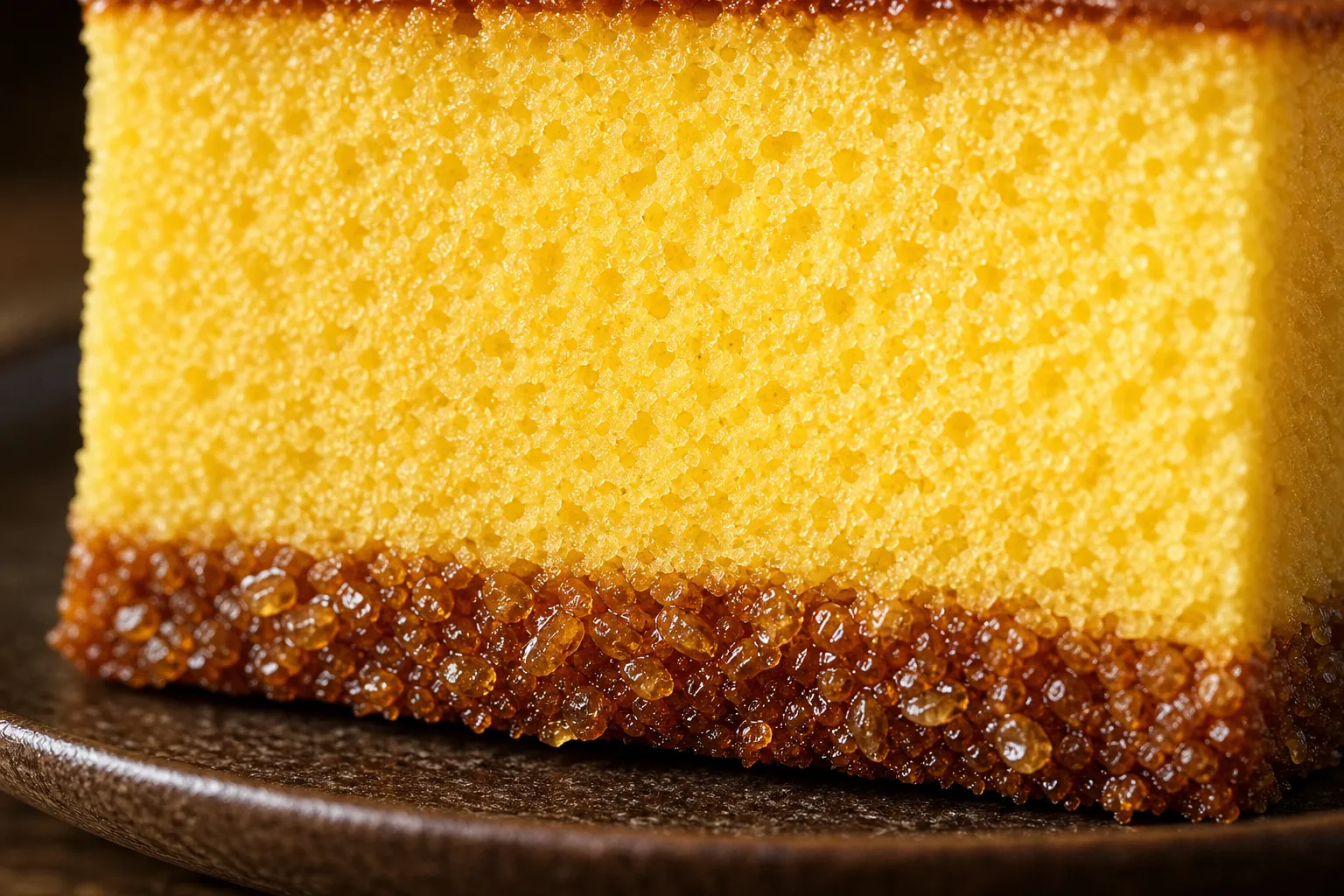
Here's the trap: castella looks simple, so cheap versions look identical from the outside. But the real thing is a completely different animal. A proper Nagasaki castella is dense and springy at once, deeply moist — never dry, never crumbly — with a fine, even, golden crumb that's almost eggy-custard rich. And then the base: that dark band of zarame, coarse sugar crystals that don't fully dissolve during baking, so the very bottom of every slice crunches. Moist top, crunchy bottom, in one bite. Whoever figured that out was a genius and I would like to shake their hand.
The good ones age well, too — many shops say castella is best a day or two after baking, once the moisture has settled evenly through the crumb. I tried this. I bought a bar, waited a day out of sheer discipline I didn't know I had, and yes — it was even better. Damp, dense, glowing yellow, sugar crackling at the base. I have no regrets, except that I only bought one bar.
How castella gets made
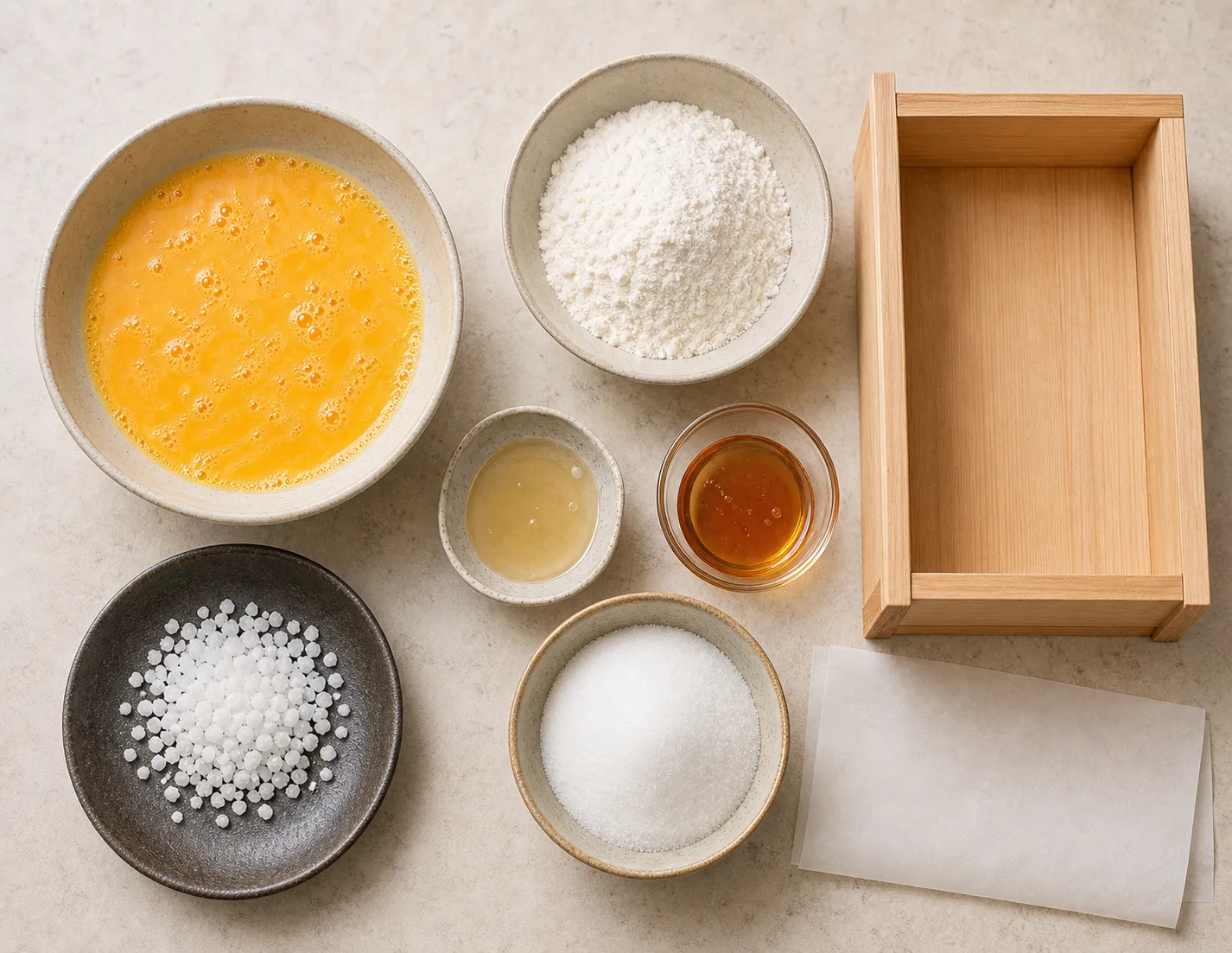
- Whole eggs and sugar are beaten together — long and hard — until pale, thick, and full of air; this aeration, not baking powder, is what lifts the cake
- Bread flour (higher protein than cake flour) is folded in gently, along with mizuame (starch syrup) and sometimes honey, which keep it moist and give it that faint gloss
- Coarse zarame sugar is scattered across the bottom of a tall wooden baking frame lined with paper
- The batter is poured in, and the baker repeatedly stirs and pops the surface bubbles so the crumb comes out fine and even, with no big holes
- It's baked slowly in the frame, then the top crust is trimmed flat, the loaf is wrapped while still warm to lock in moisture, rested, and finally cut into neat rectangular bars
Before you go — how to buy it right
Your questions, answered honestly
"Isn't this just sponge cake?" — It's the ancestor of a lot of sponge cakes, but no. Real castella is far denser and moister than Western sponge, with almost no oil or butter, and that crunchy sugar base has no Western equivalent. If you've only had the dry supermarket kind, you haven't really had it.
"Do I have to go to Nagasaki?" — No — you'll find good castella in department-store food halls (depachika) all over Japan, including boxed bars from the famous Nagasaki houses. But eating it in Nagasaki, fresh, from a centuries-old shop, hits different. If you're anywhere near, go.
"What are the flavored ones?" — Beyond plain (honke / original), you'll see matcha, chocolate, brown sugar (kurozato), and goma (sesame). Start with plain — it's the benchmark, and if a shop nails plain, everything else is worth trying too.
"Is it a good souvenir?" — It's arguably the perfect one: individually boxed, keeps for a couple of weeks unopened, doesn't need refrigeration, and it's genuinely beloved. This is the gift that makes people back home go quiet for a second.
What the staff will ask you
| You'll hear | Romaji | Meaning | Just say |
|---|---|---|---|
| プレーンと抹茶、どちらになさいますか? | Purēn to matcha, dochira ni nasaimasu ka? | "Plain or matcha?" | Purēn de onegaishimasu (plain, please) |
| ギフト包装なさいますか? | Gifuto hōsō nasaimasu ka? | "Would you like it gift-wrapped?" | Onegaishimasu (yes, please) / Sonomama de ii desu (as-is is fine) |
| 何本になさいますか? | Nan-bon ni nasaimasu ka? | "How many bars?" | Ippon kudasai (one bar, please) |
To order, just say "Kasutera o kudasai" (カステラをください) — "Castella, please."
Where to eat it
- Nagasaki city — the old-town confectionery streets are home to long-established castella houses, several founded centuries ago; many let you buy a single sliced portion to eat right there.
- Department-store food halls (depachika) in major cities — a reliable way to buy boxed bars from the famous Nagasaki makers without traveling south.
- Nagasaki Station and airport shops — practical last stops for boxed souvenir castella on your way out.
Shop line-ups, flavors, and whether they sell single slices vary, so check current details before you go — and if you can, eat one fresh the same day, then save a bar for tomorrow.
Soul Score
Local Roots5/5
First-Timer Friendly5/5
Adventure Level3/5
Comfort Level5/5
Travel Worthy4/5
These scores are one obsessed eater's gut feeling — not a verdict. A low number isn't a bad mark, just a different kind of adventure.
Know someone planning Japan?
← All Articles
Local Food · Nagasaki
Still hungry?
Eat more from Nagasaki
Local FoodSasebo, Nagasaki
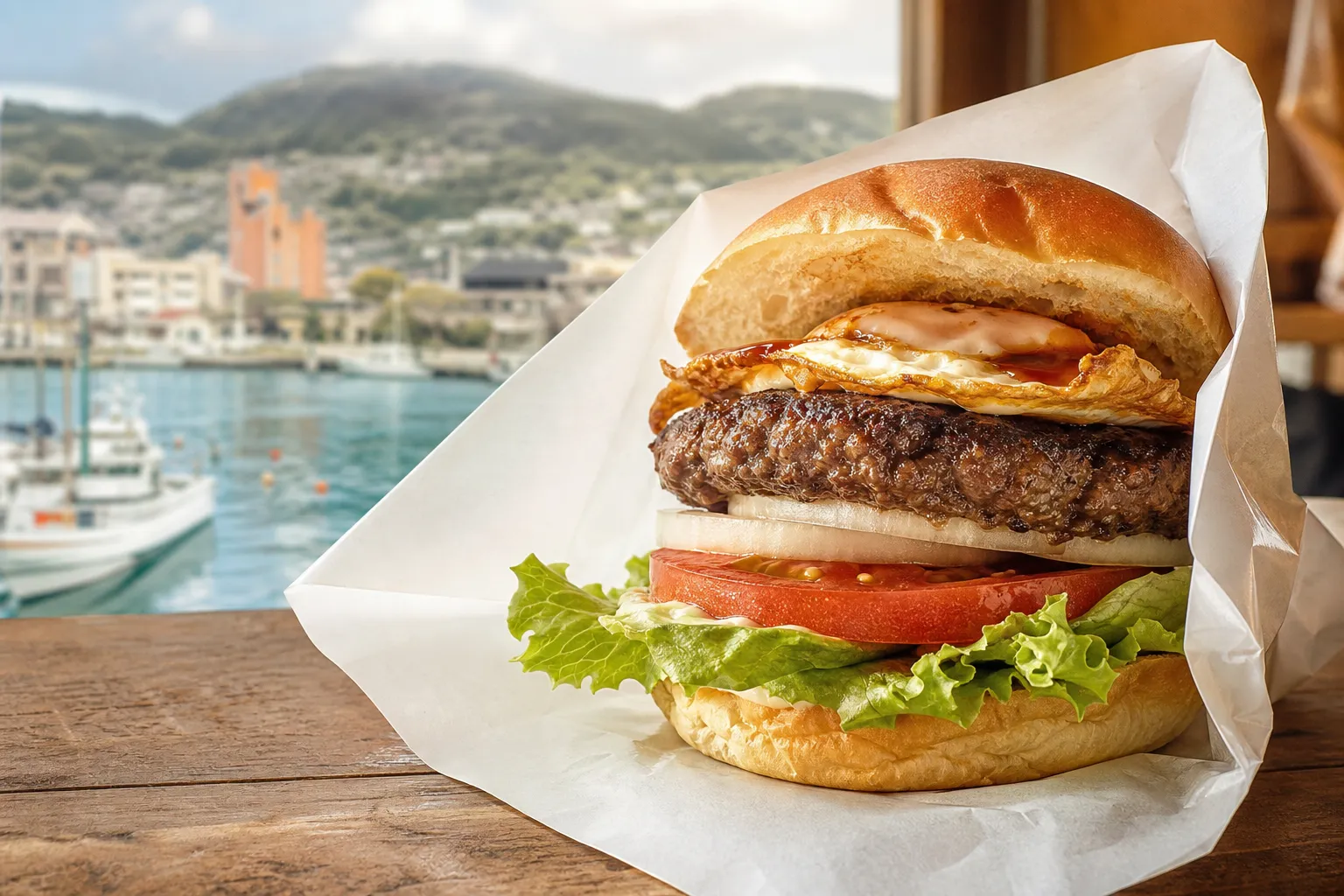
Sasebo Burger (佐世保バーガー)
It arrives the size of your face, wrapped in paper like a gift you didn't earn, and you will need both hands and possibly a moment alone with it.
August 2, 2026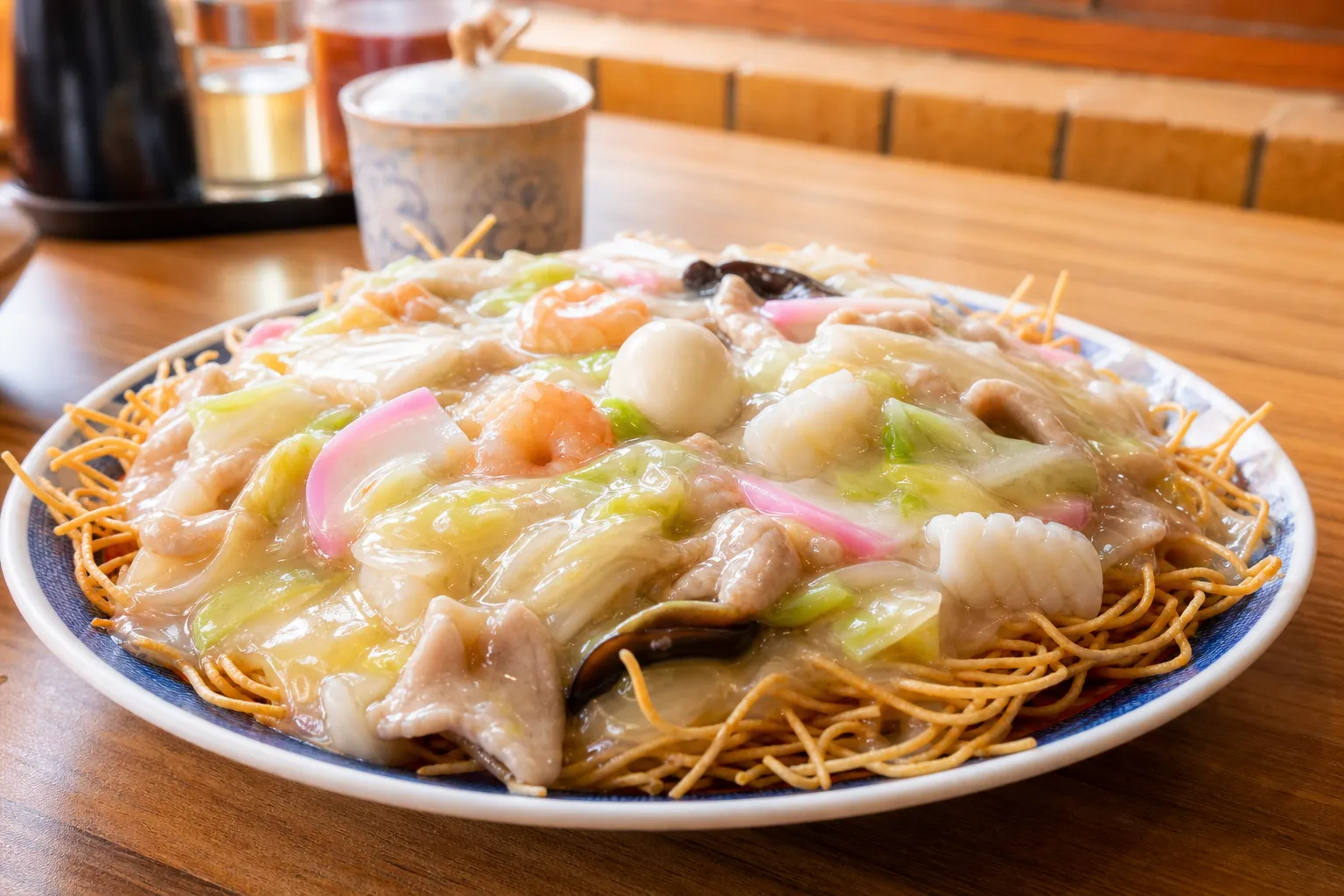
Local FoodNagasaki
Sara Udon (皿うどん)
A mountain of noodles fried until they shatter like glass, then drowned in a sauce so glossy it looks lacquered. I attacked it with chopsticks and lost the first round.
July 4, 2026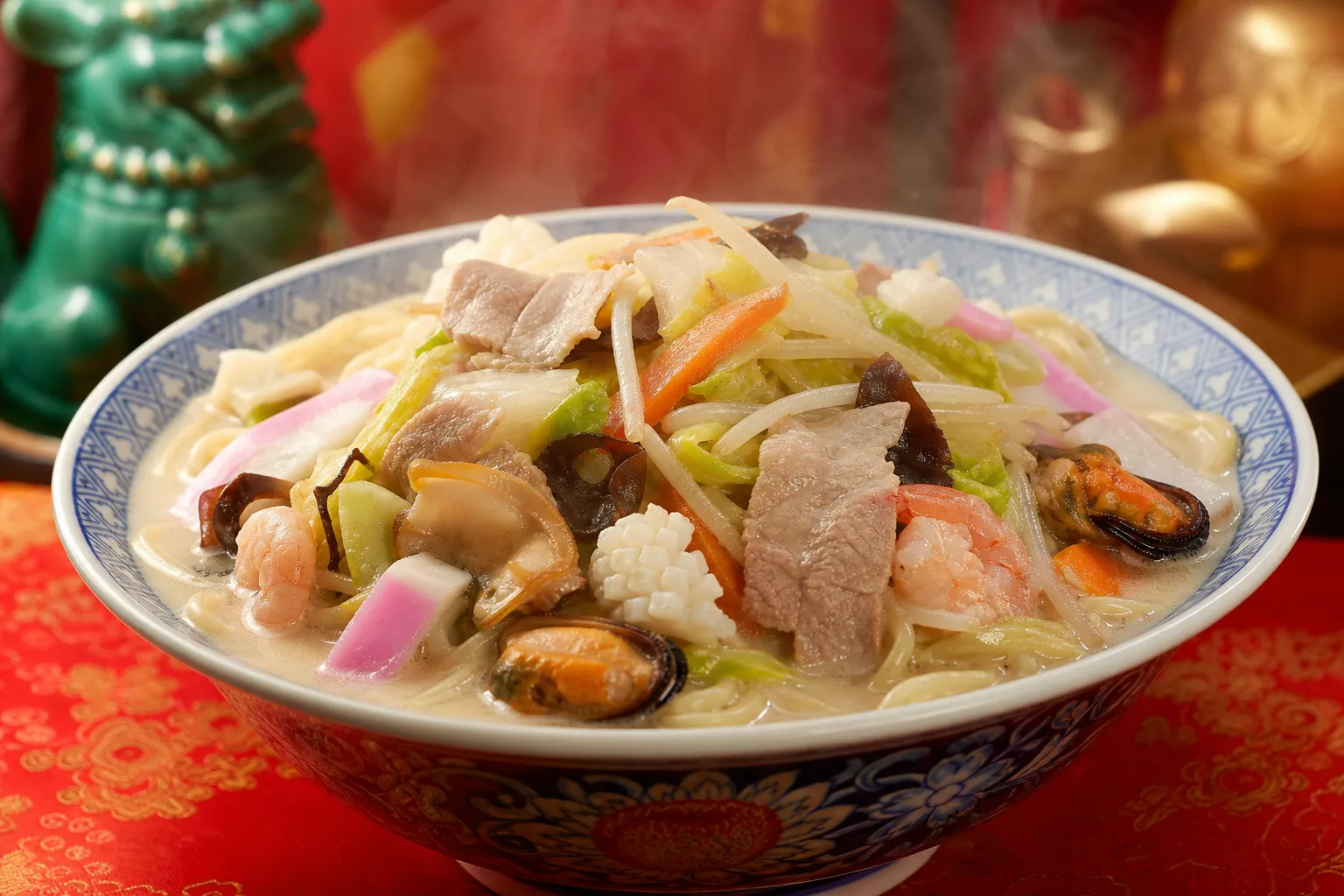
Local FoodNagasaki, Nagasaki
Nagasaki Champon (長崎ちゃんぽん)
Thick noodles in a milky pork broth buried under a stir-fried mountain of pork, squid, shrimp, cabbage, and fish cake — all cooked in one pan. Invented to feed broke students, perfected into one of Japan's great bowls.
June 26, 2026