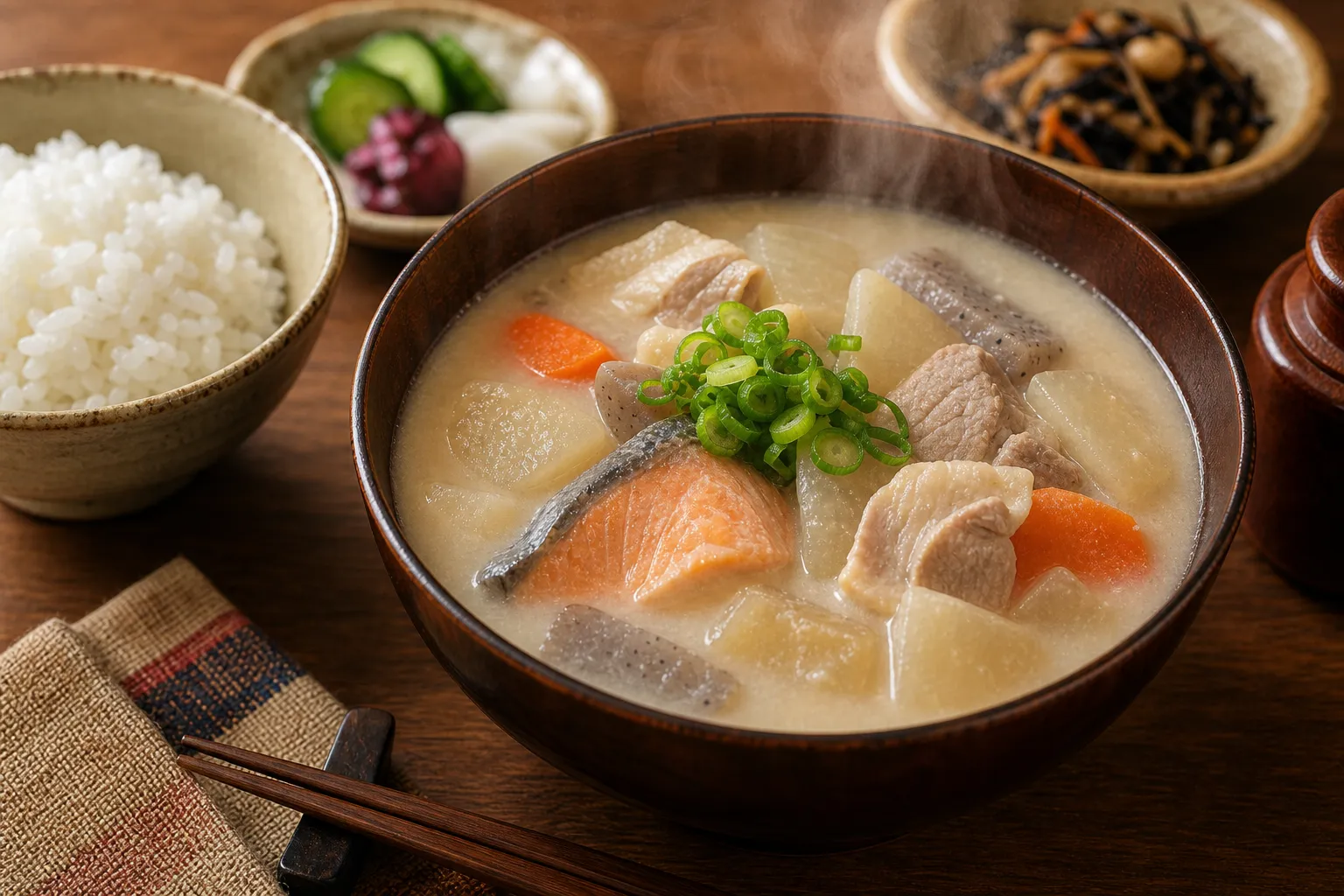
It's cold, it's January, and someone's grandmother in Kansai puts a bowl in front of you — cloudy, pale, steaming, smelling faintly, wonderfully of sake and miso all at once. You take a spoonful and it's thick and warm and savory and just barely boozy in the coziest possible way, loaded with soft daikon and a piece of salmon, and your whole body exhales. That's kasujiru, the soup that turns the humble leftovers of sake brewing into the most comforting thing on a Kansai winter table.
Share this dish


The warming winter soup that puts the leftovers of sake-making to glorious use — cloudy, faintly boozy, deeply comforting, thick with salmon and root vegetables and the smell of a Kansai kitchen in January.
Here's the clever heart of it: kasujiru (粕汁) is a hearty winter soup made with sake lees — sakekasu, the soft white pressed leftovers from making sake — melted into a dashi-and-miso broth, along with salmon (or pork), daikon, carrot, konnyaku and green onion. Sake lees, not just miso: that's what makes it kasujiru and not an ordinary miso soup — the sakekasu gives it a cloudy body, a mellow sweetness, and that unmistakable gentle sake aroma. It's beloved across Japan in winter but has especially deep roots in Kansai's sake-brewing country.
A brewery's leftovers, turned into comfort
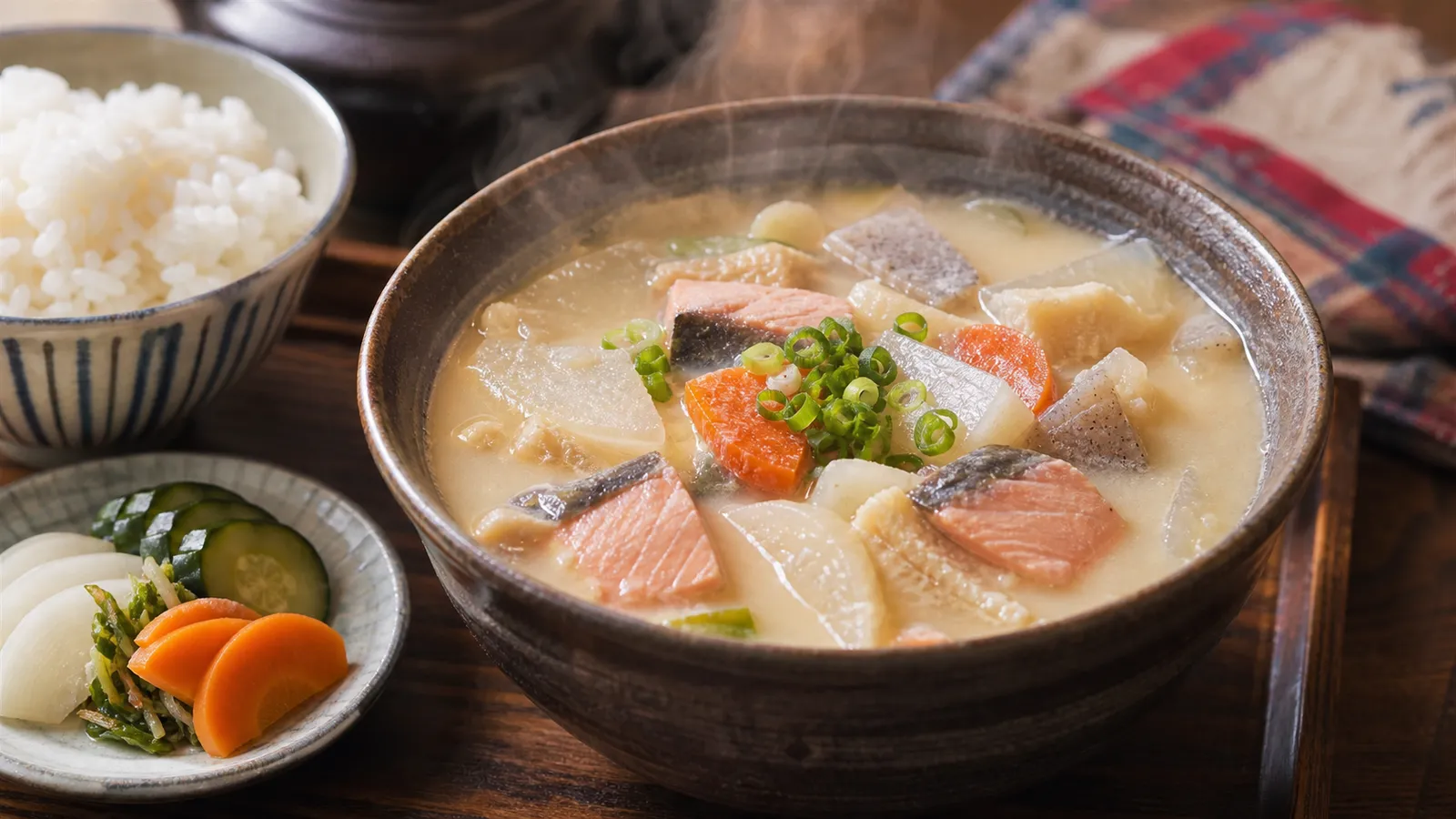
This is a dish born from thrift and place. When sake is pressed, it leaves behind sakekasu — nutritious, aromatic lees — and in the great sake-brewing regions of Kansai (like Nada in Kobe and Fushimi in Kyoto), those lees were plentiful and cheap, so kitchens turned them into soup. Kasujiru is the sound of a brewing town in winter: nothing wasted, everything warm. It spread nationwide as a cold-season home dish, but its soul is in that Kansai sake country.
I find that lineage genuinely lovely. It's peasant ingenuity at its best — taking the byproduct of a luxury (sake) and making it into daily warmth for the coldest months. There's history in every cloudy spoonful: the breweries, the winters, the family kitchens that turned "leftovers" into one of the most restorative soups in the Japanese repertoire. It tastes like being taken care of, which is the highest thing a soup can do.
What makes the eating experience different
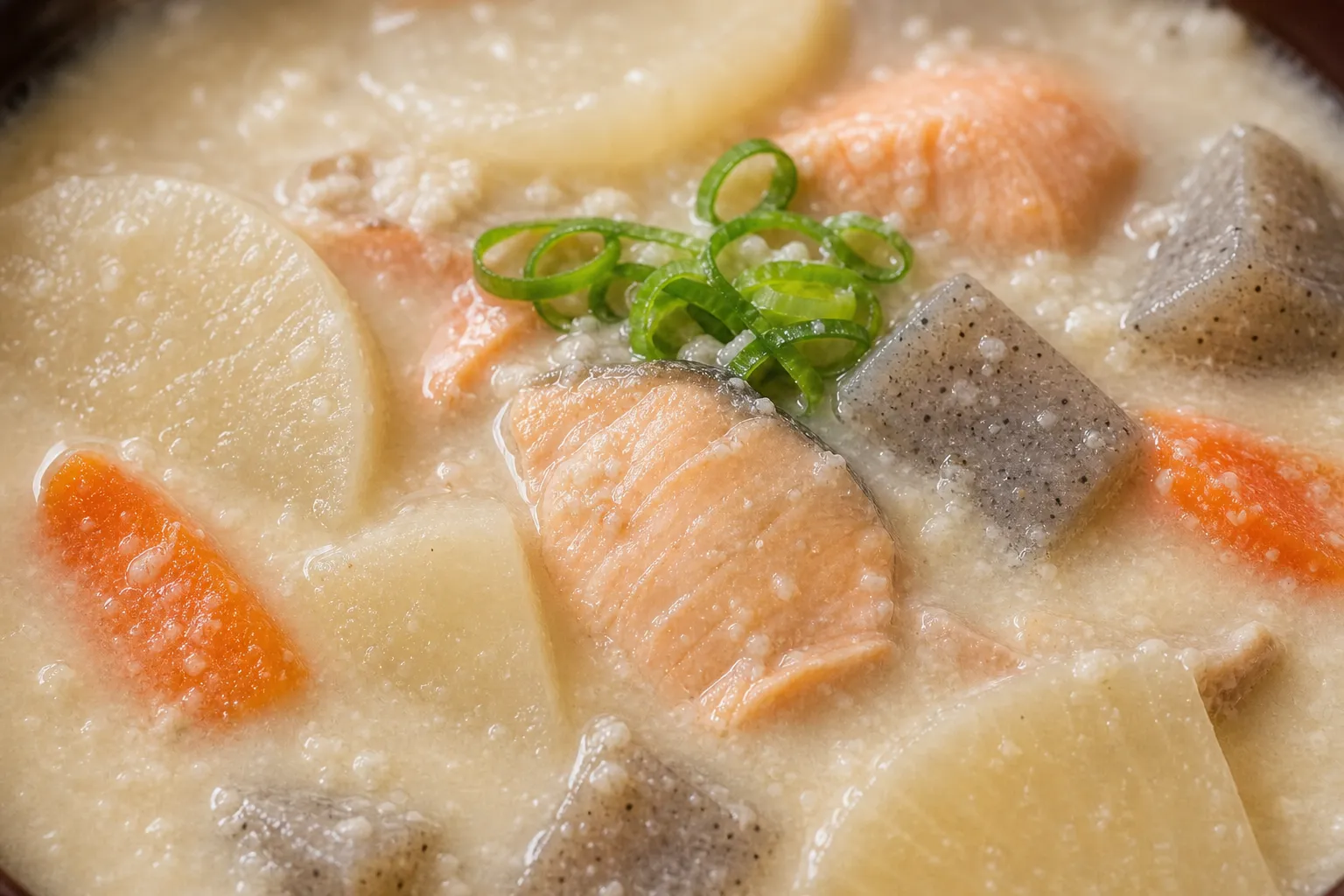
- The sake lees give the broth a cloudy, thick, almost creamy body and a mellow, faintly sweet richness beyond plain miso soup
- There's a gentle, warming sake aroma — most of the alcohol cooks off, but the fragrance stays, cozy and distinctive
- It's a substantial, meal-in-a-bowl soup — chunks of soft daikon and carrot, konnyaku, and salmon or pork make it hearty
- The salmon (or pork) adds savory depth, and the fish's richness plays beautifully against the sweet-savory lees
- It's the definition of winter comfort — thick, warm, filling, and it heats you from the inside out
How it's made
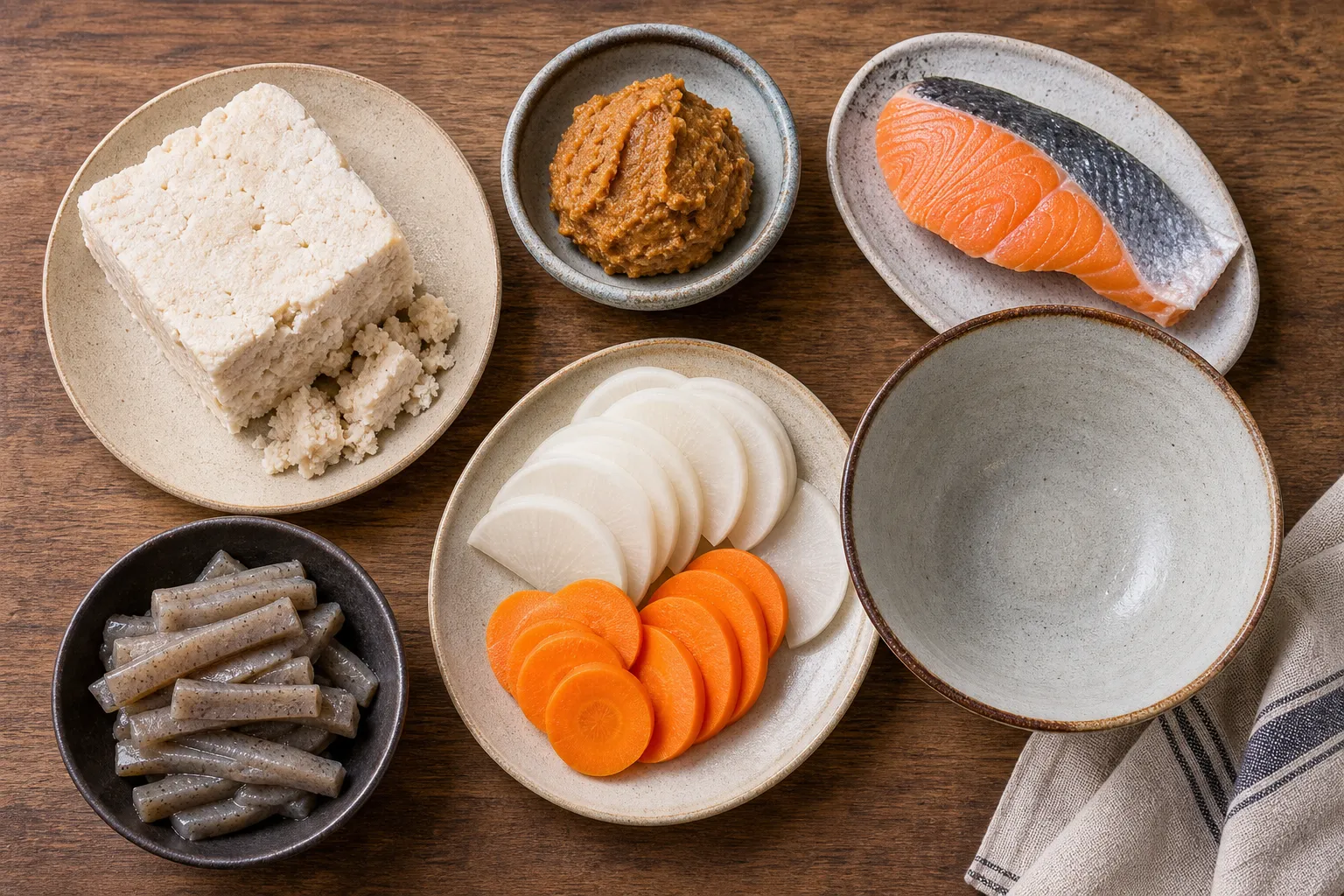
- Soften the sake lees. Sakekasu is loosened with a little warm dashi or water so it can be blended smoothly into the soup.
- Simmer the vegetables and fish. In a dashi broth, cook sliced daikon, carrot, konnyaku (and often burdock), plus pieces of salmon or pork, until tender.
- Blend in the lees and miso. Stir the softened sakekasu and miso into the broth — this gives it the cloudy body, gentle sweetness and sake aroma.
- Warm it through gently. Let it come together over low heat (not a hard boil), so the flavors meld and the alcohol mostly cooks off.
- Finish and serve hot. Top with green onion, maybe a little ginger or shichimi, and serve steaming — ideally on a very cold day.
The one bit of care is the sake lees: loosen and blend it in smoothly, and warm rather than furiously boil, so it stays mellow and creamy instead of splitting. Get that right and it's pure liquid comfort.
Before you go — a winter-only warmer
Your questions, answered honestly
"Is there alcohol in it?" — A little. The sake lees (sakekasu) contain some alcohol, and while most of it cooks off during simmering, a trace can remain. For most people that's a non-issue and part of the charm (the gentle aroma). But if you avoid alcohol entirely — for health, religious or other reasons — ask, or skip it to be safe.
"What does it actually taste like?" — Like a richer, cloudier, gently sweet miso soup with a cozy sake fragrance. It's savory and warming, thickened by the lees, with soft vegetables and salmon. Comforting rather than challenging — think 'winter hug in a bowl.'
"When and where can I find it?" — It's a winter dish, strongest in Kansai (the sake-brewing regions especially). Look for it on cold-season menus at home-style restaurants, defintely at teishoku (set-meal) places as a soup, and around sake-brewing towns. In summer it's rare.
"Salmon or pork?" — Both are traditional. Salmon (sake the fish, confusingly) is the classic Kansai choice and gives a lovely rich-savory note; pork versions are common too. Either is great; go with whatever the shop makes.
What the staff will ask you
| You'll hear | Romaji | Meaning | Just say |
|---|---|---|---|
| 温かい汁物になりますが、よろしいですか? | Atatakai shirumono ni narimasu ga, yoroshii desu ka? | "It's a hot soup — okay?" | Hai, onegaishimasu (yes, please) |
| 定食につけますか? | Teishoku ni tsukemasu ka? | "Add it to a set meal?" | Onegaishimasu (yes, please) |
| 七味はかけますか? | Shichimi wa kakemasu ka? | "Add chili-pepper mix?" | Onegaishimasu / Nashi de (yes / without, please) |
To order, just say "Kasujiru o kudasai" (粕汁をください) — "Sake-lees soup, please."
Where to eat it
- Kansai in winter — the sake-brewing heartland (Kobe's Nada, Kyoto's Fushimi and around) is the soul of kasujiru; home-style and teishoku restaurants serve it as a cold-season soup.
- Set-meal (teishoku) restaurants and home-style eateries nationwide — in winter, kasujiru often appears as the soup in a set meal across Japan.
- Sake breweries and their tap-rooms/shops — some breweries and their attached eateries serve kasujiru made with their own lees, which is a wonderful way to taste it at the source.
Kasujiru is a winter dish and contains a small amount of alcohol from the sake lees; availability, ingredients (salmon vs pork) and prices vary by shop and season — check before you go.
Soul Score
Local Roots5/5
First-Timer Friendly3/5
Adventure Level4/5
Comfort Level5/5
Travel Worthy3/5
These scores are one obsessed eater's gut feeling — not a verdict. A low number isn't a bad mark, just a different kind of adventure.
Know someone planning Japan?
← All Articles
Local Food · Kansai
Still hungry?
Eat more from Kansai
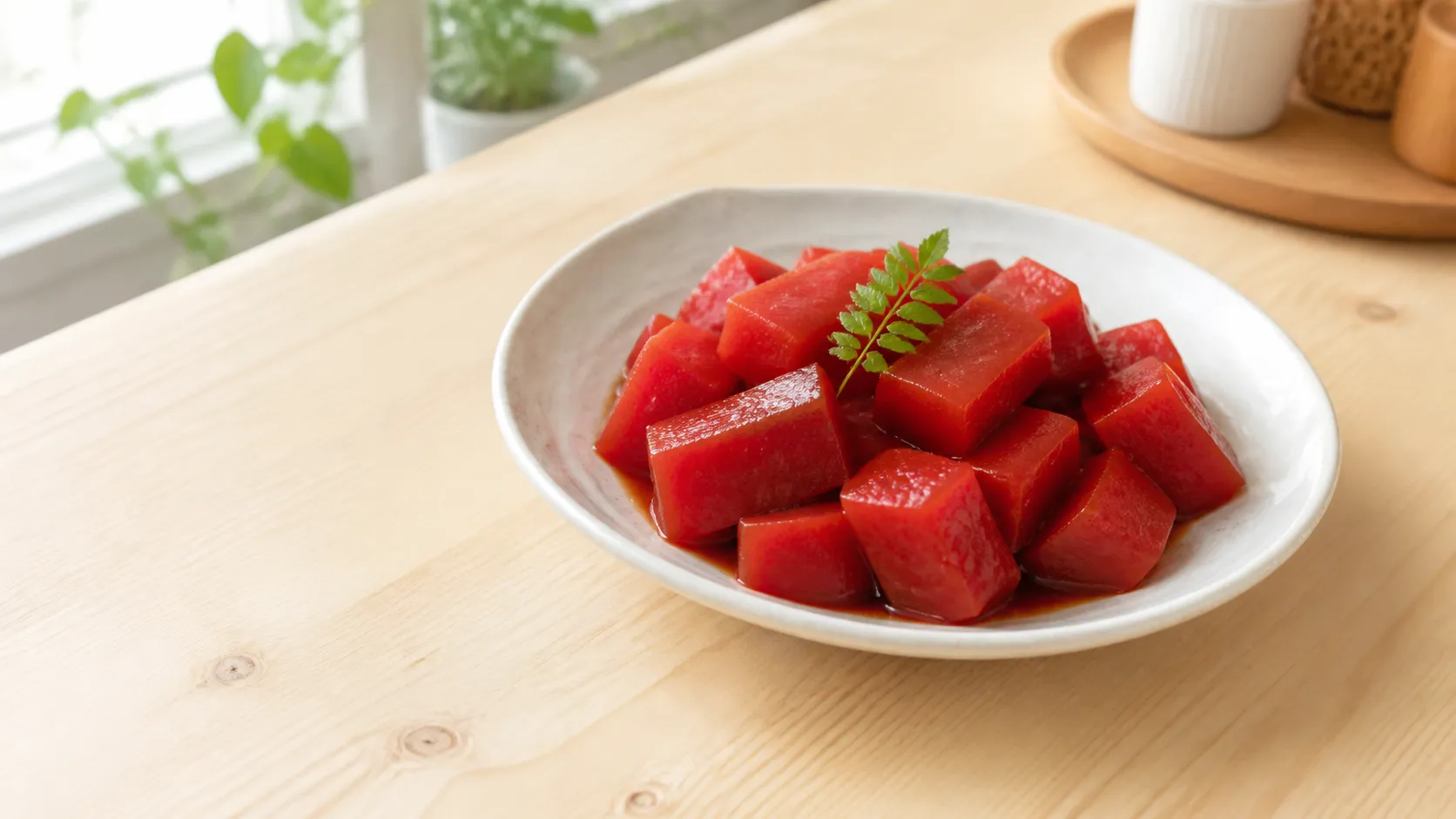
Local FoodOmihachiman, Shiga
Aka Konnyaku (赤こんにゃく)
I cut into it fully expecting the red to stop at the surface, and it didn't. It goes all the way through. That's the moment this stops being a novelty and starts being a question.
September 2, 2026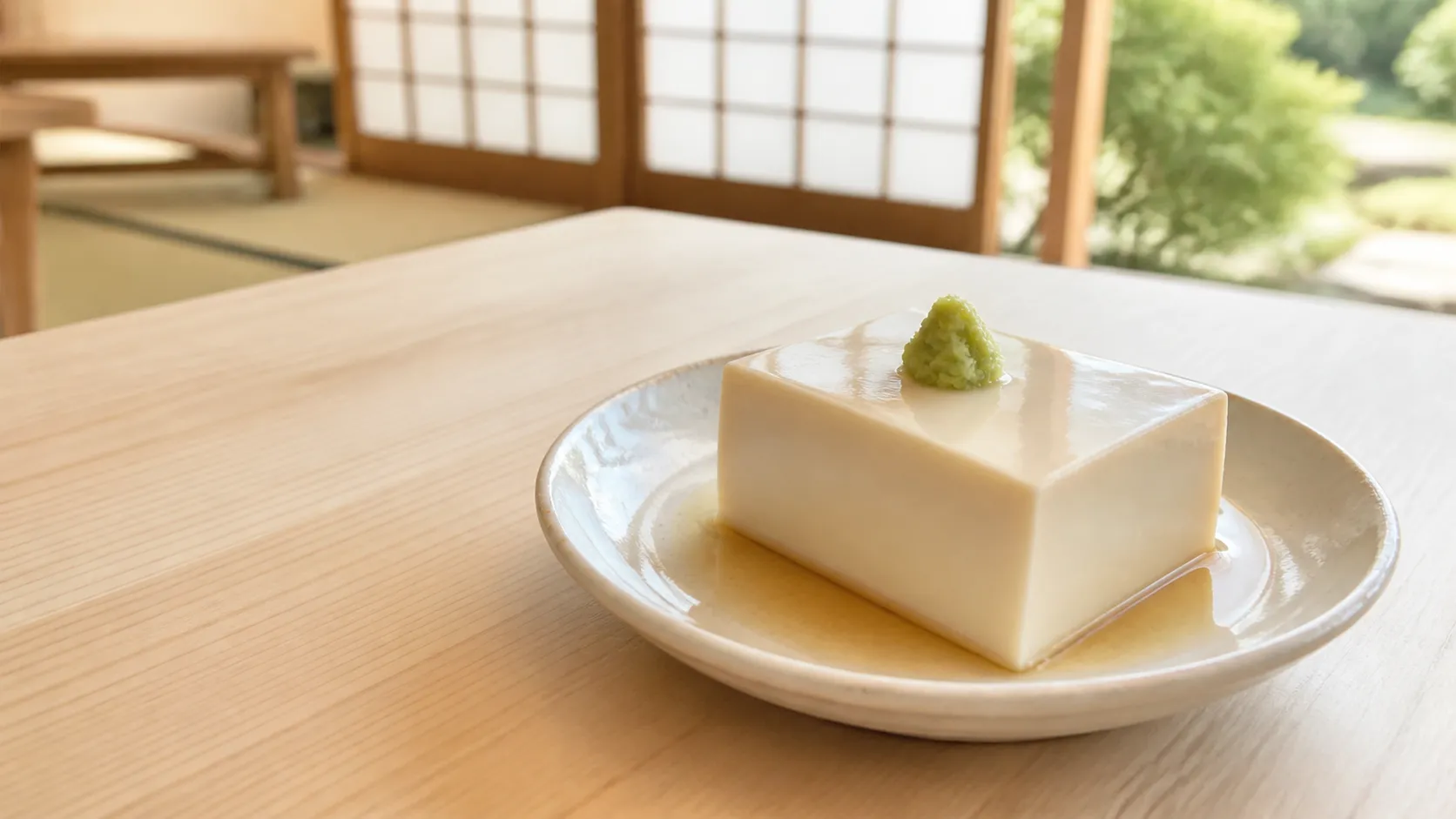
Local FoodKoyasan, Wakayama
Goma-dofu (ごま豆腐)
It has no soybeans in it, no coagulant, and no business being called tofu — and it was the best single thing I ate on a mountain full of monks.
September 2, 2026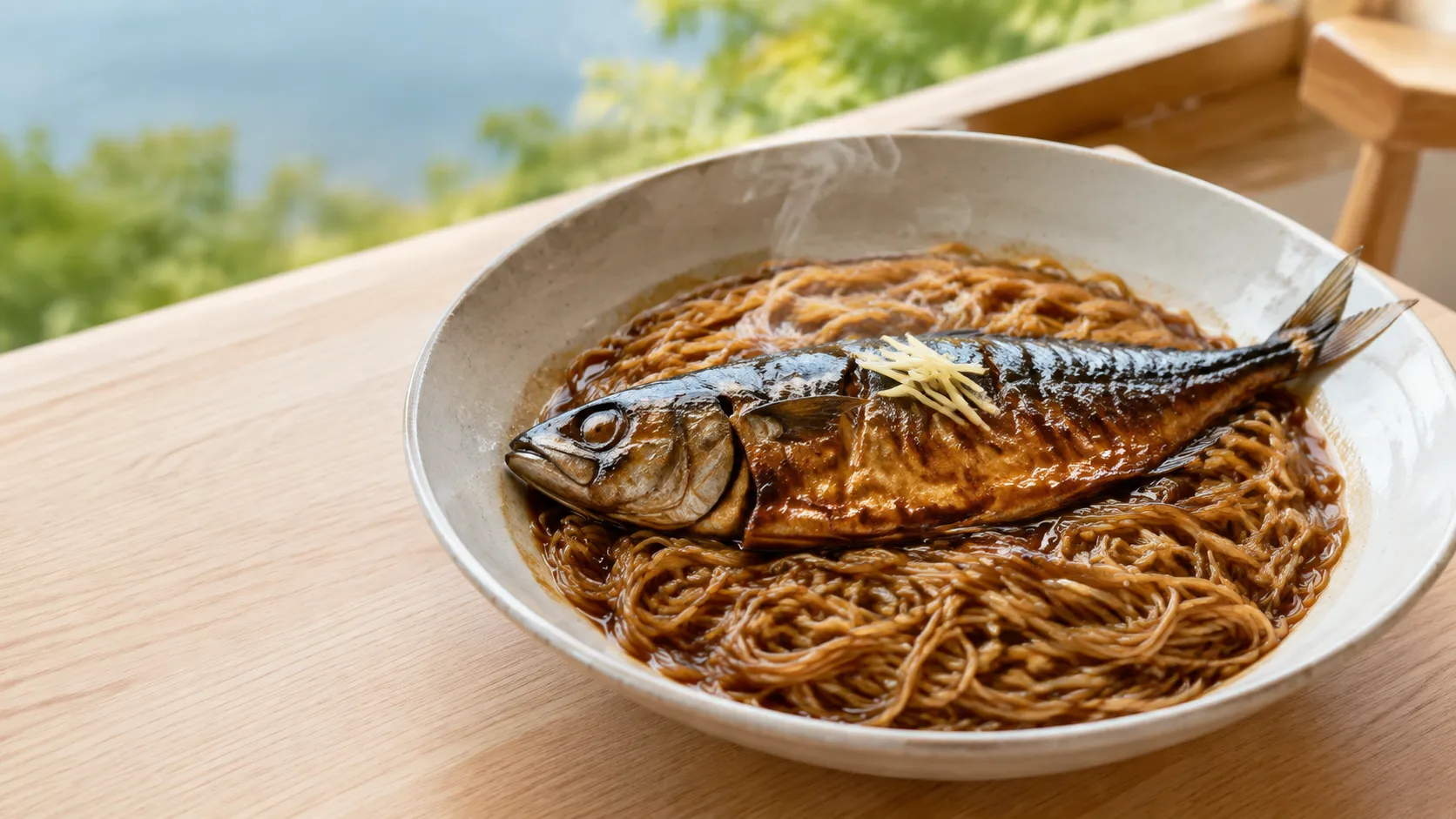
Local FoodNagahama, Shiga
Saba Somen (焼き鯖そうめん)
Somen noodles the color of strong tea, because they've been sitting in mackerel braising liquid absorbing everything it had — and yes, I drank what was left in the bowl.
September 2, 2026