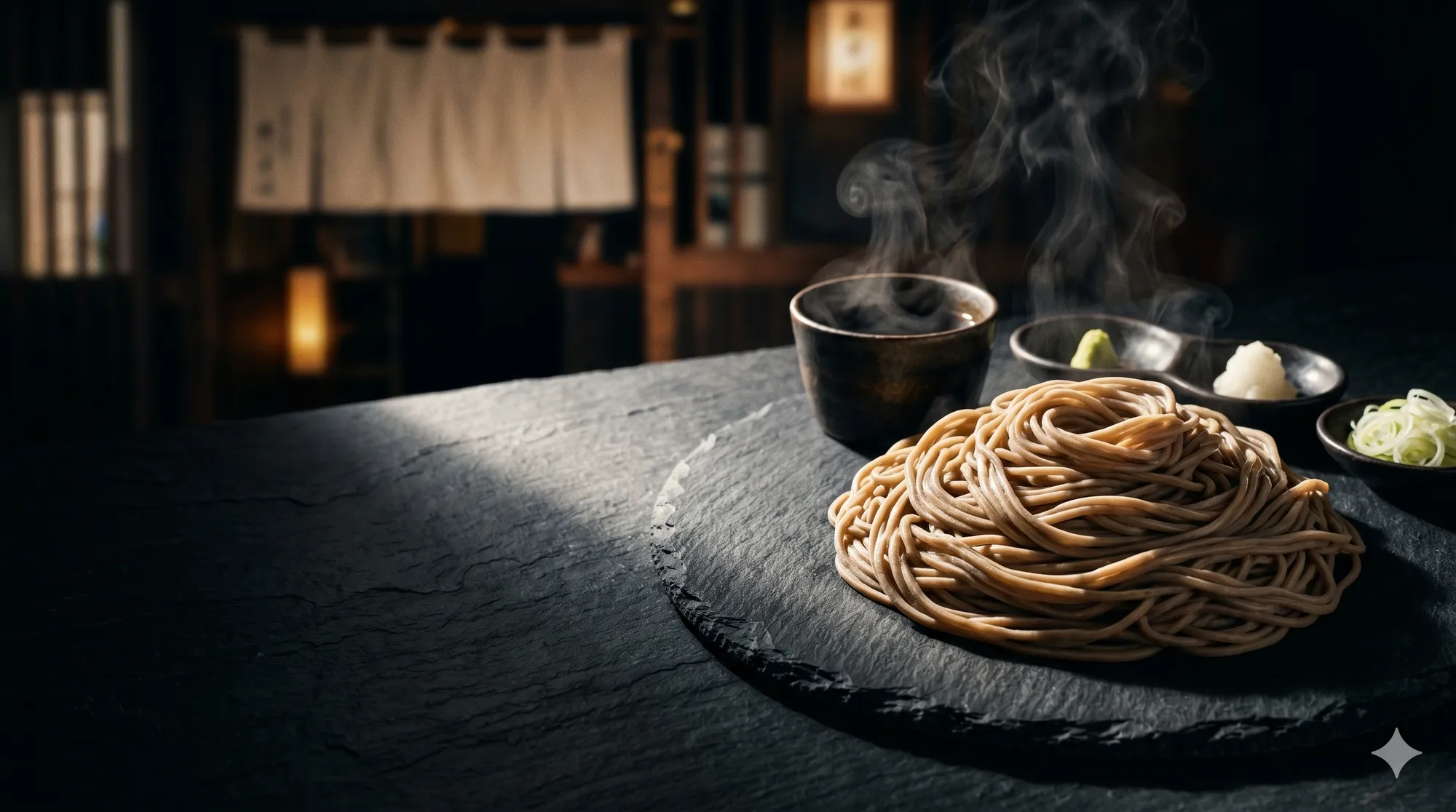
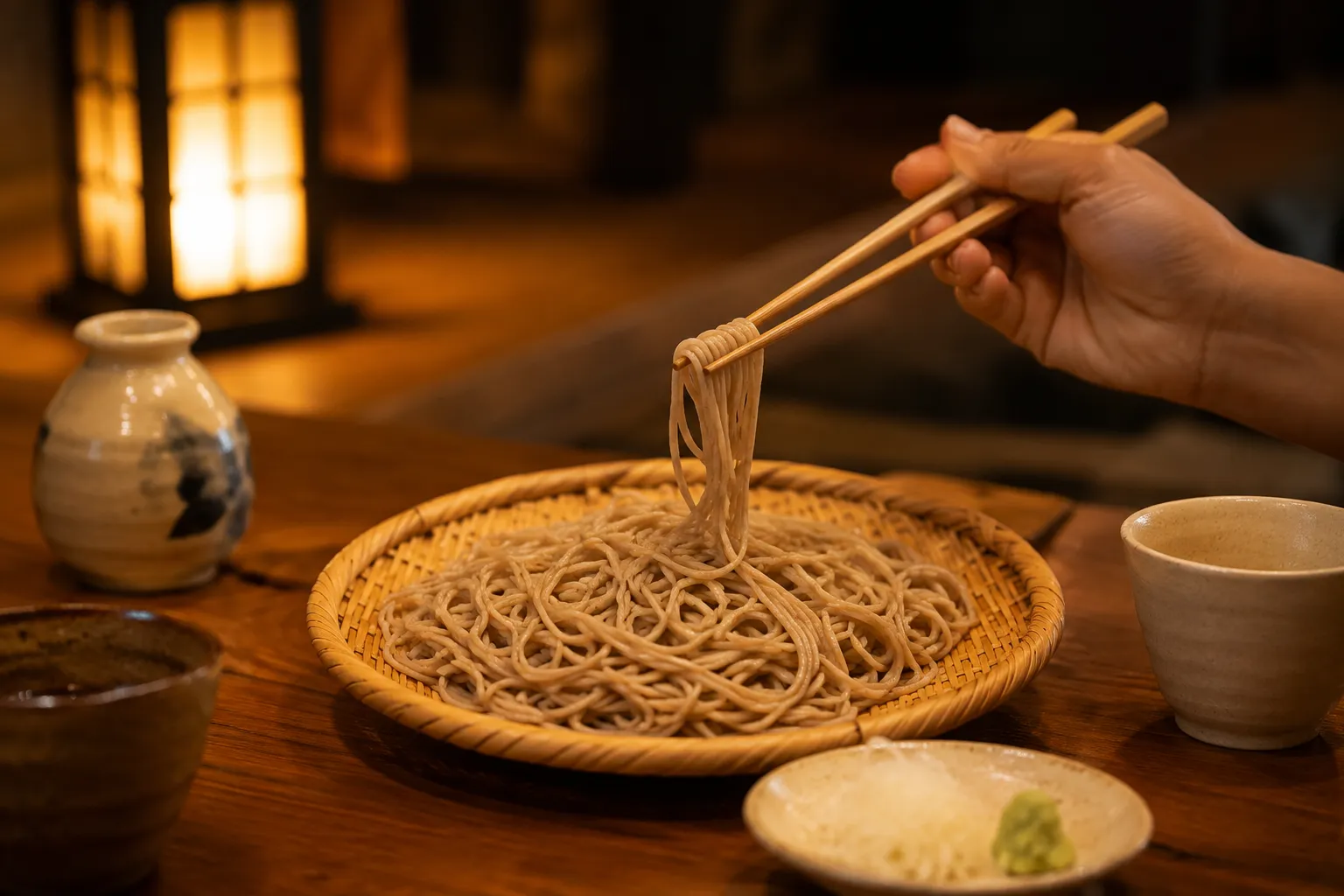
Ice-cold, lifted off a bamboo tray, dunked in a sharp little cup of soy-dashi — the first slurp of good soba on a brutal summer day is a clean, quiet shock. The noodles are cool and faintly rough, and instead of plain wheaty blankness there's this nutty, earthy, almost-toasted flavor that wheat simply can't do, because these are made from buckwheat. You dip, you slurp, and you feel about ten percent more sophisticated than you did a minute ago. If udon is a warm hug, soba is the cool friend with great taste.
Share this dish


Nutty buckwheat noodles, served ice-cold with a dipping sauce or hot in broth — the lean, earthy, grown-up noodle Japan has eaten for centuries. Slurping is mandatory; so is the noodle-water finale.
🍜 Planning a food trip to Japan?Add this dish to my Food Trip →
 Add this dish to my Food Trip →
The two essentials: zaru soba (chilled noodles you dip into a cup of tsuyu sauce) and kake soba (hot noodles in broth). From there it branches into tempura soba, duck soba, mountain-vegetable soba, and the famous year's-end ritual bowl. It's lean, often vegan-friendly, and beloved.
Edo's favorite fast food
Soba became Tokyo's defining street food in the Edo period. Buckwheat grew where rice struggled, and quick soba stalls fed the busy city — the original grab-and-go. There's even a tradition of eating toshikoshi soba on New Year's Eve: the long noodles symbolize a long life, and cutting them easily means cutting off the year's misfortune.
Mountainous regions like Nagano (Shinshu soba), Izumo, and Yamagata built deep soba cultures, each with its own grind, texture, and serving ritual. Hand-made soba (te-uchi) from a dedicated shop is a genuine craft.
Why buckwheat changes everything
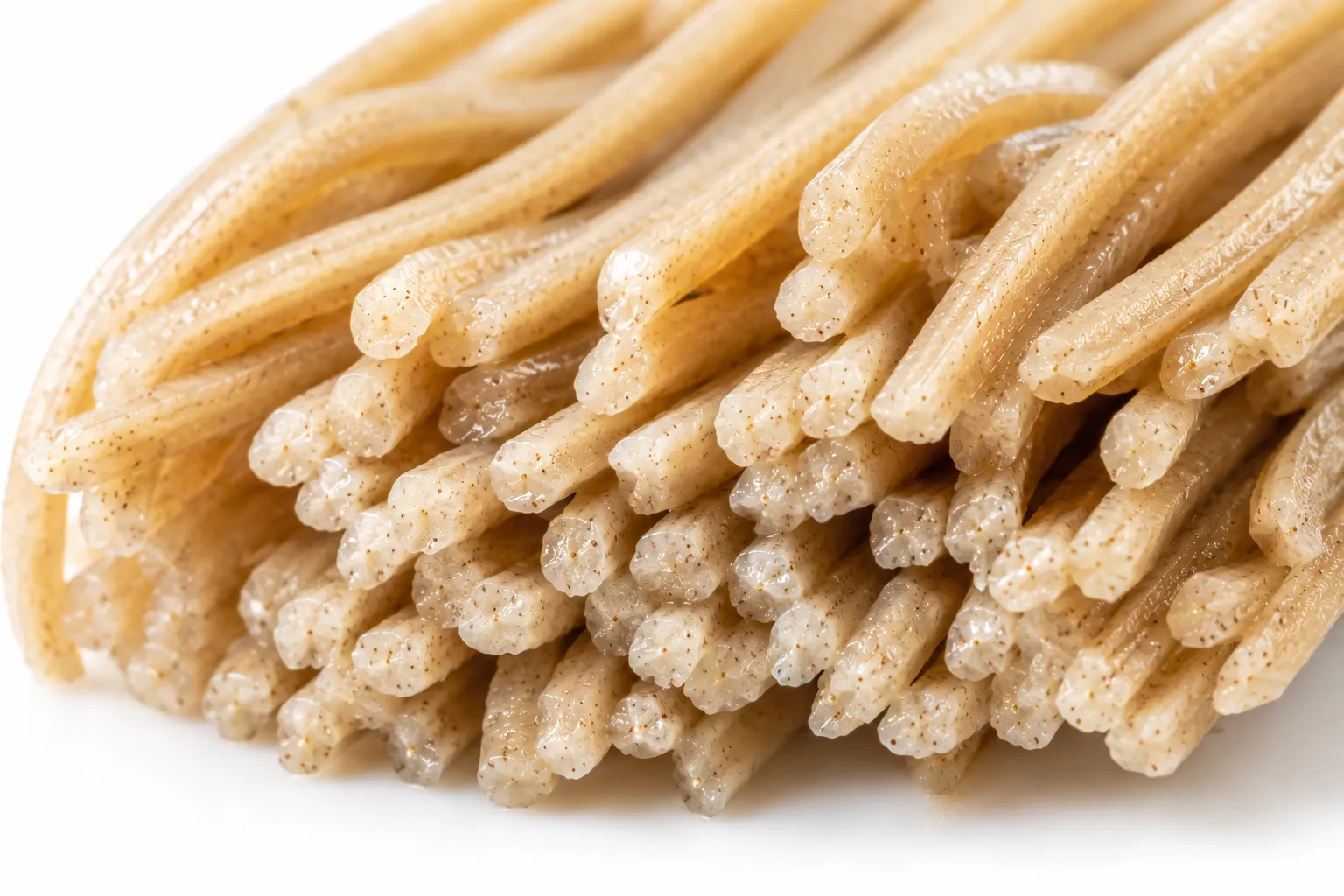
Buckwheat isn't actually a grain — it's a seed — and it gives soba its signature nutty aroma, grayish color, and slightly firm, almost crumbly bite. The higher the buckwheat ratio, the more fragrant and fragile the noodle (juwari is 100% buckwheat; many shops blend in some wheat for elasticity).
Because the flavor is subtle, soba is all about freshness and a good tsuyu — a dashi-soy dipping sauce balanced just right. Purists eat the first bite with no sauce at all, just to taste the buckwheat.
How it's made
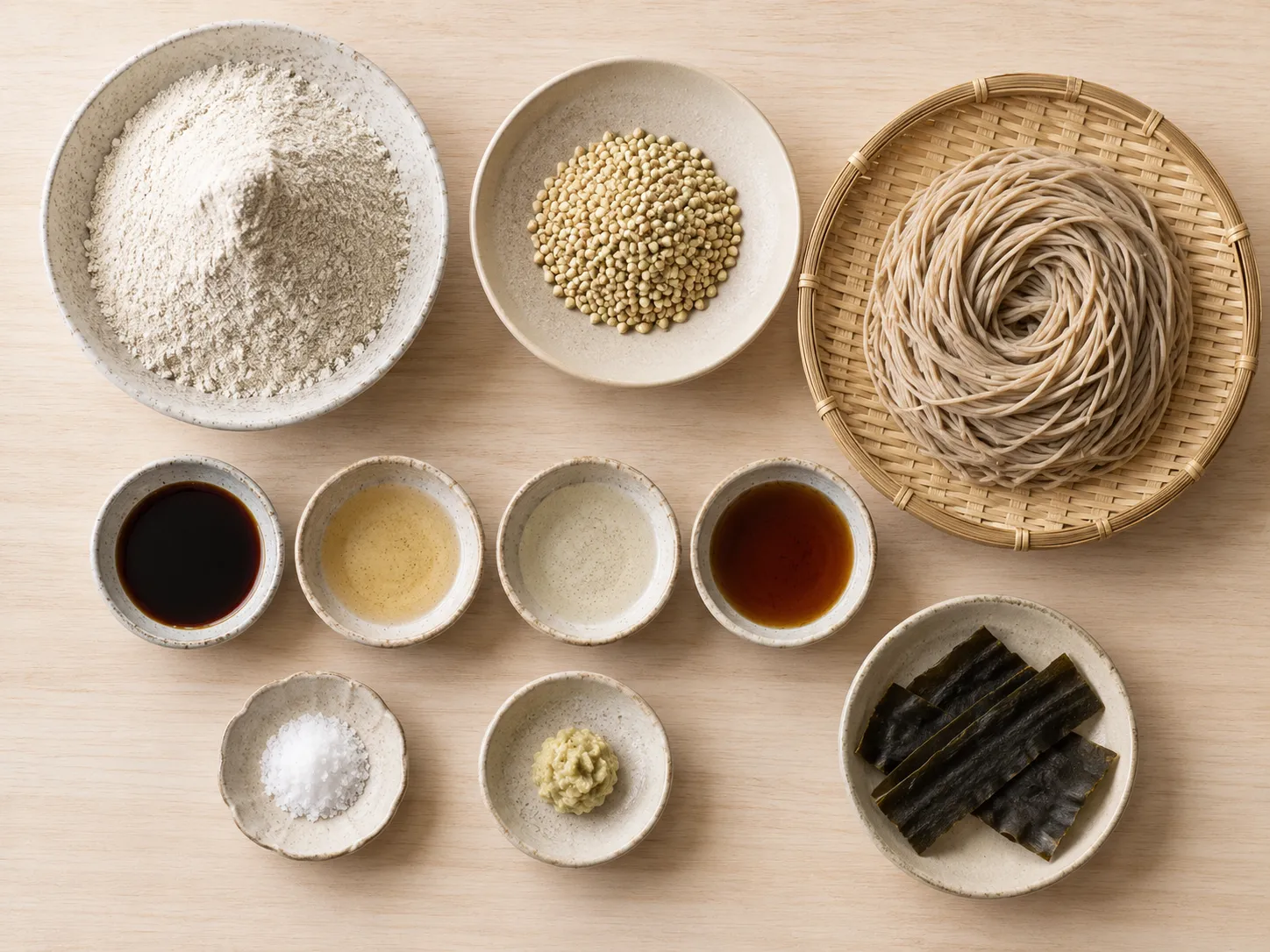
- Mix buckwheat flour (with some wheat flour for binding) and water into a dough
- Knead, roll thin, and cut into fine, even noodles
- Boil briefly — soba cooks fast
- Shock in ice water to tighten and clean the noodles
- Serve chilled on a bamboo tray with tsuyu (zaru), or hot in broth (kake)
Before you go — and don't skip the soba-yu
Your questions, answered honestly
"How do I eat zaru soba?" — Lift a small bundle of noodles, dip just the bottom third into the tsuyu cup (don't drown it), and slurp. Add the wasabi and green onion to the sauce to taste.
"What's the little teapot at the end?" — That's soba-yu — the starchy water the noodles were boiled in. Pour it into your leftover dipping sauce and drink it as a warm, nutty broth to finish. It's the best part and tourists always miss it.
"Slurp?" — Loudly. Slurping aerates the noodle and is the correct way to eat. Go for it.
"Soba vs udon?" — Soba is thinner, nuttier, earthier (buckwheat); udon is thick, chewy, mild (wheat). Try both — they're completely different moods.
"Is it gluten-free?" — Not usually — most soba is blended with wheat flour. Only juwari (100% buckwheat) is wheat-free, and cross-contamination is common, so ask if it matters for an allergy.
What the staff will ask you
| You'll hear | Romaji | Meaning | Just say |
|---|---|---|---|
| 温かいの、冷たいの? | Atatakai no, tsumetai no? | "Hot or cold?" | Tsumetai de (cold) / Atatakai de (hot) |
| 大盛りにしますか? | Ō-mori ni shimasu ka? | "Large portion?" | Hai (yes) / Futsū de (regular) |
| わさびは付けますか? | Wasabi wa tsukemasu ka? | "Want wasabi?" | Hai, onegaishimasu (yes please) |
To order, just say "Zaru soba hitotsu kudasai" (ざるそば一つください) — "one zaru soba, please."
Where to eat it
- Nagano (Shinshu soba) — the most famous soba country, with hand-made shops in the mountains.
- Izumo (Shimane) and Yamagata for distinctive regional styles (Izumo's stacked warigo bowls are a must-try).
- Tokyo's old-school soba-ya — standing soba counters in train stations are a cheap, authentic everyday experience.
The best handmade shops sell out and close early, so don't leave soba for late afternoon.
Soul Score
Local Roots4/5
First-Timer Friendly5/5
Adventure Level3/5
Comfort Level4/5
Travel Worthy4/5
These scores are one obsessed eater's gut feeling — not a verdict. A low number isn't a bad mark, just a different kind of adventure.
More food guides
Know someone planning Japan?
← All Articles
Japanese Food · Nationwide
Still hungry?
You might also like
Japanese FoodNationwide
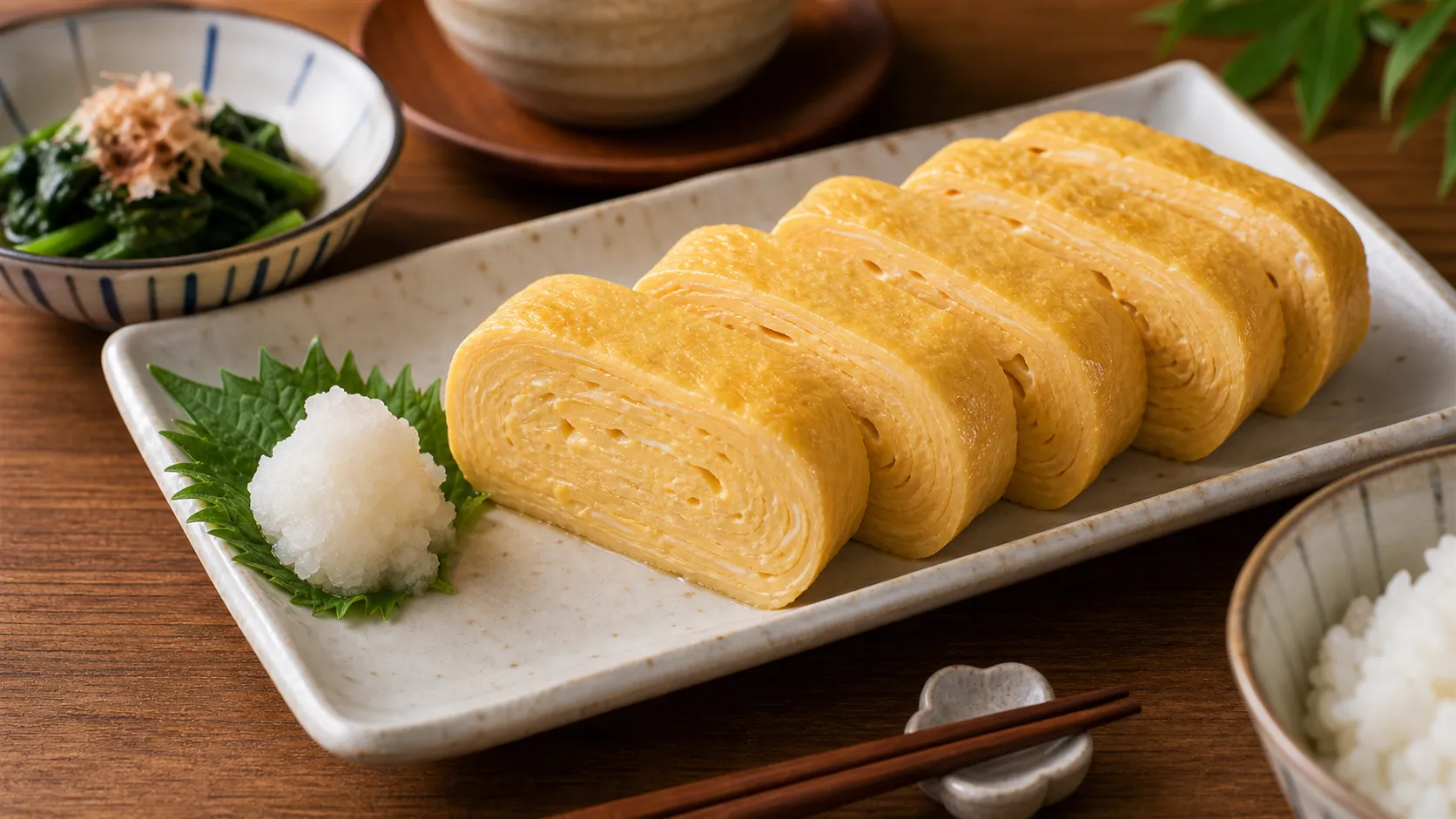
Dashimaki-tamago (だし巻き卵)
A rolled omelette so soft it almost trembles, layered fold over fold and soaked with dashi so that biting in releases a little warm rush of savory broth — the deceptively simple egg dish that Japanese chefs spend years perfecting.
July 11, 2026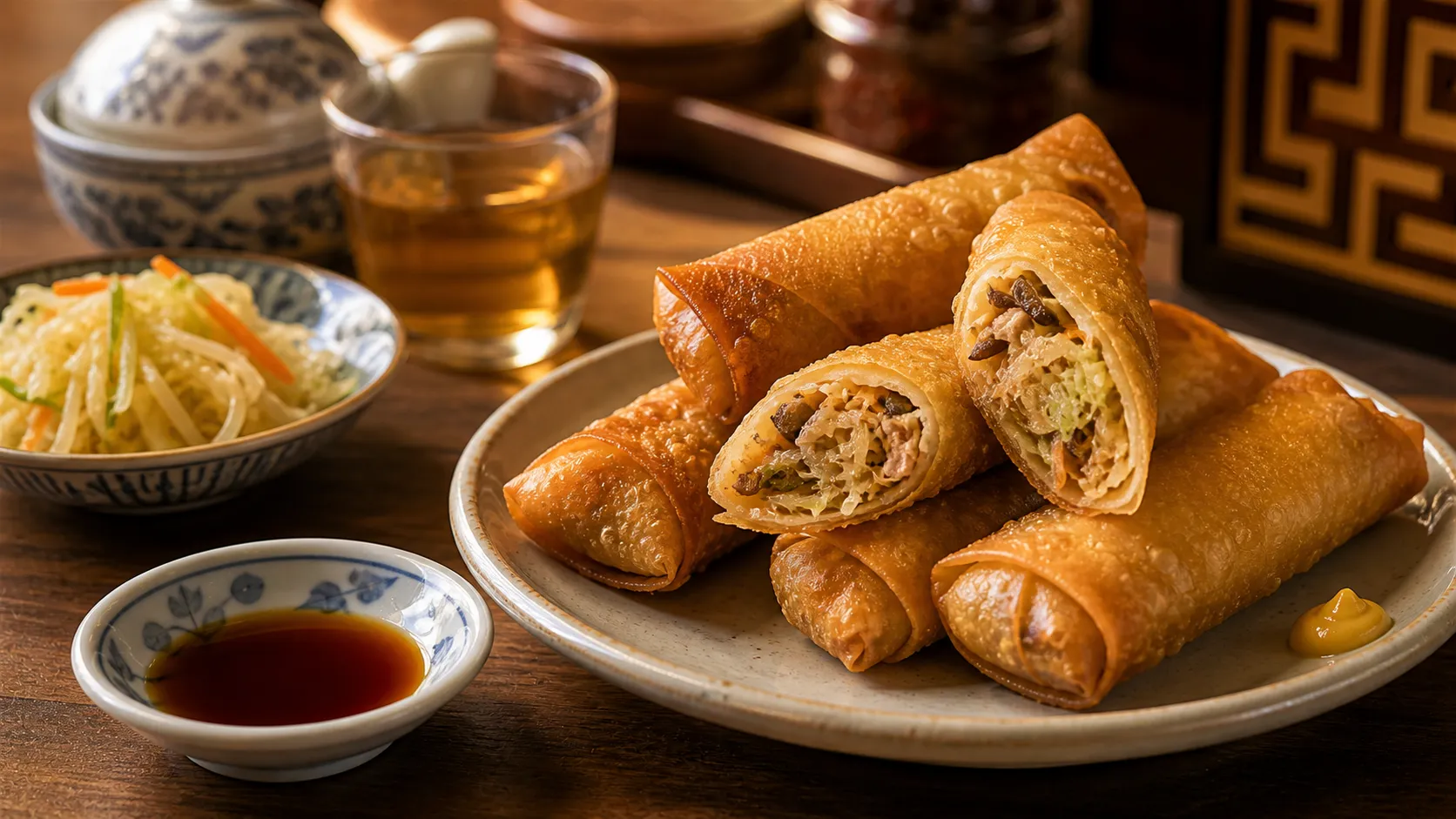
Japanese FoodNationwide
Harumaki (春巻き)
The Japanese spring roll — a shatteringly crisp golden tube that gives way to a hot, savory tangle of pork, cabbage and bamboo shoot, best eaten the second it's cool enough not to burn your mouth (you will not wait that long).
July 11, 2026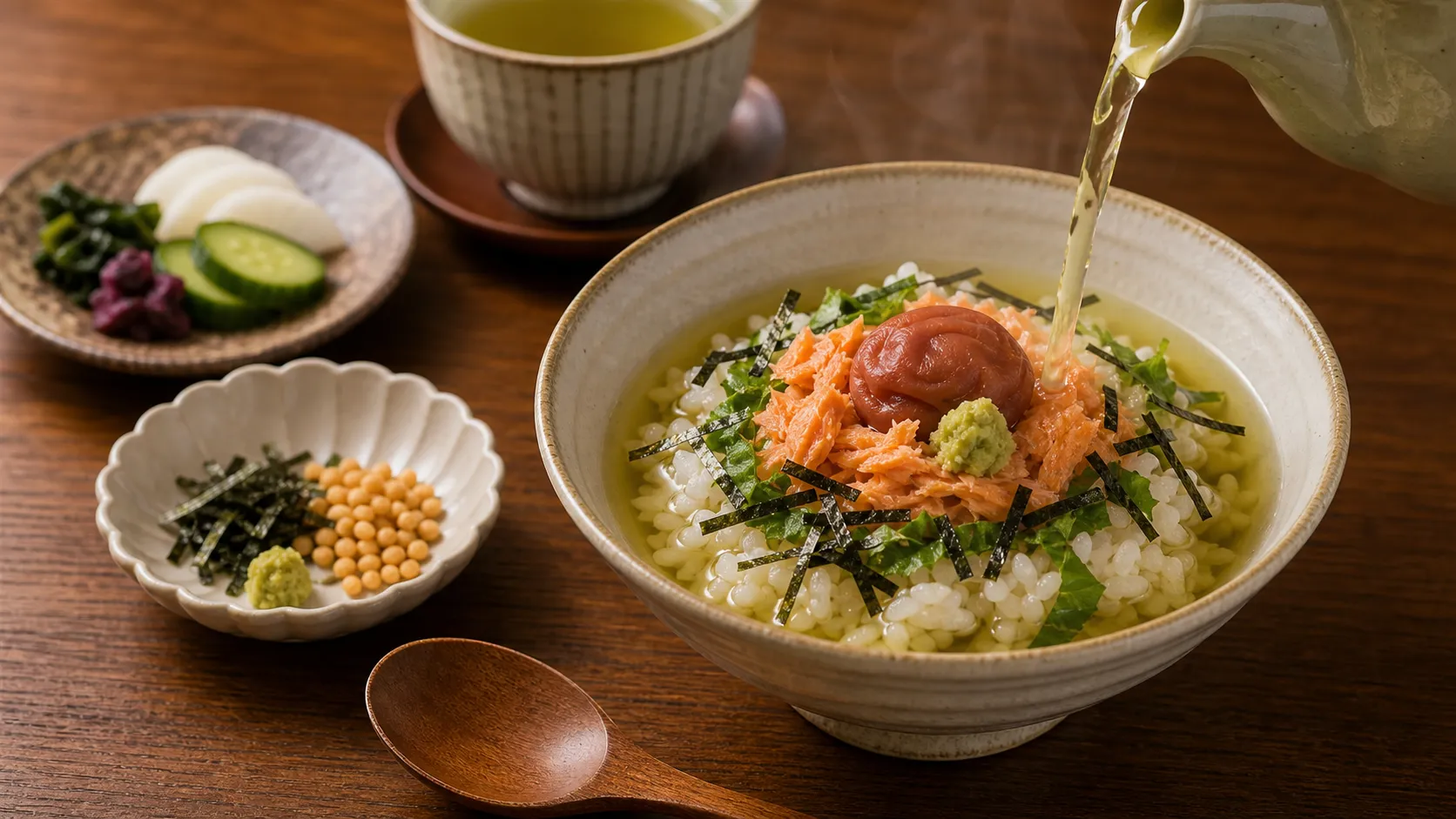
Japanese FoodNationwide
Ochazuke (お茶漬け)
Pour hot green tea or dashi over a bowl of rice, scatter something savory on top, and eat — the gentlest, most quietly restorative dish in Japan, the one you reach for late at night when you just need a warm bowl to make everything okay.
July 11, 2026