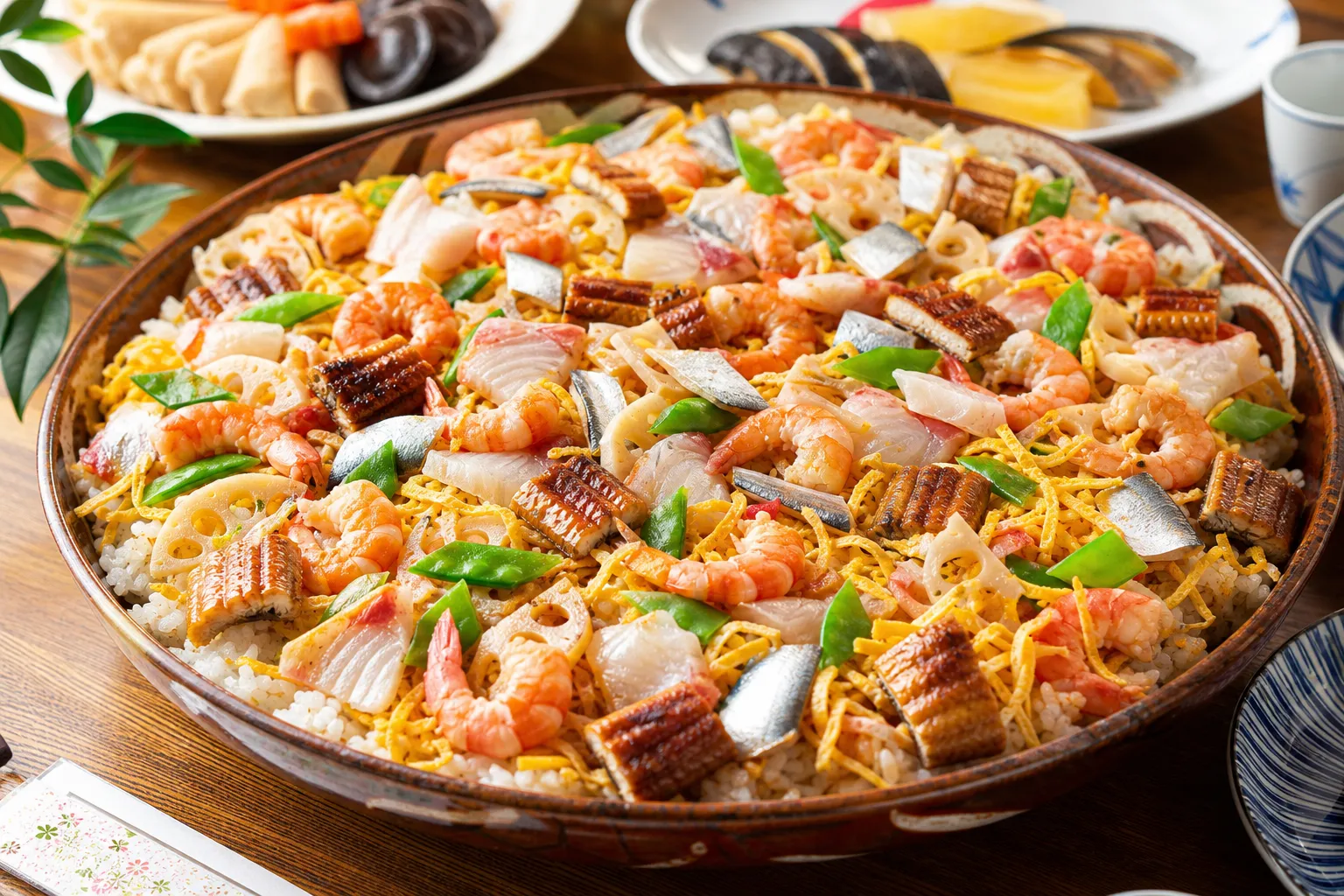
I counted. Shrimp, sea bream, conger eel, thin gold ribbons of egg, tiny silver fish, snow peas, lotus root, pickled ginger — and I'm sure I missed something under all of it. My bowl at a home table in Okayama looked less like a meal and more like somebody had opened a jewelry box over a plate of rice. I just sat there for a second before I picked up my chopsticks, genuinely unsure where to start. That's the whole point.
Share this dish


One plate, eight or nine kinds of seafood, and not a single grain of rice left uncovered — Okayama basically dared its neighbors to out-decorate this and nobody has.
🍜 Planning a food trip to Okayama?Add this dish to my Food Trip →
 Add this dish to my Food Trip →
This is bara-zushi (ばらずし), Okayama's answer to the question "what if chirashi-zushi refused to hold back." Where a normal scattered-sushi bowl might get you a modest handful of toppings, bara-zushi buries the vinegared rice completely — shrimp, white fish, grilled conger eel (anago), kinshi tamago egg strips, and often a small local fish called mamakari, all mixed and piled with an almost competitive generosity. It's a festival dish that decided every day could use a little festival in it.
Why a feudal lord accidentally invented abundance
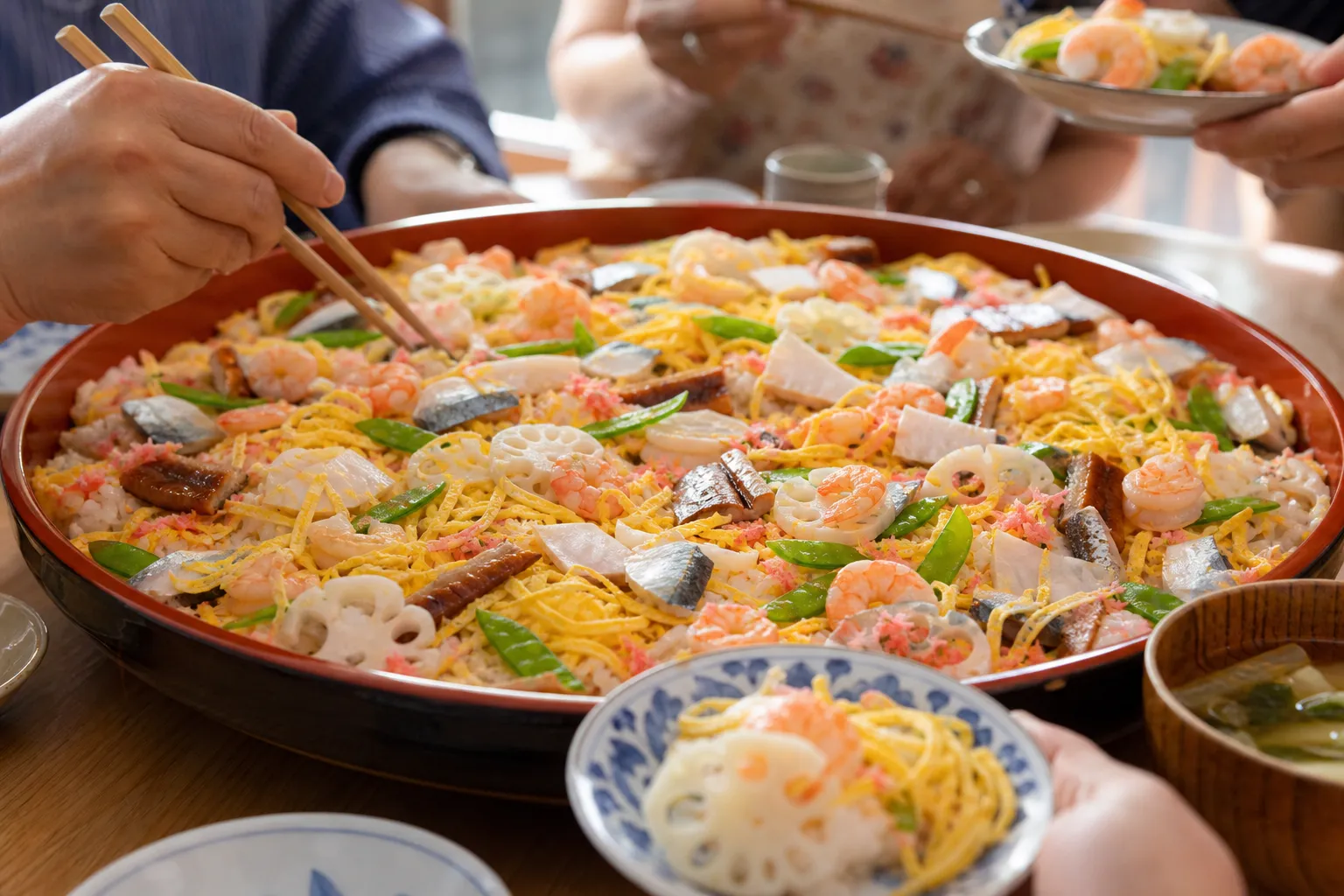
The story locals tell — and I love this story whether or not every detail survived four centuries intact — is that the Okayama domain's ruler, Ikeda Mitsumasa, issued a sumptuary edict in the 1600s ordering one soup and one dish per meal, no extravagance. Rice merchants and fishing families, unwilling to actually eat modestly, responded by burying an entire feast of toppings under the rice, or mixing everything together so it technically counted as "one dish." One dish. Sure. I find this kind of loophole logic deeply satisfying — it's the culinary equivalent of hiding vegetables in a smoothie, except the vegetables are lobster.
Whether that's the literal origin or a good story that stuck, bara-zushi has stayed a special-occasion dish in Okayama ever since — New Year's, festivals, family gatherings — the kind of thing a grandmother makes when everyone's coming home. I ate it at a wooden table with a view of nothing in particular and felt like I'd crashed someone's celebration in the best way.
A bite that never repeats itself
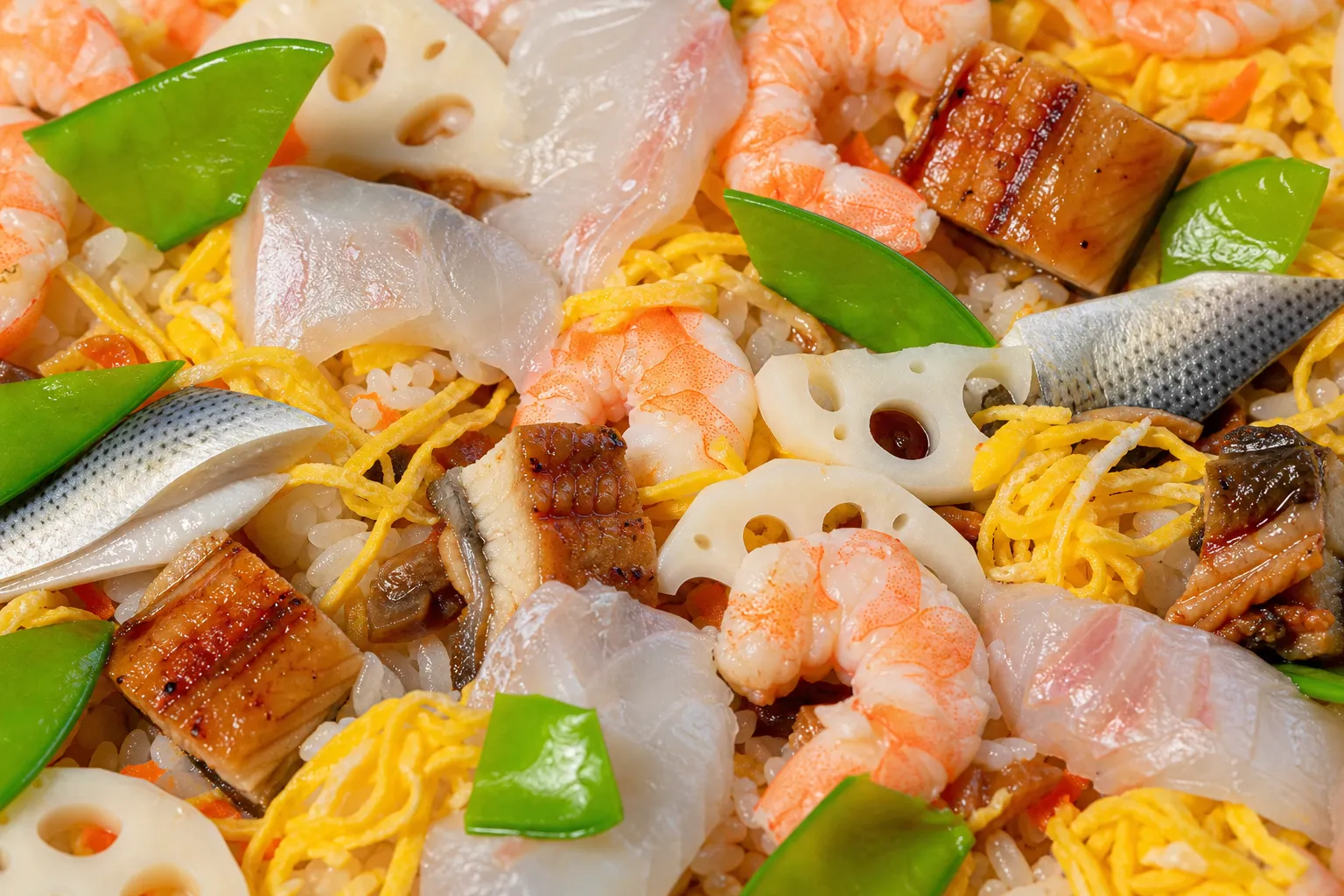
Every mouthful is a different combination. One bite is sweet grilled anago and tangy rice; the next is snappy shrimp and crunchy lotus root; the one after that is the faint iron tang of mamakari cutting through soft egg ribbons. The rice itself is properly seasoned — sharp vinegar, a little sugar — so it holds its own under the weight of everything piled on top instead of turning into a soggy base. Texture-wise it's a genuine obstacle course: silky sashimi-soft fish, crisp-tender vegetables, delicate shredded egg, all in the same spoonful if you're not careful (you won't be careful; nobody is).
It's rich without being heavy, festive without being fussy to eat, and it photographs like it knows it. I have never seen a plate of bara-zushi look understated. I don't think that's possible.
How it's made
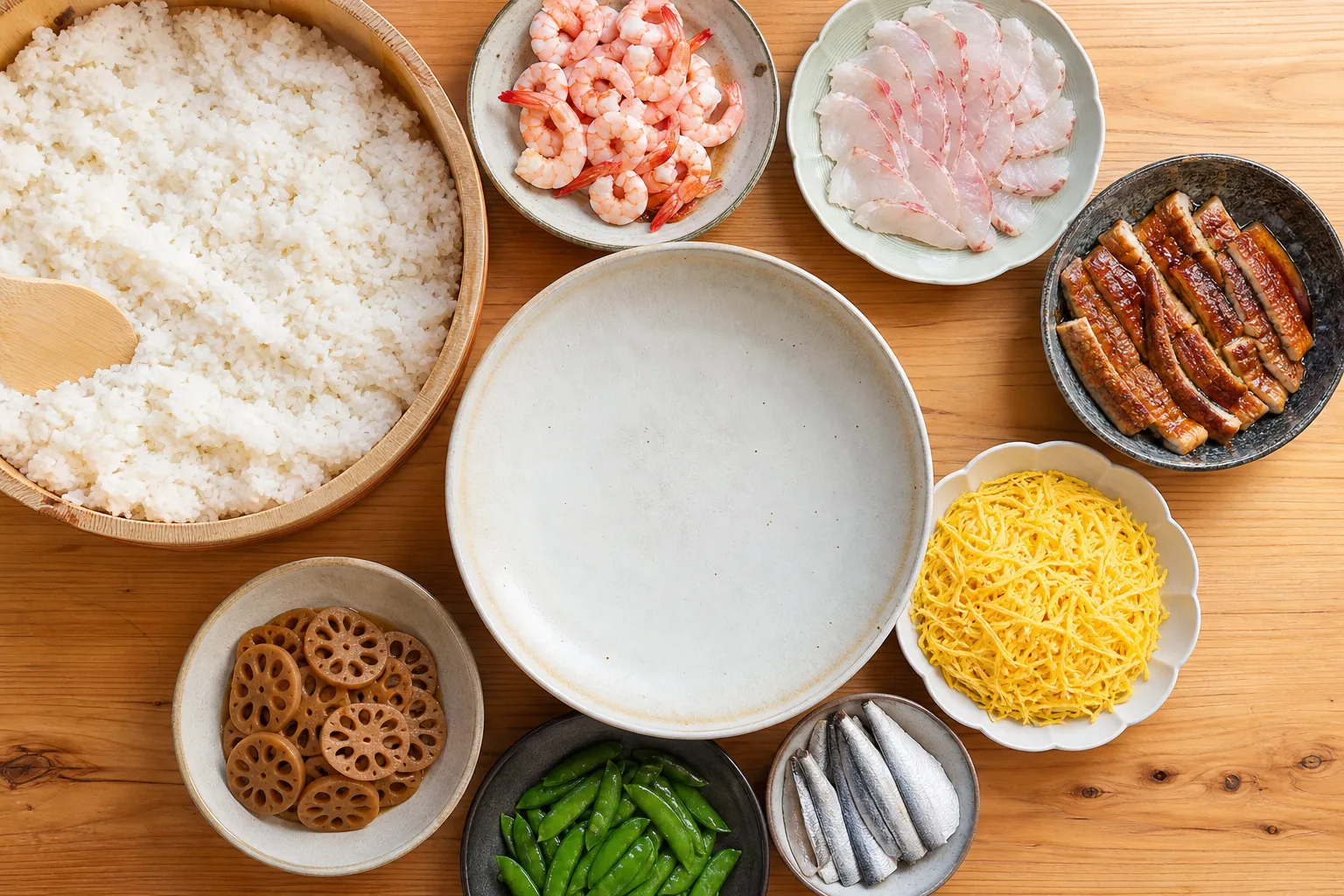
- Cook rice slightly firm and season it with vinegar, sugar, and salt while still warm
- Prepare each topping separately — simmer lotus root and shiitake in dashi, grill conger eel with a sweet glaze, blanch snow peas, poach or marinate shrimp and white fish
- Make thin sheet omelette and slice it into fine gold threads (kinshi tamago)
- Either mix some of the smaller ingredients directly into the rice, or layer them straight on top — Okayama households do both
- Arrange the showier pieces — shrimp, fish, eel — decoratively across the surface so nothing is hidden
- Serve on a large communal plate, often in a lacquered bowl, for everyone to share
Before you go — for the bara-zushi curious
Your questions, answered honestly
"Is this the same as chirashi-zushi?" — Same family, different attitude. Chirashi-zushi elsewhere in Japan can be a light scattering of a few toppings; Okayama's bara-zushi goes maximalist, often mixing ingredients into the rice as well as piling them on top, with more variety per plate.
"Is the fish raw?" — Some of it (the sashimi-style white fish and shrimp are usually lightly cooked or vinegar-cured, not raw sashimi), some of it is grilled or simmered. It's a mixed plate, not a raw-fish dish specifically — much gentler than sashimi if that's what's worrying you.
"Do I mix it up before eating?" — No need — it's already composed. Just eat it as arranged, working through different combinations bite by bite. Some people do stir a little as they go; there's no wrong way.
"Is it a whole meal?" — Yes. It usually comes with miso soup and maybe a few small side pickles, but the bara-zushi itself is the star and the substance.
What the staff will ask you
| You'll hear | Romaji | Meaning | Just say |
|---|---|---|---|
| お一人様ですか? | Ohitorisama desu ka? | "Table for one?" | Hai, hitori desu (Yes, one person) |
| お飲み物はいかがですか? | Onomimono wa ikaga desu ka? | "Something to drink?" | Ocha de onegaishimasu (Tea, please) |
| お味噌汁はお付けしますか? | Omisoshiru wa otsuke shimasu ka? | "Add miso soup?" | Hai, onegaishimasu (Yes, please) |
| こちらでお召し上がりですか? | Kochira de omeshiagari desu ka? | "Eating here?" | Hai, kochira de (Yes, here) |
To order, just say "Bara-zushi kudasai" (ばらずしください) — "Bara-zushi, please."
Where to eat it
- Okayama City — restaurants around Okayama Station and near Okayama Castle serve bara-zushi as a set meal; look for it on lunch menus at local Japanese restaurants.
- Local supermarkets and depachika — pre-made bara-zushi is a common takeaway item in Okayama, especially around New Year's and festival seasons.
- Kurashiki — the nearby historic canal district also has restaurants serving Okayama-style bara-zushi to visitors exploring the Bikan area.
- Check before you go — as a regional specialty, availability can shift seasonally; confirm current hours and menu before making a special trip.
Soul Score
Local Roots5/5
First-Timer Friendly4/5
Adventure Level3/5
Comfort Level5/5
Travel Worthy4/5
These scores are one obsessed eater's gut feeling — not a verdict. A low number isn't a bad mark, just a different kind of adventure.
Know someone planning Japan?
← All Articles
Local Food · Okayama
Still hungry?
Eat more from Okayama
Local FoodOkayama, Okayama
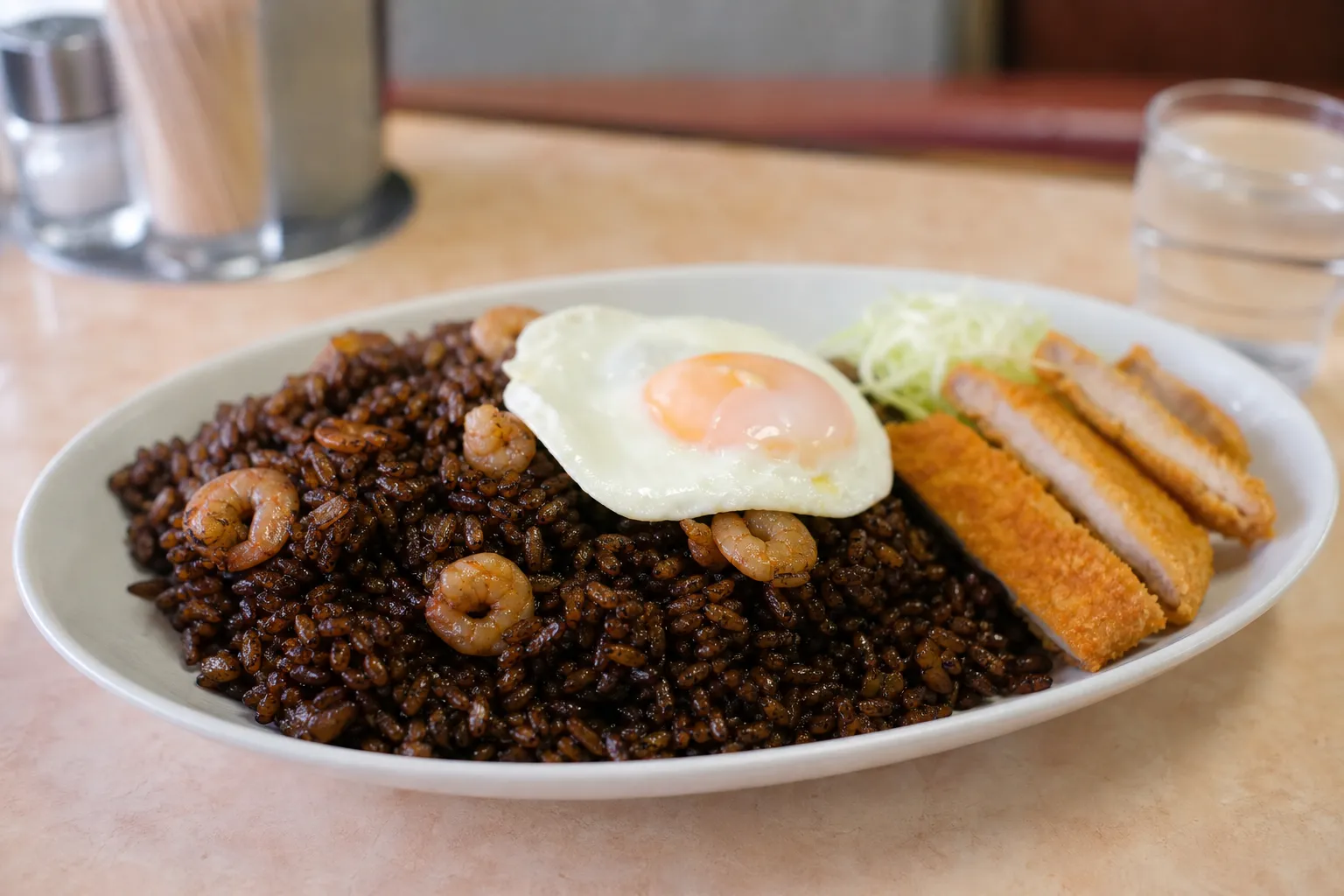
Okayama Ebimeshi (えびめし)
The rice is black. Not burnt-black — on-purpose black, glossy and rich, and I did not trust it until the first bite made me a believer.
August 2, 2026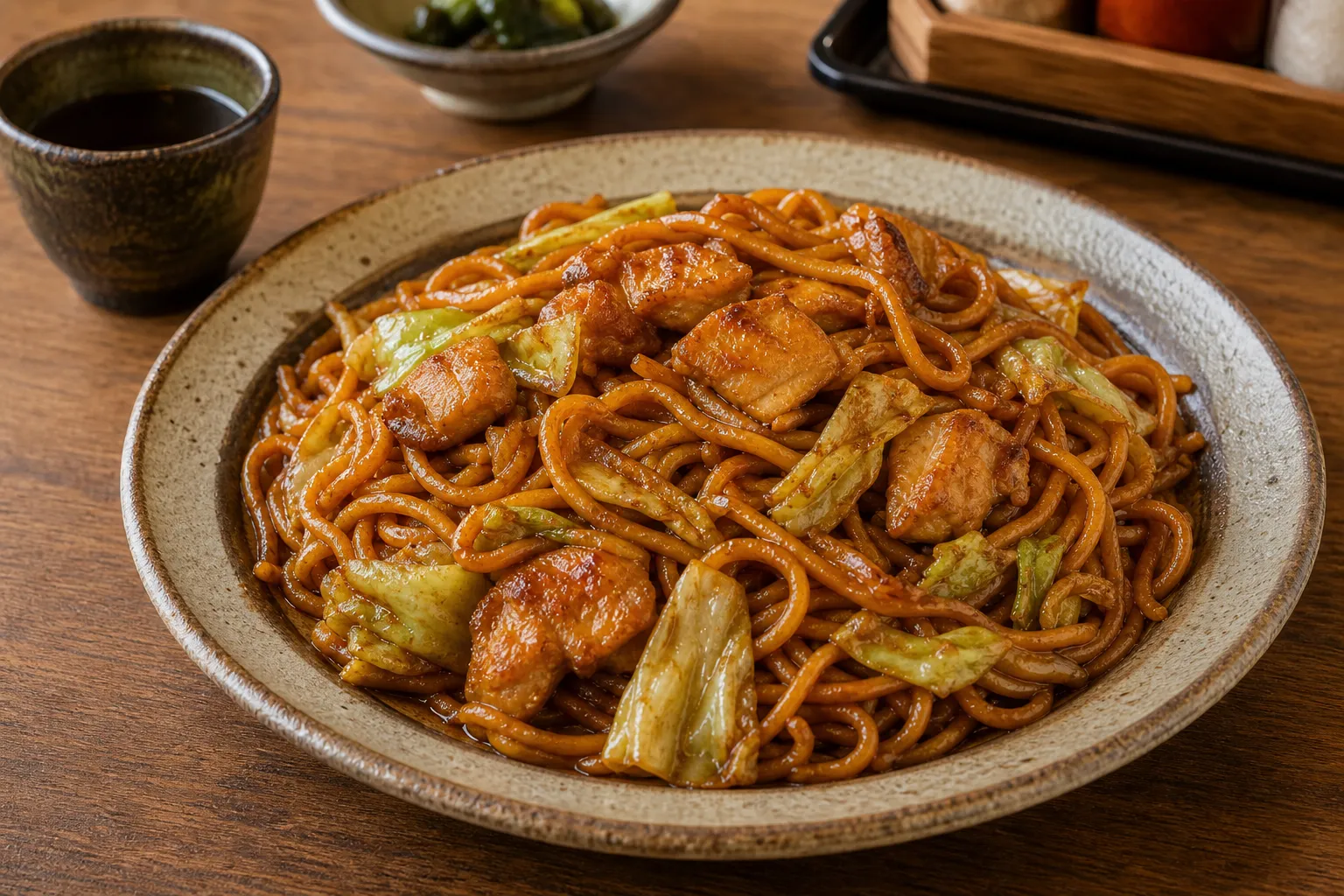
Local FoodHiruzen, Okayama
Hiruzen Yakisoba (蒜山焼きそば)
Forget the brown-sauce yakisoba you know. Up in Okayama's Hiruzen highlands they coat the noodles in a garlicky, sweet-savory miso dare with chicken and cabbage — and it ruins you for the normal kind.
July 12, 2026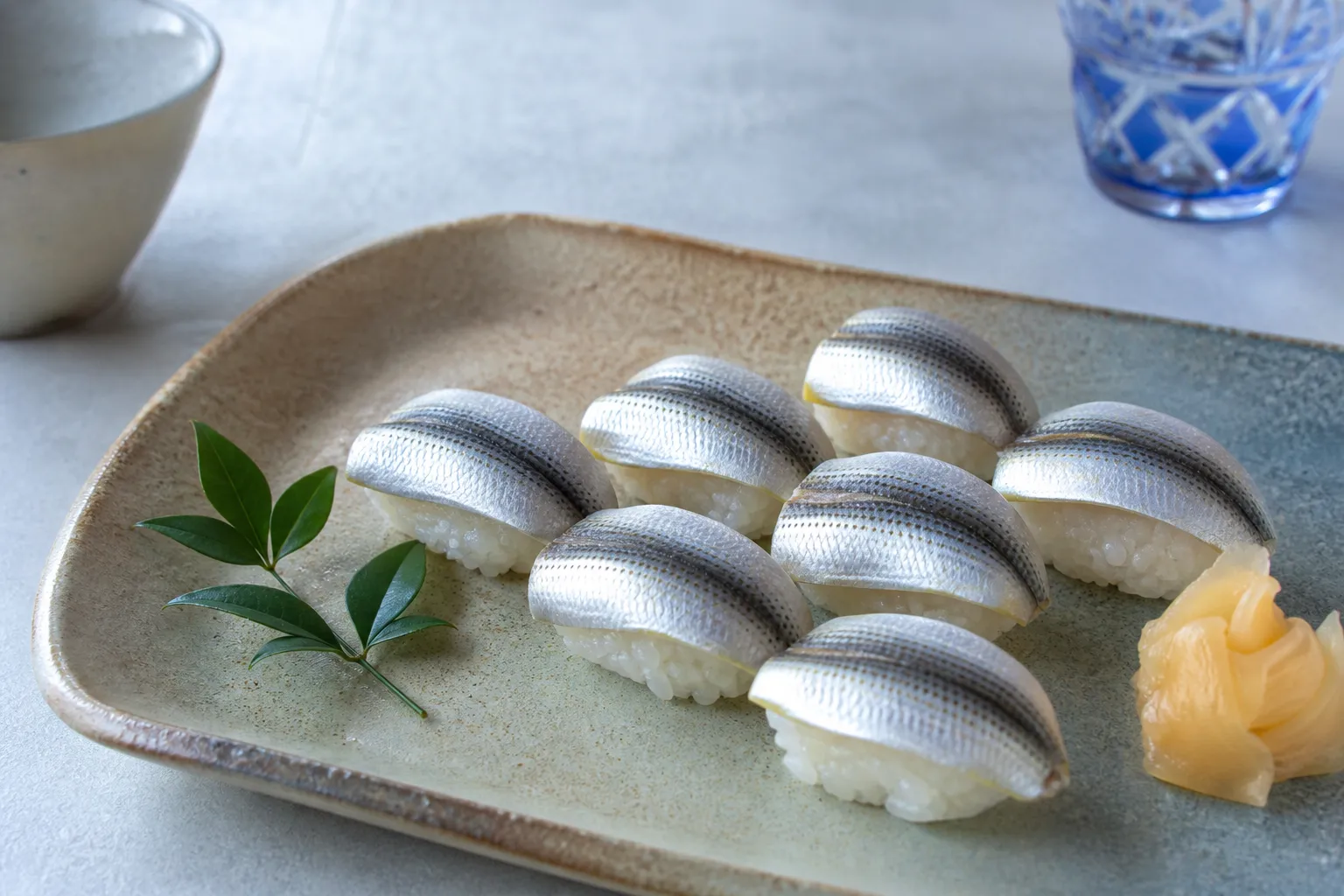
Local FoodOkayama
Mamakari-zushi (ままかり寿司)
Silvery little vinegar-cured fish draped over sushi rice — so good, the Okayama legend goes, that you'll run next door to borrow more rice. The name is a joke about greed, and honestly it undersells the fish.
July 12, 2026