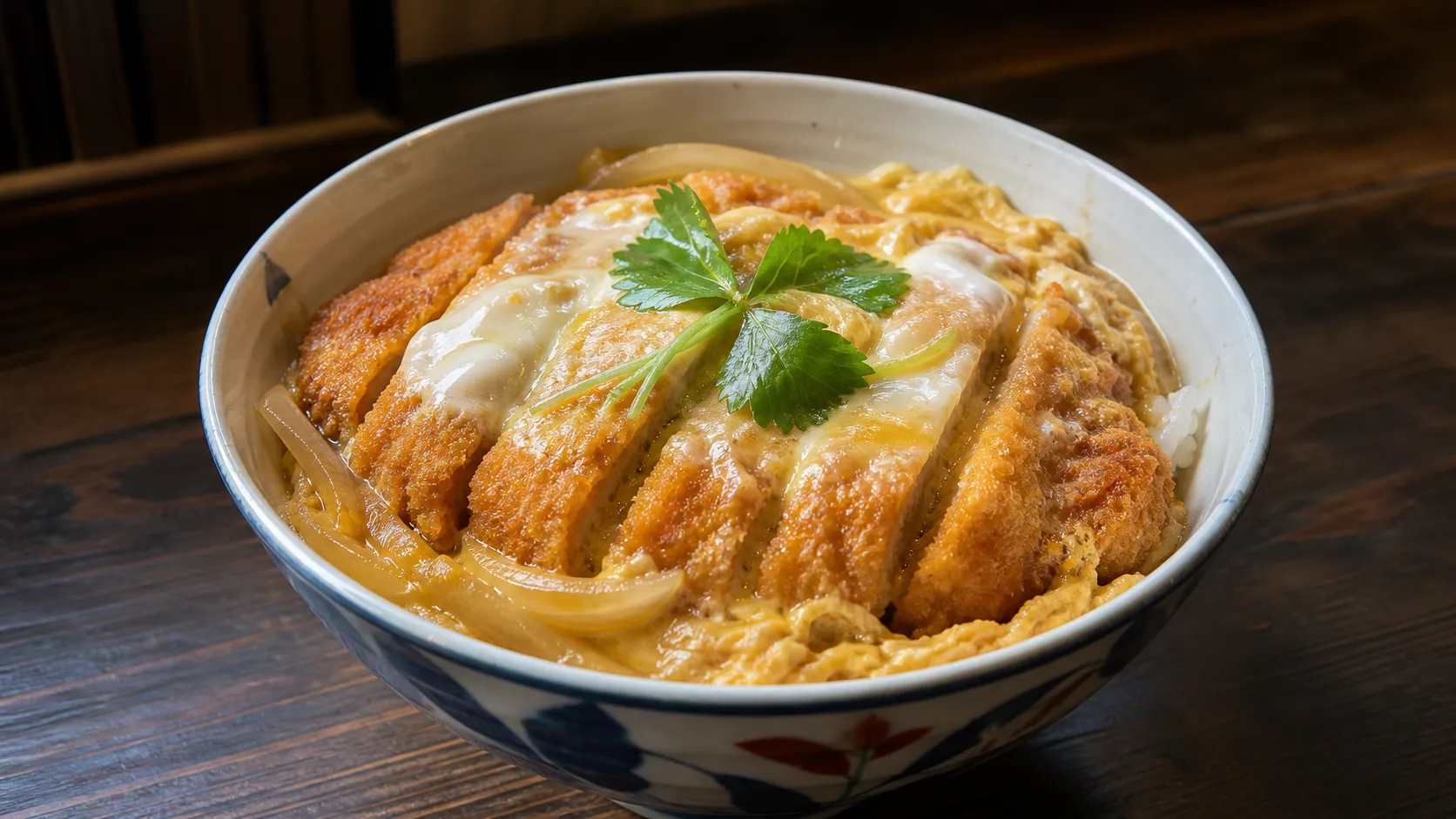
There's a particular kind of happiness that only katsudon delivers. Take a tonkatsu — a golden, crunchy breaded pork cutlet — then simmer it for a moment with sweet onions in a dashi-soy broth, pour beaten egg over the top to set it just barely runny, and slide the whole glorious mess onto a bowl of hot rice. The crispy and the silky, the savory and the sweet, the fried and the soft, all in one bowl. It is, frankly, one of the best things you can eat for under a thousand yen.
Share this dish


A crispy pork cutlet simmered with onion and egg in sweet-savory broth, draped over a bowl of hot rice. Comfort food with a fried-and-fluffy double punch — and the meal Japan eats to win.
It's the ultimate Japanese comfort food: filling, fast, cheap, and on the menu at soba shops, diners, and tonkatsu restaurants everywhere. There's even a famous superstition around it — but more on that below.
The cutlet that learned to swim
Katsudon was born from tonkatsu (the breaded fried pork cutlet, itself a Japanese take on European schnitzel), which took off in the early 20th century. Someone had the genius idea to simmer the cutlet with onion and egg and serve it over rice as a donburi (rice bowl), and a legend was born. The egg-and-onion version (tamago-toji katsudon) is the national default.
Regional variants are fun: Sauce katsudon (Fukui, Komagane) skips the egg and dips the cutlet in a sweet Worcestershire-style sauce; Demi katsudon (Okayama) crowns it with demi-glace. But the egg-simmered classic is what "katsudon" means to most of Japan.
Why the half-set egg is everything
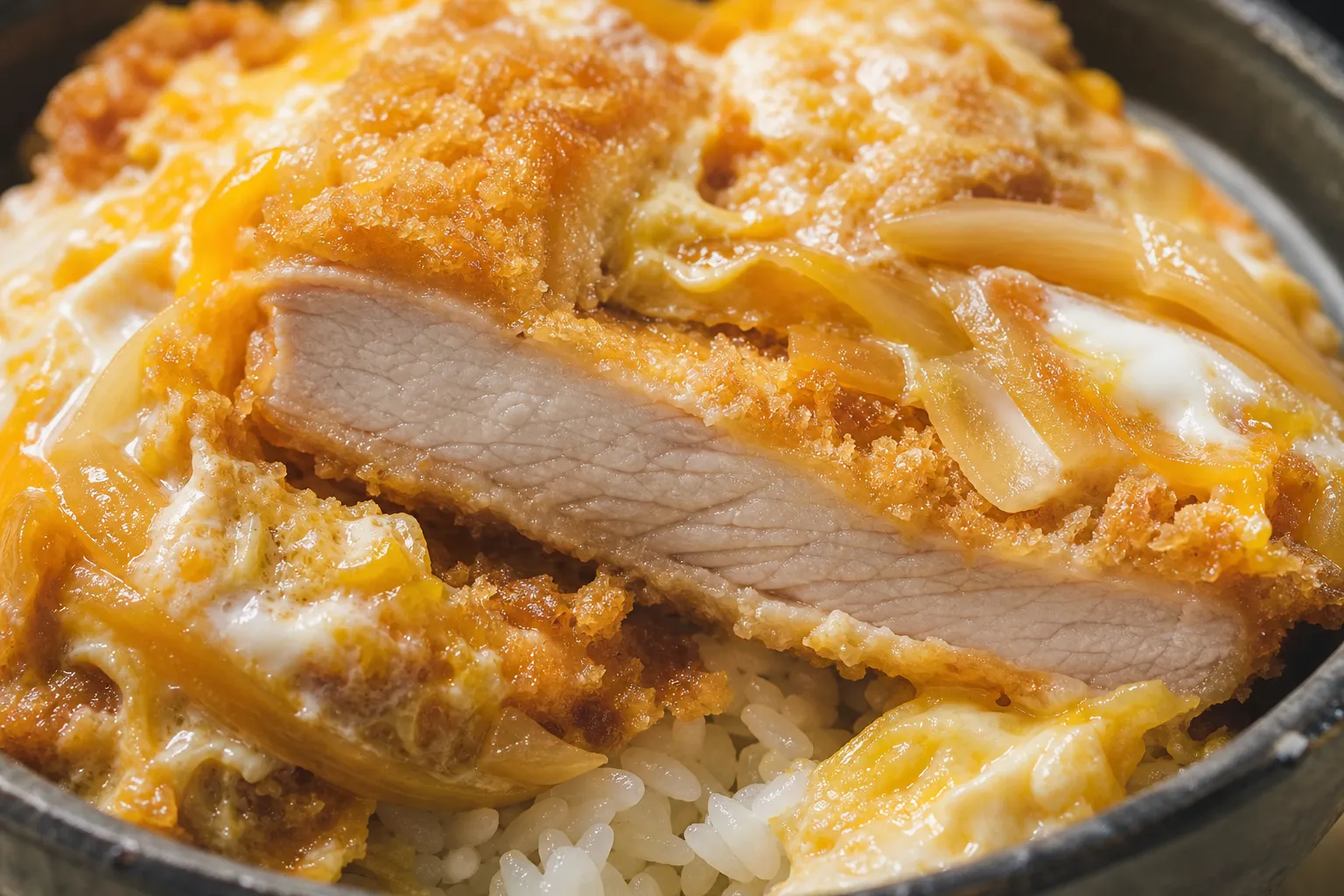
The magic move is the egg. The cutlet is simmered just long enough that the bottom soaks up broth and softens, while the top stays crisp, and the beaten egg is poured in and cooked until just set — glossy, barely runny, never dry. That contrast — crunchy cutlet, custardy egg, broth-soaked rice — is the whole point.
The broth (dashi, soy, mirin, sugar) and the sweet softened onion tie it together. Done right, every spoonful has a little of everything.
How it's made
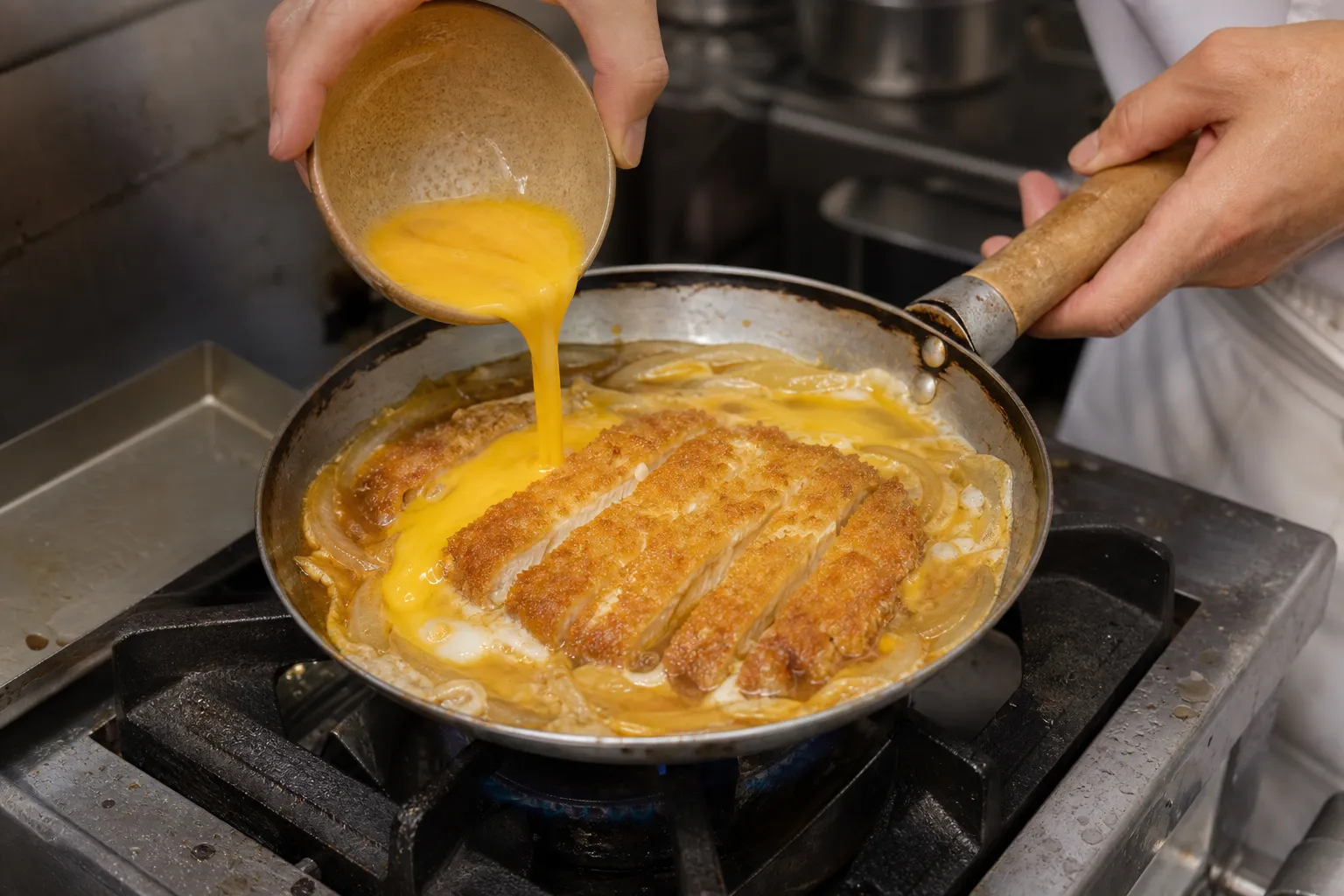
- Fry a breaded pork cutlet (tonkatsu) until golden and crisp, then slice it
- Simmer sliced onion in a broth of dashi, soy sauce, mirin, and sugar
- Lay the sliced cutlet on the onions and simmer briefly to soak up flavor
- Pour beaten egg over the top and cover; cook until just set (still glossy)
- Slide the whole thing onto a bowl of hot rice; garnish with mitsuba or scallion
Before you go — the lucky bowl
Your questions, answered honestly
"Why do students eat it before exams?" — Katsu (カツ) sounds like katsu (勝つ), meaning "to win." So katsudon is the lucky meal eaten before exams, games, and big interviews. Order one before your shinkansen and manifest a good trip.
"Egg or sauce version?" — The egg-simmered (tamago-toji) classic is the standard and the cozy one. If you spot sauce katsudon in Fukui or Nagano, try it — a crispier, no-egg experience. Both are great.
"Is it greasy?" — Less than you'd think — the simmering softens the fried coating and the broth balances the richness. It's hearty but not heavy-handed.
"Where do I find it?" — Tonkatsu restaurants, soba/udon shops, family diners, and chains all serve it. It's everywhere and reliably good.
What the staff will ask you
| You'll hear | Romaji | Meaning | Just say |
|---|---|---|---|
| ご飯の量は? | Gohan no ryō wa? | "How much rice?" | Futsū de (normal) / Ō-mori (large) |
| お味噌汁は付けますか? | Omisoshiru wa tsukemasu ka? | "Add miso soup?" | Hai, onegaishimasu (yes please) |
| セットにしますか? | Setto ni shimasu ka? | "Make it a set?" | Hai (yes) |
To order, just say "Katsudon hitotsu kudasai" (カツ丼一つください) — "one katsudon, please."
Where to eat it
- Tonkatsu specialists & soba shops nationwide — both do excellent katsudon.
- Fukui / Komagane (Nagano) — for sauce katsudon, the eggless regional cult favorite.
- Okayama — for demi katsudon topped with demi-glace.
It's on menus nationwide and cheap — the perfect "win" meal before a big day.
Soul Score
Local Roots4/5
First-Timer Friendly5/5
Adventure Level3/5
Comfort Level5/5
Travel Worthy3/5
These scores are one obsessed eater's gut feeling — not a verdict. A low number isn't a bad mark, just a different kind of adventure.
More food guides
Know someone planning Japan?
← All Articles
Japanese Food · Nationwide
Still hungry?
You might also like
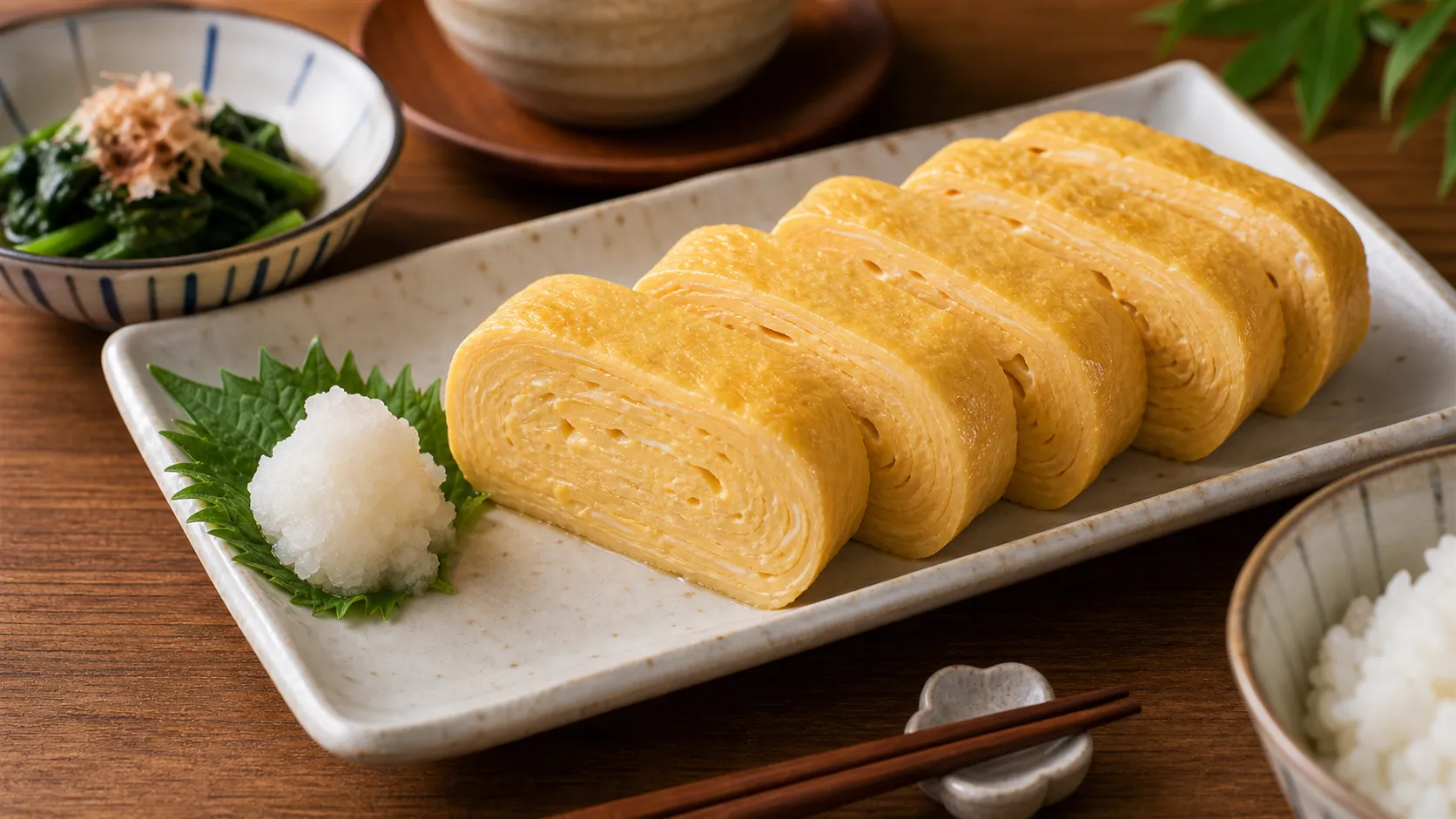
Japanese FoodNationwide
Dashimaki-tamago (だし巻き卵)
A rolled omelette so soft it almost trembles, layered fold over fold and soaked with dashi so that biting in releases a little warm rush of savory broth — the deceptively simple egg dish that Japanese chefs spend years perfecting.
July 11, 2026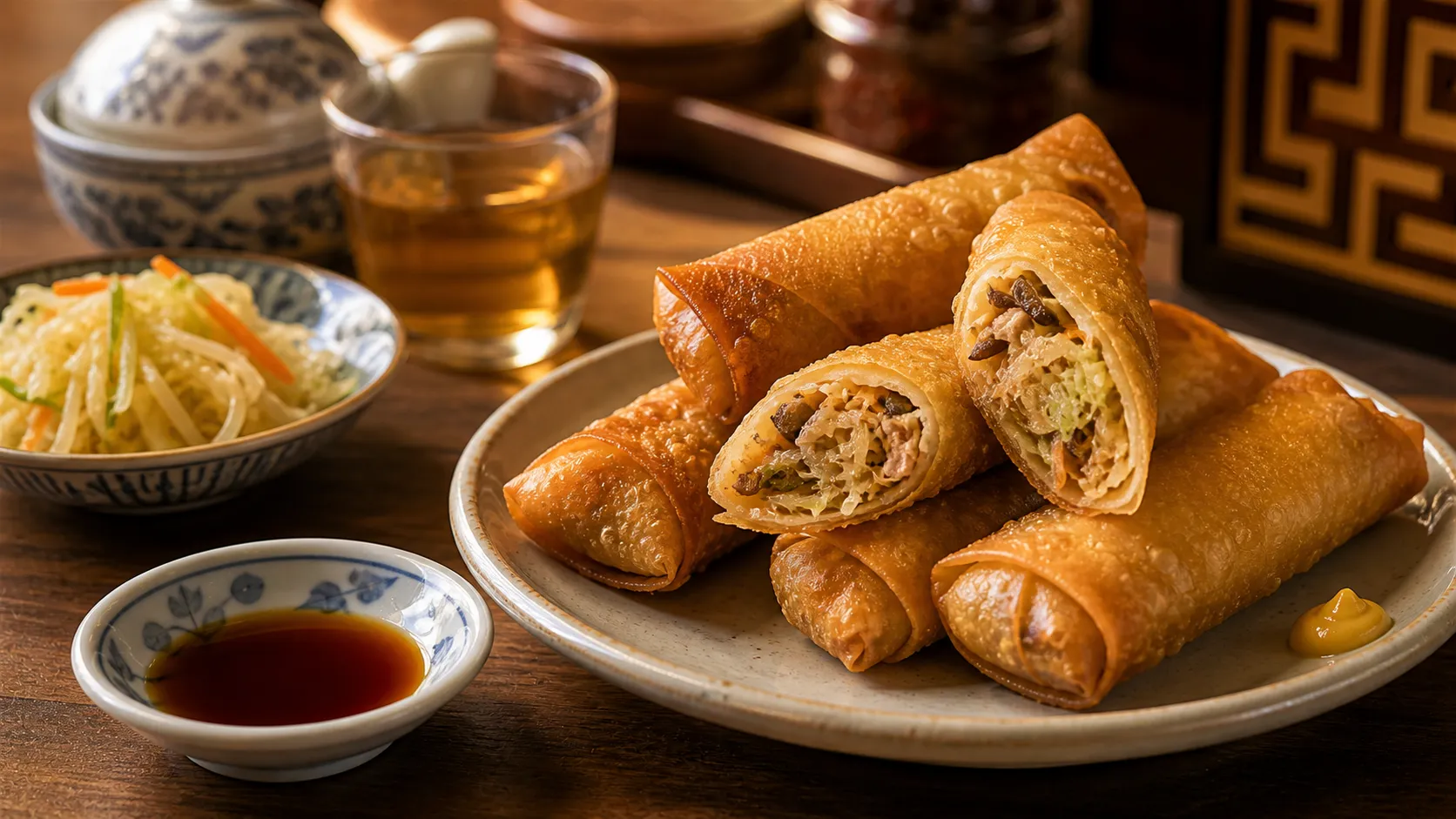
Japanese FoodNationwide
Harumaki (春巻き)
The Japanese spring roll — a shatteringly crisp golden tube that gives way to a hot, savory tangle of pork, cabbage and bamboo shoot, best eaten the second it's cool enough not to burn your mouth (you will not wait that long).
July 11, 2026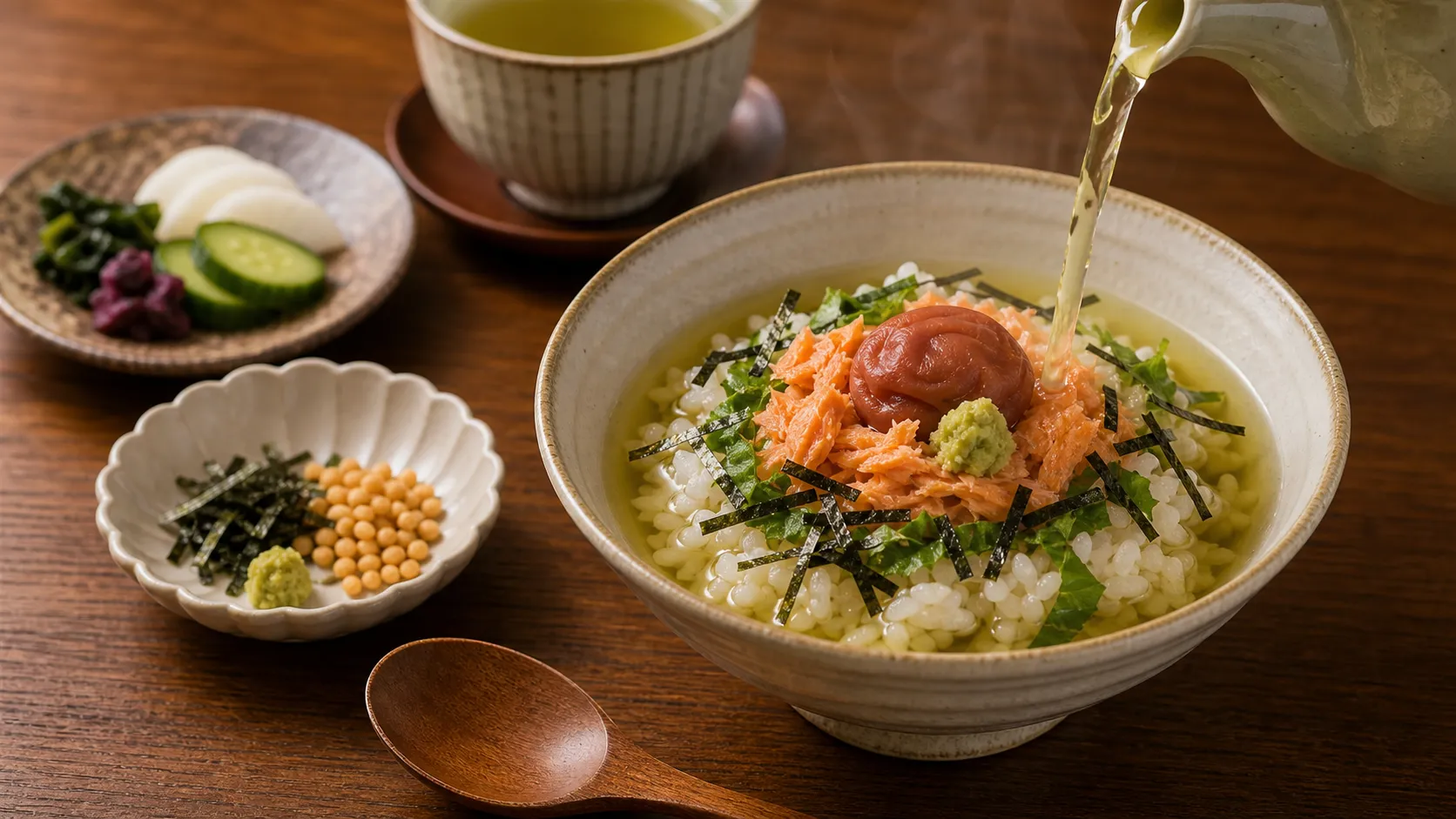
Japanese FoodNationwide
Ochazuke (お茶漬け)
Pour hot green tea or dashi over a bowl of rice, scatter something savory on top, and eat — the gentlest, most quietly restorative dish in Japan, the one you reach for late at night when you just need a warm bowl to make everything okay.
July 11, 2026