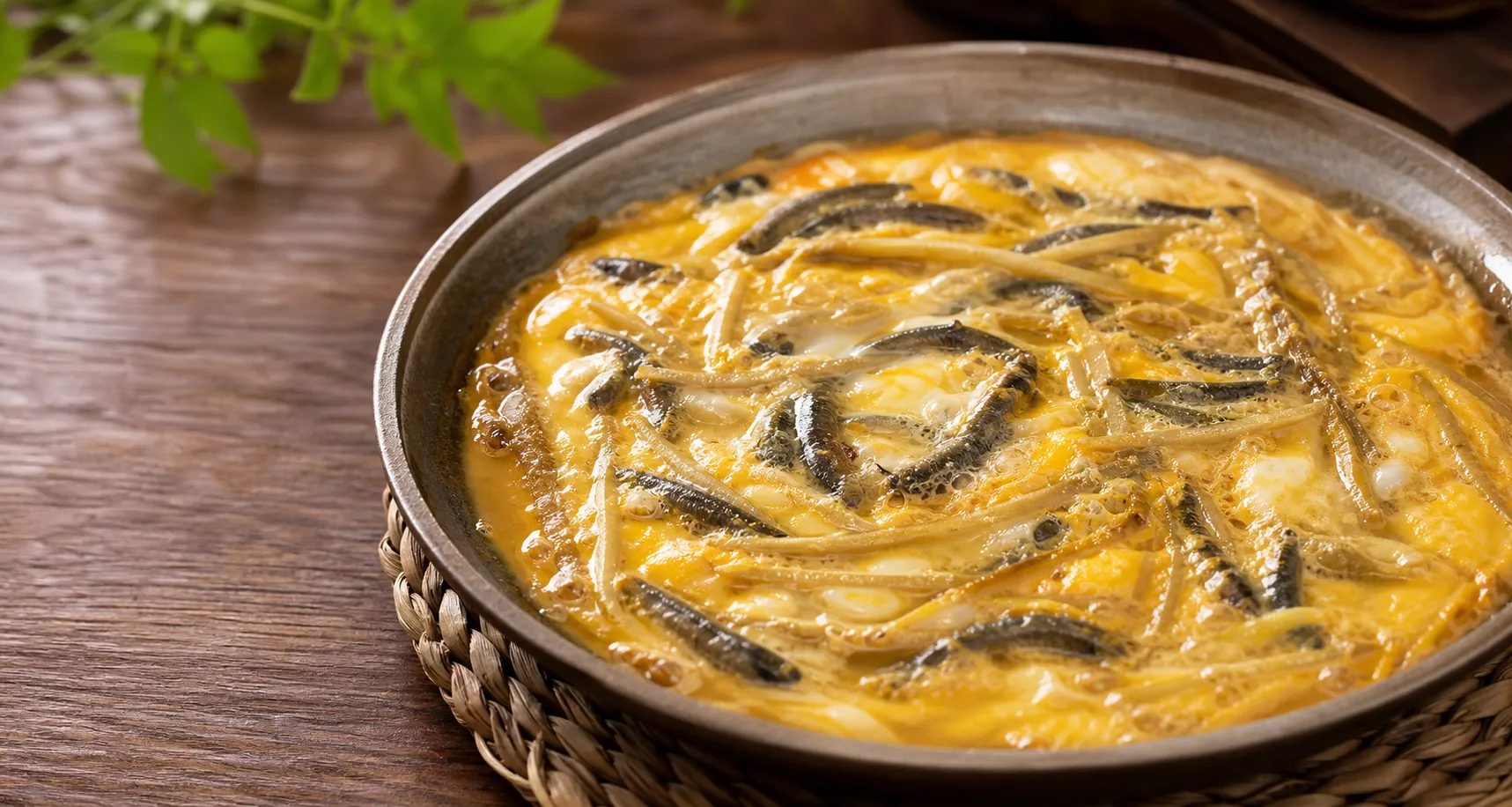
The egg came out barely set — glossy, wobbling, the color of afternoon sun — spread in a soft blanket across a shallow little pan. I slid my chopsticks under it and pulled up what was hiding beneath: tiny fish and threads of burdock, glazed dark and sweet. I hadn't ordered "cute." But that's what this is. Yanagawa-nabe is one of the gentlest, most quietly satisfying things old Tokyo ever put in a pan.
Share this dish


A shallow pan arrives with a soft golden lid of just-set egg trembling on top, and hidden underneath is the ingredient old Edo swore by for surviving the summer — a fish most travelers have never knowingly eaten.
🍜 Planning a food trip to Tokyo?Add this dish to my Food Trip →
 Add this dish to my Food Trip →
So let's be upfront about the fish, because it's the whole story: this is loach (dojo), a small, slender freshwater fish that lived in the rice paddies and waterways all around old Edo. In yanagawa-nabe (柳川鍋), the dojo is simmered with slivered burdock root (gobo) in a sweet-savory soy broth, in a distinctive shallow, flat pan — and then, right at the end, beaten egg is poured over the top and left to just set into a soft, custardy layer. Loach, burdock, sweet-soy, egg-bound, shallow pan. Those five things together are yanagawa-nabe. It is not the grilled-eel cooking of the town also called Yanagawa down in Kyushu; it's not oyakodon; it's not sukiyaki. It's its own small, perfect thing.
Why Edo fell in love with a paddy fish
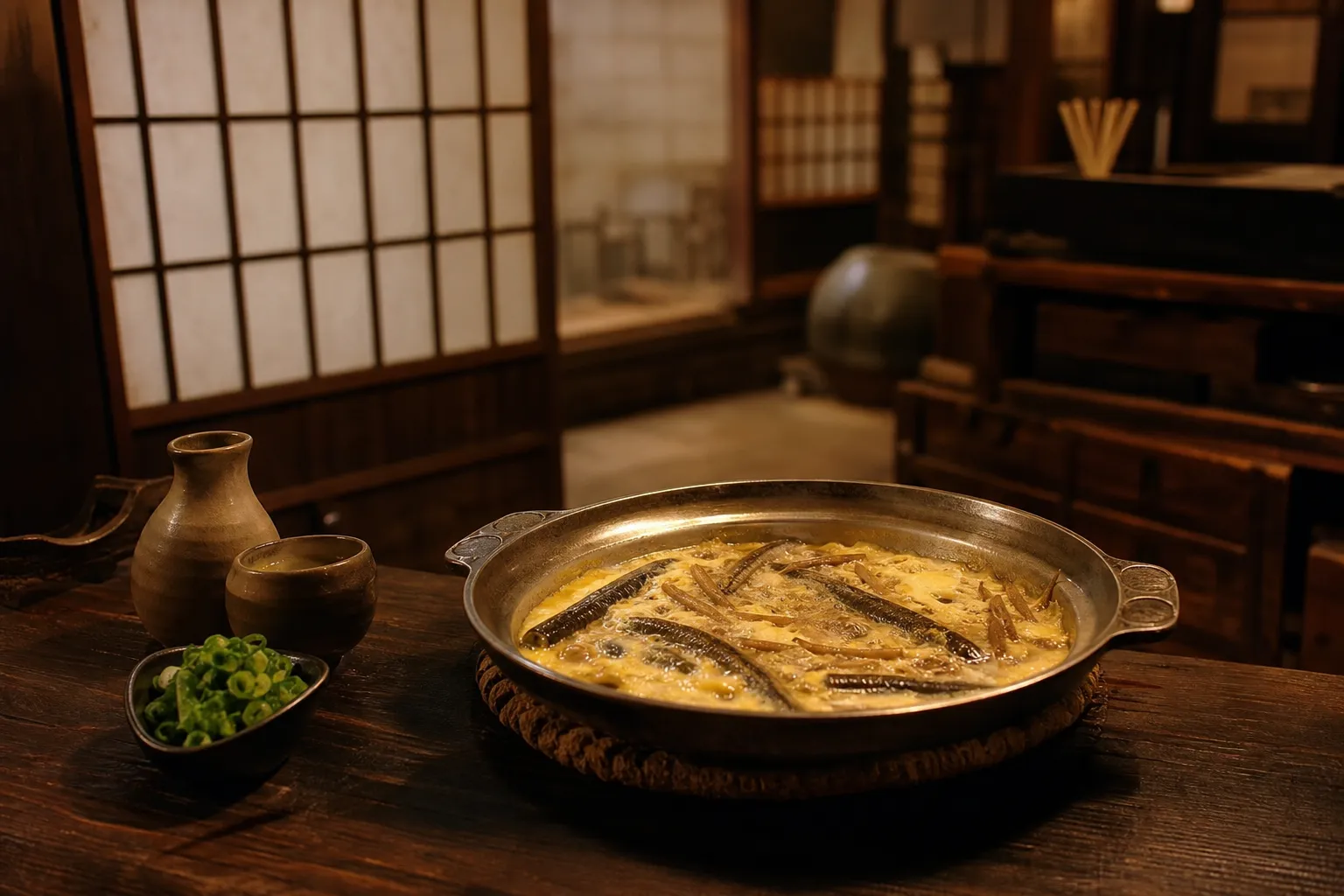
Dojo was Edo food in the truest sense — cheap, abundant, pulled straight from the waterways and rice fields of the city and its edges. Old Tokyoites believed it was a stamina food, exactly the kind of thing you ate to power through the brutal, sticky Tokyo summer. There's a whole tradition of eating dojo in the hottest months to keep your strength up, the way people elsewhere reach for eel. I love that this dainty little dish was, in its heart, survival food — the working city's answer to the heat.
The "Yanagawa" name is a lovely little mystery with several competing origin stories — a restaurant name, a type of clay vessel, a shop in the Yanagawa area — and honestly nobody's totally sure which is true. What everyone does agree on is the form: the flat pan and the egg-binding are the signature. And that egg is doing real work. It rounds off every hard edge — softening the earthiness of the burdock and the richness of the fish into something almost like a warm savory custard. It's the ingredient that turns "small paddy fish" into "comfort food a hundred and fifty years running."
What makes the eating experience different
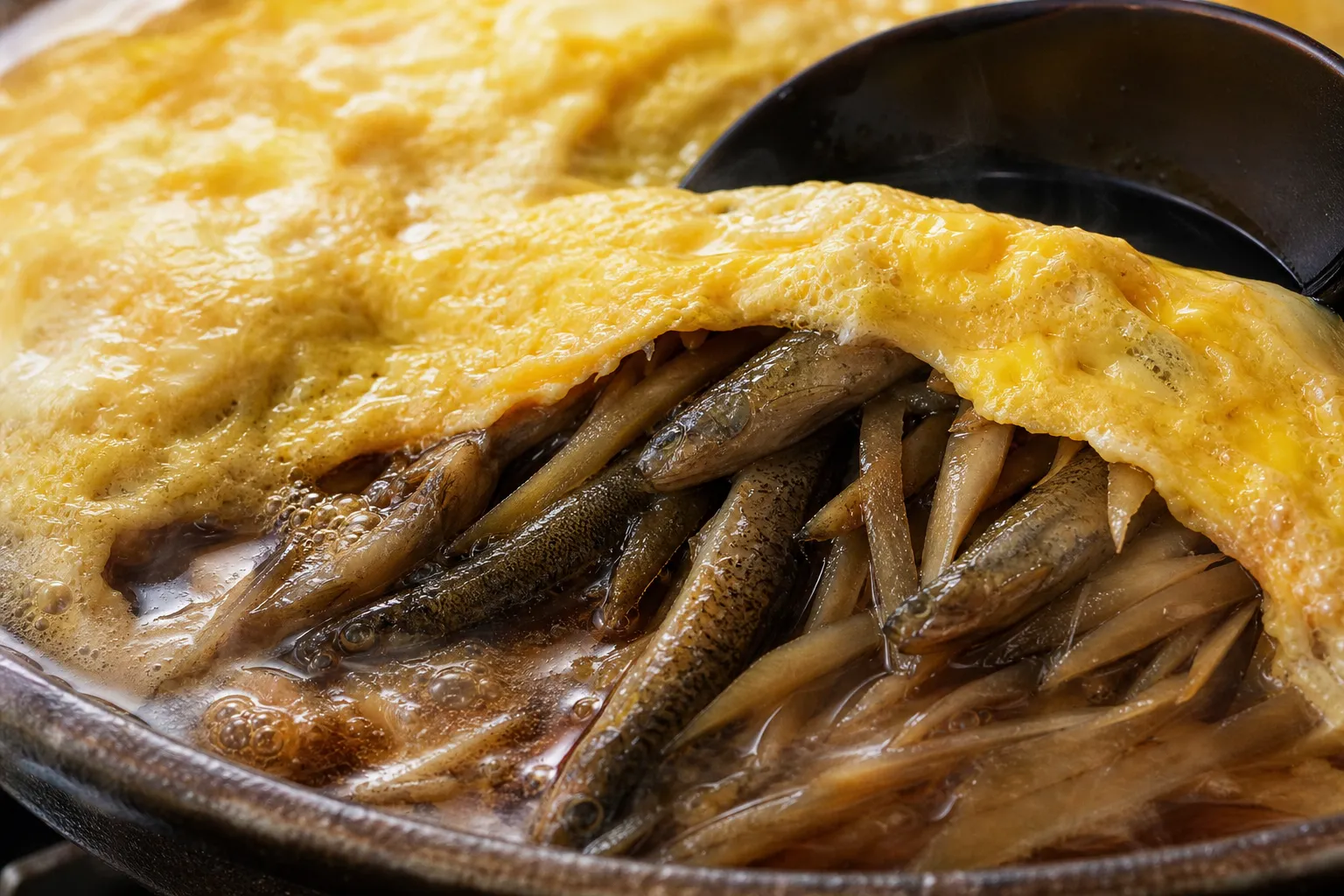
- Small loach (dojo) — often pre-dressed and simmered until tender — are arranged in a shallow, flat pan
- Slivered burdock root (gobo) is added; its earthy, woody fragrance is a defining note
- Both simmer in a sweet-savory soy broth (a sweet-soy warishita) until glossy and glazed
- Beaten egg is poured over the top and the pan is covered briefly so the egg sets soft — never hard-cooked
- It arrives at your table still bubbling, the egg trembling on top; you eat it straight from the pan, often with a sprinkle of sansho pepper and a scattering of mitsuba herb
How it's made
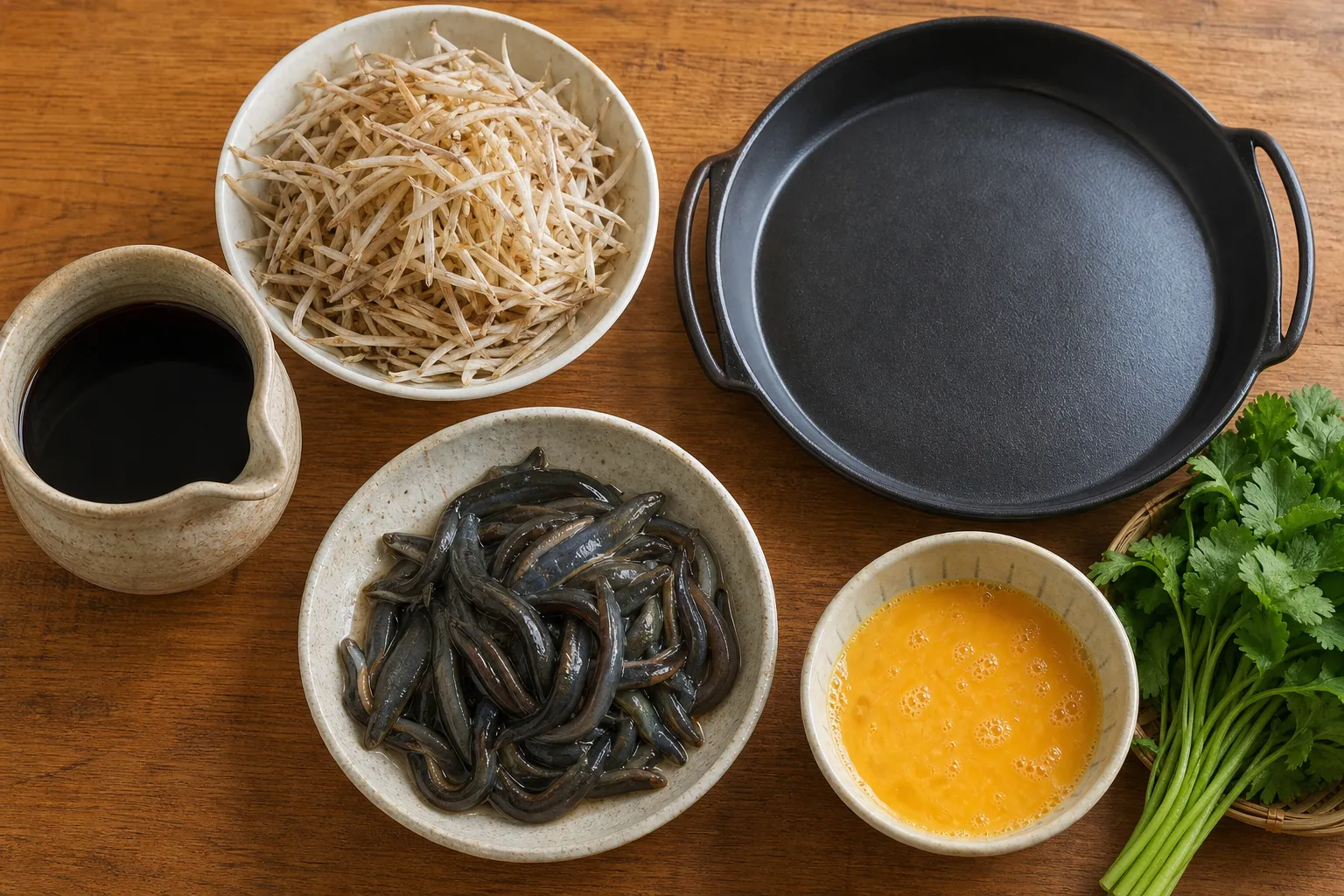
Where dojo-nabe is all sharp edges and negi, yanagawa-nabe is about rounding everything soft — and the technique is a quiet little sequence that ends with one decisive move.
- Dress and simmer the loach. The small fish are boned and opened (or bought pre-dressed) and simmered until tender — none of the whole-fish drama of dojo-nabe here.
- Add slivered burdock. Fine threads of gobo go in; their earthy, woody fragrance is a defining note of the pan.
- Glaze in a sweet-soy warishita. Fish and burdock simmer together in a sweet-savory soy broth until glossy and dark.
- Pour the egg — and stop. Beaten egg is poured over the top and the pan is covered for a moment so it sets soft, custardy, never hard. This is the move the whole dish is named for.
- Serve it trembling. It reaches the table still bubbling, often finished with mitsuba and a little sansho, eaten straight from the pan.
That barely-set egg is the entire trick — a second too long and you've made a sad omelette; done right, it's a warm savory custard hiding little fish. Timing is everything.
Before you go — sit down like an Edoite
Your questions, answered honestly
"Wait — is this the same as the eel dishes from Yanagawa in Kyushu?" — No, and it's the classic mix-up. There's a canal town called Yanagawa in Fukuoka famous for grilled eel, which is a completely different thing. Yanagawa-nabe is an Edo (Tokyo) dish made with loach, bound with egg, in a shallow pan. Same word, unrelated food.
"The fish are whole and tiny. Is that normal?" — Completely normal and completely intentional. Dojo are small fish eaten whole (in yanagawa-nabe they're usually opened/dressed first, so it's gentler than it sounds). If eating a small whole freshwater fish is new to you, this is genuinely one of the easiest, most beginner-friendly ways to try it — the egg and sweet broth carry everything.
"What does it actually taste like?" — Sweet, savory, soft, and earthy, with the egg smoothing it all into something comforting rather than challenging. The burdock gives it a woody, grounding fragrance. Add a shake of sansho pepper if it's on the table — that bright, tongue-tingling note is the classic finishing touch.
"Is this different from dojo-nabe?" — Yes! Same fish, different dish. Yanagawa-nabe is egg-bound, with burdock. Plain dojo-nabe is the loach simmered in a shallow iron pan under a mountain of chopped green onion, with no egg. If you love one, try the other — good dojo restaurants serve both.
What the staff will ask you
| You'll hear | Romaji | Meaning | Just say |
|---|---|---|---|
| 何名様ですか? | Nan-mei sama desu ka? | "How many people?" | Hitori desu (one person) — or hold up fingers |
| 柳川となべ、どちらになさいますか? | Yanagawa to nabe, dochira ni nasaimasu ka? | "Yanagawa (egg-bound) or plain dojo pot?" | Yanagawa de onegaishimasu (yanagawa, please) |
| 山椒はおかけしますか? | Sanshō wa okake shimasu ka? | "Shall I add sansho pepper?" | Onegaishimasu (yes, please) |
To order, just say "Yanagawa-nabe o kudasai" (柳川鍋をください) — "Yanagawa-nabe, please."
Where to eat it
- Tokyo shitamachi (old downtown) — the traditional home of dojo cooking is the historic east-side neighborhoods; areas like Asakusa and Ningyocho hold long-established dojo restaurants that serve yanagawa-nabe alongside plain dojo-nabe.
- Long-running dojo specialists — a handful of Tokyo dojo restaurants have been in business for well over a century, in old wooden buildings with low tables; these are the atmospheric places to try it.
- Traditional Edo-cuisine restaurants — many old-Tokyo restaurants that focus on Edo-era home cooking keep yanagawa-nabe on the menu.
The historic dojo restaurants are popular and their menus and hours vary, so check current details — and, for the famous old shops, consider going early or reserving before you go.
Soul Score
Local Roots5/5
First-Timer Friendly3/5
Adventure Level4/5
Comfort Level5/5
Travel Worthy4/5
These scores are one obsessed eater's gut feeling — not a verdict. A low number isn't a bad mark, just a different kind of adventure.
Know someone planning Japan?
← All Articles
Local Food · Tokyo
Still hungry?
Eat more from Tokyo
Sweets & SnacksTokyo
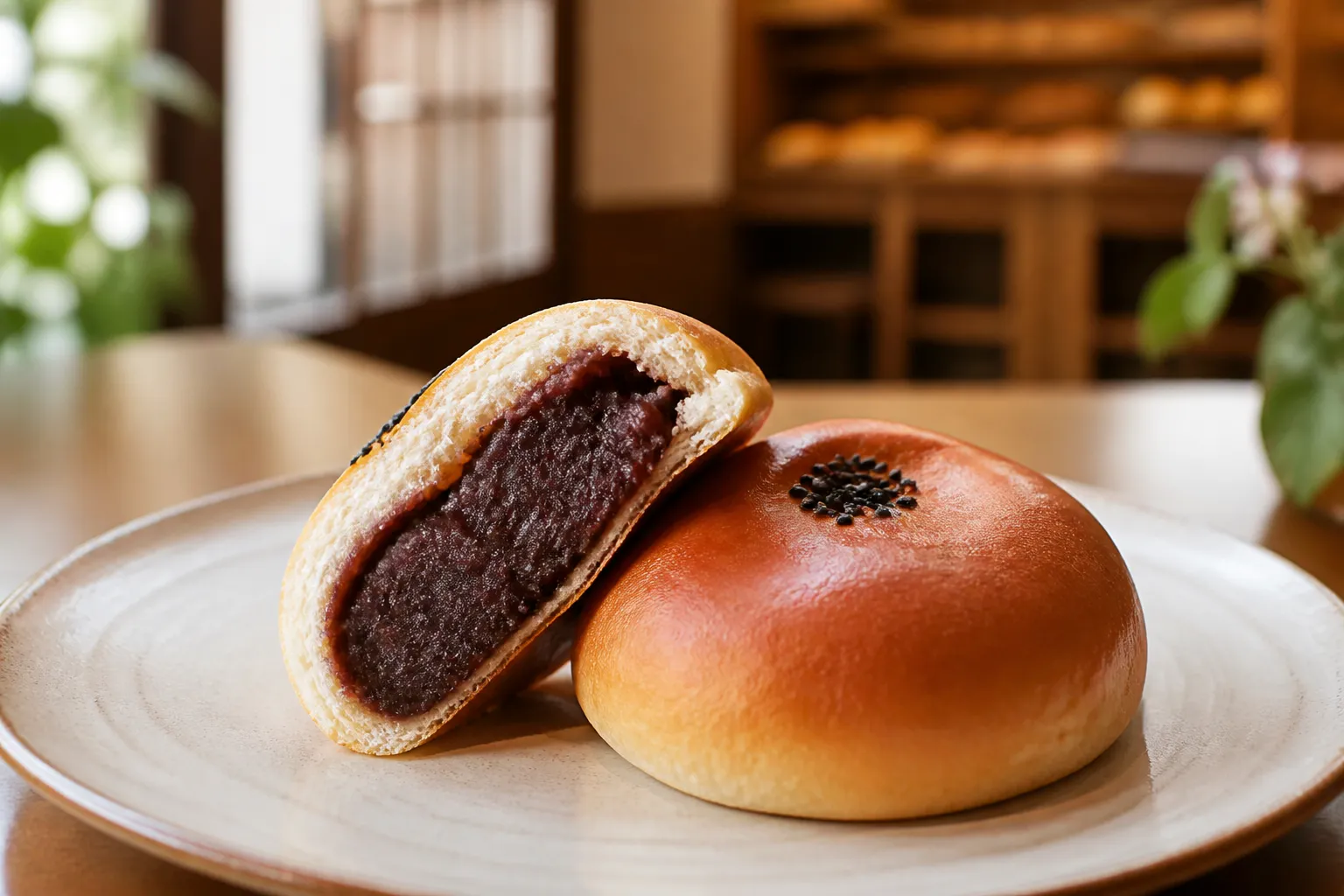
Anpan (あんパン)
A soft little bun, one bite in, and suddenly it's dense, dark, sweet red bean all the way through — the bread that talked 1870s Japan into eating Western-style bread at all.
July 27, 2026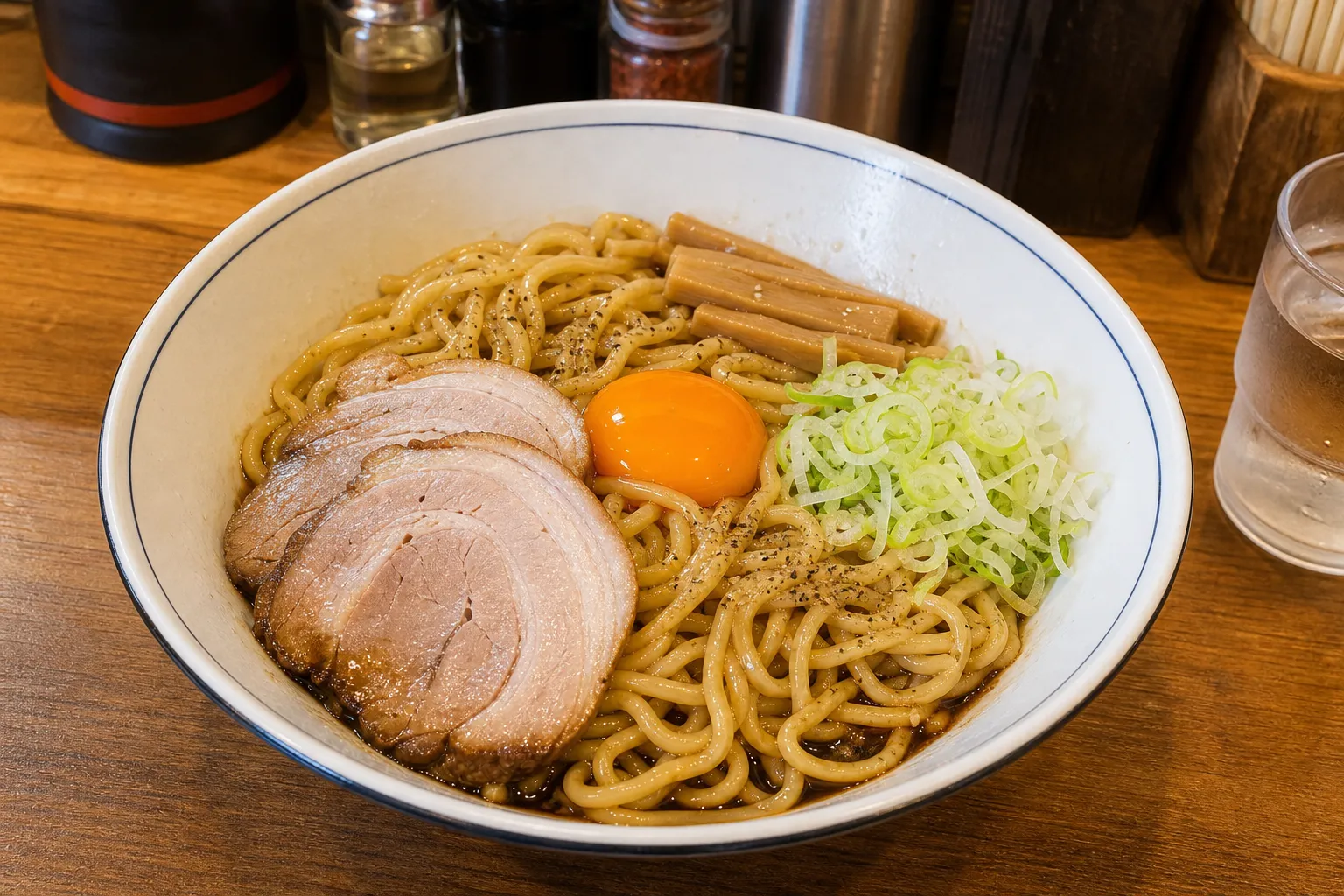
Local FoodTokyo
Abura Soba (油そば)
No soup. Just noodles, a hidden pool of tare and oil at the bottom of the bowl, and thirty seconds of frantic mixing that turns it into one of Tokyo's most addictive cheap thrills.
July 9, 2026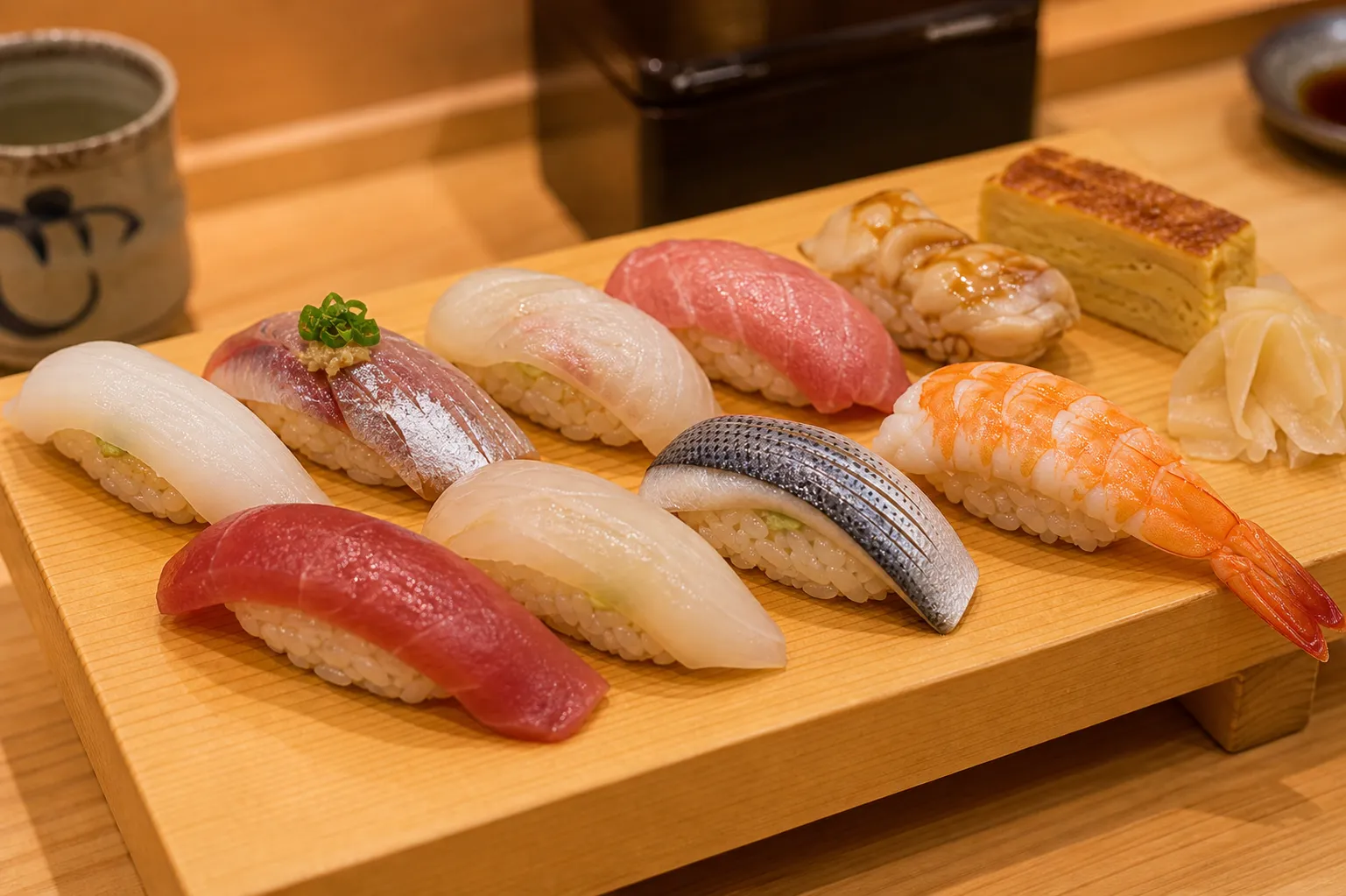
Japanese FoodTokyo
Edomae-zushi (江戸前寿司)
The original Tokyo nigiri, born before refrigerators existed — cured, marinated, simmered by hand, then pressed onto warm rice in a single confident motion. This is where sushi actually comes from, and it's a craft, not a slab of raw fish.
July 9, 2026