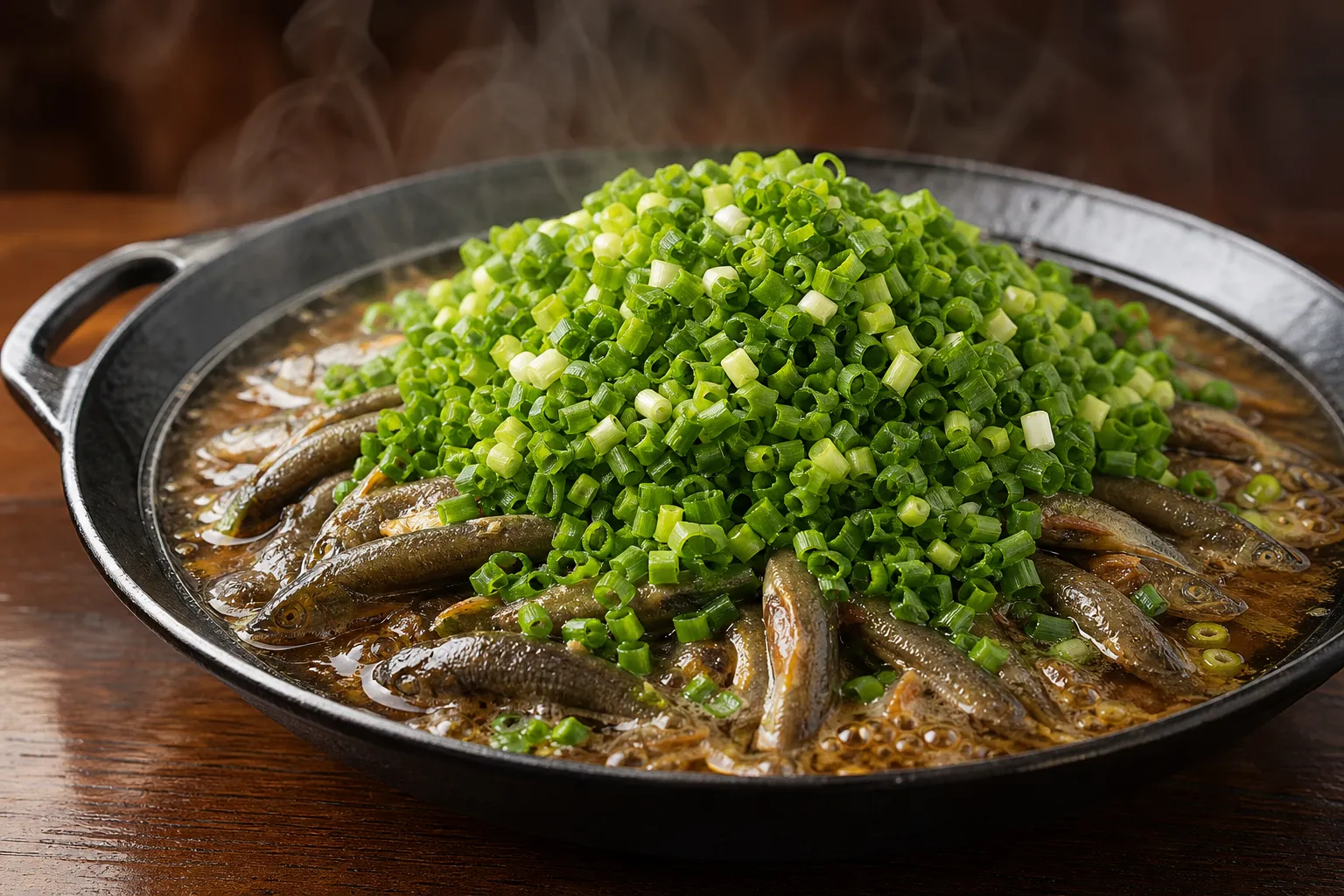
They put a small flat iron pan on the little burner in front of me, and before I could get a good look at what was in it, the server buried the whole thing under a green mountain — a genuinely absurd heap of chopped negi, taller than the pan itself. I laughed. It looked like a joke. Then it started to wilt and sink into the bubbling broth below, and the smell hit me — sweet onion, savory dashi, something faintly of the river — and I understood I was about to eat something old Tokyo has been getting right for two centuries.
Share this dish


They set a flat iron pan in front of you, and it vanishes under a green avalanche — a whole mountain of chopped negi so tall you can't even see the fish it's burying. That's not garnish. That's the dish.
🍜 Planning a food trip to Tokyo?Add this dish to my Food Trip →
 Add this dish to my Food Trip →
This is dojo-nabe (どぜう鍋 — written with an old, playful spelling of dojo), and it's the purest, most primal way Edo ate its beloved paddy fish. Loach (dojo), a small slender freshwater fish, is laid whole (or split open) into a shallow iron pan, simmered in a savory broth, and then absolutely smothered in a mountain of freshly chopped green onion that you pile on yourself. Crucially — and this is the line that matters — there is no egg. The egg-bound, burdock version is a different dish called yanagawa-nabe. Dojo-nabe is fish, broth, and an avalanche of negi. That's the whole, glorious, minimalist point.
Why old Edo built a shrine to a paddy fish
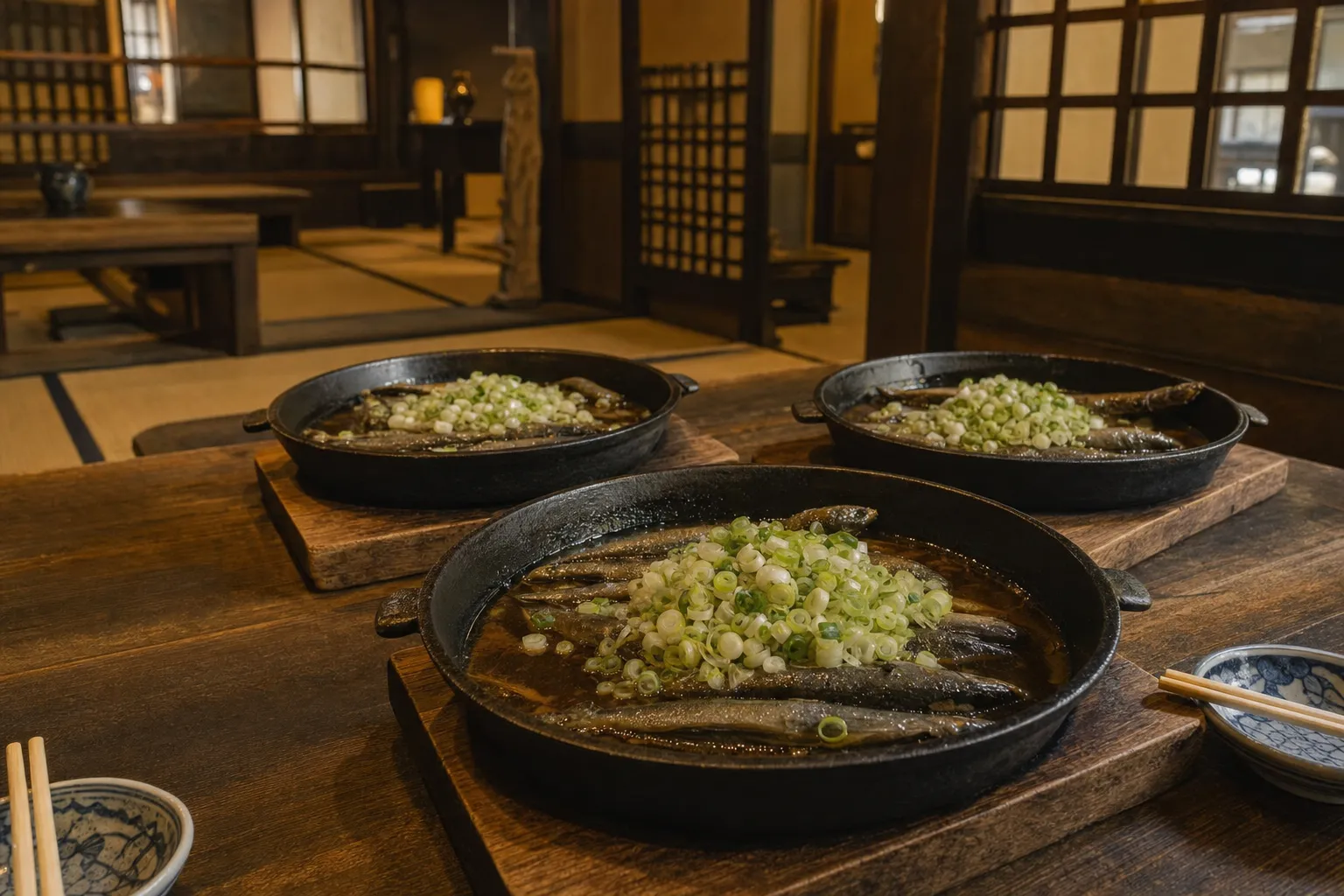
Dojo was the ultimate Edo commoner's food — plentiful, cheap, and pulled from the rice paddies and waterways that laced the old city. Like eel, it was prized as a stamina food for surviving Tokyo's punishing summers, packed with the kind of nourishment a working city ran on. There's something I find genuinely moving about a fish this humble getting its own dedicated restaurants that have survived earthquakes, war, and two hundred years of a changing city. This isn't a fancy dish. It's a stubborn one.
And the negi is not a topping — it's a co-star, and the reason is smart. Loach can have a hint of muddy-river funk (it's a bottom-dwelling paddy fish, after all), and the huge quantity of fresh, sharp green onion cuts straight through it, lifting the whole pan into something bright and clean. You keep adding more negi as you eat, watching it collapse into the broth. The interplay — whole tender fish, savory glaze, that relentless fresh oniony bite — is the entire experience. Add a shake of sansho pepper and you've got a flavor Tokyo has been chasing since the days of samurai.
What makes the eating experience different
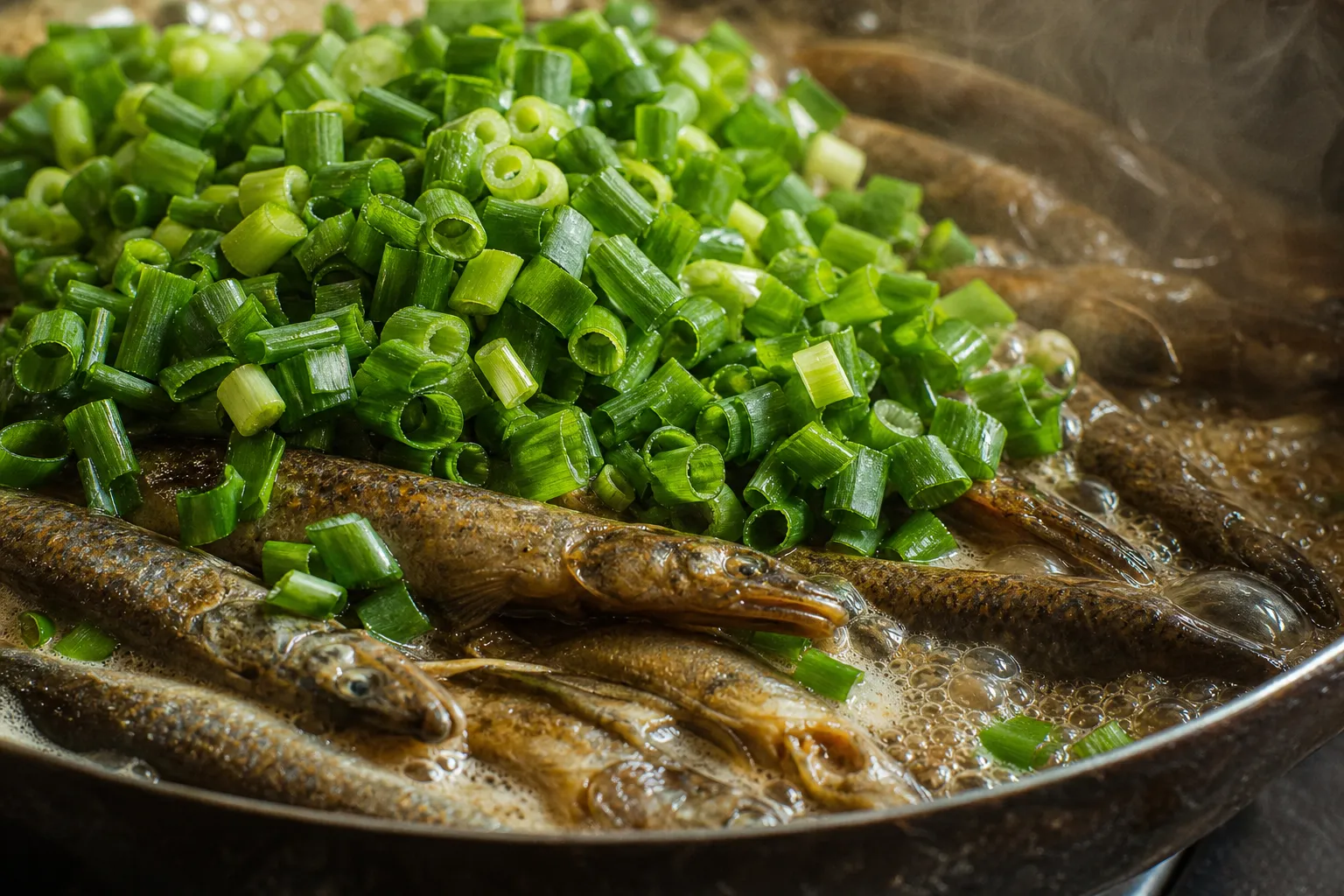
- Whole loach (dojo), often pre-simmered until very tender, are laid out in a shallow, flat iron pan
- A savory broth is added and the pan is set over a small burner right at your table
- You heap on a mountain of freshly chopped green onion (negi) — far more than seems reasonable — and let it wilt down into the simmering broth
- There is no egg here — this is the distinction from yanagawa-nabe; it's fish, broth, and negi, kept deliberately simple
- You eat straight from the pan as the negi softens, seasoning with sansho pepper, and keep topping up the onion as you go
How it's made
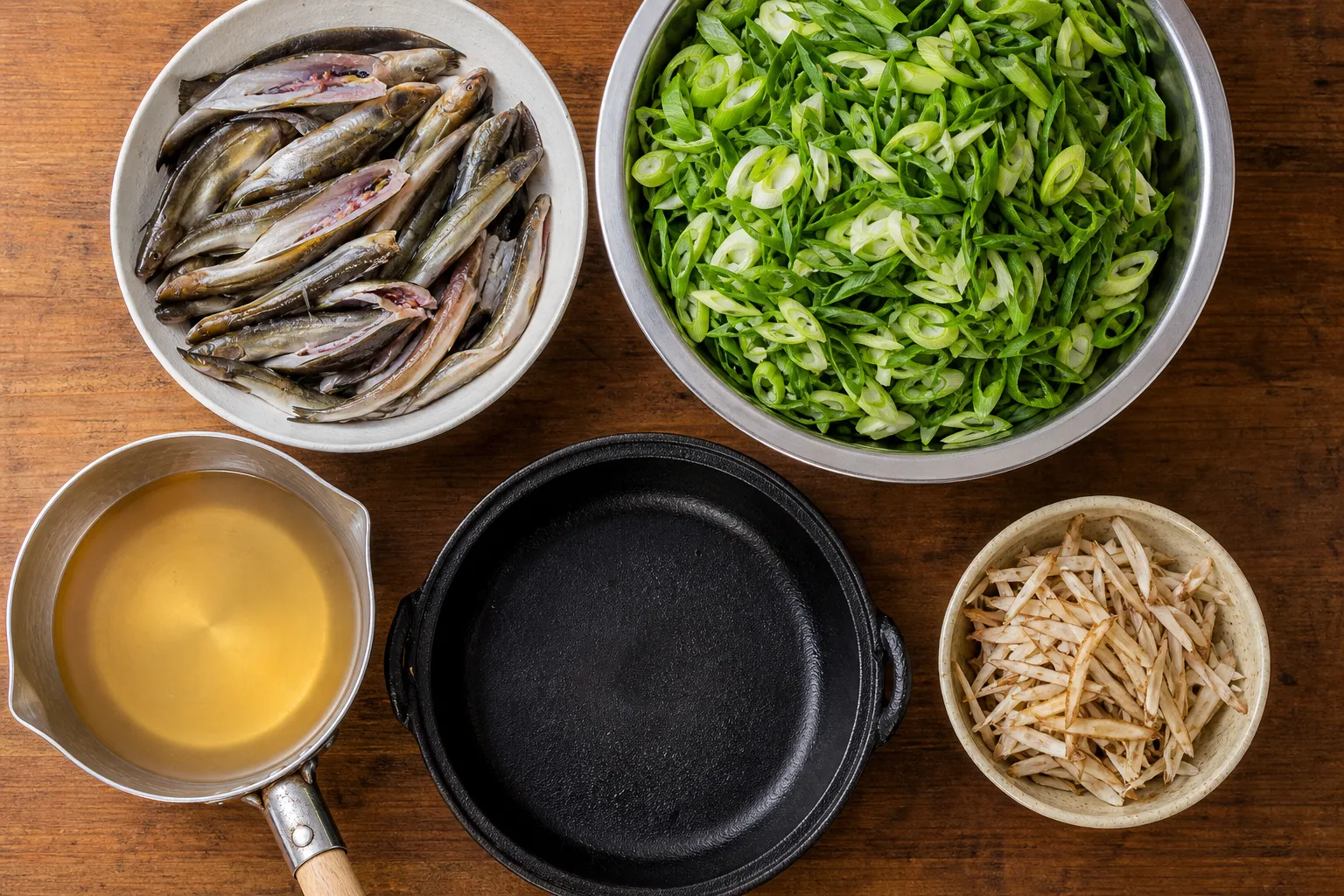
Dojo-nabe is minimalism enforced with two centuries of stubbornness — the technique is almost defiantly simple, and every step is about keeping the fish tender and the negi sharp.
- Calm and pre-simmer the loach. Live dojo are typically settled first (often in sake) and gently pre-cooked until very tender, so they melt rather than fight you at the table.
- Lay them in a shallow iron pan. The whole fish are arranged flat in the wide, low pan that defines the dish, and a sweet-savory broth is added.
- Set it over the burner. The pan goes onto a small flame right in front of you and comes up to a simmer.
- Bury it in negi. You heap on far more freshly chopped green onion than looks reasonable and let it collapse into the broth — the sharp onion is what cuts the paddy-fish funk and lifts the whole pan.
- Eat straight from the pan, with sansho. A shake of sansho pepper, more negi as you go, and no egg — ever. That last rule is the entire identity of the dish.
The first time I saw the negi mountain I assumed it was a garnish gag. It is not. It is roughly half the dish, and you will want even more.
Before you go — pile the negi high
Your questions, answered honestly
"The fish is whole. Do I eat the whole thing?" — Yes — bones and all. Dojo are simmered until they're so tender the tiny bones basically disappear; there's nothing to pick around. If that's a first for you, know that people have been eating it exactly this way, happily, for centuries. Lean in.
"How is this different from yanagawa-nabe?" — This is the question, so burn it in: dojo-nabe is whole loach + mountain of green onion + no egg. Yanagawa-nabe is loach with slivered burdock, bound with a soft layer of egg, in an even shallower pan. Same fish, two different dishes — and the great old dojo restaurants serve both, so you can compare them side by side.
"Does it taste 'fishy'?" — There's a gentle freshwater character, yes, but the whole design of the dish — the sweet-savory broth and that huge pile of fresh negi — exists precisely to keep it clean and bright rather than muddy. Keep adding negi and sansho and it stays lively to the last bite.
"Am I supposed to add the onion myself?" — Yes, and don't be shy. The negi usually comes in a big bowl on the side for you to pile on. More is correct. Add, let it wilt, eat, repeat. That rhythm is how you eat dojo-nabe.
What the staff will ask you
| You'll hear | Romaji | Meaning | Just say |
|---|---|---|---|
| 何名様ですか? | Nan-mei sama desu ka? | "How many people?" | Futari desu (two people) — or hold up fingers |
| どぜう鍋と柳川、どちらになさいますか? | Dojō-nabe to yanagawa, dochira ni nasaimasu ka? | "Plain dojo pot, or yanagawa (egg-bound)?" | Dojō-nabe de onegaishimasu (dojo-nabe, please) |
| ねぎのおかわりはいかがですか? | Negi no okawari wa ikaga desu ka? | "Would you like more green onion?" | Onegaishimasu (yes, please) |
To order, just say "Dojo-nabe o kudasai" (どぜう鍋をください) — "Dojo hot pot, please."
Where to eat it
- Asakusa, Tokyo — the old downtown heart of dojo cooking; the historic east-side neighborhood is home to Tokyo's most famous, long-established dojo restaurants, some running for well over two centuries in traditional low-table wooden halls.
- Historic dojo specialists — a small number of Asakusa dojo restaurants are Edo-era institutions where you sit on tatami at long communal low tables; the atmosphere is a big part of the meal.
- Old-Tokyo (shitamachi) restaurants — dojo-nabe also turns up at traditional Edo-cuisine restaurants in the surrounding downtown neighborhoods.
The famous old Asakusa dojo restaurants are popular and their menus and hours vary, so check current details — and consider going early or reserving before you go.
Soul Score
Local Roots5/5
First-Timer Friendly3/5
Adventure Level4/5
Comfort Level4/5
Travel Worthy4/5
These scores are one obsessed eater's gut feeling — not a verdict. A low number isn't a bad mark, just a different kind of adventure.
Know someone planning Japan?
← All Articles
Local Food · Asakusa, Tokyo
Still hungry?
Eat more from Tokyo
Sweets & SnacksTokyo
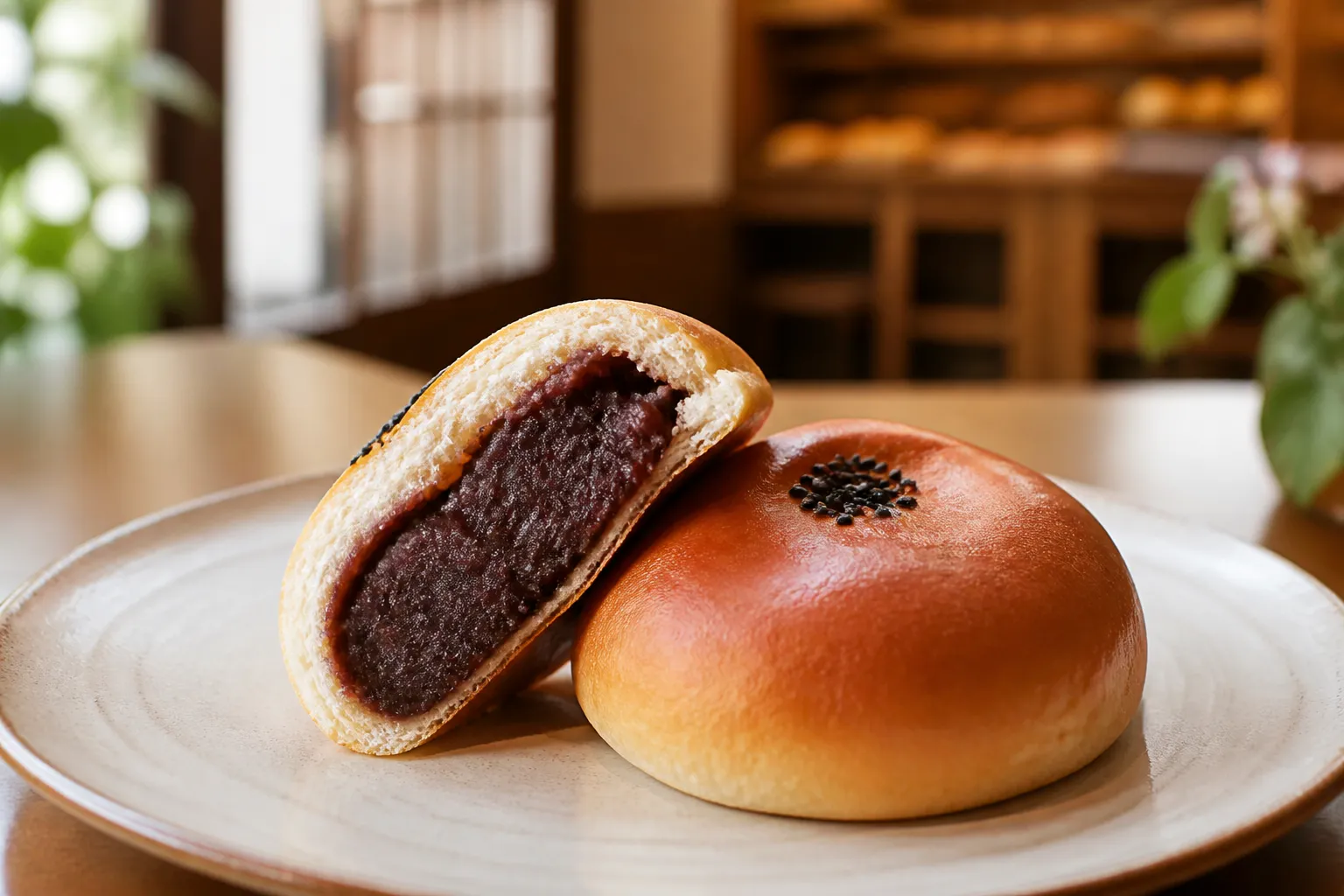
Anpan (あんパン)
A soft little bun, one bite in, and suddenly it's dense, dark, sweet red bean all the way through — the bread that talked 1870s Japan into eating Western-style bread at all.
July 27, 2026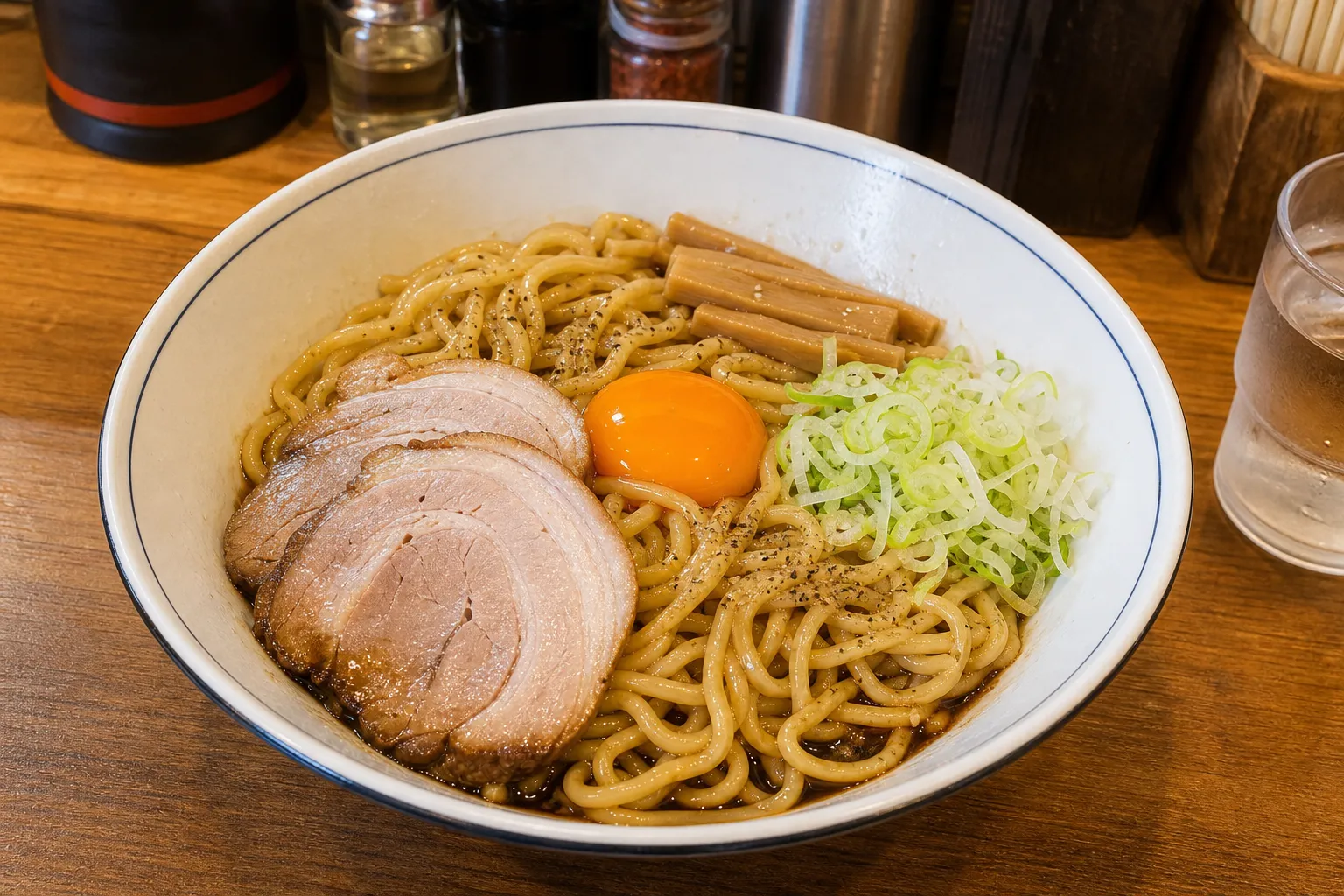
Local FoodTokyo
Abura Soba (油そば)
No soup. Just noodles, a hidden pool of tare and oil at the bottom of the bowl, and thirty seconds of frantic mixing that turns it into one of Tokyo's most addictive cheap thrills.
July 9, 2026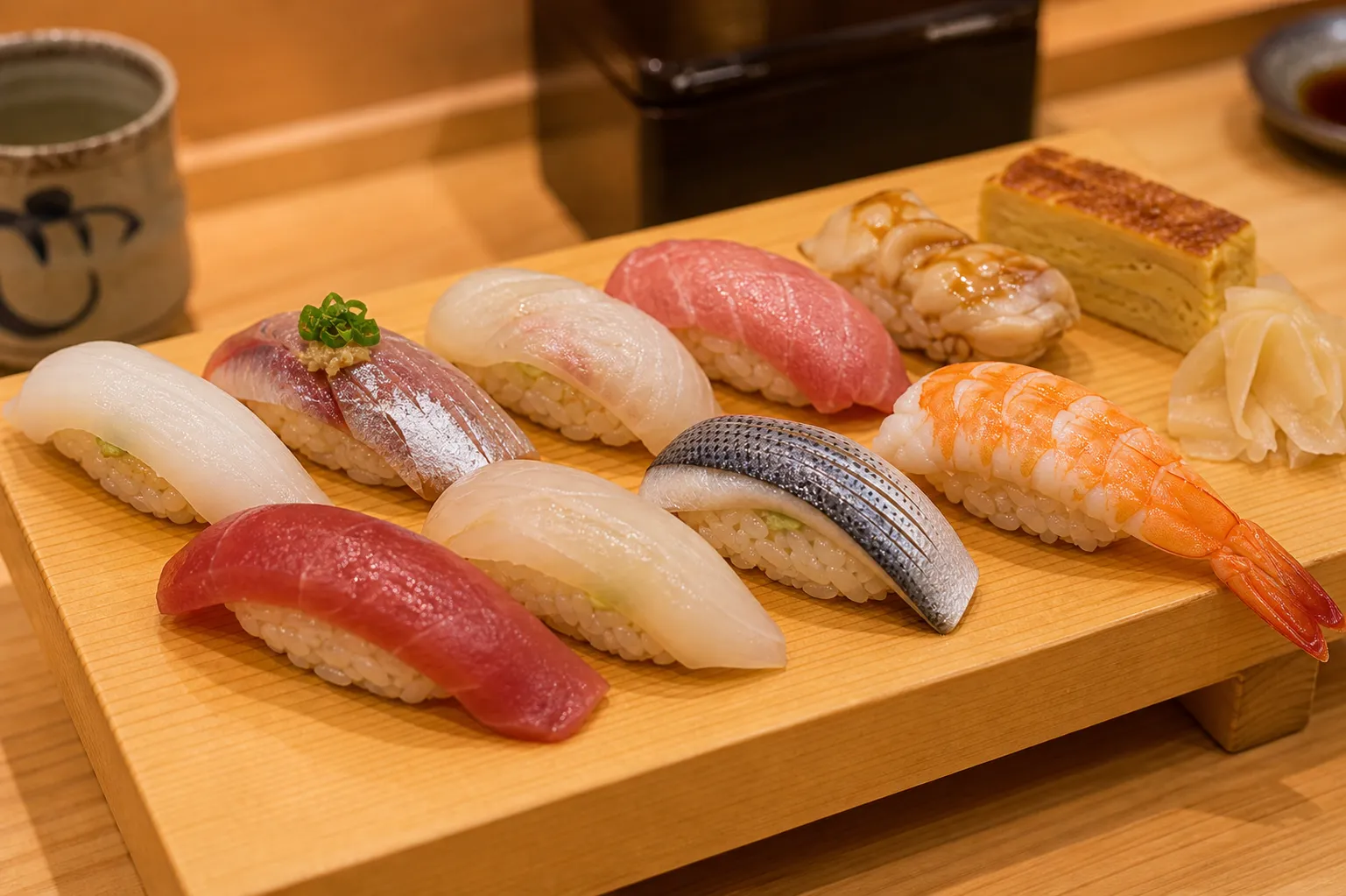
Japanese FoodTokyo
Edomae-zushi (江戸前寿司)
The original Tokyo nigiri, born before refrigerators existed — cured, marinated, simmered by hand, then pressed onto warm rice in a single confident motion. This is where sushi actually comes from, and it's a craft, not a slab of raw fish.
July 9, 2026