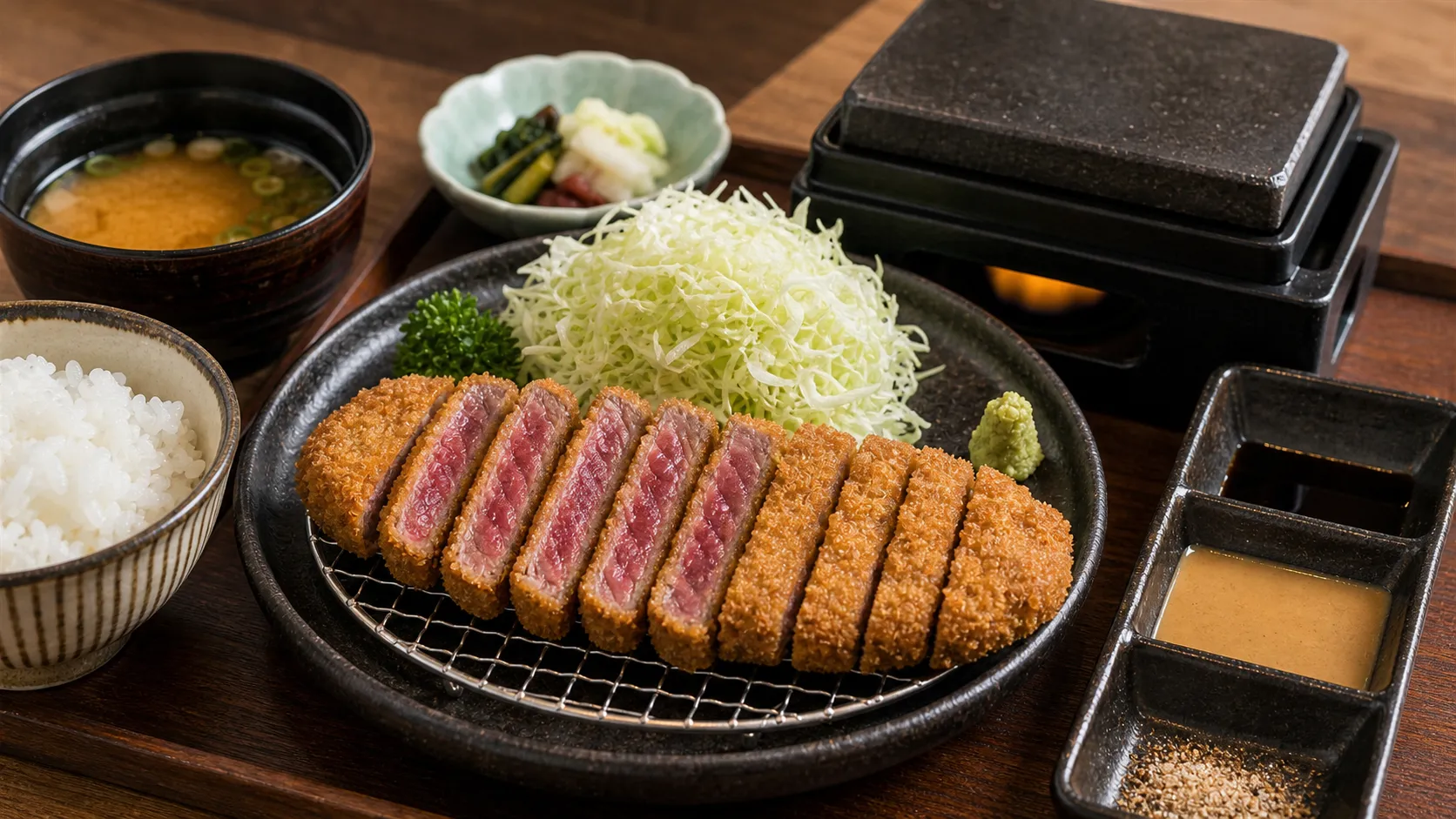
They set down a plate of thick, crumb-crusted cutlets sliced to show a shockingly pink center — and then, next to it, a small stone heated to roughly the surface of a volcano. And you realize with a little jolt of delight: they're not undercooking your beef, they're handing you the controls. You take a slice, press its rosy edge to the sizzling stone for a few seconds, watch it sear, dip it in wasabi and soy, and eat it warm and rare and crunchy and rich. That's gyukatsu, and it turned the katsu into an interactive sport.
Share this dish


A thick slab of beef in a crunchy panko crust, deep-fried for seconds so the inside stays rosy and rare — then handed to you with a searing-hot stone so you can grill each bite exactly how you like it.
Here's the thing: gyukatsu (牛カツ) is a beef cutlet — a thick slab of beef coated in panko and deep-fried very briefly, so the crust turns golden and crunchy while the inside stays rare and rosy. It's sliced thick and often comes with a personal hot stone (ishiyaki) at your seat, so you grill each piece to the doneness you want. Rare beef, quick fry, sear-it-yourself stone: that's what makes it gyukatsu and not a fully-cooked tonkatsu (pork) or a menchi-katsu (minced). It's a modern star, with celebrated specialists drawing lines in Tokyo, Osaka and beyond.
The katsu, reinvented rare
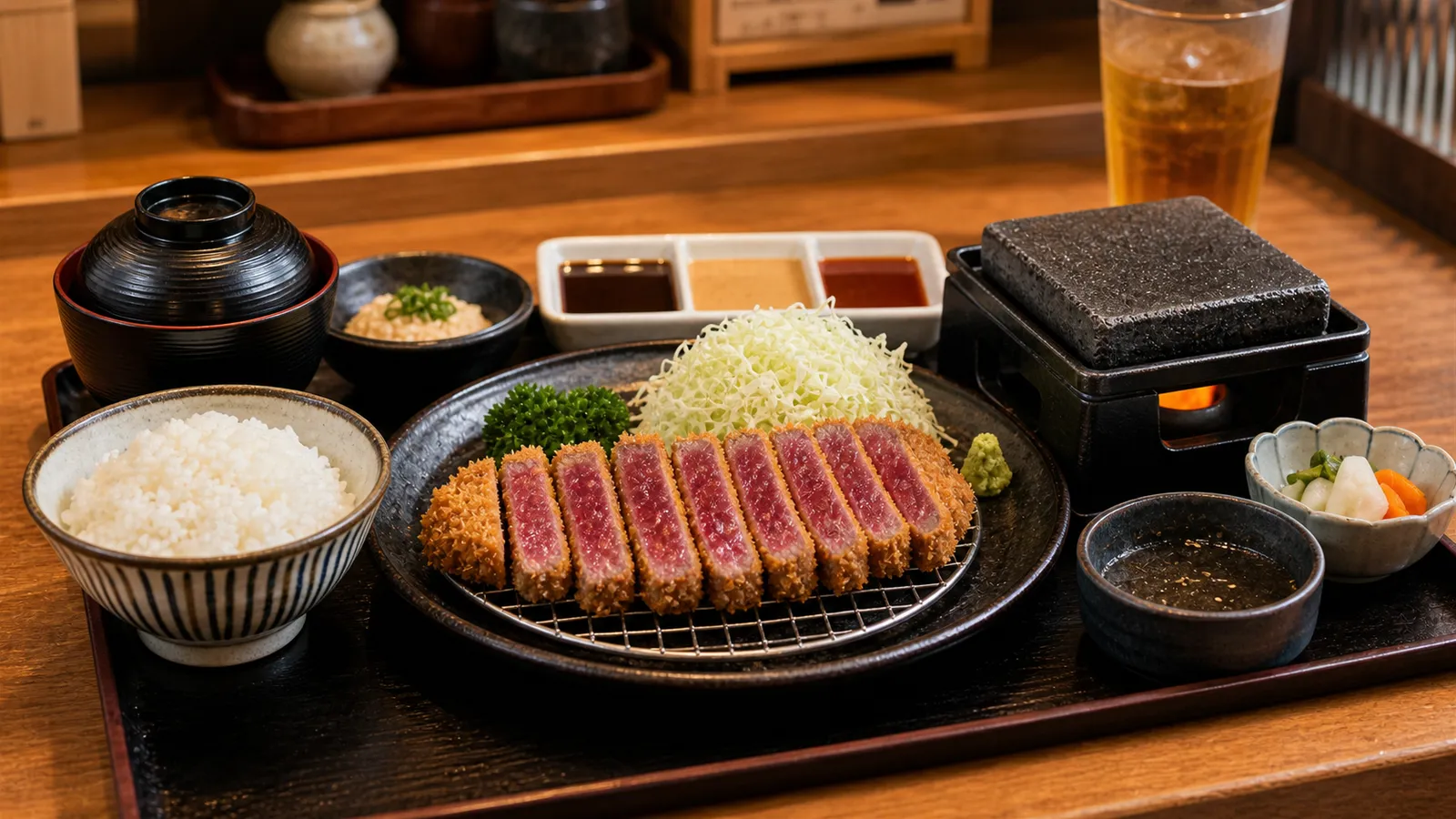
Katsu — panko-fried cutlets — has been Japanese comfort food for over a century, and tonkatsu (pork) is the household king. Gyukatsu is the newer, flashier idea: use beef, fry it only briefly so the center stays rare, and lean into the drama of it. It's ridden a big wave of popularity in recent years, with dedicated gyukatsu specialists building their whole reputation on that perfect crunch-outside, rare-inside contrast — and on the theatrical hot-stone finish that lets each diner cook to taste.
I love that it's simultaneously nostalgic and new. The panko-cutlet format is deeply familiar and comforting, but the rare beef and the personal grill make it feel modern and a little bit fun — a dish you interact with. There's something genuinely delightful about being handed a hot stone and told, essentially, "you're the chef now." It respects both the tradition of the katsu and your own preference for how you like your beef, and the result is one of the most satisfying trendy meals you can eat in Japan right now.
What makes the eating experience different
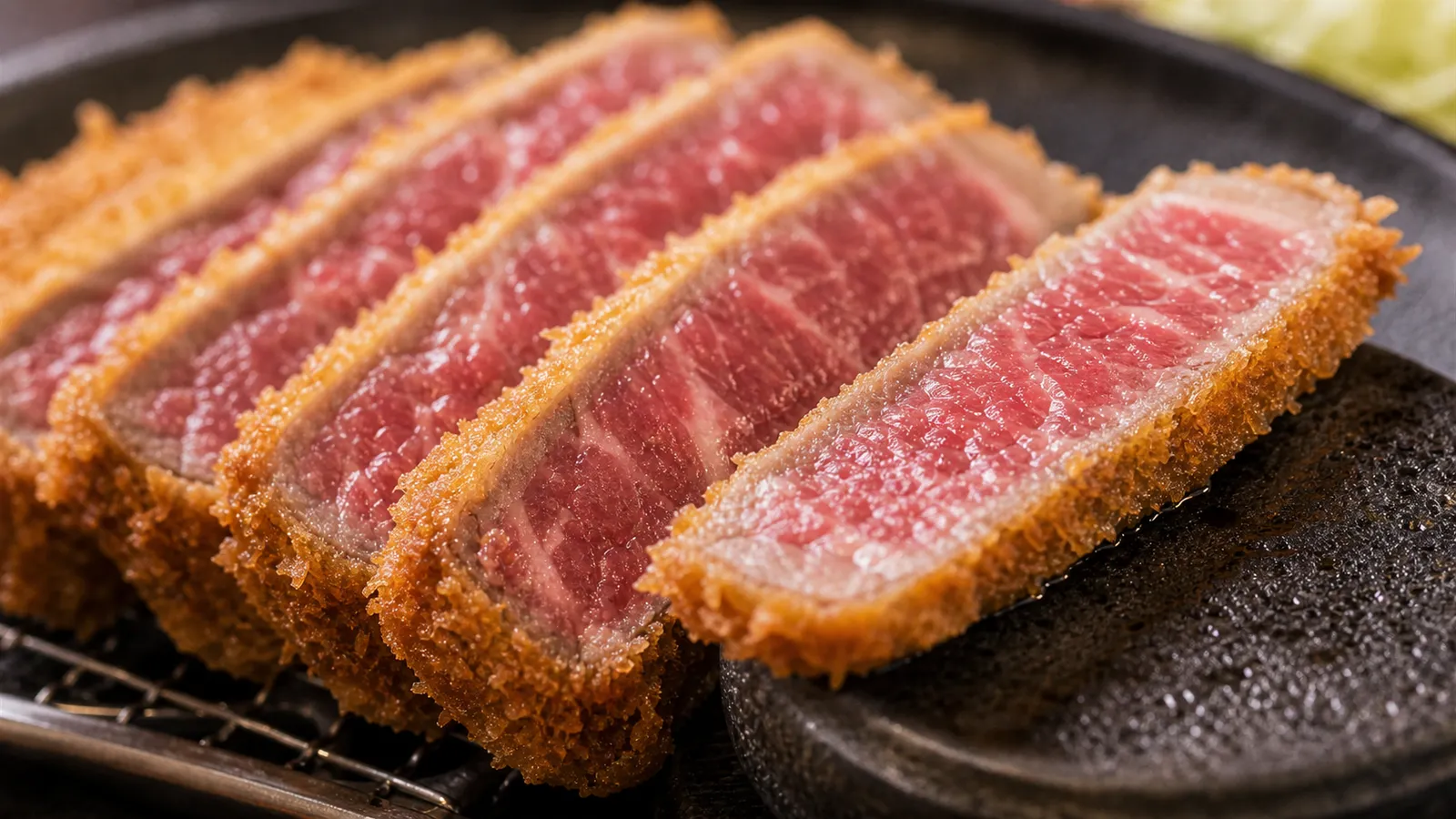
- The contrast is everything: a shatter-crisp panko crust around tender, rare, rosy beef — hot outside, barely-cooked and juicy inside
- Because it's beef and rare, it's richer and more savory than pork tonkatsu, with a real steak-like quality
- The hot stone lets you cook each slice exactly how you want — from barely seared to well done — which is genuinely fun
- It's served with a spread of dips — wasabi and soy, dipping sauces, sometimes salt or curry — so every bite can be different
- It's usually a set with rice, cabbage and miso soup, making it a proper, satisfying meal
How it's made
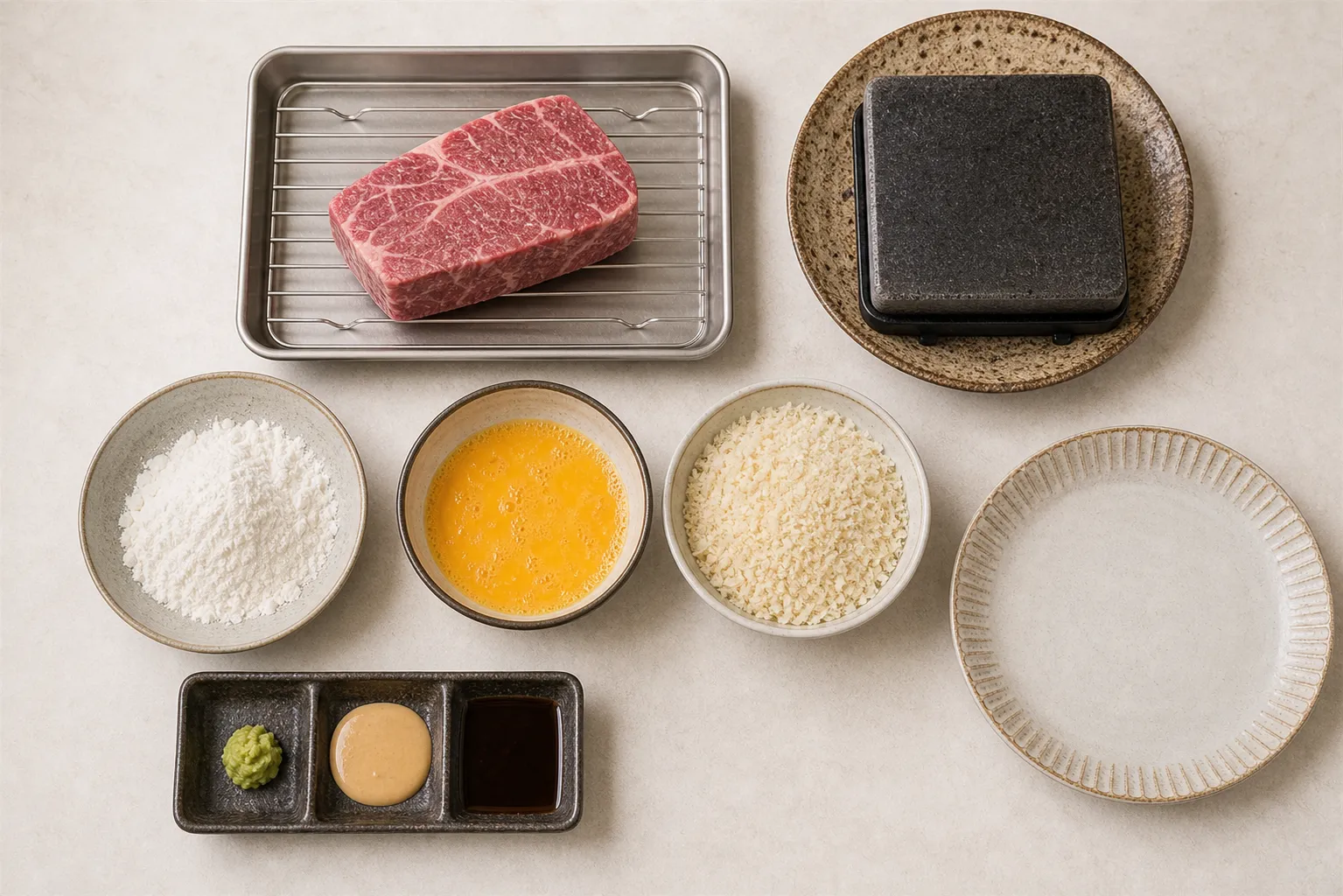
- Prep the beef. A thick cut of beef is seasoned — the quality of the beef matters a lot here, since it's the whole dish.
- Bread it. Coat the beef in flour, beaten egg, and panko breadcrumbs for a crunchy shell.
- Deep-fry briefly. Fry in hot oil for just a short time — long enough to crisp the crust, short enough to leave the center rare and rosy.
- Rest and slice thick. Let it rest, then slice into thick pieces that show off the rare interior.
- Serve with a hot stone and dips. Plated with a sizzling stone (so you can sear pieces further) plus wasabi, soy, and dipping sauces, alongside rice and cabbage.
The whole craft is the timing: fry it just long enough to nail that crunchy shell while keeping the inside rare and tender. Then the hot stone hands the final decision to you — a clever bit of theater that's also genuinely practical.
Before you go — you're the chef at the table
Your questions, answered honestly
"Is the beef really served rare — is that safe?" — Yes, it's rare on purpose, and reputable gyukatsu shops use good-quality beef and sear the outside, which is the standard way it's served. If you're uncomfortable with rare, that's exactly what the hot stone is for — cook each slice on it to your preferred doneness. You're in full control.
"How is this different from tonkatsu?" — Tonkatsu is pork, fully cooked, tender all the way through. Gyukatsu is beef, fried briefly to stay rare inside — richer, more steak-like, and usually served with a grill-it-yourself stone. Same crunchy panko idea, very different center.
"What do I dip it in?" — Whatever's on the table, and try them all: wasabi and soy is a classic (lets the beef shine), plus there are usually dipping sauces, sometimes salt, and occasionally curry or grated yam. Mix it up across the meal.
"How do I use the hot stone?" — Press a slice of beef against the sizzling stone for a few seconds per side, as much or as little as you like, then dip and eat. It's for adjusting doneness and adding a seared, warm edge — go by feel.
What the staff will ask you
| You'll hear | Romaji | Meaning | Just say |
|---|---|---|---|
| 焼き加減はお好みで石をお使いください | Yaki-kagen wa o-konomi de ishi o o-tsukai kudasai | "Cook it to taste on the stone" | Wakarimashita (understood) |
| ソースはわさび醤油と専用ソース、どちらにしますか? | Sōsu wa wasabi-shōyu to sen'yō sōsu, dochira ni shimasu ka? | "Wasabi-soy or the special sauce?" | Ryōhō tameshitai desu (I'd like to try both) |
| ご飯のおかわりはいかがですか? | Gohan no okawari wa ikaga desu ka? | "More rice?" | Onegaishimasu / Daijōbu desu (yes / I'm okay) |
To order, just say "Gyukatsu o kudasai" (牛カツをください) — "Gyukatsu, please."
Where to eat it
- Gyukatsu specialist restaurants in Tokyo and Osaka — dedicated gyukatsu shops (several with well-known names and lines) are the classic place, usually serving it as a set with the hot stone.
- Katsu and yoshoku restaurants nationwide — as the dish's popularity has spread, many cutlet and Western-style Japanese eateries now offer gyukatsu.
- Big-city food districts and station areas — busy urban areas are where you'll find the most, and the most competitive, gyukatsu specialists.
Gyukatsu is served rare by design and often with a personal grilling stone; styles, sauces and prices vary by shop, and popular specialists can have lines — check before you go.
Soul Score
Local Roots3/5
First-Timer Friendly4/5
Adventure Level4/5
Comfort Level5/5
Travel Worthy3/5
These scores are one obsessed eater's gut feeling — not a verdict. A low number isn't a bad mark, just a different kind of adventure.
Know someone planning Japan?
← All Articles
Japanese Food · Nationwide
Still hungry?
You might also like
Japanese FoodNationwide
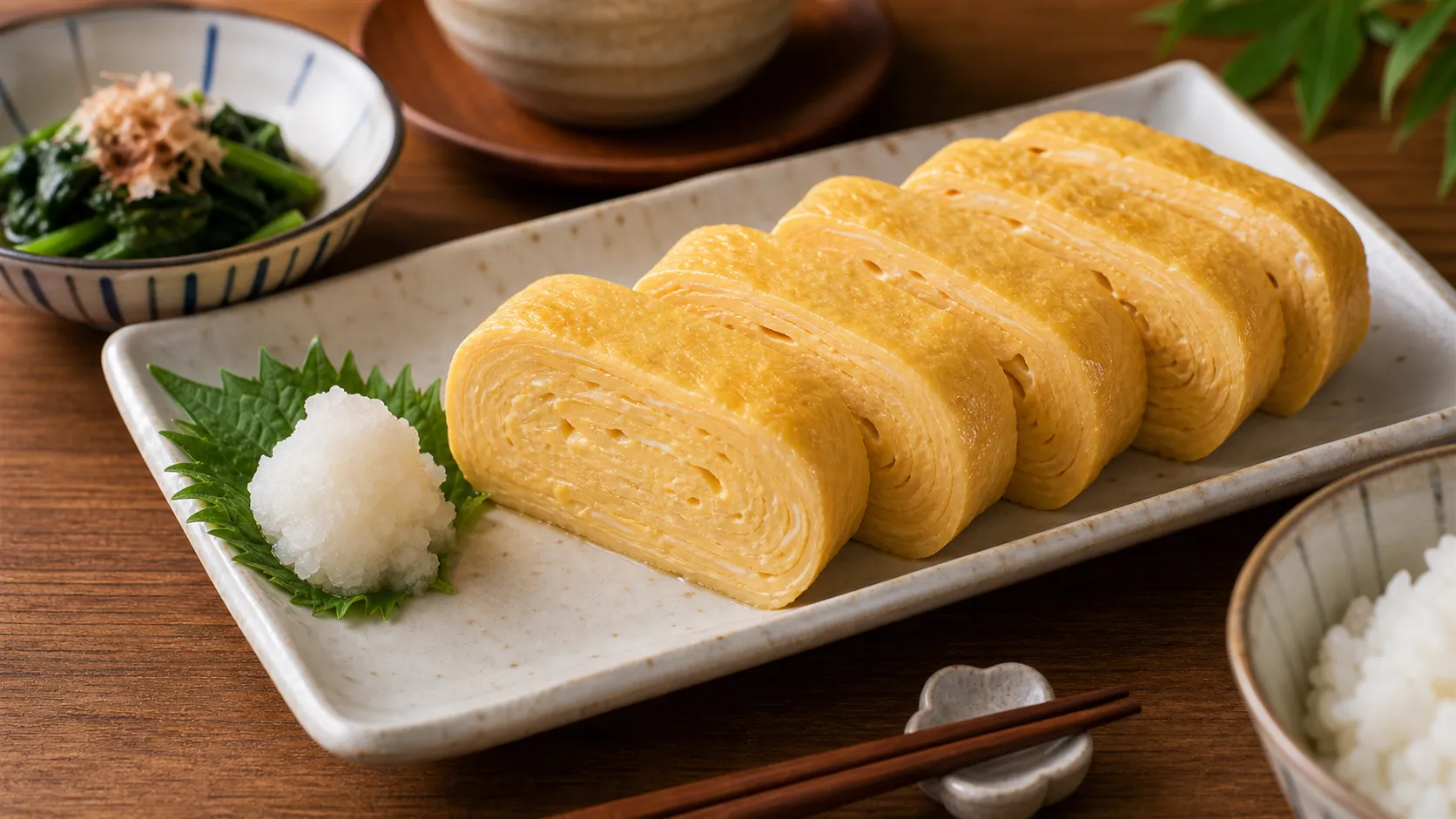
Dashimaki-tamago (だし巻き卵)
A rolled omelette so soft it almost trembles, layered fold over fold and soaked with dashi so that biting in releases a little warm rush of savory broth — the deceptively simple egg dish that Japanese chefs spend years perfecting.
July 11, 2026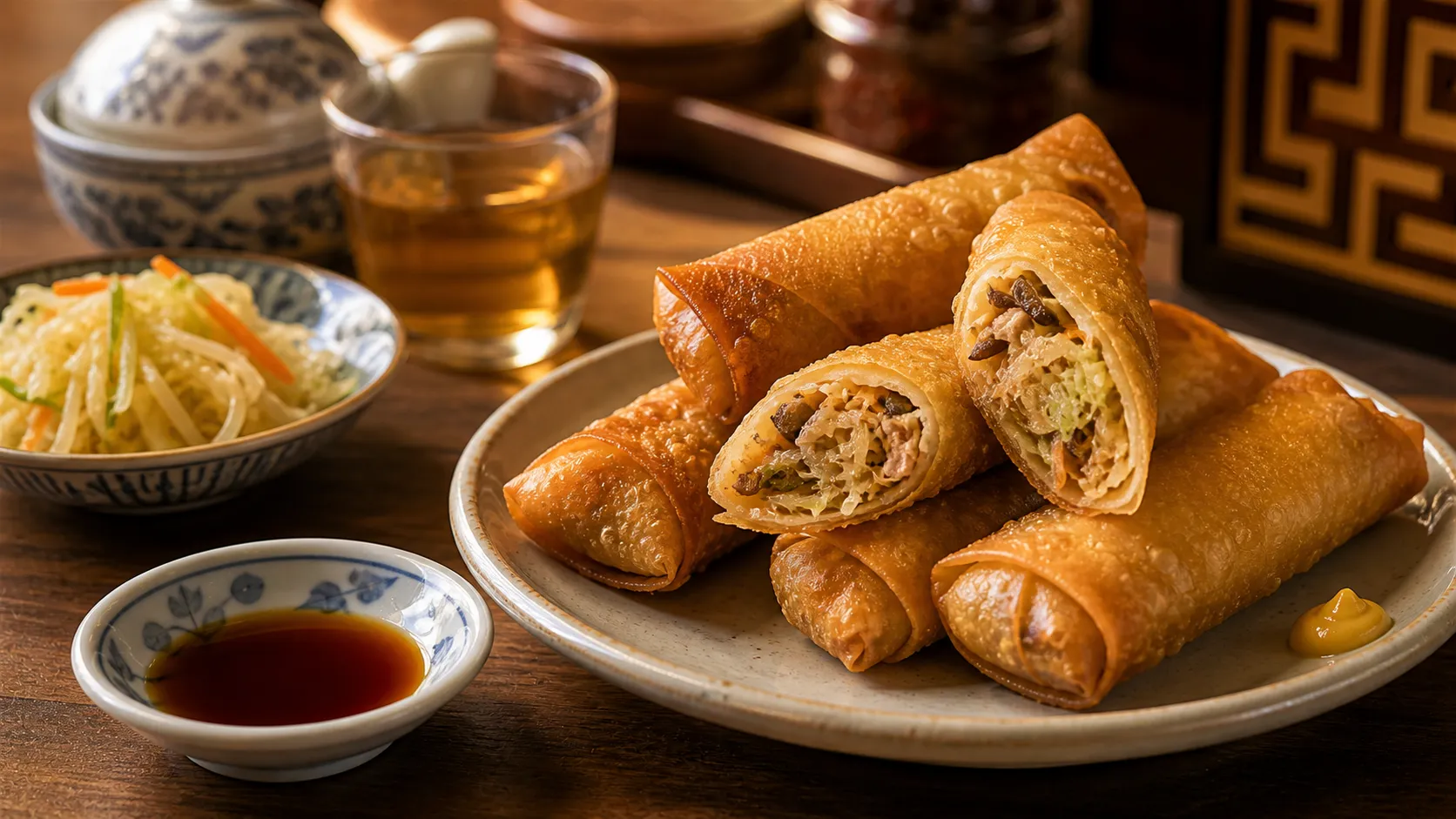
Japanese FoodNationwide
Harumaki (春巻き)
The Japanese spring roll — a shatteringly crisp golden tube that gives way to a hot, savory tangle of pork, cabbage and bamboo shoot, best eaten the second it's cool enough not to burn your mouth (you will not wait that long).
July 11, 2026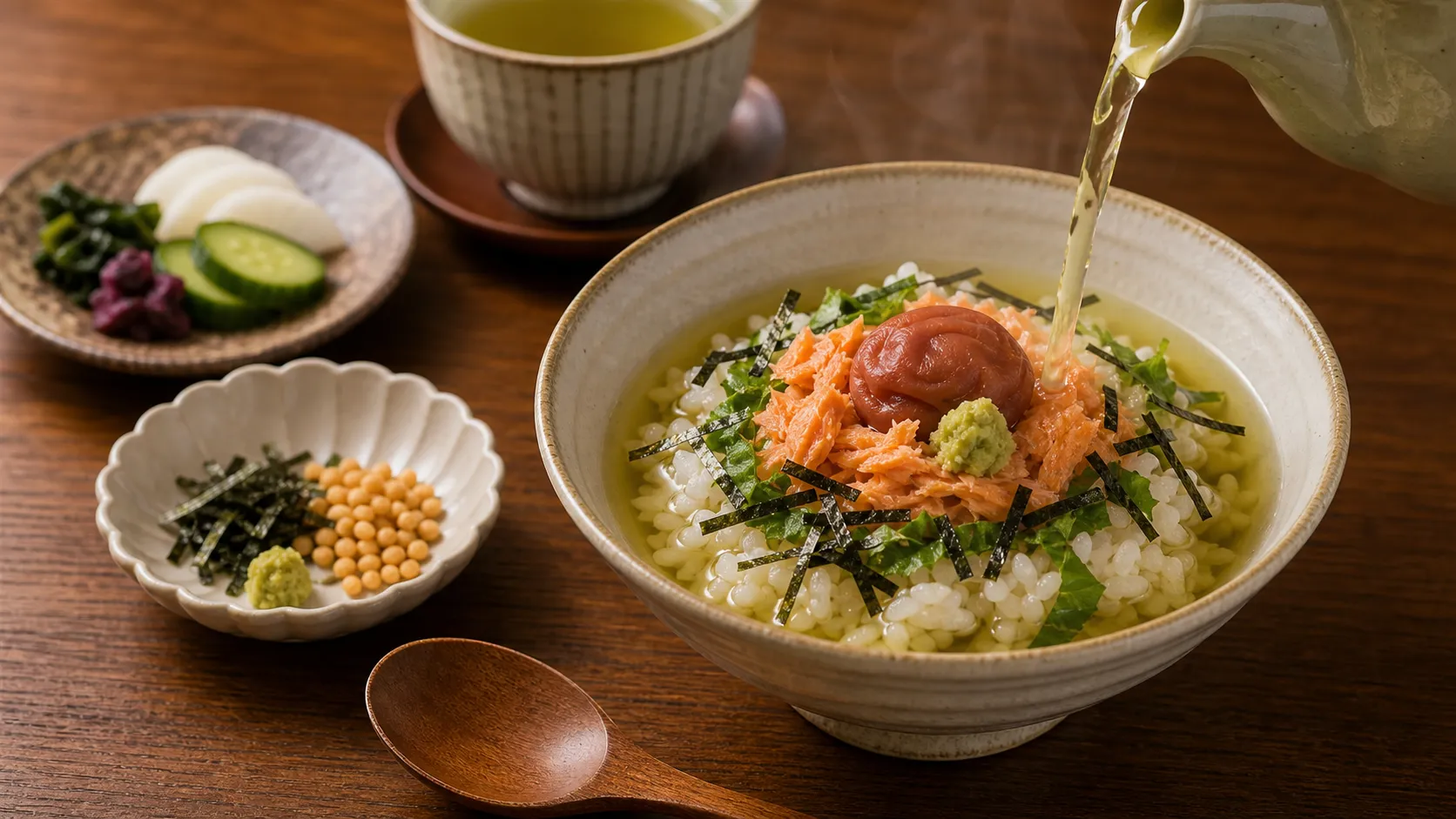
Japanese FoodNationwide
Ochazuke (お茶漬け)
Pour hot green tea or dashi over a bowl of rice, scatter something savory on top, and eat — the gentlest, most quietly restorative dish in Japan, the one you reach for late at night when you just need a warm bowl to make everything okay.
July 11, 2026