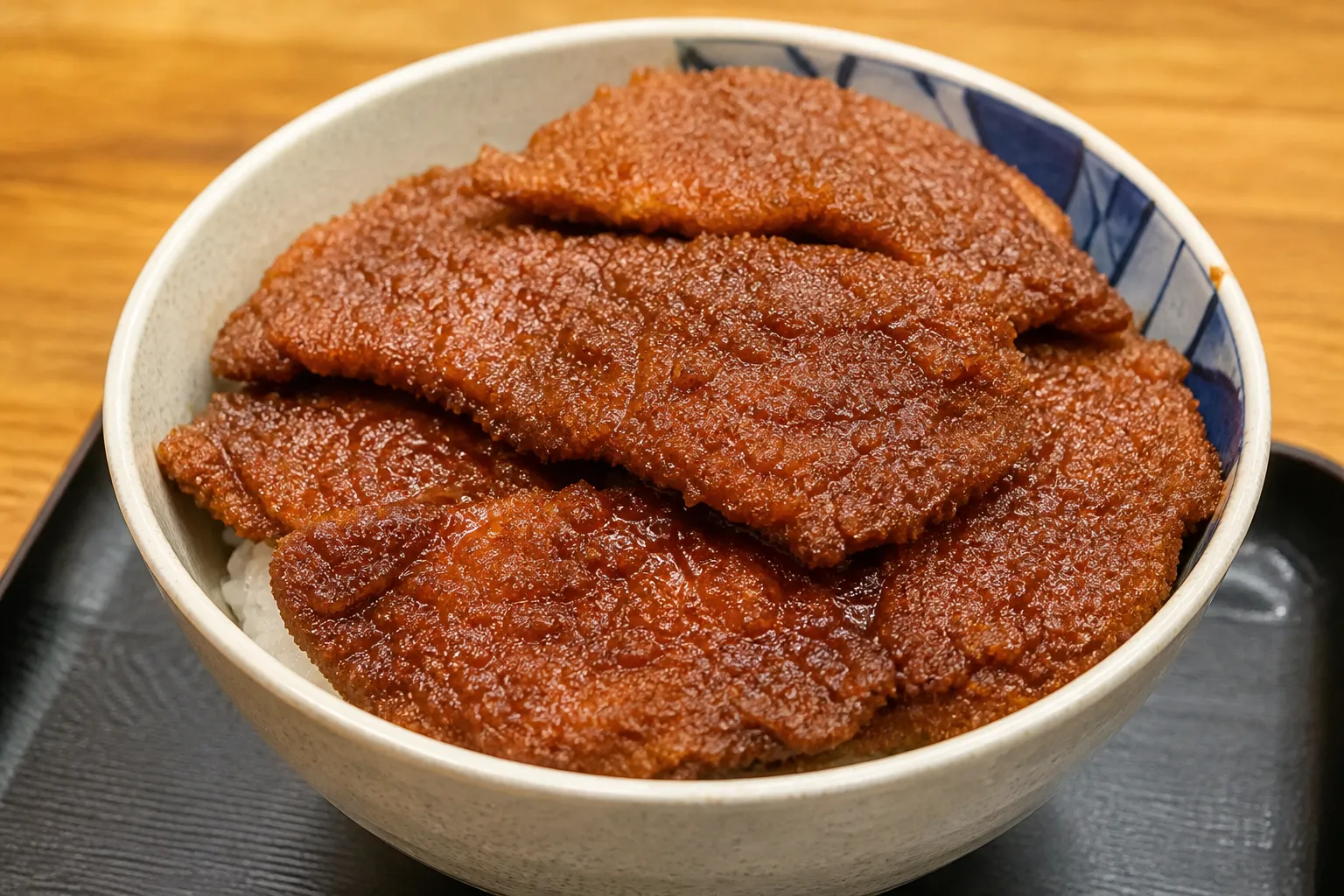
There is no egg. I need you to make peace with that right now, because if you came in expecting the soft, oniony, egg-blanketed katsudon you know and love, Fukui is about to mug you — in the best possible way. Lift the lid and it's just this: a bowl of hot rice, and on top, thin pork cutlets fried crisp and then dunked — fully, shamelessly dunked — in a dark, sweet-tangy sauce, with nothing softening the crunch except that sauce slowly bleeding down into the rice.
Share this dish


No egg. No onion. No broth. Just crisp thin cutlets fully bathed in a dark sweet-tangy sauce over hot rice. Fukui's katsudon throws out the rulebook — and it's a revelation.
🍜 Planning a food trip to Fukui?Add this dish to my Food Trip →
 Add this dish to my Food Trip →
This is Fukui sauce katsudon, and locals will gently inform you that this is what "katsudon" means in their prefecture — no egg, no dashi, no debate. The cutlets are pounded thin so the crust-to-meat ratio tips toward crunch, then bathed in a Worcestershire-style sauce that's sweet, sharp, and a little fruity. It sounds almost too simple. It is absurdly good.
A cutlet that came home from Europe
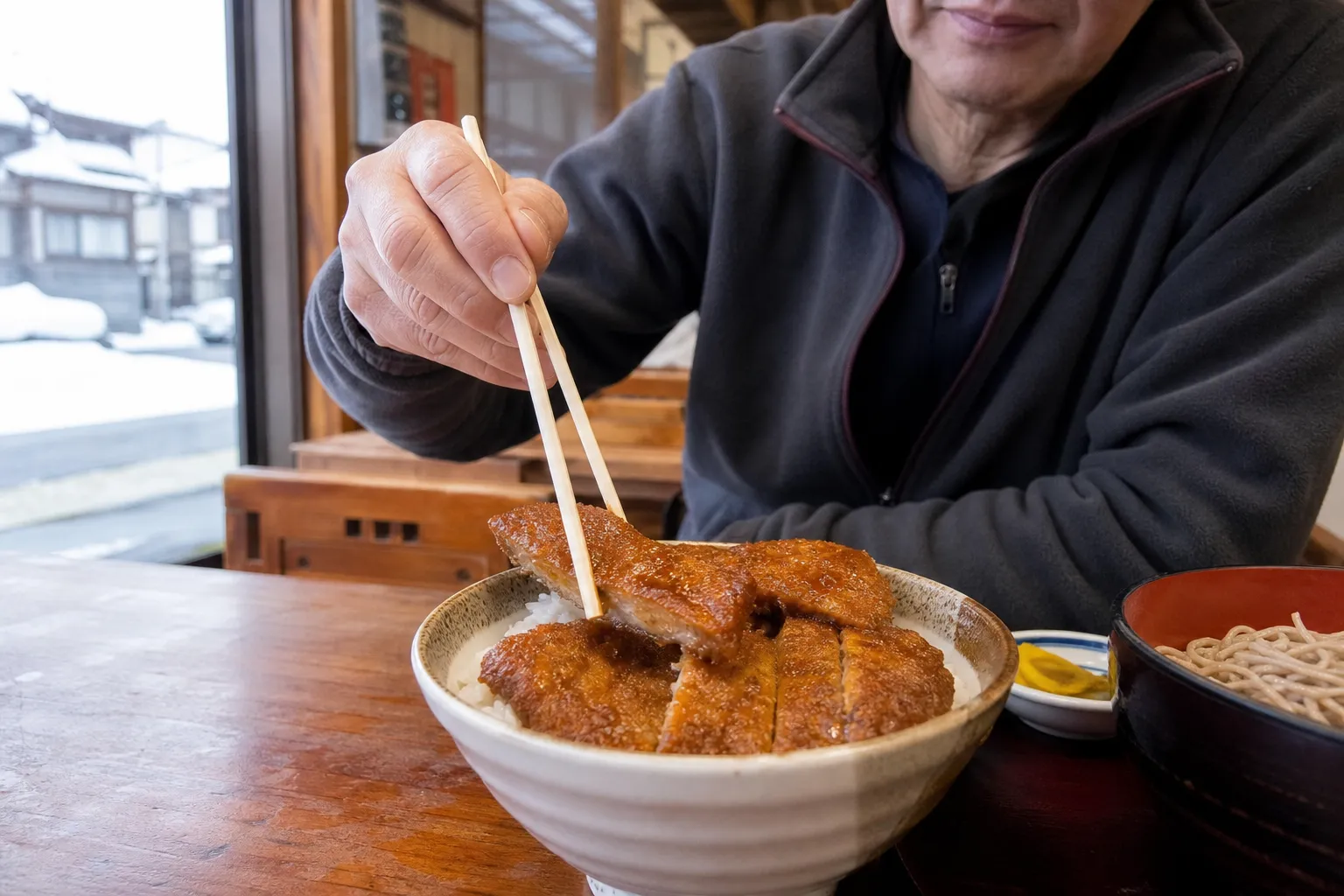
Fukui's sauce katsudon is most often traced to Yoroppaken (ヨーロッパ軒), a Fukui institution whose founder is said to have studied cooking in Europe in the early 1900s and brought back a love of Western-style frying and sauce. The story goes that he served a sauce-dipped cutlet over rice in the 1910s — well before the egg-and-onion katsudon became Japan's default — making Fukui's version arguably the original idea, not the variation. The name "Europe House" is right there on the sign, a little time capsule of the era when yoshoku (Western-influenced Japanese food) was the exciting new thing.
I love that the "weird" regional one might actually be the elder. It reframes the whole dish: Fukui didn't strip the egg out of katsudon — the rest of Japan added it later. Whether or not every detail of the legend is airtight, the pride is real, and you can taste a century of stubborn local loyalty in every sauce-soaked bite.
Thin, crisp, and drowned in sauce
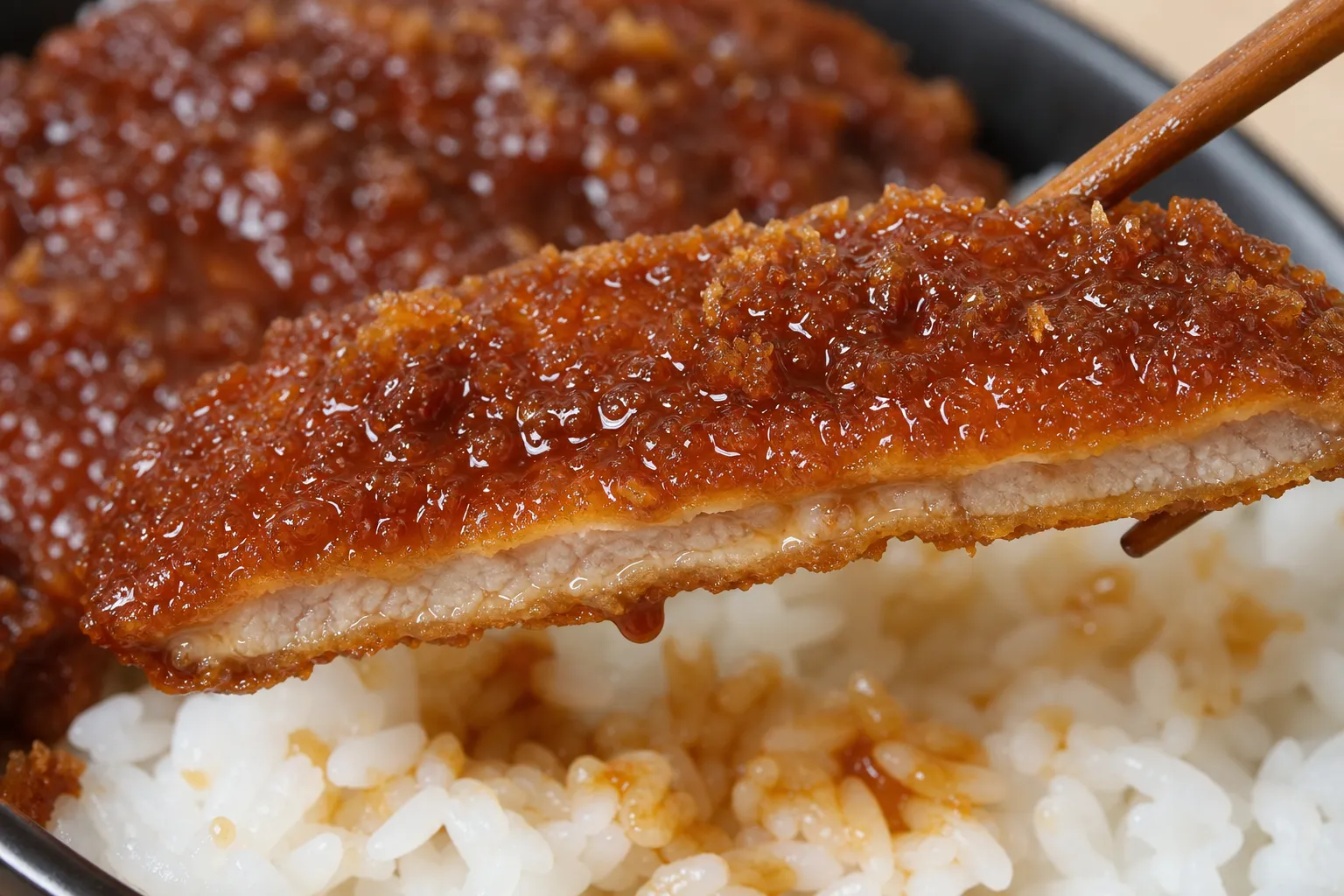
The magic is in the contrast. The cutlets are sliced or pounded thin and fried until properly crisp, then plunged into a warm pot of dark sauce so the whole surface drinks it up — sweet, tangy, savory, with that unmistakable Worcestershire fruitiness. Because there's no egg or broth blanketing it, the crust keeps a surprising amount of bite even while it's soaked, and the sauce drips down to flavor the rice underneath. Every layer is doing a job.
Two or three thin cutlets usually fan across the bowl, sometimes stacked, sometimes tucked half under the lid so they steam slightly. The first bite is crunch and sauce; by the last bite you're scooping up sauce-stained rice and wishing the bowl were deeper. I have, on more than one occasion, considered ordering a second. I'm only human.
How it's made
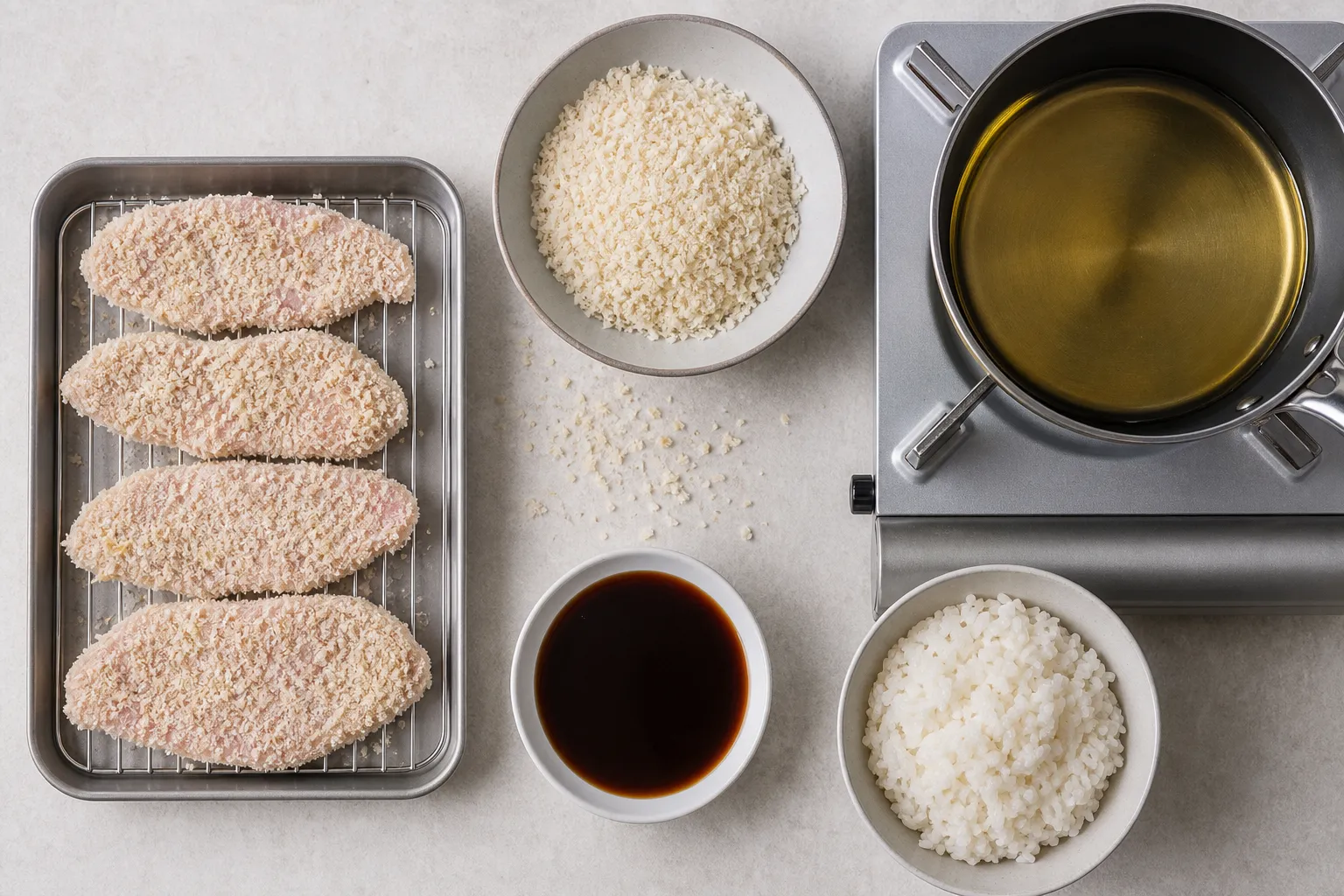
- Pound pork loin or fillet thin and bread it in panko
- Deep-fry until golden and crisp
- Keep a pot of sweet-tangy Worcestershire-style sauce warm (each shop guards its own blend)
- Dunk the just-fried cutlet fully into the sauce so it soaks through
- Lay the sauced cutlets over a bowl of hot rice — no egg, no onion, no broth
- Serve straight away, while the crust still has its crunch
Before you go — for the katsudon-curious
Your questions, answered honestly
"Wait — where's the egg?" — There isn't one, and that's the point. Fukui katsudon is the sauce-dipped style. If you specifically want the egg-and-onion version, you'll need to ask for katsu-toji or order it elsewhere; here, "katsudon" means sauce.
"Is the sauce spicy?" — No. It's a sweet, tangy, fruity Worcestershire-style sauce — think savory and a little sharp, not hot. Very easy to like.
"Loin or fillet?" — Loin (rōsu) is richer with a fatty edge; fillet (hire) is leaner and more tender. Both are great; pick by mood. Many shops do either.
"Won't the cutlet go soggy?" — Less than you'd think. It's fried crisp and sauced right before serving, so you get that crunch-meets-soak texture rather than mush — as long as you eat it fresh, which you will.
What the staff will ask you
| You'll hear | Romaji | Meaning | Just say |
|---|---|---|---|
| ロースかヒレ、どちらにしますか? | Rōsu ka hire, dochira ni shimasu ka? | "Loin or fillet?" | Rōsu de onegaishimasu (loin, please) |
| ご飯大盛りにしますか? | Gohan ōmori ni shimasu ka? | "Large rice?" | Futsū de onegaishimasu (normal is fine) |
| お味噌汁はお付けしますか? | Omisoshiru wa otsuke shimasu ka? | "Add miso soup?" | Hai, onegaishimasu (yes please) |
To order, just say "Sōsu katsudon kudasai" (ソースカツ丼ください) — "Sauce katsudon, please."
Where to eat it
- Fukui City — the heartland of the dish. Yoroppaken (ヨーロッパ軒), widely credited with originating sauce katsudon, runs its main shop and several branches around Fukui and is the classic place to try it at the source.
- Across Fukui Prefecture — diners, soba shops, and katsudon specialists throughout the prefecture serve their own sauce-dipped versions; it's the regional default, so you'll find it easily.
- Fukui Station area — convenient spots and antenna-style shops near the station make it an easy first stop. Hours vary by shop, so check before you go.
Soul Score
Local Roots4/5
First-Timer Friendly5/5
Adventure Level3/5
Comfort Level5/5
Travel Worthy4/5
These scores are one obsessed eater's gut feeling — not a verdict. A low number isn't a bad mark, just a different kind of adventure.
Know someone planning Japan?
← All Articles
Local Food · Fukui, Fukui
Still hungry?
Eat more from Fukui
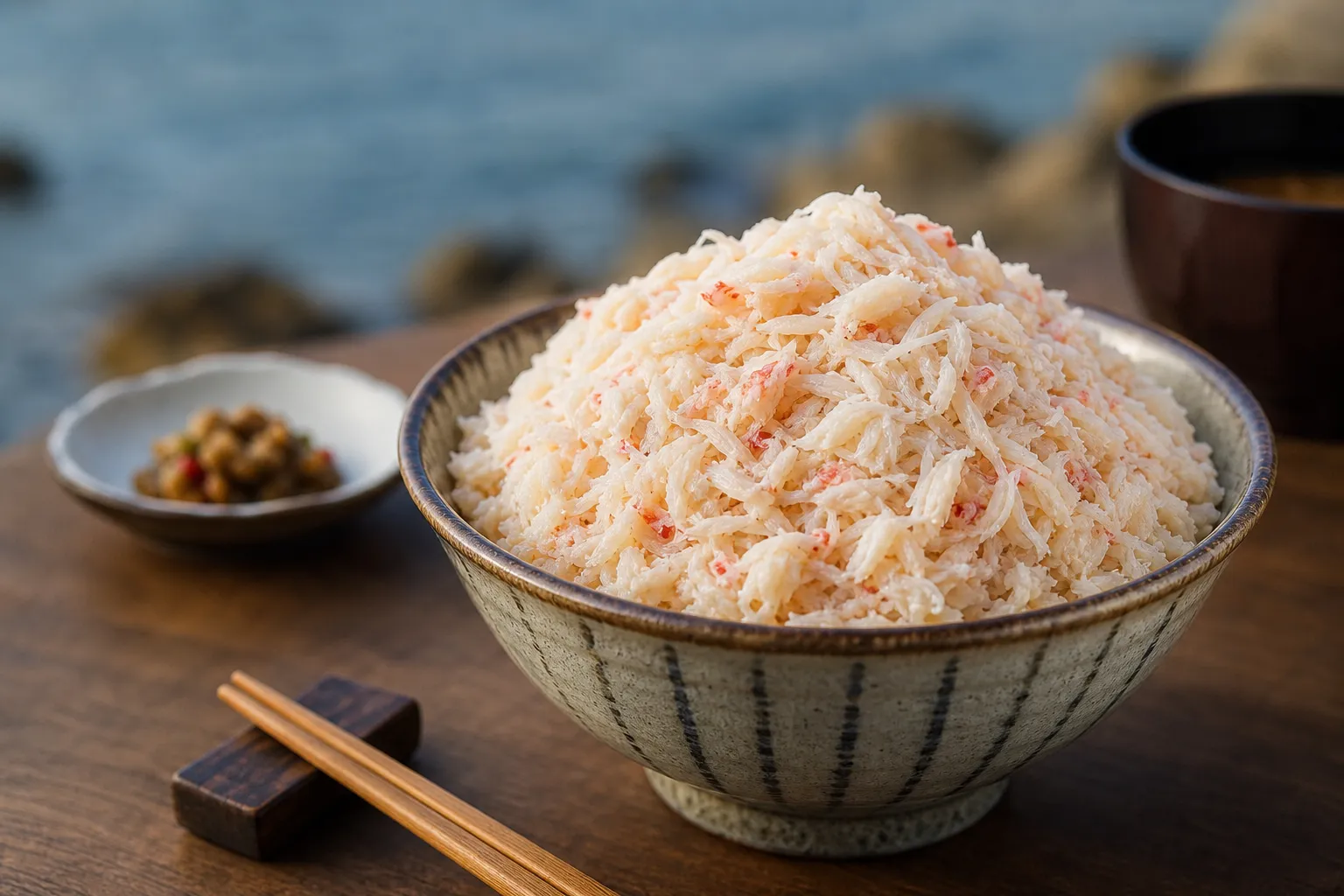
Local FoodEchizen, Fukui
Echizen Crab Meshi (越前かに飯)
A whole snow crab is a glorious, sticky, two-handed wrestling match — but someone in Fukui already did all the work and piled the sweet white meat over rice for you.
July 5, 2026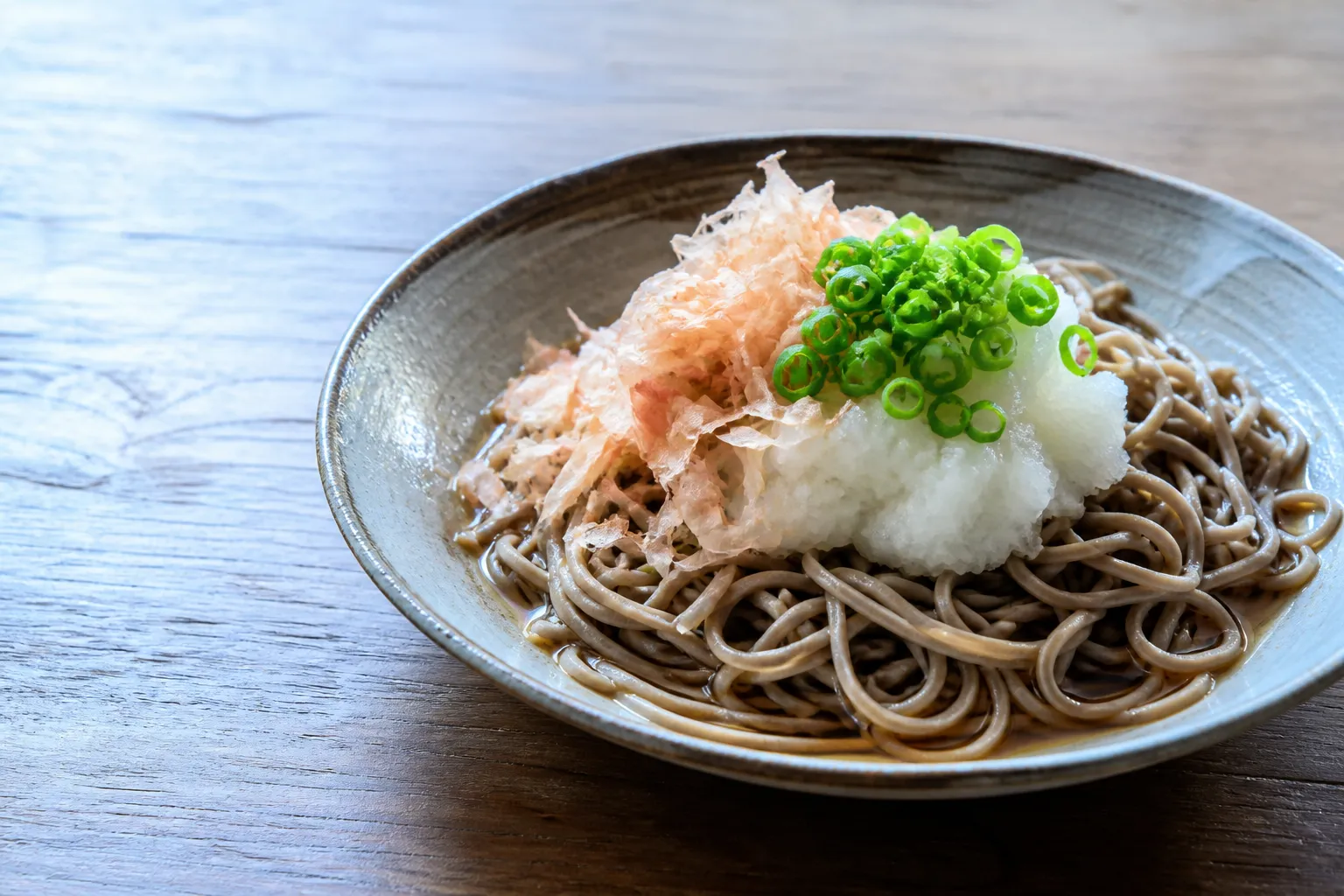
Local FoodFukui
Oroshi Soba (おろし蕎麦)
A mountain of grated daikon on cold buckwheat noodles, and the first bite is colder and sharper than any noodle dish has a right to be.
July 4, 2026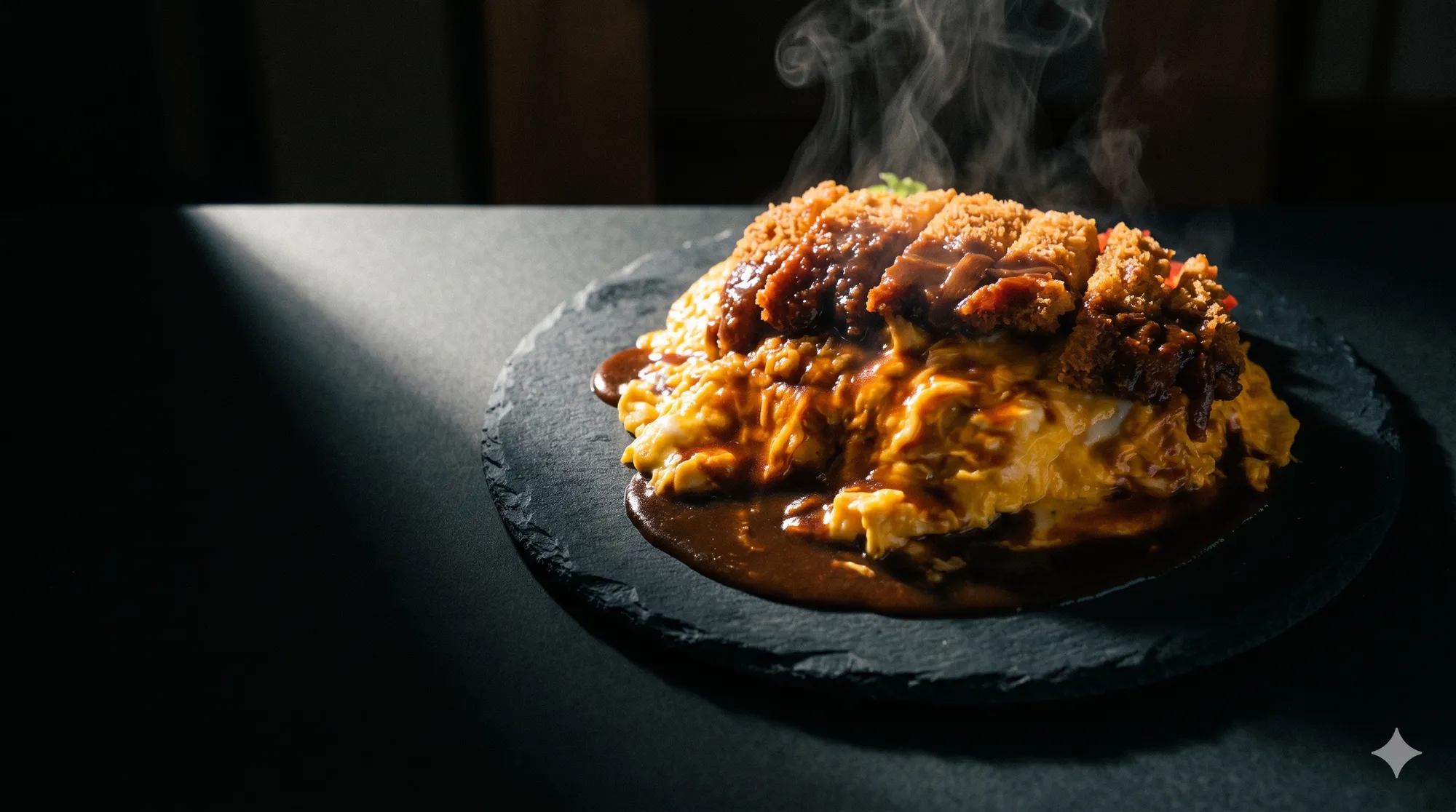
Local FoodEchizen, Fukui
Bolga Rice (ボルガライス)
Curry rice. Topped with omurice. Topped with a pork cutlet. Drowned in demi-glace. Fukui built a triple-decker monument to indulgence — and nobody knows where the name came from.
July 13, 2024