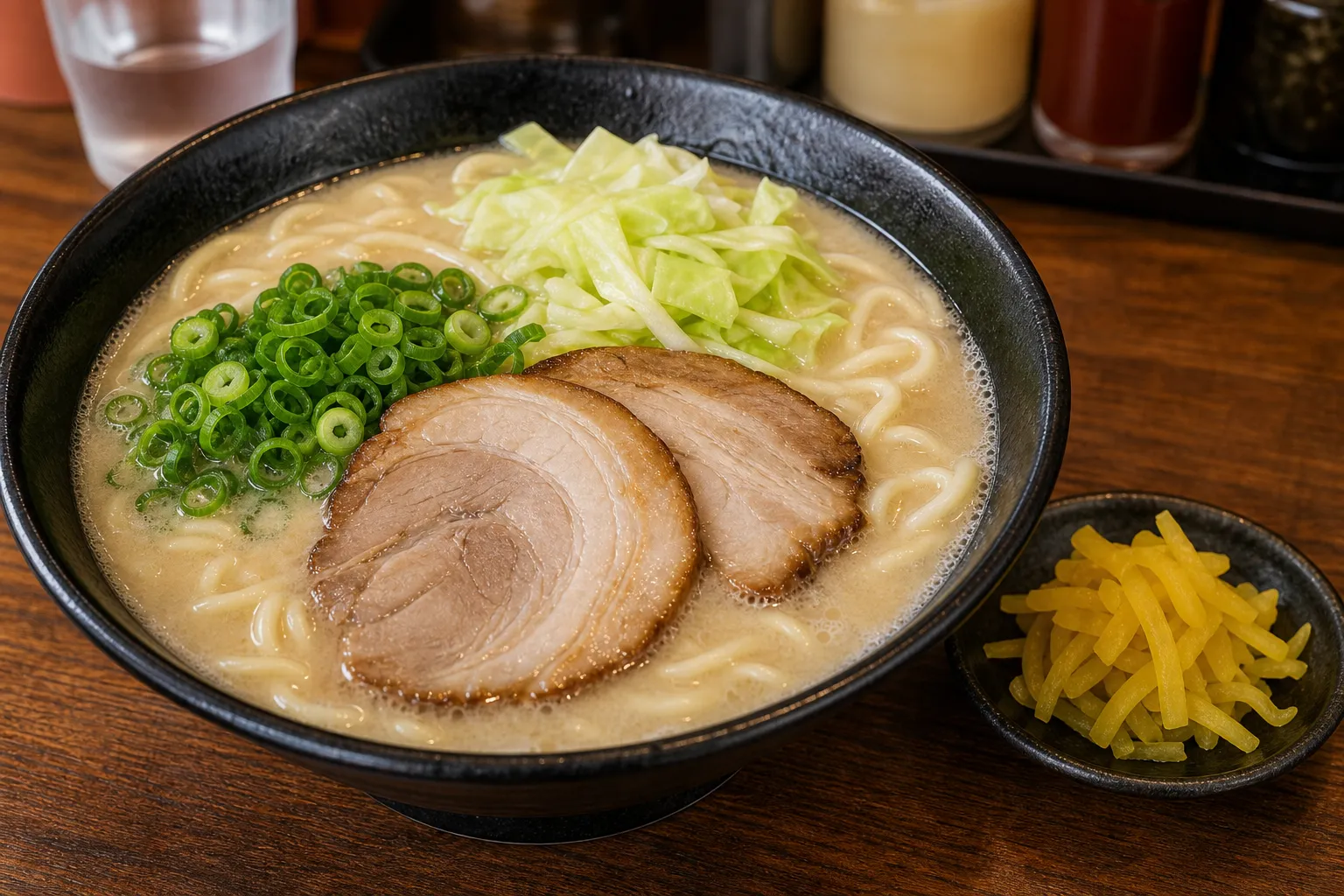
The bowl of tonkotsu landed in front of me, and next to it — unasked, unhurried — a little dish of bright yellow pickled radish and a cup of hot green tea. I'd come to Kyushu braced for the usual pork-bone punch to the face, and instead Kagoshima was setting a table. This wasn't a race. This was a bowl that wanted me to slow down.
Share this dish


Kyushu's black sheep tonkotsu — softer, rounder, semi-cloudy — served with pickled radish and a hot cup of tea like it's a whole little ceremony. The gentle giant of pork-bone ramen.
🍜 Planning a food trip to Kagoshima?Add this dish to my Food Trip →
 Add this dish to my Food Trip →
Everything about Kagoshima ramen is like that. Yes, it's tonkotsu — a pork-bone broth, the pride of Kyushu — but it's the odd one out of the family: the bones are softened and rounded with chicken and vegetables, so the soup comes out semi-cloudy and mellow rather than the intense, punchy white of Hakata. Thick-ish straight noodles, a gentler soup, and that side of takuan and tea. It grew up on its own, off in Japan's deep south, and it plays by its own rules.
The tonkotsu that grew up alone
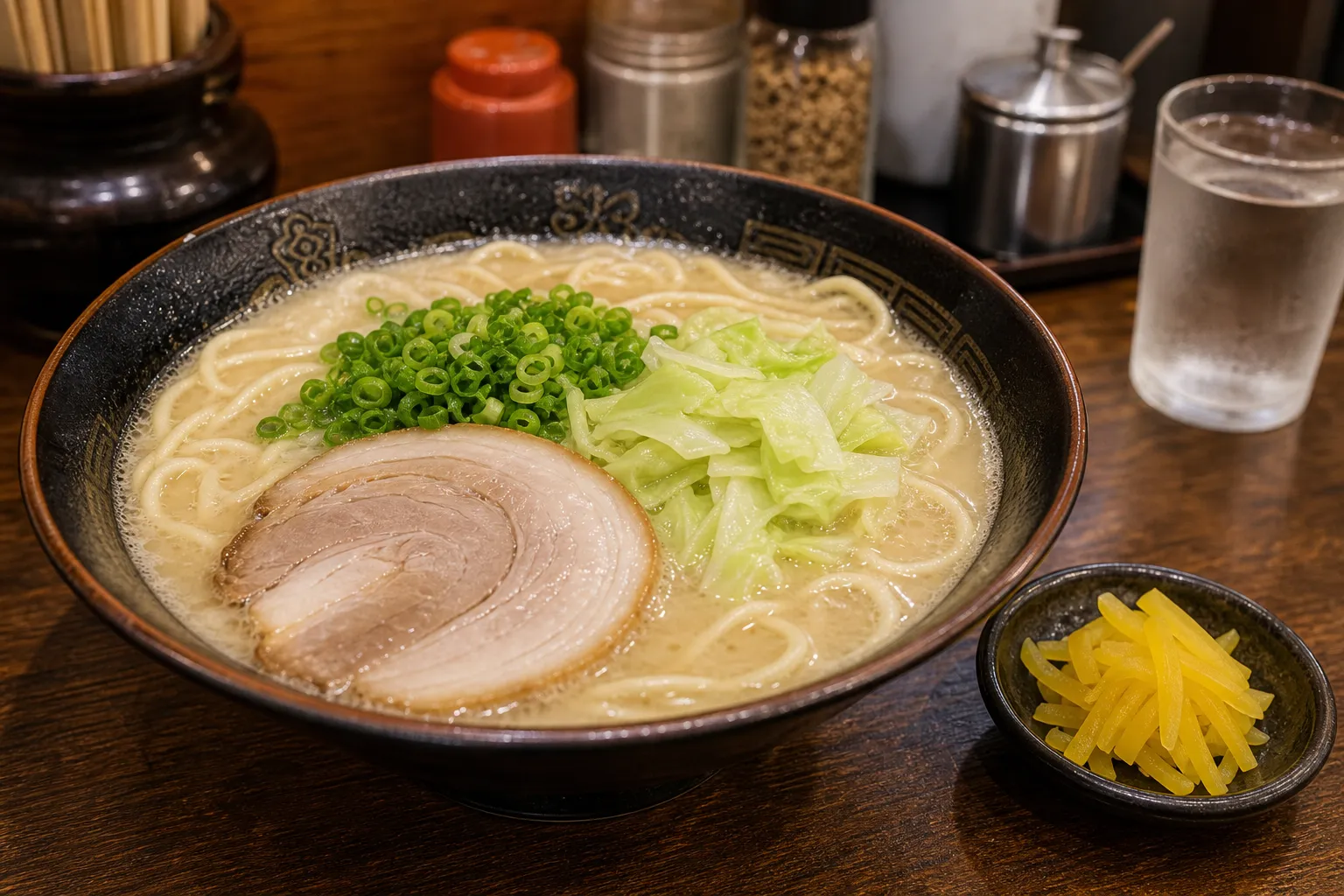
Here's the fun part of the history: most of Kyushu's tonkotsu styles are branches of the same tree — Kurume, Hakata, and their descendants share DNA and family resemblance. Kagoshima, way down at the southern tip, developed largely independently of all that. It's the same island's beloved pork-bone idea, but raised apart, and you can taste the different upbringing. It never joined the club, and I kind of love it for that.
So instead of chasing intensity, Kagoshima rounded the edges. Cooks mellow the pork-bone base with chicken bones and vegetables, giving a softer, more balanced broth. And the ritual around it — the free takuan and the cup of hot tea served alongside — turns a quick noodle lunch into something that feels a little more considered, a little more hospitable. It's the friendliest, least intimidating tonkotsu I've met, and it treats you like a guest, not a customer to turn over.
Why the mellow one hits
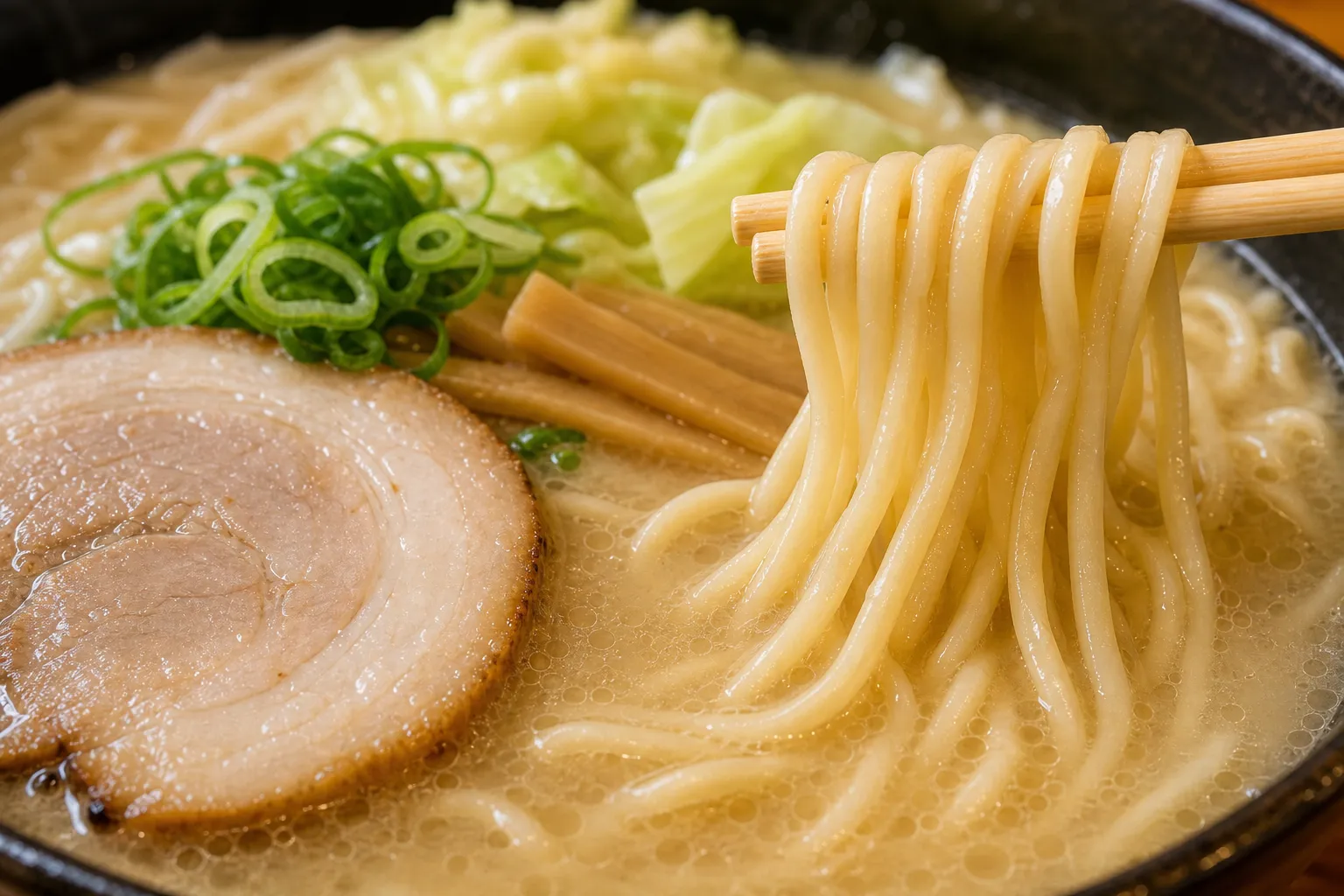
The broth is the whole character: a pork-bone base softened and rounded out with chicken and vegetables, coming out semi-cloudy and mellow rather than sharp and punchy — deep and savory, but easy. It's tonkotsu with the volume turned down and the warmth turned up. If Hakata is a shout, Kagoshima is a long, reassuring exhale.
The noodles are semi-thick and straight, with more chew and body than Hakata's hair-thin strands — a heartier noodle for a gentler soup, which balances beautifully. Then the pickled radish does quiet, brilliant work: crisp, tangy, a little sweet, it cuts through the richness between bites and resets your palate, and the hot tea keeps everything feeling calm and clean. It's a bowl that's been thought through, right down to the sides.
How it's made
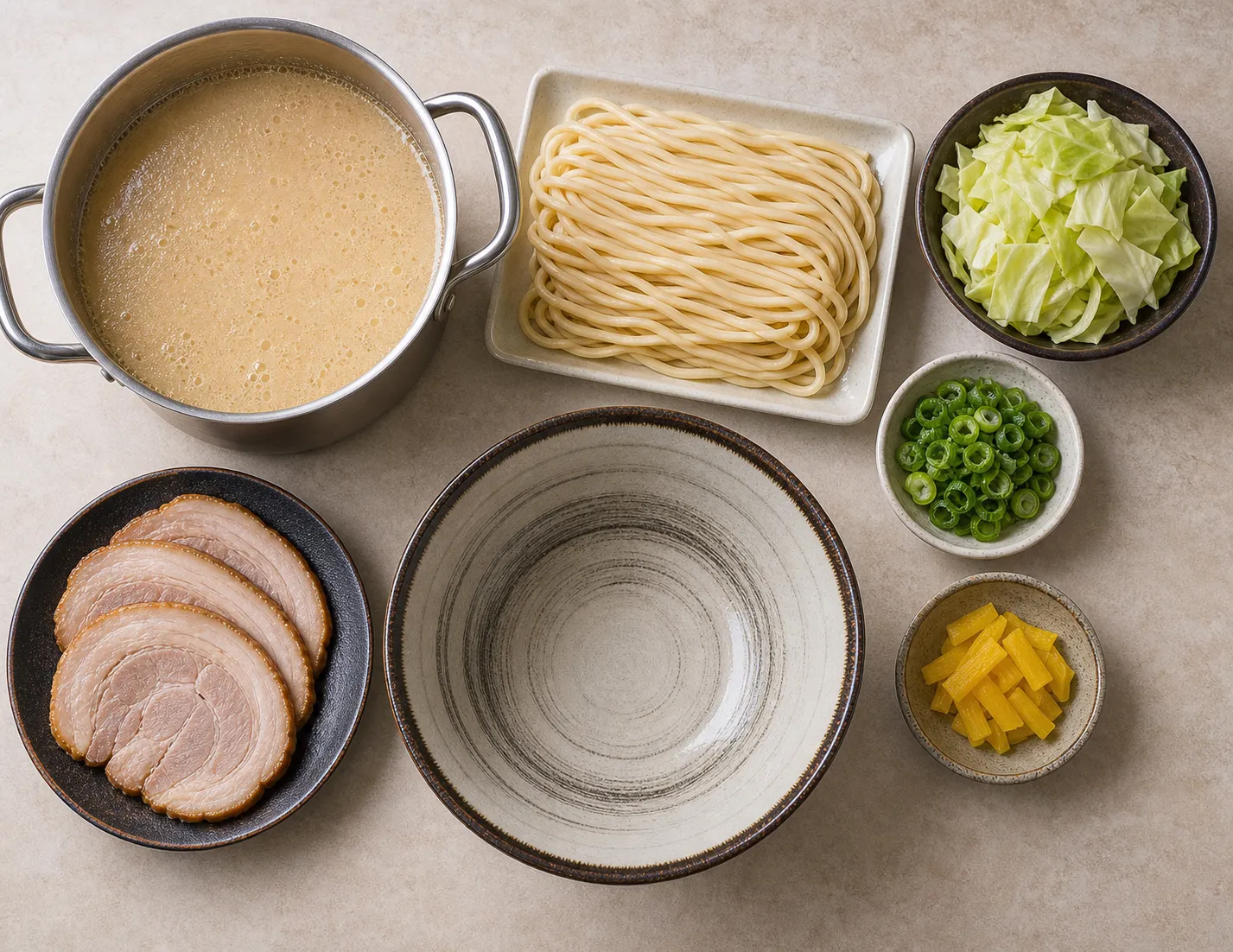
- Simmer pork bones for the tonkotsu base, but round and soften it with chicken bones and vegetables so it stays mellow and semi-cloudy rather than sharp
- Season the broth to a gentle, savory balance
- Cook semi-thick, straight noodles with a firm, hearty bite
- Combine broth and noodles; top with chashu, green onion, bean sprouts, and often a little cabbage
- Serve with a side of takuan (pickled radish) and a cup of hot tea — the Kagoshima custom
Before you go — settle in, sip the tea
Your questions, answered honestly
"Why is my tonkotsu so much milder than in Fukuoka?" — Because Kagoshima softens its pork-bone broth with chicken and vegetables on purpose, so it's semi-cloudy and mellow instead of the intense white punch of Hakata. It developed on its own down south — different family, gentler style.
"What's with the pickled radish and the tea?" — That's the Kagoshima ritual, served free alongside your ramen. The crisp, tangy takuan resets your palate between rich bites, and the hot tea keeps things calm. Enjoy them as part of the meal, not as a garnish to ignore.
"Is Kagoshima ramen part of the Yokohama iekei family?" — No — totally separate lineage. Iekei is a Yokohama invention; Kagoshima ramen grew up independently in Kyushu's south. Same word "ramen," completely different story.
"Will I still like it if I love strong tonkotsu?" — Almost certainly. It's rich and deeply porky, just rounder and more balanced. Think of it as tonkotsu you can happily finish without needing a nap.
What the staff will ask you
| You'll hear | Romaji | Meaning | Just say |
|---|---|---|---|
| 麺の硬さは? | Men no katasa wa? | "How firm do you want the noodles?" | Futsū de (normal) |
| 大盛りにしますか? | Ōmori ni shimasu ka? | "Want a large portion?" | Futsū de (regular) / Ōmori de (large) |
| お茶はいかがですか? | Ocha wa ikaga desu ka? | "Would you like some tea?" | Onegaishimasu (yes please) |
To order, just say "Rāmen kudasai" (ラーメンください) — "Ramen, please."
Where to eat it
- Tenmonkan district (天文館), Kagoshima City — the city's lively downtown and entertainment quarter, and the classic place to find long-running Kagoshima ramen shops.
- Kagoshima City ramen shops — spots around the city serve the mellow local tonkotsu with the takuan-and-tea custom; this is the home of the style, so eat it here.
Shops and hours change, so check before you go — and don't skip the pickled radish; it's part of the design.
Soul Score
Local Roots5/5
First-Timer Friendly4/5
Adventure Level3/5
Comfort Level5/5
Travel Worthy4/5
These scores are one obsessed eater's gut feeling — not a verdict. A low number isn't a bad mark, just a different kind of adventure.
Know someone planning Japan?
← All Articles
Local Food · Kagoshima, Kyushu
Still hungry?
Eat more from Kagoshima
Local FoodKagoshima
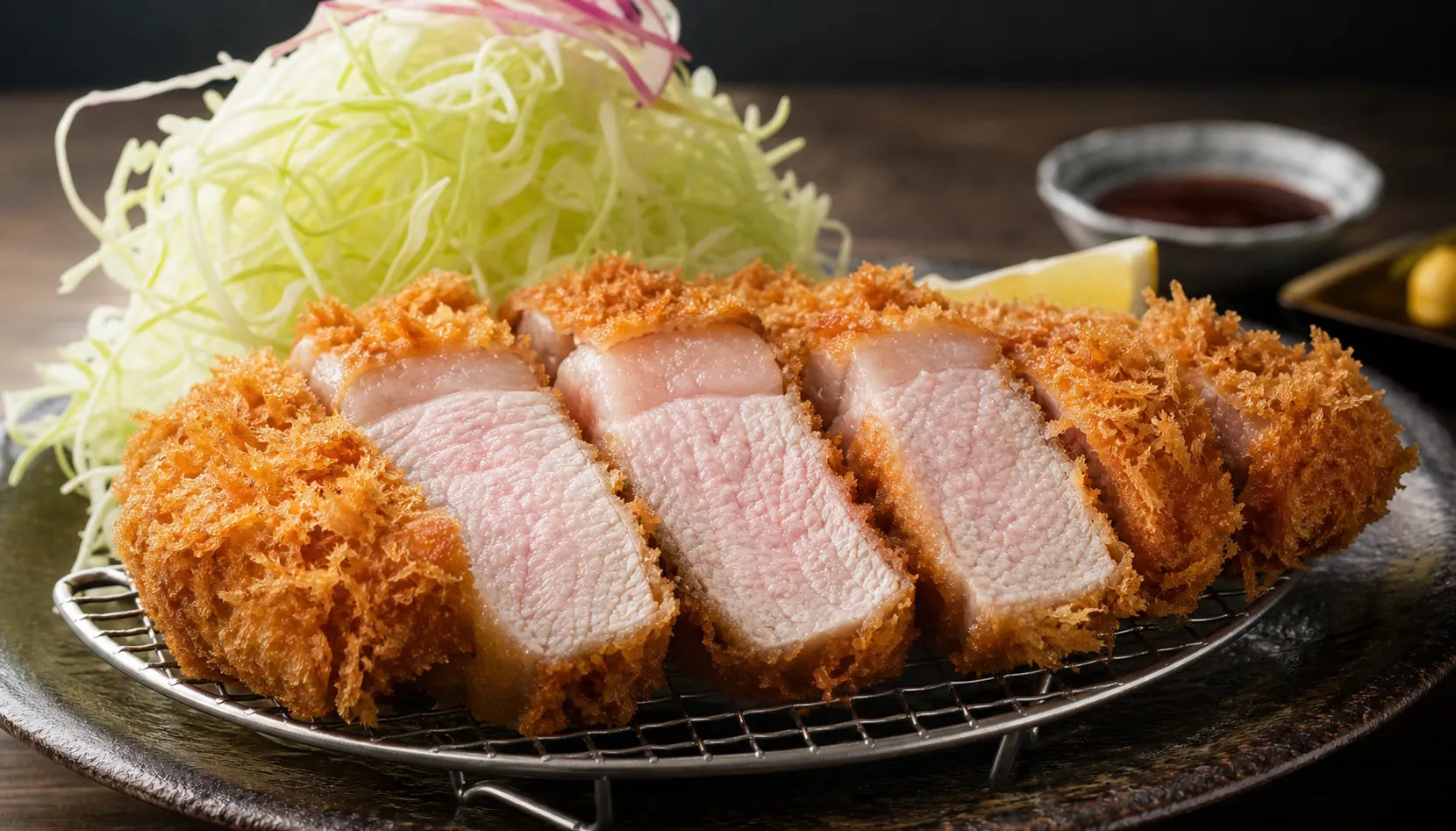
Kurobuta Tonkatsu (黒豚とんかつ)
The fat didn't just sit there being fat — it kept melting into the meat with every bite, and I stopped talking mid-sentence to deal with it properly.
July 5, 2026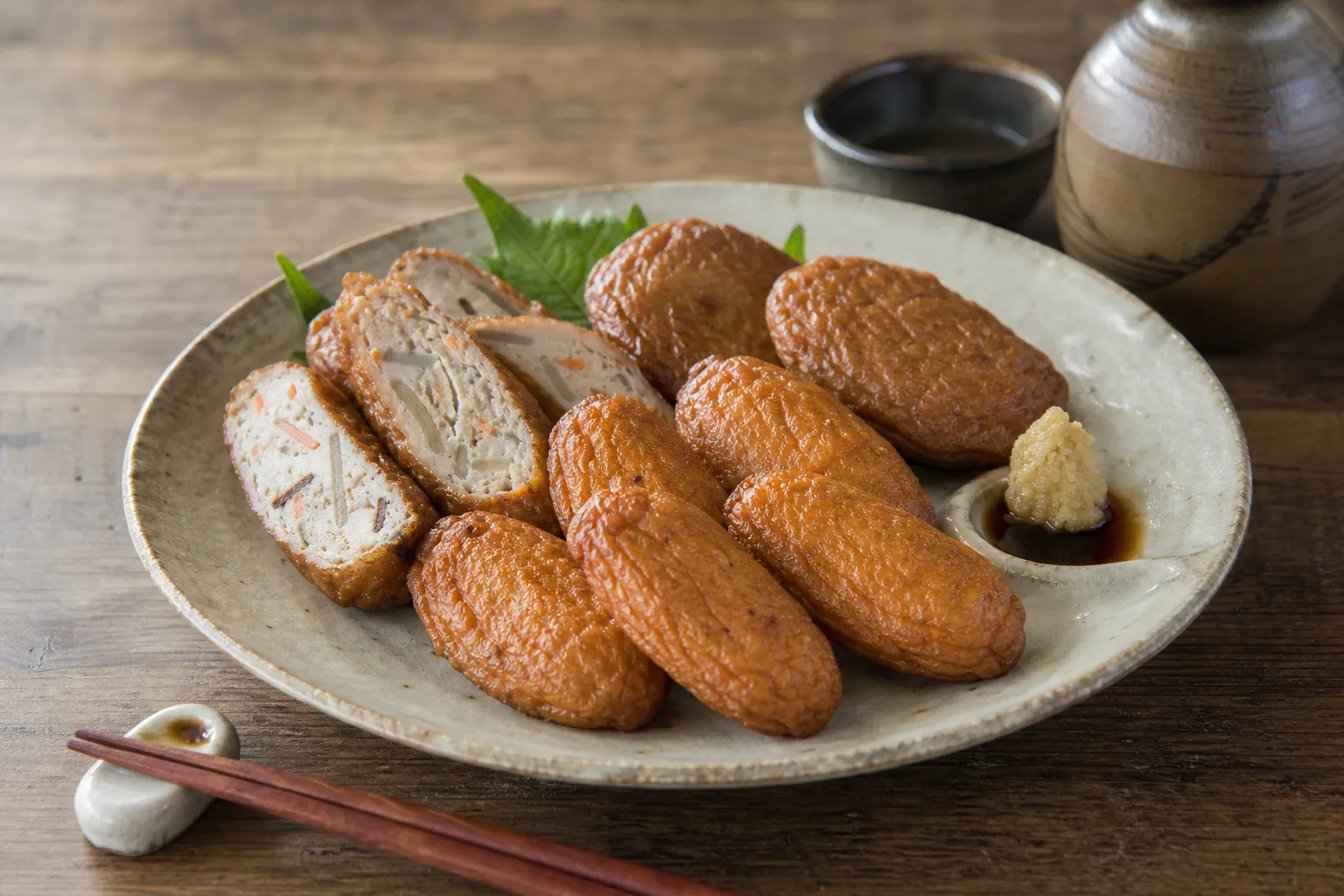
Local FoodKagoshima
Satsuma Age (さつま揚げ)
No batter. No breading. Just fish, pounded into paste and fried until the outside turns the color of good leather. I bit in expecting crunch and got something closer to a warm hug.
July 4, 2026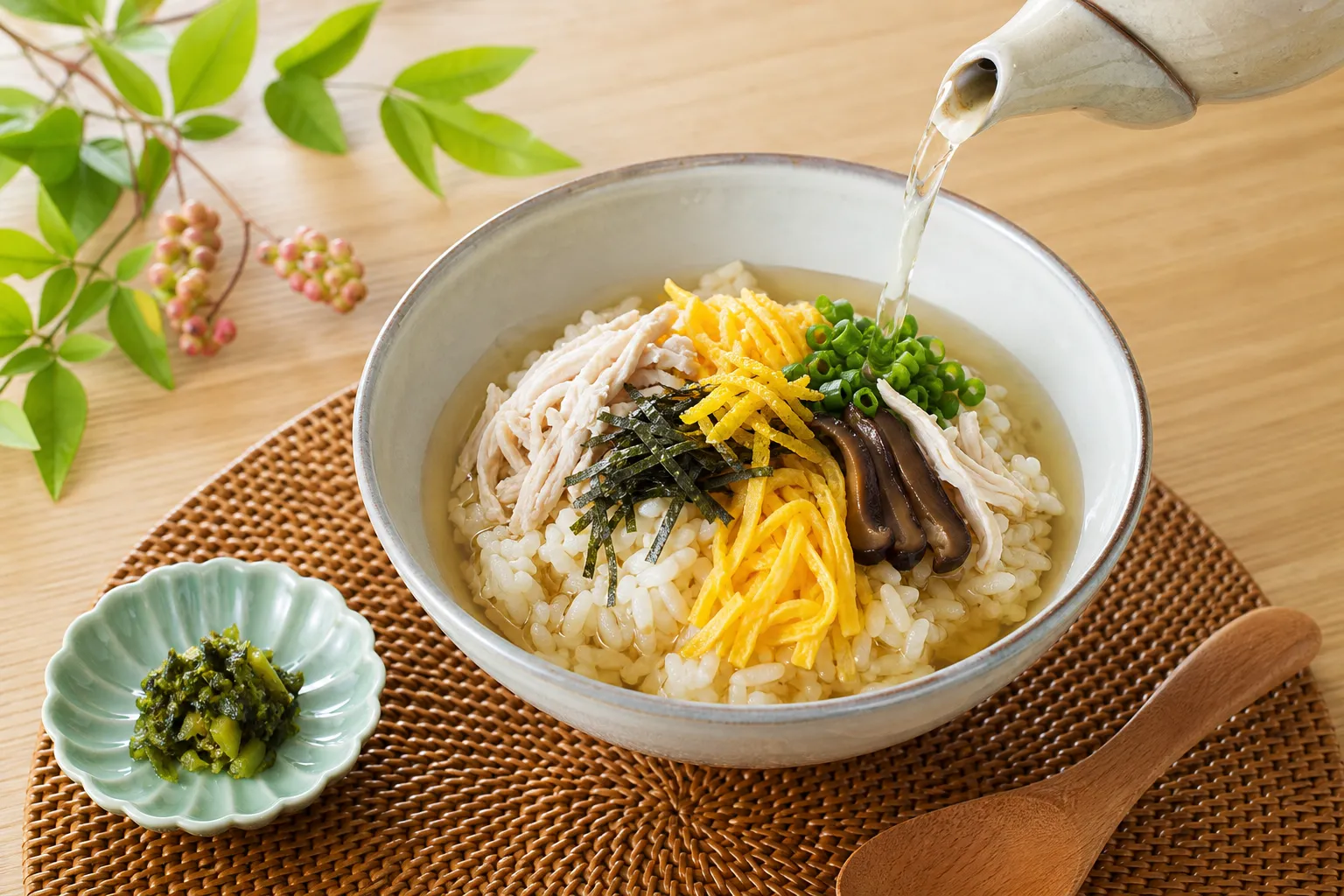
Local FoodAmami, Kagoshima
Keihan (鶏飯)
Shredded chicken, golden egg, nori and toppings over rice — and then someone pours clear, hot chicken broth over the whole thing at the table. The most soothing bowl in the south. I have rarely felt so instantly calm about a meal.
June 28, 2026