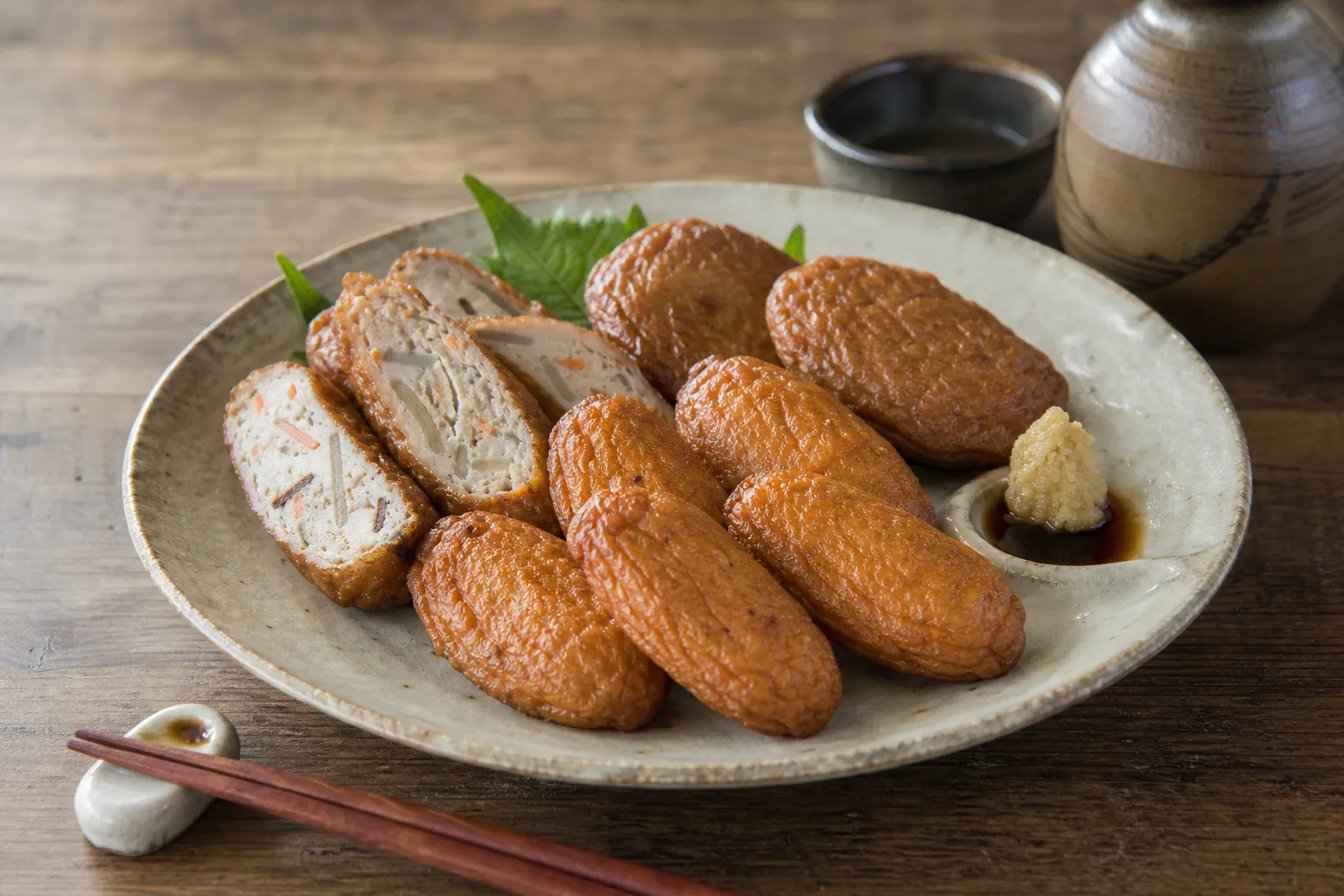
I kept waiting for the crunch. You see a golden-brown fried oval on a plate and your brain, trained by tempura and karaage and every other fried thing in Japan, braces for a shattering coating. It never came. Instead: soft, springy, faintly sweet fish, warm all the way through, with a fried skin that's more chewy-caramelized than crispy. It took me a full bite to recalibrate. Then I just kept eating.
Share this dish


No batter. No breading. Just fish, pounded into paste and fried until the outside turns the color of good leather. I bit in expecting crunch and got something closer to a warm hug.
🍜 Planning a food trip to Kagoshima?Add this dish to my Food Trip →
 Add this dish to my Food Trip →
That's satsuma age (さつま揚げ), Kagoshima's deep-fried fish cake, and the thing that trips people up is exactly what makes it good: there's no separate batter or crust at all. The fish itself — ground into a smooth paste (surimi), often with bits of vegetable or squid mixed in — is shaped and fried directly, so the surface you're biting into browns and firms up on its own instead of hiding under tempura crunch or breadcrumbs. It's fish, doing all the work itself.
A Ryukyu import that became Kagoshima's signature snack
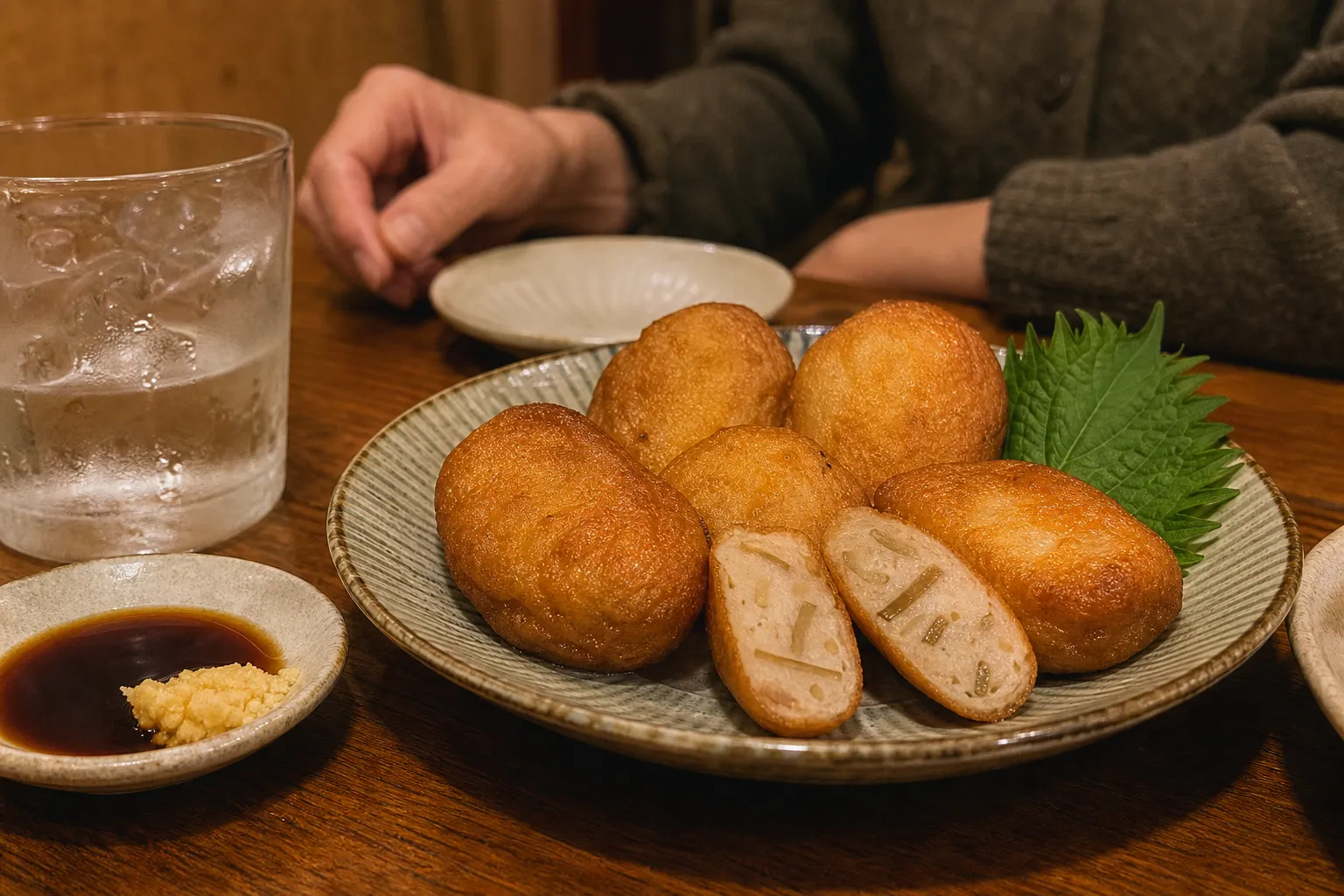
The dish's roots reportedly trace back to Okinawa (then the Ryukyu Kingdom), where a similar fried fish cake called chiki-agi existed, brought north to the Satsuma domain — modern-day Kagoshima — during the Edo period. Local legend credits the daimyo Shimazu Nariakira with popularizing it as a way to preserve fish in the region's hot, humid climate, since frying the fish paste extended its shelf life without refrigeration.
I like that this dish exists because of heat and spoilage and a lord who needed a practical answer, and four hundred years later it's a beloved snack you can buy at a train station kiosk. There's something quietly moving about food born from necessity becoming food people crave for its own sake. Kagoshima takes real pride in it — it's not a footnote regional item, it's a full identity, sold in dedicated shops with dozens of varieties.
Why "no coating" is the whole point
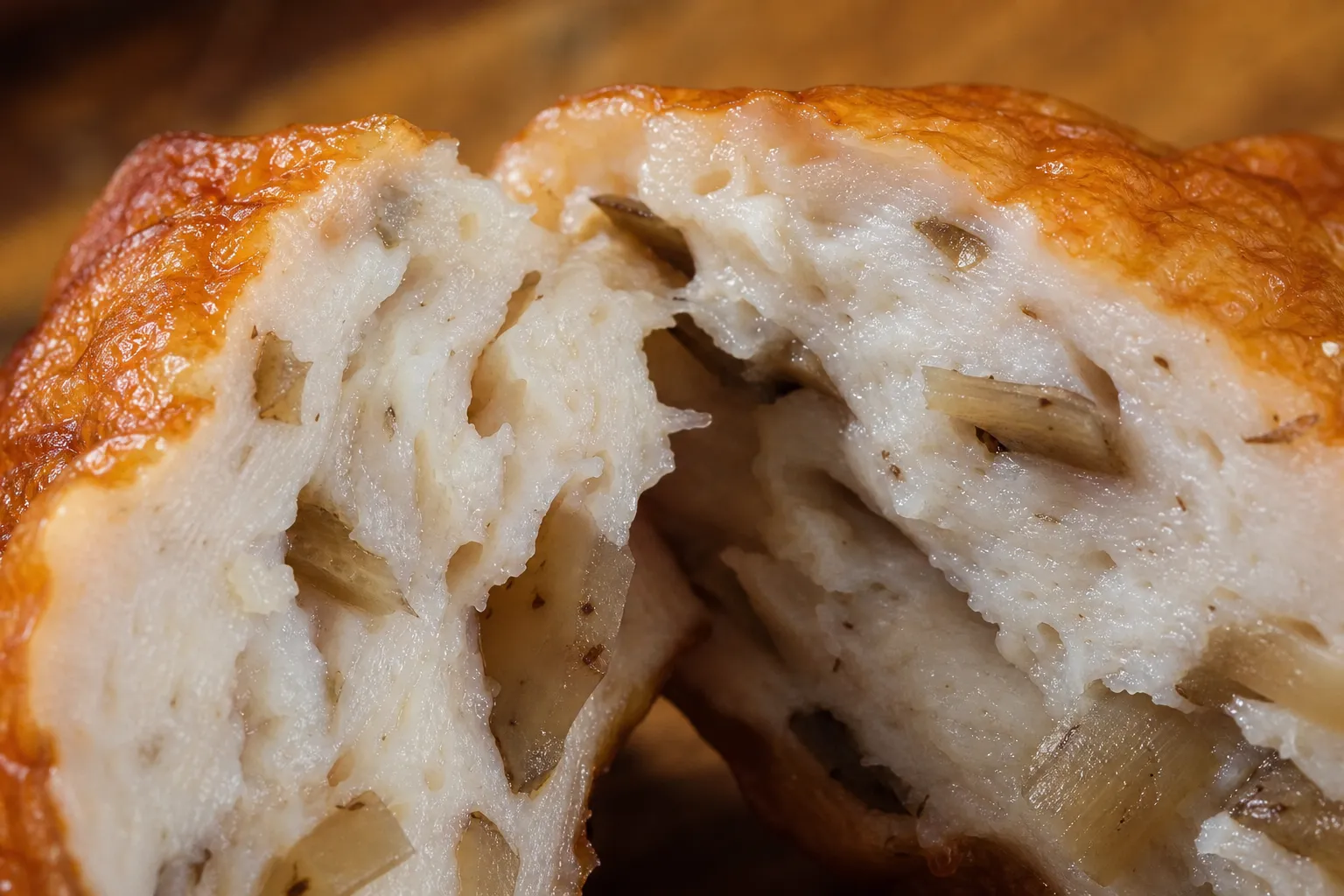
Cut one open and you'll see why the texture reads so differently from other fried Japanese foods. There's no batter layer, no breadcrumb shell — just a smooth, dense, springy fish paste all the way through, studded with visible flecks of carrot, burdock root, or green onion depending on the shop's recipe. The exterior isn't crisp; it's more of a firm, slightly chewy, caramelized skin formed by the surface of the fish paste itself hitting hot oil.
That's the key difference from tempura (battered), karaage (bite-sized marinated meat, not paste), and croquettes (breadcrumb-coated). Satsuma age is closer in spirit to a fish sausage that decided to become a snack — mild, a little sweet, savory in a rounded, comforting way rather than a punchy one. Eaten warm, straight off the fryer, it's one of the gentlest fried foods in the country. I did not expect "gentle" from something deep-fried, and yet.
How it's made
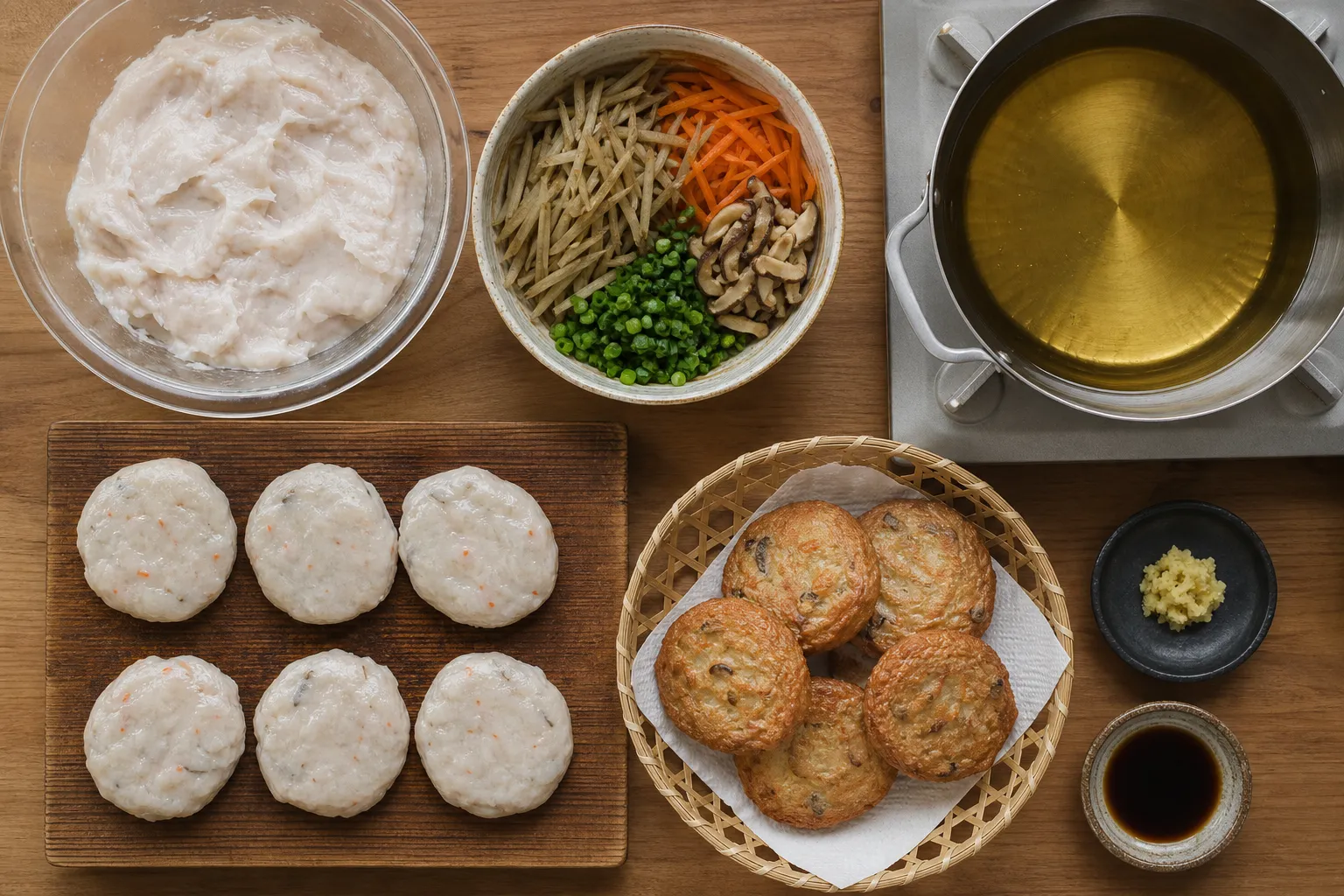
- Grind white fish (often flying fish, horse mackerel, or a local mix) into a smooth paste (surimi)
- Season the paste with salt, sugar, and sometimes sake or miso for depth
- Mix in finely chopped vegetables like carrot, burdock root, or green onion
- Shape the paste by hand into ovals or discs
- Deep-fry directly in hot oil, with no separate batter or breading, until golden
- Serve warm as-is, or with a little soy sauce, ginger, or mustard on the side
Before you go — for the fish-paste-curious
Your questions, answered honestly
"Is this tempura?" — No — tempura has a separate wet batter coating. Satsuma age fries the fish paste itself with no added coating, which is why the texture is chewier and less crunchy.
"Is it the same as fish cakes in oden?" — Related, not identical — many oden fish cakes are a similar surimi base, but satsuma age is specifically the Kagoshima style, usually eaten on its own rather than simmered in an oden pot (though it shows up in oden too).
"Hot or cold?" — Best warm, fresh off the fryer — the texture firms up and loses some appeal once fully cooled, though it's still sold and eaten cold as a snack.
"Do I need a dip?" — Not really — a little soy sauce, grated ginger, or Japanese mustard on the side is common, but plenty of people eat it plain.
What the staff will ask you
| You'll hear | Romaji | Meaning | Just say |
|---|---|---|---|
| そのまま食べますか、温めますか? | Sono mama tabemasu ka, atatamemasu ka? | "Eat as-is, or want it warmed up?" | Atatamete kudasai (please warm it up) |
| 何個にしますか? | Nanko ni shimasu ka? | "How many pieces would you like?" | San-ko onegaishimasu (three pieces, please — or your number) |
| お土産用の袋にしますか? | Omiyage-yō no fukuro ni shimasu ka? | "Should I bag it as a souvenir/gift?" | Hai, onegaishimasu (yes, please) |
To order, just say "Satsuma age kudasai" (さつま揚げください) — "Satsuma age, please."
Where to eat it
- Kagoshima City's Tenmonkan shopping district — dense with satsuma age specialty shops selling warm, fresh-fried pieces to eat while walking.
- Kagoshima Chuo Station and the airport — reliable spots to pick up a box to bring home, with multiple brands and varieties on offer.
- Ibusuki and other coastal towns near Kagoshima — smaller local fishmongers often sell their own fresh-fried versions, worth seeking out if you're in the area.
- Check before you go — small specialty shops keep their own hours and popular flavors can sell out earlier in the day; confirm before a special trip.
Soul Score
Local Roots4/5
First-Timer Friendly5/5
Adventure Level3/5
Comfort Level5/5
Travel Worthy3/5
These scores are one obsessed eater's gut feeling — not a verdict. A low number isn't a bad mark, just a different kind of adventure.
Know someone planning Japan?
← All Articles
Local Food · Kagoshima
Still hungry?
Eat more from Kagoshima
Local FoodKagoshima, Kyushu
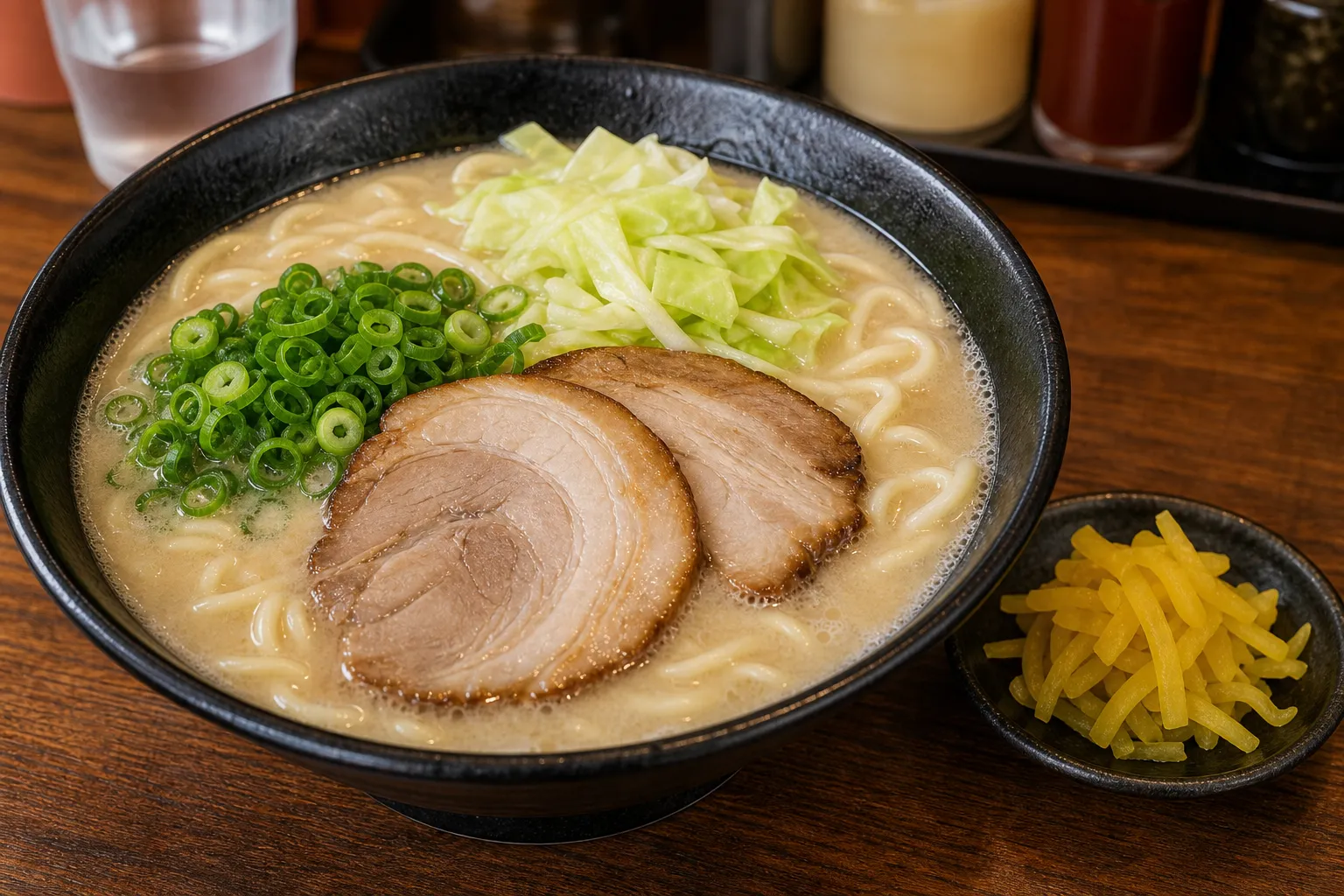
Kagoshima Ramen (鹿児島ラーメン)
Kyushu's black sheep tonkotsu — softer, rounder, semi-cloudy — served with pickled radish and a hot cup of tea like it's a whole little ceremony. The gentle giant of pork-bone ramen.
July 9, 2026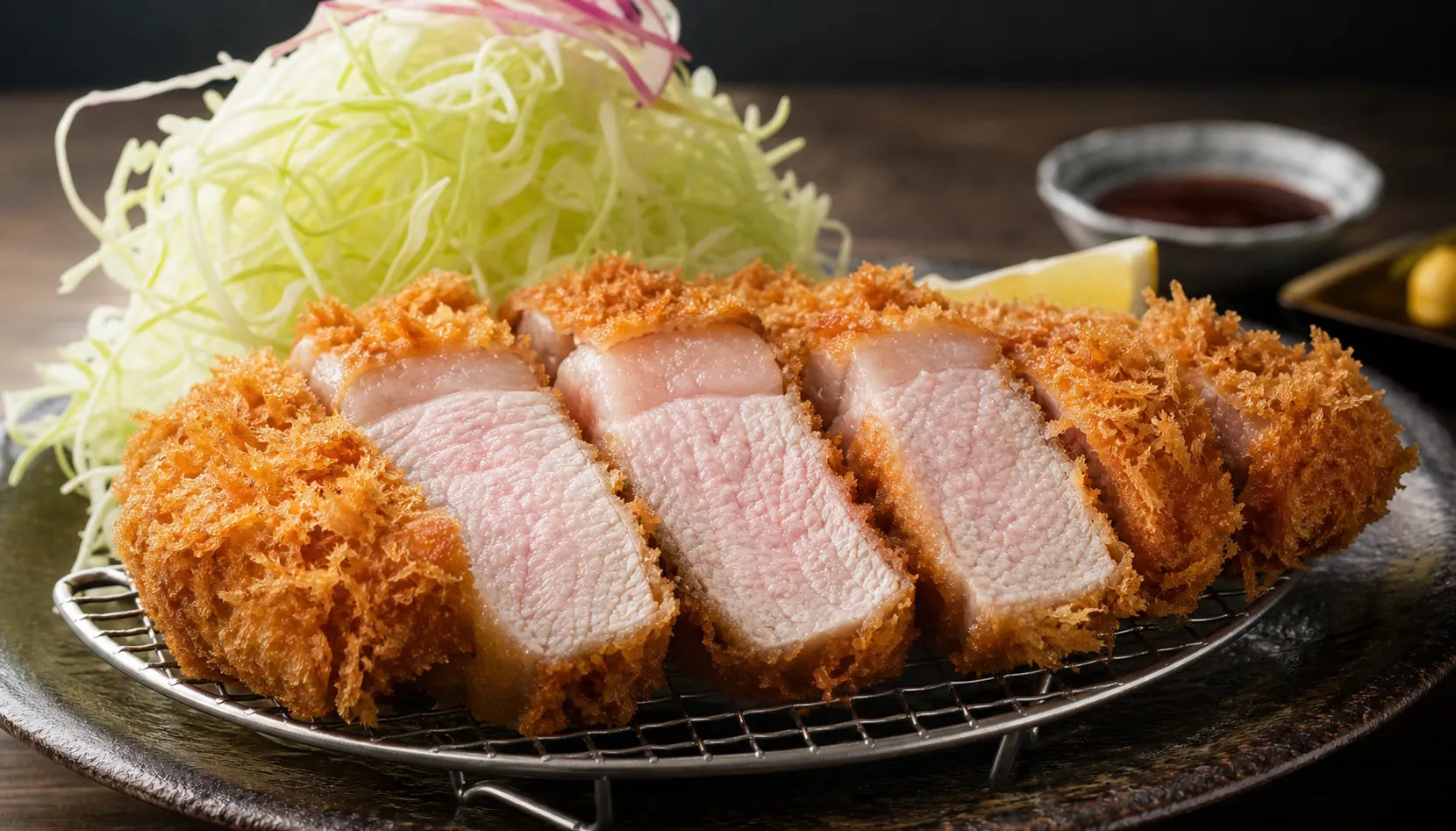
Local FoodKagoshima
Kurobuta Tonkatsu (黒豚とんかつ)
The fat didn't just sit there being fat — it kept melting into the meat with every bite, and I stopped talking mid-sentence to deal with it properly.
July 5, 2026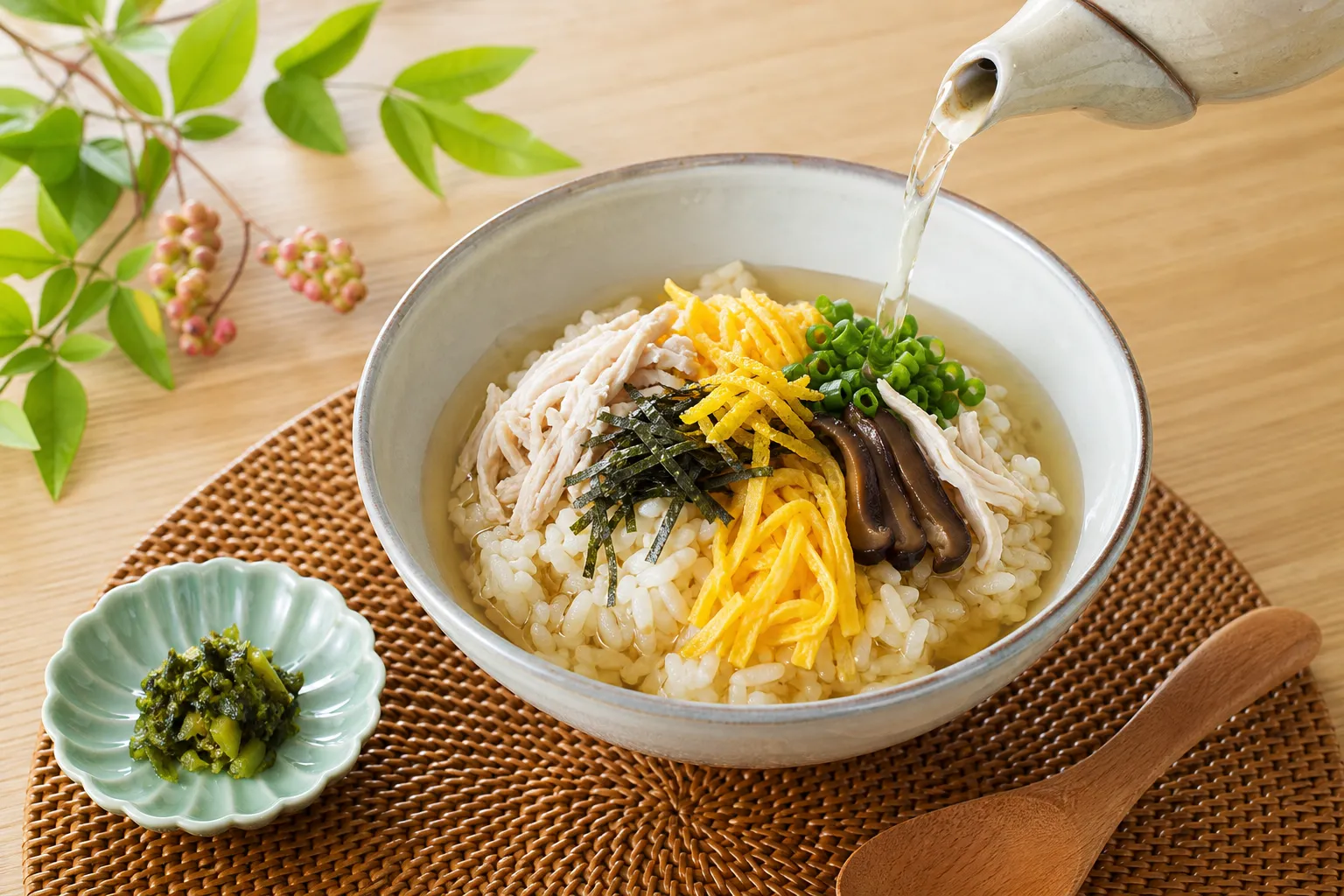
Local FoodAmami, Kagoshima
Keihan (鶏飯)
Shredded chicken, golden egg, nori and toppings over rice — and then someone pours clear, hot chicken broth over the whole thing at the table. The most soothing bowl in the south. I have rarely felt so instantly calm about a meal.
June 28, 2026