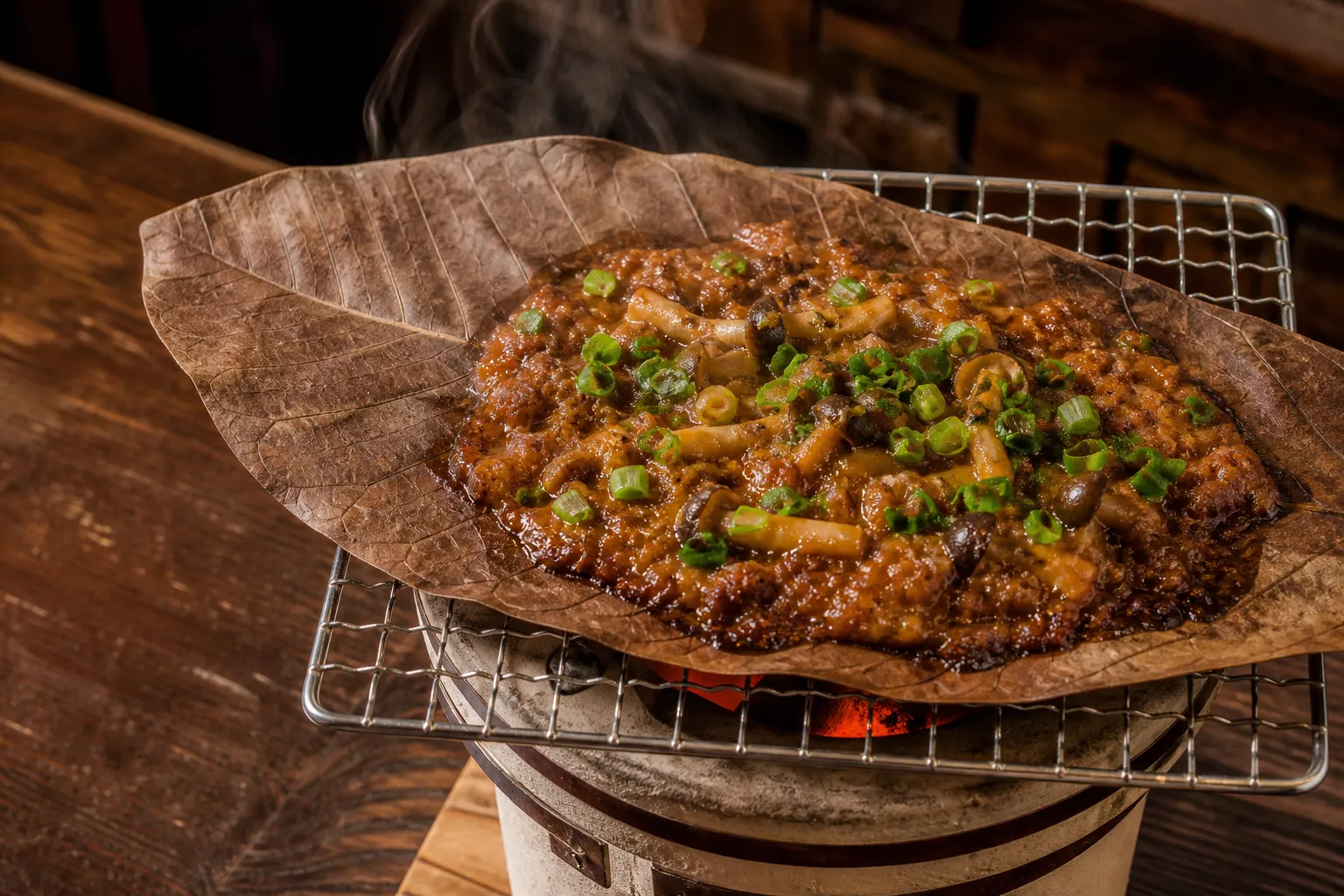
The smell hit me before the miso even started bubbling — that sweet, toasty, slightly caramelized edge of soybean paste meeting a live flame, drifting up off a big dried leaf right in front of my face. I actually put down my chopsticks just to breathe it in for a second. Then the edges began to crackle and go brown and glossy, and any composure I had left was gone. I ate about three bowls of rice. In the mountains. Before 8am.
Share this dish


Sweet miso bubbling and caramelizing on a big dried magnolia leaf over a tabletop flame — Hida-Takayama's mountain breakfast turns one scoop of miso into the best reason to keep eating rice.
🍜 Planning a food trip to Gifu?Add this dish to my Food Trip →
 Add this dish to my Food Trip →
This is hoba miso (朴葉味噌): a mound of sweet miso — mixed with green onion, and often mushrooms and other little bits — grilled on a large dried magnolia (hoba) leaf set over a tiny tabletop burner. The miso bubbles, the edges caramelize, and you scrape it off spoonful by spoonful straight onto hot white rice. It's not soup. It's not a hot pot. It's the single most effective rice-driver I have ever met, and it comes from the cold mountains of Hida-Takayama.
Born in the cold Hida mountains
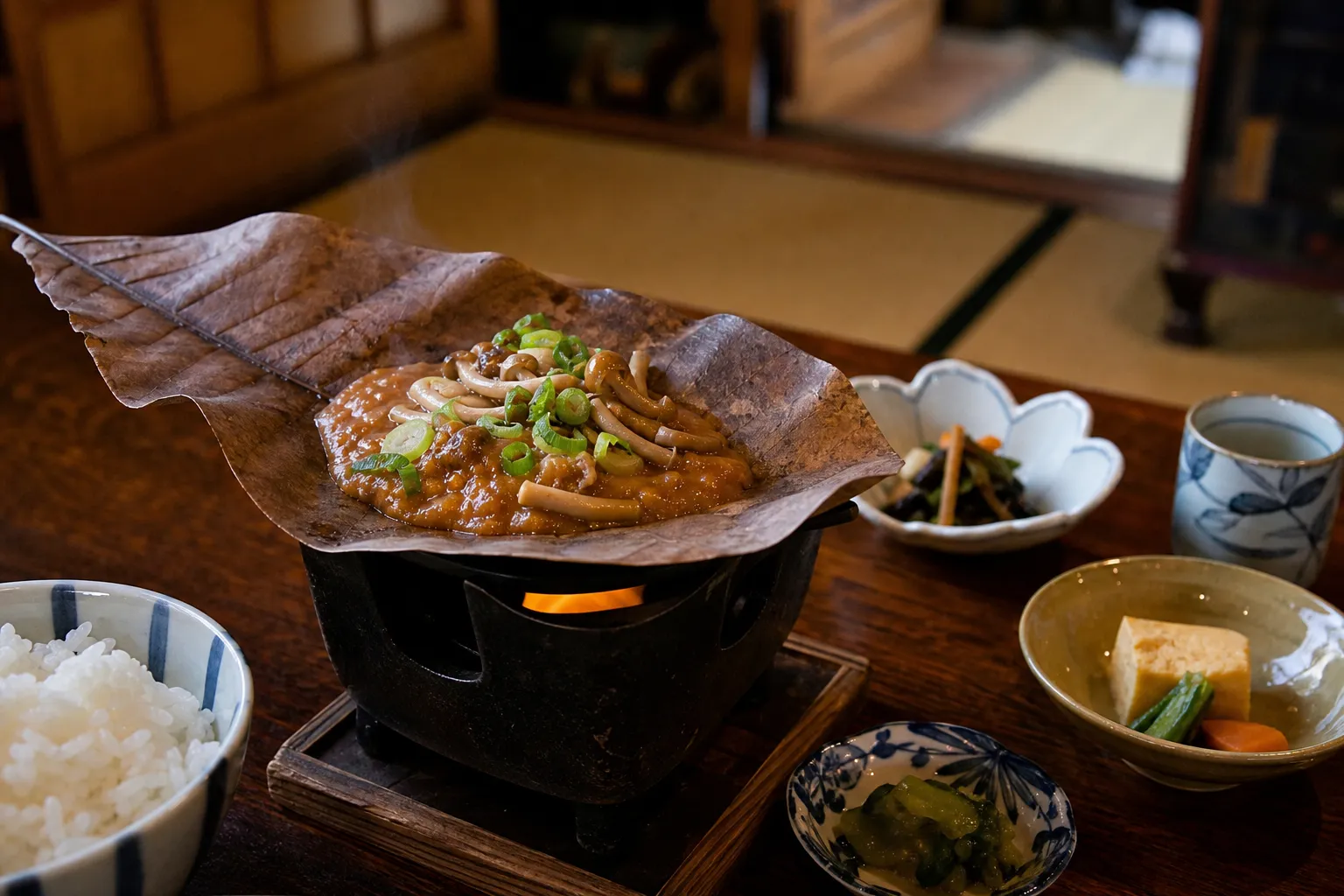
Hoba miso tastes like where it's from. Hida-Takayama sits high in the mountains of Gifu, where winters are long and brutal and, historically, the growing season was short. Miso kept. Rice kept. And the big magnolia leaves — hoba — were everywhere, drying to a sturdy brown that could take a flame. So people set the leaf over a little fire, piled sweet miso on it, and let it cook right at the table. Warmth, salt, and something to drive the rice, on the coldest mornings of the year.
I find this genuinely moving. It's a dish invented by a place that had to be clever with almost nothing, and it turned "we have miso and a leaf" into one of the great breakfasts on Earth. To this day it's the classic ryokan breakfast in Takayama — you wake up in the mountains, they light the burner at your table, and the whole room starts to smell like toasted miso. I have never once been mad about being woken up for it.
Why the caramelized miso works
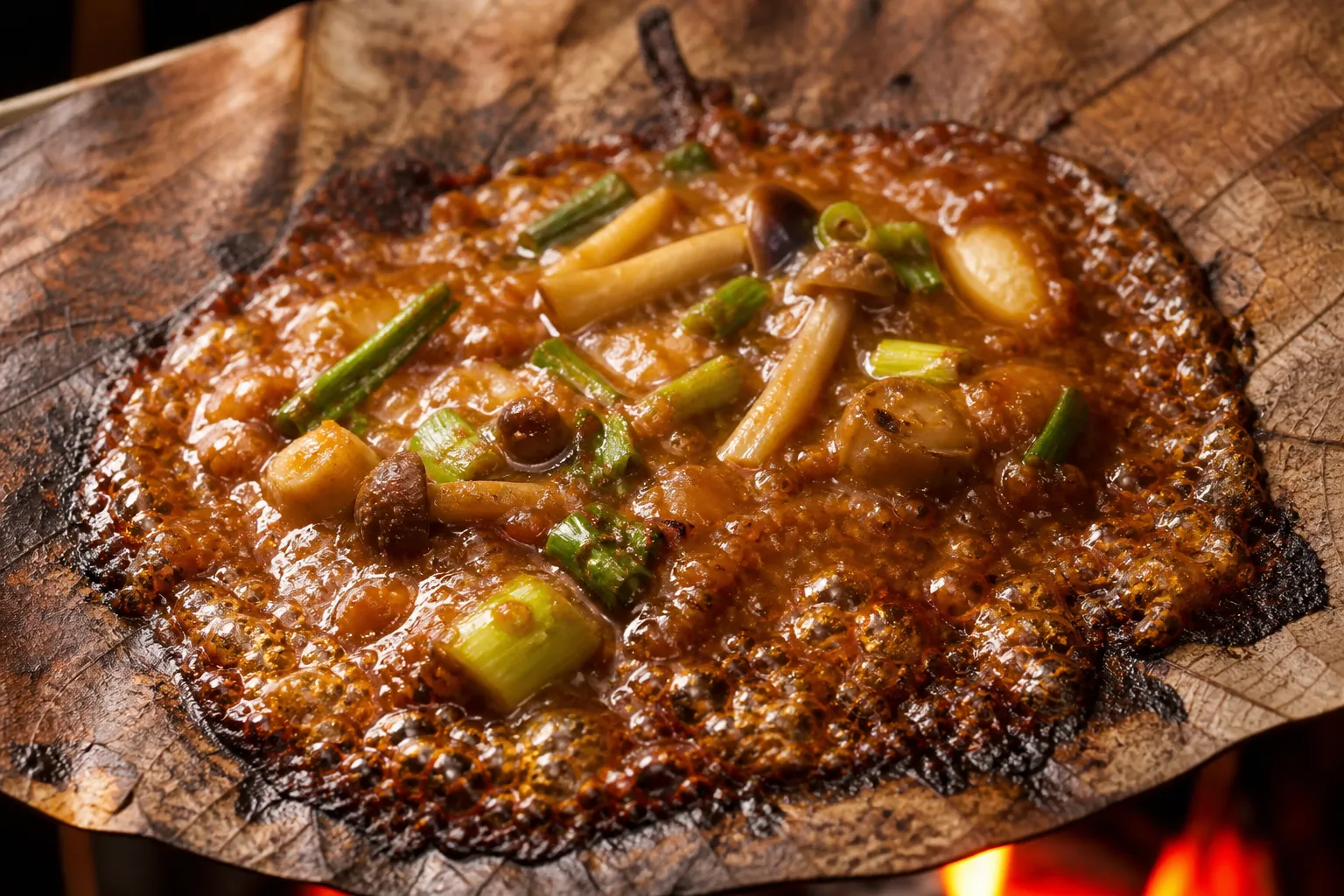
Here's the trick: it's sweet miso, not the sharp salty kind, and the leaf is doing something no pot could. As the miso grills, the edges dry, brown, and caramelize — you get this contrast between the soft, warm center and the crispy, almost candied rim where it met the heat. Green onion melts into it. Mushrooms, if they're in there, go deep and savory. The magnolia leaf lends a faint woodsy aroma you can smell but never quite name.
And then it hits the rice. This is the whole point. Hoba miso is gohan no tomo — a "friend of rice" — engineered to make you eat bowl after bowl. One scrape of that caramelized sweet-salty miso on a mouthful of hot rice and I understand why mountain people survived winter. It's intense in the best way: a little goes a long way, which is good, because I never wanted to stop.
How it's made
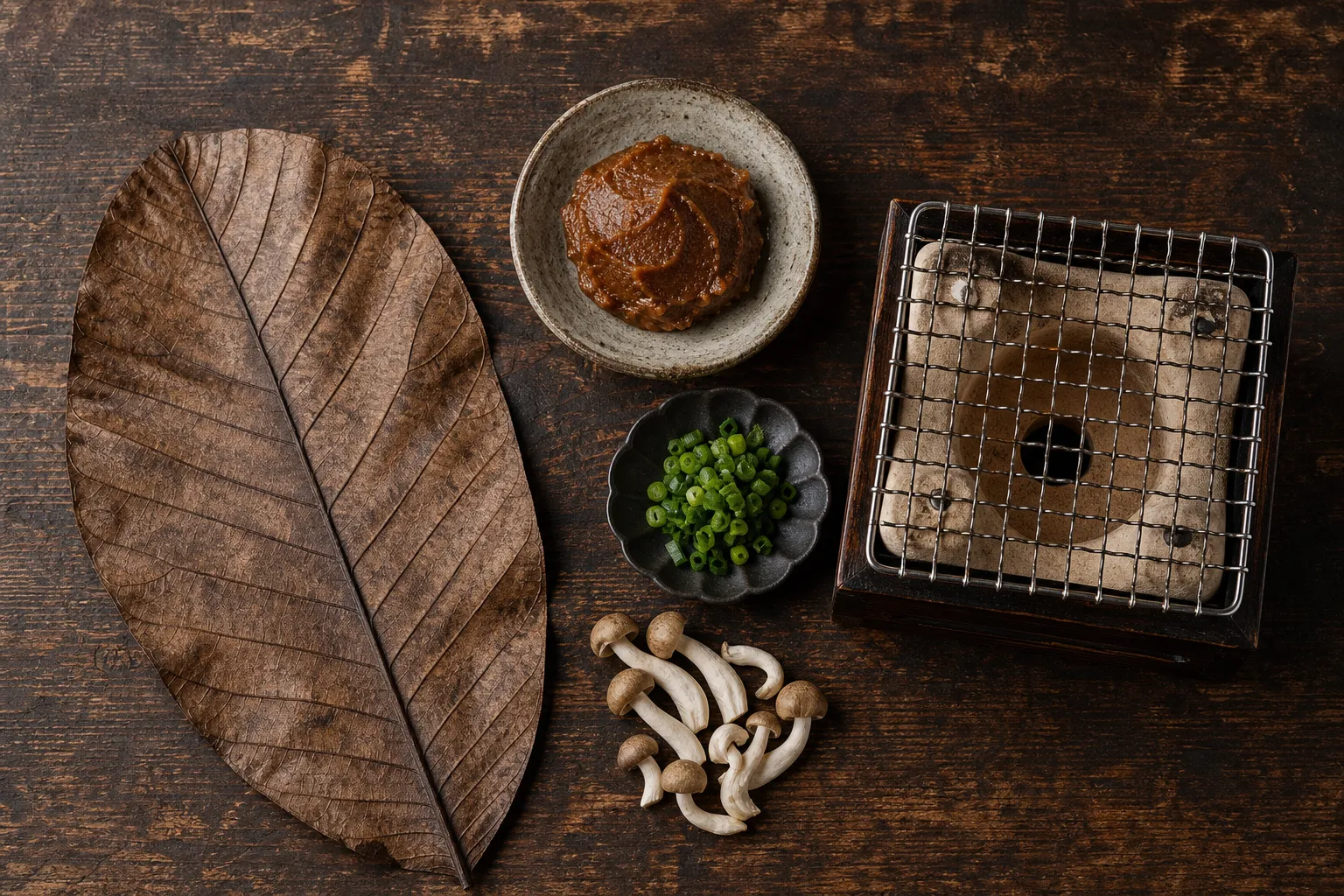
- Take a large dried magnolia (hoba) leaf as the "plate" and grill surface
- Mix sweet miso with chopped green onion — and often mushrooms and other small bits
- Mound the miso in the center of the leaf
- Set the leaf over a small tabletop burner or charcoal and light it
- Let the miso bubble and the edges caramelize and go glossy-brown
- Scrape the hot miso off spoonful by spoonful onto white rice — and, if you like, grill a little Hida beef or vegetables right on top
Before you go — for the miso-curious
Your questions, answered honestly
"Is this miso soup?" — No, and this trips people up. It's a thick, grilled miso paste, not a liquid. Nothing to sip. You scrape it onto rice and eat it like a topping.
"Do I eat the leaf?" — No. The leaf is the plate and the grill. Leave it. Just take the miso off it.
"Is it spicy?" — Not at all. It's savory and a little sweet. The heat you feel is temperature, not chili.
"How do I actually eat it?" — Rice. Get rice. Scrape a little caramelized miso onto a mouthful and go. It's salty and concentrated on purpose, so pace yourself — a small amount flavors a whole bowl. If there's Hida beef or veg, grill it on the hot miso and eat that too.
"When will I run into it?" — Most often at a mountain ryokan breakfast in Takayama, where they light the burner at your table. Old-town restaurants serve it too, often as part of a set.
What the staff will ask you
| You'll hear | Romaji | Meaning | Just say |
|---|---|---|---|
| ご飯のおかわりは? | Gohan no okawari wa? | "More rice?" | Hai, onegaishimasu (yes please) |
| 火をつけますね | Hi o tsukemasu ne | "I'll light the burner" | Hai, arigatō (yes, thanks) |
| 焼けたら食べてください | Yaketara tabete kudasai | "Eat it once it's grilled" | Wakarimashita (got it) |
| 飛騨牛もつけますか? | Hida-gyū mo tsukemasu ka? | "Add Hida beef too?" | Hai, onegaishimasu / Kekkō desu (no thanks) |
To order, just say "Hoba miso kudasai" (朴葉味噌ください) — "Hoba miso, please."
Where to eat it
- Hida-Takayama, Gifu — ryokan breakfasts — this is the classic setting. Stay a night at a mountain ryokan in the Takayama / Hida region and there's a strong chance the burner and leaf show up at your morning tray. Worth choosing a ryokan for.
- Takayama old town restaurants — the preserved old-town streets have restaurants and set-meal spots serving hoba miso, sometimes with Hida beef grilled right on top. A great lunch if your inn didn't serve it.
- The Takayama morning markets — the riverside and Takayama-jinya morning markets are the place to see (and buy) the miso, leaves, and local ingredients that go into it — a good stop to understand the dish at its source.
- Check before you go — small mountain restaurants and ryokan keep their own hours and seasons, and markets run mornings only; confirm current times and availability before you count on it.
Soul Score
Local Roots5/5
First-Timer Friendly4/5
Adventure Level3/5
Comfort Level4/5
Travel Worthy4/5
These scores are one obsessed eater's gut feeling — not a verdict. A low number isn't a bad mark, just a different kind of adventure.
Know someone planning Japan?
← All Articles
Local Food · Takayama, Gifu
Still hungry?
Eat more from Gifu
Local FoodGifu
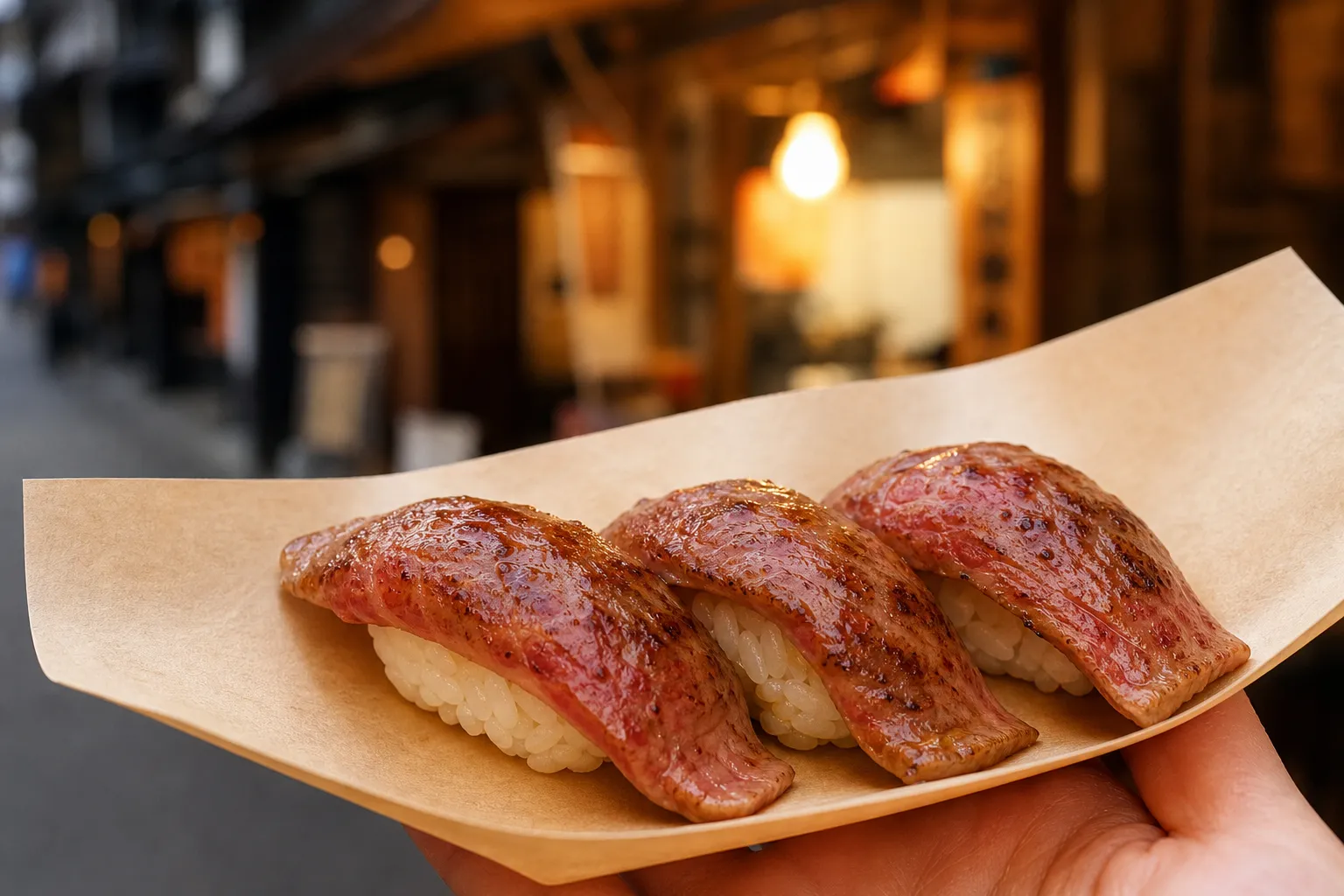
Hida Beef (飛騨牛)
A torch flares over a single bite of beef sushi on a wooden boat, someone hands it to you still warm, and you eat Japan's most-awarded wagyu standing in the middle of a street.
July 22, 2026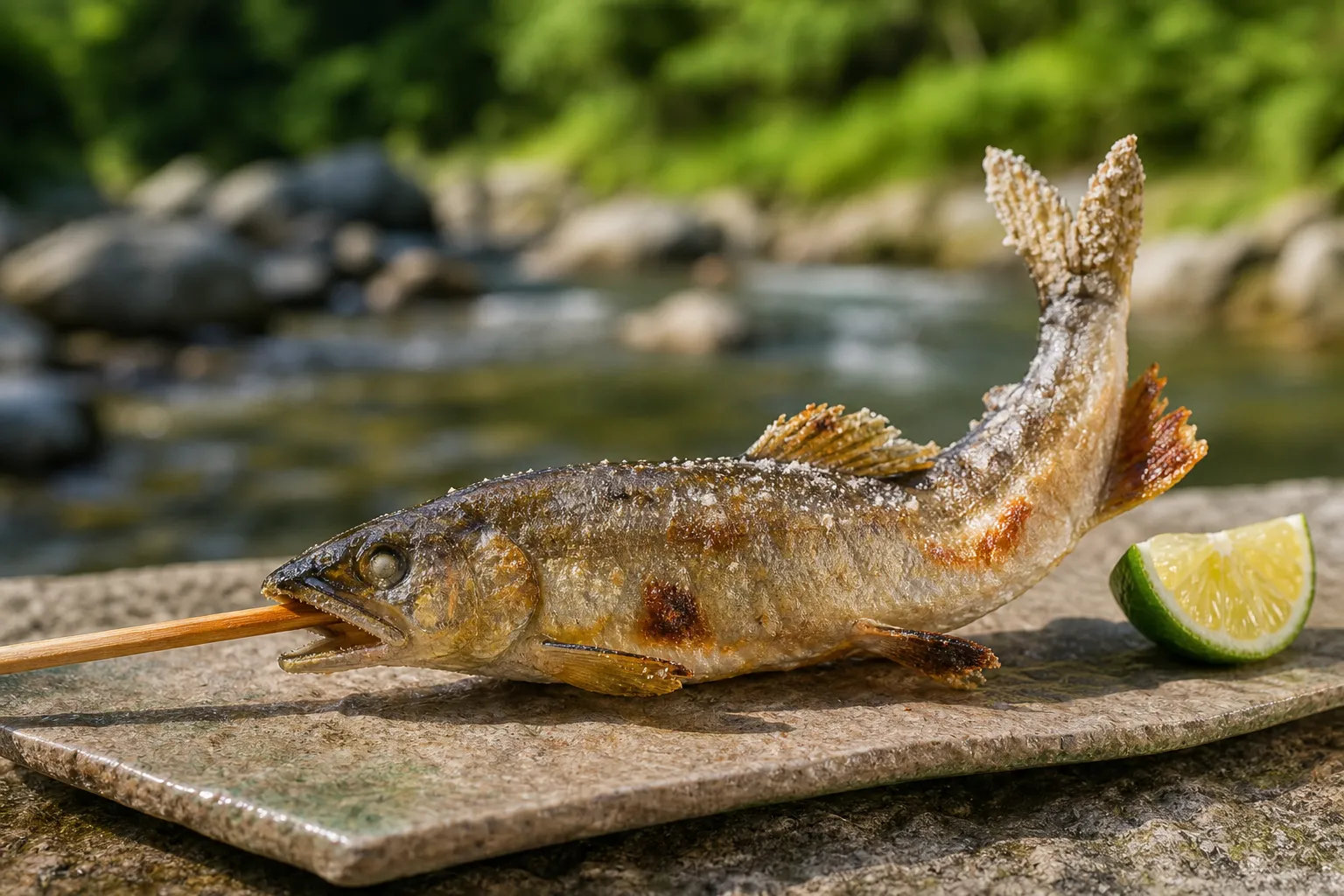
Local FoodGifu
Ayu no Shioyaki (鮎の塩焼き)
A whole river fish, salted and grilled over coals until the skin blisters and the fins go crisp — and then you eat the entire thing, head to tail, chasing the clean green taste of the Nagara River.
July 12, 2026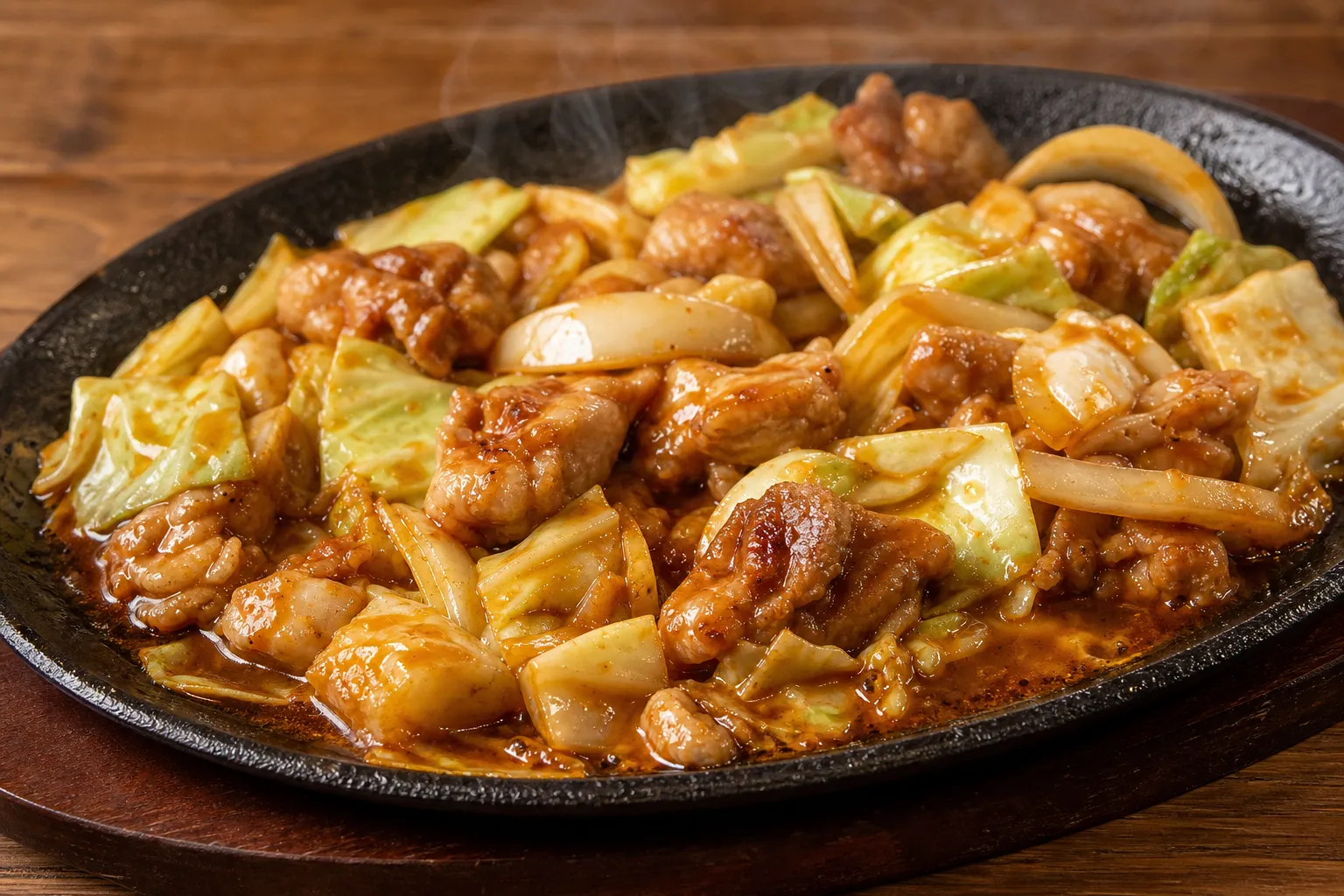
Local FoodOkumino, Gifu
Keichan (けいちゃん)
Chicken and cabbage hit a screaming-hot iron plate slathered in miso, and the whole table leans in — this is food you cook together, argue over, and fight for the last piece of.
July 5, 2026