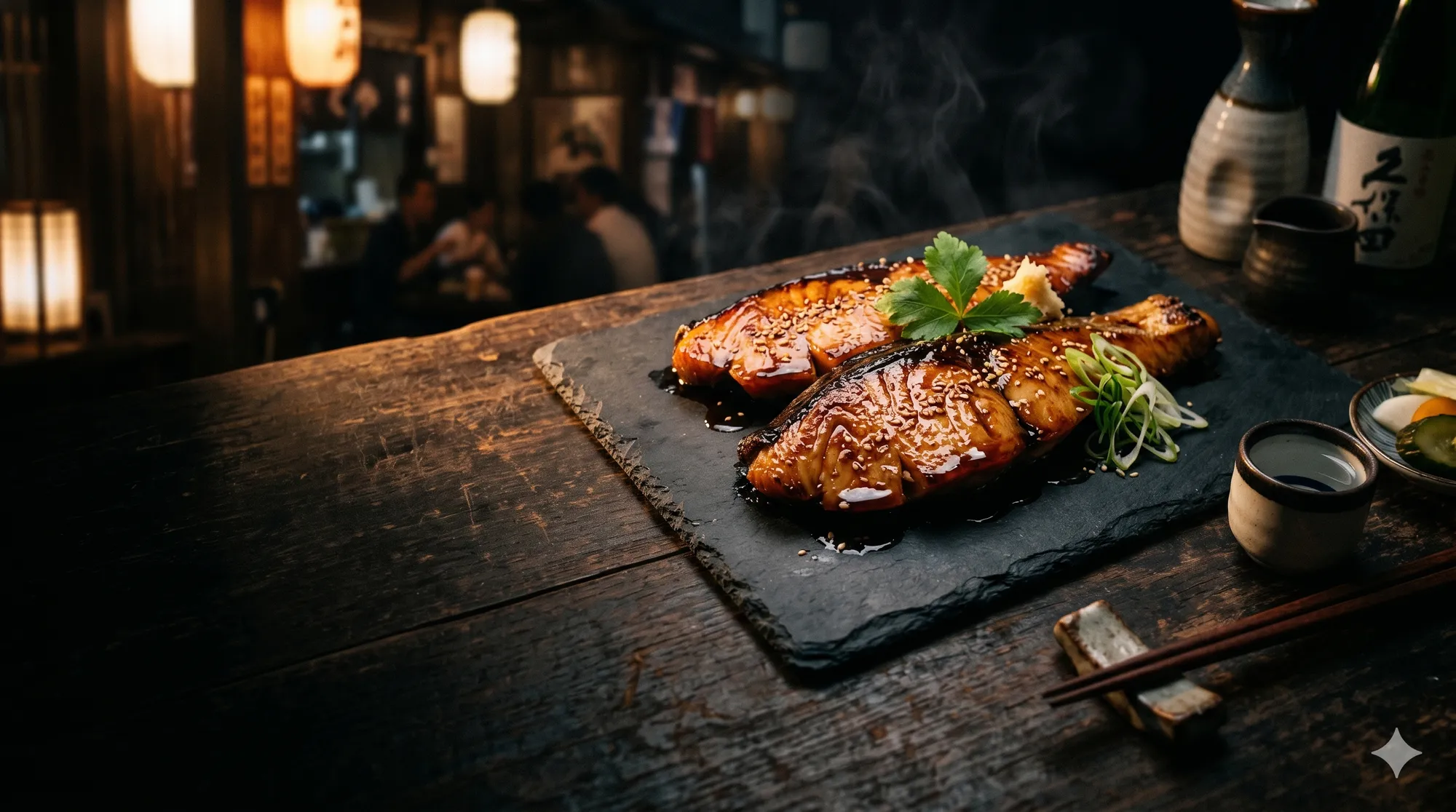
If the only "teriyaki" you've met came out of a bottle labeled with a cartoon, I have wonderful news: that's not really it. This is it.
Share this dish


Fatty winter yellowtail lacquered in sweet soy until it shines. This is teriyaki the way Japan actually means it — not a bottled sauce, but a glossy glaze on a rich, seasonal fish.
Buri no teriyaki is winter yellowtail, seared and then glazed in a reduction of soy, mirin, sake, and sugar until the fish glistens like it's been lacquered. The word teriyaki literally means "shine-grill" — teri is that glossy sheen — and on a piece of rich, fatty buri, it's extraordinary. The sweet-savory glaze meets the buttery, almost meaty flesh of the fish, and the whole thing tastes deep and luxurious despite being a humble home-cooked dinner. In a Japanese winter, this is the warm, glossy, deeply satisfying plate everyone's quietly craving.
A winter fish and an Edo-era trick
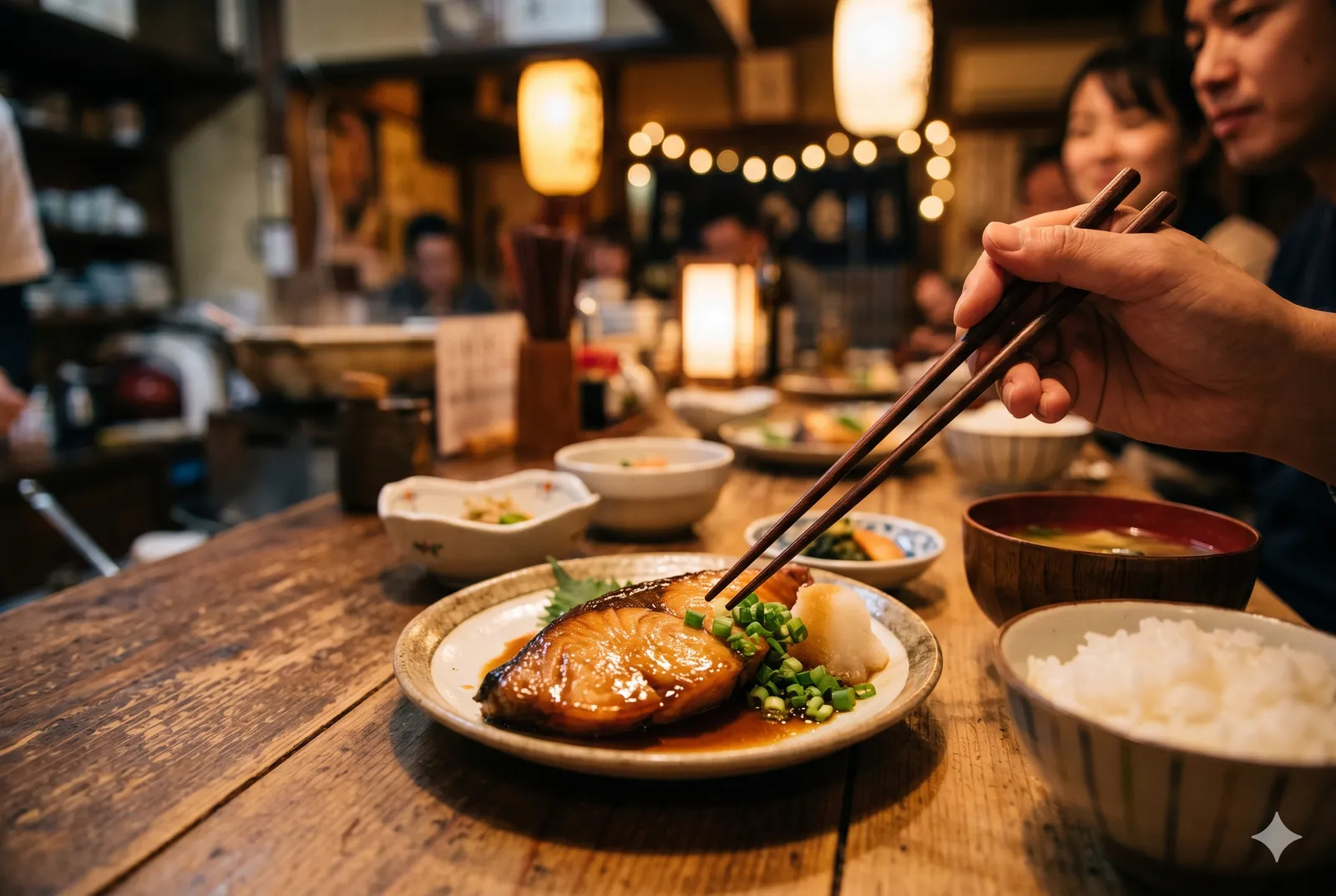
Yellowtail has been prized in Japan for centuries, and winter yellowtail — kan-buri — is the good stuff, fattened and rich in the cold months. The teriyaki technique itself, that glaze of soy and sugar cooked down to a shine, dates to the Edo period and has been a beloved Japanese method ever since. Put the two together and you get a dish that's both everyday and quietly special.
Why it's a cut above other teriyaki
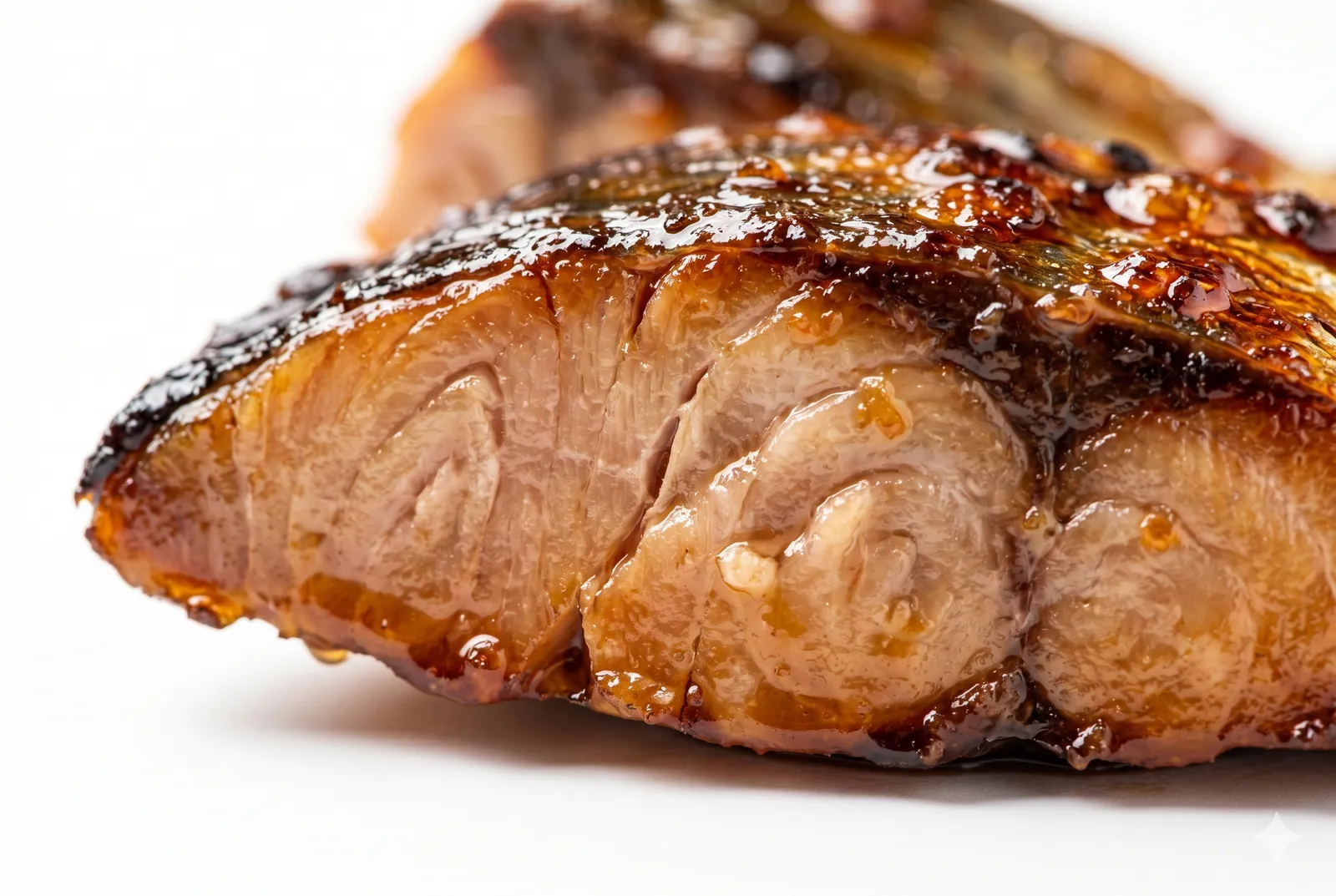
The secret is the fish's natural fat melting into the sweet-savory glaze. As the sauce reduces and coats the fillet, the buri's richness and the lacquered sweetness fuse into something far deeper than teriyaki on leaner proteins. Served with rice and a mound of grated daikon to cut the richness, it's balanced, glossy, and genuinely crave-worthy.
How it's made
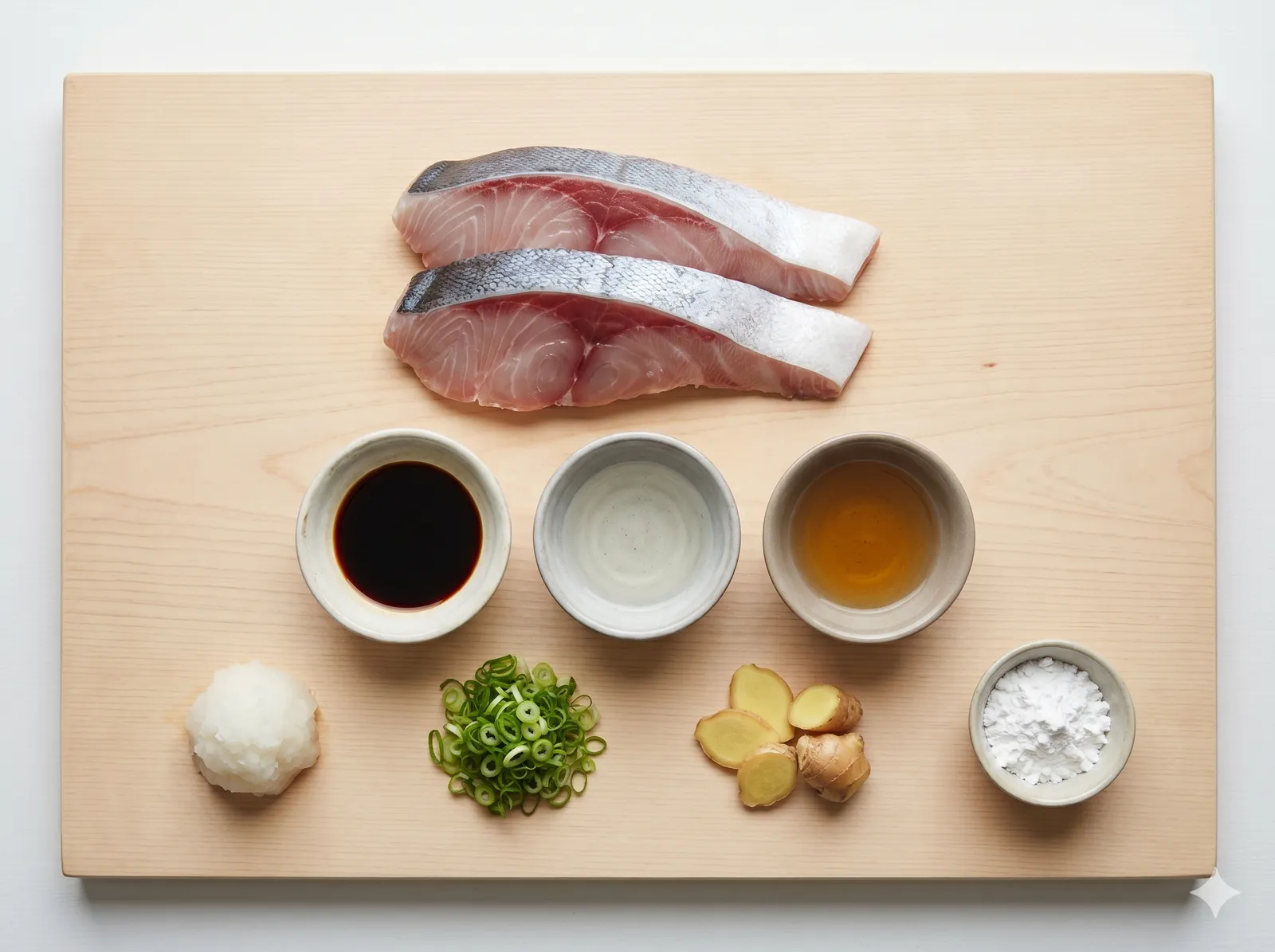
- Salt the yellowtail fillets, rest 15 minutes, then pat dry (this firms the flesh and removes any odor)
- Mix soy sauce, mirin, sake, and sugar for the glaze
- Sear the fillets in a hot oiled pan until golden on both sides
- Pour in the sauce and simmer, spooning it over, until it thickens into a glossy glaze
Serve with steamed rice and grated daikon.
Before you go — a home dish worth seeking out
Your questions, answered honestly
"Is yellowtail 'fishy'?" — Good fresh buri isn't — it's rich, clean, and almost meaty. The salt-and-pat-dry step and the savory glaze keep it bright. Winter buri especially is mild and luscious.
"Where do I eat it if it's home cooking?" — It's a teishoku (set meal) staple — look for buri teriyaki teishoku at neighborhood diners, and it's common in izakaya and the prepared-food section of supermarkets, especially in winter.
"What's the grated daikon for?" — Daikon-oroshi cuts the fatty richness and refreshes your palate between bites. Don't skip it — it's part of the balance.
"Best season?" — Winter, hands down, when kan-buri is at its fattiest. Yellowtail's also a New Year's lucky fish, so you'll see it at celebratory tables.
What the staff will ask you
| You'll hear | Romaji | Meaning | Just say |
|---|---|---|---|
| 定食にしますか? | Teishoku ni shimasu ka? | "Make it a set meal?" | Hai, onegaishimasu (yes please) |
| ごはんのおかわりは? | Gohan no okawari wa? | "More rice?" | Onegaishimasu (yes) / Daijōbu desu (I'm good) |
| 大根おろし、おつけしますか? | Daikon-oroshi, otsuke shimasu ka? | "Grated daikon with it?" | Hai (yes please) |
To order, just say "Buri teriyaki teishoku kudasai" (ブリ照り焼き定食ください) — "The yellowtail teriyaki set, please."
Where to eat it
- Teishoku diners and izakaya nationwide — a winter menu regular almost everywhere
- Toyama and Ishikawa (Hokuriku coast) — famous for superb kan-buri; the fish is a regional point of pride
- Supermarket prepared-food counters — a surprisingly great, affordable way to try it
Buri is seasonal (best in winter), so availability varies — check before a special trip.
Soul Score
Local Roots3/5
First-Timer Friendly5/5
Adventure Level3/5
Comfort Level5/5
Travel Worthy3/5
These scores are one obsessed eater's gut feeling — not a verdict. A low number isn't a bad mark, just a different kind of adventure.
Know someone planning Japan?
← All Articles
Japanese Food · Nationwide
Still hungry?
You might also like
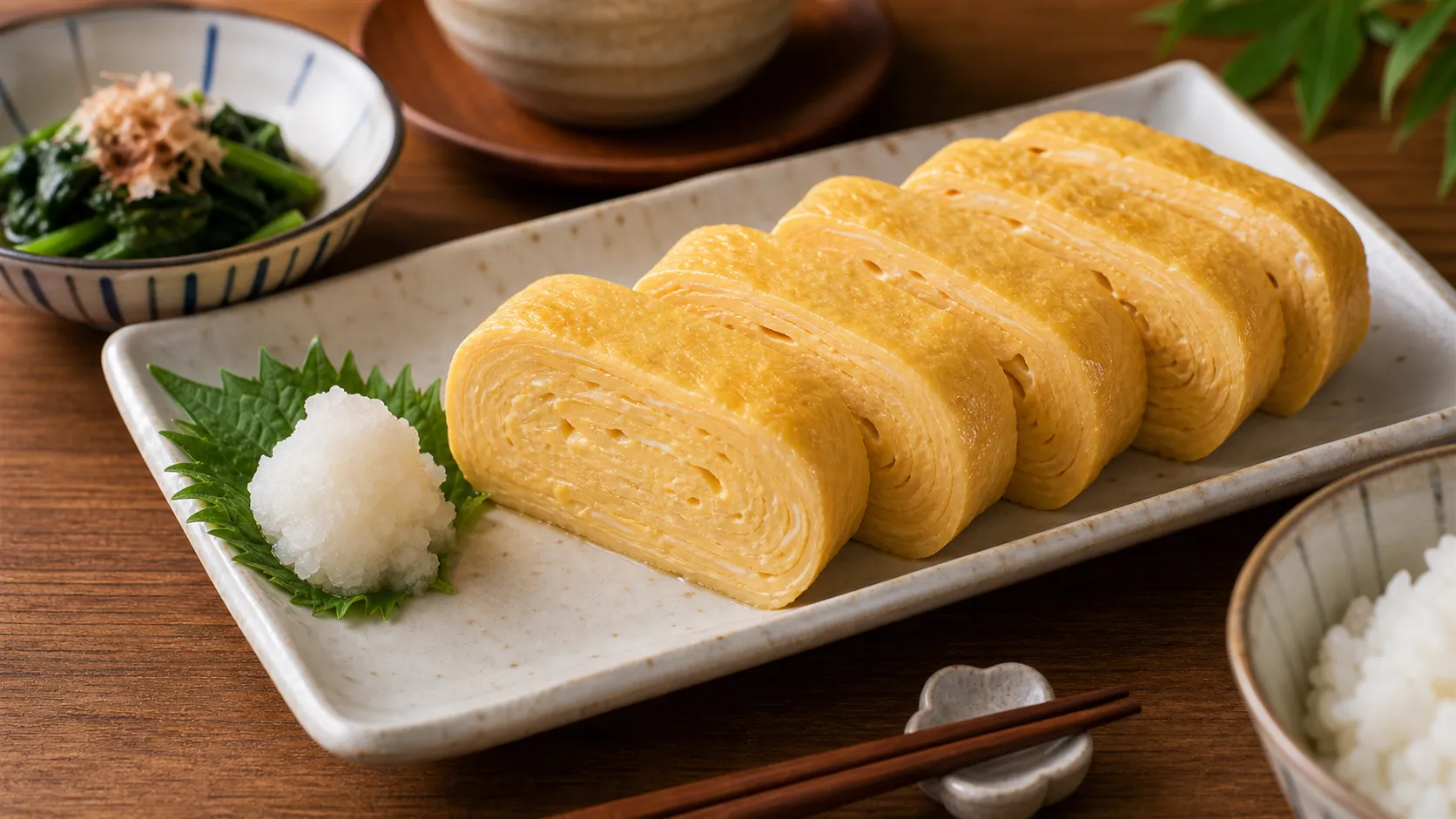
Japanese FoodNationwide
Dashimaki-tamago (だし巻き卵)
A rolled omelette so soft it almost trembles, layered fold over fold and soaked with dashi so that biting in releases a little warm rush of savory broth — the deceptively simple egg dish that Japanese chefs spend years perfecting.
July 11, 2026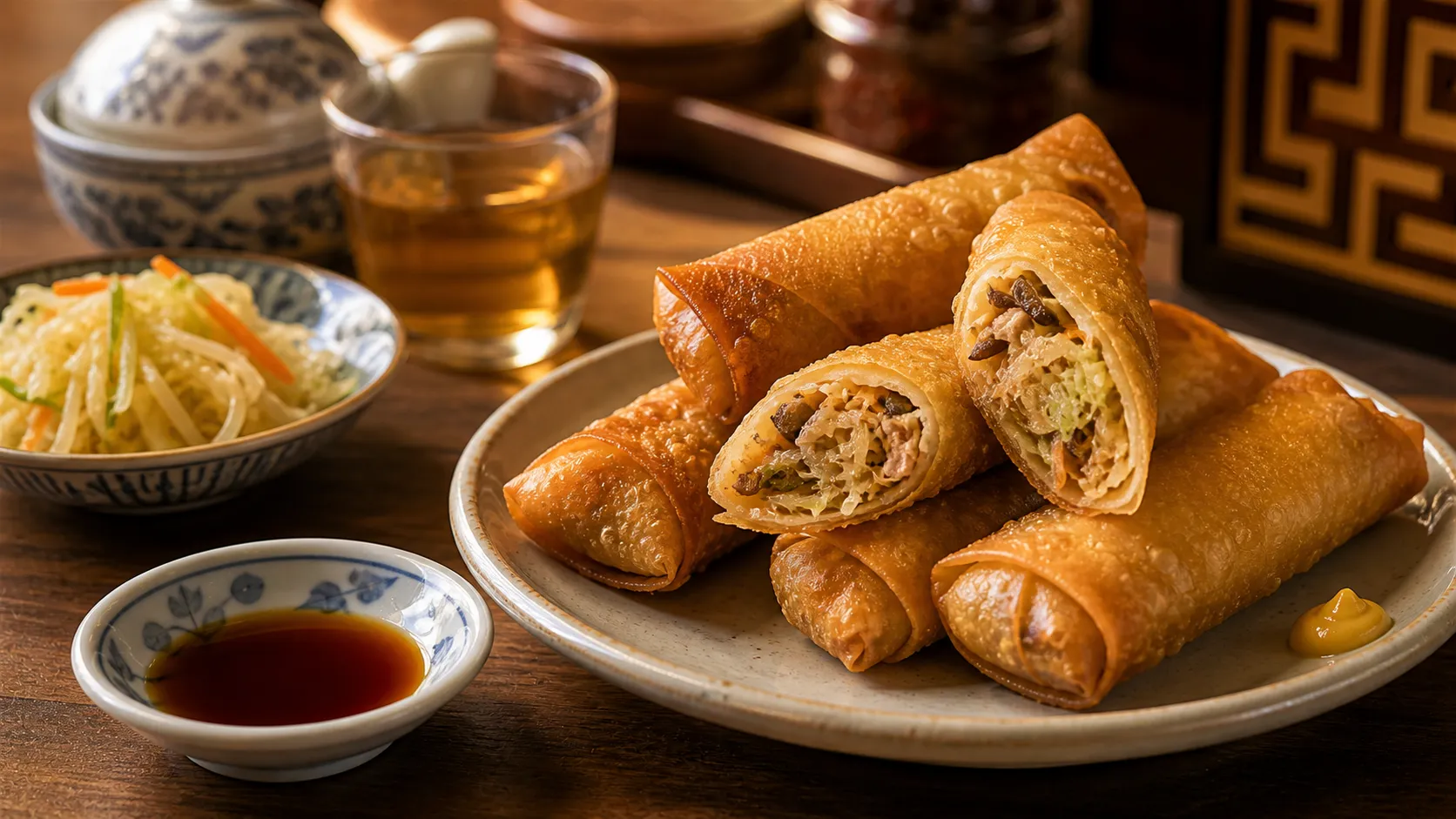
Japanese FoodNationwide
Harumaki (春巻き)
The Japanese spring roll — a shatteringly crisp golden tube that gives way to a hot, savory tangle of pork, cabbage and bamboo shoot, best eaten the second it's cool enough not to burn your mouth (you will not wait that long).
July 11, 2026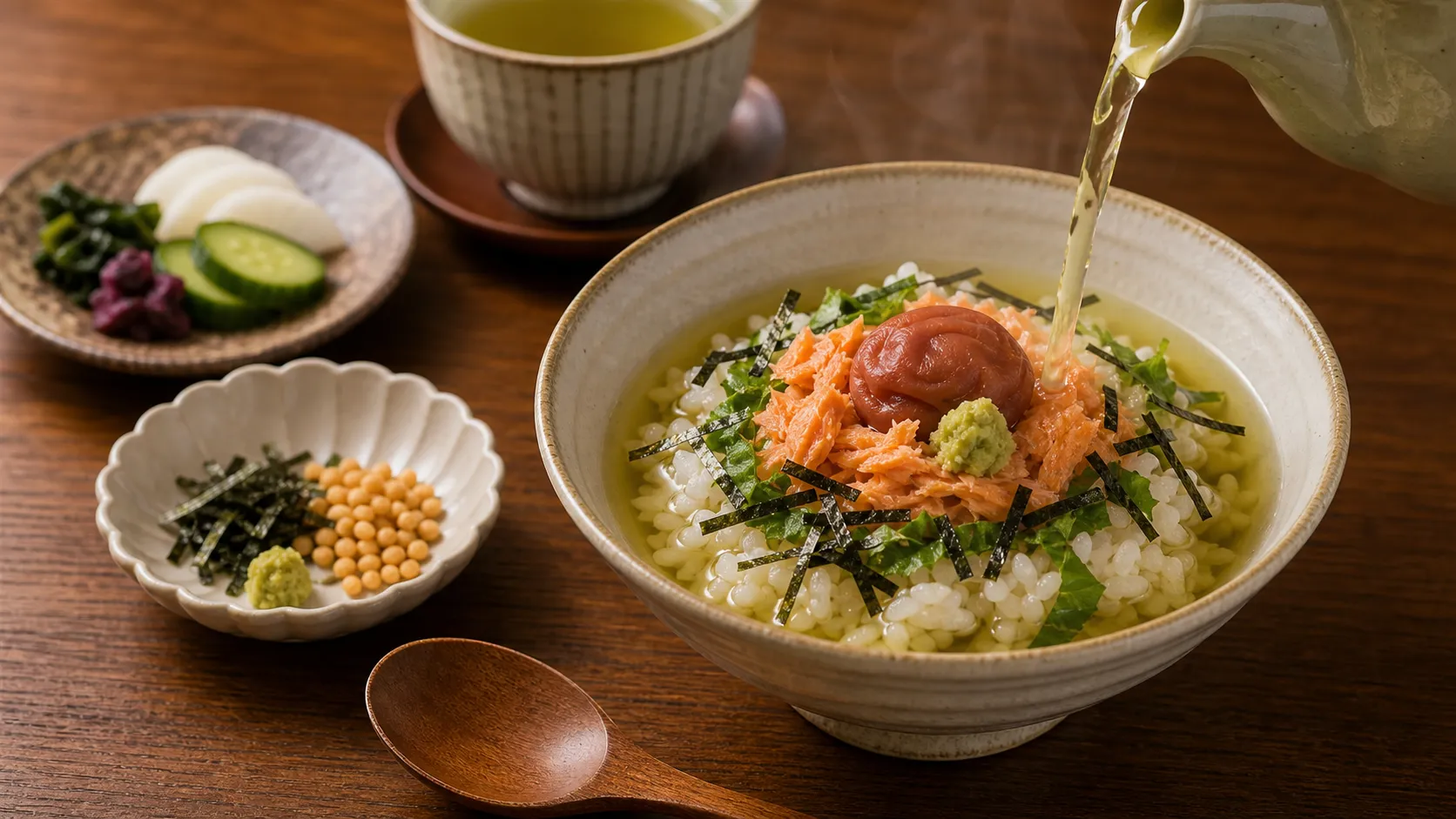
Japanese FoodNationwide
Ochazuke (お茶漬け)
Pour hot green tea or dashi over a bowl of rice, scatter something savory on top, and eat — the gentlest, most quietly restorative dish in Japan, the one you reach for late at night when you just need a warm bowl to make everything okay.
July 11, 2026