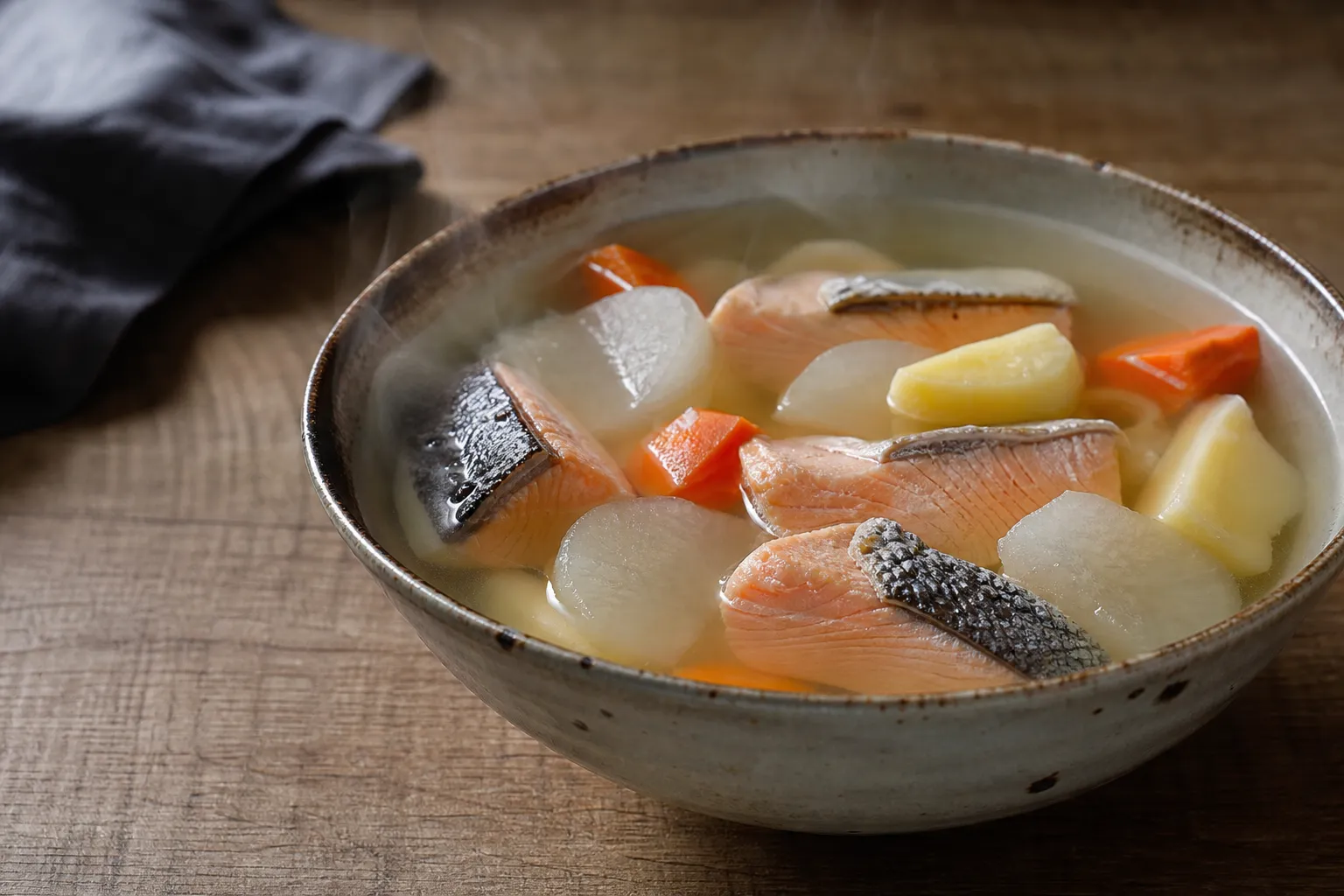
I expected miso. I got a spoonful of clear, pale broth with a chunk of soft daikon and a flake of salmon in it, took a sip, and felt something unclench in my chest. It was salty and clean and warm right down to the bones, and outside it was snowing, and for a second I understood the entire point of Hokkaido winter cooking in one mouthful. No fireworks. Just exactly what a cold body wants.
Share this dish


No miso, no cream, no drama — just salted fish and root vegetables in a clear broth so honest it tastes like a Hokkaido winter finally letting its guard down.
🍜 Planning a food trip to Hokkaido?Add this dish to my Food Trip →
 Add this dish to my Food Trip →
This is sanpei-jiru (三平汁), and the thing you have to understand up front is what it is not: it is not a miso soup. It's a Hokkaido fish soup seasoned with salt — traditionally with the addition of sake lees (kasu), the fragrant leftover mash from sake brewing — and that's the whole identity. Chunks of salted fish (salmon, cod, or herring are the classics) go in with hearty winter root vegetables — daikon, carrot, potato — and everything simmers into a clear, deeply savory, salty broth. It's rustic, warming, unfancy, and about as Hokkaido as a bowl gets.
A soup built to survive winter
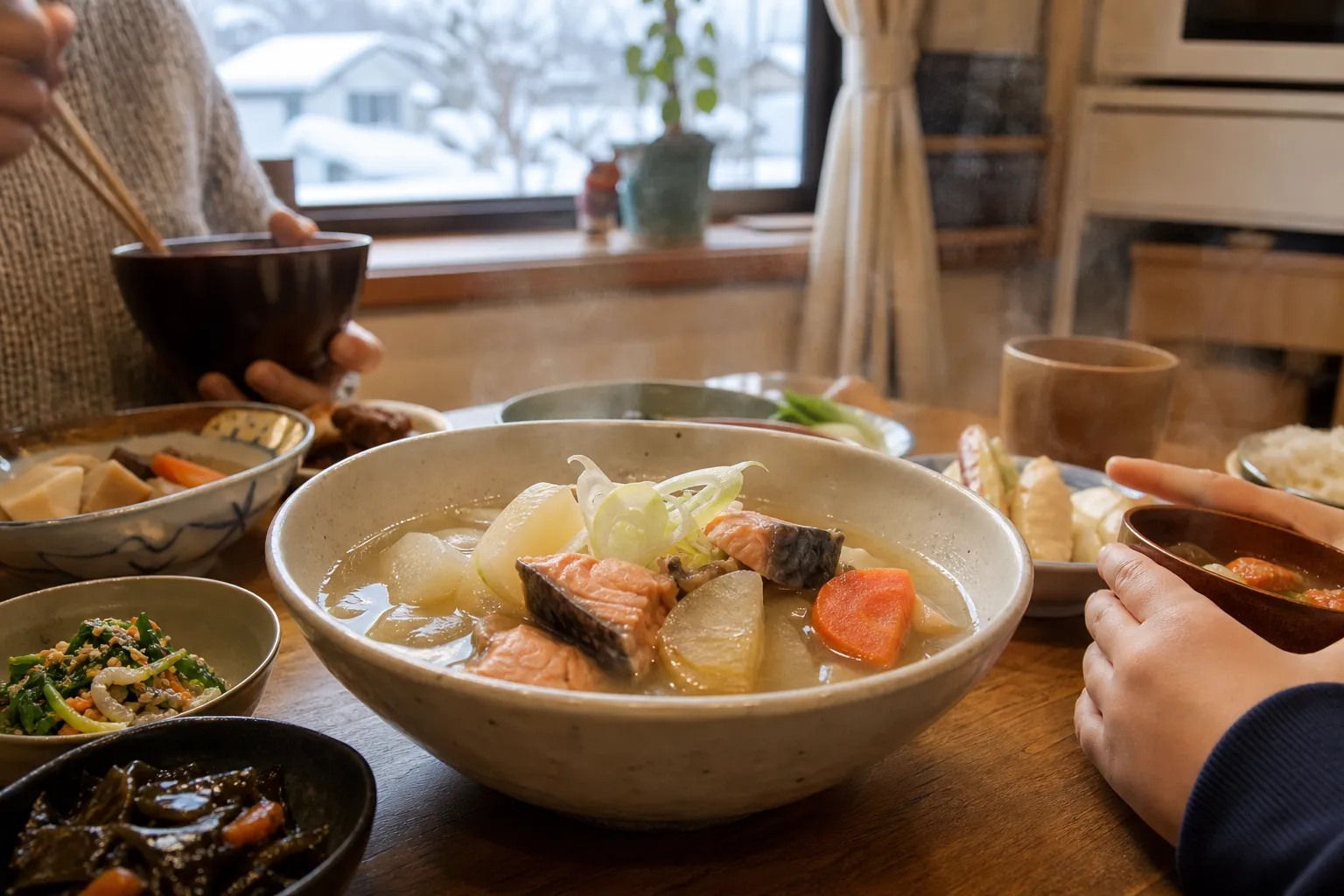
Sanpei-jiru is old — an Ainu- and settler-era Hokkaido home dish born from cold-weather practicality. The key is the salted fish. In a place with long, brutal winters and no refrigeration, fish was salted to keep, and that preserved salmon or herring became the backbone of a soup that could feed a household cheaply through the cold. The salt in the fish is the seasoning; the sake lees, added in many versions, bring warmth, body, and a faint sweetness that softens the edge.
I find the honesty of it moving. There's no imported technique, no restaurant polish — it's what people cooked because it kept them alive and warm and it happened to taste wonderful. That's the best kind of regional food: not invented to impress anyone, just perfected by generations of people who needed it to be good.
Why it's so satisfying
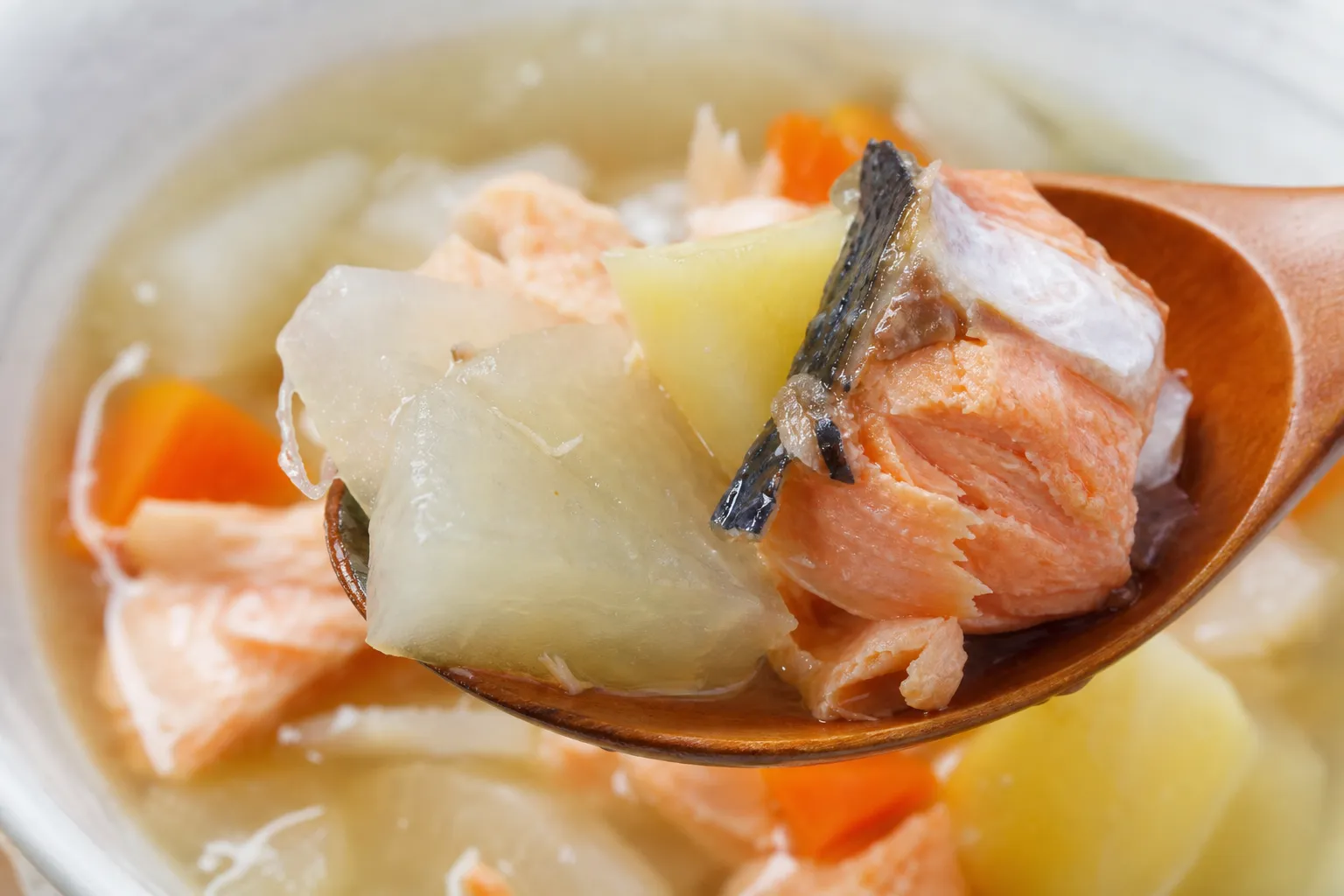
The clarity is the joy. Because there's no miso to muddy it, you taste everything cleanly: the brine and richness of the salted fish, the sweetness the daikon and potato give up into the broth, the gentle roundness of the sake lees. It's light on the eye and deep on the palate — a soup that looks like almost nothing and tastes like a lot.
And it's textural comfort at its purest: soft, collapsing daikon, potato gone creamy at the edges, carrot holding just enough bite, and flaking salted fish that seasons every spoonful around it. It's meant to sit beside a bowl of rice, and it should — the saltiness is calibrated for that. On its own it's a little assertive; with rice, it's a full, deeply satisfying winter meal. I had it twice in one trip and would've had it a third time.
How it's made
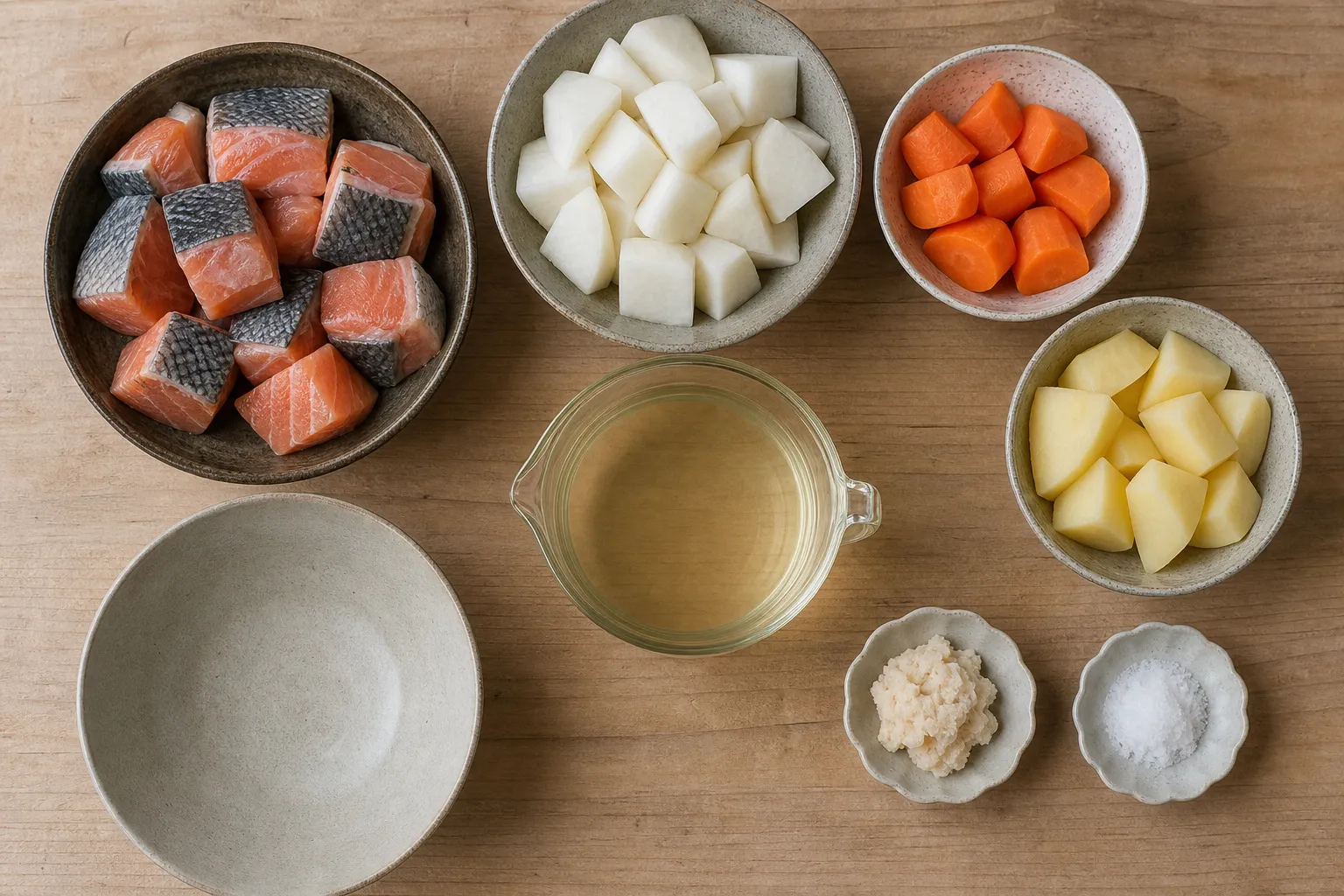
- Salted fish (salmon, cod, or herring) is cut into chunks — bones and collar bits welcome, they enrich the broth
- Daikon, carrot, and potato are peeled and cut into hearty pieces
- The root vegetables are simmered in a clear dashi (or plain water) until they begin to soften
- The salted fish goes in and everything simmers gently until the fish is cooked and the vegetables are tender and sweet
- The broth is finished with salt to taste and, in many versions, a spoonful of sake lees (kasu) stirred in for warmth and body — kept clear, never thickened with miso
Before you go — how to actually eat it
Your questions, answered honestly
"Isn't this the same as Ishikari-nabe?" — This is the question, and the answer is the whole point: no. Ishikari-nabe is miso-based. Sanpei-jiru is salt / sake-lees-based and stays clear. Same prefecture, same salmon-and-vegetables idea, but one's a miso hot pot and this one is a clear salted soup. Don't let anyone blur them.
"Why is it so salty?" — Because the fish is salted on purpose — that's the traditional preservation and the built-in seasoning. It's designed to be eaten with rice, which balances it. Sip, don't gulp.
"What fish will I get?" — Depends on the region and season — salmon is the most famous, but cod and herring versions are just as traditional. All of them work.
"Is it a starter or a main?" — It's usually part of a set meal (teishoku) alongside rice and sides, functioning as the warming, filling centerpiece of a simple winter table rather than a fussy first course.
What the staff will ask you
| You'll hear | Romaji | Meaning | Just say |
|---|---|---|---|
| 定食になさいますか? | Teishoku ni nasaimasu ka? | "Would you like it as a set meal?" | Onegaishimasu (yes, please) |
| ご飯の量はどうしますか? | Gohan no ryō wa dō shimasu ka? | "How much rice would you like?" | Futsū de onegaishimasu (regular, please) |
| お魚は鮭でよろしいですか? | Osakana wa sake de yoroshii desu ka? | "Is salmon okay for the fish?" | Onegaishimasu (yes, please) |
| 温かいのでお気をつけください | Atatakai node oki o tsukete kudasai | "It's hot, please be careful" | Arigatō gozaimasu (thank you) |
To order, just say "Sanpei-jiru o kudasai" (三平汁ください) — "Sanpei-jiru, please."
Where to eat it
- Hokkaido set-meal restaurants and inns (ryokan/minshuku) — especially in winter, it turns up as the warming centerpiece of a home-style teishoku, often at breakfast.
- Coastal and fishing-town eateries across Hokkaido — close to the salted-fish source, you'll find honest, generous bowls.
- Roadside stations (michi-no-eki) and regional food halls — good places to catch a local, seasonal version without a reservation.
It's a seasonal, often winter-leaning home dish, so availability varies by place and time of year — check whether it's on the current menu before you count on it.
Soul Score
Local Roots5/5
First-Timer Friendly4/5
Adventure Level3/5
Comfort Level5/5
Travel Worthy3/5
These scores are one obsessed eater's gut feeling — not a verdict. A low number isn't a bad mark, just a different kind of adventure.
Know someone planning Japan?
← All Articles
Local Food · Hokkaido
Still hungry?
Eat more from Hokkaido
Local FoodFurano, Hokkaido
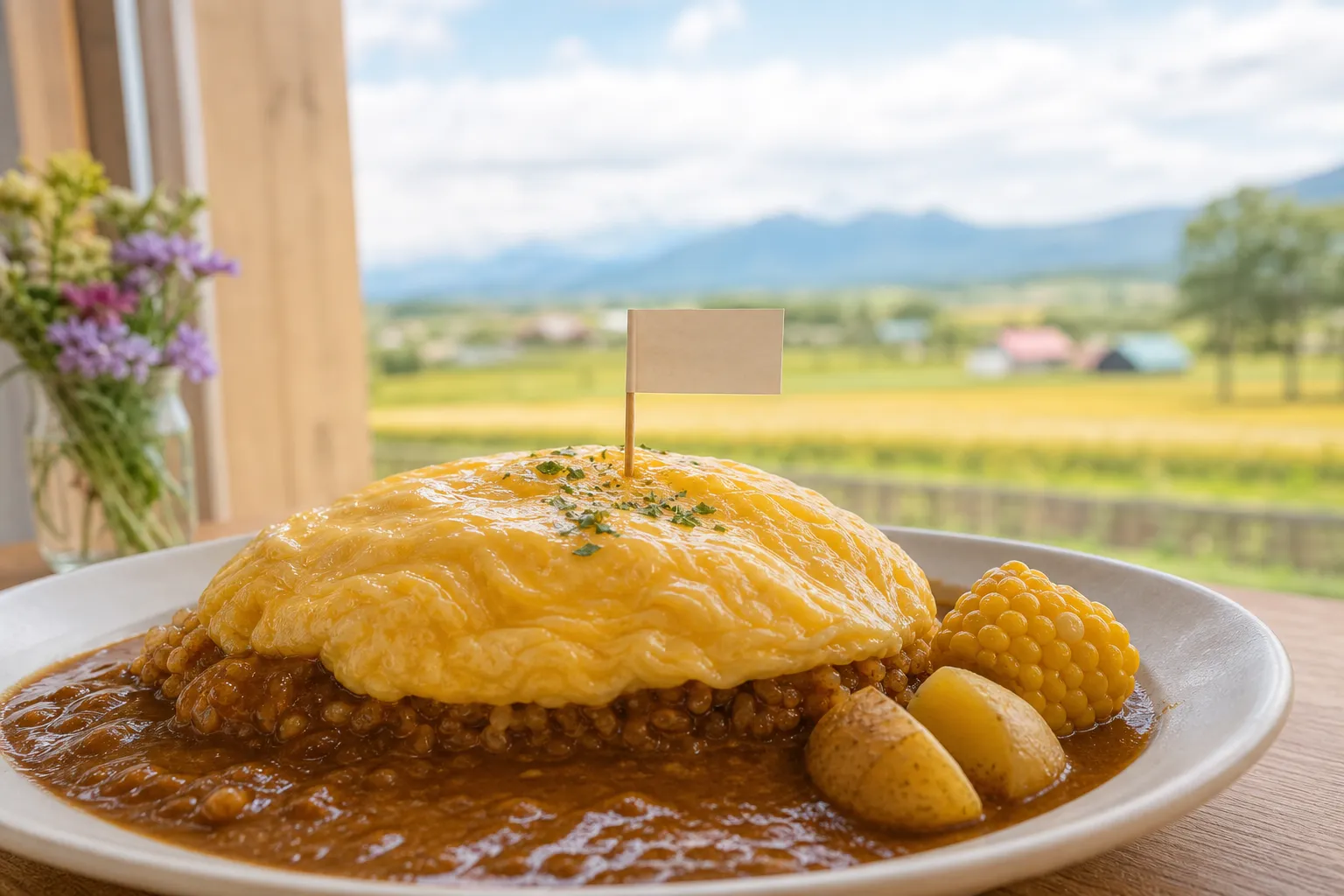
Furano Omu-Curry (富良野オムカレー)
Cut into the omelette and curry sauce comes flooding out like it's been waiting all morning for permission — with a lavender field in the window behind it.
August 2, 2026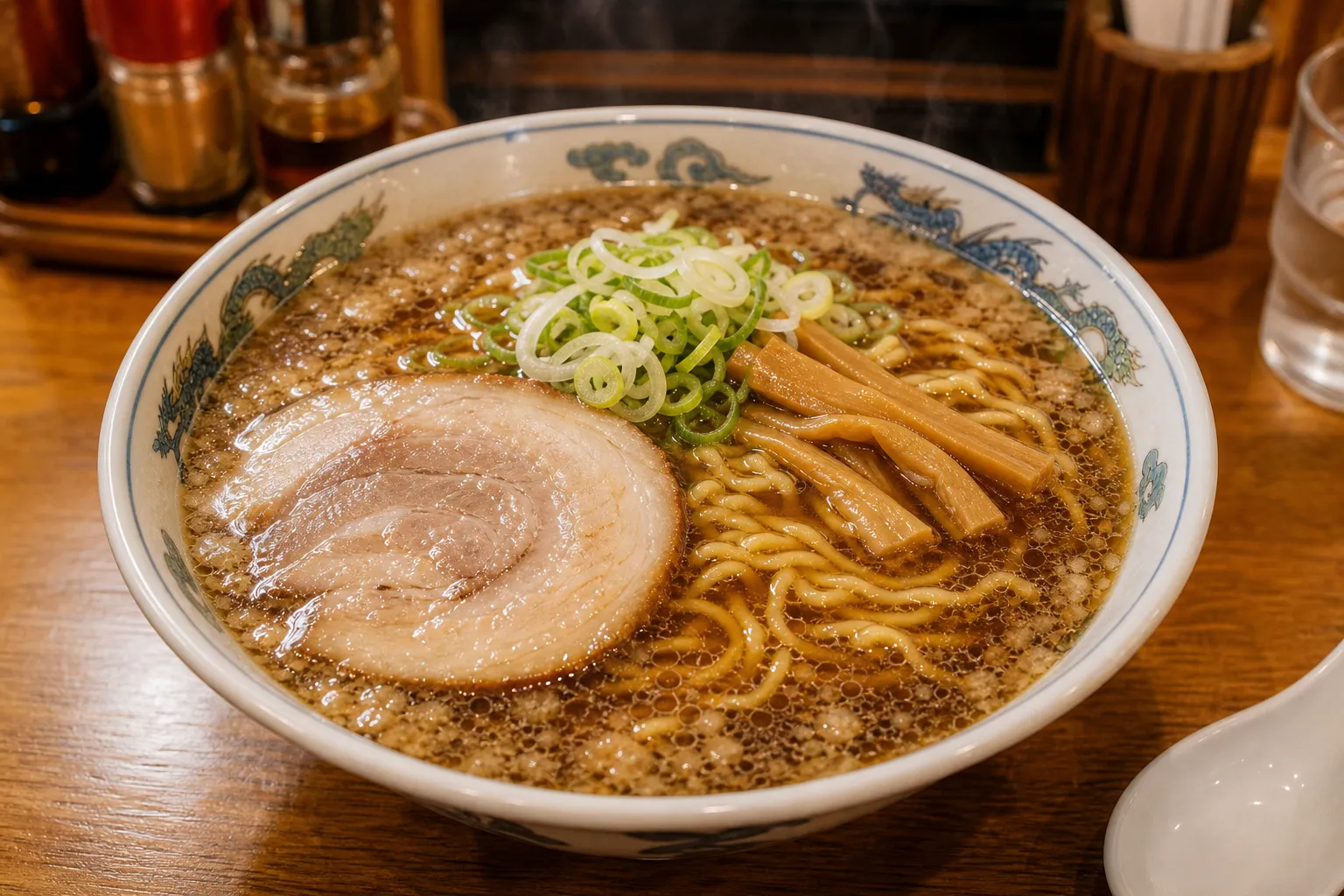
Local FoodAsahikawa, Hokkaido
Asahikawa Ramen (旭川ラーメン)
A slick of lard traps the heat so your soy broth stays scalding to the last drop — because in Asahikawa, the cold outside is trying to kill your ramen. It loses.
July 9, 2026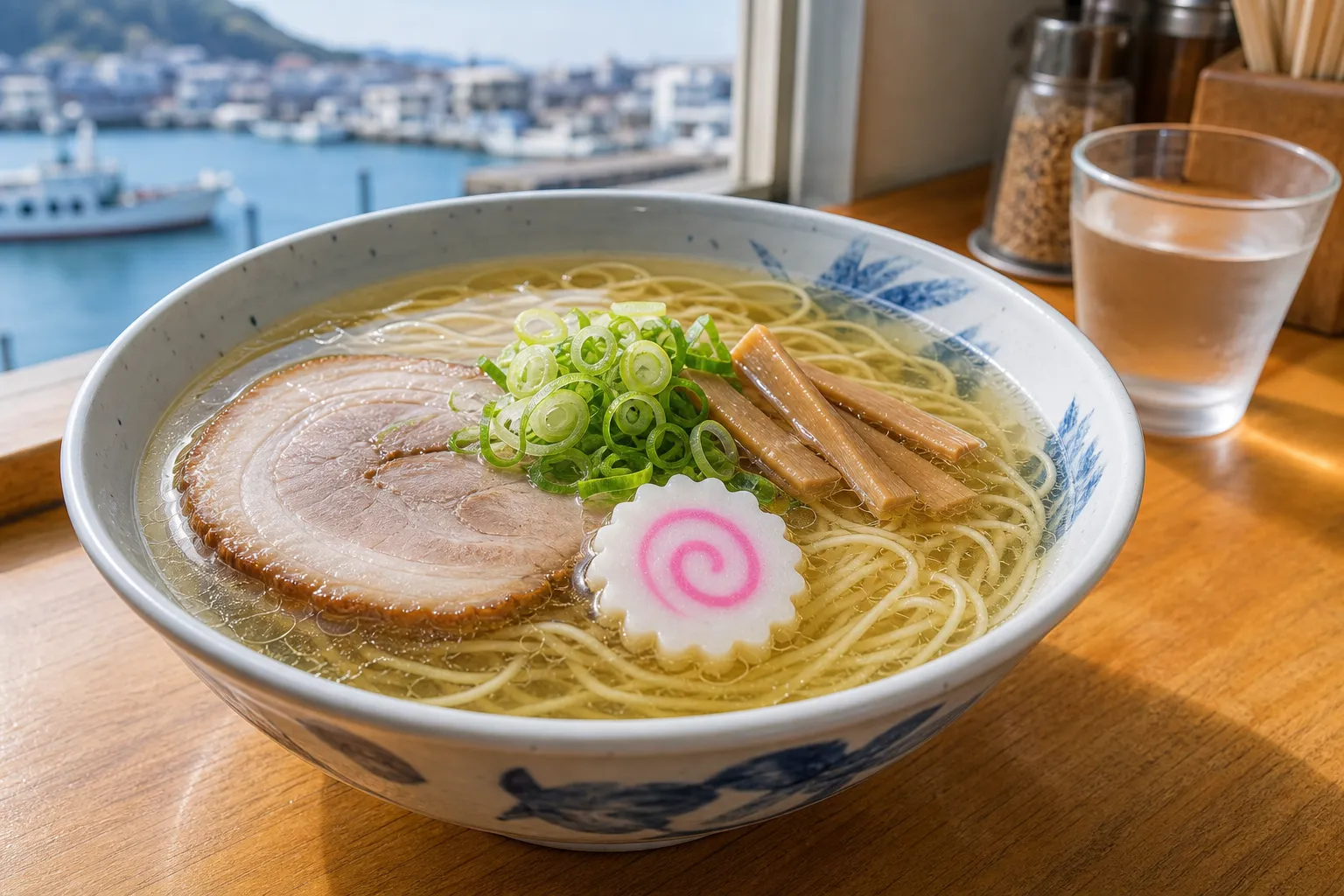
Local FoodHakodate, Hokkaido
Hakodate Shio Ramen (函館塩ラーメン)
Clear as tea, gold as morning light, quiet as a held breath — this is the ramen that proves subtraction is a flavor. Hokkaido's gentle bowl, and my hangover's best friend.
July 9, 2026