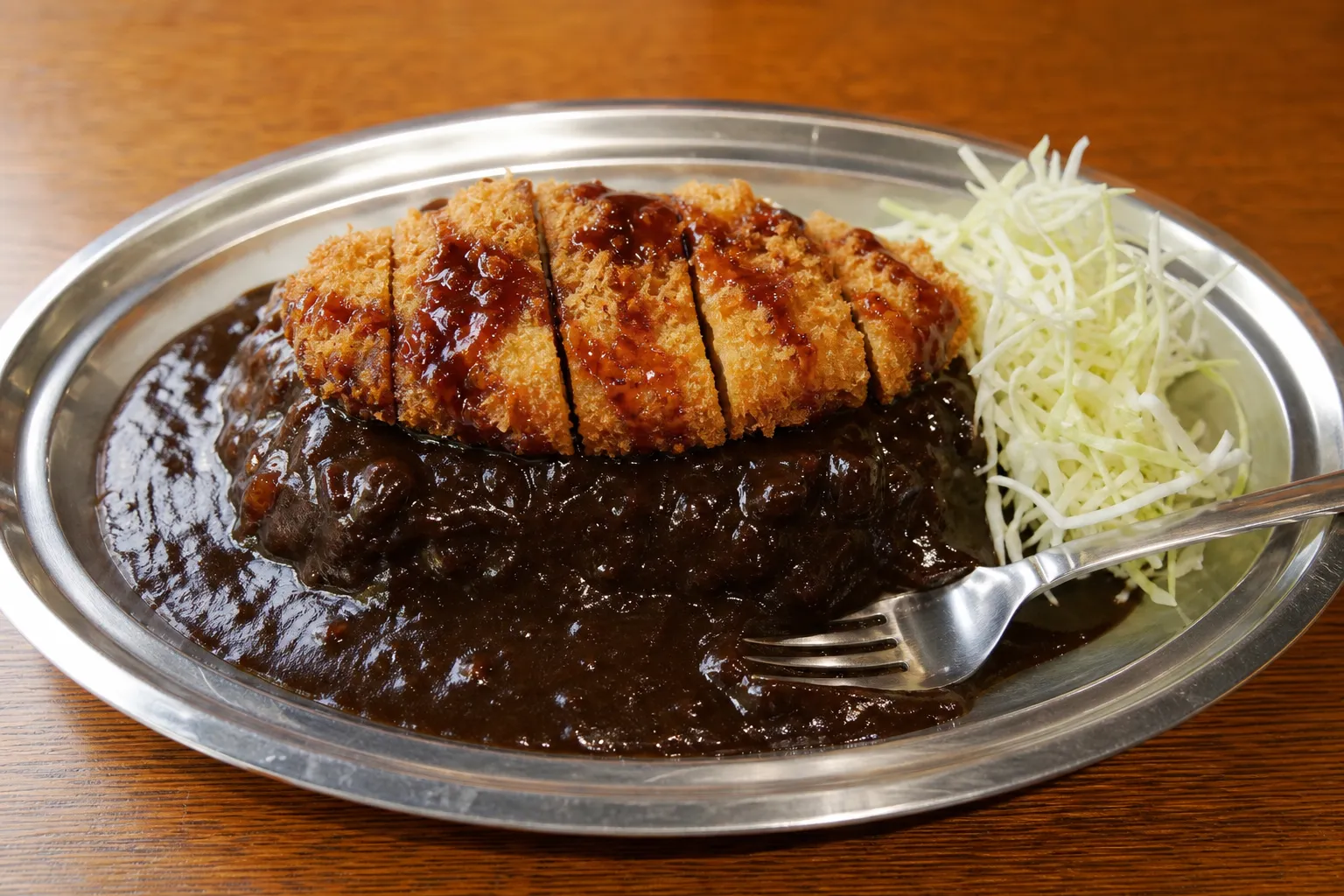
The fork hit the curry and the curry didn't move. That's the first thing — you come in braced for saucy, pourable curry and instead there's this dark, glossy, almost-black slab of roux gripping the rice like it has opinions. Then the fork (yes, a fork, on a steel plate) drags through it, you get a bite with a corner of crunchy katsu and a cold strand of cabbage, and your whole idea of what curry is supposed to be quietly rearranges itself.
Share this dish


Curry so thick and dark it stands the fork up — served on a steel plate, crowned with a sauced-up katsu, cold cabbage on the side. Ishikawa's gloriously stubborn take on comfort food.
🍜 Planning a food trip to Ishikawa?Add this dish to my Food Trip →
 Add this dish to my Food Trip →
This is Kanazawa curry, the proudly stubborn house style of Ishikawa. The rules are weirdly specific and locals will defend every one: an oval stainless-steel plate, a fork (or a spork), a dark and intensely thick roux poured over the rice, a crisp pork cutlet laid on top and pre-drizzled with sauce, and a little pile of shredded cabbage on the side. Master that diagram and you've basically passed your Kanazawa entrance exam.
Born in postwar Kanazawa diners
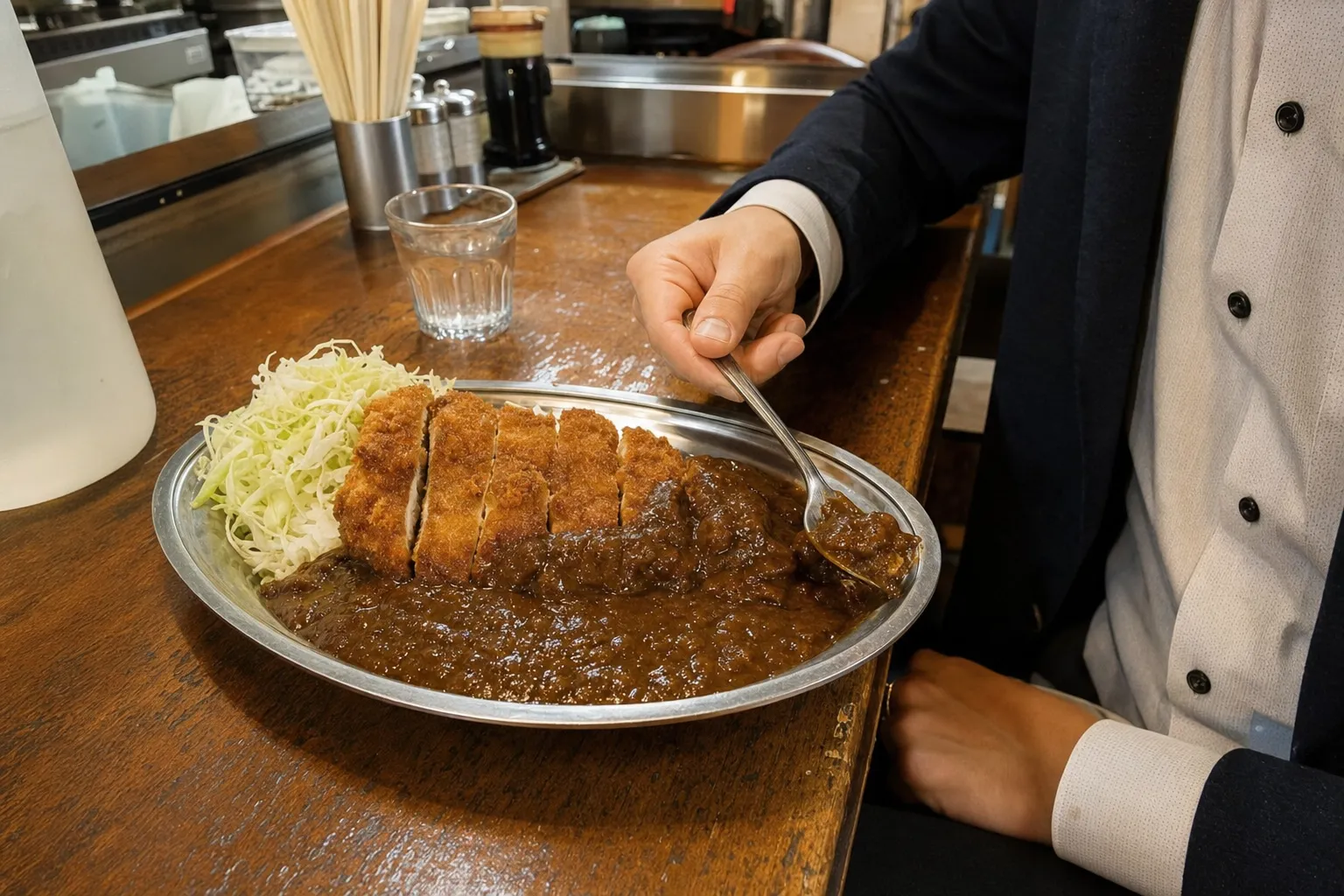
Kanazawa curry grew out of the city's postwar diners and curry shops, where a handful of cooks landed on the same gloriously specific formula and never let it go. The local chain Champion Curry (チャンピオンカレー) is most often cited as the root of the style, and Go Go Curry — born in Kanazawa before it marched out to Tokyo and beyond — carried the gospel nationwide with its gorilla mascot and yellow signage. The lineages argue about who did what first, the way all good food origin stories do.
I find the whole thing kind of moving, honestly. This isn't curry that drifted into Japan and got softened into something polite — it's curry that a specific city grabbed, thickened, plated on metal, and turned into a rule book. It's regional pride you can eat with a fork. The roux even looks defiant: darker and denser than the friendly brown stew most of Japan eats, like it's daring you to call it normal.
Black, thick, and eaten with a fork
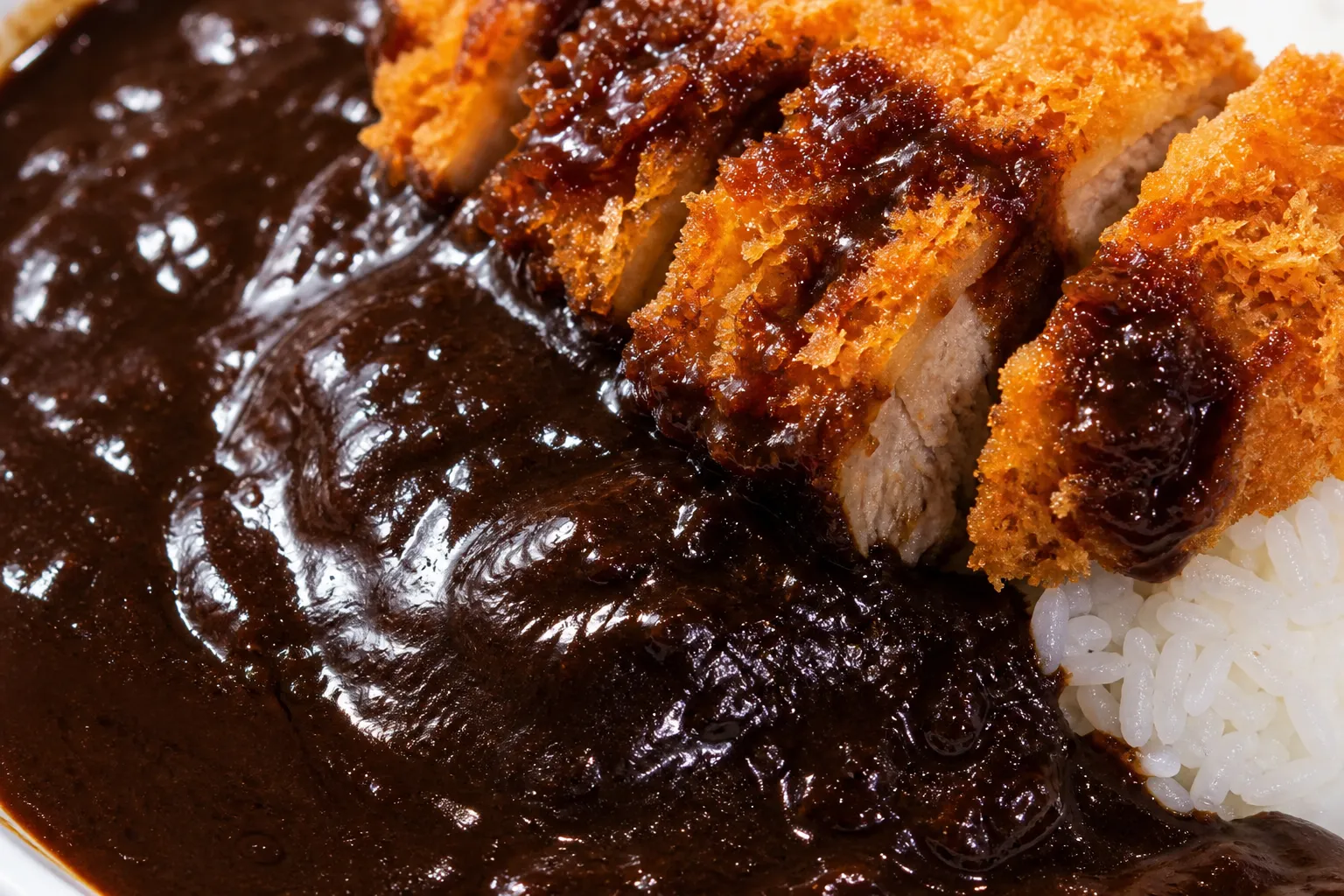
The roux is the whole personality: deeply browned, almost ink-dark, slow-cooked until it's thick and clingy rather than soupy, with a savory, slightly bitter-sweet depth from long cooking. It doesn't flood the plate — it coats it. On top sits the katsu, fried crisp and then brushed or drizzled with a tangy Worcestershire-style sauce before it reaches you, so you get crunch, sauce, and roux in the same forkful. The cold, raw shredded cabbage isn't decoration either — it's the reset button, cutting the richness so you can keep going.
And the fork. People fixate on it and they're right to — the thick roux and the steel plate basically demand it, and scraping the last of that dark sauce off the metal is part of the ritual. I ate the whole thing faster than I'm proud of, then sat there scraping the plate like a raccoon. No regrets.
How it's built
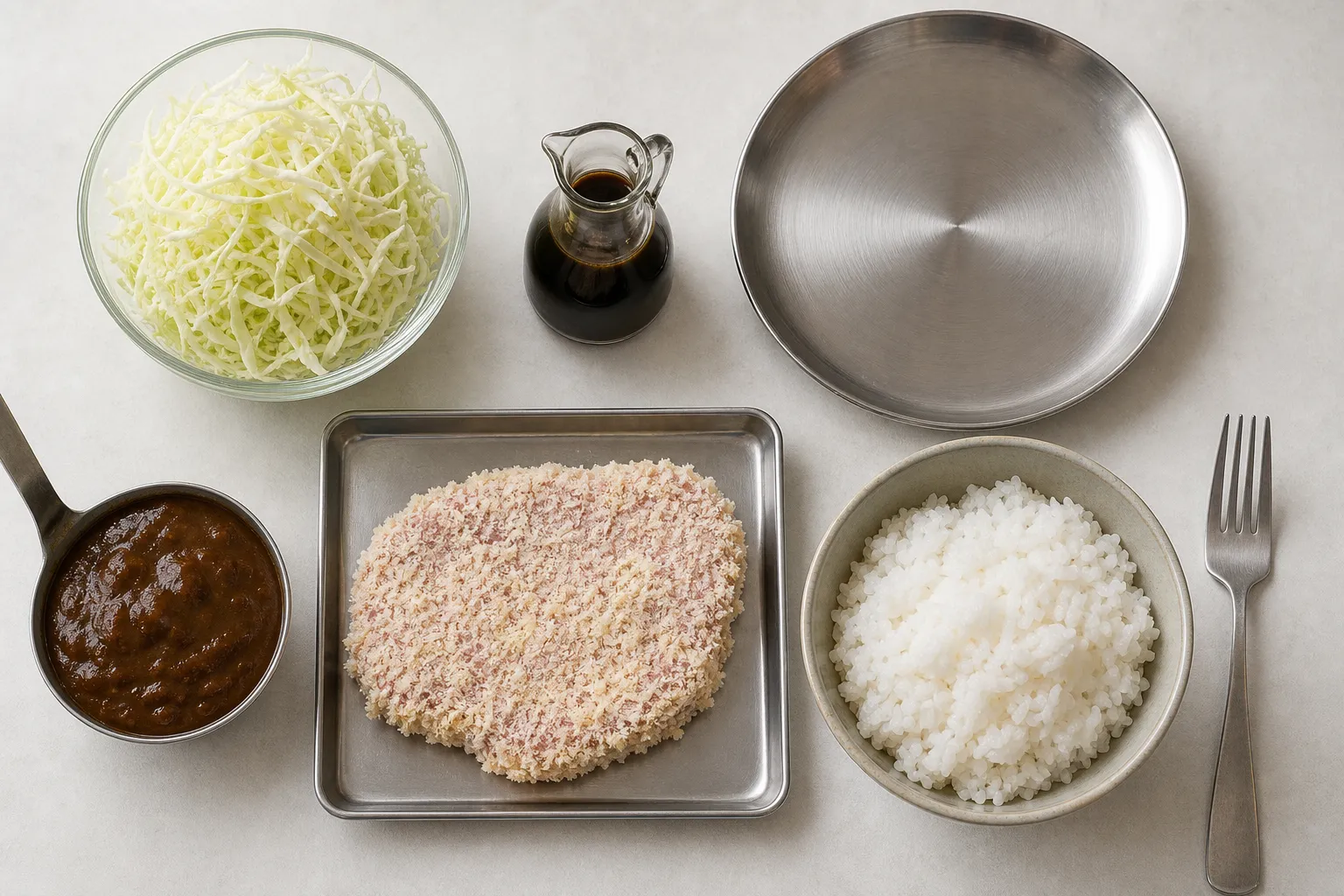
- Cook a roux long and dark — flour, oil, curry spices, and stock simmered down until it's thick, glossy, and nearly black
- Mound hot rice onto an oval stainless-steel plate
- Ladle the thick roux over the rice so it clings rather than pools
- Fry a pork cutlet crisp, slice it, and lay it on top
- Drizzle the katsu with a tangy Worcestershire-style sauce (it arrives already sauced)
- Add a heap of cold shredded cabbage to the side — and serve with a fork or spork
Before you go — for the curry-curious
Your questions, answered honestly
"Why is it so dark — is it burnt?" — No, it's just cooked long and hard. The deep color comes from a slow, heavily browned roux, which is exactly where that rich, slightly bitter-savory depth lives. It's a feature, not an accident.
"Do I really eat curry with a fork?" — Yes. The roux is too thick and the plate too metal for a spoon to feel right, and locals use a fork or a spork. Lean in — it's part of the experience.
"Is it spicy?" — Mild to moderate by default, more savory-rich than hot. Many shops let you bump up the heat or add toppings, so start standard and adjust next time.
"What's with the cold cabbage?" — It's the palate-cutter. The roux and fried katsu are heavy, so the raw cabbage keeps each bite from getting too rich. Don't skip it.
What the staff will ask you
| You'll hear | Romaji | Meaning | Just say |
|---|---|---|---|
| ロースかヒレ、どちらにしますか? | Rōsu ka hire, dochira ni shimasu ka? | "Loin or fillet katsu?" | Rōsu de onegaishimasu (loin, please) |
| ルーは多めにしますか? | Rū wa ōme ni shimasu ka? | "Extra roux?" | Hai, onegaishimasu (yes please) |
| 辛さはどうしますか? | Karasa wa dō shimasu ka? | "Spice level?" | Futsū de onegaishimasu (normal is fine) |
To order, just say "Katsu karē kudasai" (カツカレーください) — "Pork cutlet curry, please."
Where to eat it
- Kanazawa, Ishikawa — the home turf, where the style was born; the local chain Champion Curry is widely cited as its originator and is the classic place to meet the dark roux at the source.
- Go Go Curry — founded in Kanazawa and now found in Tokyo and other cities, an easy way to try the style if you can't get to Ishikawa. Look for the gorilla.
- Diners and curry shops around Kanazawa — many independent spots serve their own take on the steel-plate-and-fork formula. Hours and lineups vary, so check before you go.
Soul Score
Local Roots4/5
First-Timer Friendly5/5
Adventure Level3/5
Comfort Level5/5
Travel Worthy4/5
These scores are one obsessed eater's gut feeling — not a verdict. A low number isn't a bad mark, just a different kind of adventure.
Know someone planning Japan?
← All Articles
Local Food · Kanazawa, Ishikawa
Still hungry?
Eat more from Ishikawa
Local FoodKanazawa, Ishikawa
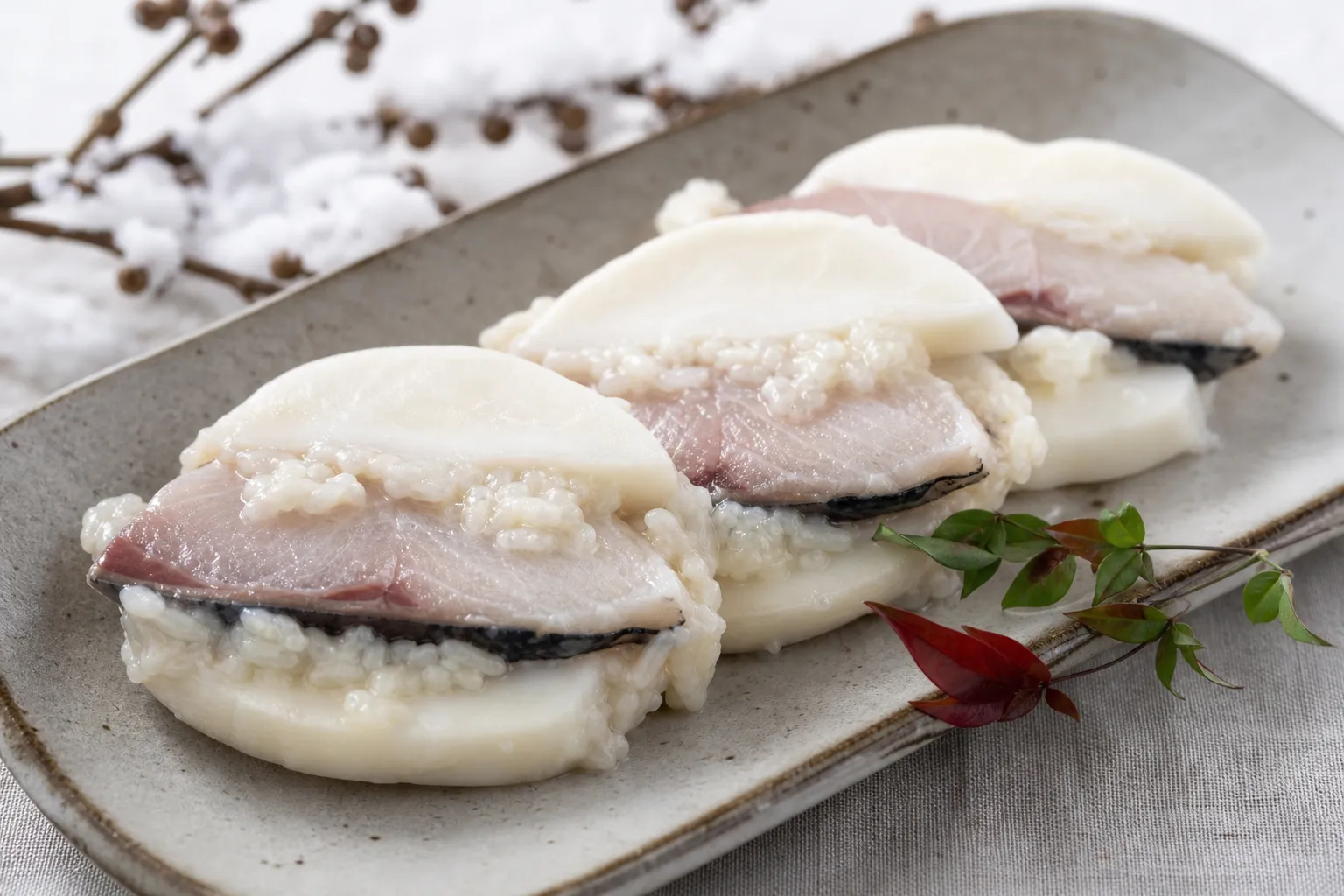
Kabura-zushi (かぶら寿司)
Two discs of pickled turnip with a slice of cured yellowtail hidden inside, all buried in sweet rice koji until it ferments into something funky, creamy and impossible to stop eating. Kanazawa's New Year on a plate.
July 12, 2026
Local FoodKanazawa, Ishikawa
Hanton Rice (ハントンライス)
Ketchup rice, wrapped in egg, crowned with deep-fried fish, drowned in tartar sauce and a red ketchup swirl — Kanazawa built a plate with zero business working this well, and it works perfectly.
July 5, 2026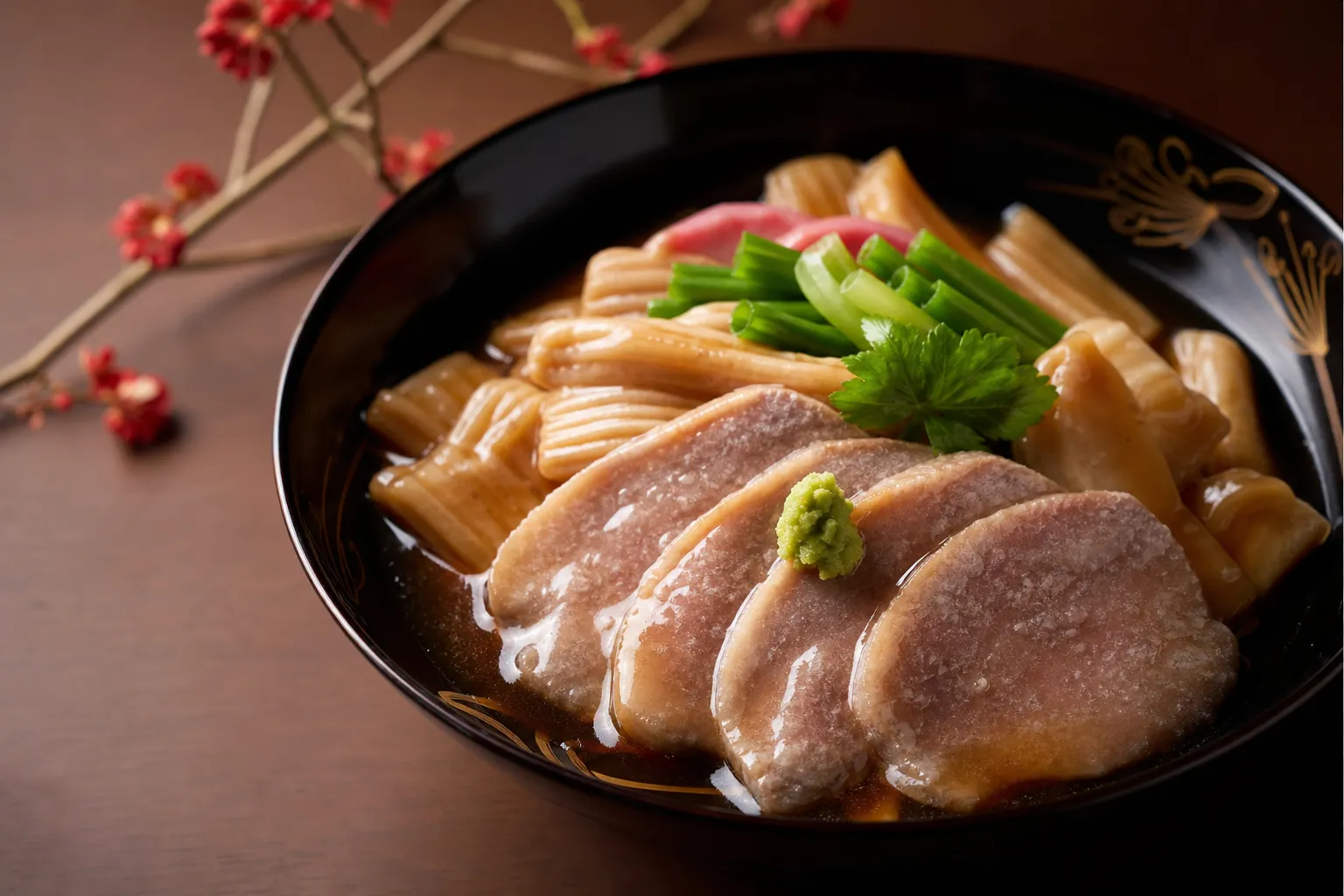
Local FoodKanazawa, Ishikawa
Jibuni (治部煮)
A tiny dab of wasabi on top of a warm, glossy duck stew — it sounds wrong, it looks fussy, and then the spoon hits your mouth and you go quiet.
July 5, 2026