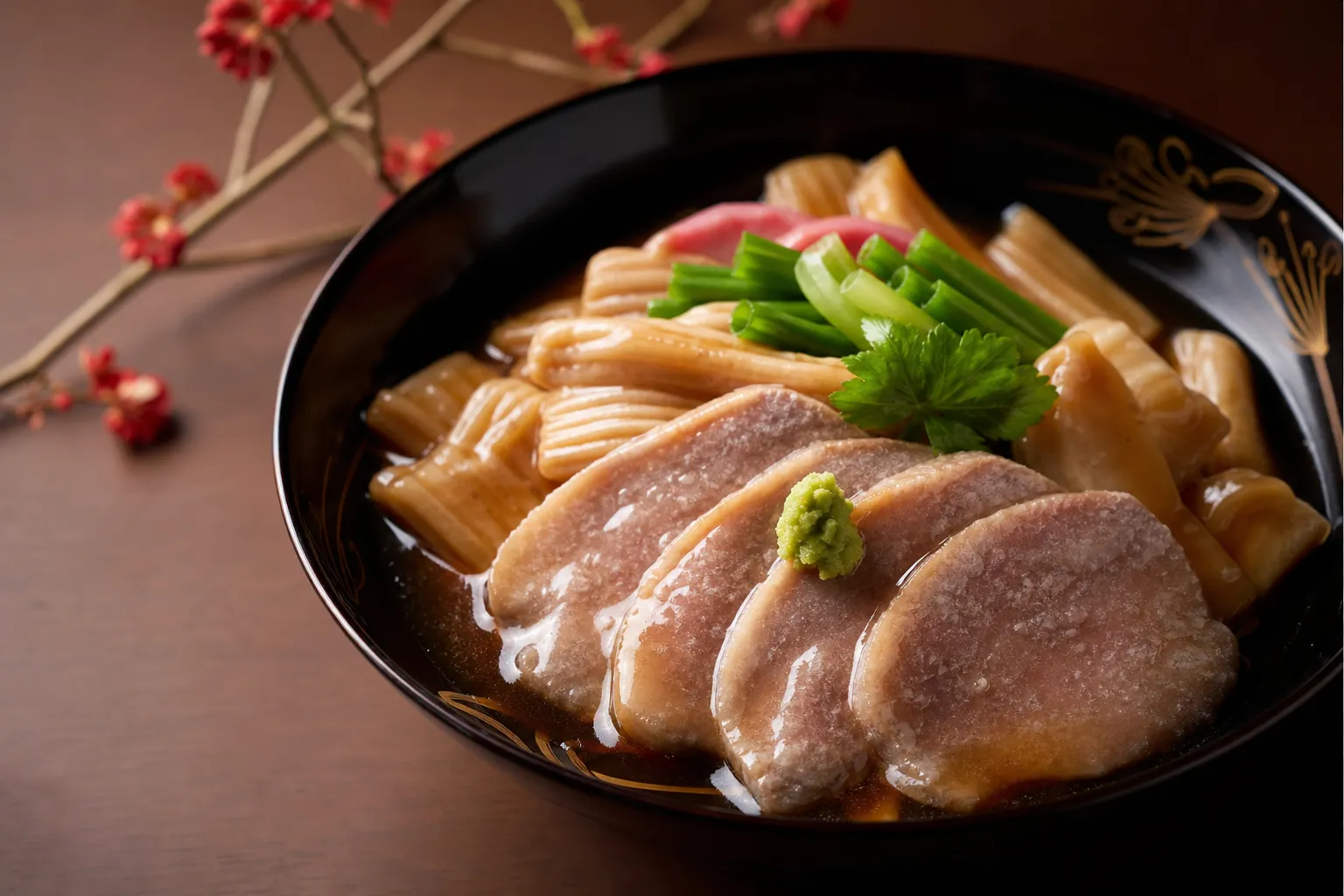
I dipped the spoon in, caught a slice of duck and a wedge of that pale, spongy wheat gluten, and lifted it out coated in a broth so glossy it looked lacquered — like someone had polished the sauce. Then the little green dab of wasabi slid off the duck onto my tongue at the exact moment the sweet, savory warmth arrived, and I did that thing where you stop talking mid-sentence and just stare at the bowl. My friend asked if I was okay. I was not okay. I was delighted, which is a different thing.
Share this dish


A tiny dab of wasabi on top of a warm, glossy duck stew — it sounds wrong, it looks fussy, and then the spoon hits your mouth and you go quiet.
🍜 Planning a food trip to Ishikawa?Add this dish to my Food Trip →
 Add this dish to my Food Trip →
This is jibuni (治部煮, jibuni), the quiet aristocrat of Kanazawa's Kaga cuisine. Here's what's actually happening in the bowl: thin slices of duck (sometimes chicken) are dusted in flour, then gently simmered with sudarefu — a local sudare-style wheat gluten that soaks up broth like a sponge — plus seasonal vegetables, all in a sweet-savory soy dashi that's been lightly thickened. That flour coating is the trick: it seals the duck so it stays silky, and it thickens the broth into that clinging, glossy sheen. On top goes a small dab of wasabi. Not a lot. Just enough to cut the richness with a clean green edge. It is not oyakodon, it is not sukiyaki, it is not a plain pot of simmered vegetables — it is its own careful, deliberate thing.
Where a samurai town's restraint ends up in a bowl
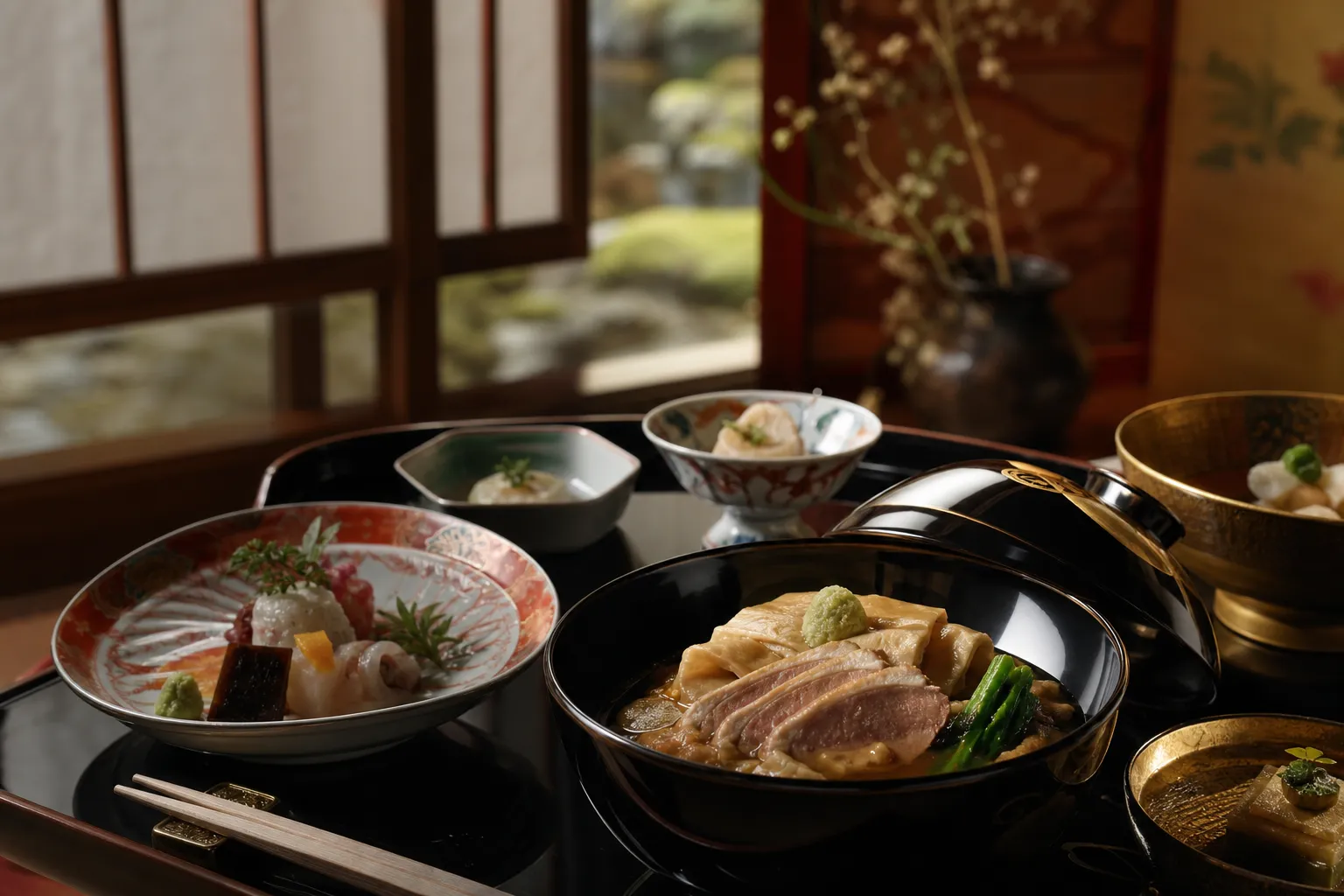
Kanazawa was the seat of the Maeda clan, one of the wealthiest domains in feudal Japan, and the city poured that wealth into culture instead of war — gold leaf, lacquer, tea, gardens, and food that behaves like all of those things. Jibuni comes straight out of that world. The name's origin is charmingly unsettled: some say it echoes a general named Jibu, some say it's the jibujibu sound of the pot simmering. Nobody fully agrees, and honestly I love that a dish this refined can't remember its own name.
What gets me is the restraint. This is a region that could afford to show off with anything, and instead the signature dish is a gentle bowl of duck and gluten with a whisper of wasabi. That's a flex of a completely different kind — the confidence to make something subtle the star. I find that genuinely moving. It's the culinary equivalent of a very rich person wearing one perfect, unbranded coat.
Why the texture is the whole point
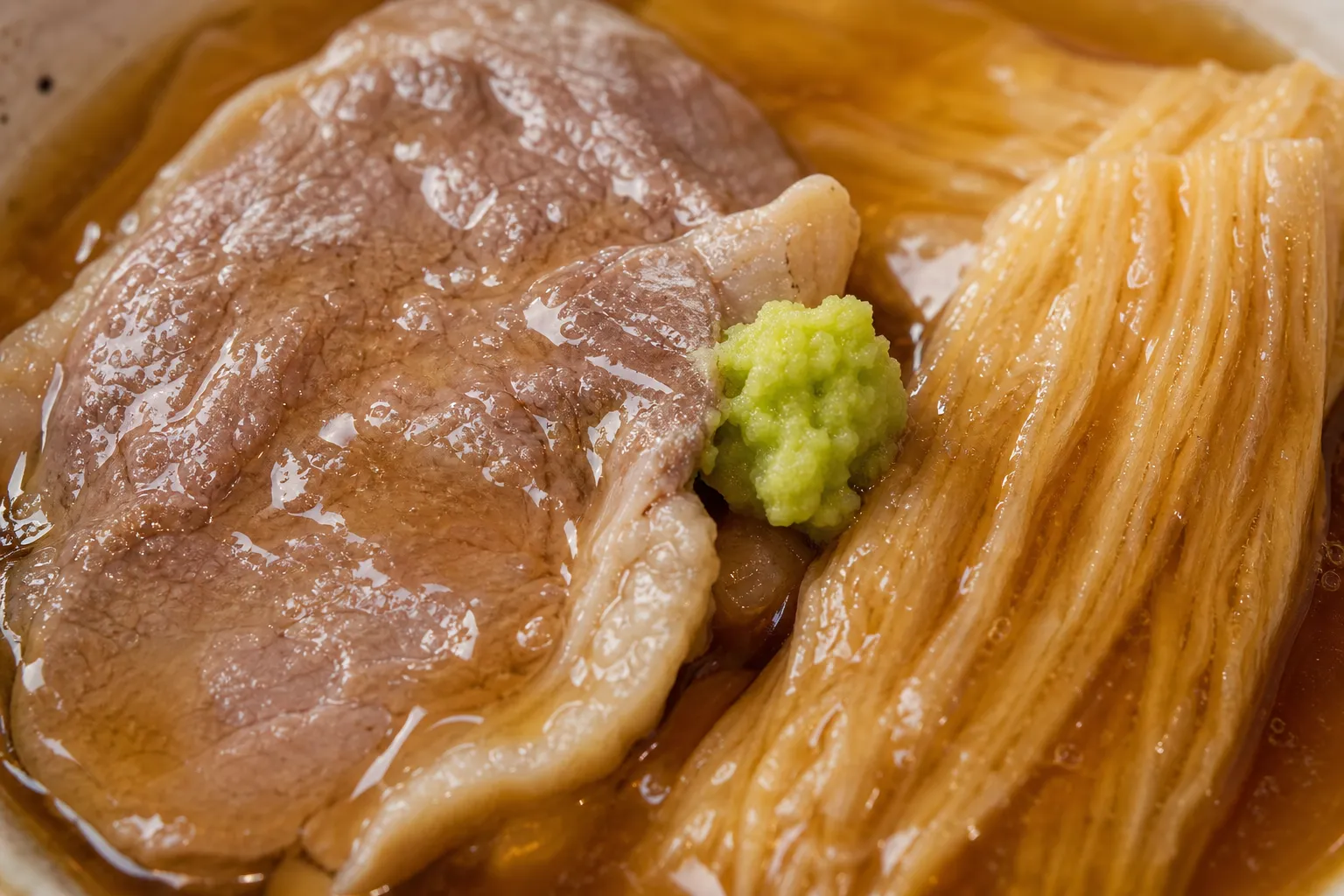
Most stews win you over with big, bold flavor. Jibuni wins you over with feel. The flour-dusted duck goes velvety and tender, never stringy. The sudarefu is the sleeper hero — spongy wheat gluten that drinks up the broth and then releases it in a warm gush when you bite down. And the broth itself isn't watery like a clear soup or heavy like a gravy; it's this in-between silk that coats everything evenly and slides.
Then the wasabi. People assume wasabi means "sharp punch," but here it's doing something warmer and smarter — it lifts the sweet-soy richness, gives it a clean top note, and keeps the whole bowl from feeling heavy. It's not there to burn you. It's there to make the second spoonful taste as good as the first. I ate slowly, which I never do, because the bowl seemed to be asking me to.
How it comes together
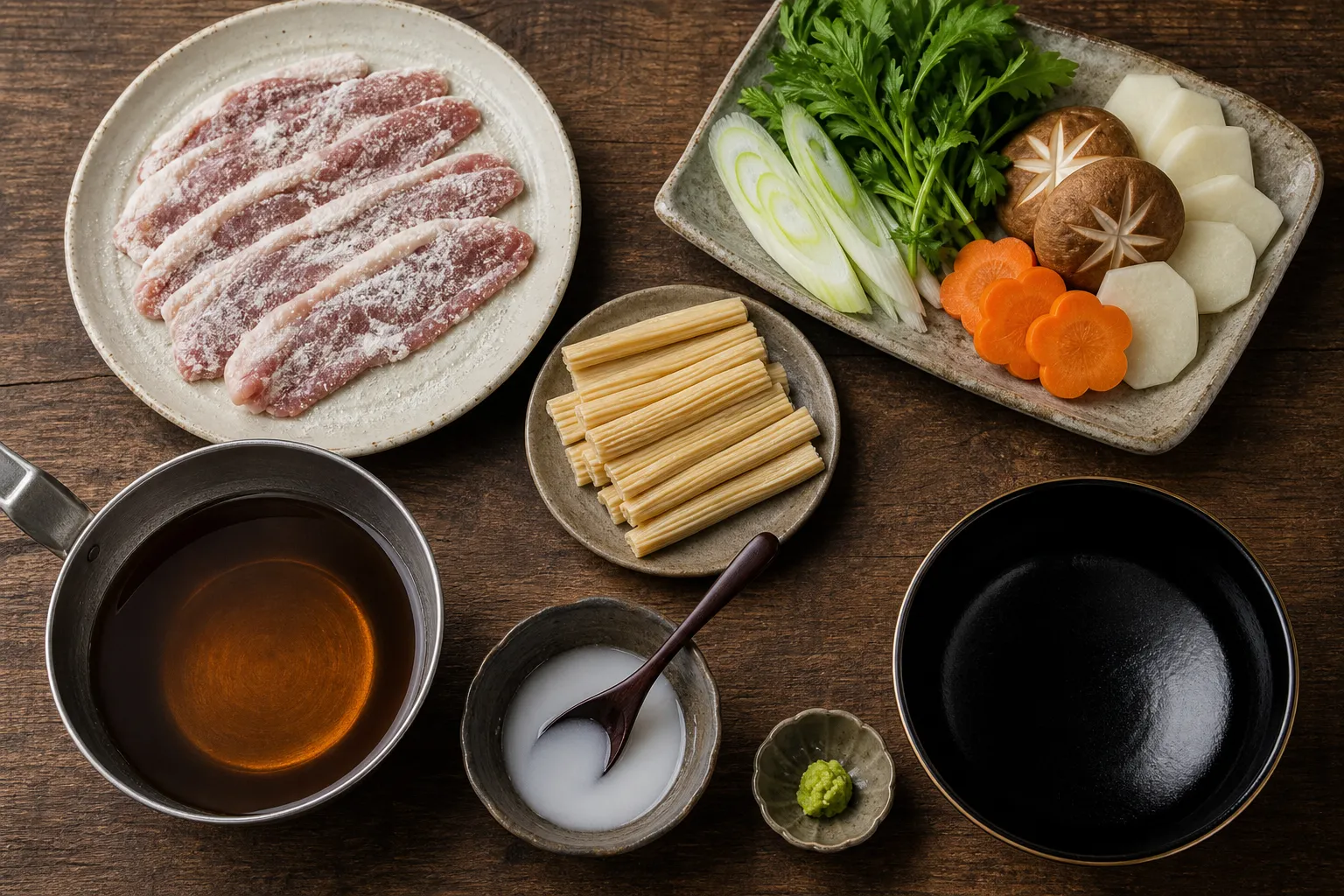
- Slice duck (or chicken) thin and dust each piece lightly in flour
- Prepare a sweet-savory soy dashi — dashi stock, soy sauce, mirin, a touch of sugar
- Gently simmer the floured duck in the dashi; the flour both seals the meat and naturally thickens the broth into its signature glossy sheen
- Add sudarefu and seasonal vegetables to soak up the broth
- Ladle into a lacquer bowl and finish with a small dab of fresh wasabi on top
Before you go — order it slow
Your questions, answered honestly
"Is it duck or chicken?" — Traditionally duck, and duck is the classic Kaga-cuisine version worth seeking out. But chicken jibuni is common and completely legitimate, especially in casual or set-meal spots. If it matters to you, ask — many places do both.
"What on earth is sudarefu?" — It's a Kanazawa specialty wheat gluten (fu), shaped with a bamboo-mat pattern, made to absorb broth. Think of it as the sponge that carries the flavor. Don't skip it or fish it out — it's half the reason the dish exists.
"Why the wasabi? Isn't that a sushi thing?" — Trust the dab. It's not there for heat; it's there to brighten the sweet-soy richness and keep the bowl light. Eat a bite with it and a bite without, and you'll feel the difference immediately.
"Is this a whole meal or one dish?" — Usually one refined dish within a larger spread — part of a kaiseki course or a set with rice, pickles, and miso soup. If you want it as the centerpiece, order it as part of a Kaga-ryori set.
What the staff will ask you
| You'll hear | Romaji | Meaning | Just say |
|---|---|---|---|
| 鴨と鶏、どちらになさいますか? | Kamo to tori, dochira ni nasaimasu ka? | "Duck or chicken?" | Kamo de onegaishimasu (duck, please) |
| 単品ですか、セットになさいますか? | Tanpin desu ka, setto ni nasaimasu ka? | "Single dish or a set?" | Setto de onegaishimasu (a set, please) |
| わさびは大丈夫ですか? | Wasabi wa daijōbu desu ka? | "Is wasabi okay for you?" | Hai, daijōbu desu (yes, that's fine) |
To order, just say "Jibuni o kudasai" (治部煮をください) — "Jibuni, please."
Where to eat it
- Central Kanazawa (Korinbo / Kata-machi area) — the city's traditional Kaga-ryori restaurants and ryotei cluster here, and jibuni is a fixture on their menus, often within a kaiseki course.
- Omicho Market area — casual eateries and set-meal spots around Kanazawa's big market serve approachable jibuni sets alongside local seafood.
- Near Kenrokuen / Higashi Chaya district — several long-running traditional restaurants near the garden and the old teahouse quarter feature Kaga cuisine, jibuni included.
Menus, prices, and whether duck or chicken is offered vary shop to shop and season to season, so check current details before you go.
Soul Score
Local Roots5/5
First-Timer Friendly4/5
Adventure Level3/5
Comfort Level5/5
Travel Worthy4/5
These scores are one obsessed eater's gut feeling — not a verdict. A low number isn't a bad mark, just a different kind of adventure.
Know someone planning Japan?
← All Articles
Local Food · Kanazawa, Ishikawa
Still hungry?
Eat more from Ishikawa
Local FoodKanazawa, Ishikawa
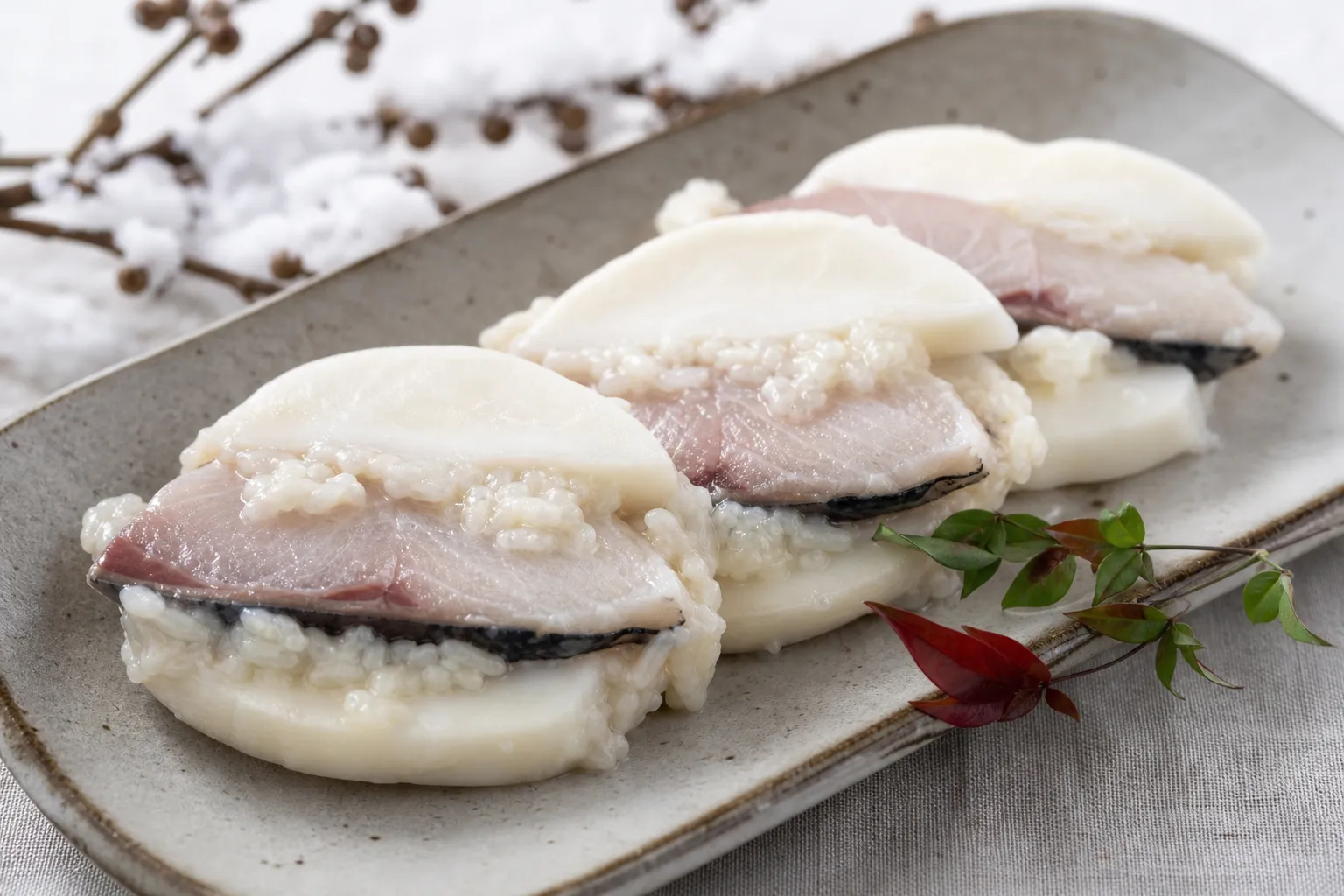
Kabura-zushi (かぶら寿司)
Two discs of pickled turnip with a slice of cured yellowtail hidden inside, all buried in sweet rice koji until it ferments into something funky, creamy and impossible to stop eating. Kanazawa's New Year on a plate.
July 12, 2026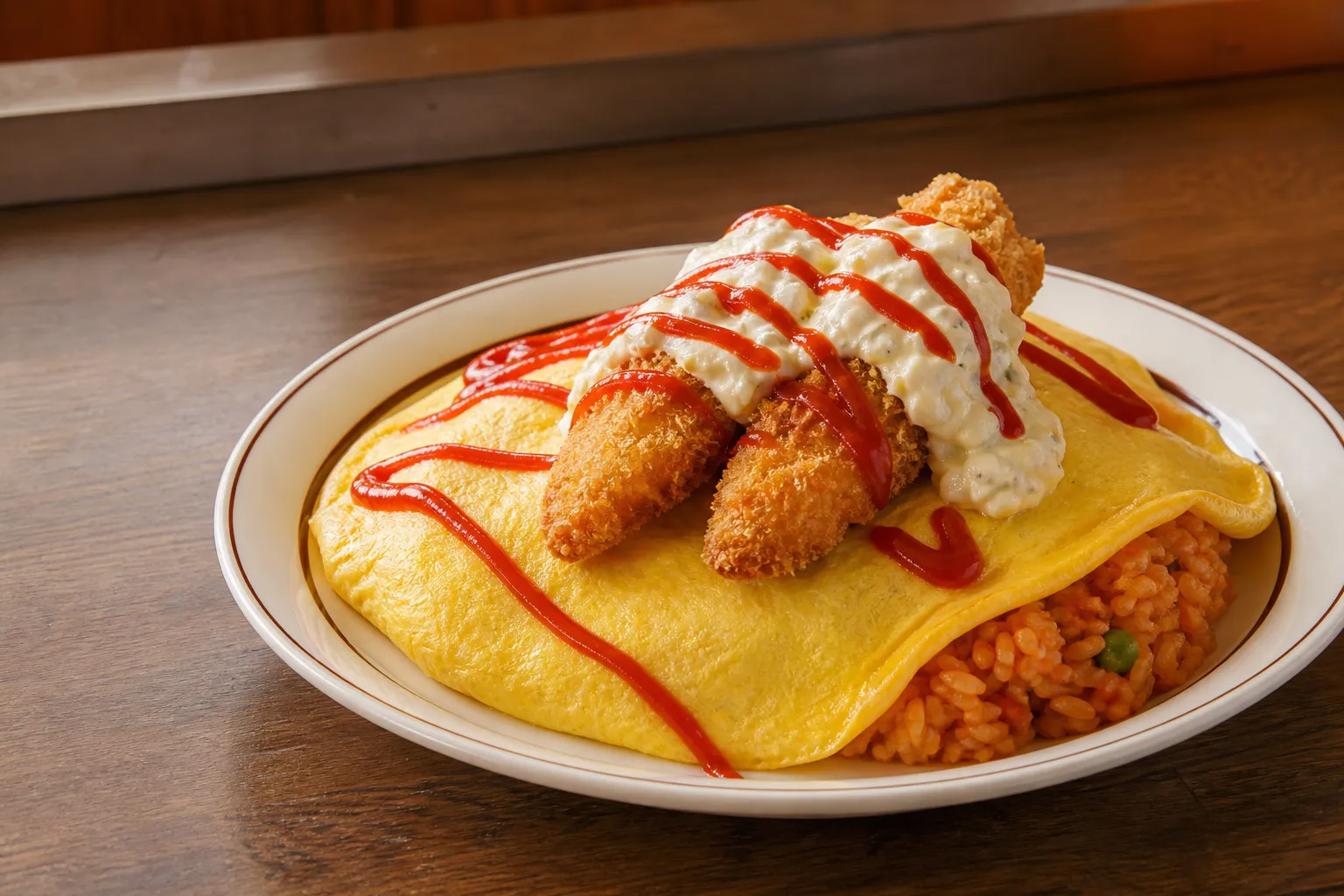
Local FoodKanazawa, Ishikawa
Hanton Rice (ハントンライス)
Ketchup rice, wrapped in egg, crowned with deep-fried fish, drowned in tartar sauce and a red ketchup swirl — Kanazawa built a plate with zero business working this well, and it works perfectly.
July 5, 2026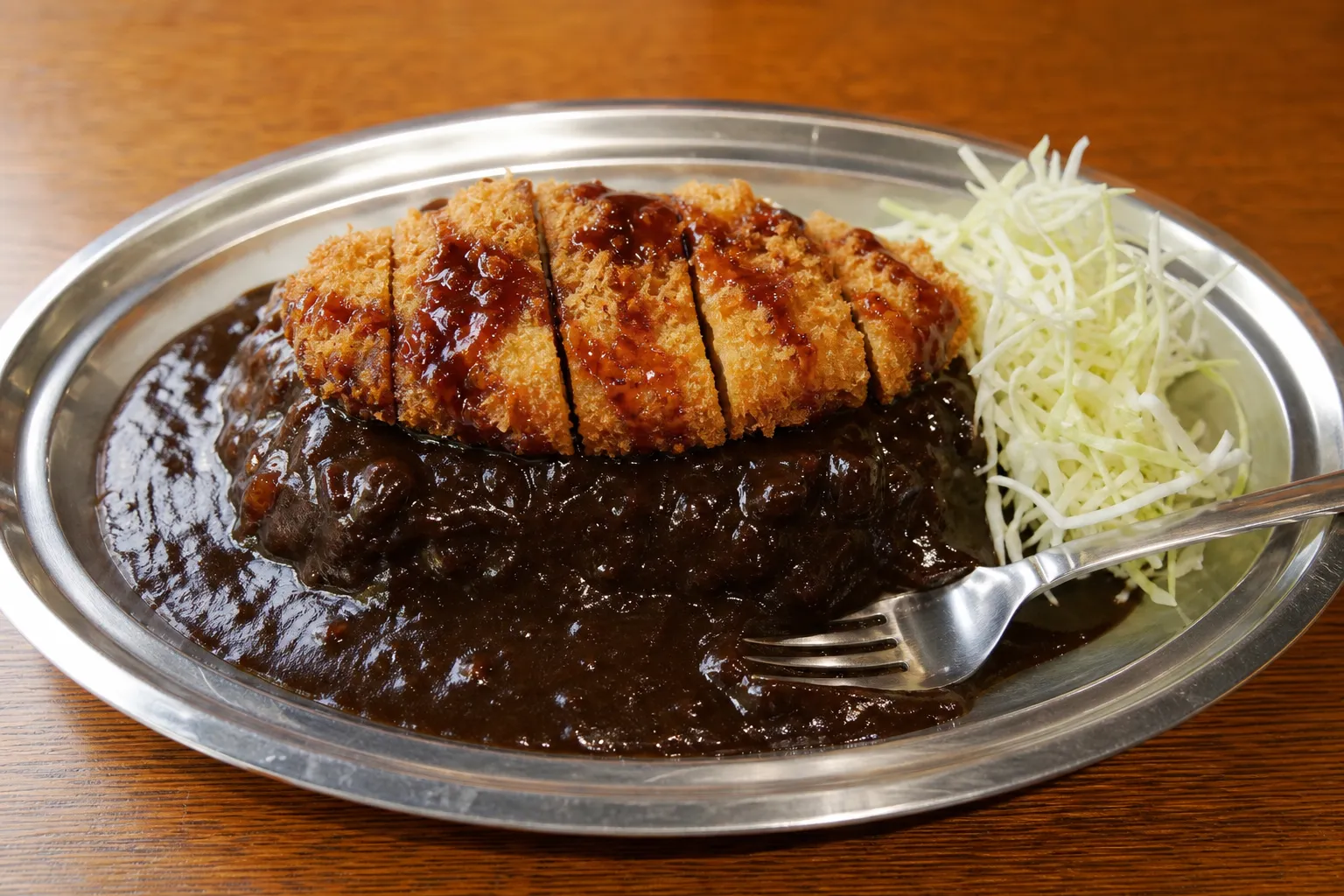
Local FoodKanazawa, Ishikawa
Kanazawa Curry (金沢カレー)
Curry so thick and dark it stands the fork up — served on a steel plate, crowned with a sauced-up katsu, cold cabbage on the side. Ishikawa's gloriously stubborn take on comfort food.
June 27, 2026