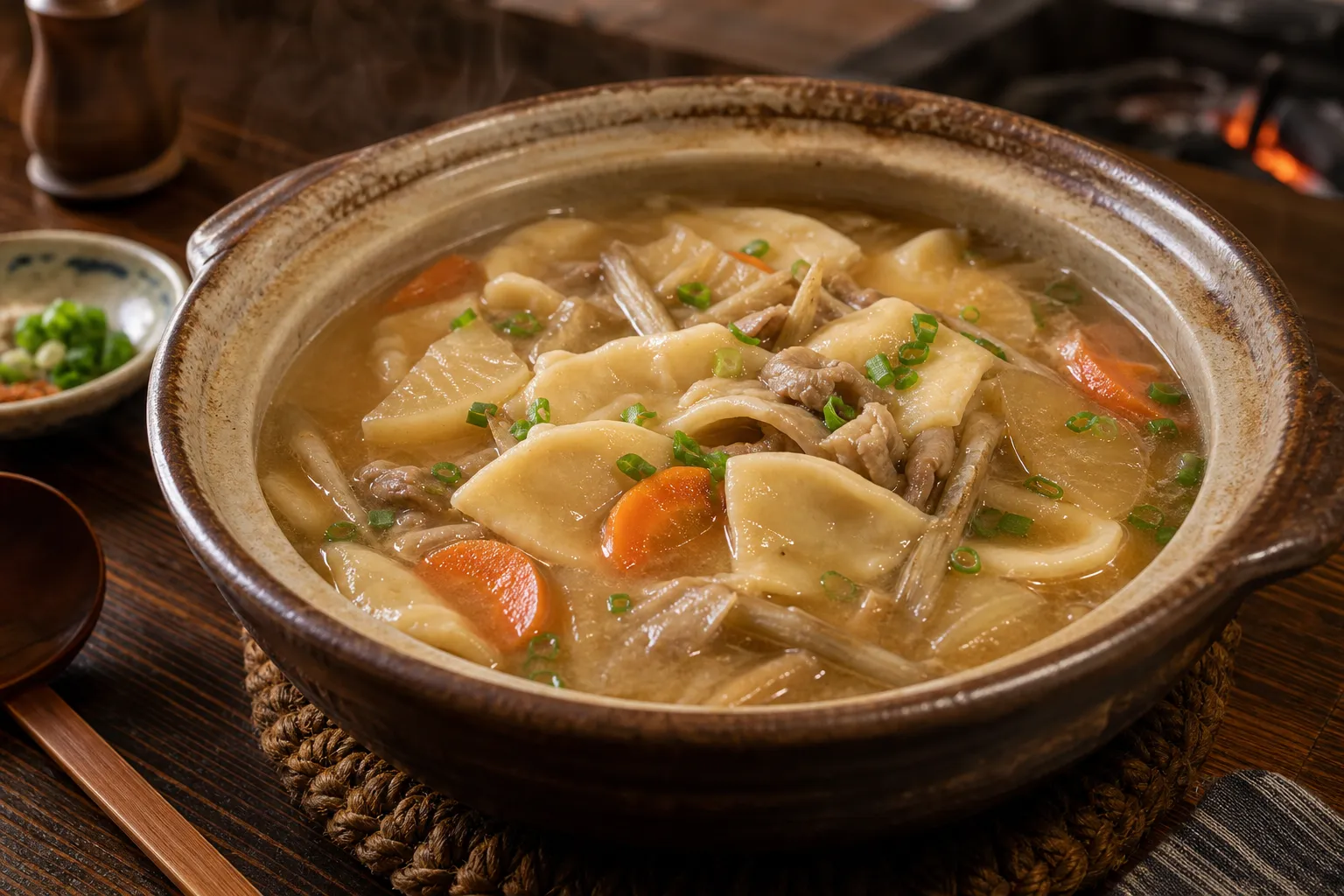
I came in from the cold half-frozen, ordered the thing the handwritten sign pushed hardest, and got a huge steaming earthenware bowl of cloudy miso broth with... dumplings that looked wrong. Not the neat round dango I expected. These were flat, stretched, slightly torn straps of dough, thick and glossy, sliding around chunks of daikon and carrot and burdock. I fished one out, bit down, and it was chewy — properly chewy, dense and satisfying — soaked through with miso. I stopped shivering somewhere around the third bite. By the bottom of the bowl I'd forgiven the weather entirely.
Share this dish


The dumplings weren't neat little balls — they were flat, torn-looking, chewy straps of dough sliding through miso broth, and one bowl on a cold day undid every knot in my shoulders.
🍜 Planning a food trip to Oita?Add this dish to my Food Trip →
 Add this dish to my Food Trip →
This is dagojiru (だご汁), the great farmhouse soup of Oita and Kumamoto in Kyushu. "Dago" is the local dialect word for dango — dumpling — but forget any image of sweet dessert dumplings on a skewer. These are savory, unsweetened wheat-flour dumplings, hand-pulled and stretched flat before they go in the pot, then simmered with hearty root vegetables in a miso or soy-dashi broth. It's the definition of soul food: cheap, filling, made from whatever's in the kitchen, and quietly perfect on a cold day.
Country cooking that never needed a recipe
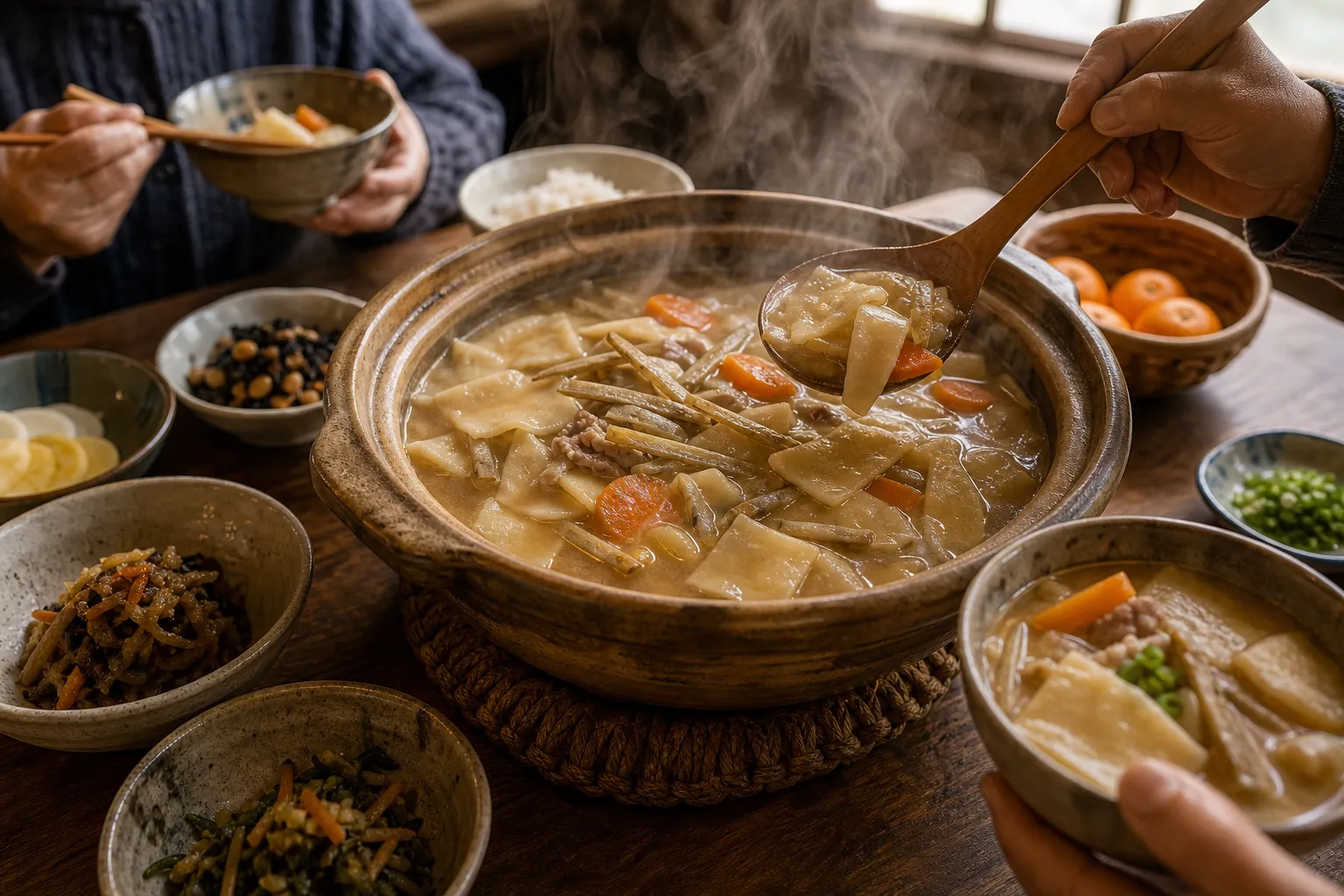
Dagojiru comes from exactly where it tastes like it comes from — Kyushu farm kitchens, where wheat flour and root vegetables were on hand and a hot, filling one-pot meal fed a working family with almost no money spent. You didn't need fancy ingredients. You needed flour, water, whatever vegetables were in the ground, some miso, and a big pot. That's it. That's the whole genius.
The dumplings tell you everything about the dish's honesty: you just mix flour and water into a dough, rest it, then tear off pieces and pull them flat with your hands straight into the broth — no mold, no precision, no two the same. I find this genuinely moving. It's food shaped by hands that had other work to do. Every region and honestly every household has its own version — thicker or thinner dumplings, miso or soy base, more or fewer vegetables — because it was never a restaurant recipe. It was just dinner.
Why a bowl of flour and vegetables works so well
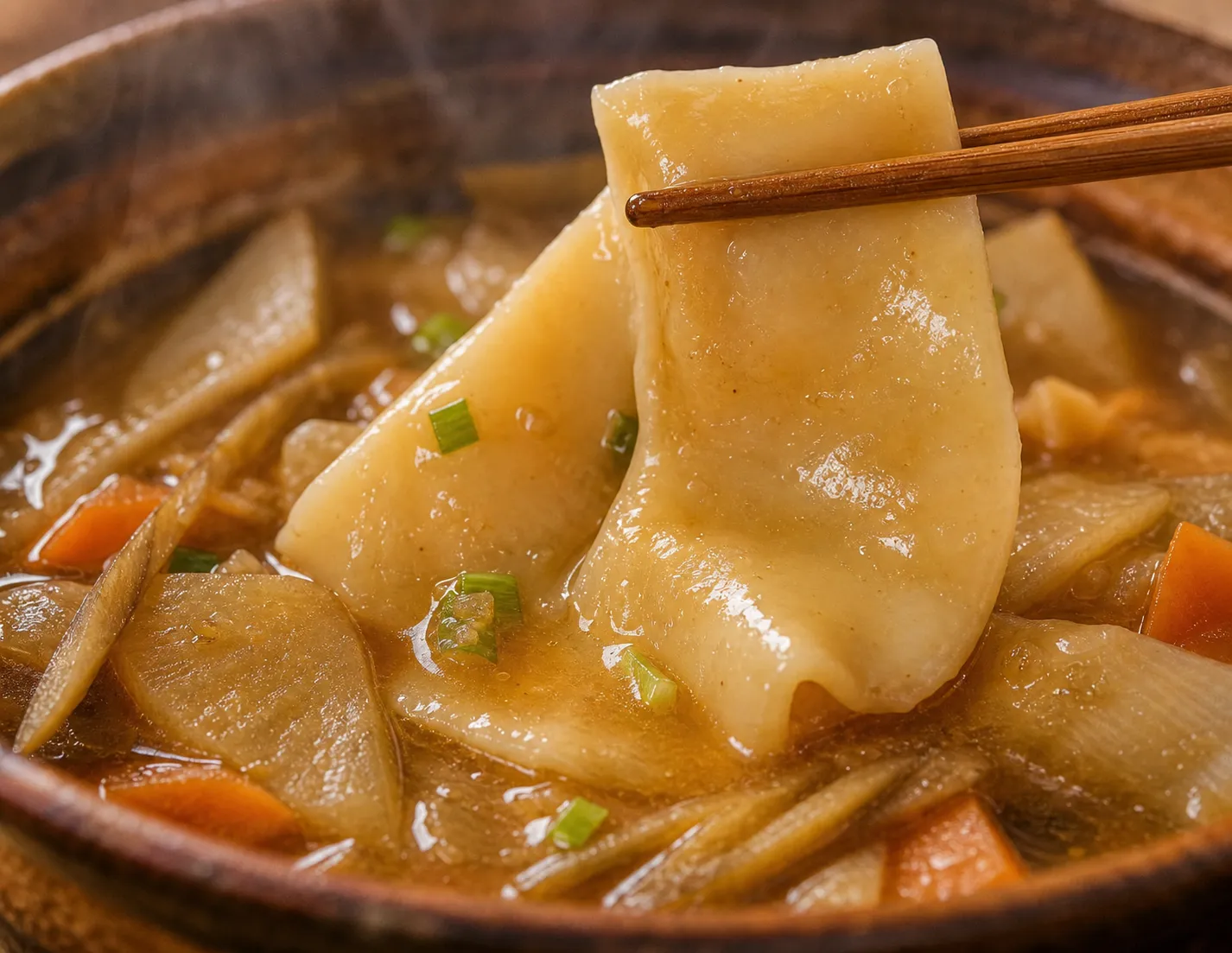
The magic is in the dumplings' texture. Because they're stretched flat and fairly thick, they cook up dense and deeply chewy — somewhere between a thick noodle and a proper dumpling, with real bite. They don't dissolve, they don't go mushy; they hold their own against the vegetables and soak up the broth like they were built for it. Which they were.
And the broth is doing comfort-food work at the highest level: root vegetables — daikon, carrot, burdock, sometimes sweet potato or taro — simmered until soft and sweet, their earthiness melting into a miso or soy base until the whole thing turns rich, cloudy, and warming. It's not delicate. It's not refined. It's a bowl that fills you up, warms you from the inside, and asks nothing of you. On a cold Kyushu day I could not imagine wanting anything else. I ate the whole bowl and eyed the pot. Twice.
How dagojiru gets made
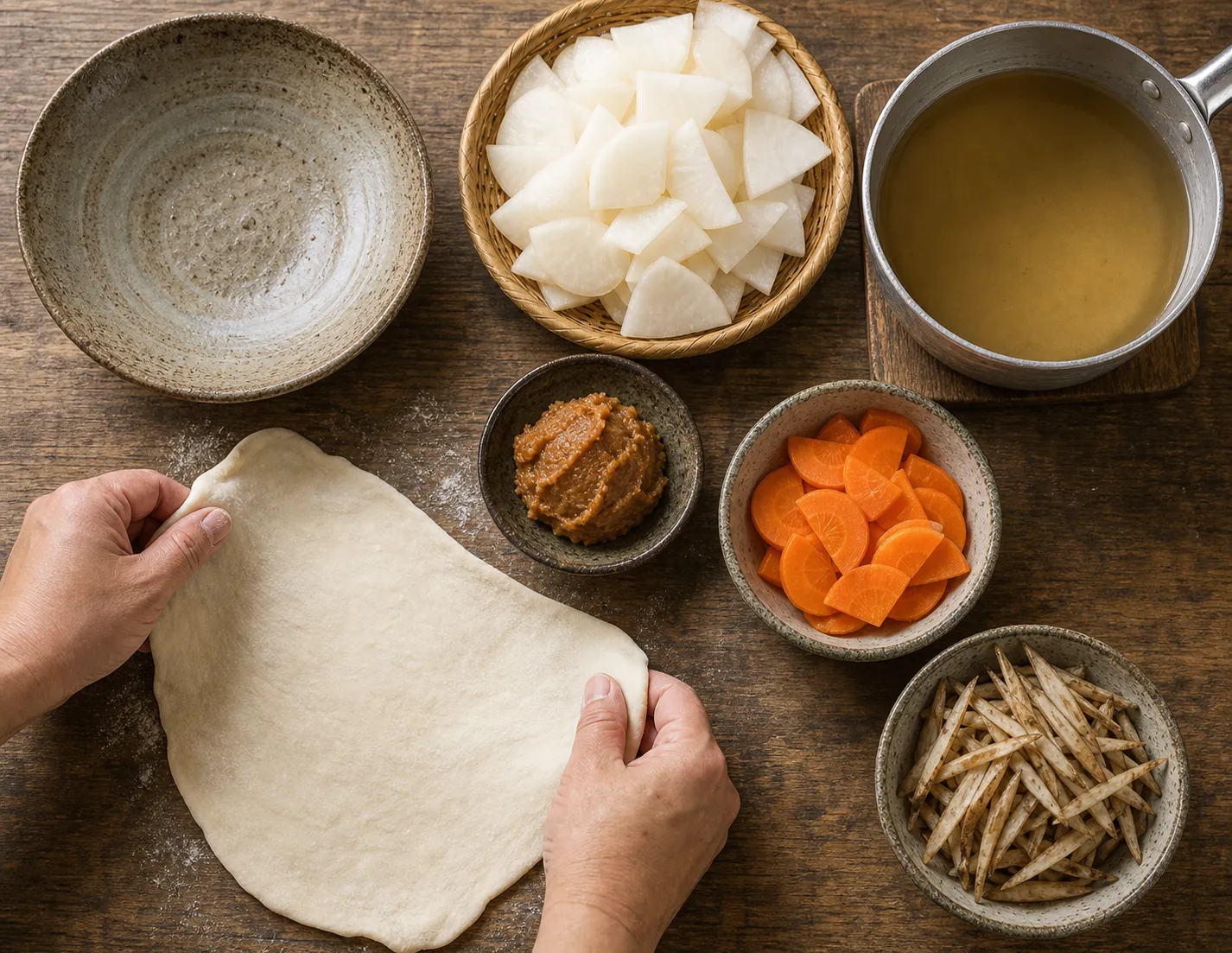
- Wheat flour is mixed with water (and often a pinch of salt) into a firm dough, then rested so it turns stretchy and elastic
- Root vegetables — daikon, carrot, burdock, sometimes sweet potato or taro — are cut into chunks and simmered in a dashi broth until they start to soften
- Pieces of dough are torn off and pulled flat by hand straight into the simmering pot, so each dumpling is thin-ish, wide, and irregular
- The dumplings simmer until cooked through and chewy, thickening the broth slightly as they release starch
- Miso (or soy sauce, depending on the region and household) is stirred in to finish, and it's served piping hot in a big bowl, often topped with green onion
Before you go — how to order it right
Your questions, answered honestly
"Are these the sweet dango on sticks?" — No, completely different. Those are dessert dumplings. Dagojiru's dago are savory, unsweetened, flat, and chewy, floating in miso soup. Same word, opposite dish.
"Is it like Yamanashi hoto?" — They're cousins but not twins. Hoto uses wide flat noodles in a squash-heavy miso soup. Dagojiru uses hand-torn dumplings — chunkier, chewier, more irregular. If you liked hoto, you'll like this, but don't expect the same thing.
"Is it a full meal or a starter?" — It's a meal. It's hearty and carb-heavy and genuinely filling. It's often served as a set with rice and pickles, which sounds like carb overload but is exactly what a cold, hungry day calls for.
"Miso or soy — which will I get?" — Depends entirely on the region and shop; both are traditional. Oita and Kumamoto each have their own leanings, and honestly both are great. Don't overthink it.
What the staff will ask you
| You'll hear | Romaji | Meaning | Just say |
|---|---|---|---|
| 単品にしますか、定食にしますか? | Tanpin ni shimasu ka, teishoku ni shimasu ka? | "Just the soup, or the set meal?" | Teishoku de onegaishimasu (the set, please) |
| ご飯は普通でいいですか? | Gohan wa futsū de ii desu ka? | "Regular-size rice okay?" | Hai, onegaishimasu (yes, please) |
| 温かいうちにどうぞ | Atatakai uchi ni dōzo | "Please eat it while it's hot" | Itadakimasu (thanks, digging in) |
To order, just say "Dagojiru o kudasai" (だご汁をください) — "Dagojiru, please."
Where to eat it
- Oita and Kumamoto Prefectures — country-style restaurants and set-meal spots across both prefectures serve dagojiru as a regional staple, especially in cooler months.
- Roadside stations (michi-no-eki) and farm restaurants in rural Kyushu — often the most homemade, hand-pulled versions, cooked the old way.
- Regional-cuisine restaurants in Oita city, Beppu, and Kumamoto city — reliable places to find it on a menu in town.
Recipes, broth base, and whether it comes as a set vary by shop and region, so check current details before you go — and go on a cold day if you can. Trust me on that.
Soul Score
Local Roots5/5
First-Timer Friendly4/5
Adventure Level3/5
Comfort Level5/5
Travel Worthy3/5
These scores are one obsessed eater's gut feeling — not a verdict. A low number isn't a bad mark, just a different kind of adventure.
Know someone planning Japan?
← All Articles
Local Food · Oita
Still hungry?
Eat more from Oita
Local FoodOita
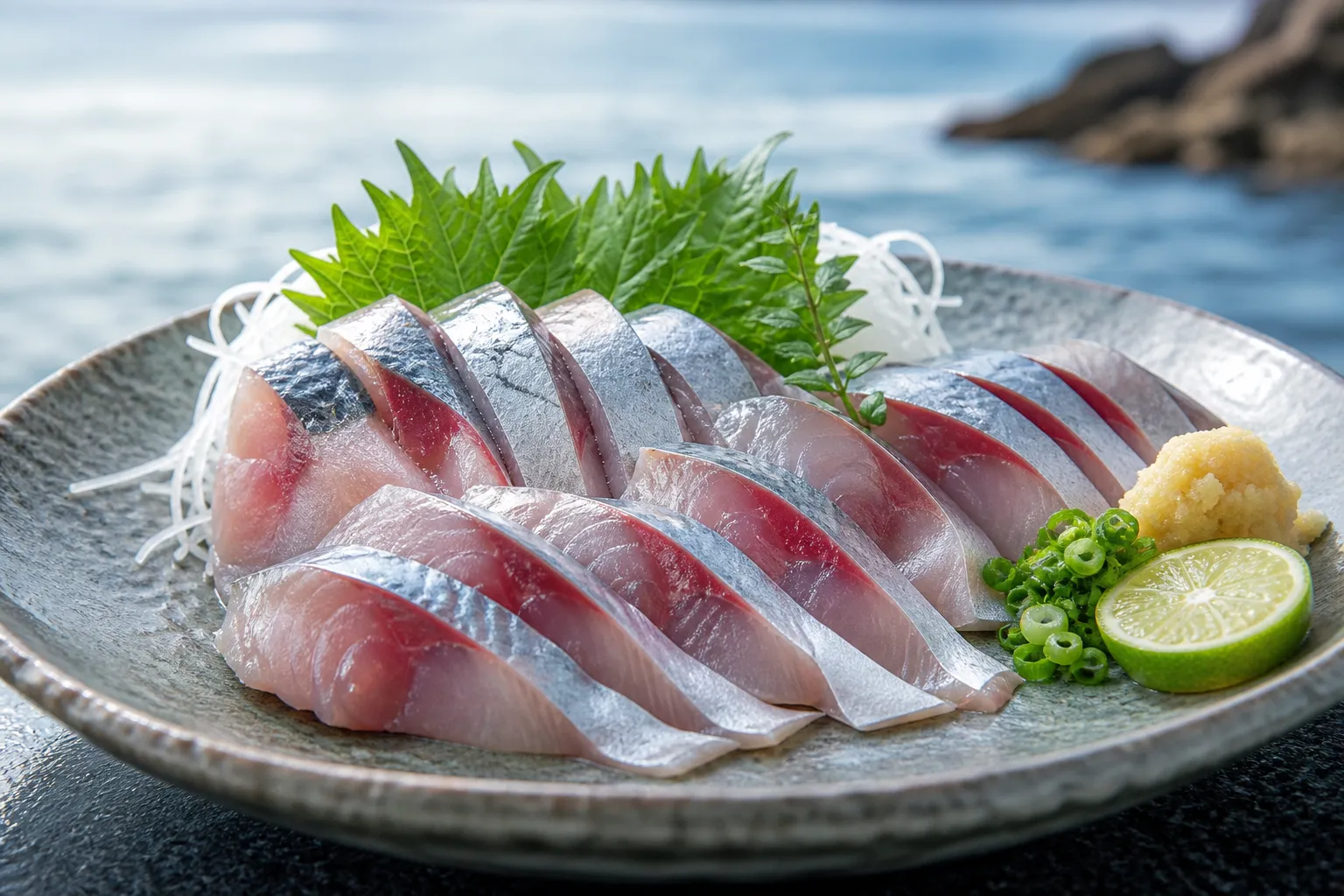
Seki-saba (関さば)
Mackerel — as sashimi. Glossy, firm, clean, and so ferociously fresh it breaks the one rule everyone thinks they know about mackerel: this brand-name fish from Oita's fast Bungo Channel is eaten raw, and it's a revelation.
July 12, 2026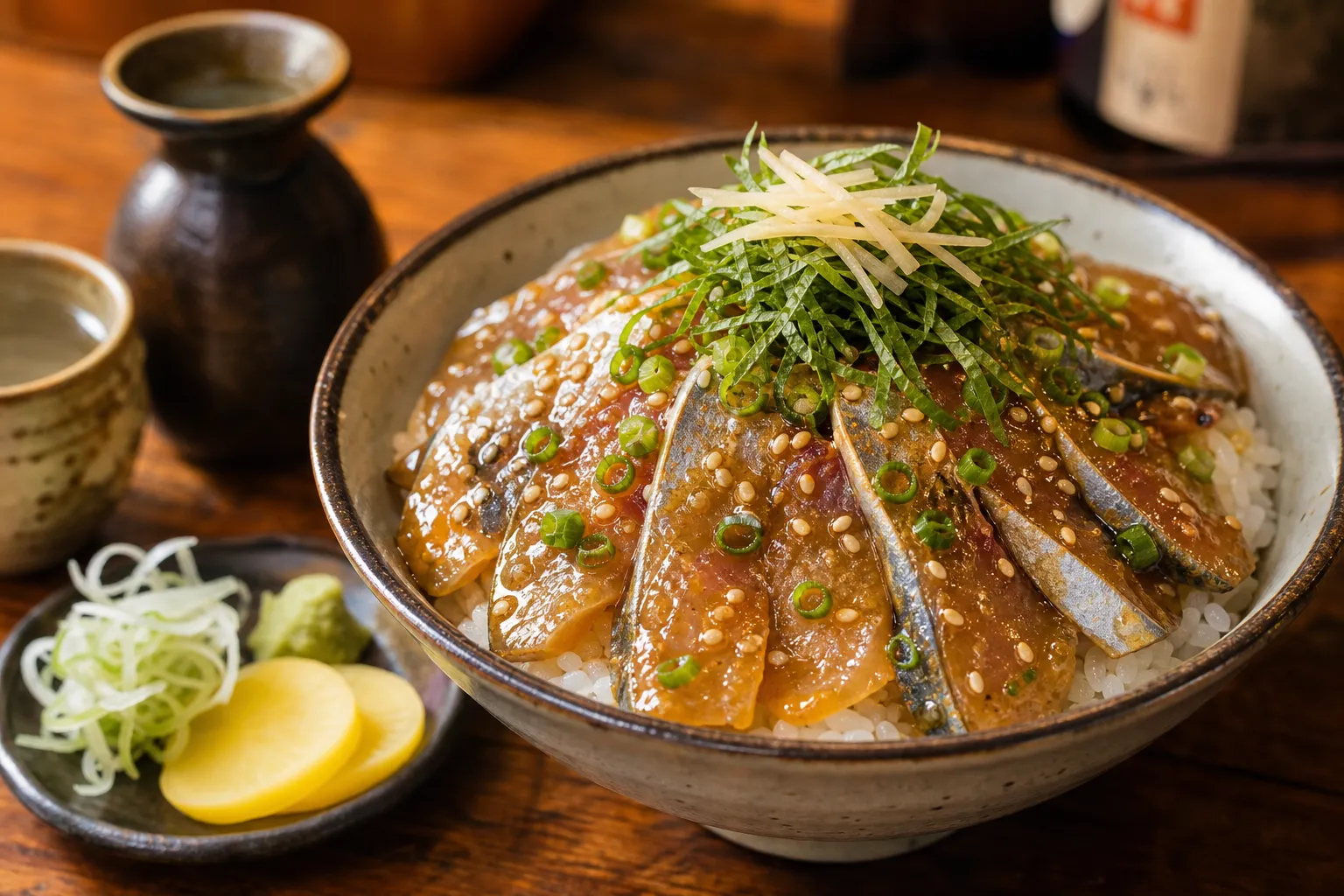
Local FoodOita
Ryukyu (りゅうきゅう)
I ordered it braced for plain sashimi and got fish that had been sitting in a soy-sesame marinade until it turned silky and deep — then someone poured hot tea over the leftovers and somehow it got even better.
July 5, 2026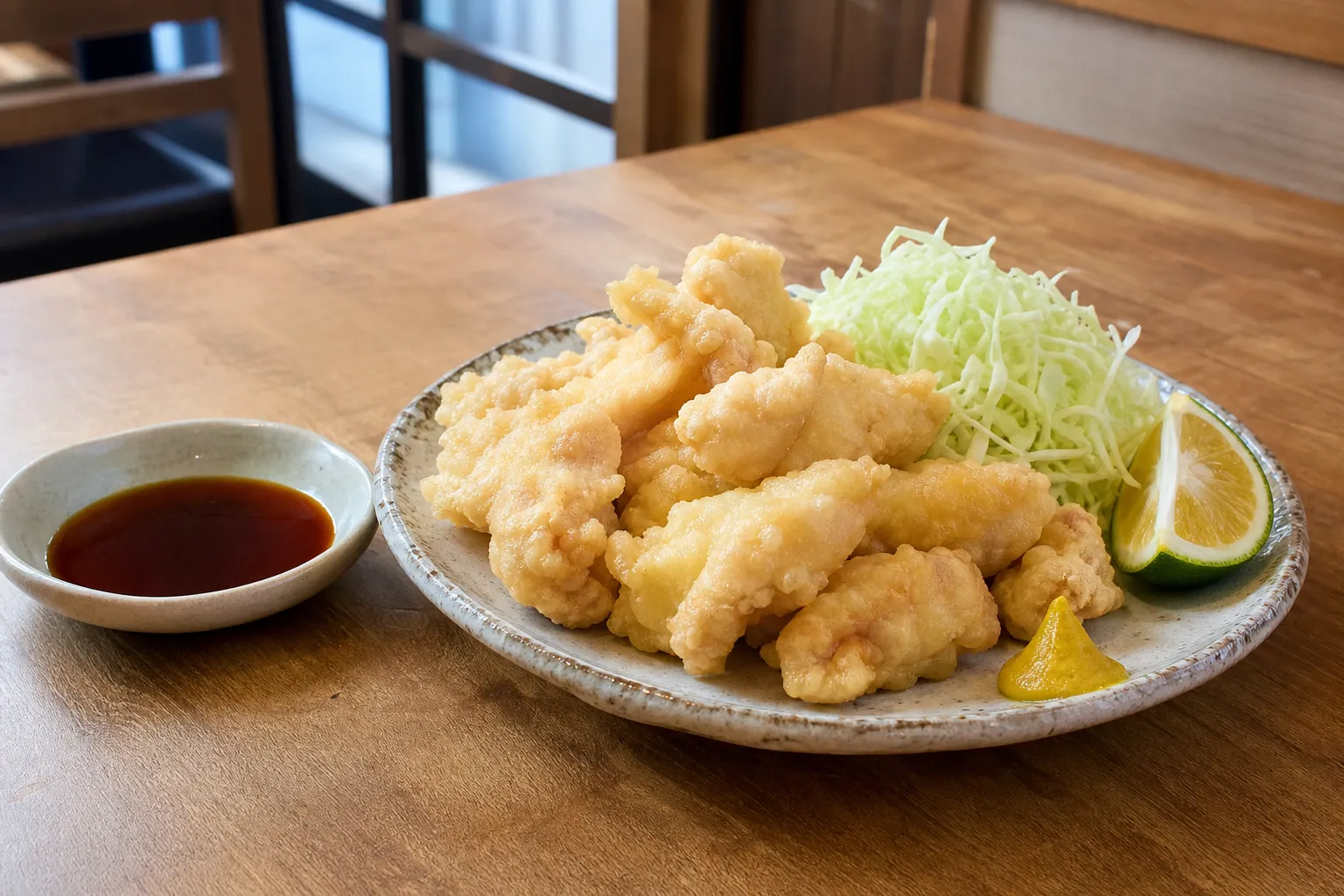
Local FoodOita, Oita
Toriten (とり天)
I bit in expecting karaage and got something else entirely — a cloud-light tempura coating, juicy chicken, and a splash of citrus-soy ponzu. This is Oita's chicken tempura, and it deserves to be as famous as its fried cousin.
June 28, 2026