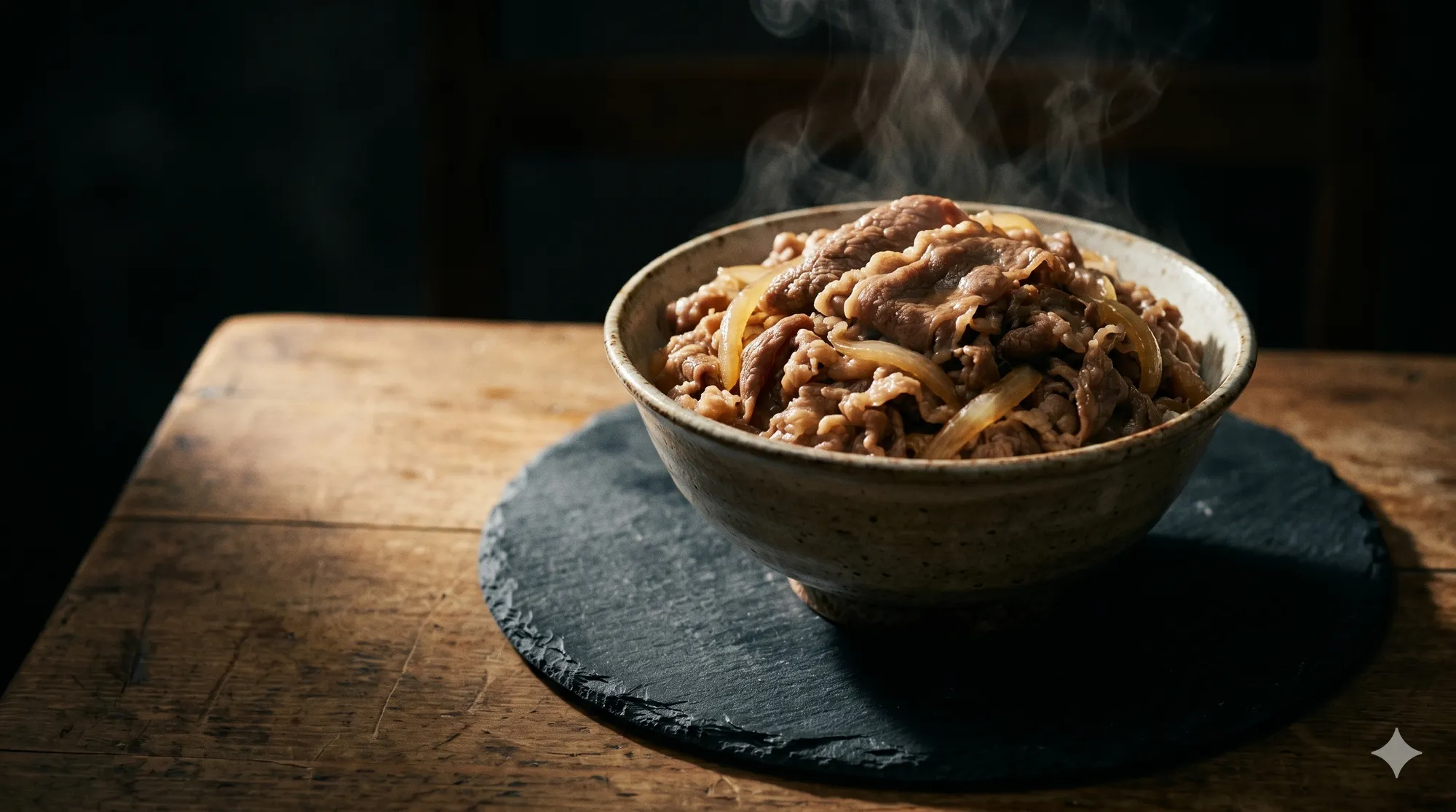
It's almost three in the morning, you're hungry and a little wrecked, and the orange sign down the street is still glowing. You sit at the counter and barely ninety seconds later a bowl lands in front of you — thin-sliced beef and onion simmered glossy and silky in a sweet-and-savory broth of soy, mirin, dashi, and a little sugar, ladled hot over rice — and it costs about the same as a coffee. And here's the thing nobody warns you about: it isn't just fast and cheap, it's genuinely, surprisingly delicious. This is the bowl that feeds Japan.
Share this dish


Thin-sliced beef and onion simmered in sweet-savory broth, piled over a bowl of hot rice. Fast, cheap, served in minutes, open all night — the working hero of the Japanese diet, and shockingly good.
🍜 Planning a food trip to Japan?Add this dish to my Food Trip →
 Add this dish to my Food Trip →
The beef is sliced paper-thin so it soaks up the broth and the onions go silky and sweet. A perfect gyudon is glossy, a little soupy, the rice underneath catching all that flavor. Add a raw egg, some red pickled ginger, a dash of seven-spice, and you've got one of the best cheap meals on earth.
How three chains conquered a nation
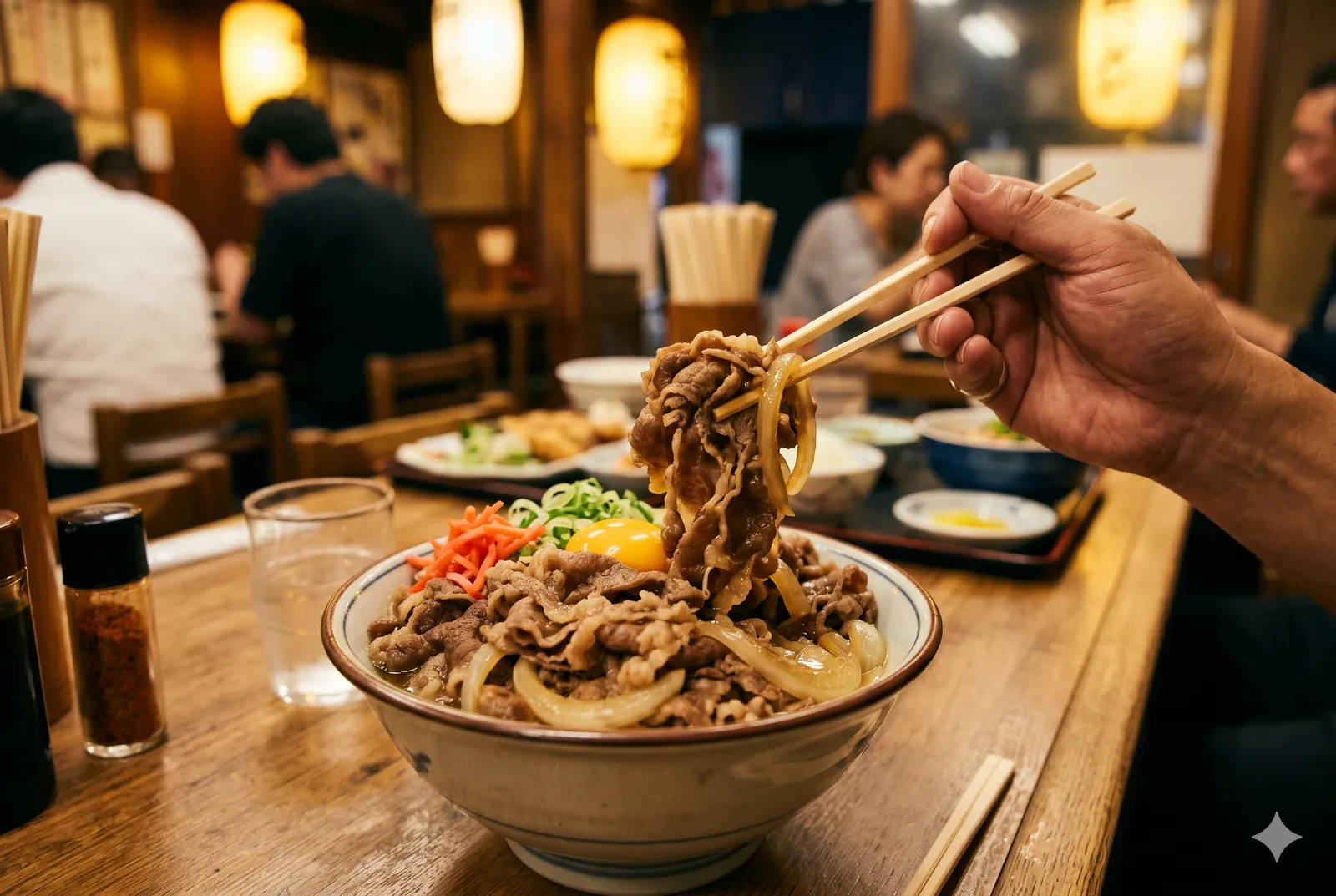
Gyudon was born in the late 1800s as gyūmeshi ("beef rice"), an early taste of beef in a country that had barely eaten it for centuries. It exploded in the 20th century thanks to a handful of chains — Yoshinoya, Sukiya, and Matsuya — who turned it into Japan's ultimate fast food: cheap, instant, open 24 hours, and weirdly comforting.
Yoshinoya (orange sign) is the original purist. Sukiya (red) has the widest menu and toppings. Matsuya (yellow/blue) gives you free miso soup and uses ticket machines. The friendly rivalry between them is a national pastime, and locals have opinions.
Why it works so well
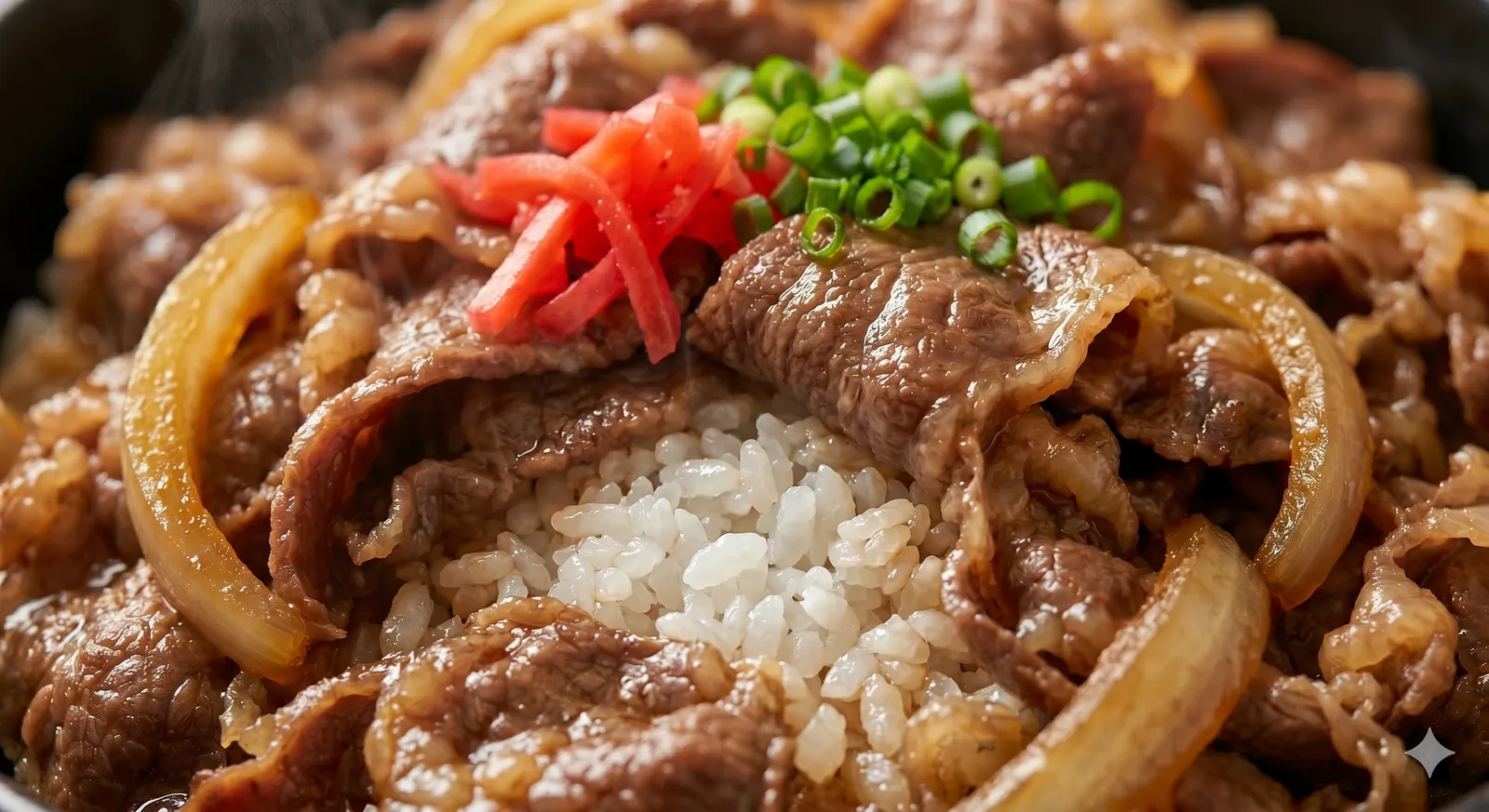
The genius is the broth-soaked beef-and-onion combo over rice. The thin beef cooks in seconds and drinks up the tare (sweet-savory sauce); the onions melt down sweet; the rice catches the runoff. It's salty, sweet, fatty, and satisfying in a way that hits every comfort button at once — for about ¥400.
It's also endlessly customizable: top it with a soft onsen egg, melted cheese, kimchi, grated yam, or extra negi. The base bowl is perfect; the toppings make it yours.
How it's made
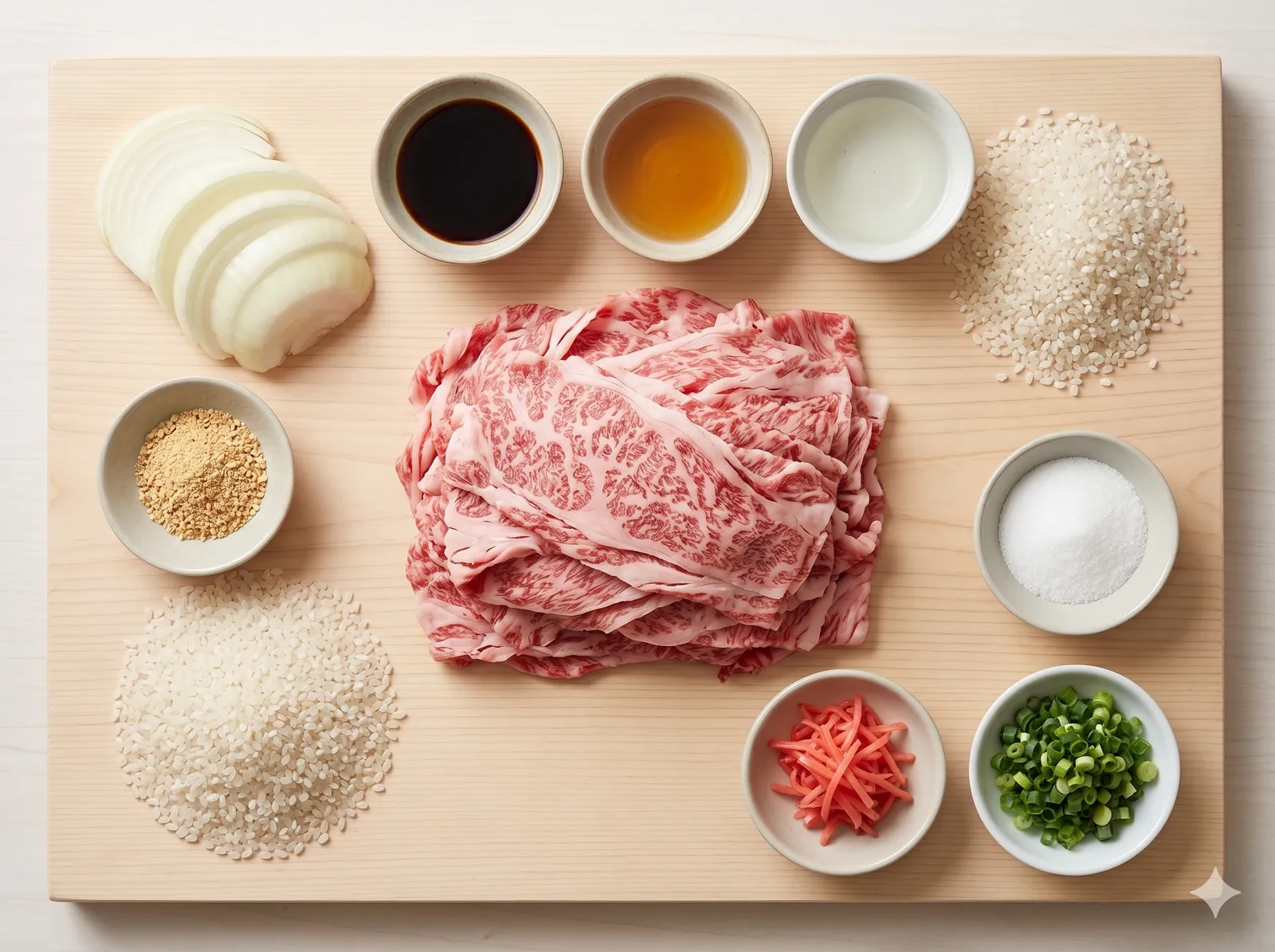
- Simmer thinly sliced beef and onion in a broth of dashi, soy sauce, mirin, sake, and sugar
- Cook just until the beef is done and the onion turns soft and sweet
- Pile a generous serving of hot rice in a bowl
- Ladle the beef, onion, and some of the broth over the rice
- Top with red pickled ginger (beni shoga) and, if you like, a raw or onsen egg
Before you go — order at the machine and dig in
Your questions, answered honestly
"Which chain should I try?" — Start with Yoshinoya for the classic, or Sukiya for the most variety (cheese gyudon, kimchi gyudon). You can't go wrong — try a couple and pick a side.
"What size?" — Nami (regular) is plenty. Ō-mori (large) and tokumori (extra-large) exist for big appetites. Most chains also let you order extra beef (tsuyudaku = extra broth).
"What do I add?" — A raw or onsen egg to swirl in is the classic move. Red pickled ginger and shichimi (seven-spice) are free on the table — pile them on.
"Tsuyudaku?" — Say tsuyudaku (つゆだく) if you want it extra saucy, tsuyunuki if you want it drier. A small power move.
"Ticket machine?" — Matsuya and many shops use a vending machine: insert cash, press your bowl + toppings, hand the ticket over. Yoshinoya/Sukiya usually take your order at the counter or table.
What the staff will ask you
| You'll hear | Romaji | Meaning | Just say |
|---|---|---|---|
| サイズは? | Saizu wa? | "What size?" | Nami de (regular) / Ō-mori (large) |
| 店内ですか、お持ち帰り? | Tennai desu ka, omochikaeri? | "Eat in or takeout?" | Tennai de (eat in) / Mochikaeri (takeout) |
| トッピングは? | Toppingu wa? | "Any toppings?" | Tamago kudasai (an egg, please) |
| セットにしますか? | Setto ni shimasu ka? | "Make it a set?" | Hai (with miso soup & salad) |
To order, just say "Gyudon nami hitotsu kudasai" (牛丼並一つください) — "one regular beef bowl, please."
Where to eat it
- Yoshinoya / Sukiya / Matsuya — the big three, on practically every corner and near every station. Open late or 24h.
- Try all three and settle the great national debate for yourself.
Chains are reliably open and cheap nationwide — this is your go-to for a fast, late, or budget meal.
Soul Score
Local Roots3/5
First-Timer Friendly5/5
Adventure Level3/5
Comfort Level5/5
Travel Worthy3/5
These scores are one obsessed eater's gut feeling — not a verdict. A low number isn't a bad mark, just a different kind of adventure.
Know someone planning Japan?
← All Articles
Japanese Food · Nationwide
Still hungry?
Start with the classics
Japanese FoodNationwide
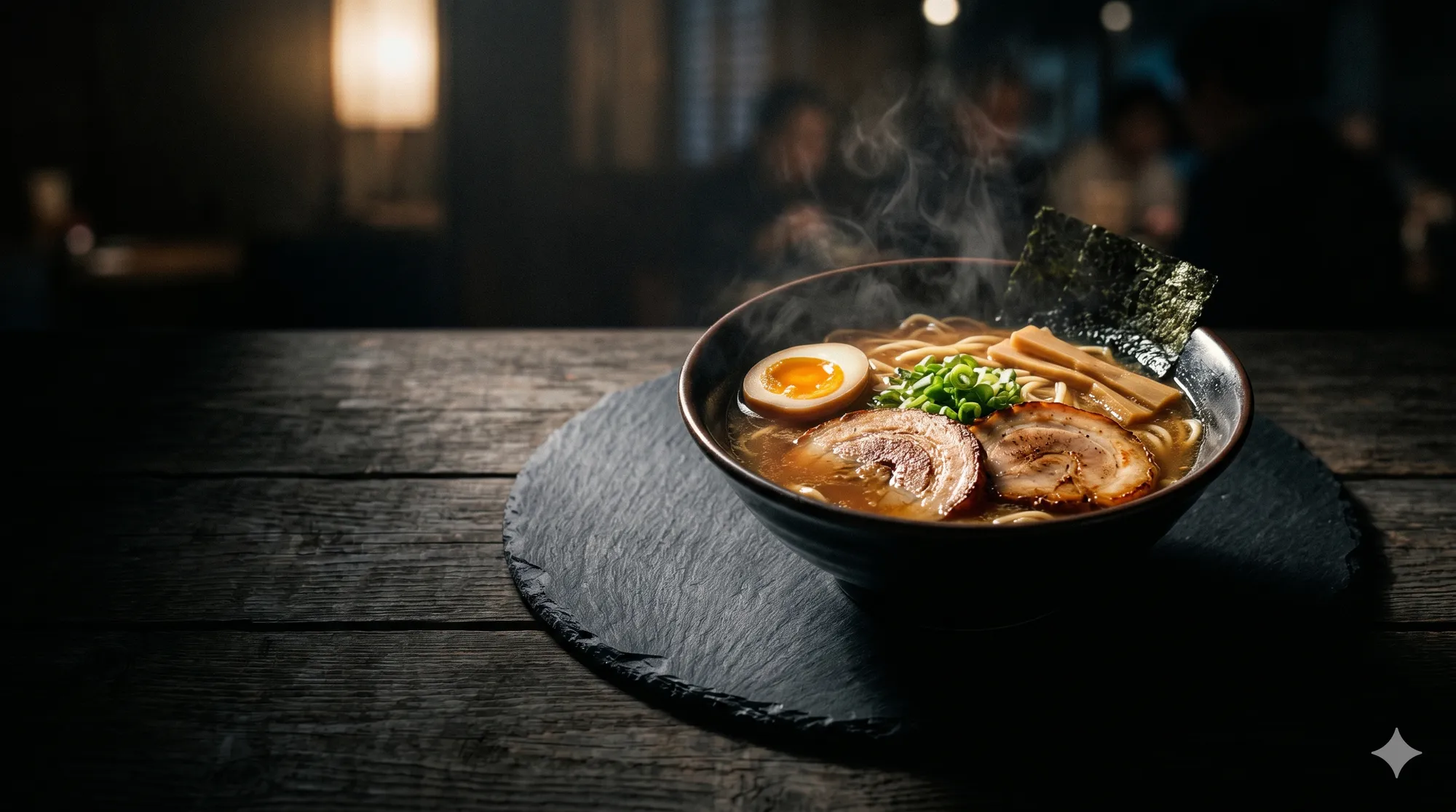
Ramen (ラーメン)
A bowl of noodles in soup — and somehow one of the most obsessed-over foods on the planet. Shoyu, miso, shio, tonkotsu: here's how to read a ramen menu and slurp like you mean it.
June 20, 2026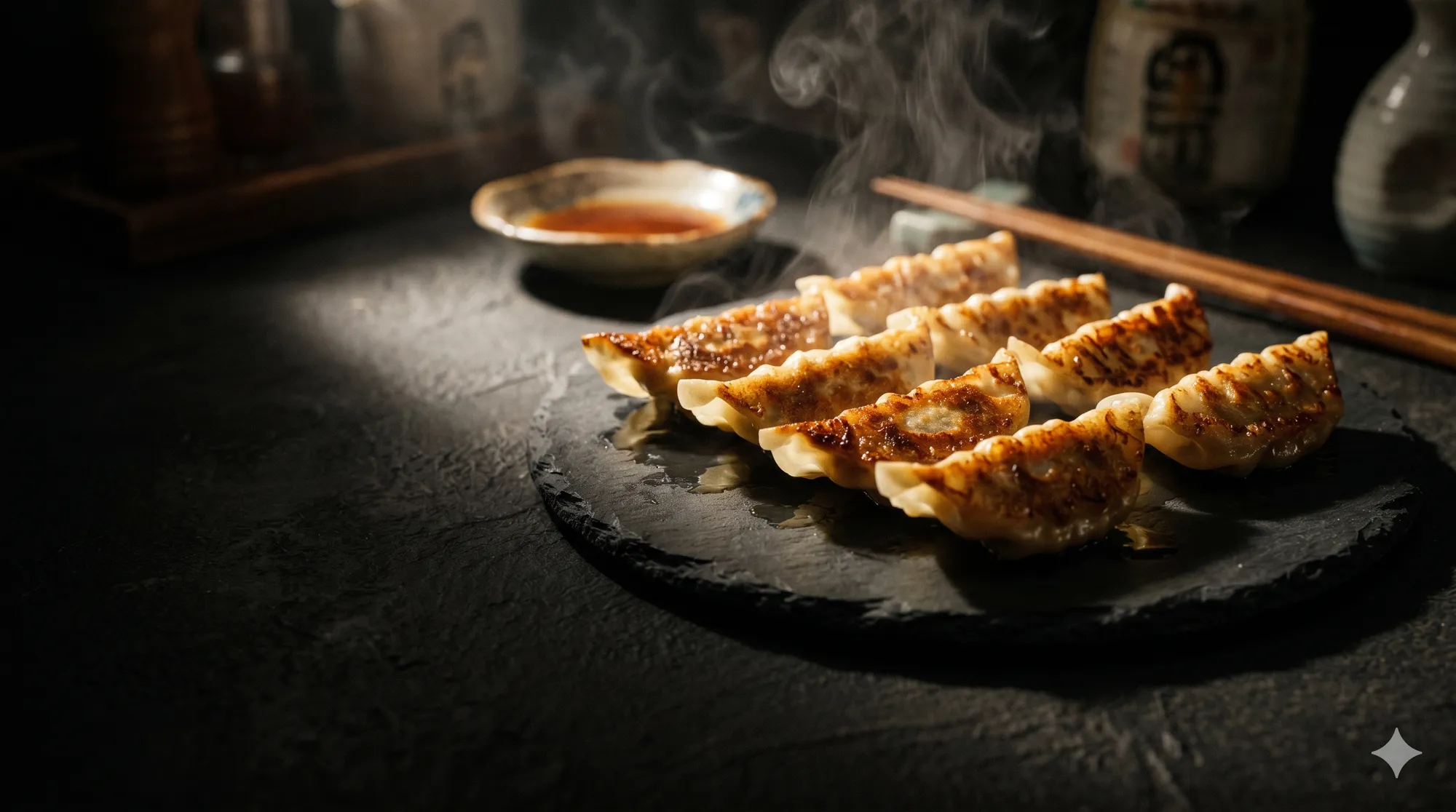
Japanese FoodNationwide
Gyoza (餃子)
Pan-fried dumplings with a crispy bottom and a juicy pork-and-cabbage filling, dunked in vinegar-soy-chili. The ultimate ramen sidekick, the izakaya staple, and the snack nobody can stop eating.
June 20, 2026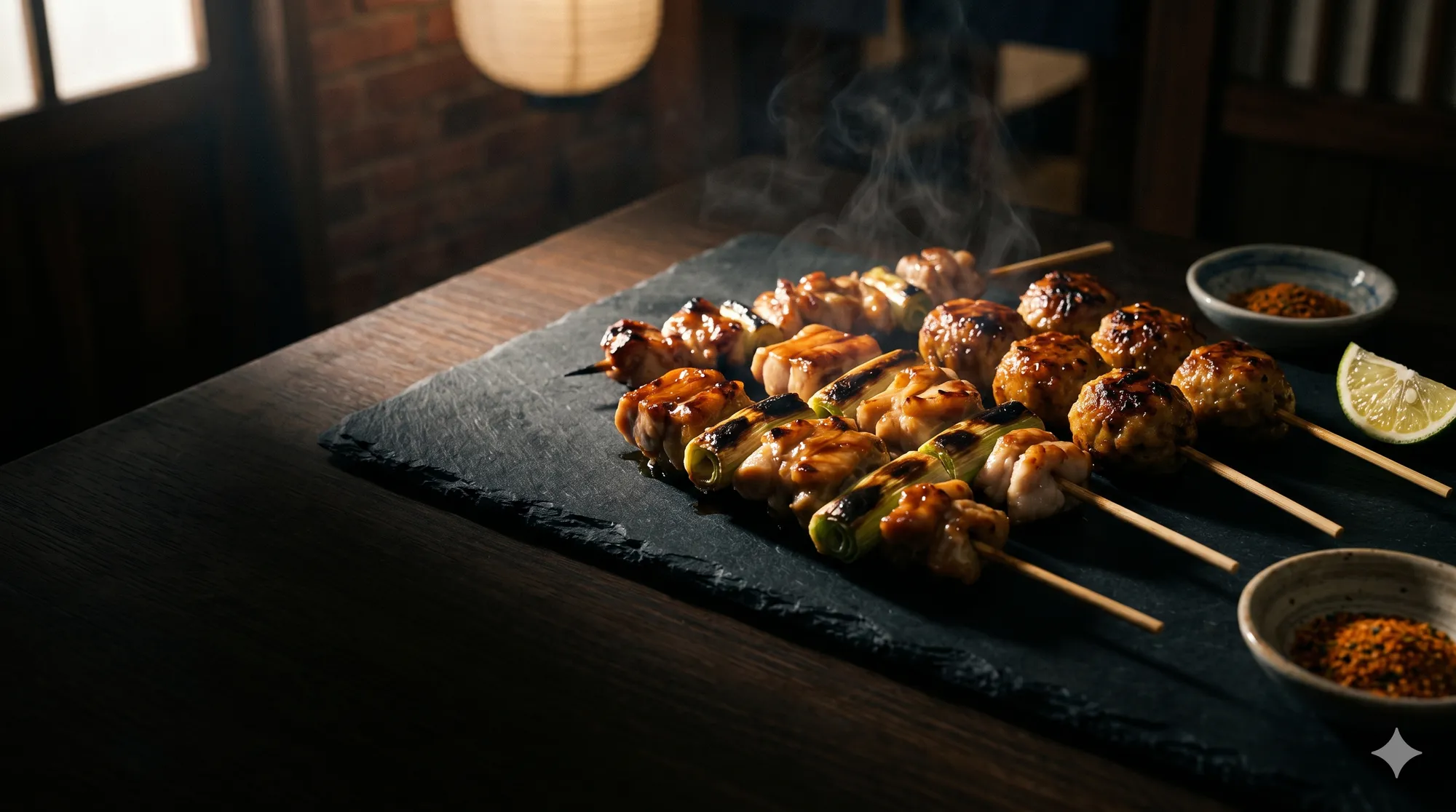
Japanese FoodNationwide
Yakitori (焼き鳥)
Bite-sized skewers of chicken grilled over blazing charcoal, seasoned with just salt or a sweet-savory tare. The beating heart of the izakaya, smoke and beer included. Nose-to-tail, and all of it good.
June 20, 2026