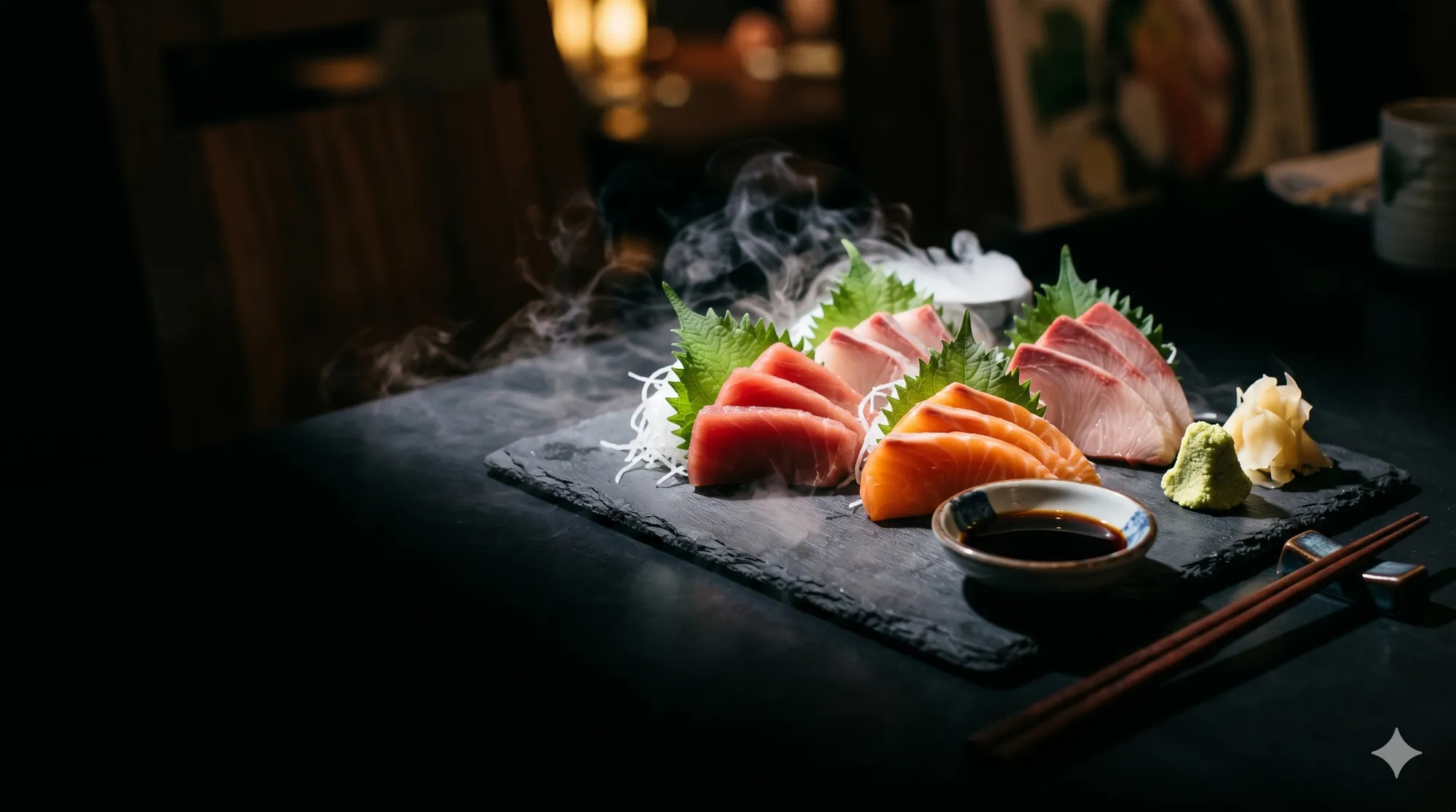
Sashimi terrifies a lot of people, and I get it. Raw fish? Just… raw fish? But here's what I want you to understand: sashimi is the most confident food in Japan, because it has absolutely nowhere to hide.
Share this dish


Raw fish, sliced with a blade and a lifetime of skill, served with nothing to hide behind. The purest, most honest, most quietly thrilling thing in all of Japanese cuisine.
No sauce to mask it, no heat to transform it, no clever technique to distract you. Just a perfect piece of fish, sliced by someone who's spent years learning exactly how, melting on your tongue. When it's right — a slice of fatty tuna that dissolves into sweetness, a piece of sea bream that's clean and firm and faintly sweet — it's one of the most thrilling things you'll ever eat. This is Japanese cuisine stripped to its soul: the best ingredient, treated with total respect, and trust that simplicity is enough.
A thousand years of "leave it alone"
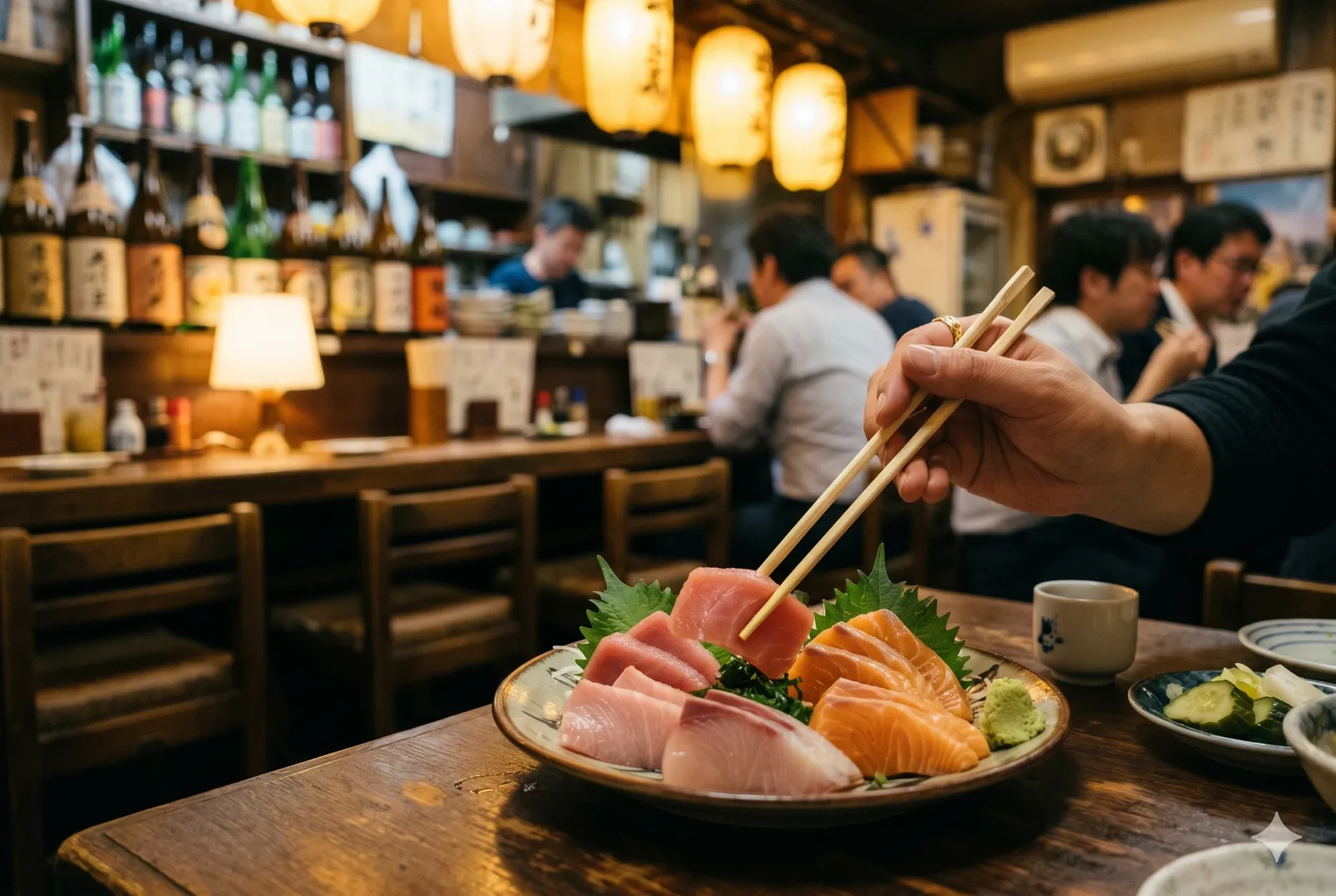
Sashimi goes back to the Heian period (794–1185), when nobles ate fresh fish with seasonings. The very name comes from an old habit of leaving the fish's tail or fin "stuck" (sashi) to the slices so diners could tell what they were eating. Centuries of obsessive refinement later, it's become a quiet art form — and a national point of pride about freshness and care.
Why it's harder than it looks
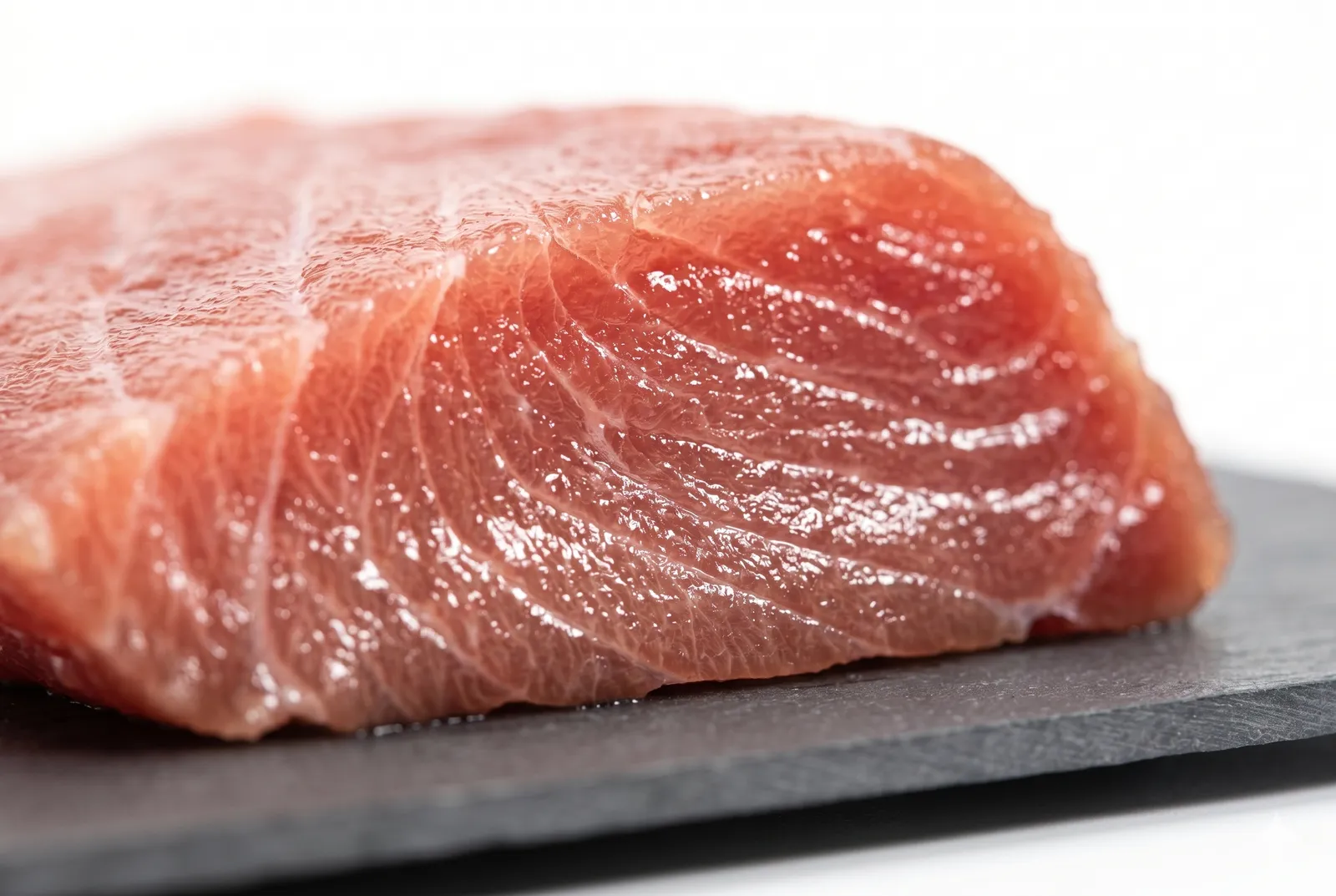
Sashimi is fresh seafood, thinly sliced and served raw — tuna, sea bream, salmon, squid, each with its own texture and sweetness. But "just slicing fish" is doing enormous work: the knife, the angle, the thickness, the presentation all matter. A great slice has clean edges and a glossy sheen; a careless one falls apart. It's typically served with wasabi, pickled ginger, and soy.
How it's prepared
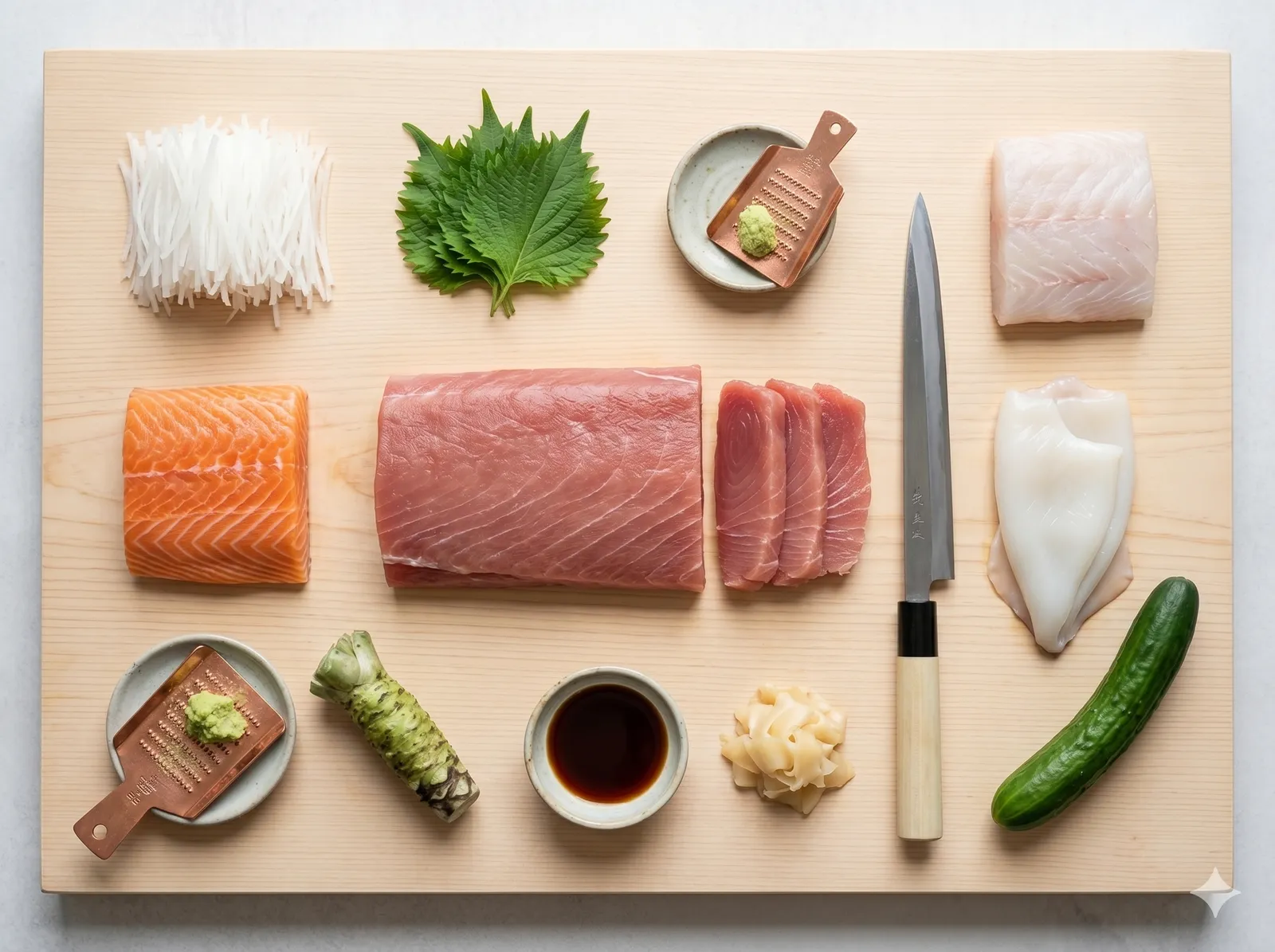
It takes skill and a frightening amount of precision:
- Source impeccably fresh fish and clean it thoroughly
- Use a long, single-bevel sashimi knife to slice in one smooth pull
- Choose the technique for the fish: hira-zukuri (clean rectangular slices) or usu-zukuri (paper-thin)
- Plate it like a small landscape, with shredded daikon and shiso
That single-pull cut is everything. Saw at the fish and you crush the flesh; pull cleanly and you get that mirror-smooth surface that makes good sashimi shine.
Before you go — eat it like you respect it
Your questions, answered honestly
"Do I mix the wasabi into the soy sauce?" — Purists say no — put a tiny dab of wasabi on the fish, then dip lightly in soy. Mixing it into a green slurry is common and nobody will scold you, but try it the clean way once; you'll taste more.
"How much soy sauce?" — Barely any. A light touch on one edge. Drowning a delicate slice in soy is like turning up a whisper to a shout — you lose the whole point.
"What's the pickled ginger for?" — Gari is a palate cleanser between different fish, not a topping. Eat a little to reset, then move to the next kind.
"Which fish should a beginner start with?" — Maguro (tuna) and salmon are friendly, clean, and crowd-pleasing. Then graduate to tai (sea bream) and the rich, melting wonder of otoro (fatty tuna belly). That one converts skeptics.
What the staff might ask you
| You'll hear | Romaji | Meaning | Just say |
|---|---|---|---|
| 本日のおすすめは○○です | Honjitsu no osusume wa ○○ desu | "Today's recommendation is ___" | Sore o kudasai (I'll have that) |
| 盛り合わせにしますか? | Moriawase ni shimasu ka? | "An assorted platter?" | Hai, onegaishimasu (yes please) |
| わさびは大丈夫ですか? | Wasabi wa daijōbu desu ka? | "Is wasabi okay?" | Hai (yes) / Sukuname de (just a little) |
To order, just say "Sashimi no moriawase kudasai" (刺身の盛り合わせください) — "An assorted sashimi platter, please."
Where to eat it
- Toyosu Market (and the old Tsukiji outer market), Tokyo — for the freshest cuts on earth, eaten steps from where they're landed
- Any quality sushi bar or traditional Japanese restaurant nationwide — sashimi is everywhere good fish is
- Coastal towns and fishing ports — often the best and most affordable, straight off the boats
Market hours and shops change, so check before you go — and when in doubt, ask the chef what's best today. That's the whole secret.
Soul Score
Local Roots5/5
First-Timer Friendly3/5
Adventure Level4/5
Comfort Level3/5
Travel Worthy4/5
These scores are one obsessed eater's gut feeling — not a verdict. A low number isn't a bad mark, just a different kind of adventure.
Know someone planning Japan?
← All Articles
Japanese Food · Nationwide
Still hungry?
You might also like
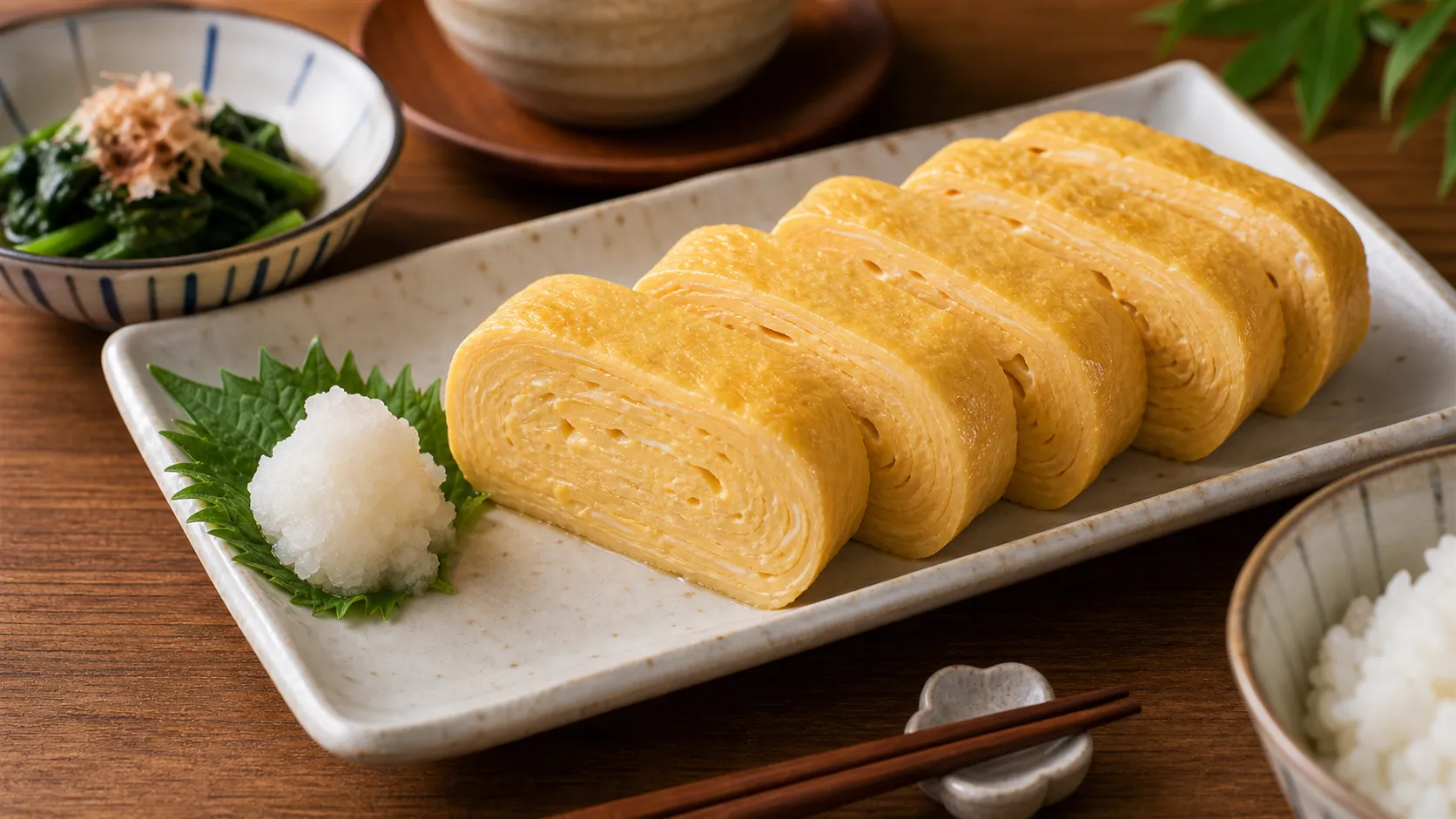
Japanese FoodNationwide
Dashimaki-tamago (だし巻き卵)
A rolled omelette so soft it almost trembles, layered fold over fold and soaked with dashi so that biting in releases a little warm rush of savory broth — the deceptively simple egg dish that Japanese chefs spend years perfecting.
July 11, 2026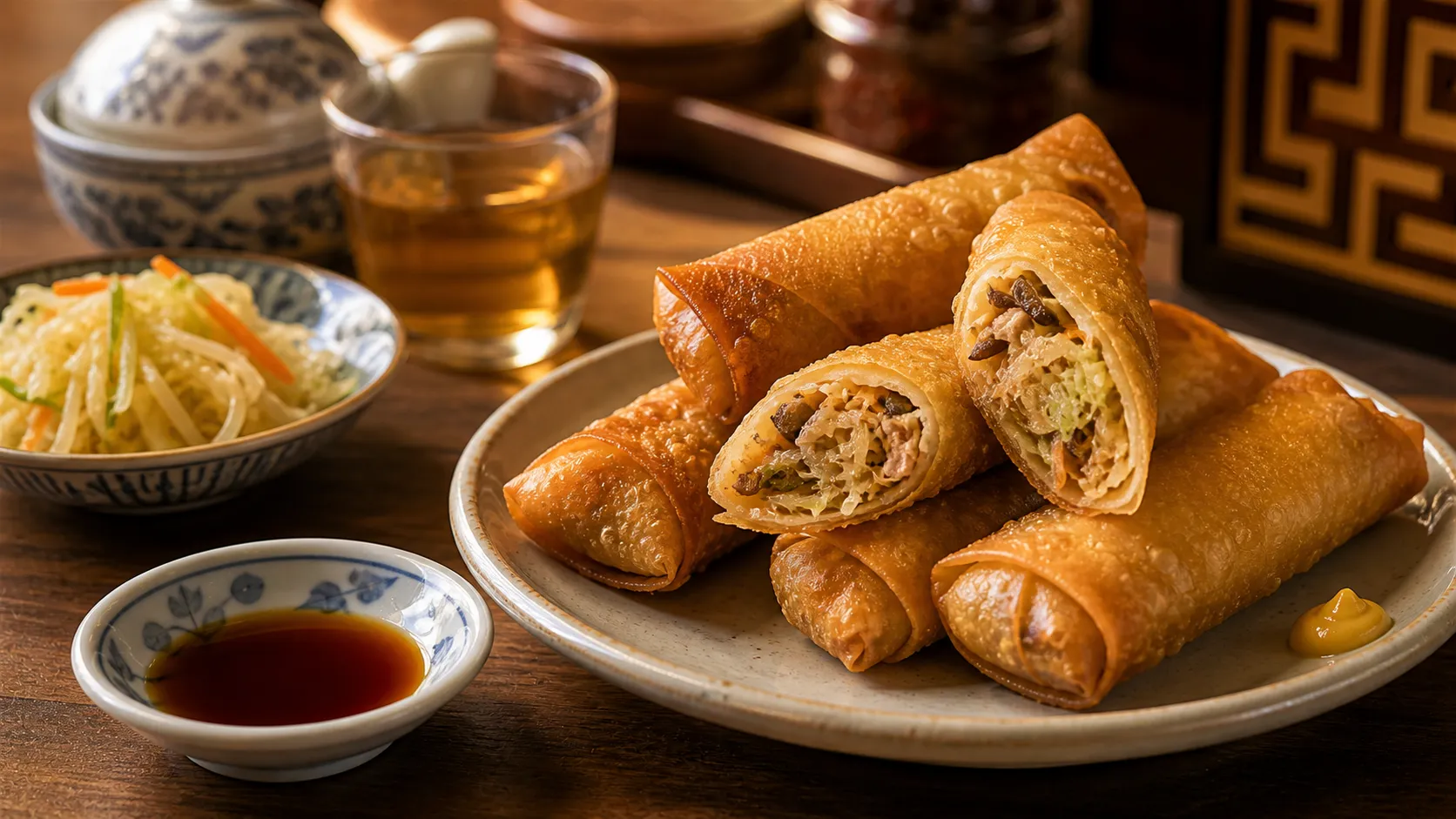
Japanese FoodNationwide
Harumaki (春巻き)
The Japanese spring roll — a shatteringly crisp golden tube that gives way to a hot, savory tangle of pork, cabbage and bamboo shoot, best eaten the second it's cool enough not to burn your mouth (you will not wait that long).
July 11, 2026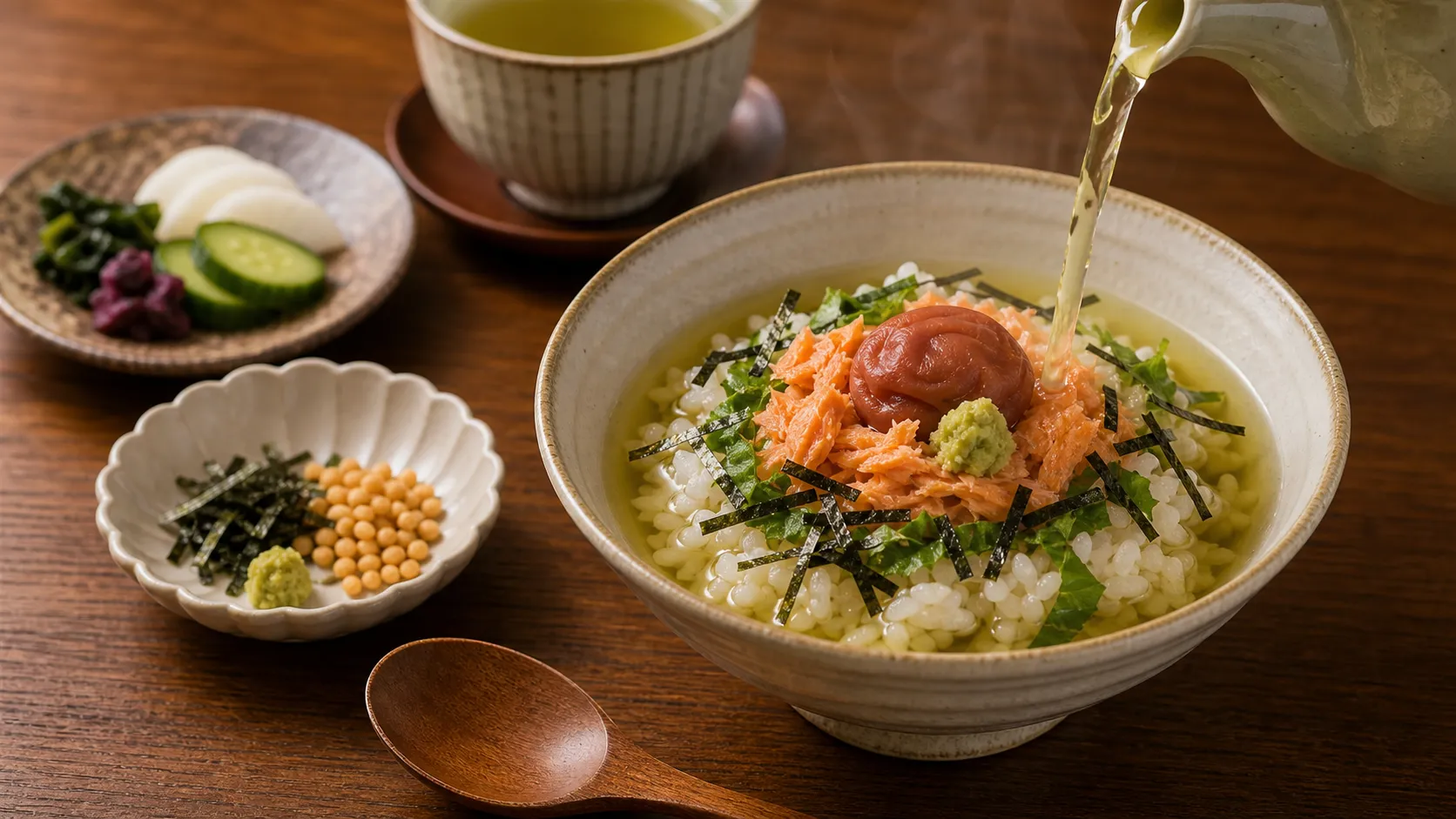
Japanese FoodNationwide
Ochazuke (お茶漬け)
Pour hot green tea or dashi over a bowl of rice, scatter something savory on top, and eat — the gentlest, most quietly restorative dish in Japan, the one you reach for late at night when you just need a warm bowl to make everything okay.
July 11, 2026