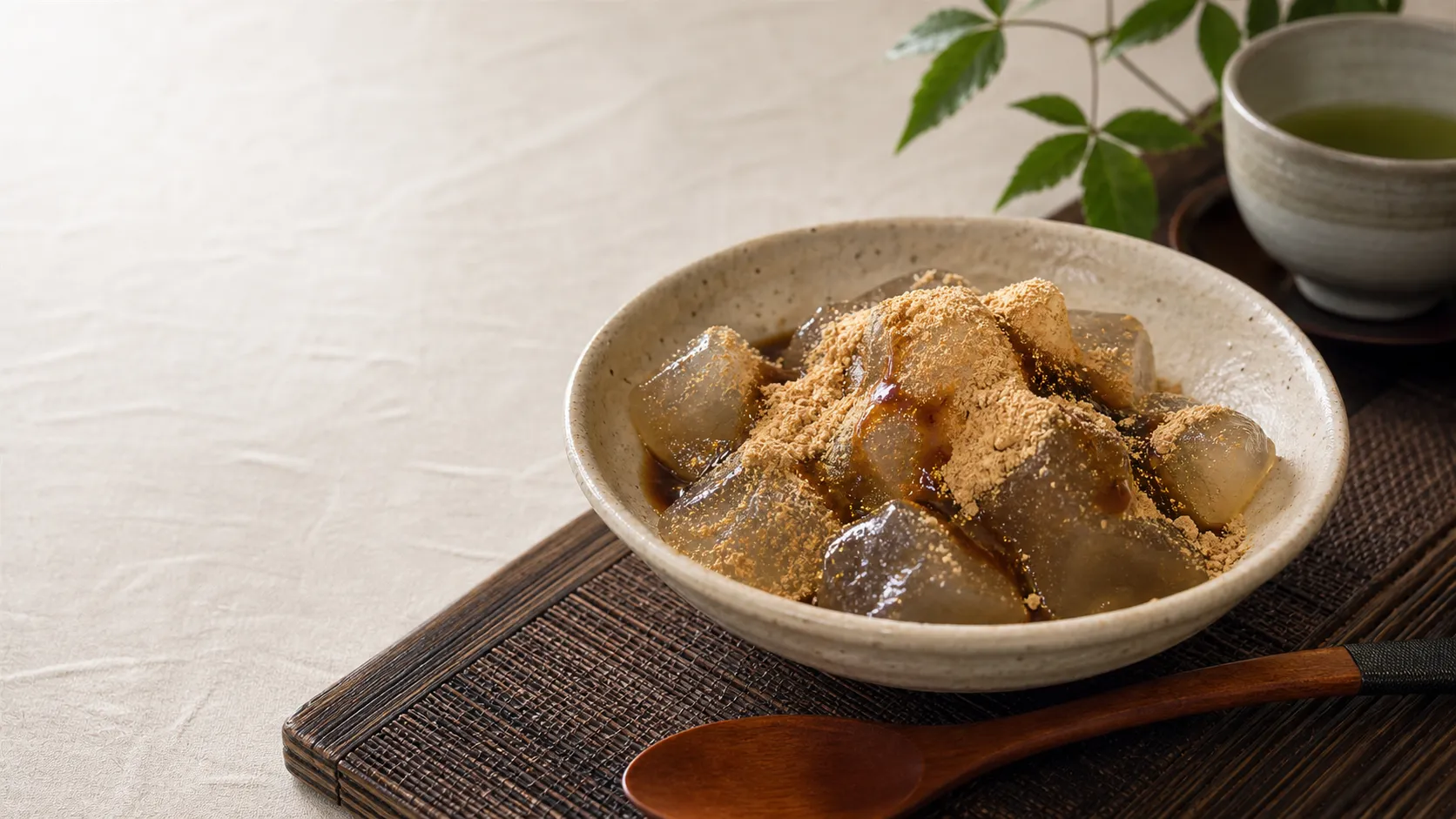
The plate arrives and the cubes are shivering — pale, glassy, almost see-through, wobbling at the slightest nudge like they can't quite believe they're solid. You pick one up (it barely holds together), roll it through the nutty golden soybean flour, drag it through the dark syrup, and eat it cold, and it's soft and cool and slippery and melts almost before you can chew it. And I giggle, every time, like a delighted child. That's warabimochi, the jiggliest, most quietly joyful sweet in Japan.
Share this dish


Cool, wobbling cubes of near-translucent jelly, rolled in nutty roasted soybean flour and drizzled with dark brown sugar syrup — the jiggliest, most refreshing sweet in Japan, and a texture you'll chase forever.
Here's what it is: warabimochi (わらび餅) is a soft, translucent, jelly-like "mochi" traditionally made from bracken starch (warabiko) — not rice — set into a cool, wobbling block, then cut into cubes, dusted with kinako (roasted soybean flour), and drizzled with kuromitsu (dark brown-sugar syrup). Bracken starch, served cold, with kinako and kuromitsu: that's what makes it warabimochi and not a chewy rice mochi or a firm agar jelly. It's a summer favorite and a Kansai darling, and its whole personality lives in that impossible, delightful texture.
The wobble that Japan fell in love with
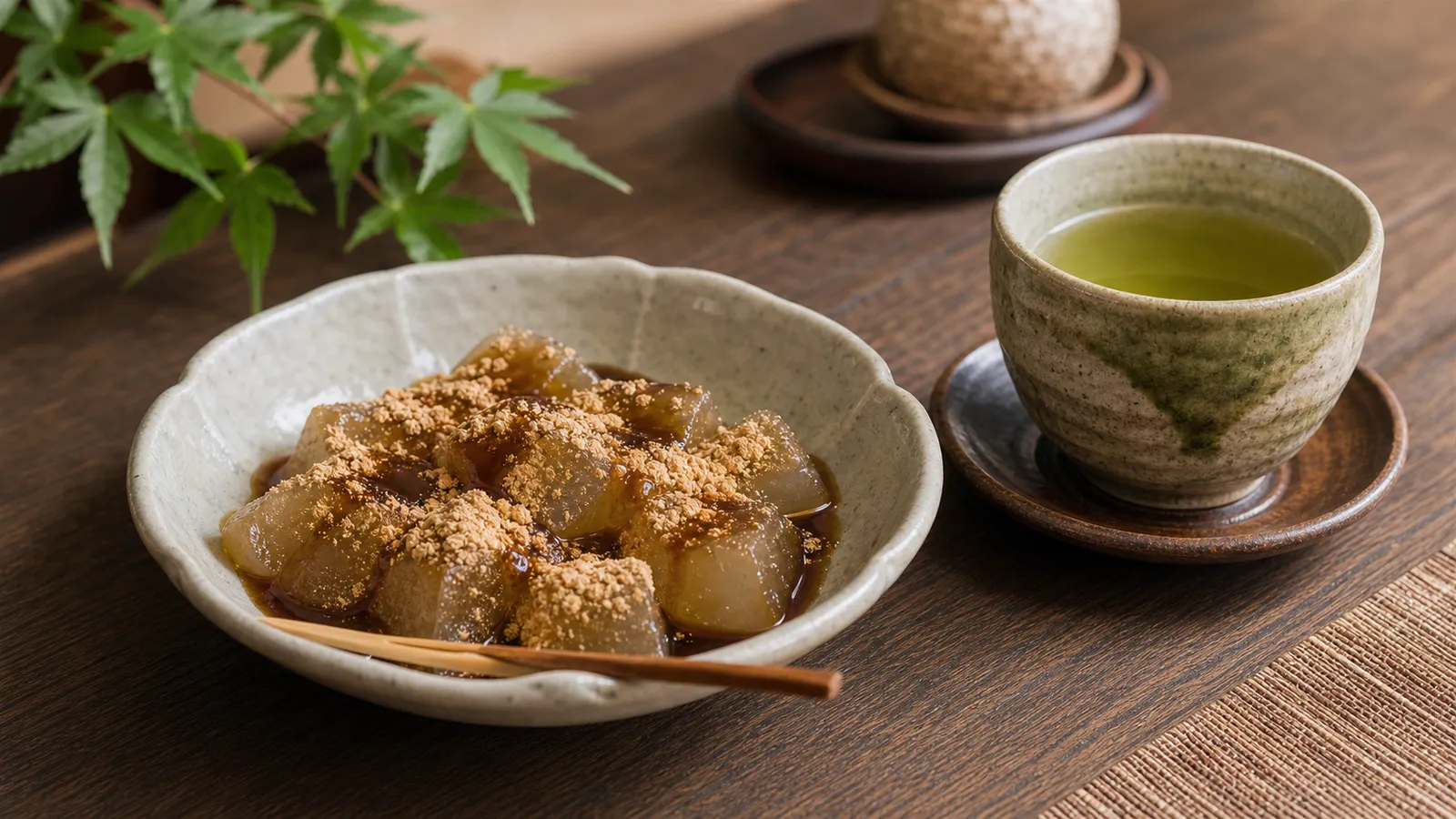
True warabimochi is old — a wagashi made from bracken-root starch, a laborious, precious ingredient, which is why proper hon-warabimochi (100% bracken starch) is still a bit of a luxury. Most everyday warabimochi today uses other starches (tapioca, sweet potato) to get that translucent jiggle affordably, and that's completely fine — the texture is the whole point, and it's beloved from convenience-store cups to refined tea-house plates. In Kansai especially, and everywhere in the hot months, it's a go-to cooling sweet.
I love how sensory it is. Warabimochi isn't about a big sweet flavor — it's about the cool slither on the tongue, the way it barely resists a bite, the toasty warmth of the kinako and the molasses depth of the kuromitsu wrapping around all that jelly. It's a sweet you experience as much with your fingers and your teeth as your tastebuds. On a sweltering Japanese summer afternoon, few things reset your whole mood faster.
What makes the eating experience different
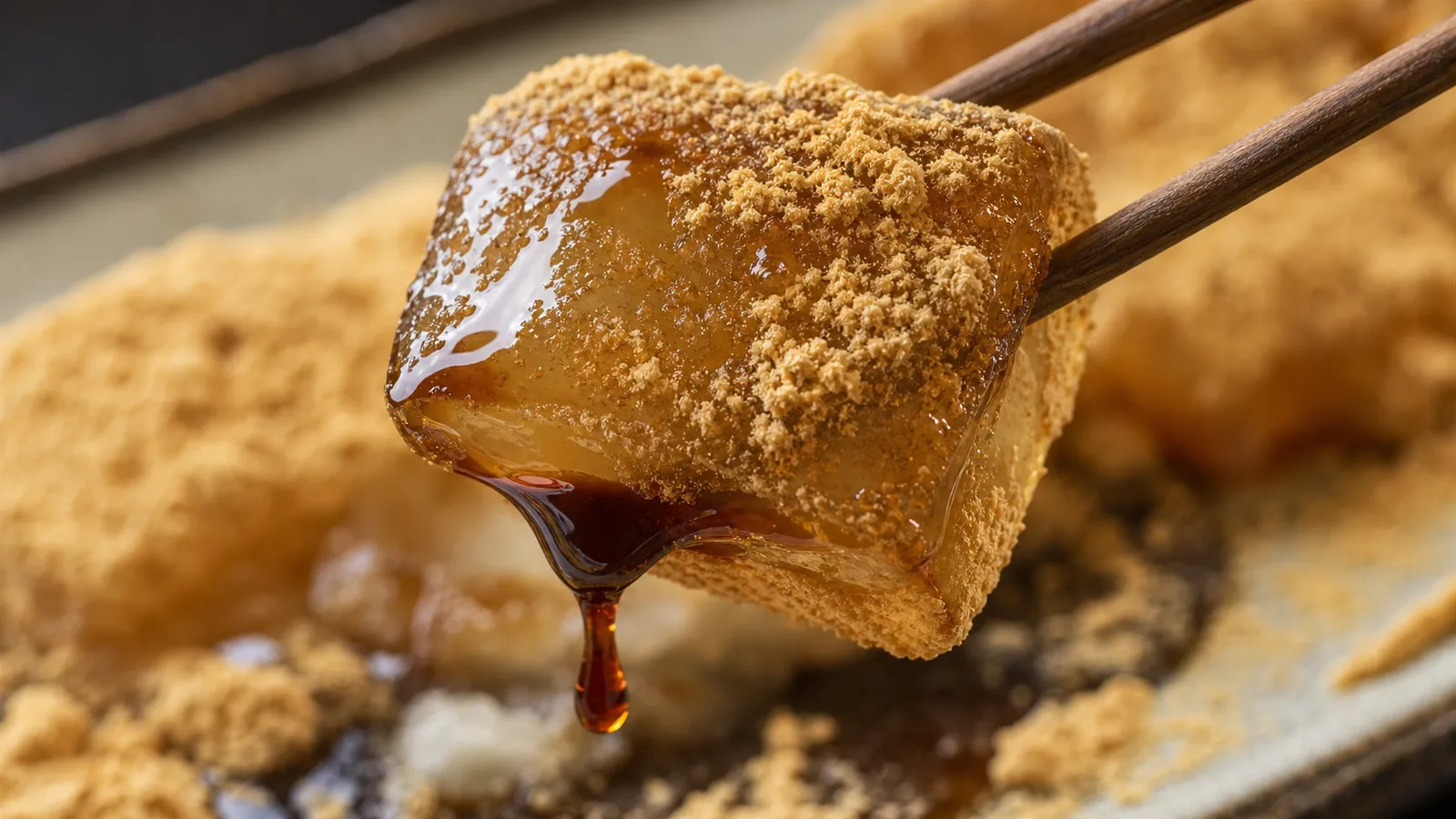
- The texture is the star: cool, soft, jiggly and slippery, melting almost instantly — utterly unlike chewy rice mochi
- Kinako (roasted soybean flour) coats it in a nutty, toasty, faintly savory dust that balances the sweetness beautifully
- Kuromitsu (dark brown-sugar syrup) drizzled over adds a deep, molasses-like sweetness with a hint of bitterness
- It's served cold, which makes it one of the most refreshing traditional sweets — peak summer food
- Proper hon-warabimochi has a slightly grey, more delicate, meltier quality that's a genuine treat if you find it
How it's made
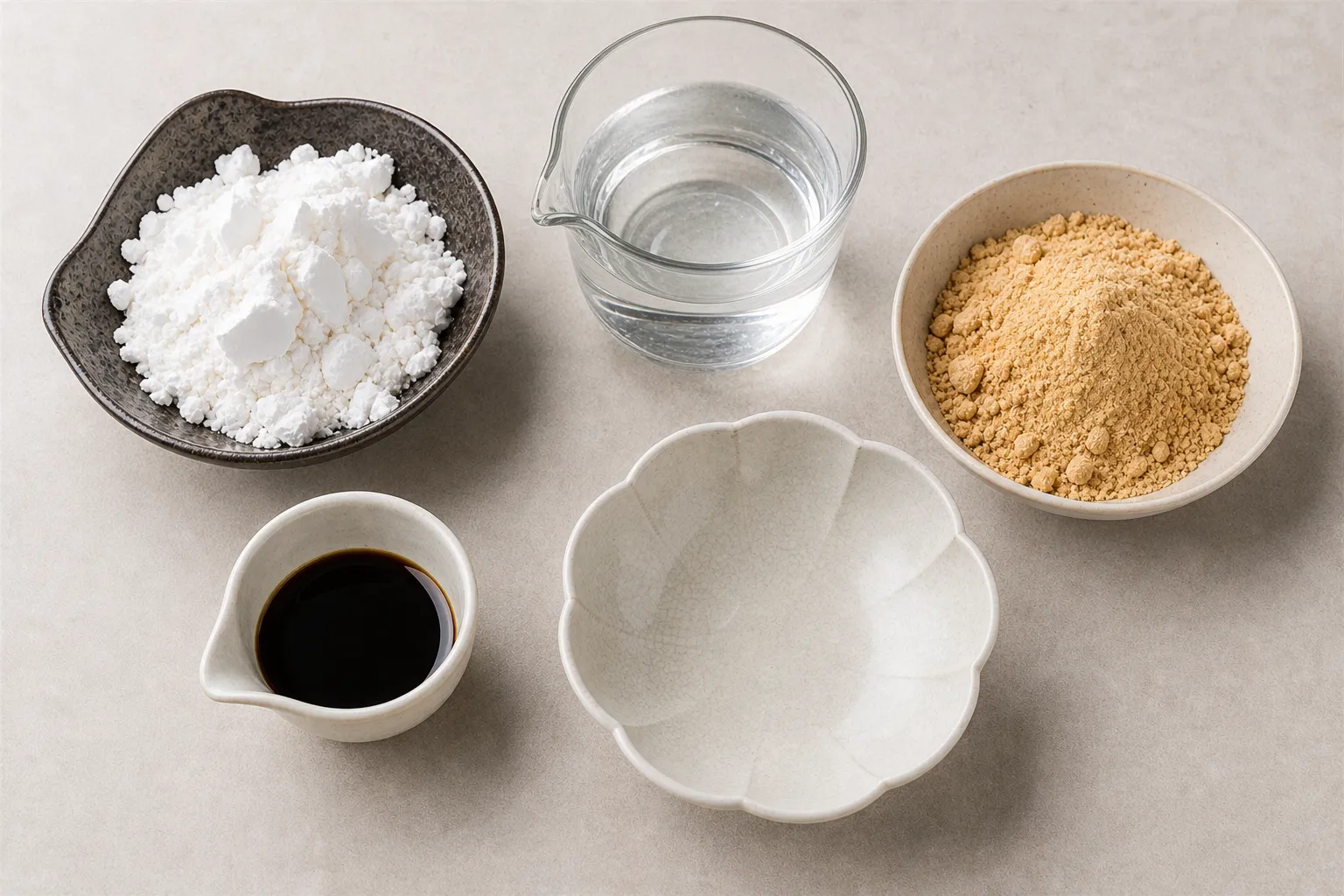
- Mix the starch and water. Bracken starch (warabiko), or a starch blend, is stirred together with water and sugar into a smooth slurry.
- Cook until translucent. The mixture is heated and stirred constantly as it thickens and turns from cloudy to glossy and see-through — this transformation is the craft.
- Set and cool. The hot, glossy jelly is poured out to set, then chilled until firm enough to cut but still wobbly.
- Cut into cubes. The cooled block is cut into bite-size squares.
- Dust and drizzle. Roll the cubes in kinako and serve with kuromitsu poured over — cold, wobbling, ready.
That cooking step — stirring cloudy starch until it turns glassy and translucent — is oddly hypnotic, and it's where a good warabimochi is won or lost: cook it right and you get that perfect cool, melting jiggle.
Before you go — a texture worth chasing
Your questions, answered honestly
"Is this like the chewy mochi I know?" — No, and that surprises people. Rice mochi is chewy and elastic. Warabimochi is soft, cool and jiggly, melting almost instantly — a completely different, jelly-like texture. If you found rice mochi too chewy or sticky, warabimochi might actually be the mochi for you.
"What's the powder and the syrup?" — The golden dust is kinako, roasted soybean flour — nutty, toasty, lightly sweet. The dark syrup is kuromitsu, made from unrefined brown sugar — deep and molasses-like. Together they turn plain jelly into something wonderful. Use both generously.
"Is it very sweet?" — Gently. The jelly itself is mild; the sweetness comes from the kuromitsu you add, so you can control it. It's more refreshing than sugary, which is exactly why it's such a great hot-weather sweet.
"Where do I get the good stuff?" — Everywhere from convenience stores (surprisingly decent) to wagashi (traditional sweet) shops and tea houses. If you see hon-warabimochi (real bracken-starch) at a specialist, treat yourself — it's meltier and more delicate than the everyday kind.
What the staff will ask you
| You'll hear | Romaji | Meaning | Just say |
|---|---|---|---|
| きな粉と黒蜜はおかけしますか? | Kinako to kuromitsu wa o-kake shimasu ka? | "Shall I add kinako and kuromitsu?" | Onegaishimasu (yes, please) |
| 店内で召し上がりますか? | Tennai de meshiagarimasu ka? | "Eating in?" | Hai / Mochikaeri de (yes / takeout, please) |
| お茶はいかがですか? | O-cha wa ikaga desu ka? | "Green tea with that?" | Onegaishimasu (yes, please) |
To order, just say "Warabimochi o kudasai" (わらび餅をください) — "Warabimochi, please."
Where to eat it
- Wagashi (traditional sweet) shops and tea houses nationwide — the classic place, especially for a proper plate with tea; Kansai has a particularly deep love for it.
- Summer festival stalls and sweet stands — cold warabimochi cups are a beloved hot-weather treat, sometimes sold from roving trucks with a distinctive call.
- Convenience stores and supermarkets — surprisingly good chilled warabimochi cups are available year-round for a quick, cooling fix.
Warabimochi ranges from everyday starch-blend versions to luxurious real-bracken (hon-warabimochi); styles, quality and prices vary by shop — it's best cold, so eat it fresh.
Soul Score
Local Roots4/5
First-Timer Friendly5/5
Adventure Level3/5
Comfort Level5/5
Travel Worthy3/5
These scores are one obsessed eater's gut feeling — not a verdict. A low number isn't a bad mark, just a different kind of adventure.
Know someone planning Japan?
← All Articles
Sweets & Snacks · Nationwide
Still hungry?
You might also like
Sweets & SnacksSaga
Maruboro (丸ぼうろ)
It looks like the most boring biscuit in Japan. Then you bite it and it's soft, and honey-warm, and about four hundred years of Portuguese sailors arrive all at once.
September 2, 2026
Sweets & SnacksYamanashi
Shingen Mochi (信玄餅)
There is a correct way to eat this and I did not know it, so I made a mess in front of several Yamanashi locals who were extremely kind about it and absolutely watching.
September 2, 2026
Sweets & SnacksTokyo
Anpan (あんパン)
A soft little bun, one bite in, and suddenly it's dense, dark, sweet red bean all the way through — the bread that talked 1870s Japan into eating Western-style bread at all.
July 27, 2026