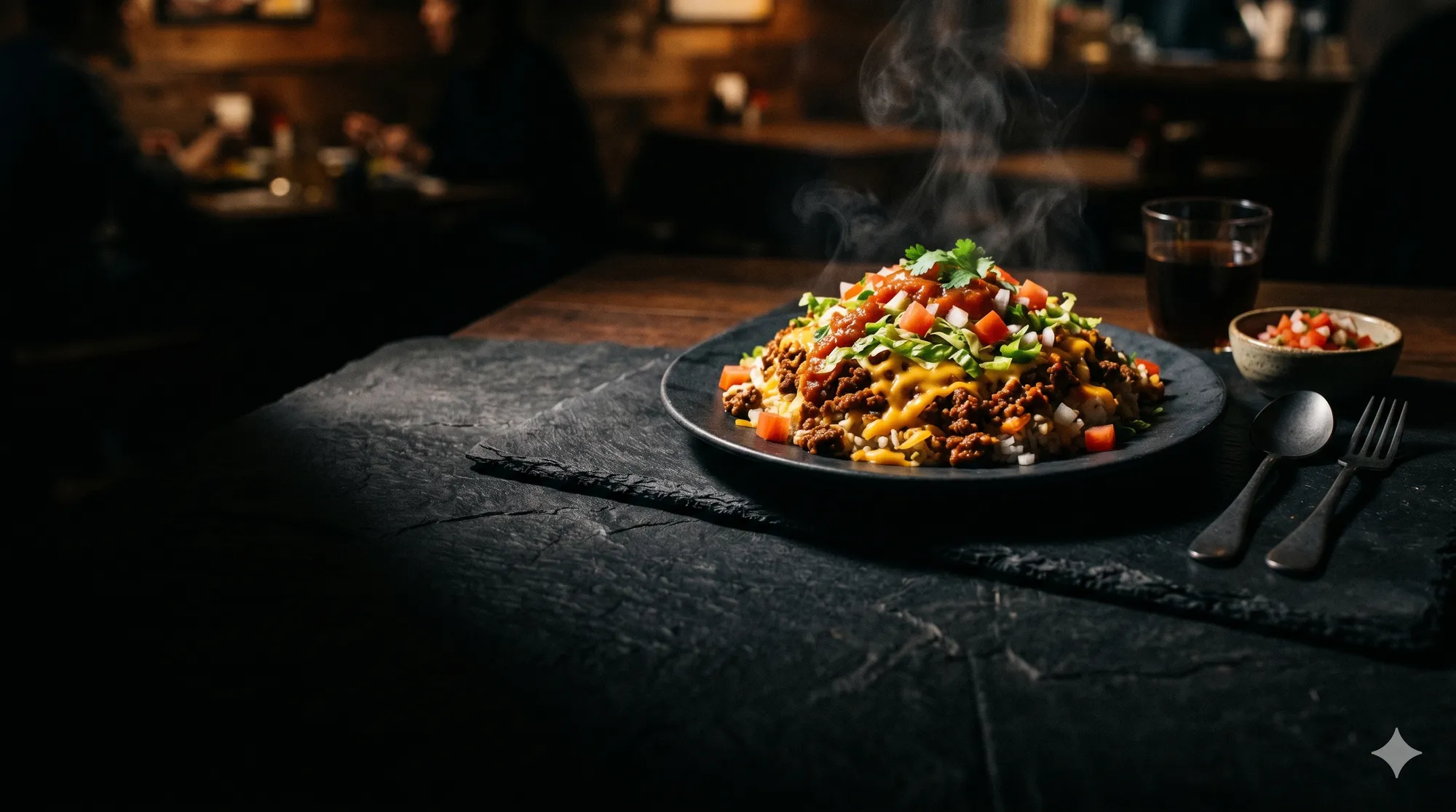
The first forkful is pure happy confusion. It tastes like the inside of a taco — spiced ground beef, crisp shredded lettuce, tomato, melty cheese, a hit of salsa — except it's all piled on a bowl of warm Japanese rice instead of a shell, and somehow that one swap makes the whole thing better: no fragile shell shattering down your wrist, just every good taco flavor scooped up by the spoonful with rice. One bite of taco rice and you start wondering why the rest of the world isn't doing this.
Share this dish


Taco fillings piled on rice instead of in a shell — seasoned beef, lettuce, tomato, cheese, salsa. Born next to a US base in Okinawa, it's the most deliciously unlikely fusion in Japan.
🍜 Planning a food trip to Okinawa?Add this dish to my Food Trip →
 Add this dish to my Food Trip →
This is Okinawa's beautiful, only-here mashup: American diner food, Mexican flavors, and Japanese rice colliding in one cheap, colorful, ridiculously satisfying bowl. It's the taste of Okinawa's unique modern history on a plate — and it's so good and so easy to love that it's spread from island snack bars all the way to convenience stores across Japan. Bright, messy, and full of joy. Let me tell you where it came from, because the story is as good as the food.
A dish born beside the bases
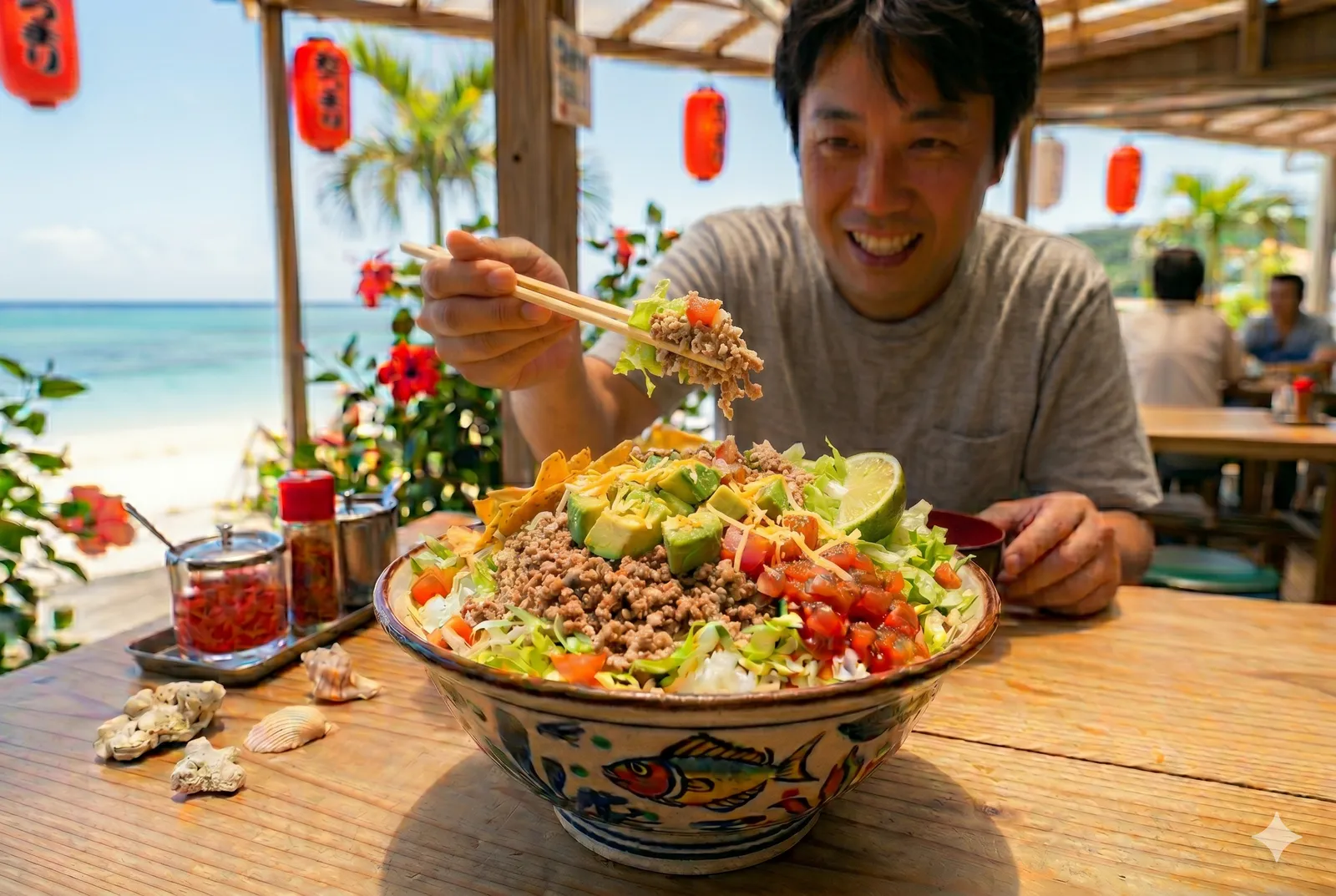
Taco rice was invented in Okinawa in the 1980s, in the town of Kin (金武町), right next to a major US military base. American servicemen wanted tacos; the local cooks had rice; somebody had the genius idea to serve the taco fillings over rice — affordable, filling, and perfect for hungry young soldiers (and locals). A shop often credited as the origin, King Tacos (キングタコス), is still a pilgrimage spot today. It's a dish that could only have come from Okinawa's particular crossroads of cultures — and the island is rightly proud of it.
Why it just works
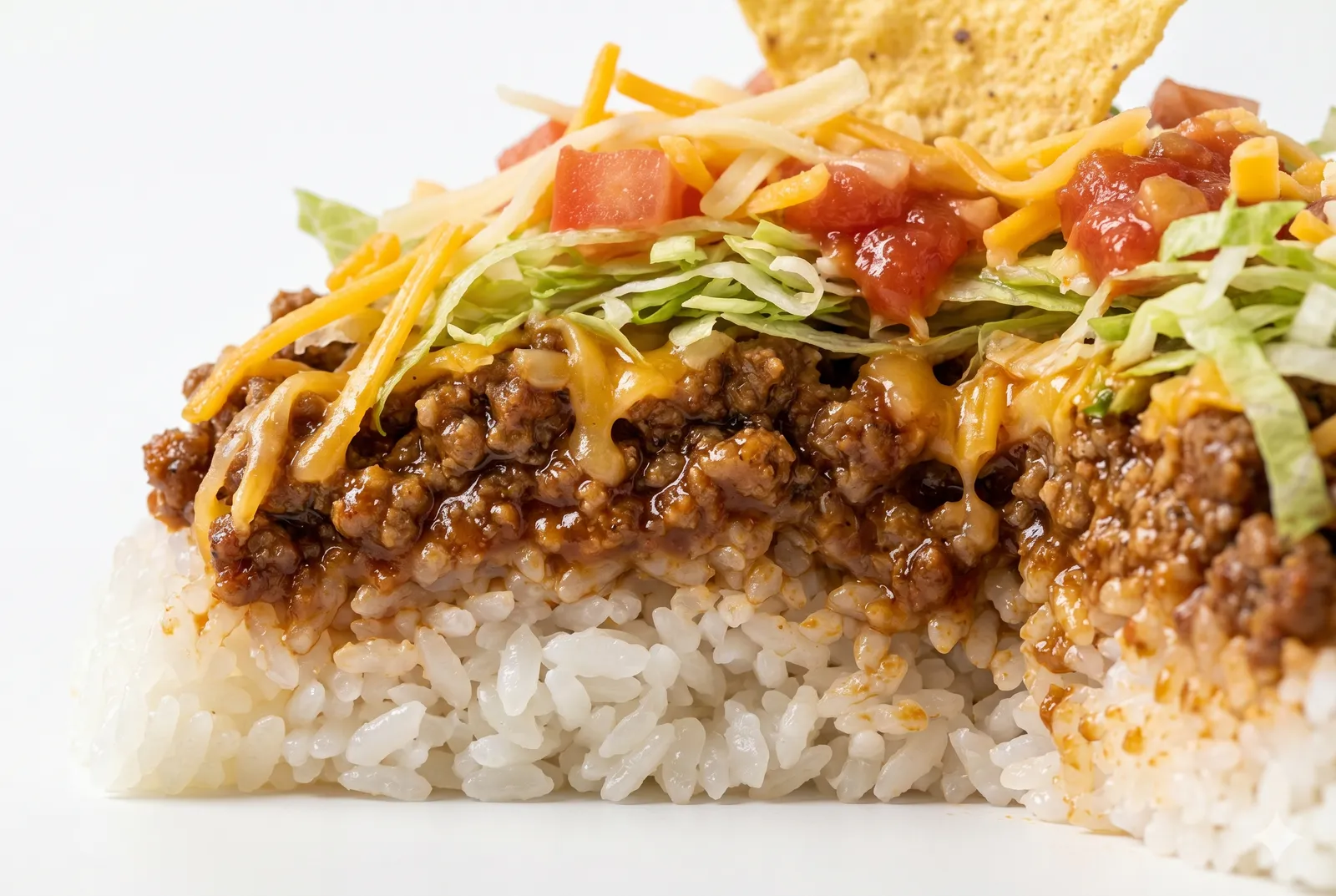
The whole thing is a flavor party: savory, mildly spiced taco-seasoned beef; cool crisp lettuce and tomato; rich melted cheese; tangy salsa or hot sauce — all soaking down into fluffy rice that catches every drop. It hits comfort food and party food at the same time, and you can dial the heat up or down however you like. Simple parts, joyful whole.
How it's made
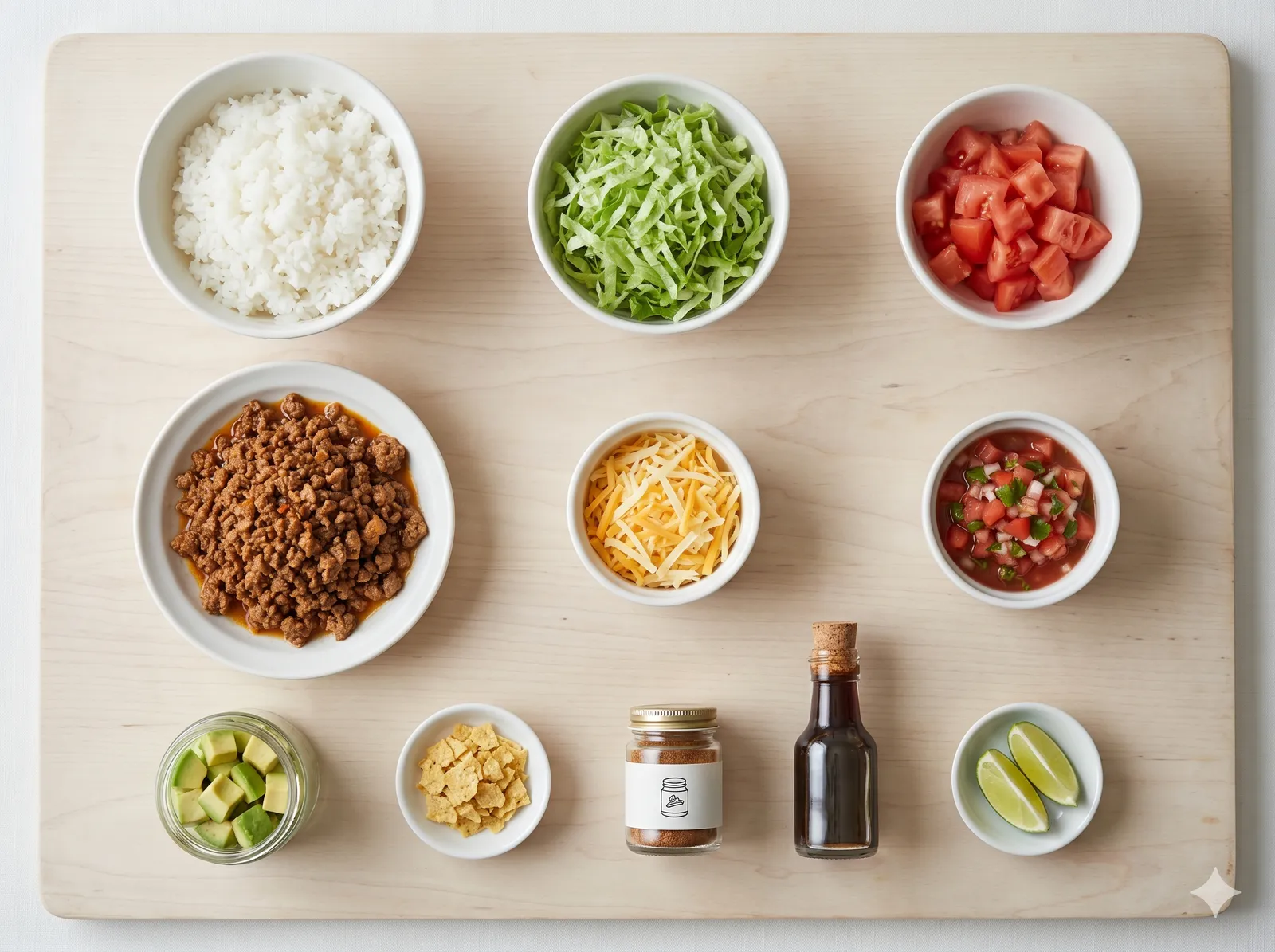
- Brown ground beef and season it taco-style (chili, cumin, garlic, a little ketchup or Worcestershire)
- Spoon it over a bowl of warm white rice
- Top with shredded lettuce, diced tomato, and grated cheese
- Finish with salsa or hot sauce to taste
Before you go — build your perfect bowl
Your questions, answered honestly
"Is it spicy?" — Mild by default — it's friendly to everyone. Salsa and hot sauce are usually on the side so you can crank it up. Okinawan versions lean tasty over fiery.
"Cheese — yes or no?" — Yes. A thousand times yes. The melty cheese over the warm beef and rice is the move. Get it with cheese (chīzu iri).
"Spoon or chopsticks?" — Spoon. It's a glorious mess of toppings and rice — a spoon scoops it all up in one perfect bite.
"Where does it fit — meal or snack?" — A full, cheap, satisfying meal. It's diner food, beach-shack food, late-night food. Any time is taco rice time.
What the staff will ask you
| You'll hear | Romaji | Meaning | Just say |
|---|---|---|---|
| チーズはのせますか? | Chīzu wa nosemasu ka? | "Add cheese?" | Hai, onegaishimasu (yes please) |
| サイズはどうしますか? | Saizu wa dō shimasu ka? | "Which size?" | Futsū de (regular) / Ōmori de (large) |
| 辛いの、かけますか? | Karai no, kakemasu ka? | "Want hot sauce on it?" | Betsu de (on the side) / Hai (yes) |
To order, just say "Taco raisu, chīzu iri de kudasai" (タコライス、チーズ入りでください) — "Taco rice with cheese, please."
Where to eat it
- King Tacos (キングタコス / "Kin-Taco") — Kin Town and other Okinawa locations. The legendary near-the-base original; come hungry.
- Okinawa diners and snack bars island-wide — taco rice is everywhere, and often best at a humble local spot.
- Convenience stores nationwide now sell taco rice bowls — a surprisingly decent way to try it off-island.
Hours and locations change, so check before a special trip — and get the cheese. Always the cheese.
Soul Score
Local Roots5/5
First-Timer Friendly5/5
Adventure Level4/5
Comfort Level4/5
Travel Worthy5/5
These scores are one obsessed eater's gut feeling — not a verdict. A low number isn't a bad mark, just a different kind of adventure.
Planning what to eat in Okinawa?🌺 Okinawa Food Guide: Soba, Taco Rice, Chanpuru, Sweets, and Island Comfort Food →
Know someone planning Japan?
← All Articles
Local Food · Okinawa
Still hungry?
Eat more from Okinawa
Local FoodOkinawa
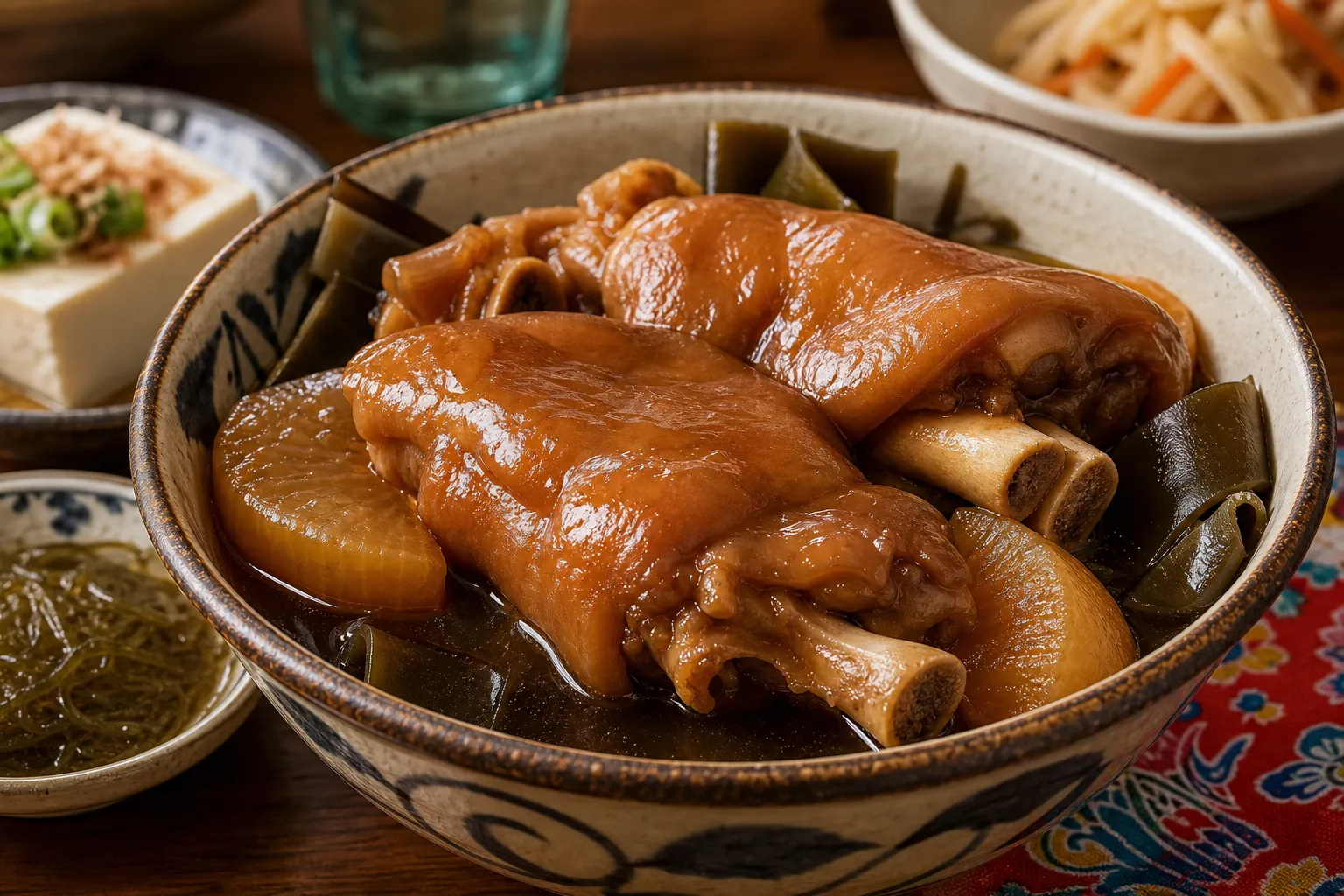
Tebichi (てびち)
It wobbled when the bowl hit the table — actually jiggled — and I hesitated for one honest second before the first bite dissolved into warm, savory collagen and I understood why Okinawans swear by it.
July 5, 2026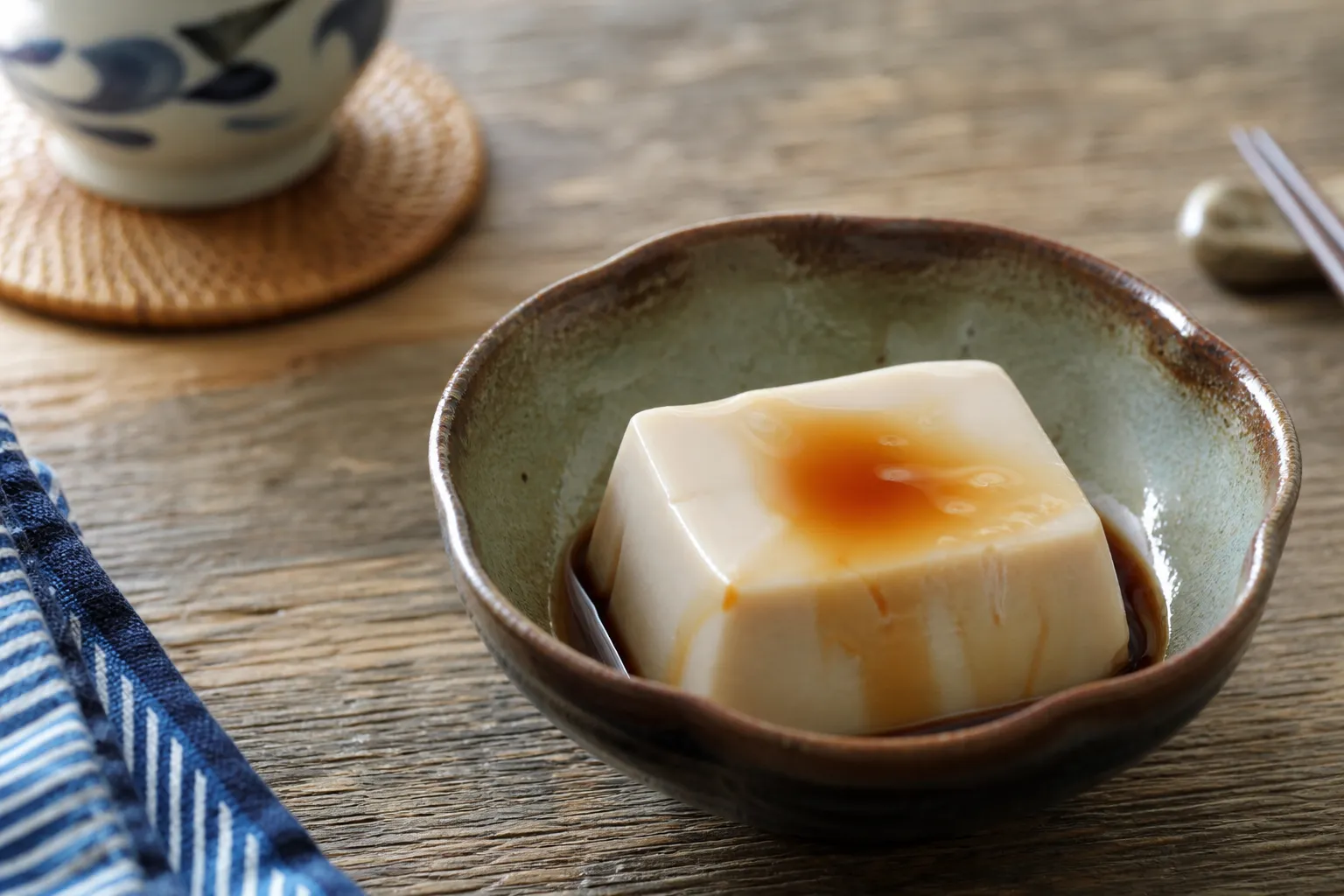
Local FoodOkinawa
Jimami Tofu (じーまーみ豆腐)
It jiggles like tofu, it tastes like peanuts, and it took me three spoonfuls to accept that both of those things were happening in my mouth at the same time.
July 4, 2026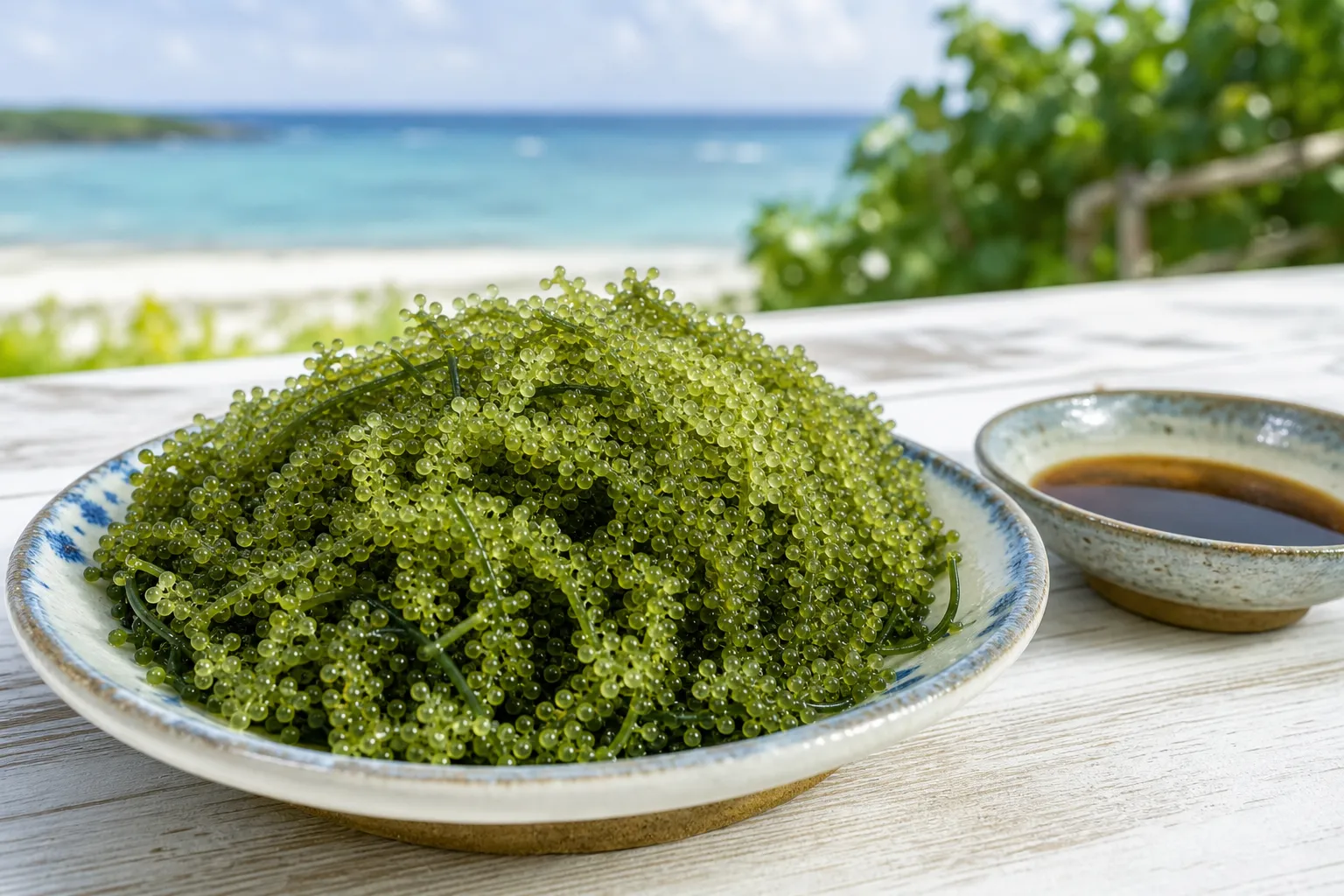
Local FoodOkinawa
Umibudo (海ぶどう)
Tiny green beads burst between my teeth, one after another, like the ocean somehow figured out how to make caviar out of a salad.
July 4, 2026