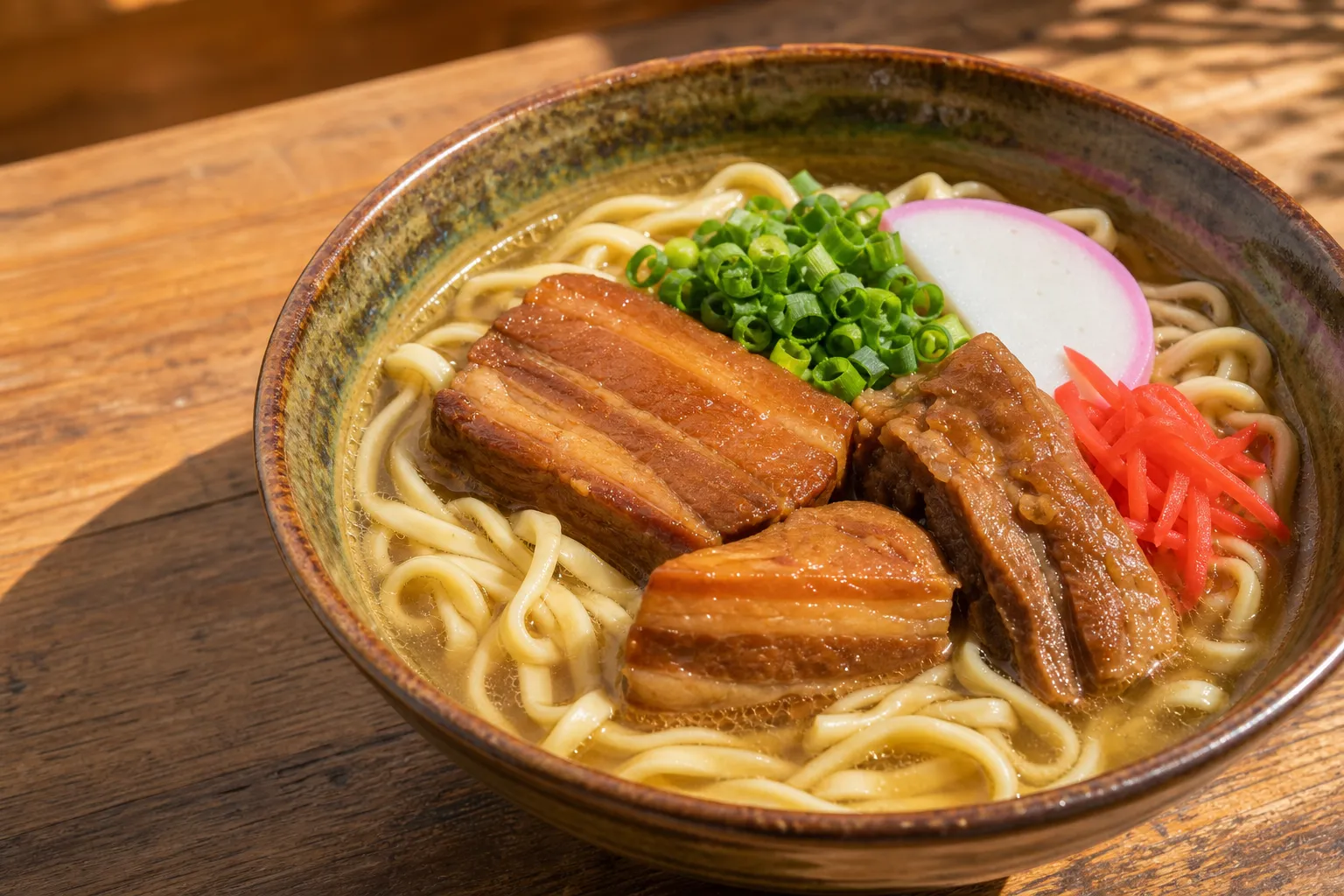
It's not soba.
Share this dish


It's called soba. It's made with wheat. The broth is pork and bonito. The toppings are braised pork belly. It follows none of the rules and it is one of the best noodle soups in Japan.
🍜 Planning a food trip to Okinawa?Add this dish to my Food Trip →
 Add this dish to my Food Trip →
I know. It says soba. The menu says soba. The shop is called a soba-ya. But buckwheat — the grain that defines soba everywhere else in Japan — is not present in this bowl. Okinawa soba is thick wheat noodles, flat and chewy, swimming in a golden broth built from pork bones and katsuobushi, topped with braised pork that's been cooked until the fat goes soft and the skin goes gelatinous and the whole thing falls apart at the touch of chopsticks. It is a completely different dish wearing a borrowed name, and the moment you take the first sip of broth you stop caring about taxonomy entirely.
Okinawa soba (沖縄そば) is the soul of Okinawan food. Not the most exotic thing on the island, not the most famous export — just the thing that Okinawan people eat for breakfast, for lunch, for comfort, at roadside stalls, at lunch counters that have been open since before the prefectural capital had traffic lights. The noodles are made fresh. The broth simmers all morning. The pork is braised separately in soy and awamori and brought to a depth that mainland pork dishes spend years trying to approximate. It is the bowl you need before the beach and the bowl you want after.
Why Okinawa soba is its own thing
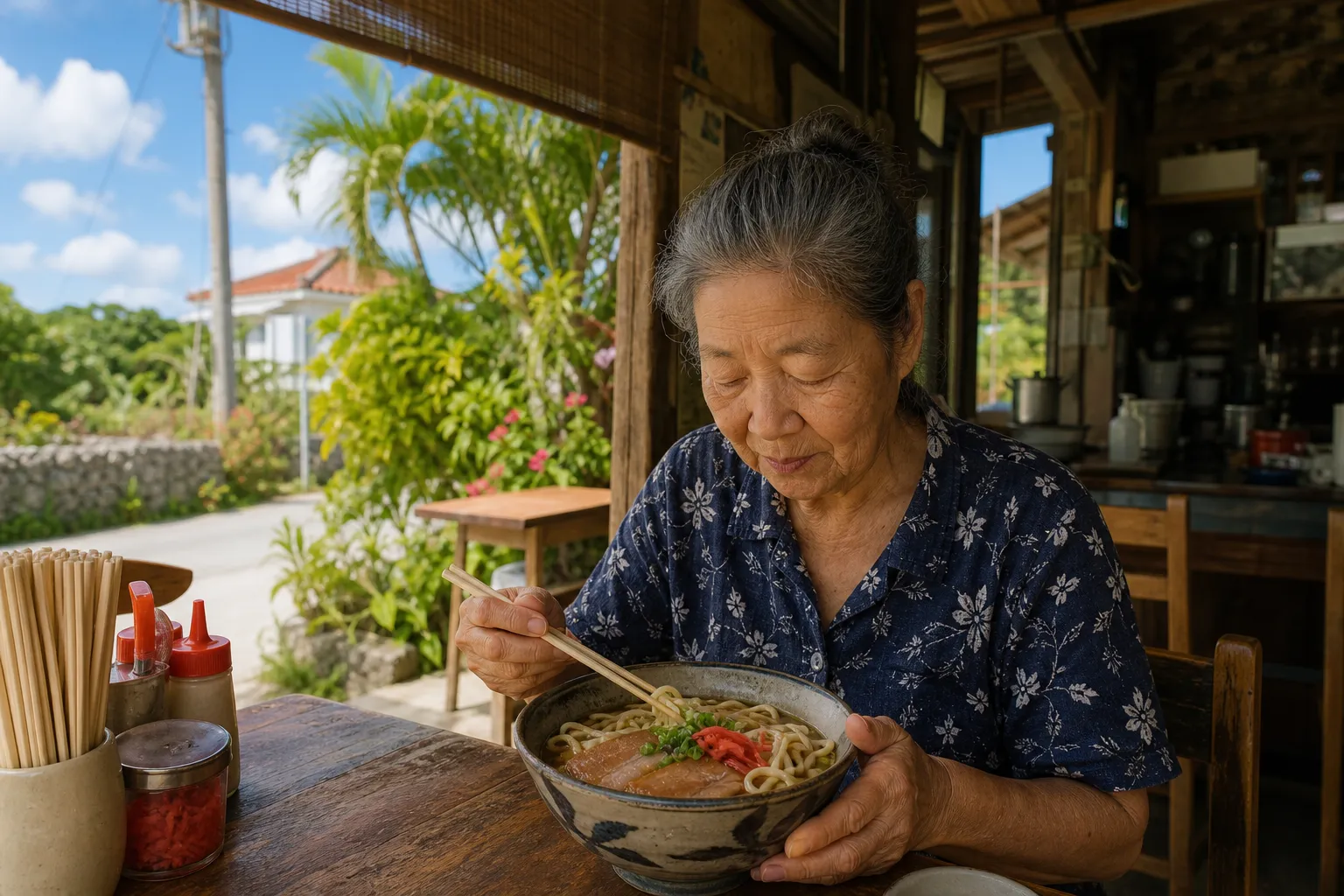
Okinawa's culinary history is genuinely different from mainland Japan's. The Ryukyu Kingdom had its own cuisine, its own ingredients, its own relationship with pork (almost total — every part of the pig was used, nothing wasted). When the noodle dish that would become Okinawa soba developed, it drew on those local traditions: pork-heavy, rich, filling, sustained by a broth that borrowed the bonito intensity of mainland dashi but built its foundation on long-cooked pork bone.
The "soba" name is contested history. During the postwar period, the name was at risk of being regulated away — mainland soba authorities argued that a noodle with no buckwheat couldn't legally be called soba. Okinawa pushed back, hard, on the grounds that the name had been in local use for generations. In 1978, the Fair Trade Commission granted an exception: Okinawa soba is an officially recognized proper noun, exempt from the buckwheat requirement. It is the only noodle dish in Japan with this status.
The toppings define the style. Sōki soba (ソーキそば) uses pork spare ribs — the most common variation, the one you'll see everywhere. Sanmainiku soba uses braised pork belly, the fat layer rendering into something extraordinary. Some shops use both. Tebichi soba features braised pig's trotters for maximum collagen density. The kamaboko (fish cake) is always there, pink-white, mild, a textural note among the richness.
The broth and what makes it different
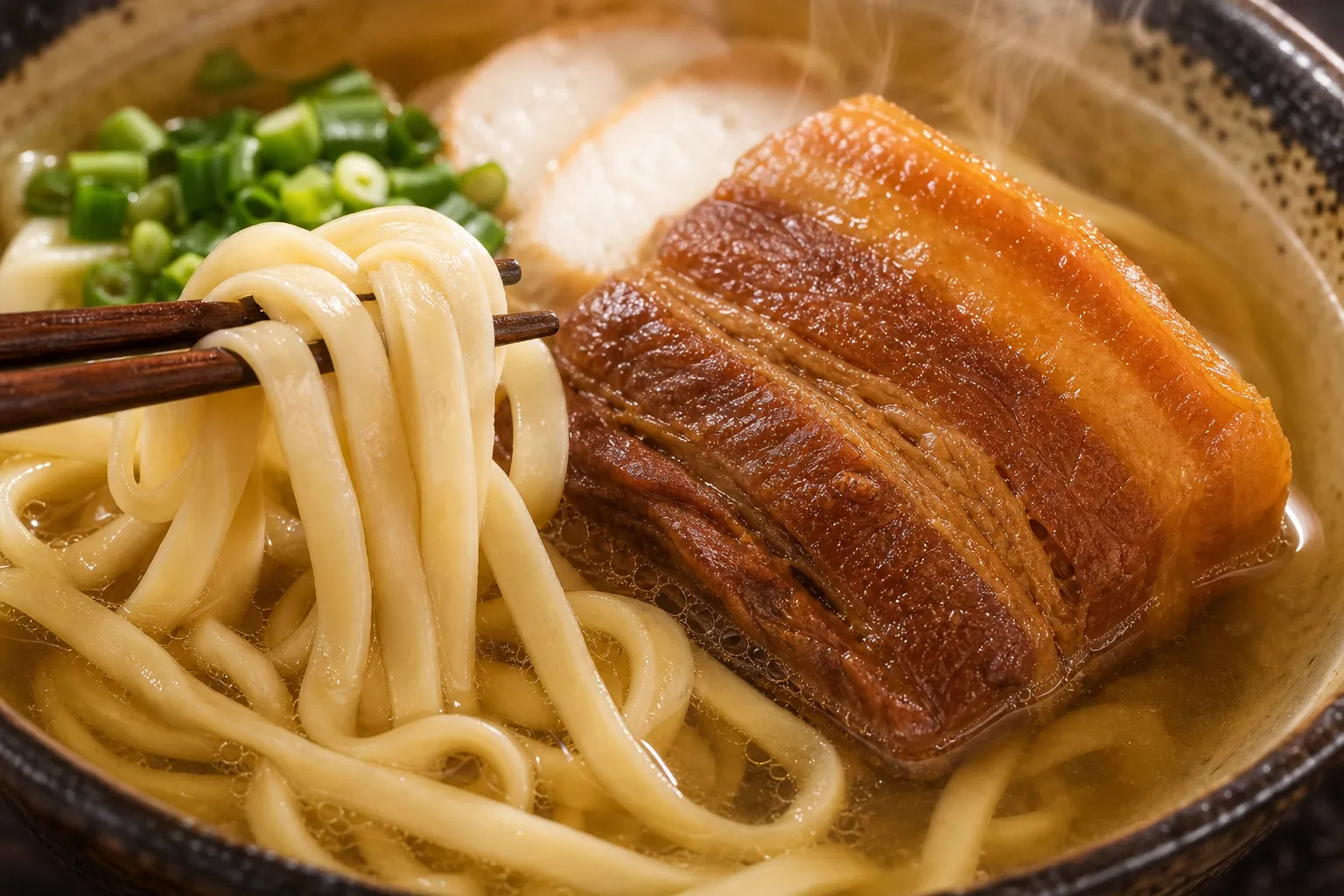
The broth is clear golden and lighter-looking than it tastes. It's built in two stages: a pork bone base simmered long enough to extract the collagen and fat, then blended with a katsuobushi dashi that adds the marine depth and cuts through the pork richness. The result is cleaner than tonkotsu ramen but richer than Tokyo soba broth — somewhere between the two, uniquely itself.
The noodles are handmade in traditional shops, thick, slightly irregular, with a chew that's firmer than ramen and more substantial than udon. They absorb the broth. They hold up to the pork. They don't disappear after two minutes of sitting in the bowl.
Condiments matter: koregusu (コーレーグース) is the essential Okinawan chili sauce — small red peppers steeped in awamori — that you add drop by drop to heat things up. And beni-shōga (red pickled ginger) on the side, which cuts through the richness exactly when you need it.
How it's made
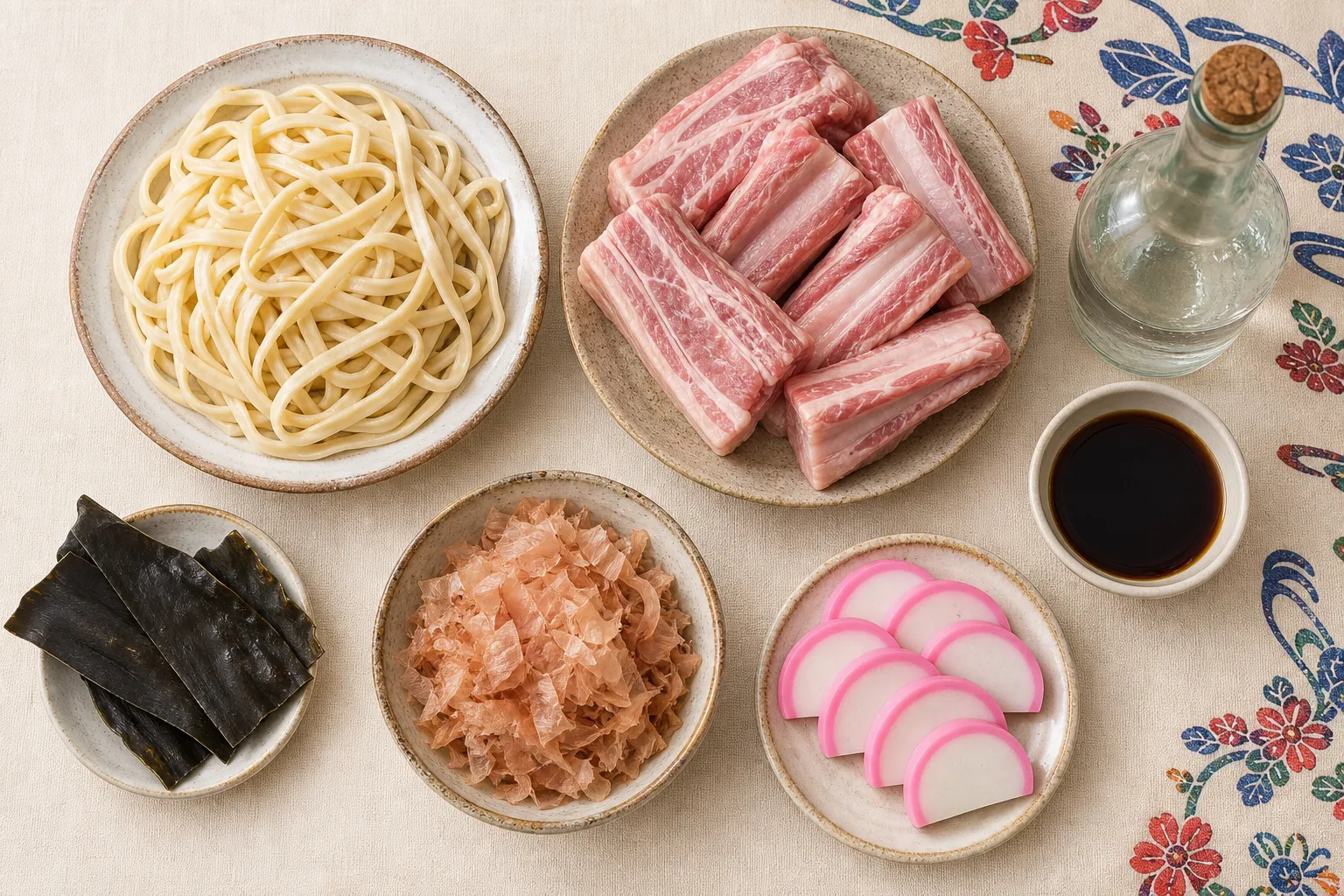
- Simmer pork bones (sometimes with pig's feet) for several hours to build the base stock; skim carefully
- Make a separate katsuobushi dashi; combine with the pork stock and season with salt and soy
- Braise pork separately in soy, awamori, and sugar until very tender and deeply colored
- Cook fresh thick wheat noodles; drain and place in a bowl
- Ladle hot broth; arrange pork, kamaboko, and green onion on top; serve with beni-shōga and koregusu on the side
Before you go — add koregusu gradually
Your questions, answered honestly
"Is it related to mainland soba at all?" — Not really. Same word, completely different dish. No buckwheat, different noodle texture, different broth philosophy. Think of it as a separate regional noodle tradition that happens to share a name.
"What's sōki?" — Pork spare ribs, braised until tender. The most common topping for Okinawa soba. They're served bone-in and the meat falls off when you nudge it.
"What's koregusu?" — Okinawan chili sauce: small red peppers soaked in awamori (Okinawan distilled spirit). Very hot, very aromatic. Add a few drops at a time. It transforms the bowl.
"Can I find this outside Okinawa?" — Okinawan restaurants exist on the mainland and serve it, but it's not common. The freshness of the noodles and the quality of the pork are meaningfully better in Okinawa. This is worth eating on the island.
What the staff will ask you
| You'll hear | Romaji | Meaning | Just say |
|---|---|---|---|
| ソーキと三枚肉、どちらにしますか? | Sōki to sanmainiku, dochira ni shimasu ka? | "Sōki ribs or pork belly?" | Sōki de onegaishimasu (ribs, classic choice) |
| 大きさはどうしますか? | Ōkisa wa dō shimasu ka? | "What size?" | Futsū de onegaishimasu (regular) |
| コーレーグースはありますよ | Kōrēgūsu wa arimasu yo | "Koregusu is available" | Arigatō gozaimasu — use it |
To order, just say "Okinawa soba kudasai" (沖縄そばください) — "Okinawa soba, please."
Where to eat it
- Shuri area, Naha — the former royal capital neighborhood has concentrated soba shops with long histories.
- Roadside soba-ya across the island — the best Okinawa soba is often at unmarked lunch counters that locals fill at noon. Follow the cars.
- Makishi Public Market area, Naha — the market neighborhood has several excellent soba shops accessible on foot.
- Northern Okinawa (Yanbaru region) — some argue the most traditional preparations survive in the north. Worth seeking out if you're traveling the whole island.
Soul Score
Local Roots5/5
First-Timer Friendly4/5
Adventure Level3/5
Comfort Level5/5
Travel Worthy5/5
These scores are one obsessed eater's gut feeling — not a verdict. A low number isn't a bad mark, just a different kind of adventure.
Planning what to eat in Okinawa?🌺 Okinawa Food Guide: Soba, Taco Rice, Chanpuru, Sweets, and Island Comfort Food →
Know someone planning Japan?
← All Articles
Local Food · Okinawa
Still hungry?
Eat more from Okinawa
Local FoodOkinawa
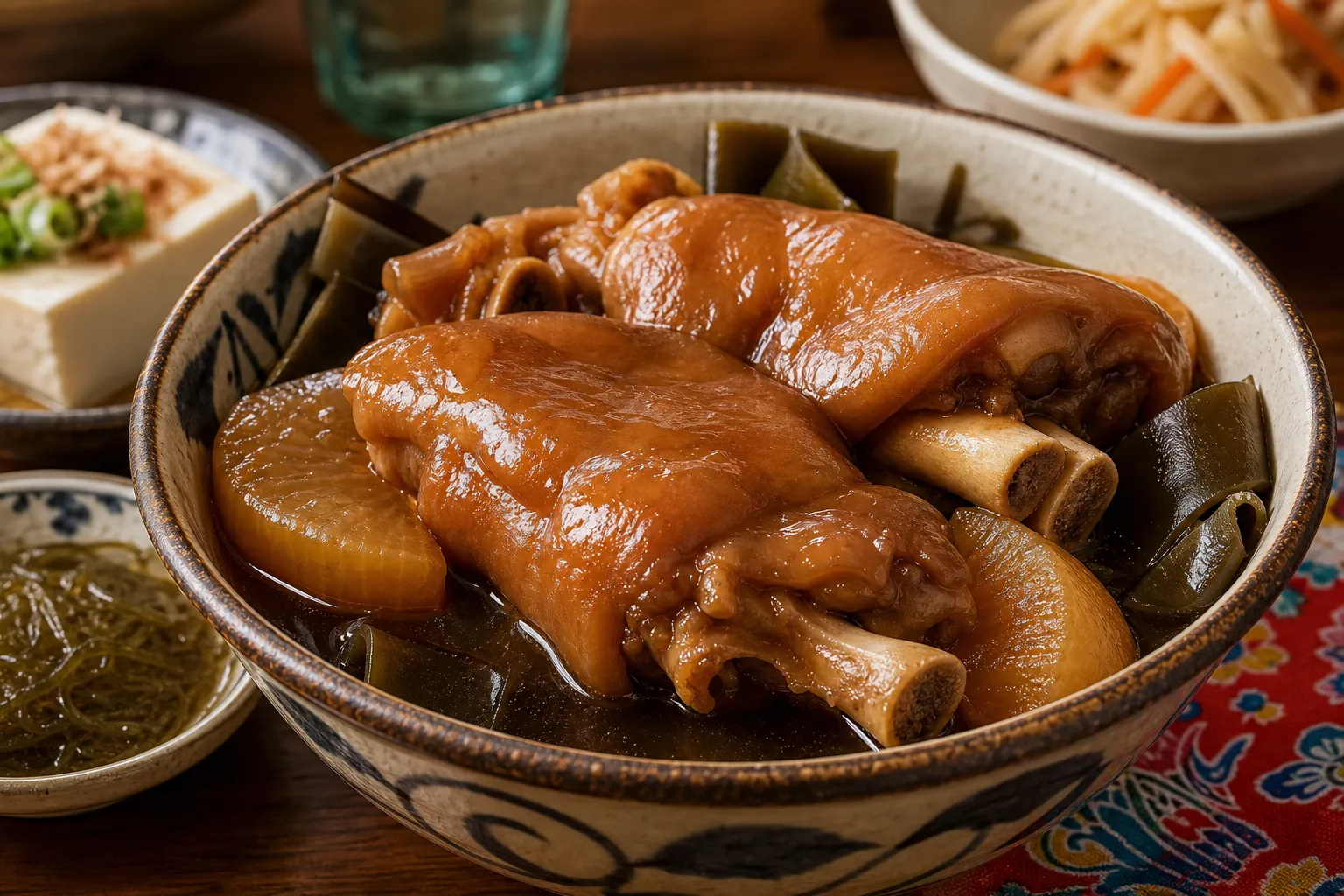
Tebichi (てびち)
It wobbled when the bowl hit the table — actually jiggled — and I hesitated for one honest second before the first bite dissolved into warm, savory collagen and I understood why Okinawans swear by it.
July 5, 2026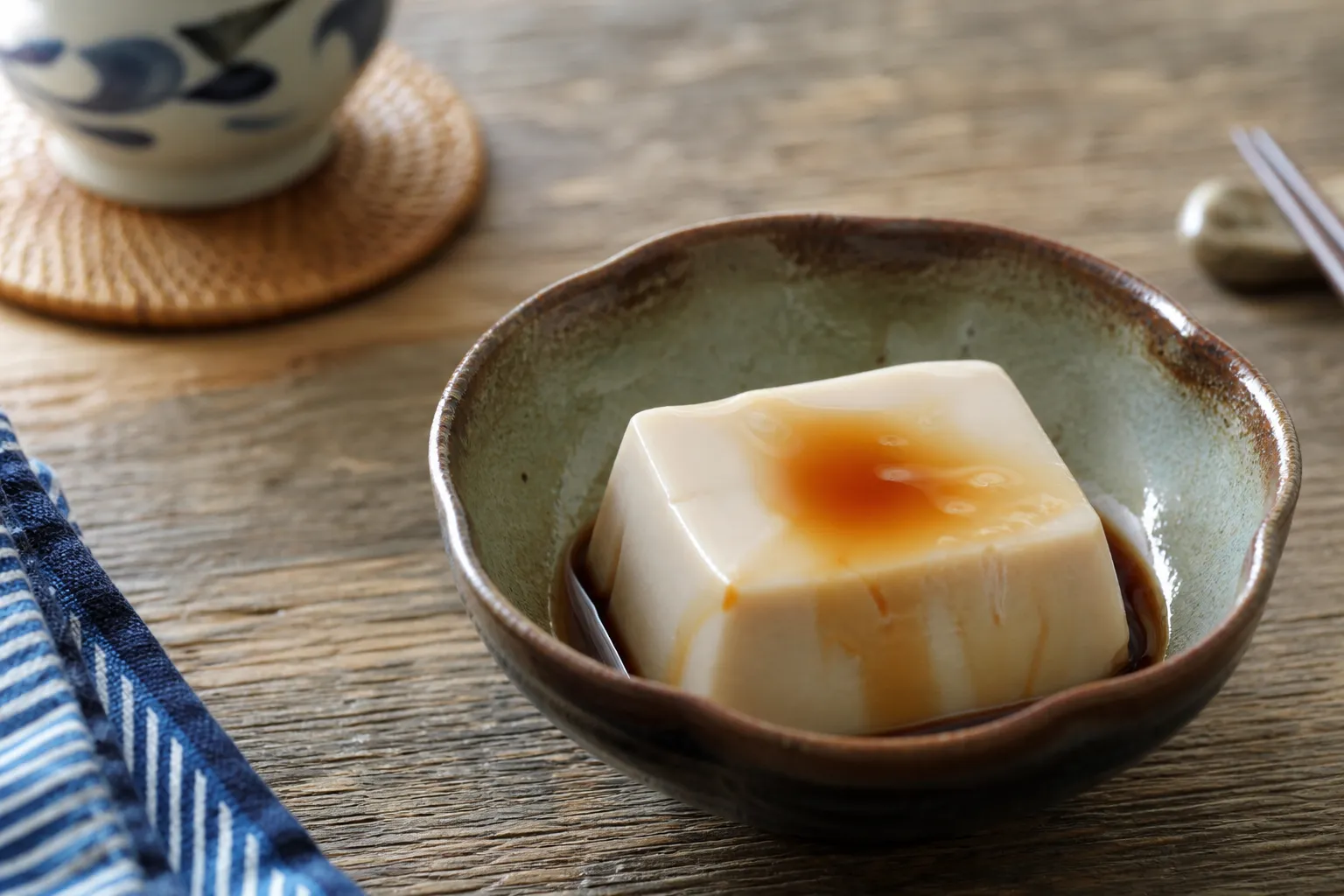
Local FoodOkinawa
Jimami Tofu (じーまーみ豆腐)
It jiggles like tofu, it tastes like peanuts, and it took me three spoonfuls to accept that both of those things were happening in my mouth at the same time.
July 4, 2026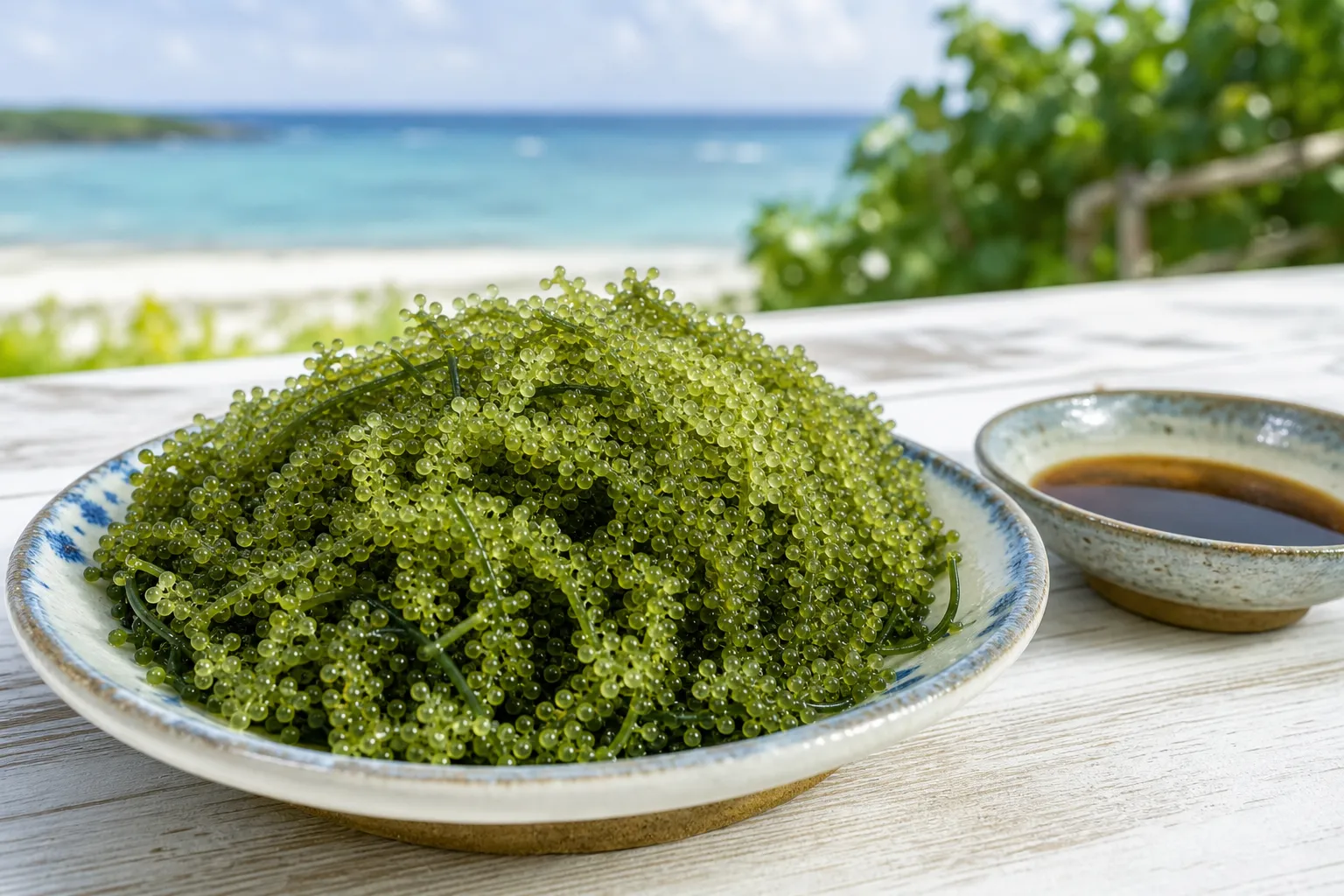
Local FoodOkinawa
Umibudo (海ぶどう)
Tiny green beads burst between my teeth, one after another, like the ocean somehow figured out how to make caviar out of a salad.
July 4, 2026