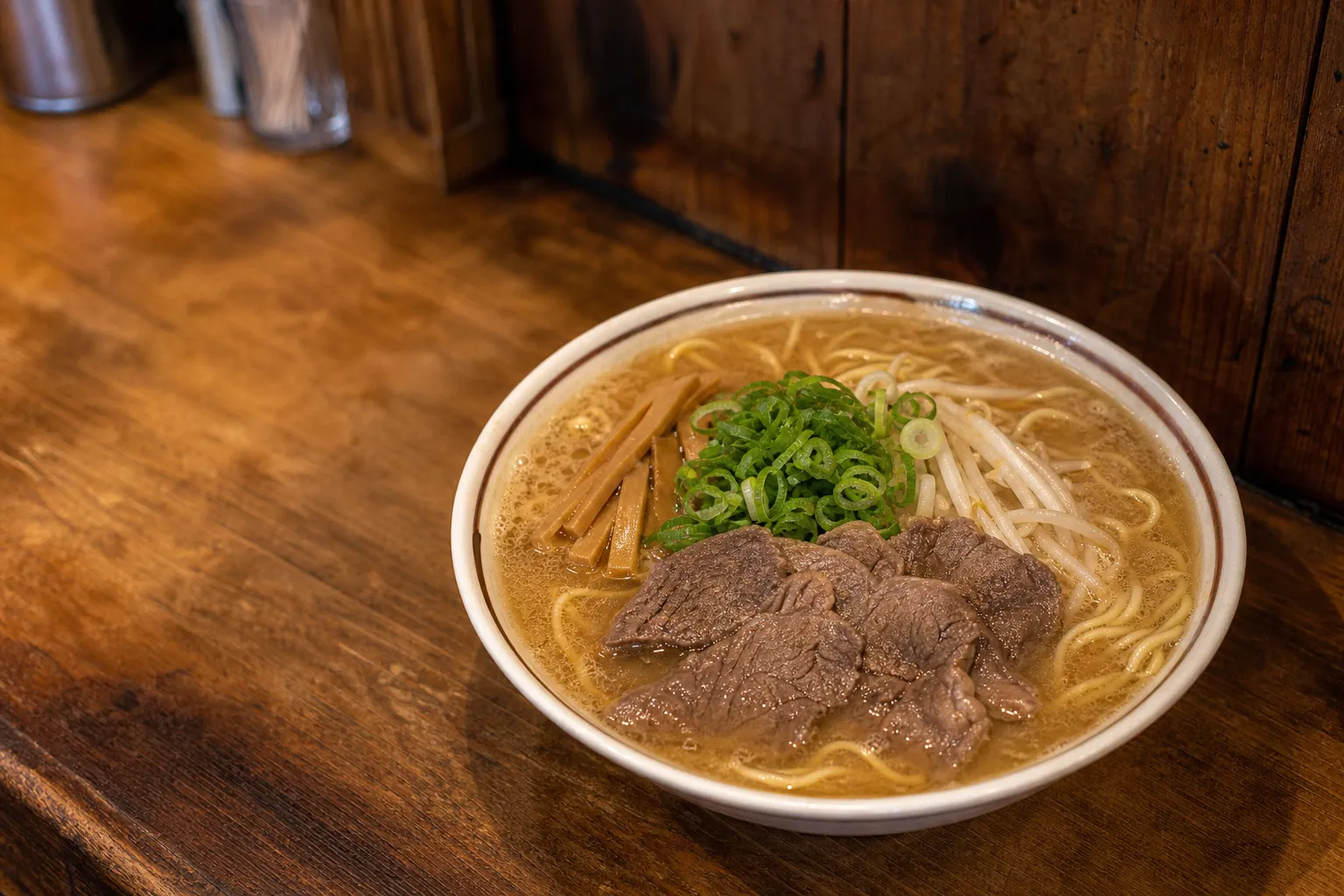
I took the first sip braced for the usual pork-bone richness and got something else — rounder, sweeter, beefier, with a savory depth that landed in a slightly different part of my mouth than tonkotsu does. I actually stopped and looked at the bowl. "This is beef," the guy next to me said, like it was the most normal thing in the world, which in this town it is. I went back to drinking the broth and didn't say much for a while.
Share this dish


Ramen broth simmered from beef bones instead of pork — sweet, deep, and quietly unusual in a country obsessed with tonkotsu. Tottori has been eating it this way since the postwar years and barely told anyone.
🍜 Planning a food trip to Tottori?Add this dish to my Food Trip →
 Add this dish to my Food Trip →
This is Tottori gyukotsu ramen — ramen built on a broth simmered from beef bones (gyukotsu) instead of the pork or chicken that powers almost everything else in Japan. It's the everyday ramen of central and western Tottori, especially around Kurayoshi, and the broth comes out a clear-ish soy-brown, sweet and deep and clean, usually topped with chashu, green onion, and menma. Here's the part I love: the locals don't make a fuss about it. To them it's just chuka soba — the ramen. The fact that it's beef is simply what's always been in the pot.
The ramen Tottori quietly kept to itself
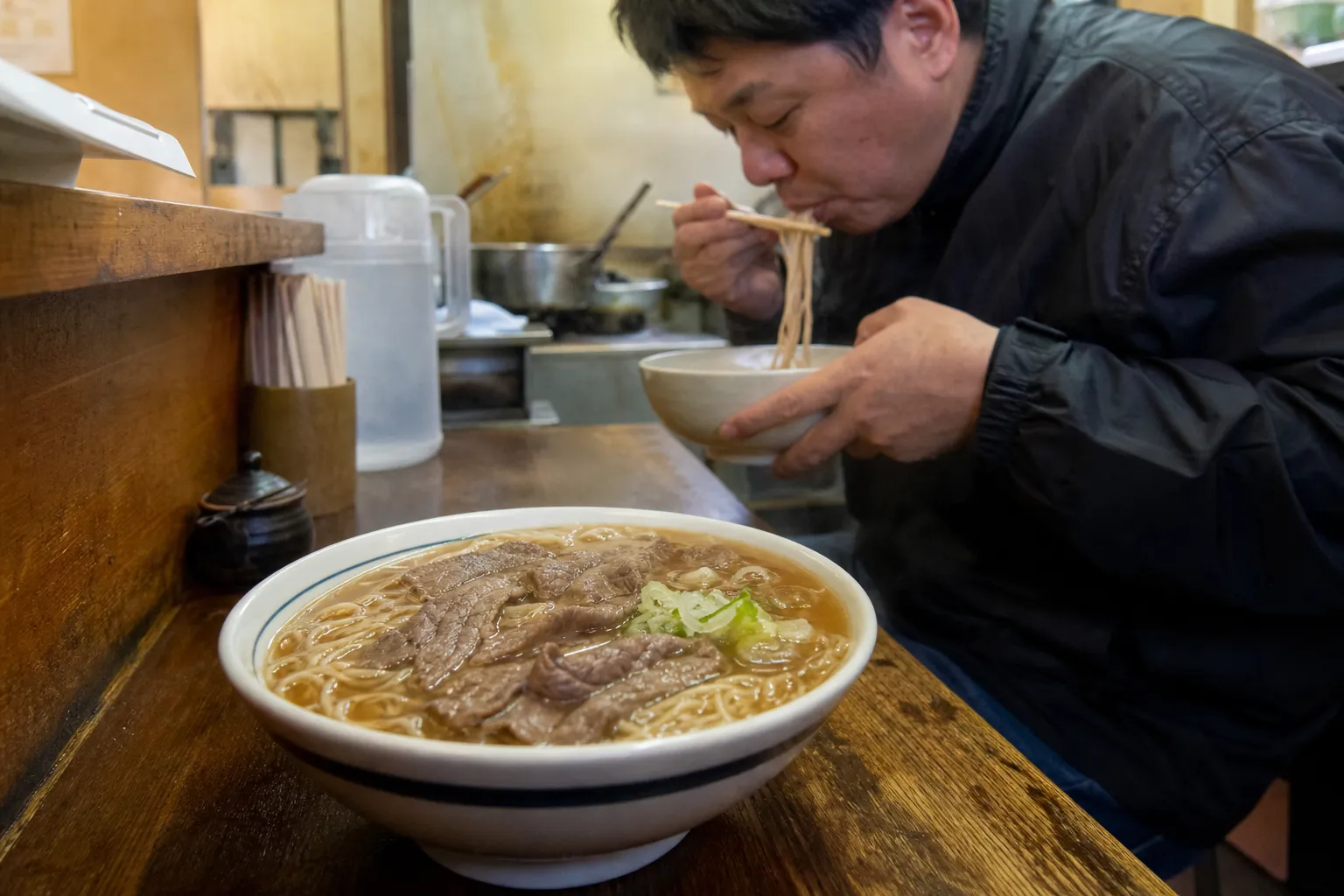
The story goes back to the postwar years, around the 1950s, when shops in the Kurayoshi area started simmering broth from beef bones — cattle country supplied them, and beef bones were what was around. It caught on locally and then just... stayed local. For decades, gyukotsu ramen was simply the ramen people in this part of Tottori grew up eating, with no special name and no fanfare, while the rest of Japan went tonkotsu-crazy and never noticed San'in was doing its own thing entirely.
Then, the way these stories always go, food media "discovered" it — counted up how many shops in this small region were quietly serving beef-bone ramen, realized it was a genuine, dense local tradition, and gave it the gyukotsu label so the rest of the country could ask for it. I find that quietly wonderful: a whole regional ramen culture that existed for half a century purely because that's how grandma's local shop made it. No marketing. Just beef bones and habit.
Sweet, deep, and not what your mouth expects
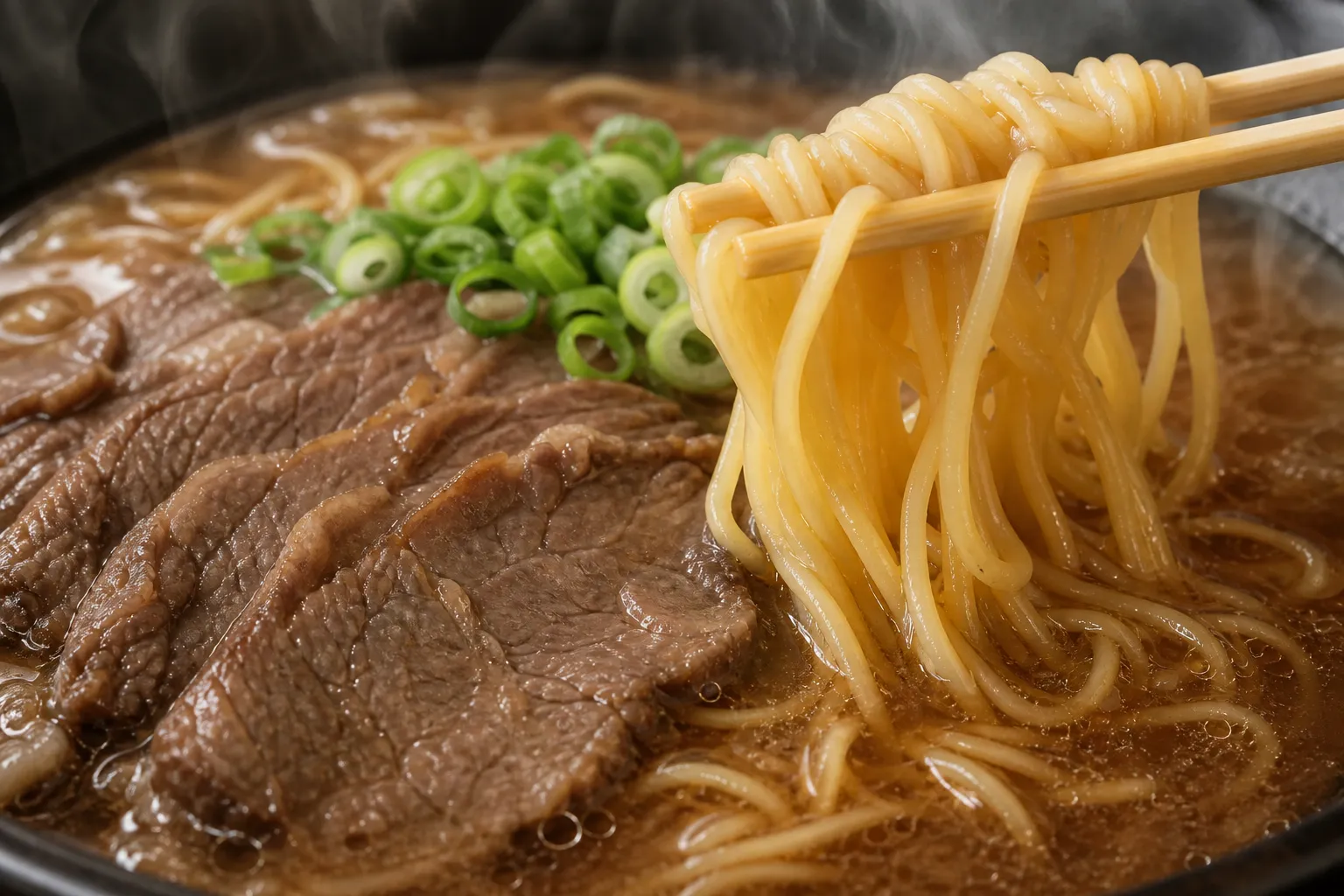
The broth is the star, and it's genuinely distinct. Beef bones give it a sweetness and a deep, savory roundness that pork-bone tonkotsu doesn't have — less of that heavy, fatty cling, more of a clean, soy-tinged richness with a faintly sweet finish. Shops vary: some keep it light and clear, some richer and more robust, but that beefy backbone is the constant. The noodles are usually medium-thin and straight, the toppings classic — chashu, green onion, menma, maybe a sheet of nori.
It's deeply comforting in a way that sneaks up on you. The first sip is the surprising one; by the third you've stopped analyzing and you're just drinking warm, beefy, slightly sweet broth in a quiet Tottori shop, completely content. I drained it. I am not sorry.
How it's made
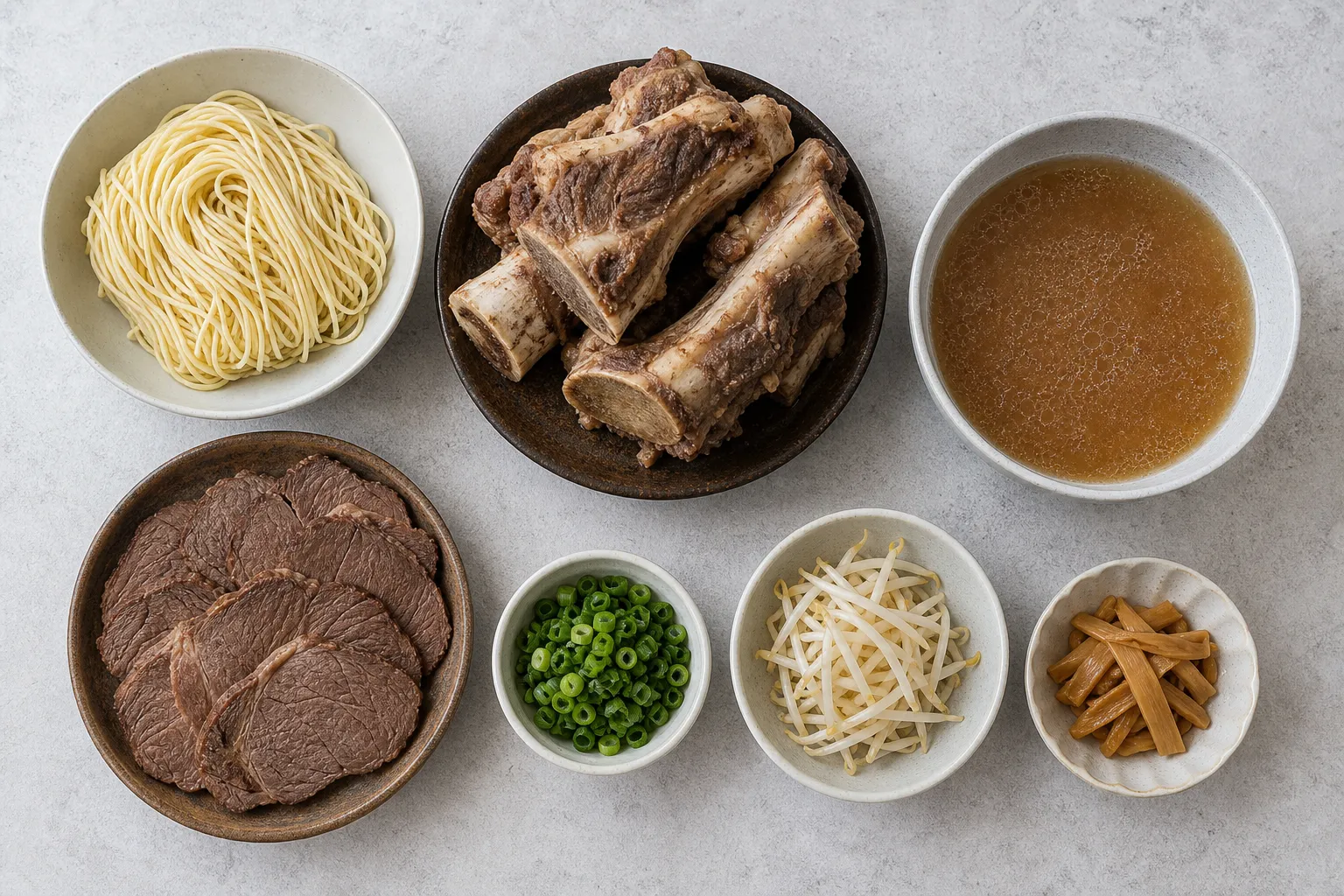
- Simmer beef bones (gyukotsu) for hours to draw out a deep, sweet, savory broth
- Skim and adjust — some shops keep it clear and light, others richer
- Season with a soy-based tare, balancing the natural sweetness of the beef stock
- Cook medium-thin straight noodles and drain
- Combine broth and noodles, then top with chashu, green onion, and menma
- Serve hot — clean, beefy, and quietly unlike any tonkotsu you've had
Before you go — for the ramen hunter
Your questions, answered honestly
"Beef-bone ramen — is it heavy like tonkotsu?" — Surprisingly no. Beef bones give sweetness and depth without the thick, fatty cling of pork-bone broth. It tends to drink cleaner and a touch sweeter. Easy to finish.
"What do I actually order?" — In Tottori, just ask for chuka soba or ramen — the beef-bone broth is the default, so you don't need to say "gyukotsu." But "gyukotsu ramen" works fine and makes it clear what you're after.
"Is it spicy?" — No. It's a gentle, savory-sweet soy-and-beef broth. Add pepper or pickled ginger if you like, but it doesn't need heat.
"Where's the heart of it?" — Kurayoshi and the central/western part of Tottori Prefecture have the densest concentration of beef-bone ramen shops. This isn't a big-city dish — it's a regional one, so seek out local shops.
What the staff will ask you
| You'll hear | Romaji | Meaning | Just say |
|---|---|---|---|
| 麺の硬さはどうしますか? | Men no katasa wa dō shimasu ka? | "How firm would you like the noodles?" | Futsū de onegaishimasu (normal, please) |
| 大盛りにしますか? | Ōmori ni shimasu ka? | "Large size?" | Futsū de daijōbu desu (normal is fine) |
| 味玉は付けますか? | Ajitama wa tsukemasu ka? | "Add a seasoned egg?" | Hai, onegaishimasu (yes please) |
To order, just say "Gyukotsu ramen kudasai" (牛骨ラーメンください) — "Beef-bone ramen, please."
Where to eat it
- Kurayoshi, Tottori — the traditional heartland of gyukotsu ramen, with long-running local shops where the beef-bone broth is simply "the ramen." The best place to taste the tradition at its source.
- Central & western Tottori Prefecture — beef-bone ramen shops dot this region; an easy try if you're traveling the San'in coast (think Tottori Sand Dunes or the Mt. Daisen area).
- Local ramen shops over chains — this is a regional, shop-by-shop tradition, so opening hours and exact styles vary. Check before you go, and favor the small local counters.
Soul Score
Local Roots5/5
First-Timer Friendly4/5
Adventure Level3/5
Comfort Level5/5
Travel Worthy4/5
These scores are one obsessed eater's gut feeling — not a verdict. A low number isn't a bad mark, just a different kind of adventure.
Know someone planning Japan?
← All Articles
Local Food · Kurayoshi, Tottori
Still hungry?
Eat more from Tottori
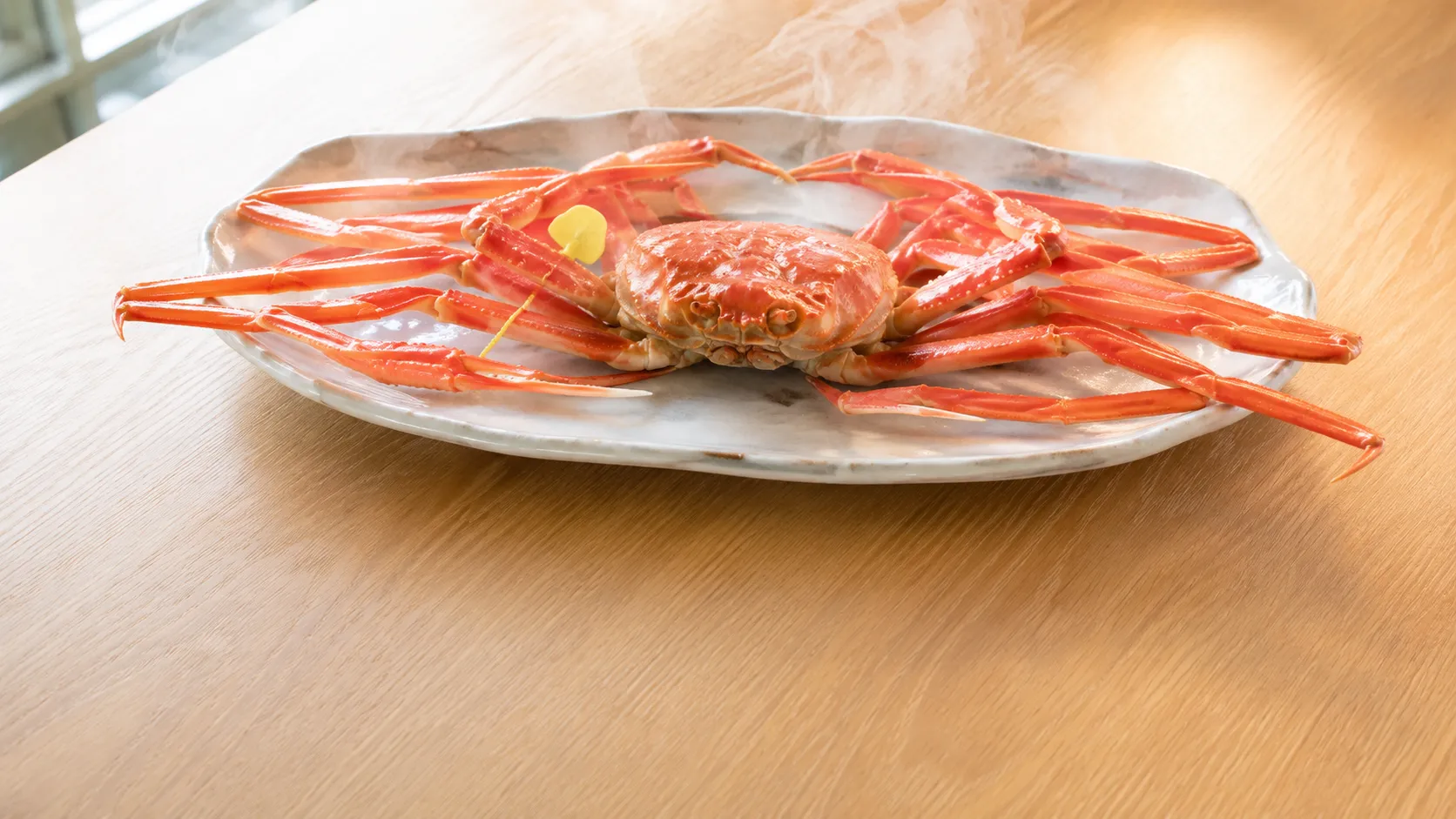
Local FoodSakaiminato, Tottori
Matsuba-gani (松葉ガニ)
There's a small plastic tag clipped to the crab's leg like a name badge, and once someone explains what it means you will never look at a crab the same way again.
September 2, 2026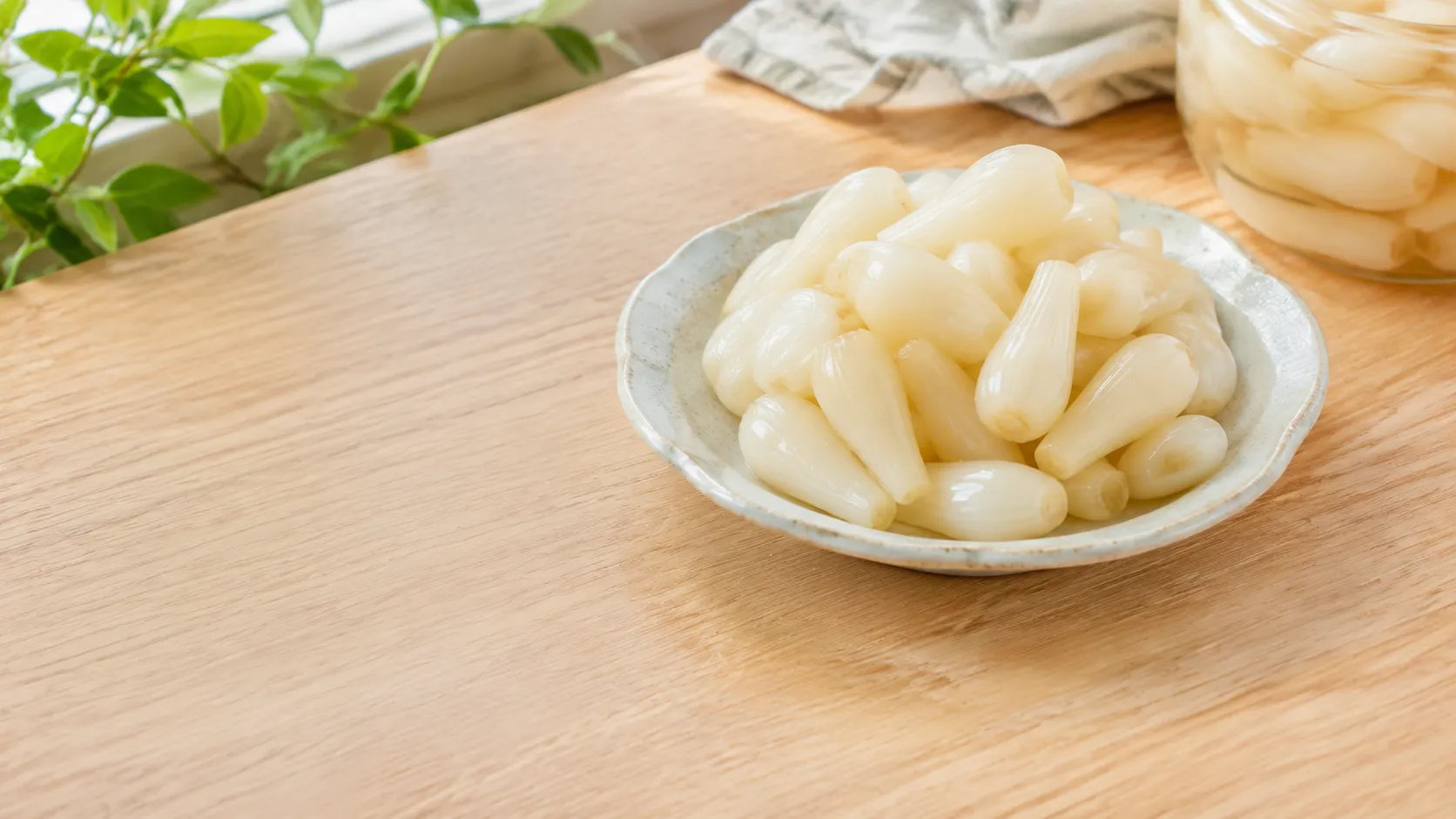
Local FoodTottori
Rakkyo (砂丘らっきょう)
The crunch is so loud I actually stopped talking mid-sentence. Then I ate five more and understood why they sit next to curry in every restaurant in Japan.
September 2, 2026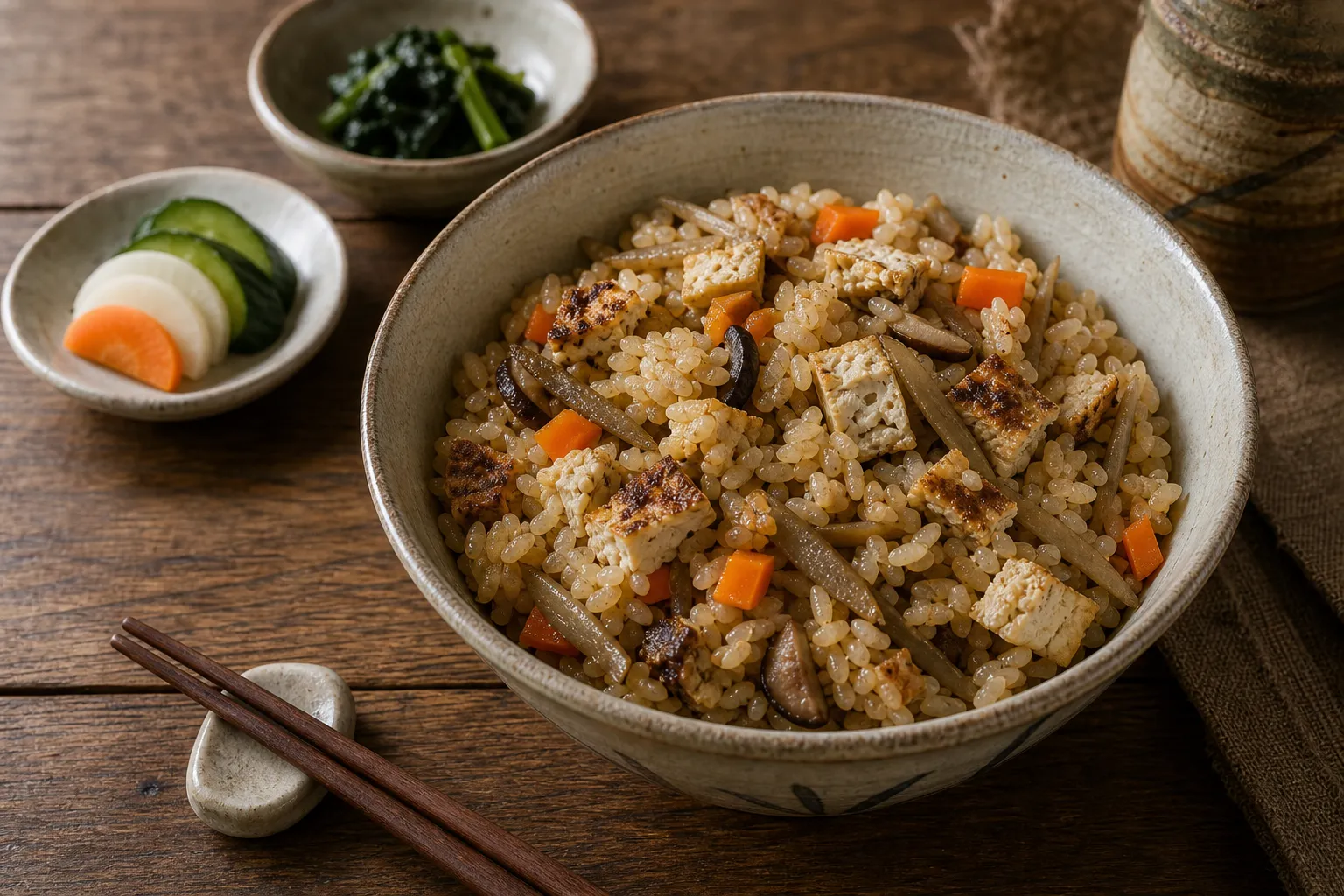
Local FoodTottori
Dondoroke-meshi (どんどろけ飯)
Rice named after thunder — because the tofu crackles like a storm when it hits the hot pan. Crumbled grilled tofu, carrot and burdock cooked right into the rice: humble Tottori country food with the best name in Japan.
July 12, 2026Keep slurping the ramen trail
Local FoodKitakata, Fukushima
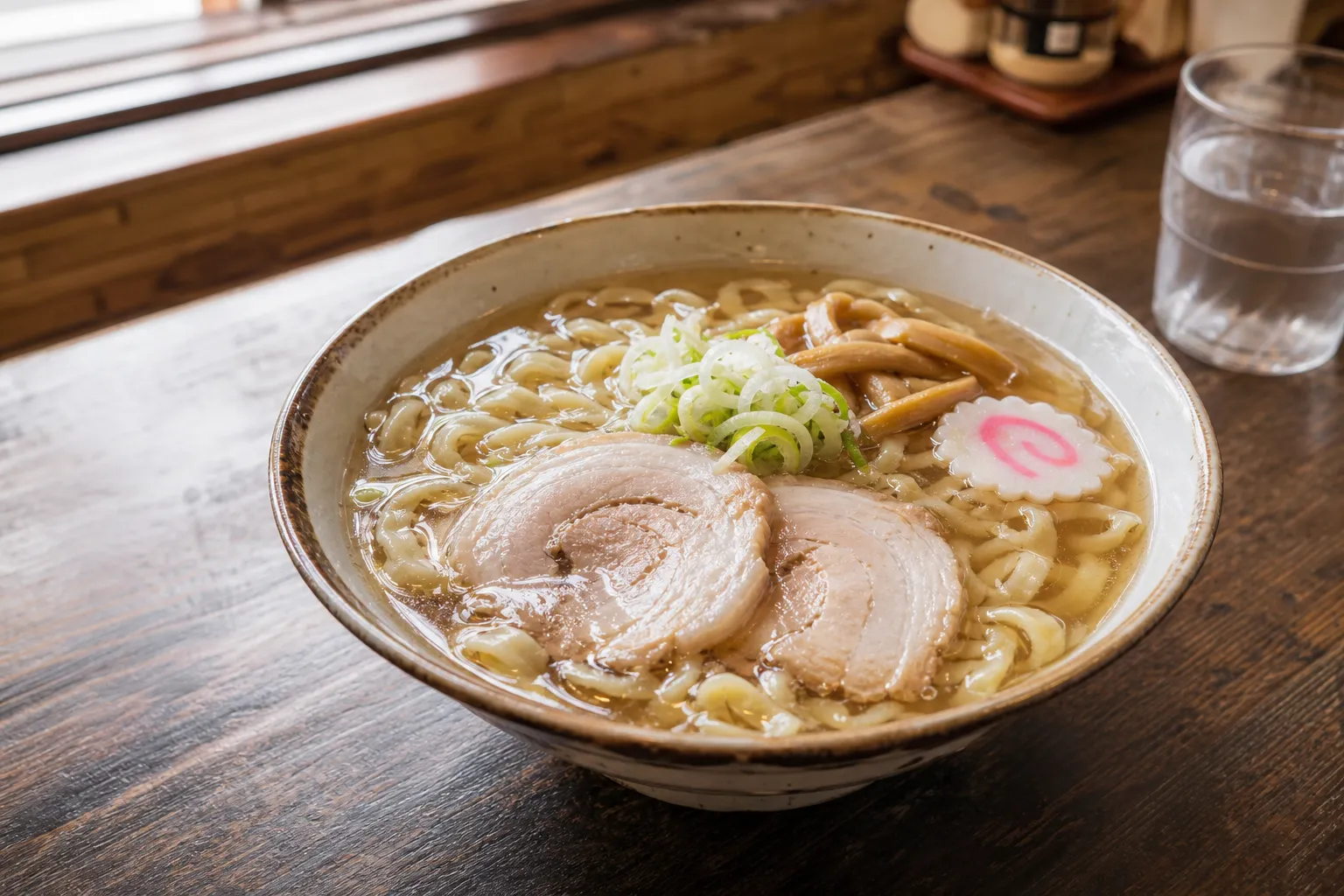
Kitakata Ramen (喜多方ラーメン)
Flat, wide, curly noodles in a clear soy broth so clean you can see the bottom of the bowl — and a town so obsessed it eats ramen for breakfast. This is comfort with the volume turned down, on purpose.
June 26, 2026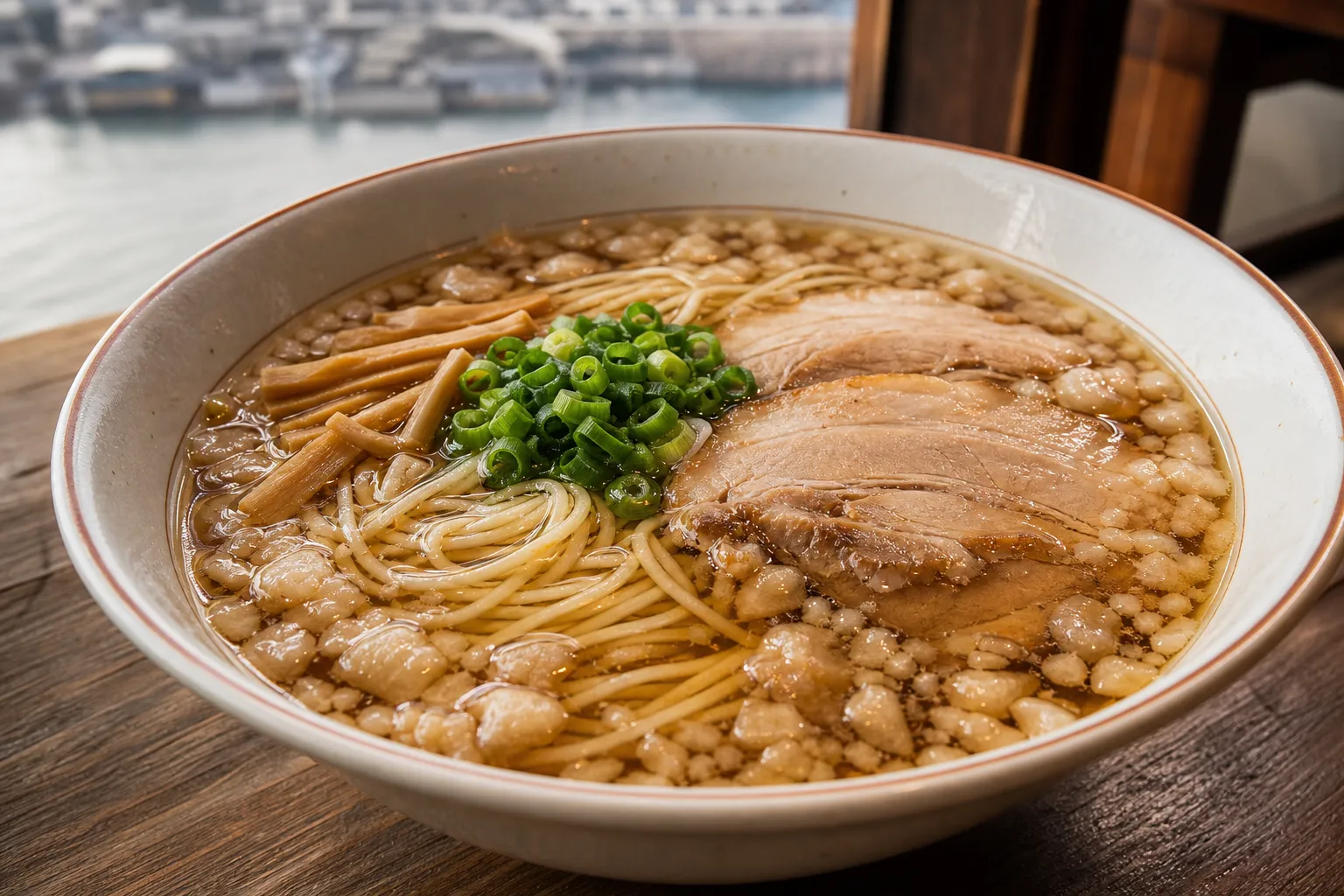
Local FoodOnomichi, Hiroshima
Onomichi Ramen (尾道ラーメン)
Clear soy broth from the Seto Inland Sea, studded with little pillows of melting pork fat that change everything. A hillside port town's bowl — light and deep at the same time, which shouldn't be possible.
June 26, 2026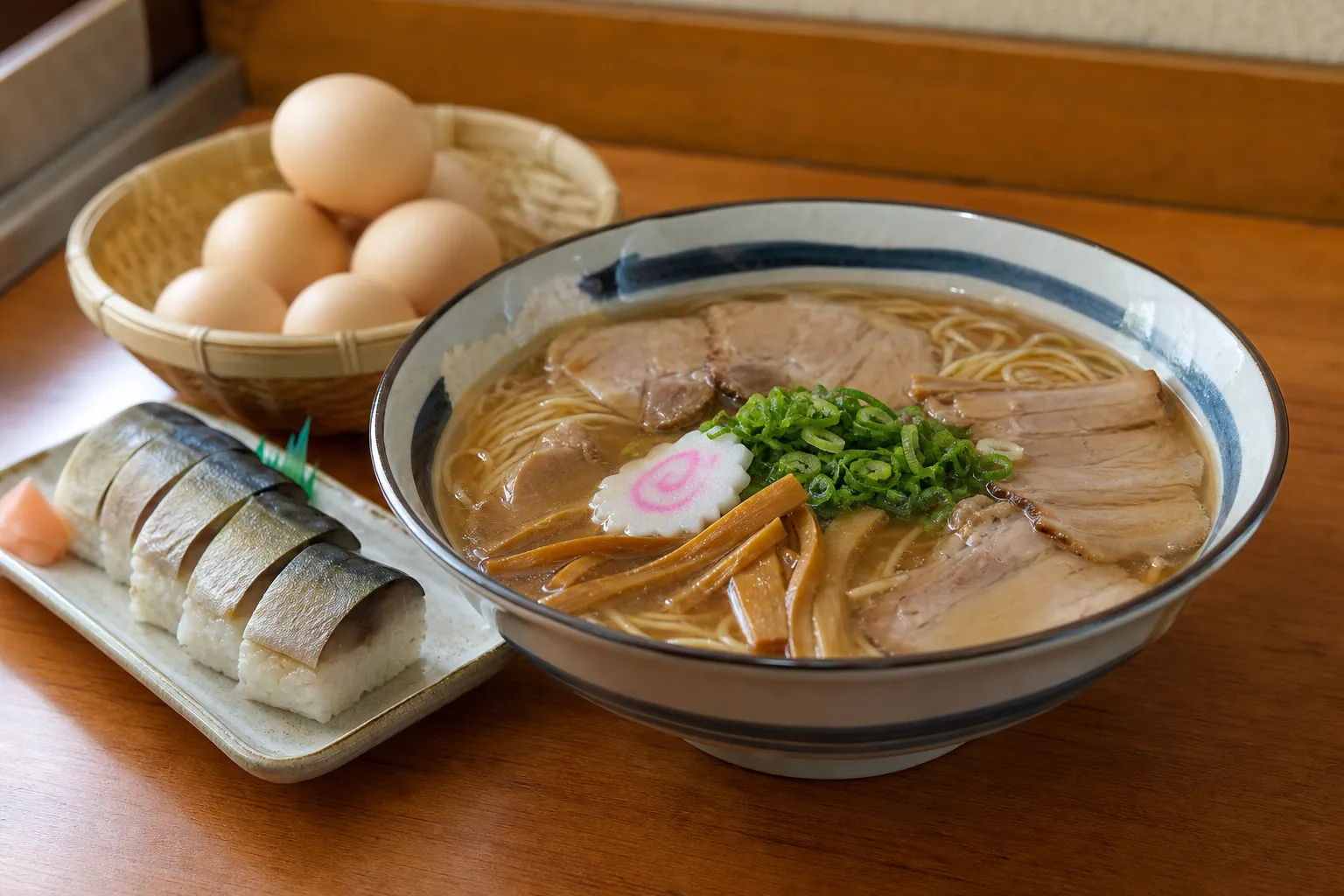
Local FoodWakayama, Wakayama
Wakayama Ramen (和歌山ラーメン)
Pork-bone-meets-soy broth, thin springy noodles — and a self-serve table loaded with pressed mackerel sushi and boiled eggs you grab while you wait. Locals don't even call it ramen. They call it the good stuff.
June 26, 2026