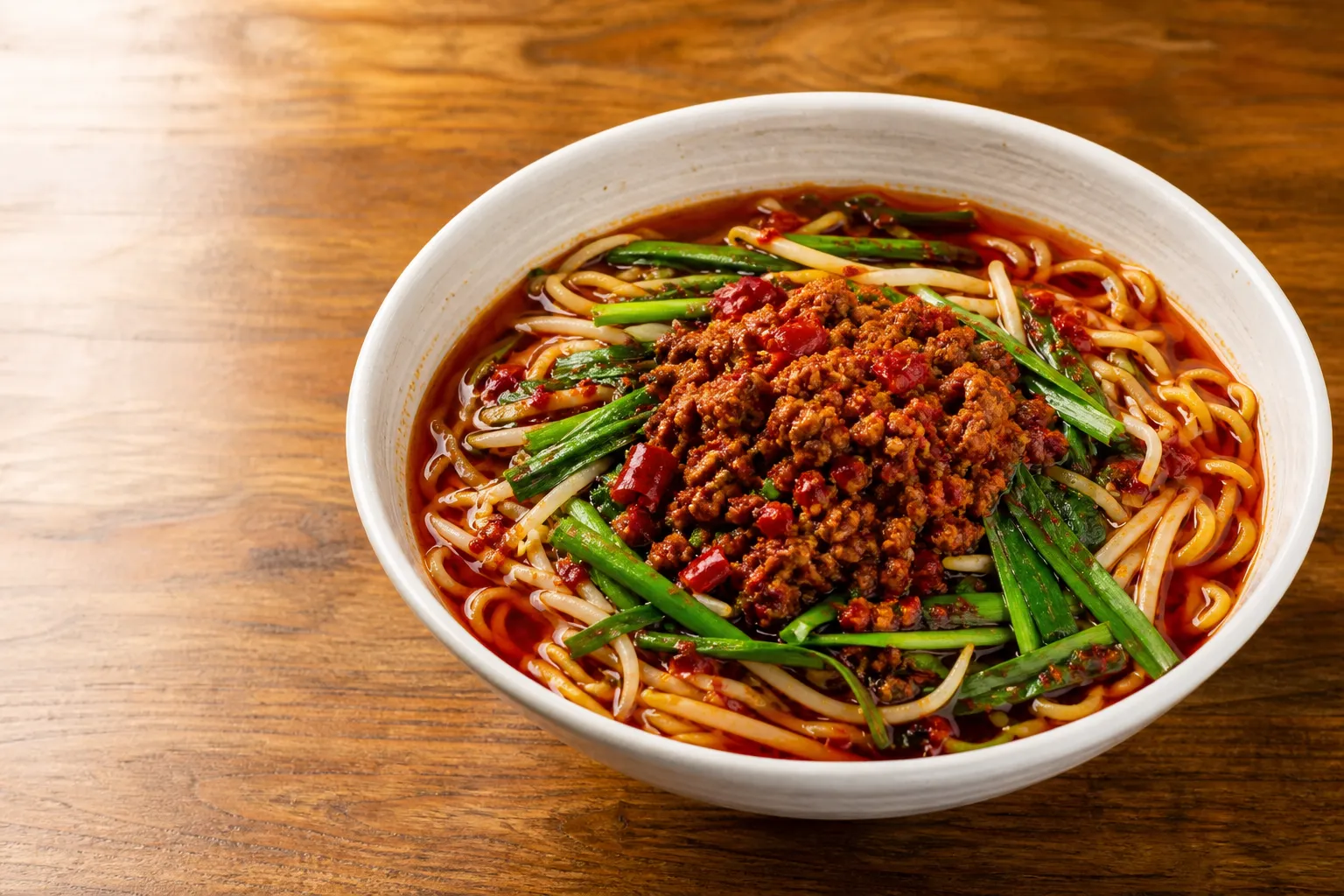
One mouthful and my scalp went hot. Not "hmm, a little kick" hot — properly, gloriously hot, the kind that arrives a half-second after you swallow and makes you sit up straight. The broth was chili-red, there was a small mountain of garlicky minced pork sliding down into it, and the whole bowl smelled like a wok that had just been through a fight. I reached for water. Then I reached for the noodles again. I did not stop.
Share this dish


A chili-red bowl buried under a mountain of garlicky, fiery minced pork — invented in Nagoya, named after Taiwan, and hotter than either has any right to be. Your scalp will know within one mouthful.
🍜 Planning a food trip to Aichi?Add this dish to my Food Trip →
 Add this dish to my Food Trip →
This is Taiwan ramen (台湾ラーメン), and here's the joke built right into the name: it is not from Taiwan. It's a Nagoya invention — a soy-based ramen in a reddish, spicy broth, buried under a generous heap of minced pork stir-fried with chili and garlic, plus garlic chives (nira) and bean sprouts. Fiery, garlicky, chili-red, and completely, defiantly local. Do not confuse it with Taiwanese beef noodle soup or a mellow sesame tantanmen. This one bites back.
The name is a beautiful lie
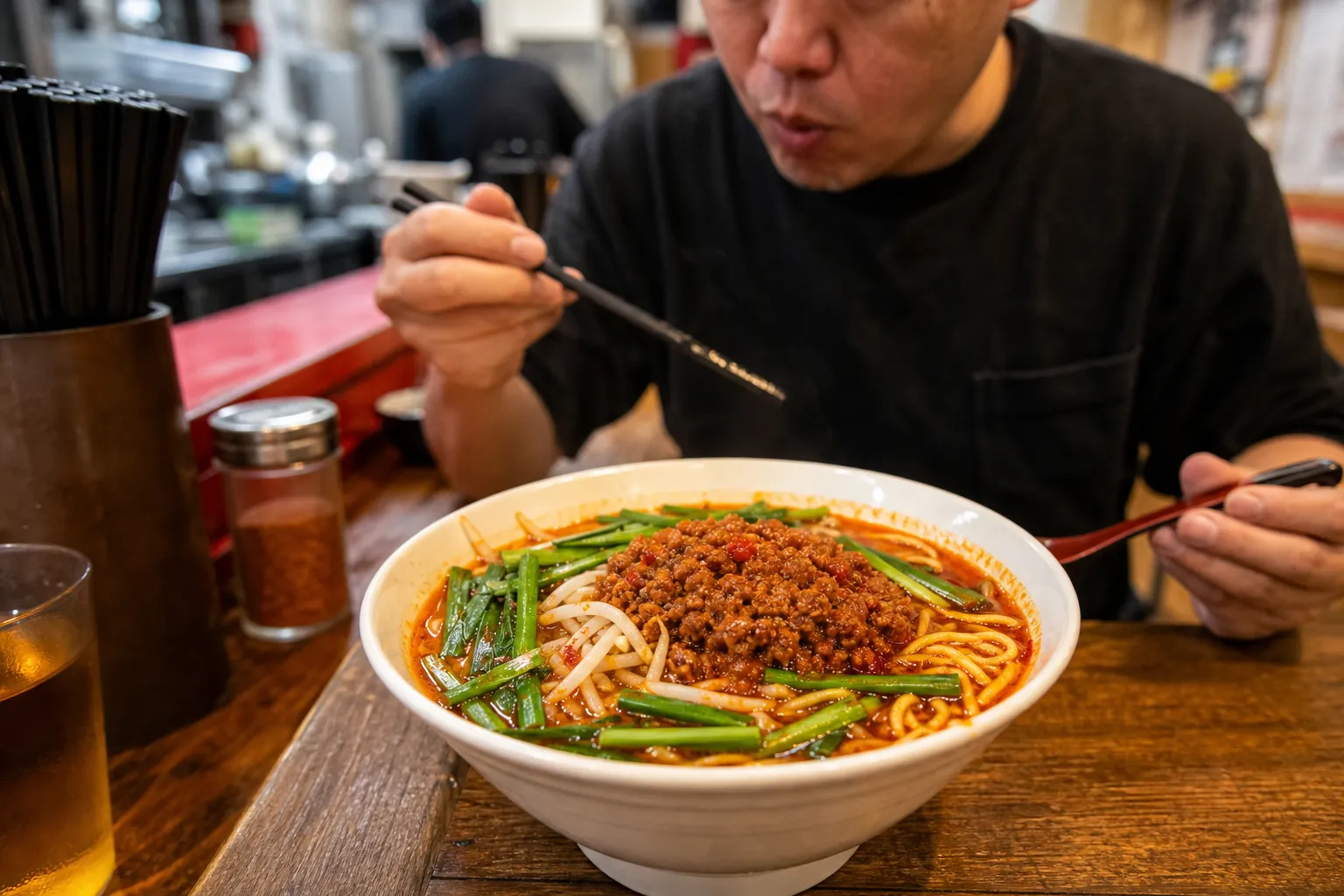
Here's the story I love. Taiwan ramen was born in Nagoya, at a shop called Misen, invented by a Taiwanese-born chef who was reportedly riffing on a spicy Taiwanese minced-pork noodle dish and cranked the chili way up — supposedly first as a fiery staff meal. Customers caught wind of it, wanted it, and it went on the menu. He named it after his roots. And so a dish that does not exist in Taiwan got called "Taiwan ramen" and became a Nagoya soul food. Go to Taiwan and ask for it and you'll get a confused look; it's ours now.
I find this genuinely funny and a little bit moving. A chef, homesick or just proud, names his creation after home — and the city adopts it so hard that it becomes a regional icon of Nagoya. The locals even lean into the absurdity: there's a milder "American" version (less spicy, like a coffee diluted for the timid) and a hotter "Italian" version (extra spicy) — joke names that only make sense as inside baseball. That's a food with a sense of humor about itself.
Why the heat works
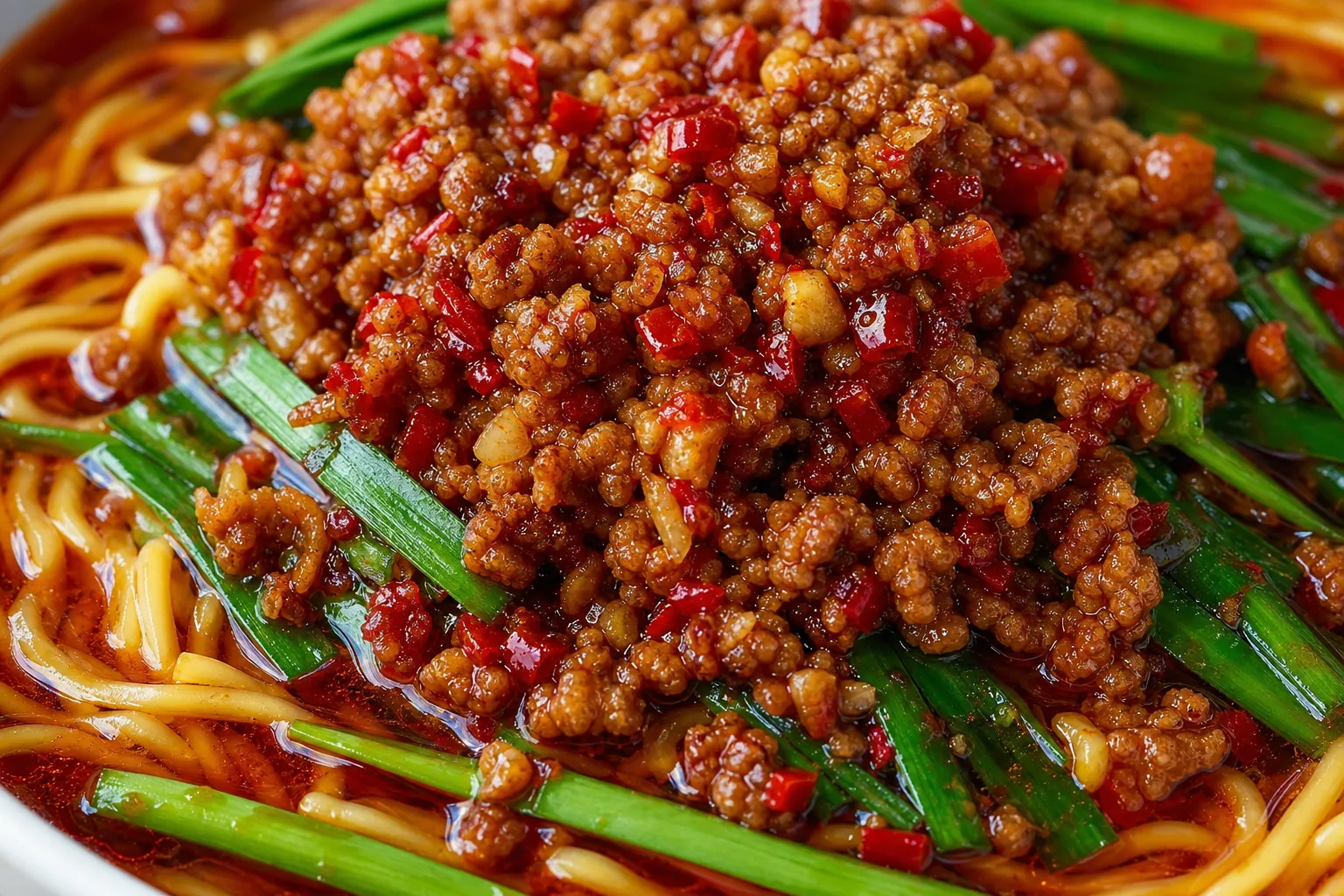
The magic is in that minced pork. It's stir-fried hard with chili and a lot of garlic, so by the time it hits the bowl it's not a topping so much as a delivery system for heat — spicy, savory, aggressive, clinging to every noodle it touches. The broth underneath is soy-based but stained red and simmering with chili, so it never lets up. Then the nira (garlic chives) and bean sprouts pile on: green, sharp, a little crunch, and more garlic, because apparently there is no such thing as enough.
It should be overwhelming. Instead it's addictive. The heat, the garlic, the springy noodles, the pork chasing you down the whole bowl — it builds instead of fading, and by the end you're sweating slightly and weirdly happy about it. I ate the whole thing faster than I meant to and immediately understood why Nagoya people talk about this bowl with actual affection. It's not subtle. It was never trying to be.
How it's made
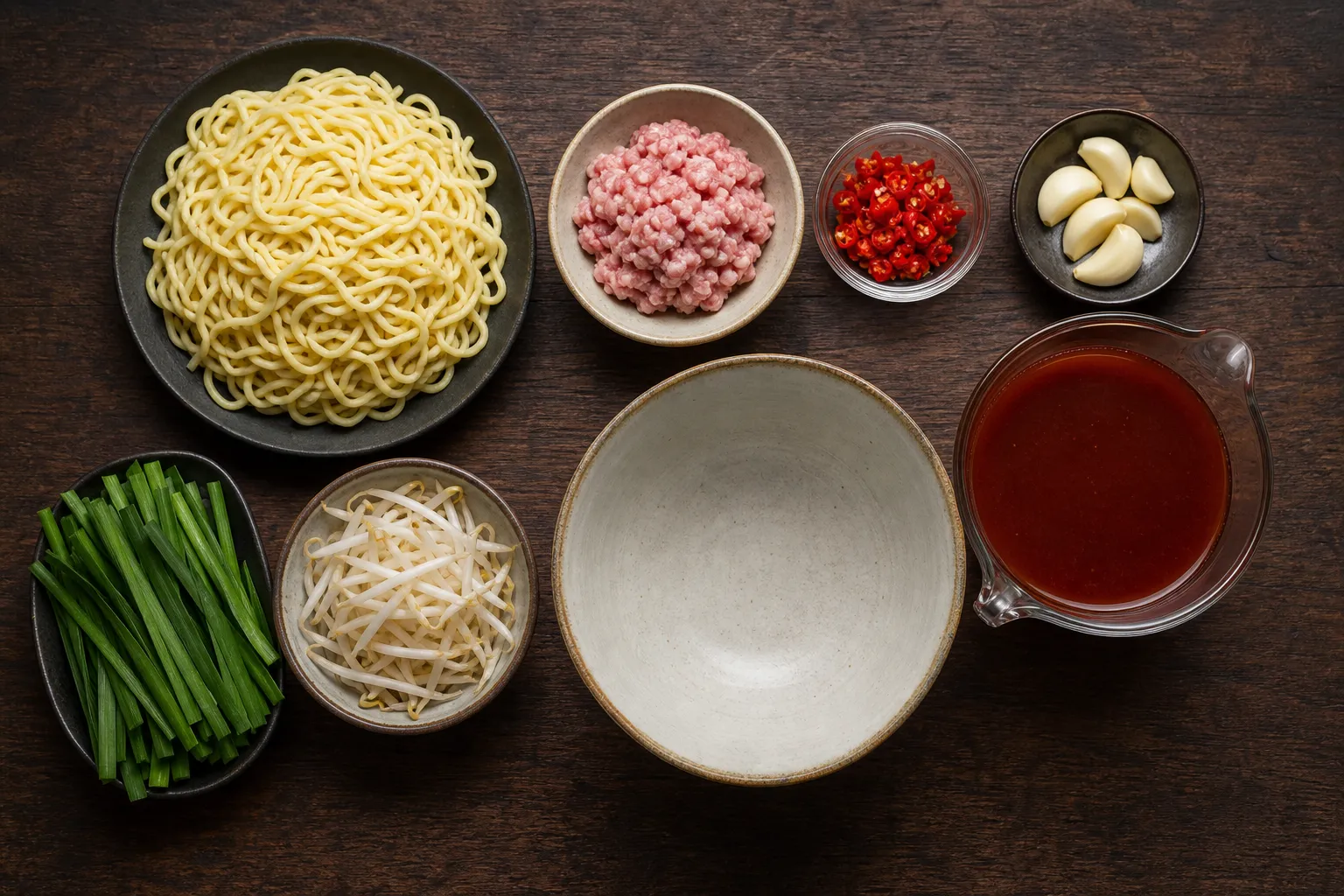
- Stir-fry minced pork hard in a hot wok with plenty of chili and garlic until it's fragrant and fiery
- Toss in garlic chives (nira) and bean sprouts near the end so they stay sharp and crunchy
- Build a soy-based ramen broth and spike it red with chili
- Boil the ramen noodles until springy
- Combine noodles and hot spicy broth in the bowl
- Crown it with the chili-garlic minced pork, nira, and sprouts — pile it on
Before you go — for the heat-seekers
Your questions, answered honestly
"Wait, it's not from Taiwan?" — Correct, and this trips everyone up. It's a Nagoya original, invented at Misen by a Taiwanese-born chef and named after his heritage. It's a beloved Nagoya local food, not a Taiwanese dish.
"How spicy are we talking?" — Genuinely spicy. The chili-and-garlic minced pork is the whole point and it does not hold back. If you're heat-shy, you can ask for the "American" version (milder). If you're a masochist about chili, the "Italian" version is extra spicy. Yes, those are the real local names, and yes, they're a joke.
"Is this like tantanmen?" — No. Tantanmen is sesame/peanut and creamy. Taiwan ramen is soy-based, chili-red, and sharp with garlic — a totally different animal. Don't confuse it with Taiwanese beef noodle soup either.
"Do I need a plan for the garlic?" — Honestly, yes. This bowl is loud with garlic. Maybe don't schedule a first date for right after. Worth it anyway.
What the staff will ask you
| You'll hear | Romaji | Meaning | Just say |
|---|---|---|---|
| 辛さはどうしますか? | Karasa wa dō shimasu ka? | "How spicy?" | Futsū de (normal) / Amerikan de (milder) / Itarian de (extra hot) |
| 大盛りにしますか? | Ōmori ni shimasu ka? | "Want a large?" | Futsū de (regular) / Ōmori de (large) |
| ニンニク入れますか? | Ninniku iremasu ka? | "Add garlic?" | Hai, onegaishimasu (yes please) / Nashi de (without) |
| 麺の固さは? | Men no katasa wa? | "Noodle firmness?" | Futsū de (normal) |
To order, just say "Taiwan ramen kudasai" (台湾ラーメンください) — "Taiwan ramen, please."
Where to eat it
- Misen (味仙), Nagoya — the well-known originator chain, the shop credited with inventing the bowl. The Imaike area is its home turf and the classic place to eat Taiwan ramen at the source.
- Around Nagoya — the dish spread across the city and beyond into a whole genre (you'll even see "Taiwan"-flavored spin-offs like Taiwan mazesoba), so Nagoya ramen shops are your best hunting ground.
- Check before you go — popular Nagoya shops keep their own hours and can queue at peak times, so confirm the details for the specific branch before you make the trip.
Soul Score
Local Roots4/5
First-Timer Friendly3/5
Adventure Level4/5
Comfort Level4/5
Travel Worthy4/5
These scores are one obsessed eater's gut feeling — not a verdict. A low number isn't a bad mark, just a different kind of adventure.
Planning what to eat in Nagoya?🍤 Nagoya Food Guide: What to Eat, Where to Start, and How to Order →
Know someone planning Japan?
← All Articles
Local Food · Nagoya, Aichi
Still hungry?
Eat more from Aichi
Sweets & SnacksNagoya, Aichi
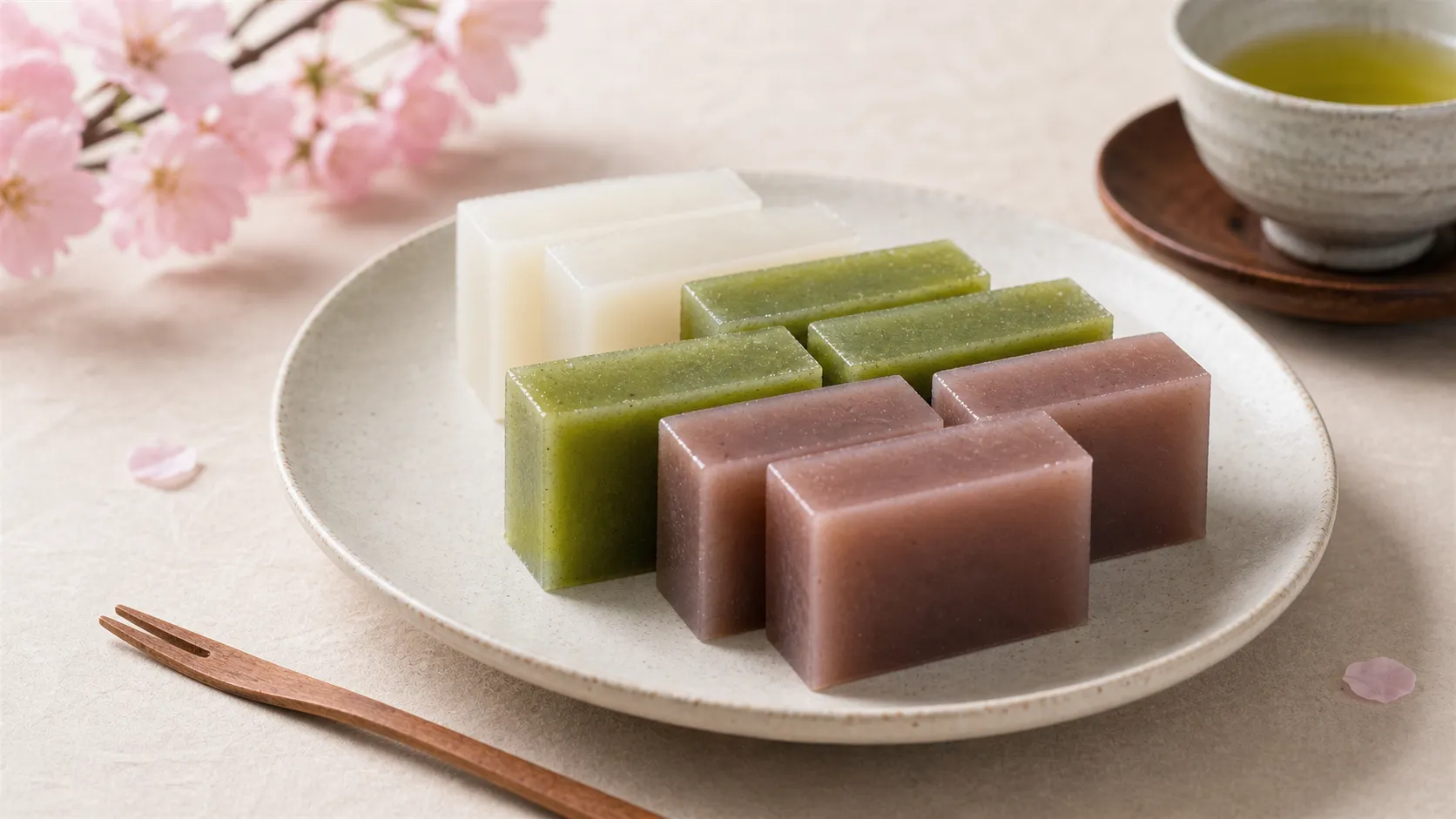
Uiro (ういろう)
A steamed cake of rice flour and sugar that's somehow both chewy and clean, mild and moreish — Nagoya's understated, faintly wobbly sweet that grows on you until you can't stop buying it at the station.
July 10, 2026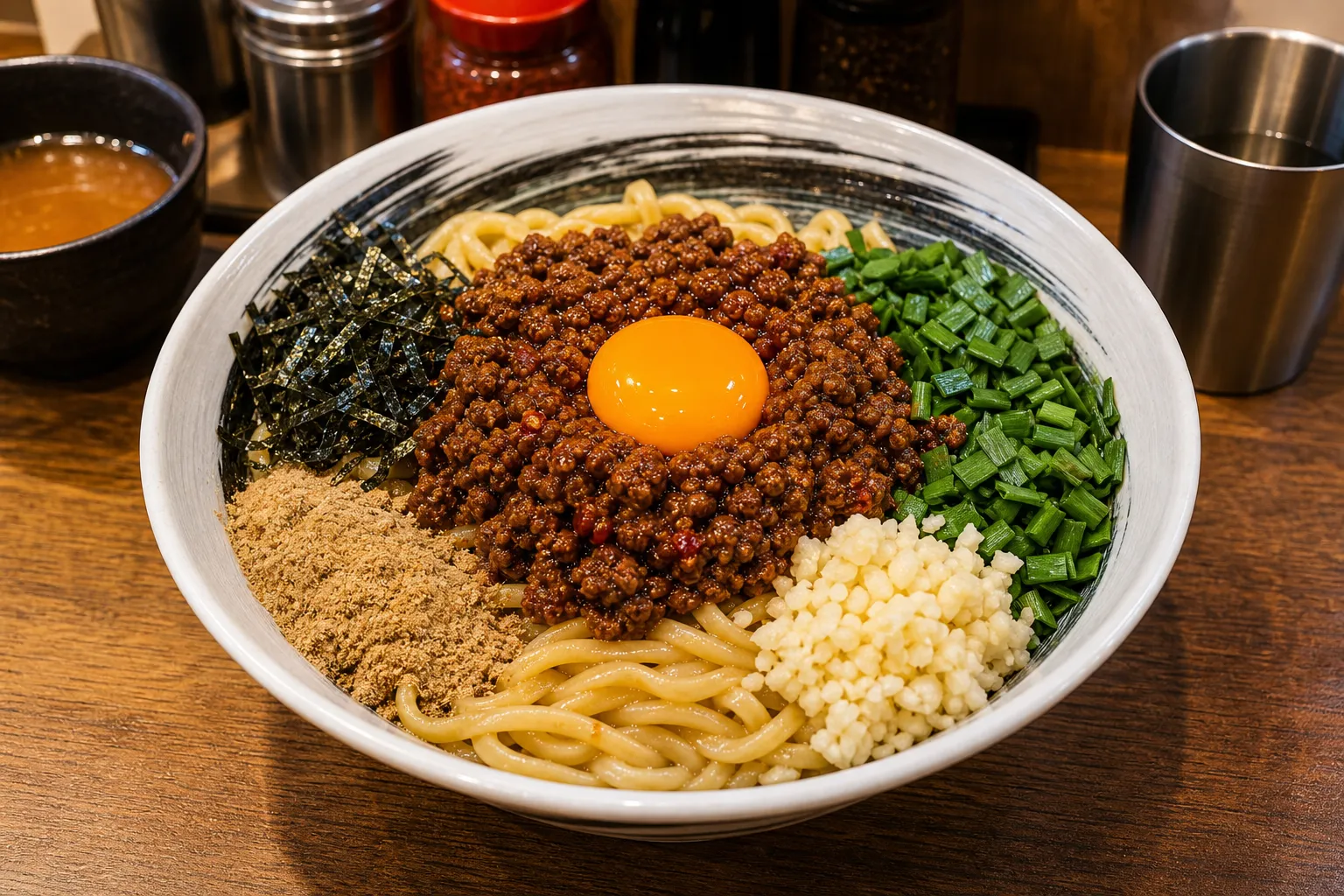
Local FoodNagoya
Taiwan Mazesoba (台湾まぜそば)
Break the egg yolk, plunge in, and mix like you're furious — this brothless Nagoya bomb of spicy pork, raw garlic and chives doesn't reveal itself until it's a chaotic, glorious mess.
July 9, 2026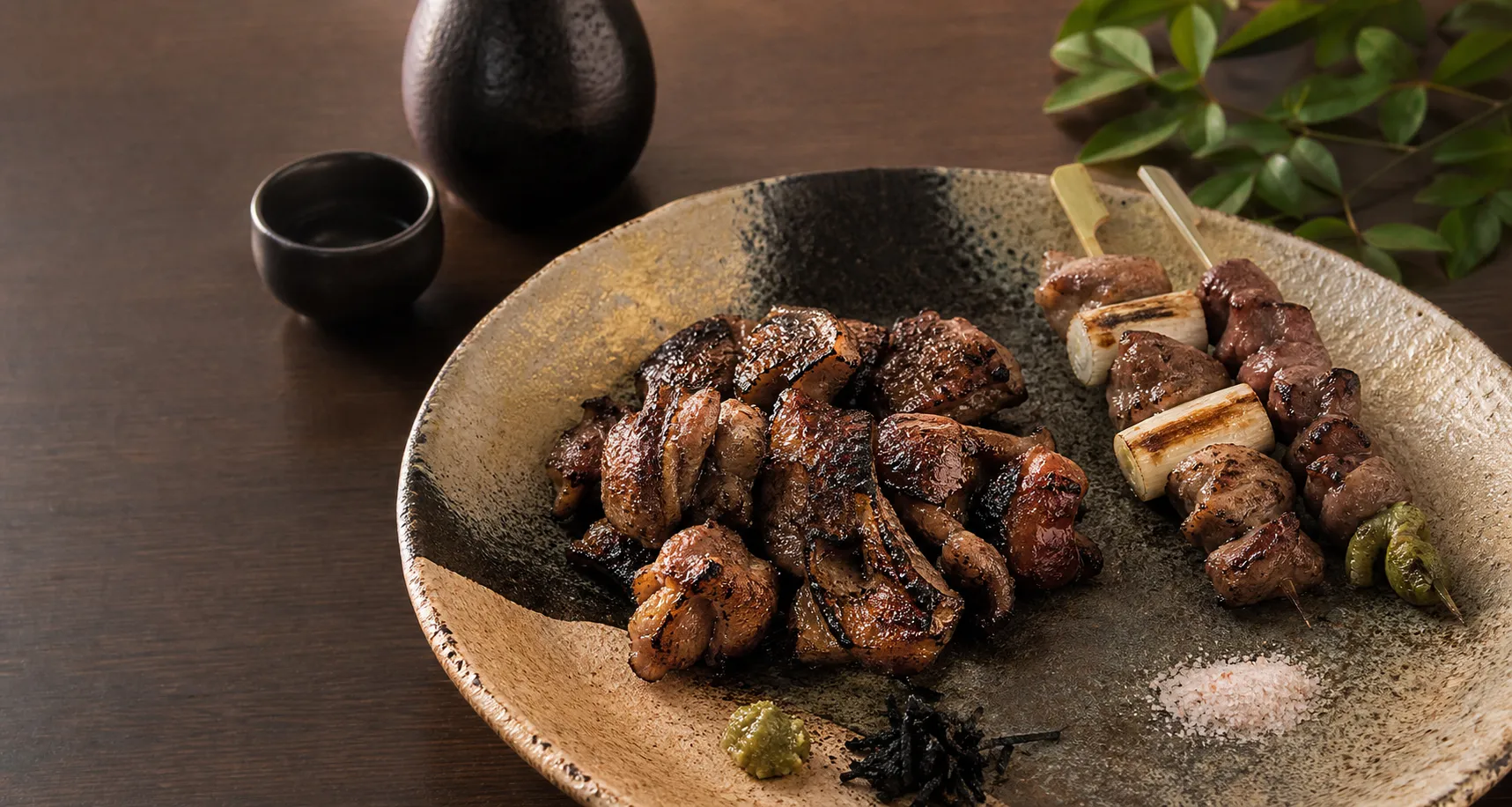
Local FoodNagoya, Aichi
Nagoya Cochin (名古屋コーチン)
Everyone warns you about the chewiness like it's a flaw — but that first spring-back bite of charcoal-grilled thigh is exactly the point, and I get it now.
July 5, 2026