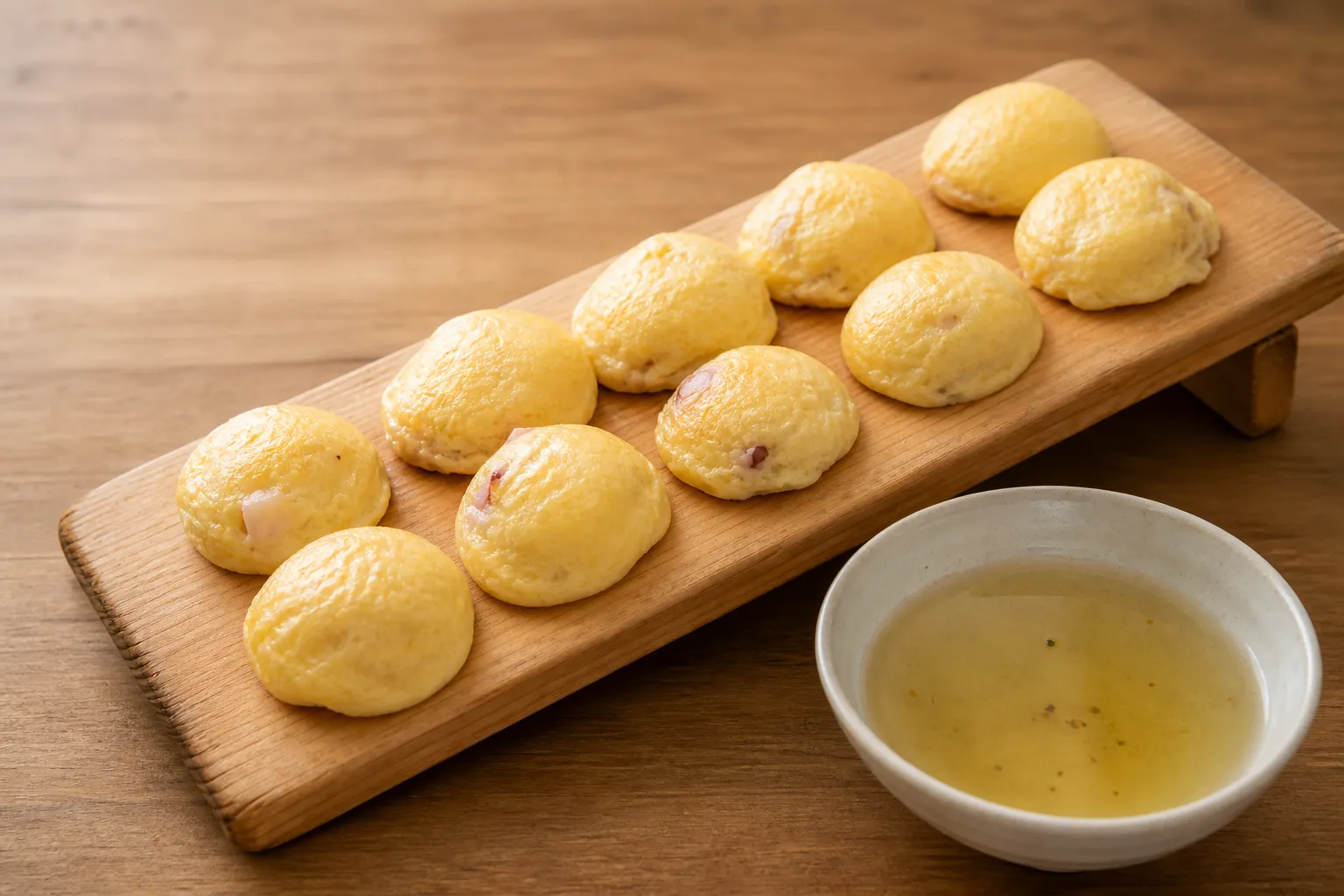
I picked one up with chopsticks and it nearly fell apart on the way to the bowl. Not a fail — a feature. These things are that soft, almost custard, barely holding their round shape, and the move is to dunk them into a little bowl of warm dashi and eat them before they collapse. The first one practically dissolved on my tongue. I made an involuntary noise. The vendor smiled like he'd seen it a thousand times.
Share this dish


Imagine takoyaki, but so soft it barely holds together — pale, eggy, wobbling on a wooden board, and dunked into a bowl of warm dashi instead of drowned in sauce. Akashi's gentle original.
🍜 Planning a food trip to Hyogo?Add this dish to my Food Trip →
 Add this dish to my Food Trip →
This is akashiyaki (明石焼き), from the port town of Akashi in Hyogo — and locals actually call it tamagoyaki. Picture takoyaki's gentler, older ancestor: round dumplings made from an egg-rich batter with a piece of octopus inside, so soft they wobble, served on a slanted wooden board and dipped into warm dashi broth instead of being slathered in sauce and mayo. It's the dish takoyaki grew up from, and honestly? It might be the more beautiful one.
The dish takoyaki came from
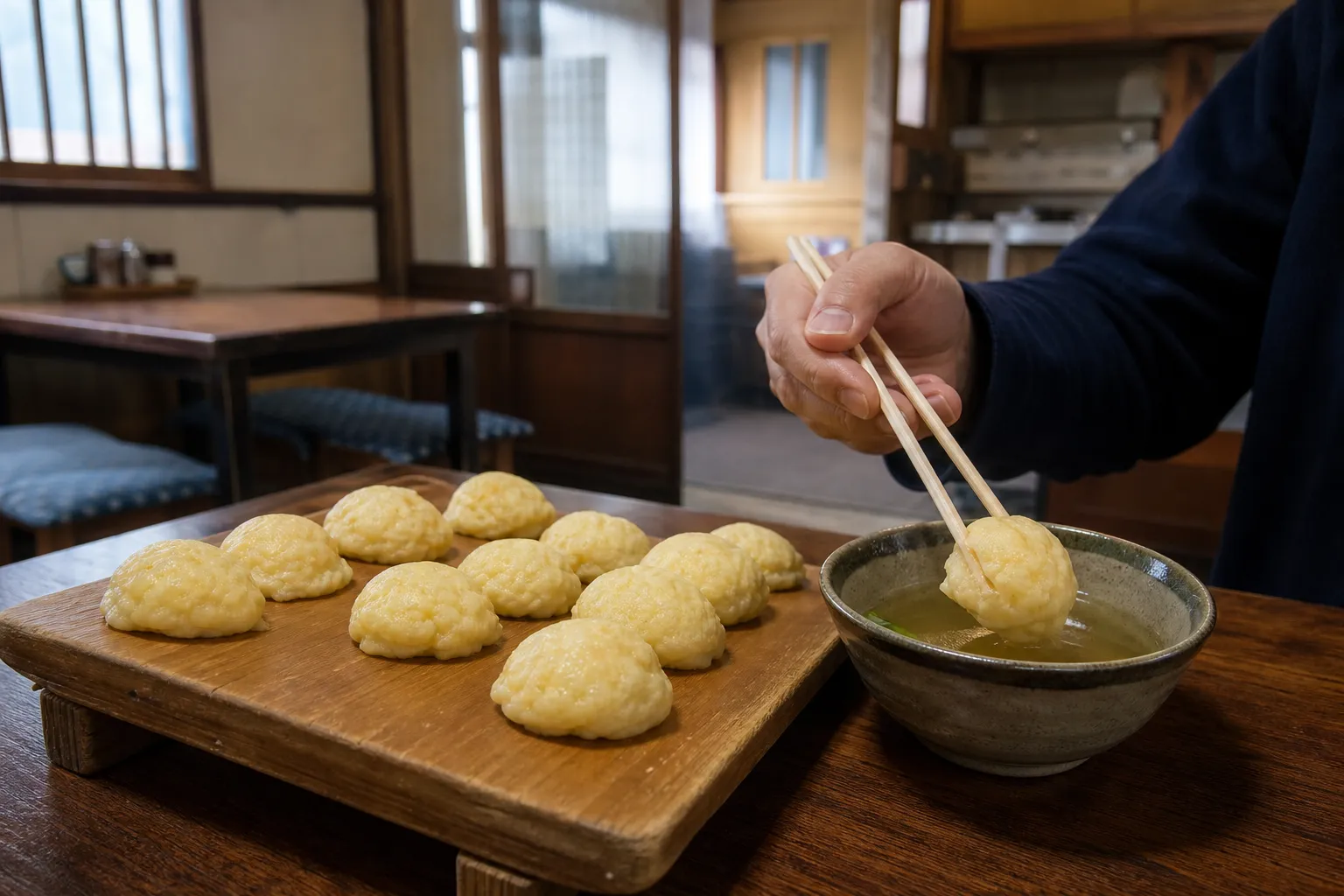
Akashi is an octopus town — the strong tides of the Akashi Strait produce famously firm, sweet octopus — so it makes sense that this is where the octopus dumpling was perfected first. Akashiyaki came before Osaka's takoyaki and quietly shaped it. But where takoyaki went loud (crisp shell, brown sauce, mayo, bonito waving in the heat), akashiyaki stayed delicate: more egg, almost no crust, and that bowl of clean dashi instead of sauce.
I find the restraint kind of wonderful. This is a dish that could have chased the festival-snack spotlight and didn't. It just kept being soft, eggy, and dashi-dipped, the way Akashi has always liked it. I ate a whole board, dipping each one, and felt like I was let in on a quieter, older secret hiding behind the famous cousin.
Why the softness works
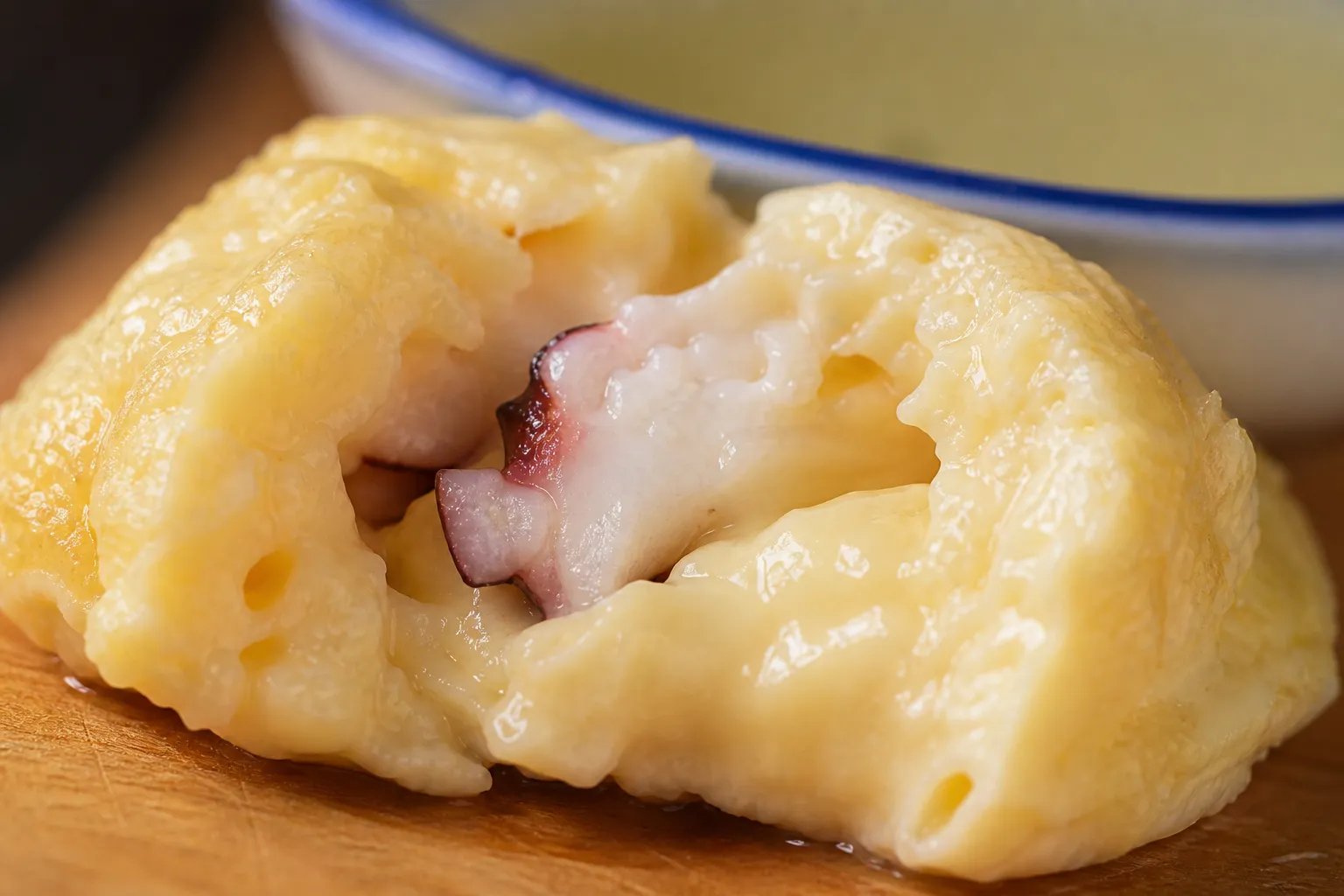
The texture is the whole experience. Far more egg than takoyaki and very little flour means the inside stays loose and custardy, almost like a savory pudding wrapped around a chunk of springy octopus. There's no crunchy shell to bite through — you dip, you lift, and it gives way instantly, warm dashi and egg and octopus all at once.
The dashi is the genius move. Warm, light, faintly sweet, it soaks into the spongy dumpling and turns each bite into something between a snack and a soup. Sauce would bully a dumpling this gentle; dashi cradles it. By the end I was drinking the leftover broth straight from the bowl, and I regret nothing.
How it's made
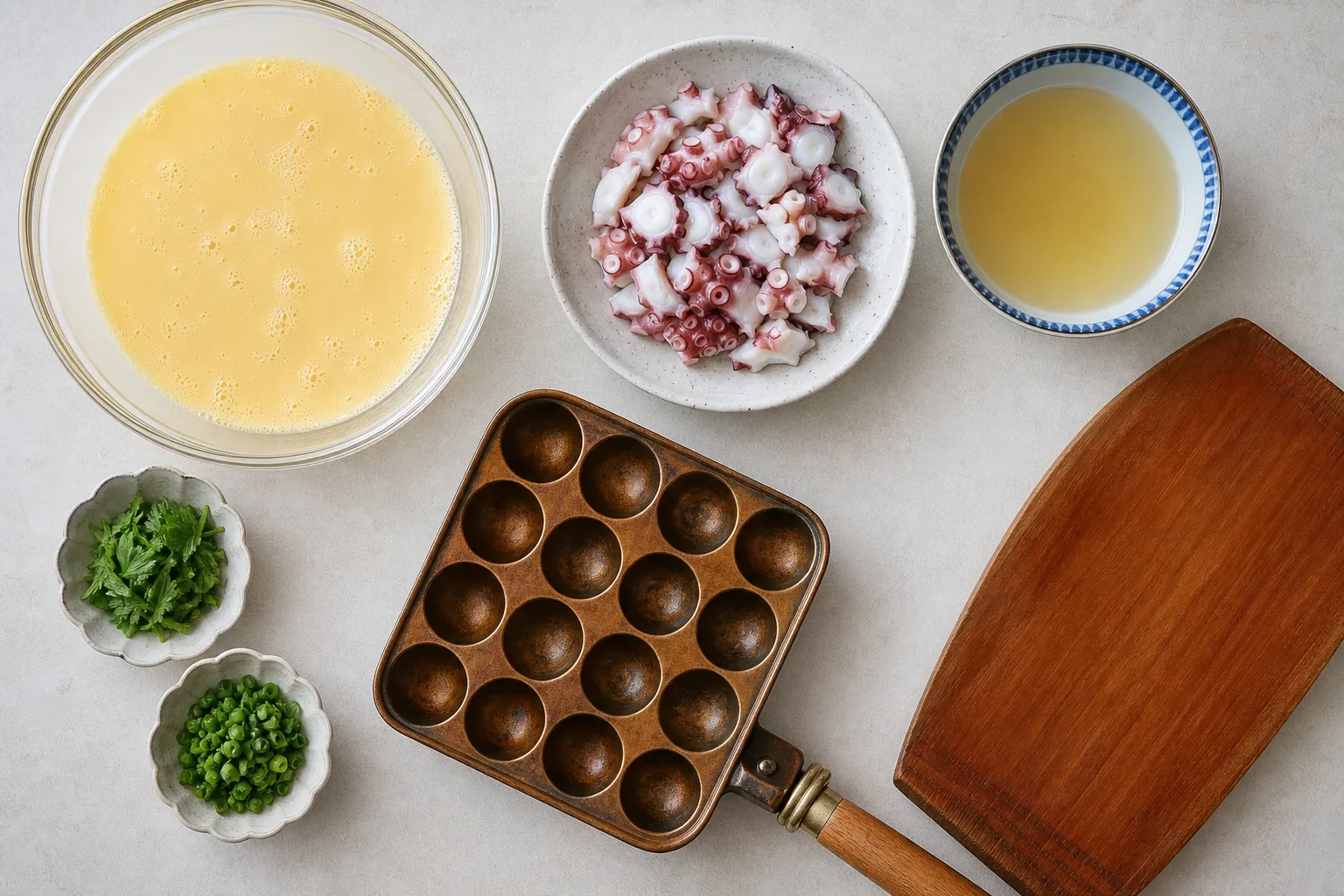
- Whisk a batter heavy on egg with a little soft flour and dashi (much eggier than takoyaki)
- Pour into a dimpled pan and drop a piece of octopus into each well
- Cook gently and turn, keeping the centers soft and custardy — not browned and crisp
- Line them up on a slanted wooden board (oage)
- Serve with a bowl of warm dashi broth alongside
- Dip each dumpling into the dashi and eat while hot and soft
Before you go — for the takoyaki-curious
Your questions, answered honestly
"Is this just takoyaki?" — No — it's the gentler original. Akashiyaki has far more egg, almost no crisp shell, and you dip it in dashi instead of coating it in sauce and mayo. If you only know takoyaki, this will genuinely surprise you.
"Why is it so soft / falling apart?" — That's correct akashiyaki. The high-egg batter is meant to stay custardy. Use chopsticks gently and dip carefully; don't expect a firm ball.
"Sauce or dashi?" — Dashi. The warm broth is the point. Some shops offer sauce too, but try it dashi-first the way Akashi intends.
"Is it spicy? Is it hot?" — Not spicy at all, but freshly made and very hot inside — let the first one cool a second before you commit.
What the staff will ask you
| You'll hear | Romaji | Meaning | Just say |
|---|---|---|---|
| 何人前にしますか? | Nan-nin-mae ni shimasu ka? | "How many servings?" | Ichi-nin-mae (one serving) |
| だしで召し上がってください | Dashi de meshiagatte kudasai | "Please eat it with the dashi" | Hai, arigatō (yes, thanks) |
| お持ち帰りですか? | Omochikaeri desu ka? | "Takeaway?" | Tennai de (eating in) |
To order, just say "Akashiyaki kudasai" (明石焼きください) — "Akashiyaki, please."
Where to eat it
- Akashi, Hyogo — the birthplace, an easy train ride west of Kobe. Specialist shops cluster near Akashi Station and the Uonotana (魚の棚) covered market, where the octopus is about as fresh as it gets.
- Around Akashi Station — the most convenient place to grab a board if you're passing through on the way to or from Kobe/Himeji.
- Check before you go — small shops keep their own hours and can sell out; confirm timing, especially outside lunch.
Soul Score
Local Roots5/5
First-Timer Friendly4/5
Adventure Level3/5
Comfort Level5/5
Travel Worthy4/5
These scores are one obsessed eater's gut feeling — not a verdict. A low number isn't a bad mark, just a different kind of adventure.
Planning what to eat in Hyogo?🐙 Hyogo Food Guide: Kobe Beef, Akashiyaki, and What to Eat Across Kobe, Himeji and Akashi →
Know someone planning Japan?
← All Articles
Local Food · Akashi, Hyogo
Still hungry?
Eat more from Hyogo
Local FoodTamba-Sasayama, Hyogo
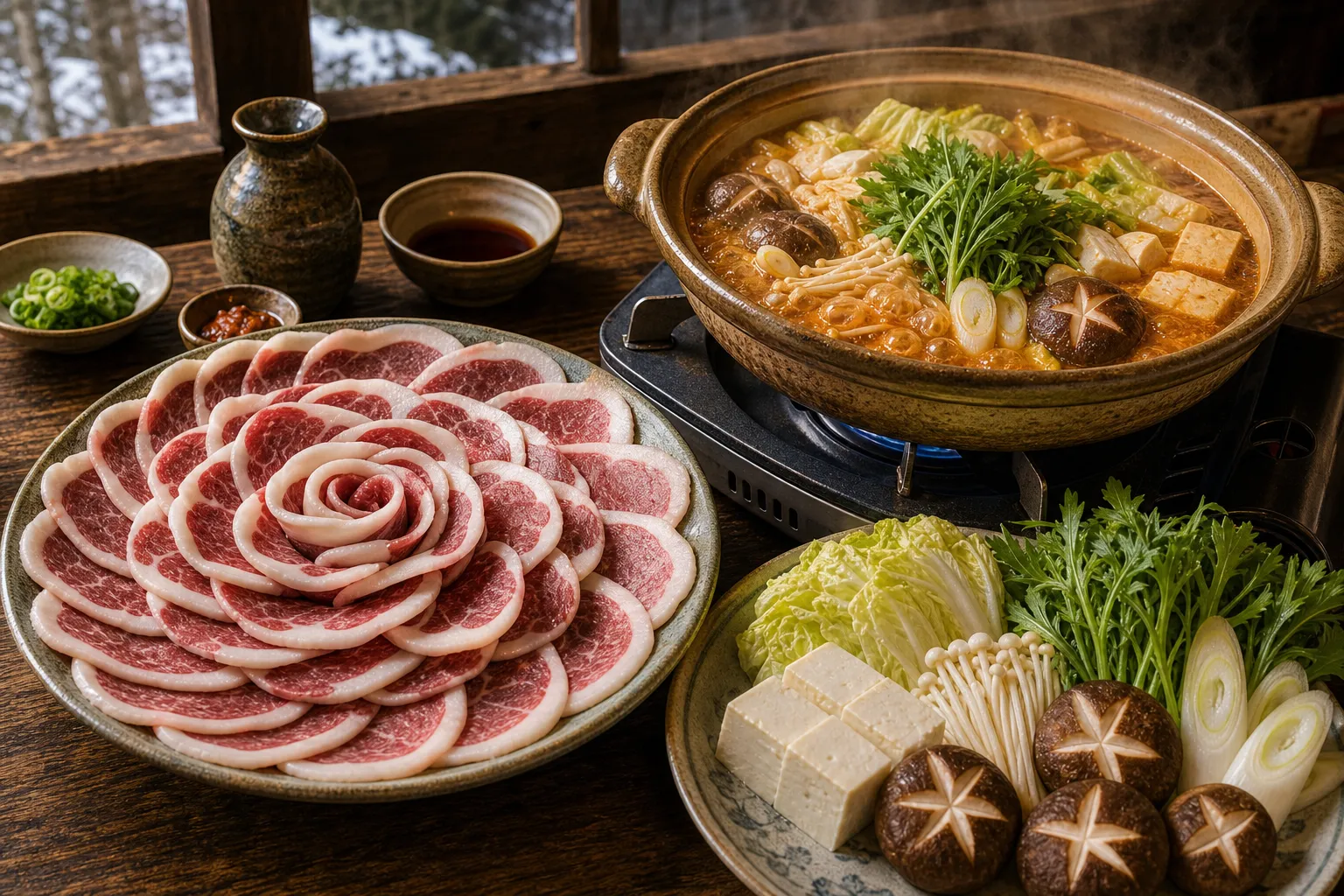
Botan-nabe (牡丹鍋)
Wild boar, sliced so thin and marbled that it's laid out like the petals of a peony flower, then simmered in a sweet-savory miso broth in the mountains of Hyogo — the winter game dish that tastes nothing like you're bracing for.
July 10, 2026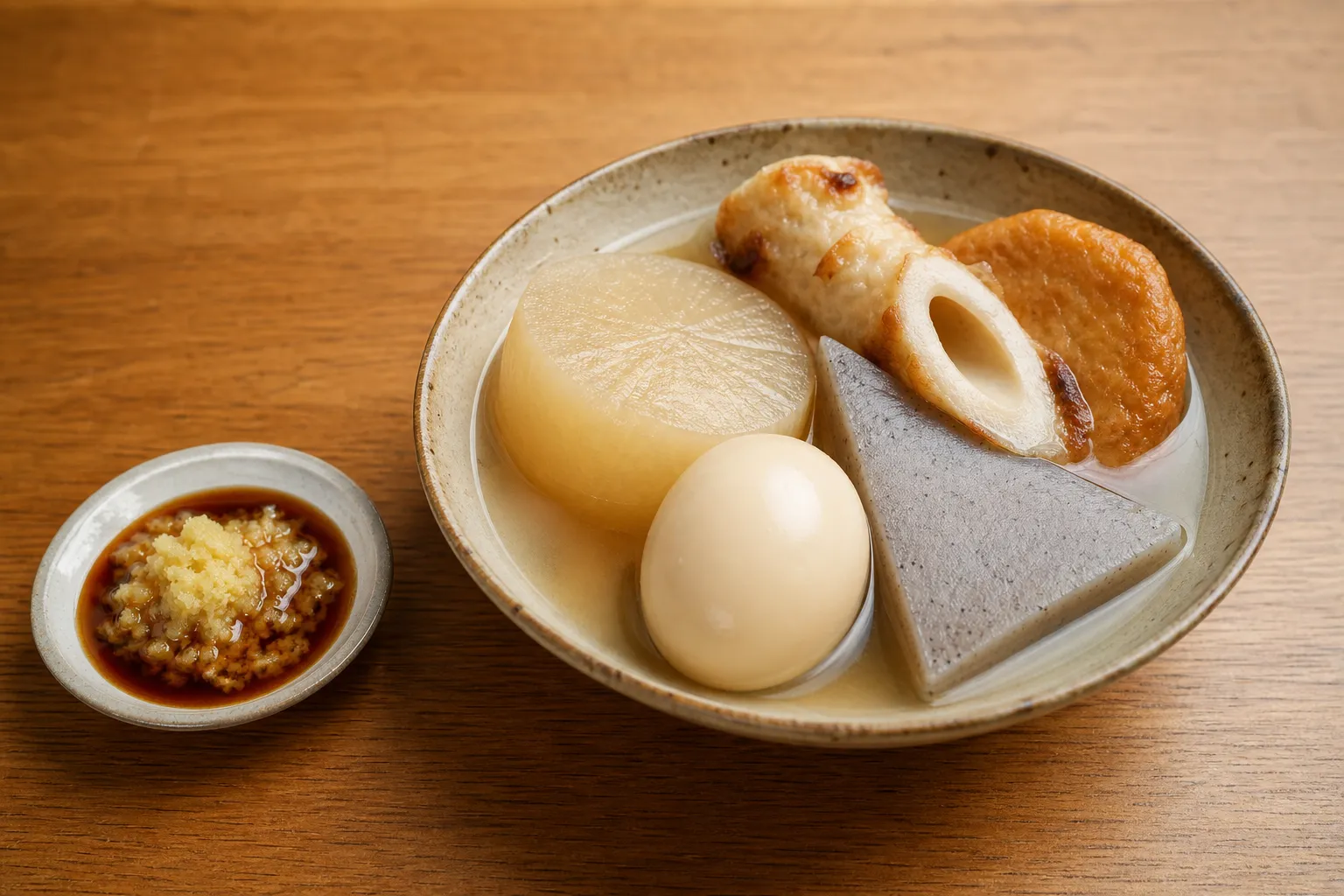
Local FoodHimeji, Hyogo
Himeji Oden (姫路おでん)
I dunked a chunk of daikon into the little dish of ginger soy sauce out of pure curiosity, and it rearranged how I think about oden completely — where has this been all my life?
July 5, 2026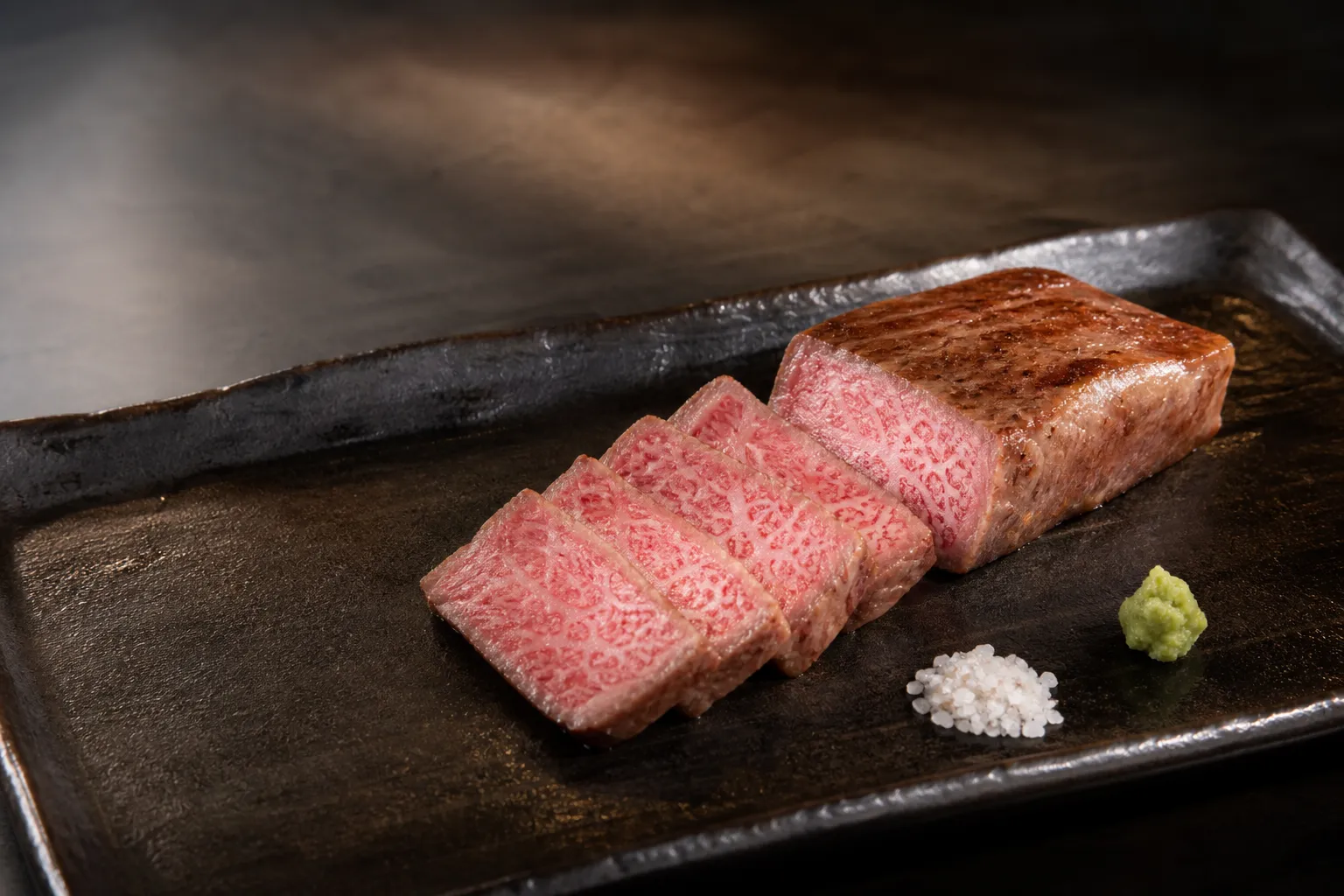
Local FoodKobe, Hyogo
Kobe Beef (神戸牛)
One bite and the fat basically evaporates on your tongue before you've even started chewing — I actually laughed out loud at the table, alone, like an idiot.
July 5, 2026