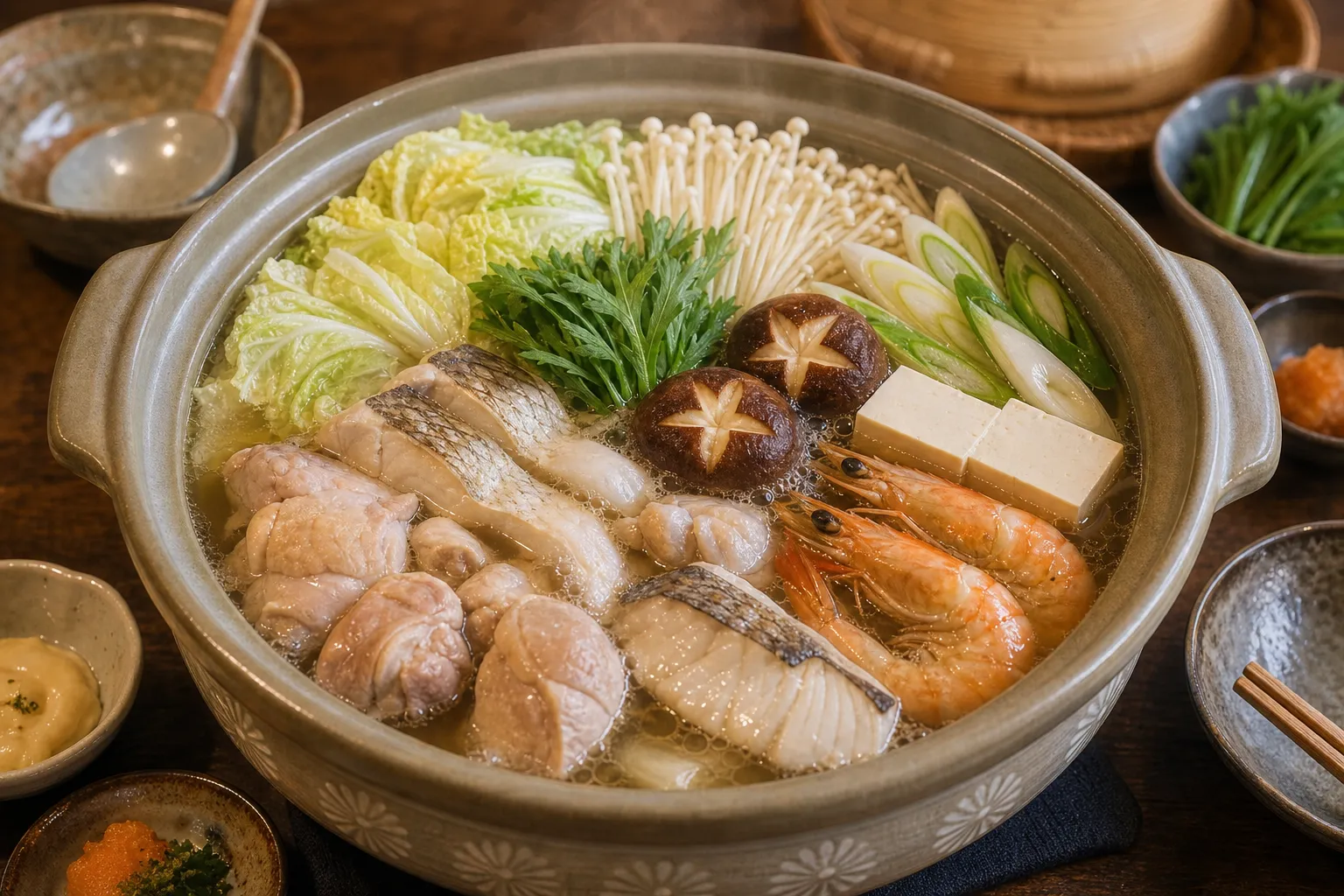
There's a pot in the middle of the table, it's steaming, and four people are leaning in with their chopsticks poised over it like herons. Someone drops in the tofu. Someone else is definitely eyeing the last piece of chicken. Nobody's really talking about the food and everybody is completely focused on it. That, right there — the huddle, the steam, the quiet chopstick diplomacy — is yosenabe, and it is the warmest meal in Japan that nobody puts on a postcard.
Share this dish


The hot pot Japan actually eats at home on cold nights — a bubbling communal pot of chicken, seafood, tofu and vegetables where the whole point is that everyone leans in, cooks together, and fights gently over the last piece.
Here's what it actually is: yosenabe (寄せ鍋) literally means "gather-together pot," and that's the whole philosophy. You take a light dashi-and-soy broth, and into it you gather chicken, a bit of seafood (shrimp, white fish), tofu, mushrooms like shiitake and enoki, napa cabbage and green onion — and you simmer it all at the table. Light broth, mixed everything, cooked as you eat: that's what makes it yosenabe and not a single-ingredient specialist pot like a boar-meat botan-nabe or an oyster dotenabe. It's the generalist. The friendly one. The one your Japanese friend's mom makes without thinking twice.
The pot that isn't trying to impress you
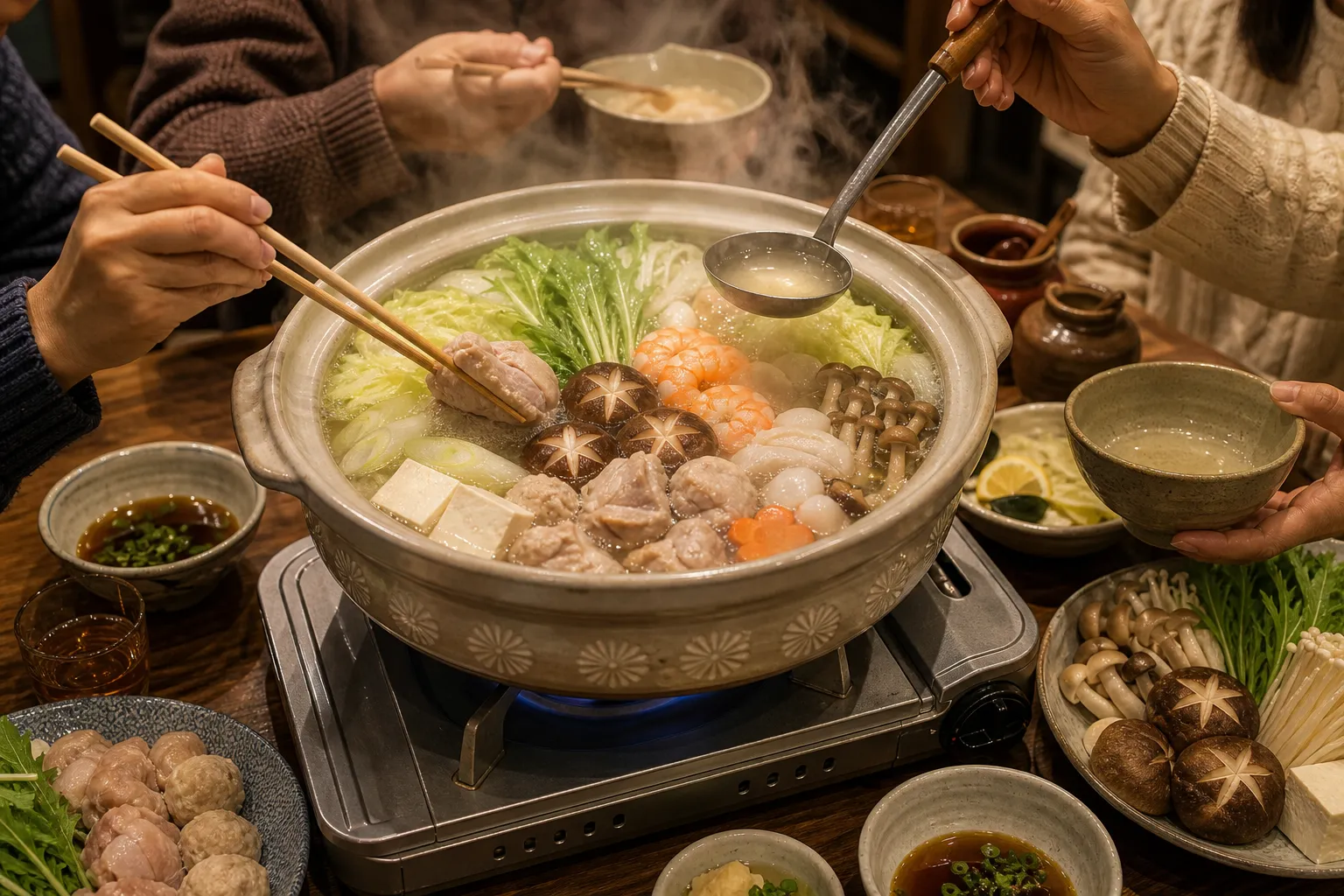
Most of the famous Japanese hot pots have a gimmick, a hometown, a legend. Sukiyaki has its sweet soy and raw egg. Anko-nabe has its ugly-genius monkfish. Botan-nabe has its wild boar. Yosenabe has… none of that, and that's exactly why I love it. It's the pot of the ordinary winter night, assembled from whatever's good and in the fridge, and it's been the default warm meal of Japanese households for as long as households have had a table and a portable burner.
That flexibility is the entire soul of the dish. There's no canonical yosenabe recipe you can get "wrong," because the whole tradition is gathering things together. Northern homes lean seafood; someone's grandmother swears by adding a specific fish cake; every family has a slightly different broth. I find that genuinely moving — a national dish with no rulebook, defined only by the act of everyone eating from the same pot. You are, quite literally, sharing.
What makes eating it feel so good
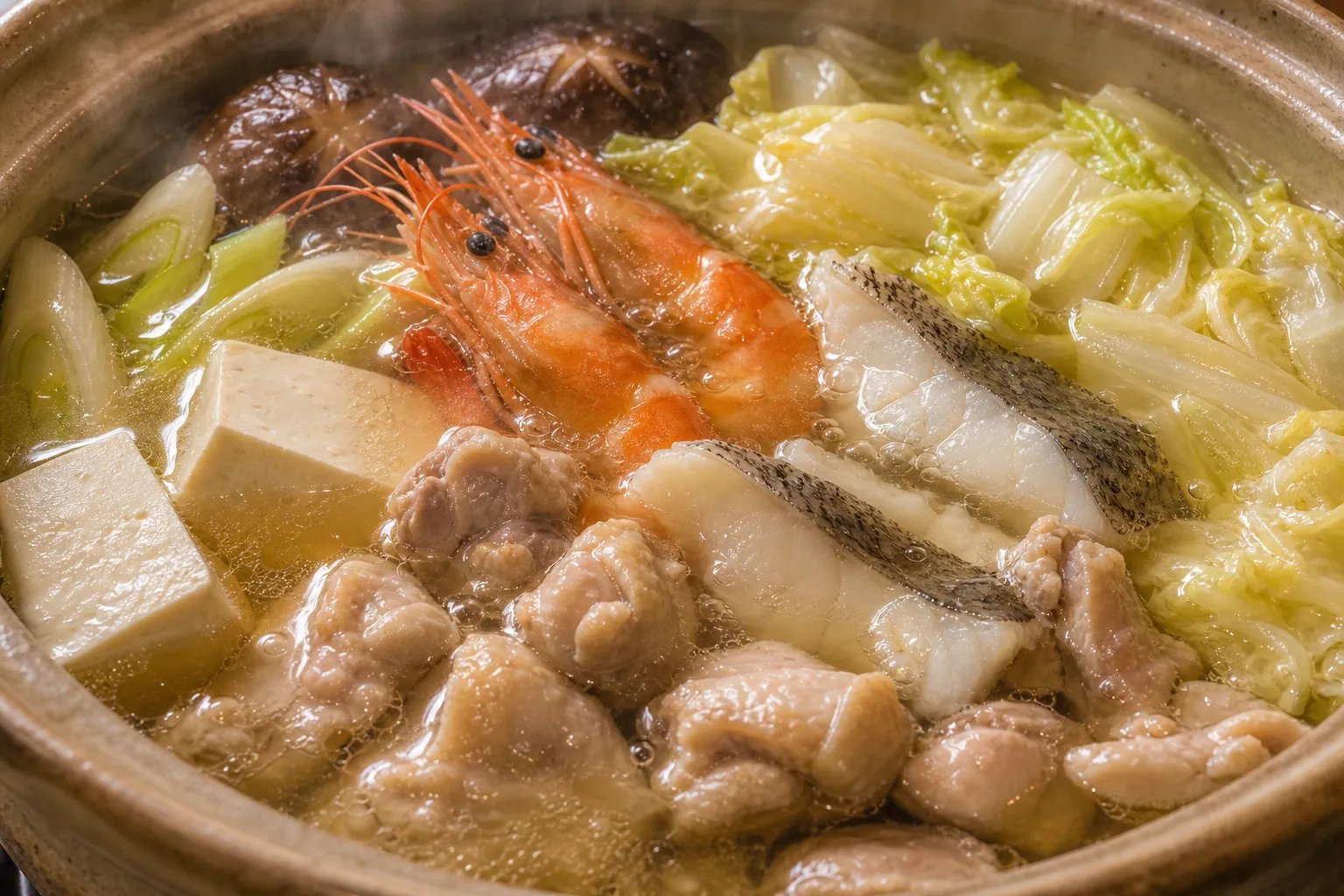
- The broth is a clean, light dashi-soy — savory and warming, never heavy, so you can eat a lot of it and still feel good
- Every bite is different: one chopstick-load is silky tofu, the next is a snap of shrimp, the next is cabbage that's gone sweet and soft in the broth
- It's interactive — you cook pieces to your own liking and fish them out at the perfect moment, which somehow makes it taste better
- As the meal goes on, the broth keeps getting richer, soaking up flavor from everything that's passed through it
- The finish is the payoff: at the end you add rice for zosui (savory rice porridge) or udon noodles into that loaded broth, and it is the coziest last bite imaginable
How it's made
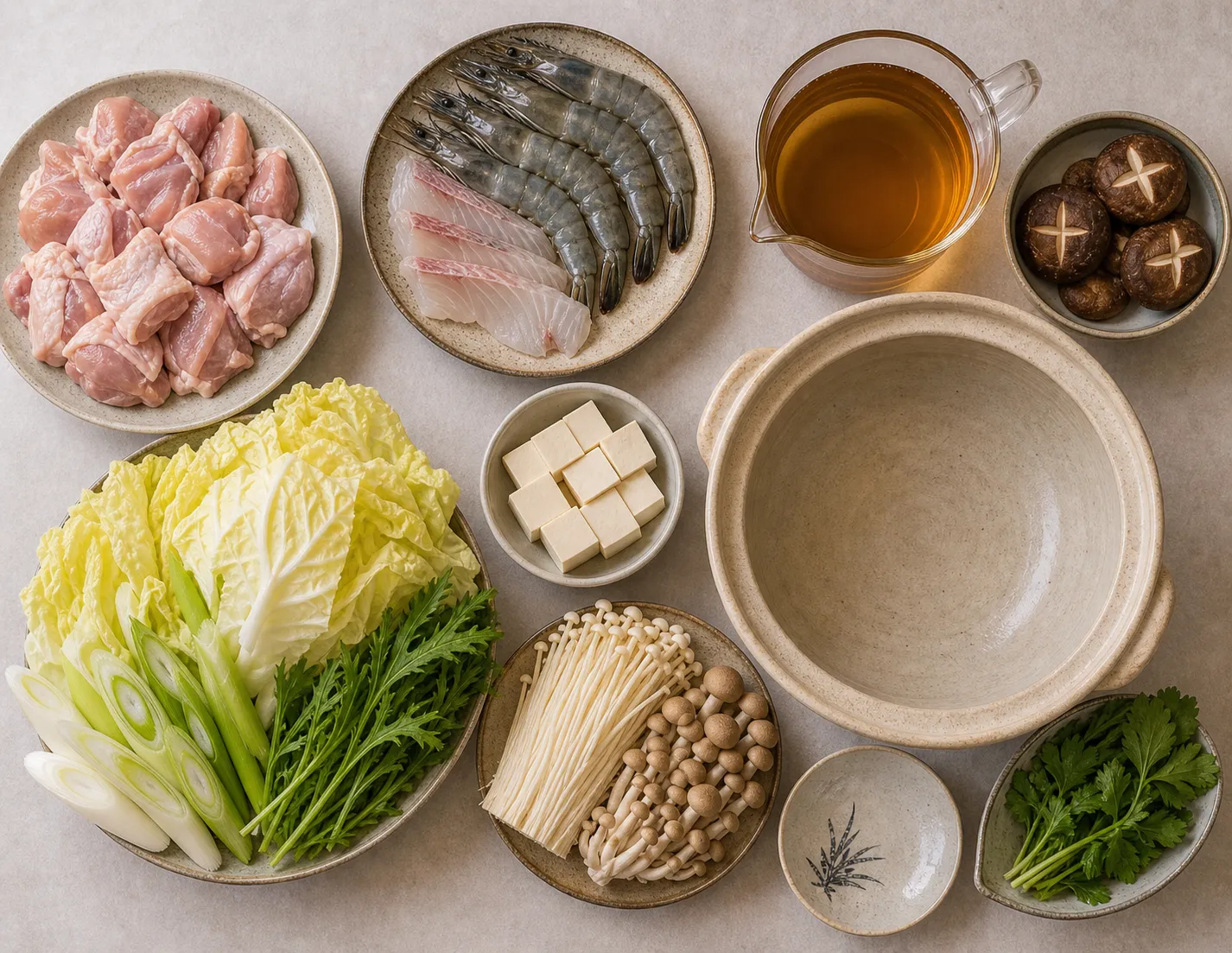
The beauty of yosenabe is that "making it" is really "assembling it, then eating it as it cooks."
- Build a light broth. Start with a dashi base seasoned with soy sauce (and often a splash of mirin/sake). It should be gentle — this is a broth that gets stronger as the meal goes, so you don't want to start it heavy.
- Prep the cast. Bite-size chicken, shrimp and white fish, cubes of tofu, shiitake and enoki mushrooms, chunks of napa cabbage, and lengths of green onion. Whatever's good.
- Add in order of cooking time. The chicken and firmer vegetables go in first; the delicate seafood, greens and tofu go in later so nothing overcooks.
- Simmer at the table and eat as you go. Everyone cooks and fishes out their own pieces, dipping in ponzu or just eating them straight from the broth.
- Finish with the shime. When the pot is nearly empty and the broth is at its most flavorful, add rice for zosui or drop in udon. Do not skip this. It's the whole reason to keep the broth.
Watching a yosenabe happen is watching a table relax in real time. It's slow food in the best sense — you can't rush a pot.
Before you go — how to actually eat one
Your questions, answered honestly
"Do I have to order it for a group?" — Usually, yes. Yosenabe is a shared, cook-at-the-table dish, and most izakaya serve it as a pot for two or more people. It's a fantastic thing to order when you're eating with others; it's not really a solo meal. If you're alone and craving nabe, look for single-portion nabe sets instead.
"What's the difference between this and sukiyaki or shabu-shabu?" — Big difference. Sukiyaki is beef in a sweet soy-sugar sauce with raw-egg dipping; shabu-shabu is thin meat you swish in plain broth for seconds. Yosenabe is neither — it's a mixed pot (chicken, seafood, tofu, veg) in a savory light dashi-soy broth, all simmered together. It's the most 'everything, gently' of the three.
"Is it spicy?" — No. Standard yosenabe is warm, clean and savory, not spicy at all. If you want heat, that's a different pot — you're looking for kimchi-nabe.
"What do I do at the end?" — Order the shime (the finish). Ask for zosui (rice cooked into the leftover broth) or udon. After everything has simmered in that pot, the broth is the best part, and turning it into porridge or noodles is the traditional, glorious ending.
What the staff will ask you
| You'll hear | Romaji | Meaning | Just say |
|---|---|---|---|
| 何名様ですか? | Nan-mei sama desu ka? | "How many people?" | Futari desu (two people) — or hold up fingers |
| お鍋は二人前からになります | O-nabe wa ni-nin-mae kara ni narimasu | "The pot is for two or more" | Daijōbu desu (that's fine) |
| 〆はご飯とうどん、どちらにしますか? | Shime wa gohan to udon, dochira ni shimasu ka? | "Rice or udon to finish?" | Gohan de / Udon de (rice / udon, please) |
To order, just say "Yosenabe o kudasai" (寄せ鍋をください) — "Gather-together hot pot, please."
Where to eat it
- Izakaya nationwide, in winter — yosenabe is a classic cold-season menu item at casual Japanese pubs across the country; look for 鍋 (nabe) on the winter menu.
- A Japanese home, if you're lucky enough to be invited — this is the pot's true habitat. If a local invites you over on a cold night, say yes.
- Anywhere with a portable tabletop burner — many restaurants and even some accommodations offer nabe sets in winter; it travels well as a concept because the recipe is "whatever's good, together."
Yosenabe recipes, prices and minimum portions vary by shop and season, and it's usually a cold-weather offering — check the current menu and confirm portions before you go.
Soul Score
Local Roots4/5
First-Timer Friendly5/5
Adventure Level3/5
Comfort Level5/5
Travel Worthy3/5
These scores are one obsessed eater's gut feeling — not a verdict. A low number isn't a bad mark, just a different kind of adventure.
Know someone planning Japan?
← All Articles
Japanese Food · Nationwide
Still hungry?
You might also like
Japanese FoodNationwide
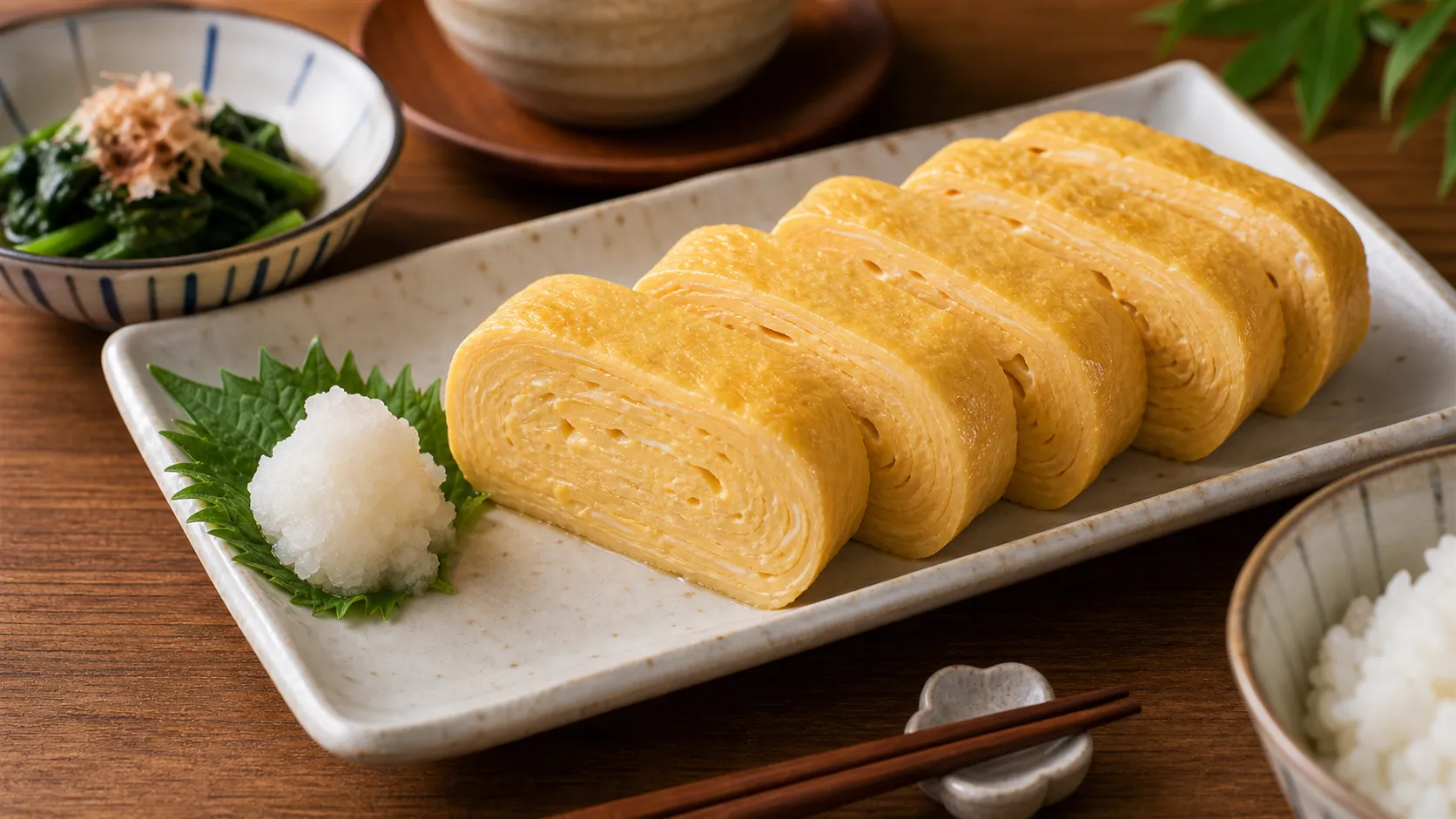
Dashimaki-tamago (だし巻き卵)
A rolled omelette so soft it almost trembles, layered fold over fold and soaked with dashi so that biting in releases a little warm rush of savory broth — the deceptively simple egg dish that Japanese chefs spend years perfecting.
July 11, 2026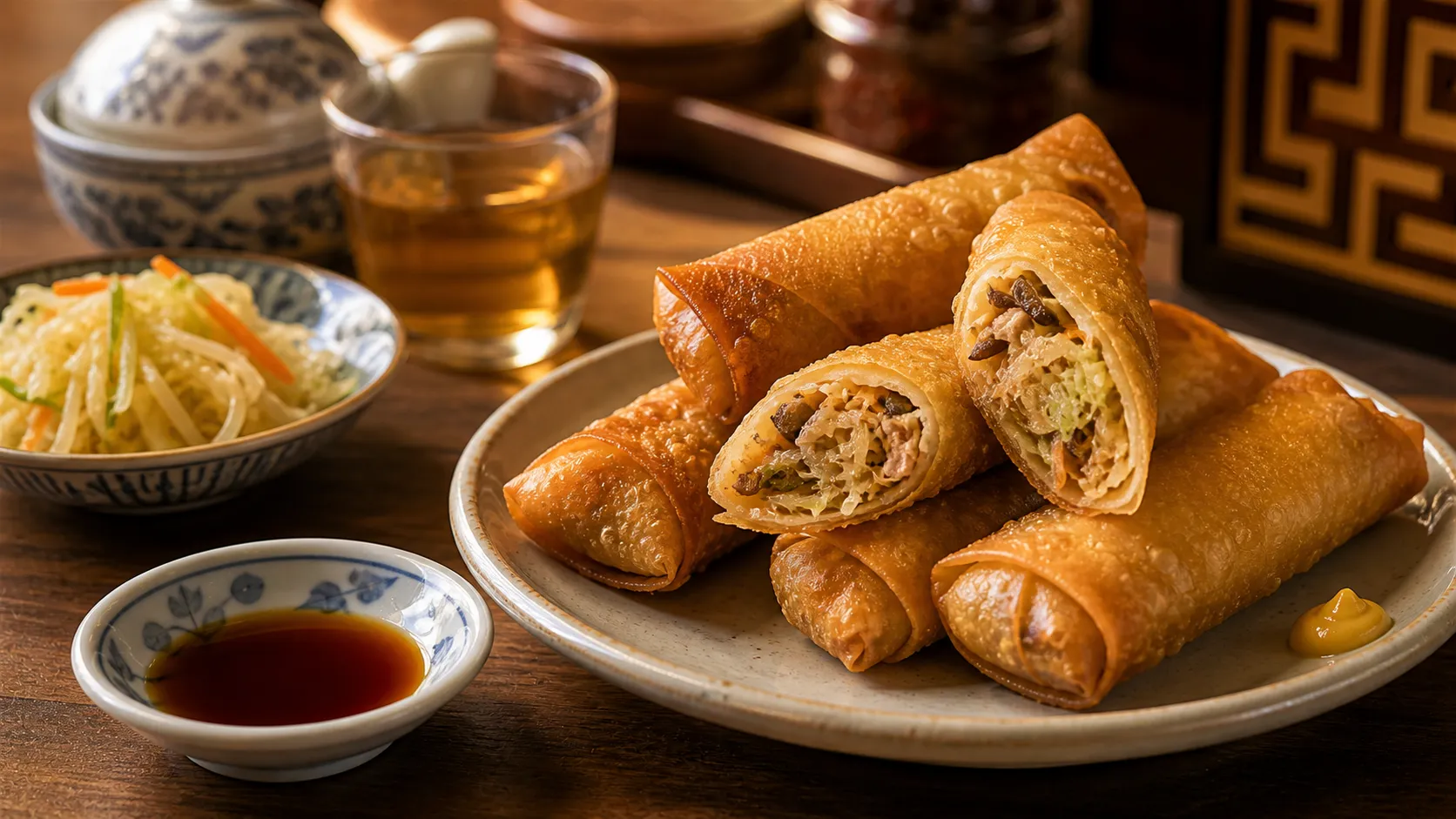
Japanese FoodNationwide
Harumaki (春巻き)
The Japanese spring roll — a shatteringly crisp golden tube that gives way to a hot, savory tangle of pork, cabbage and bamboo shoot, best eaten the second it's cool enough not to burn your mouth (you will not wait that long).
July 11, 2026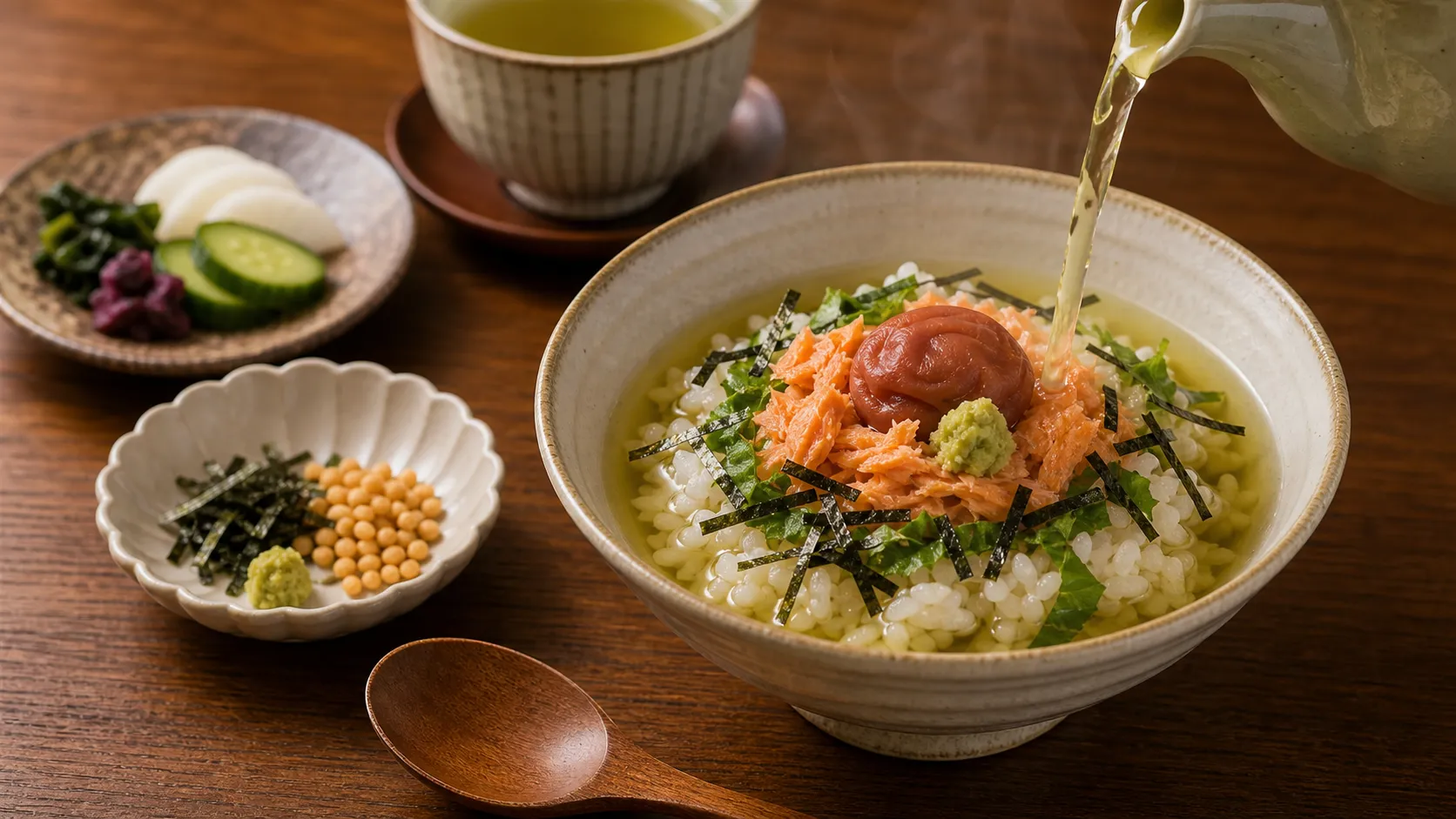
Japanese FoodNationwide
Ochazuke (お茶漬け)
Pour hot green tea or dashi over a bowl of rice, scatter something savory on top, and eat — the gentlest, most quietly restorative dish in Japan, the one you reach for late at night when you just need a warm bowl to make everything okay.
July 11, 2026