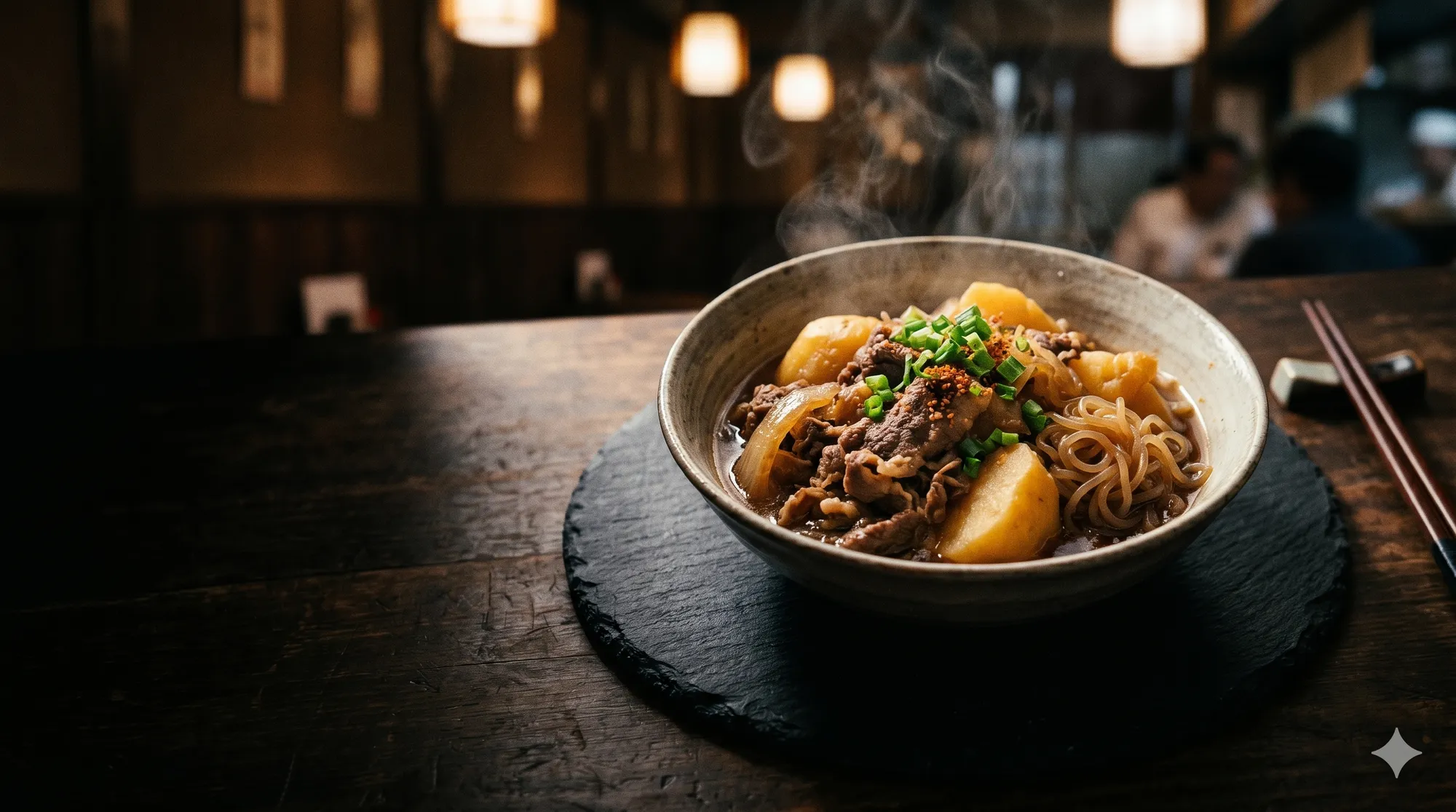
Ask a Japanese person which food tastes like their mother's cooking, and more often than anything else, they'll say nikujaga.
Share this dish


Meat and potatoes simmered in sweet soy until they melt — the dish Japan means when it says 'the taste of home.' Allegedly invented because an admiral missed British beef stew.
It's the humblest thing imaginable — beef and potatoes and onions simmered in a sweet, savory soy broth until the potatoes go soft and the meat melts and the whole pot smells like a warm kitchen on a cold day. No technique to show off, no expensive ingredient, no drama. Just comfort, in its purest form. This is the dish that makes grown adults a little homesick, the one kids learn first, the one that quietly wins "favorite home food" survey after survey. It's not trying to impress you. It's trying to take care of you. And it works.
A beef stew that crossed an ocean and changed clothes
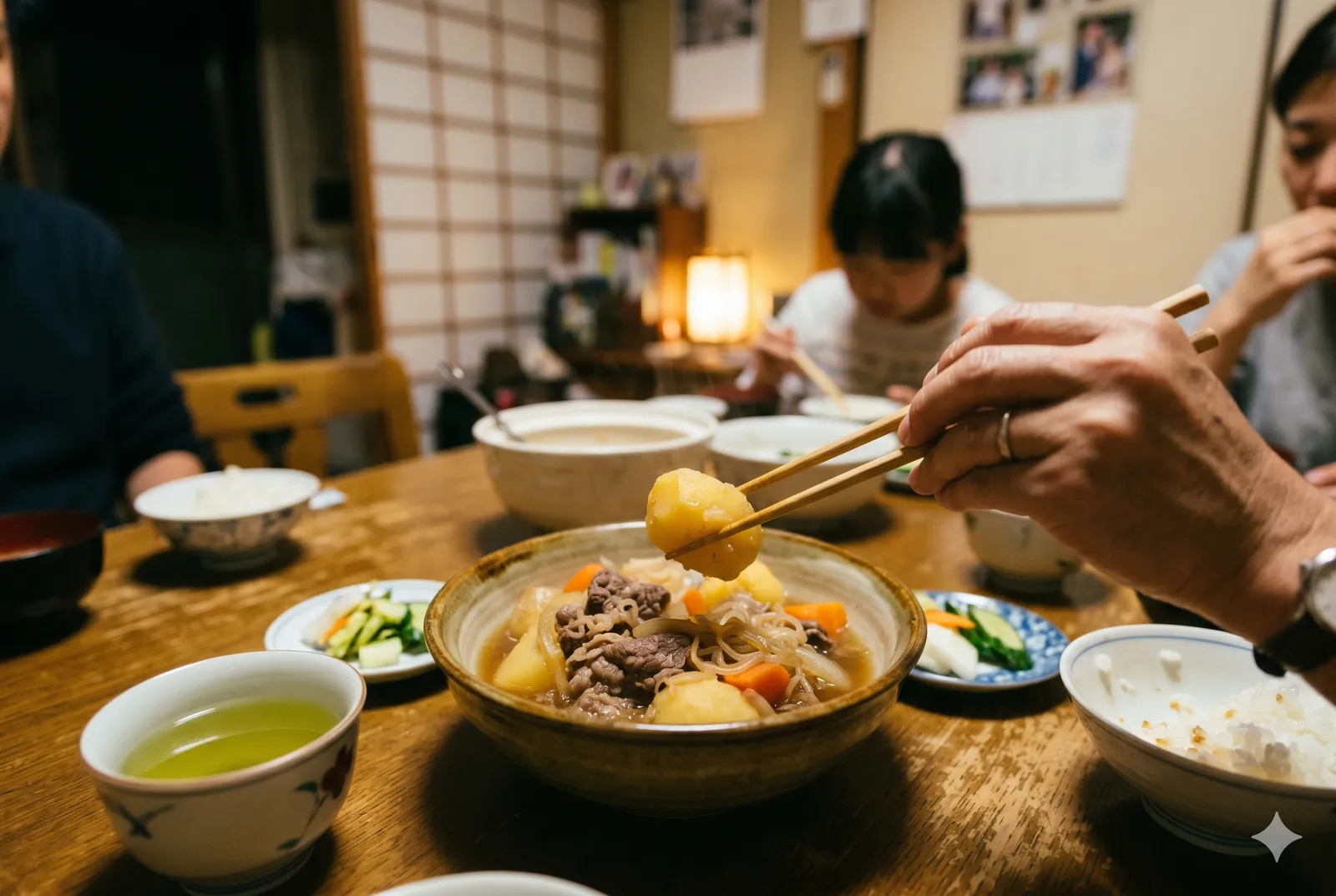
Here's the legend, and it's a good one: in the Meiji era, Admiral Heihachiro Togo, having eaten beef stew in Britain, supposedly asked his ship's cook to recreate it with Japanese ingredients. With no demi-glace or wine on hand, the cook reached for soy sauce, sugar, and mirin instead — and out came nikujaga: meat and potatoes, but unmistakably Japanese. True or not, the story nails it perfectly — a Western idea, gently rebuilt into Japanese comfort.
Why it tastes like home
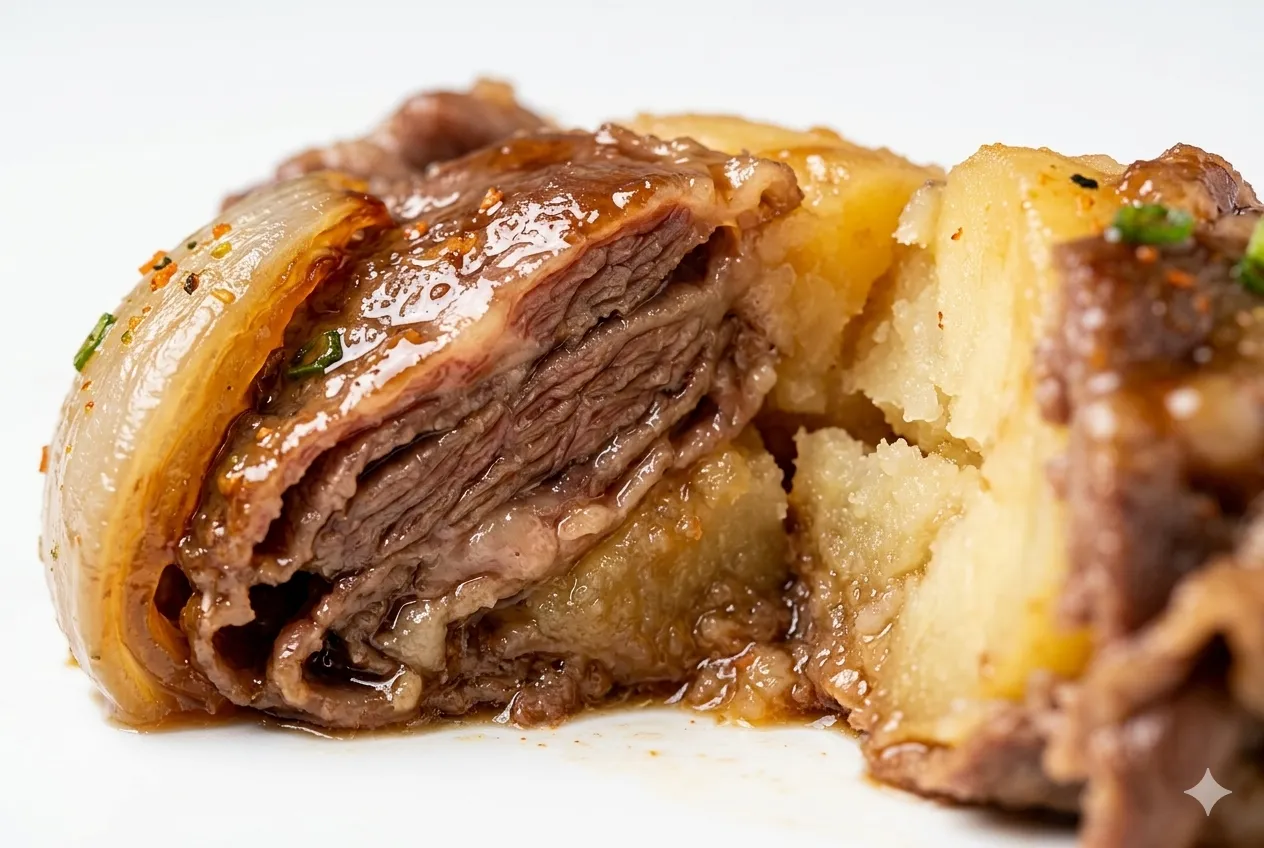
The whole thing is potatoes, carrots, onions, and thin-sliced beef (or pork) simmered in dashi, soy, mirin, sake, and sugar until the potatoes are just shy of falling apart and the meat has gone silky. Shirataki noodles soak up the broth; a handful of snow peas adds a pop of green. It's sweet-savory, gentle, and deeply, deeply satisfying.
Regional note: Kanto leans beef; Kansai (and Maizuru, which claims to be the dish's birthplace) often uses pork. Both are right.
How it's made
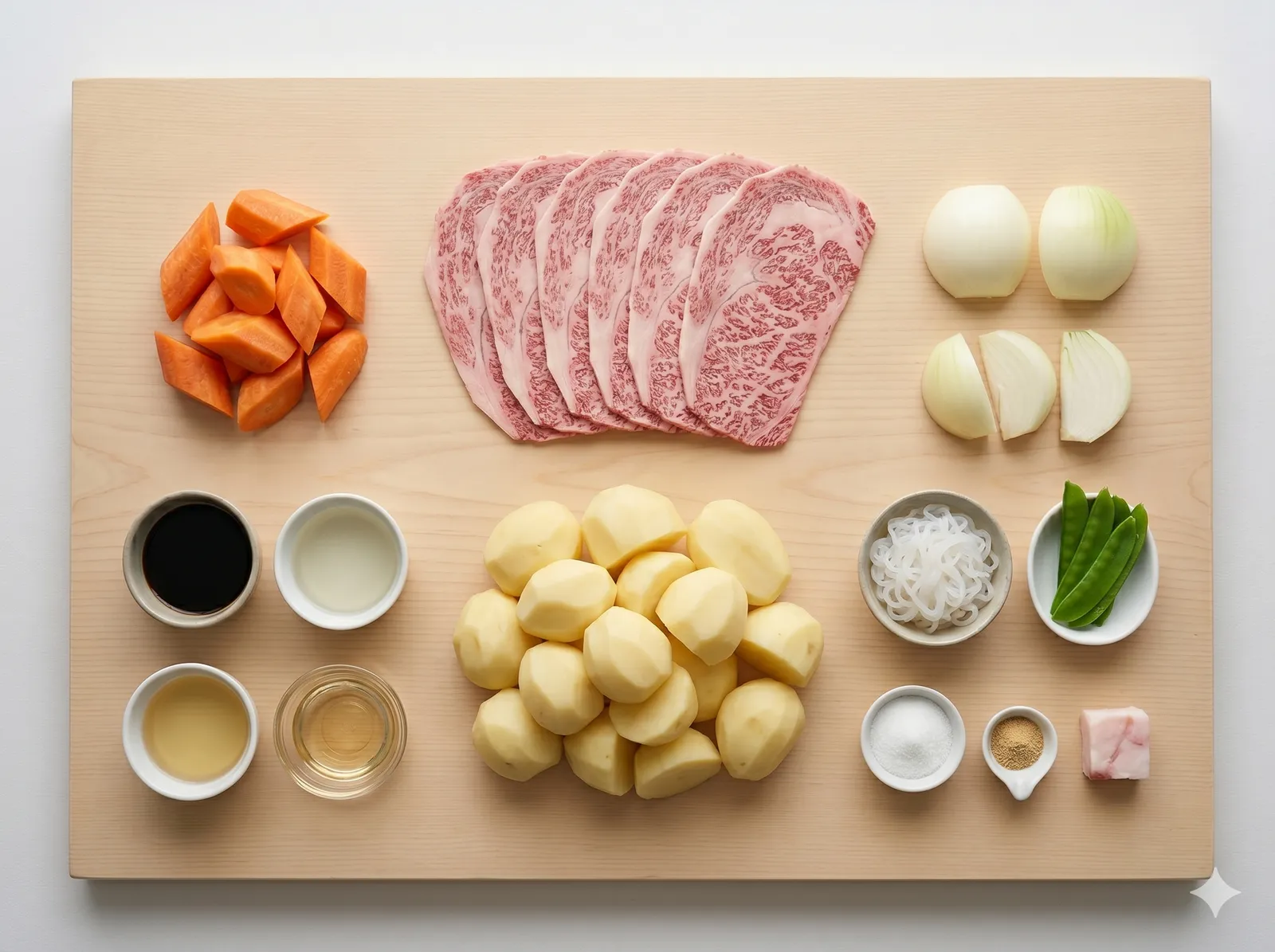
- Cut potatoes into big chunks, carrots into half-moons, onions into wedges
- Lightly sauté the meat in a pot until the color changes
- Add the potatoes, carrots, onions, and shirataki
- Pour in dashi, soy sauce, mirin, sugar, and sake
- Boil, skim the foam, then simmer gently until the potatoes are tender
- Let it rest 10–15 minutes before serving — this is when the magic deepens
Before you go — the soul of home cooking
Your questions, answered honestly
"Beef or pork?" — Kanto-style beef is the classic; Kansai-style pork is lighter and just as loved. If you see both, try whichever the region is known for.
"Where do I even eat this if it's home food?" — It's a staple on teishoku (set meal) menus, in izakaya, at obanzai (Kyoto home-style) restaurants, and in the prepared-food (sōzai) section of any supermarket or depachika. It's everywhere once you start looking.
"Why let it rest?" — Simmered dishes like this taste markedly better after sitting — the flavors sink into the potatoes. Same reason next-day curry rules.
"Is it a main or a side?" — Both. As part of a teishoku it's a side with rice and miso soup; at home it's often the heart of the meal. No wrong way.
What the staff might say
| You'll hear | Romaji | Meaning | Just say |
|---|---|---|---|
| 定食につきます | Teishoku ni tsukimasu | "It comes with the set meal" | Sore de onegaishimasu (that one, please) |
| 牛と豚、どちらに? | Gyū to buta, dochira ni? | "Beef or pork?" | Gyū de (beef) / Buta de (pork) |
| 温めますか? | Atatamemasu ka? | "Shall I warm it up?" | Onegaishimasu (yes please) |
To order, just say "Nikujaga arimasu ka?" (肉じゃがありますか?) — "Do you have nikujaga?"
Where to eat it
- Teishoku diners and izakaya nationwide — it's a menu regular almost everywhere
- Kyoto's obanzai restaurants — for a refined home-style version
- Maizuru (Kyoto Prefecture) — the port town that proudly claims to be nikujaga's birthplace
- Honestly? The best one is in somebody's home. Get yourself invited.
Menus and hours change, so check before a special trip — and eat it slowly, like you've got nowhere to be.
Soul Score
Local Roots4/5
First-Timer Friendly5/5
Adventure Level3/5
Comfort Level5/5
Travel Worthy3/5
These scores are one obsessed eater's gut feeling — not a verdict. A low number isn't a bad mark, just a different kind of adventure.
Know someone planning Japan?
← All Articles
Japanese Food · Nationwide
Still hungry?
You might also like
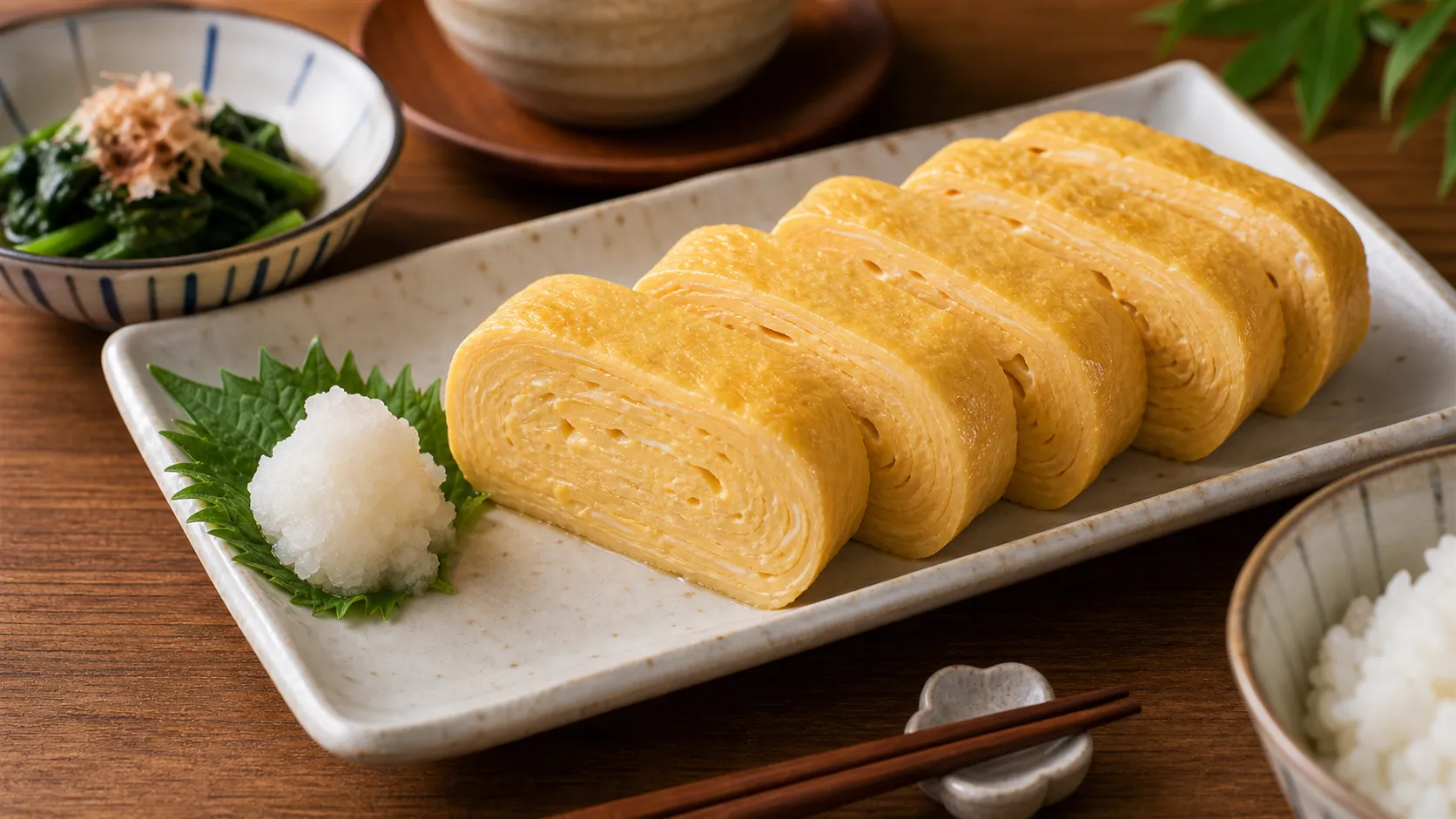
Japanese FoodNationwide
Dashimaki-tamago (だし巻き卵)
A rolled omelette so soft it almost trembles, layered fold over fold and soaked with dashi so that biting in releases a little warm rush of savory broth — the deceptively simple egg dish that Japanese chefs spend years perfecting.
July 11, 2026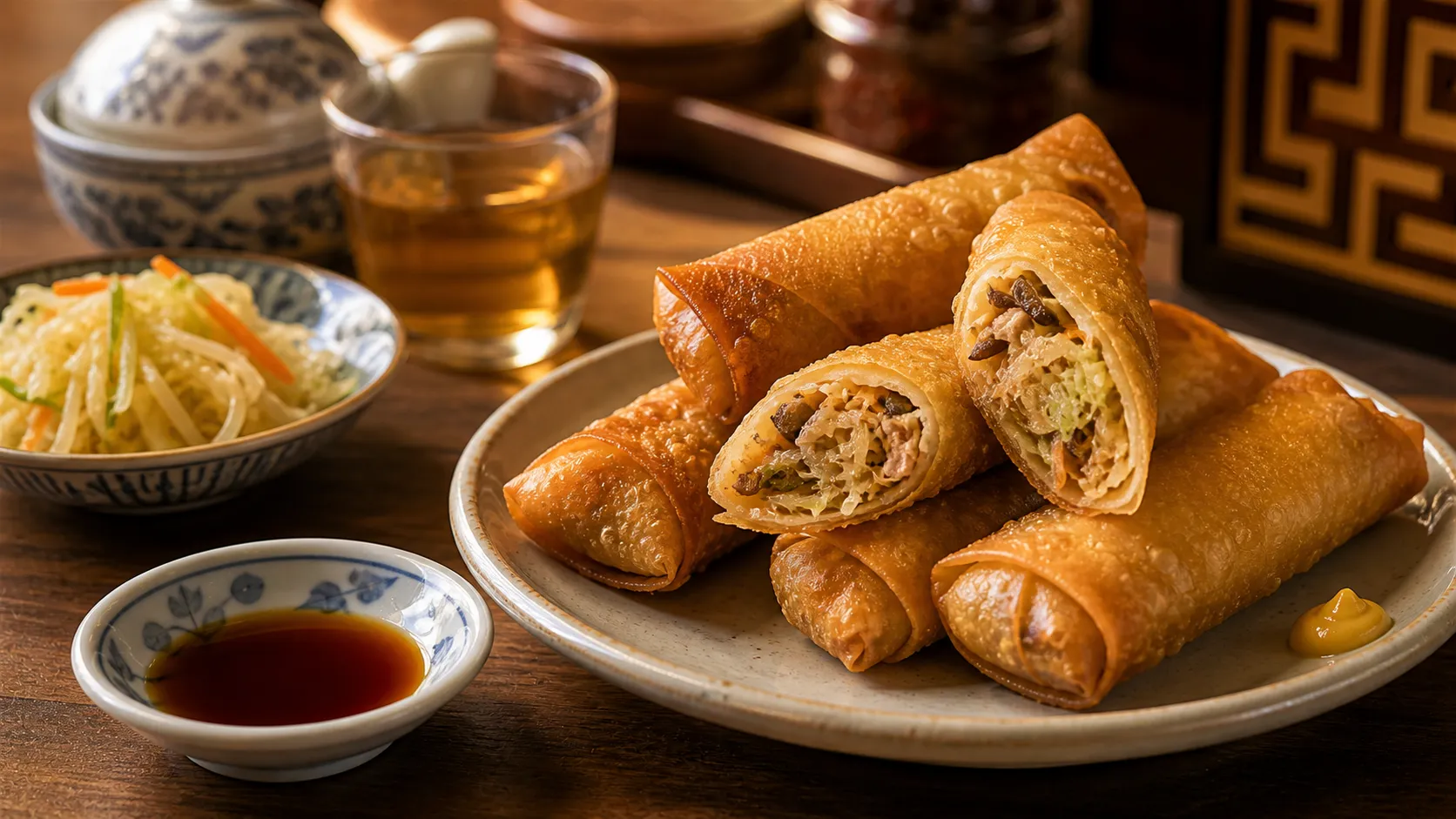
Japanese FoodNationwide
Harumaki (春巻き)
The Japanese spring roll — a shatteringly crisp golden tube that gives way to a hot, savory tangle of pork, cabbage and bamboo shoot, best eaten the second it's cool enough not to burn your mouth (you will not wait that long).
July 11, 2026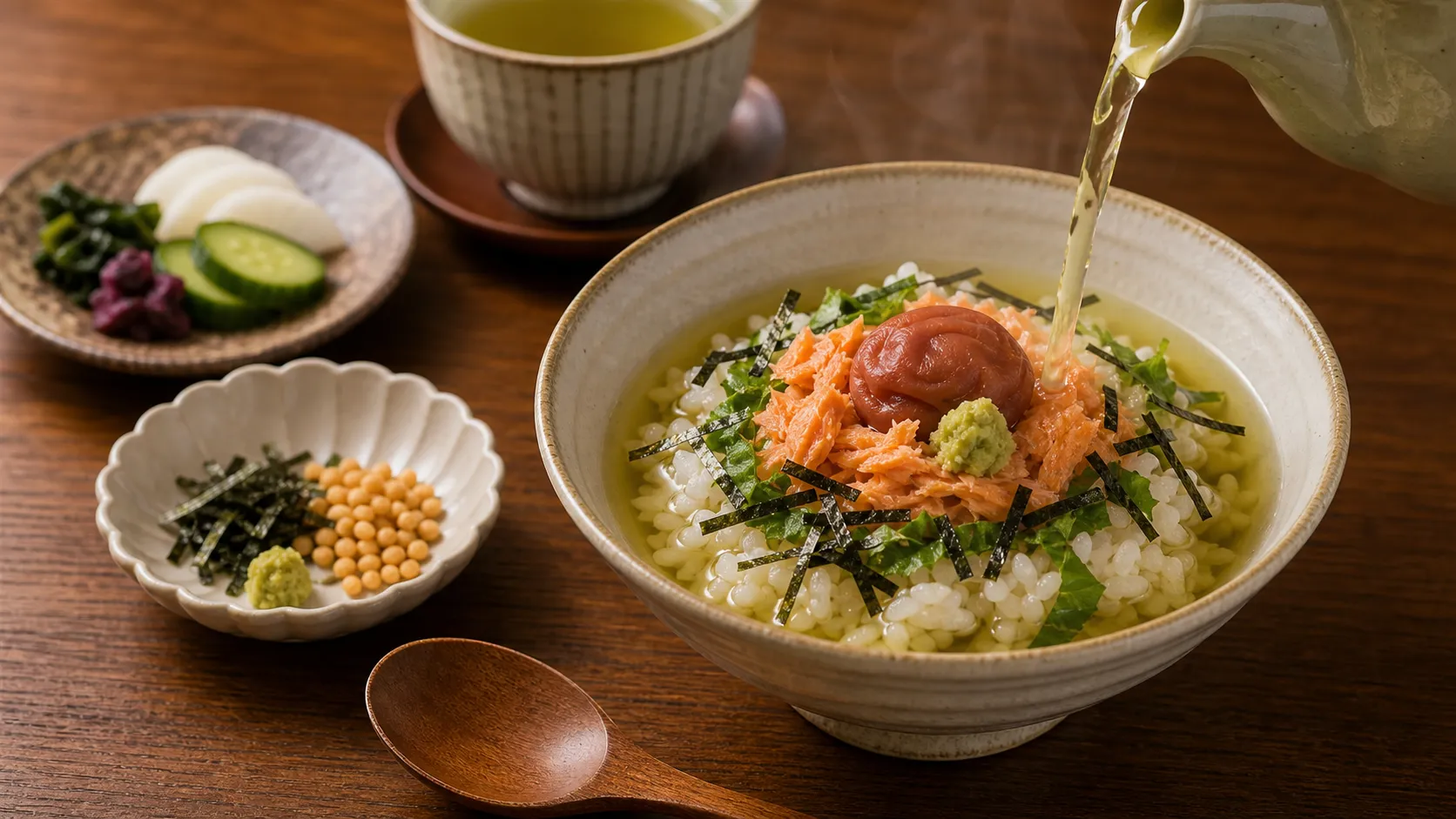
Japanese FoodNationwide
Ochazuke (お茶漬け)
Pour hot green tea or dashi over a bowl of rice, scatter something savory on top, and eat — the gentlest, most quietly restorative dish in Japan, the one you reach for late at night when you just need a warm bowl to make everything okay.
July 11, 2026