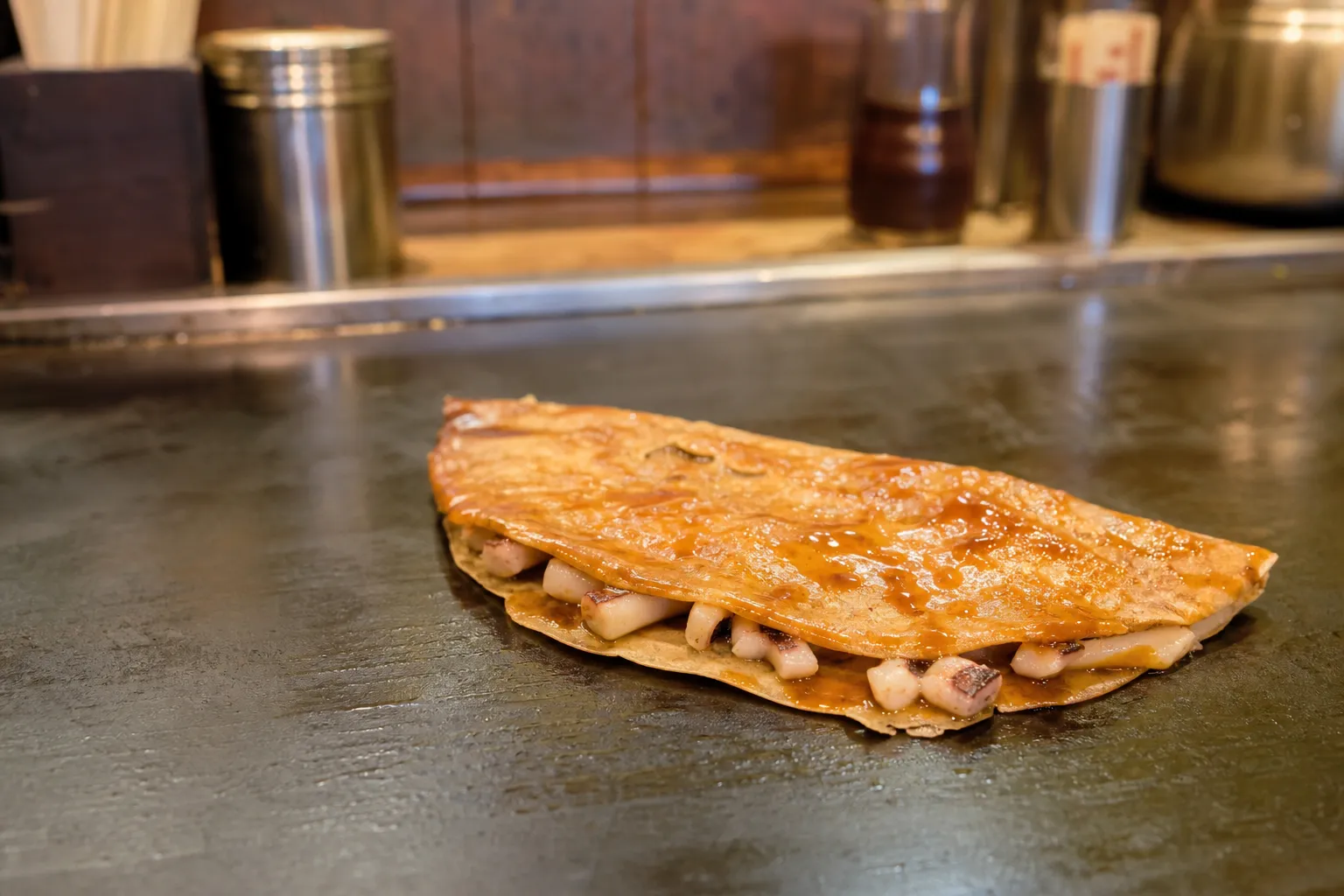
I bit into it expecting a squid. I got a pancake. And then I stood there in the basement of a department store, chewing, thinking: wait, why is this so good? Hot, chewy-crisp at the edges, a warm hit of savory sauce, little snaps of tender squid buried inside the flour. I bought a second one before I'd finished the first. I regret nothing.
Share this dish


Not the whole grilled squid you're picturing from festival stalls — this is a flat, folded, sauce-slicked flour pancake, and Osaka has been quietly obsessed with it for decades.
🍜 Planning a food trip to Osaka?Add this dish to my Food Trip →
 Add this dish to my Food Trip →
Here's the confusion I need to clear up immediately, because it caught me too: ikayaki (いか焼き) in Osaka is not the whole grilled squid brushed with soy that you see at summer festival stalls. Same name, totally different food. Osaka's version is konamon — "flour stuff," the city's whole food religion — a thin wheat-flour batter studded with chopped squid, pressed flat on a hot iron griddle, brushed with sauce, and folded over. Think closer to a paper-thin okonomiyaki, or a savory squid crepe, than anything on a skewer. Cheap, fast, handheld, and weirdly addictive.
How a flour cake became an Osaka institution
Osaka earned the nickname tenka no daidokoro — "the nation's kitchen" — as a merchant trading hub, and its street food grew out of exactly that: cheap, filling, fast fuel for working people. Konamon is the whole genre. Takoyaki, okonomiyaki, and ikayaki are all cousins in the same flour-and-griddle family, and ikayaki is arguably the most humble of the lot. No frills. No towering toppings. Just batter, squid, sauce, heat.
The most famous version has a very specific home: the food floor of the Hanshin Department Store in Umeda, where their "ika-yaki" has been a legendary quick-bite for generations of Osaka shoppers. People line up. People have opinions. I find that genuinely charming — a whole city taking a flat flour snack this seriously. It's not fancy. It was never trying to be. That's exactly why locals love it.
Why the thin, chewy, sauce-slicked thing works
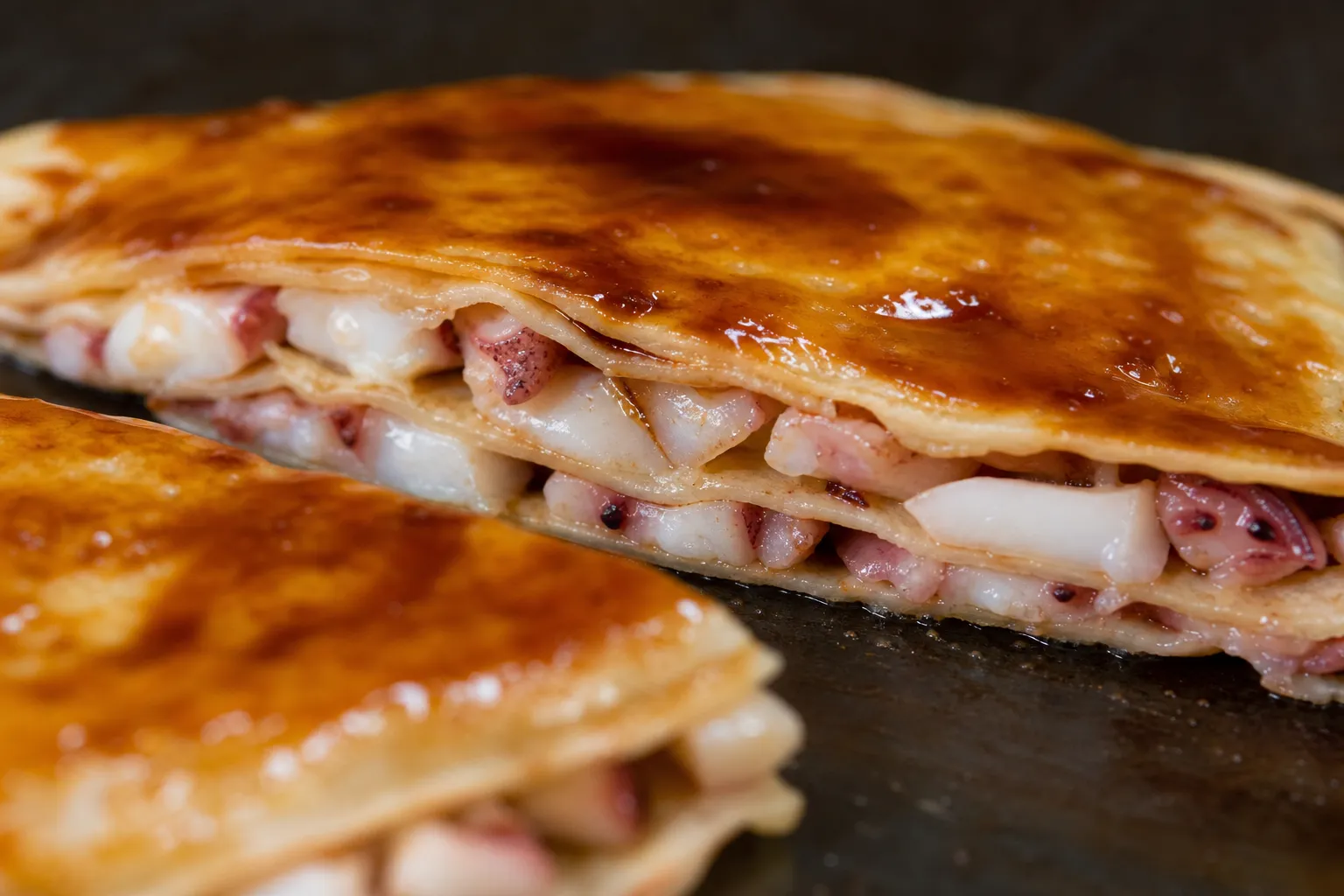
The magic is in the texture contrast. The batter goes on thin and gets pressed hard against the iron, so you get a slightly crisp, browned exterior and a dense, chewy interior — nothing like the fluffy pancake you might expect from "okonomiyaki." Then the squid: little pieces distributed through the batter, each one a soft, springy bite that breaks up the chew.
And the sauce. A savory, faintly sweet brush of Worcestershire-style sauce (sometimes with a splash of egg mixed into fancier versions, called deluxe or deraban) ties the whole thing together — that warm, umami, slightly tangy coating that makes konamon konamon. It's not spicy. It's not complicated. It's the kind of food you eat walking, one hand, no plate, already thinking about the next one. I ate mine on a train platform and felt completely at peace.
How it's made
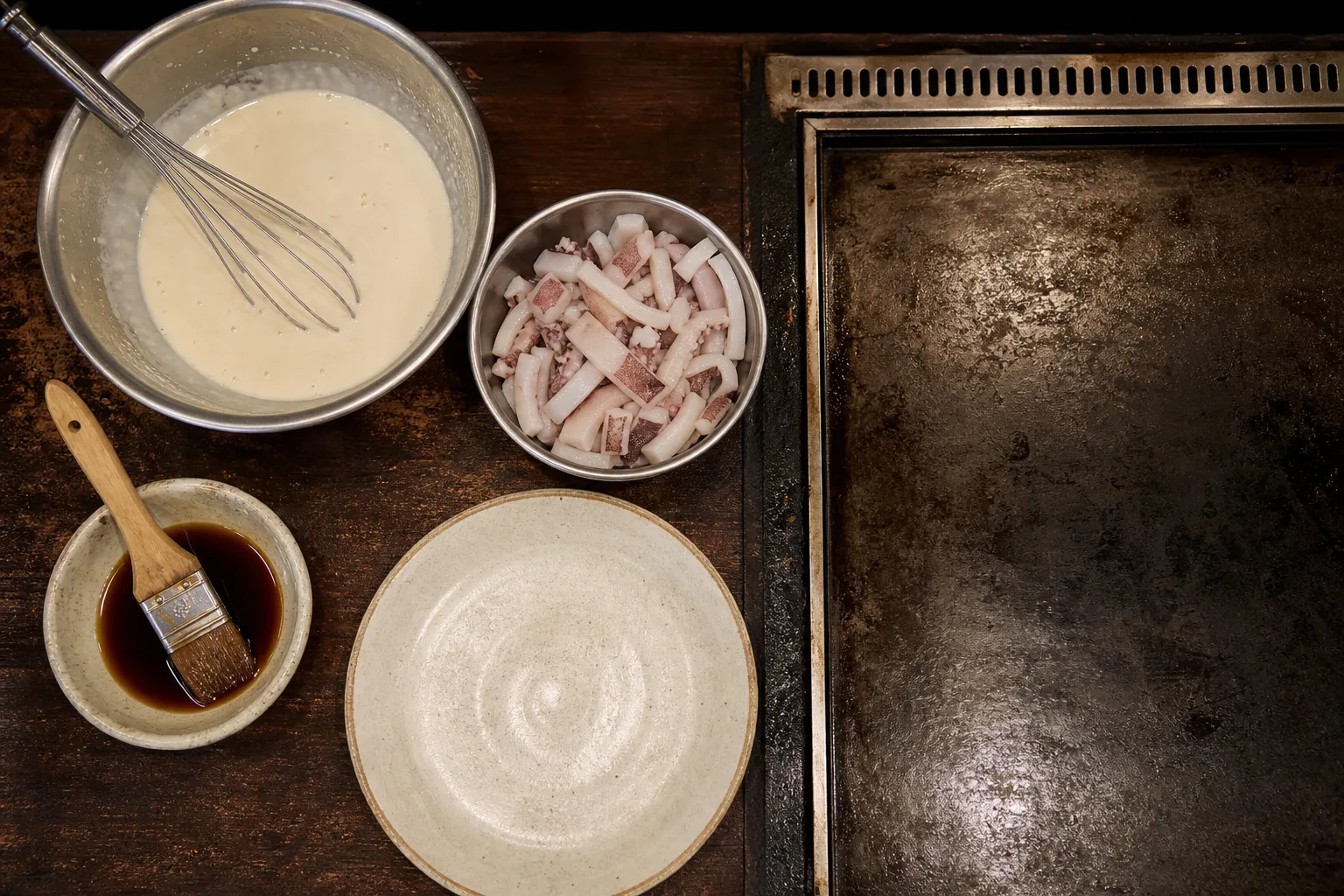
- A thin wheat-flour batter is mixed and pieces of squid are folded in
- The batter is poured onto a screaming-hot flat iron griddle and pressed down flat
- It's cooked hard on both sides until the edges crisp and brown
- The surface is brushed with a savory Worcestershire-style sauce (a "deluxe" version adds egg griddled in)
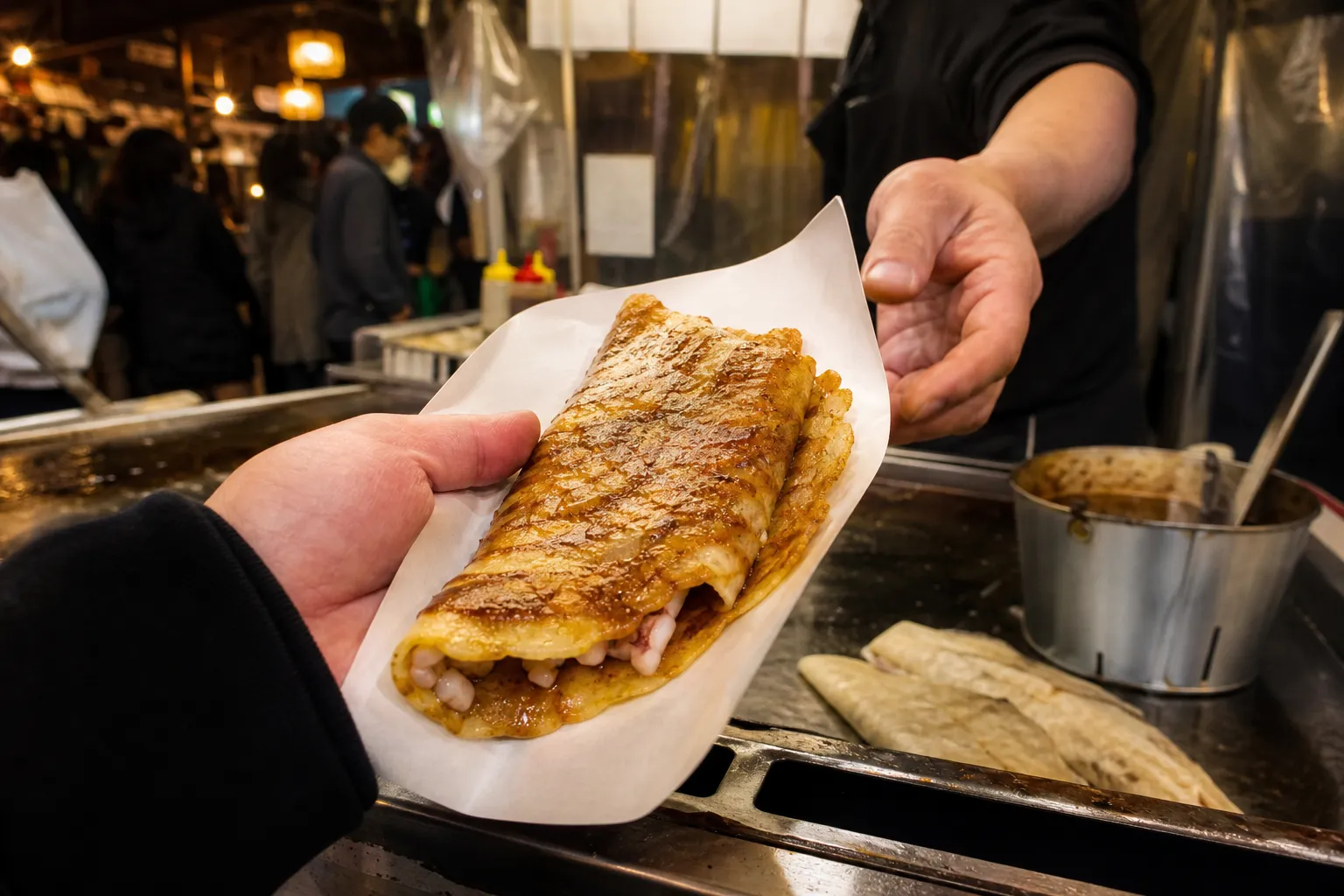
- It's folded in half and handed over in paper — eaten hot, with your hands, on the move
Before you go — get the right ikayaki
Your questions, answered honestly
"Is this the grilled squid on a stick?" — No, and this is the number-one mix-up. That whole-squid festival snack shares the name ikayaki but it's a completely different thing. Osaka konamon ikayaki is a flat, folded flour-and-squid pancake. If you want the department-store legend, this is the one you're after.
"Is it like okonomiyaki?" — Same family, different build. Okonomiyaki is thick, fluffy, loaded with cabbage and toppings. Ikayaki is thin, dense, chewy, and stripped down to batter + squid + sauce. Think of it as okonomiyaki's lean, fast, pocket-money cousin.
"Should I get the plain one or the deluxe?" — The plain (just batter, squid, sauce) is the pure classic and honestly hard to beat. The deluxe (deraban), with an egg griddled in, is richer and a little more filling. If you're only having one, I'd get the deluxe — but you should have two.
"Do I need utensils?" — No. This is a walking snack. It comes folded in paper. Eat it with your hands while it's hot, which is the only correct temperature.
What the staff will ask you
| You'll hear | Romaji | Meaning | Just say |
|---|---|---|---|
| ノーマルとデラックスどちらにしますか? | Nōmaru to derakkusu dochira ni shimasu ka? | "Normal or deluxe?" | Derakkusu de (deluxe, please) |
| 何枚にしますか? | Nanmai ni shimasu ka? | "How many?" | Ichimai onegaishimasu (one, please) |
| 店内ですか、お持ち帰りですか? | Tennai desu ka, omochikaeri desu ka? | "Eat here or take away?" | Mochikaeri de (take away, please) |
To order, just say "Ikayaki o kudasai" (いか焼きをください) — "Ikayaki, please."
Where to eat it
- Hanshin Department Store food floor, Umeda, Osaka — the legendary "ika-yaki" counter, a long-running quick-bite institution that locals line up for. The obvious first stop.
- Konamon stalls around Namba and Dōtonbori — Osaka's street-food heartland, where konamon in all its forms (ikayaki, takoyaki, okonomiyaki) is everywhere.
- Local festivals and market stalls across Osaka — griddle stands often make konamon-style ikayaki fresh to order.
Counters, hours, and menus change, so check current details before you go — and confirm you're getting the flat konamon ikayaki, not the whole grilled squid.
Soul Score
Local Roots4/5
First-Timer Friendly4/5
Adventure Level3/5
Comfort Level5/5
Travel Worthy3/5
These scores are one obsessed eater's gut feeling — not a verdict. A low number isn't a bad mark, just a different kind of adventure.
Know someone planning Japan?
← All Articles
Local Food · Osaka
Still hungry?
Eat more from Osaka
Local FoodOsaka
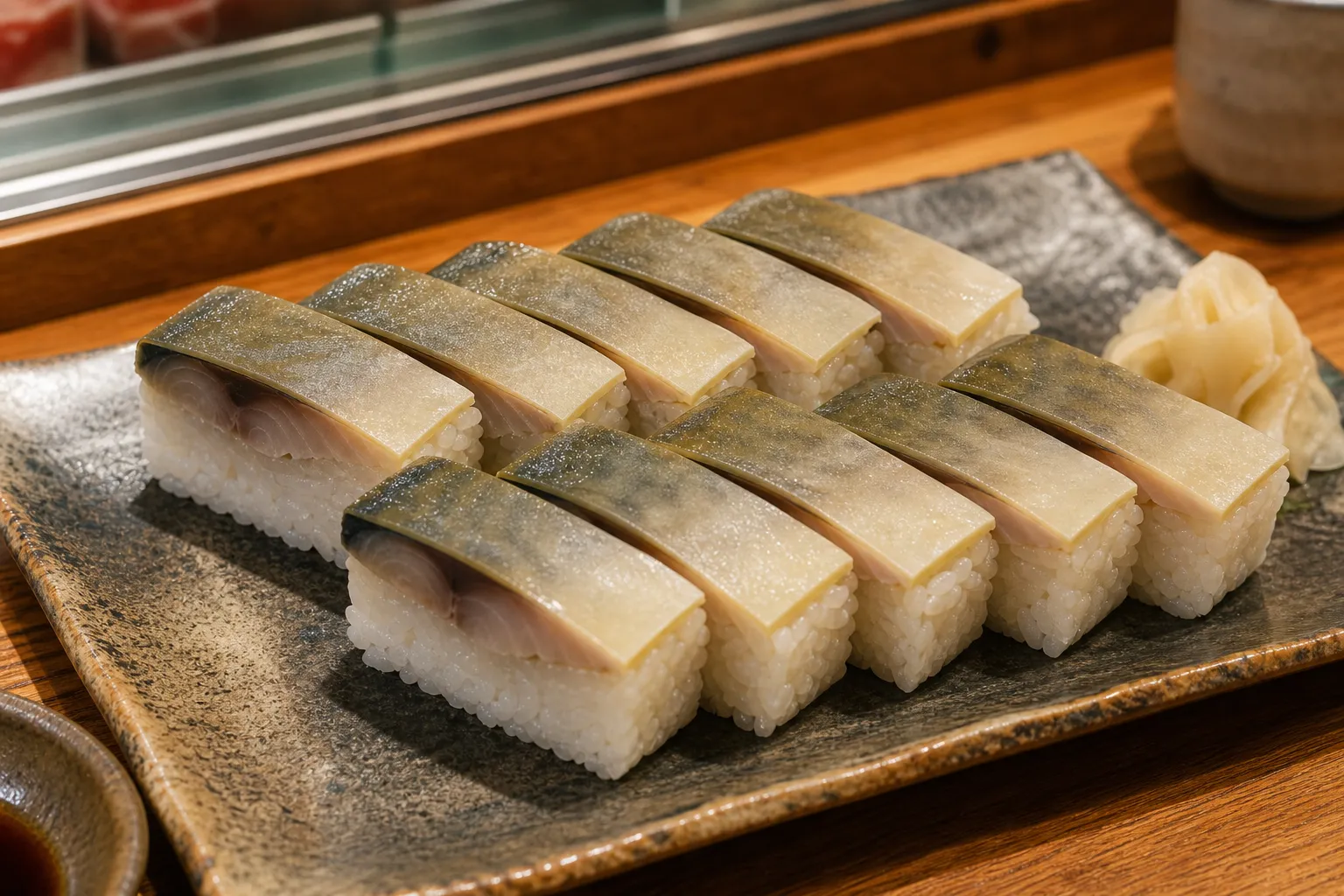
Battera (バッテラ)
Osaka's beautiful pressed sushi — vinegar-cured mackerel and rice squared off in a wooden box and crowned with a translucent sheet of kelp, sliced into glossy little bricks that taste like the city's quieter, older idea of sushi.
July 10, 2026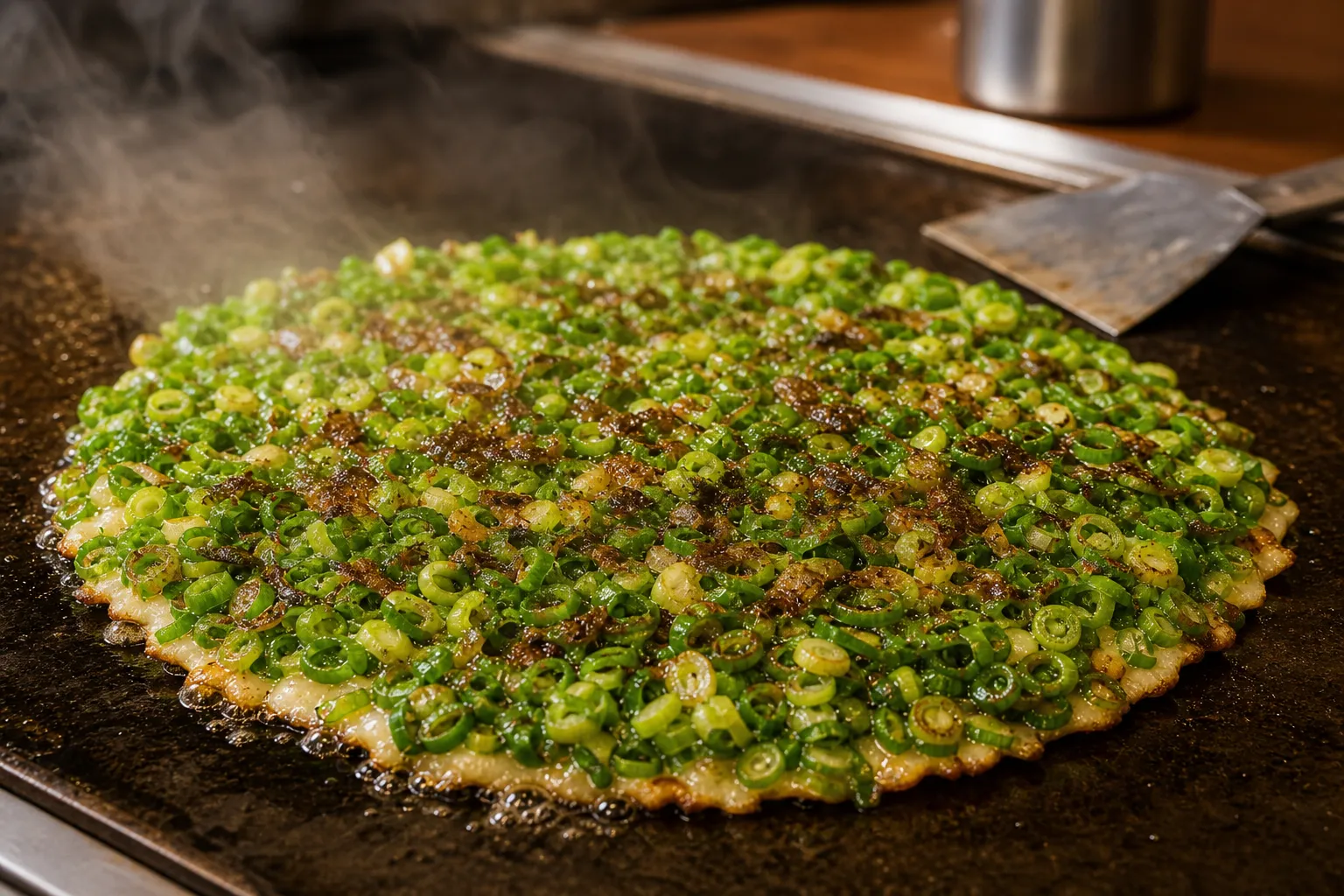
Local FoodOsaka
Negiyaki (ねぎ焼き)
Okonomiyaki's leaner, greener Osaka cousin — a thin griddle cake packed with a mountain of chopped green onion instead of cabbage, savory with beef tendon, and finished with soy instead of sweet sauce.
July 10, 2026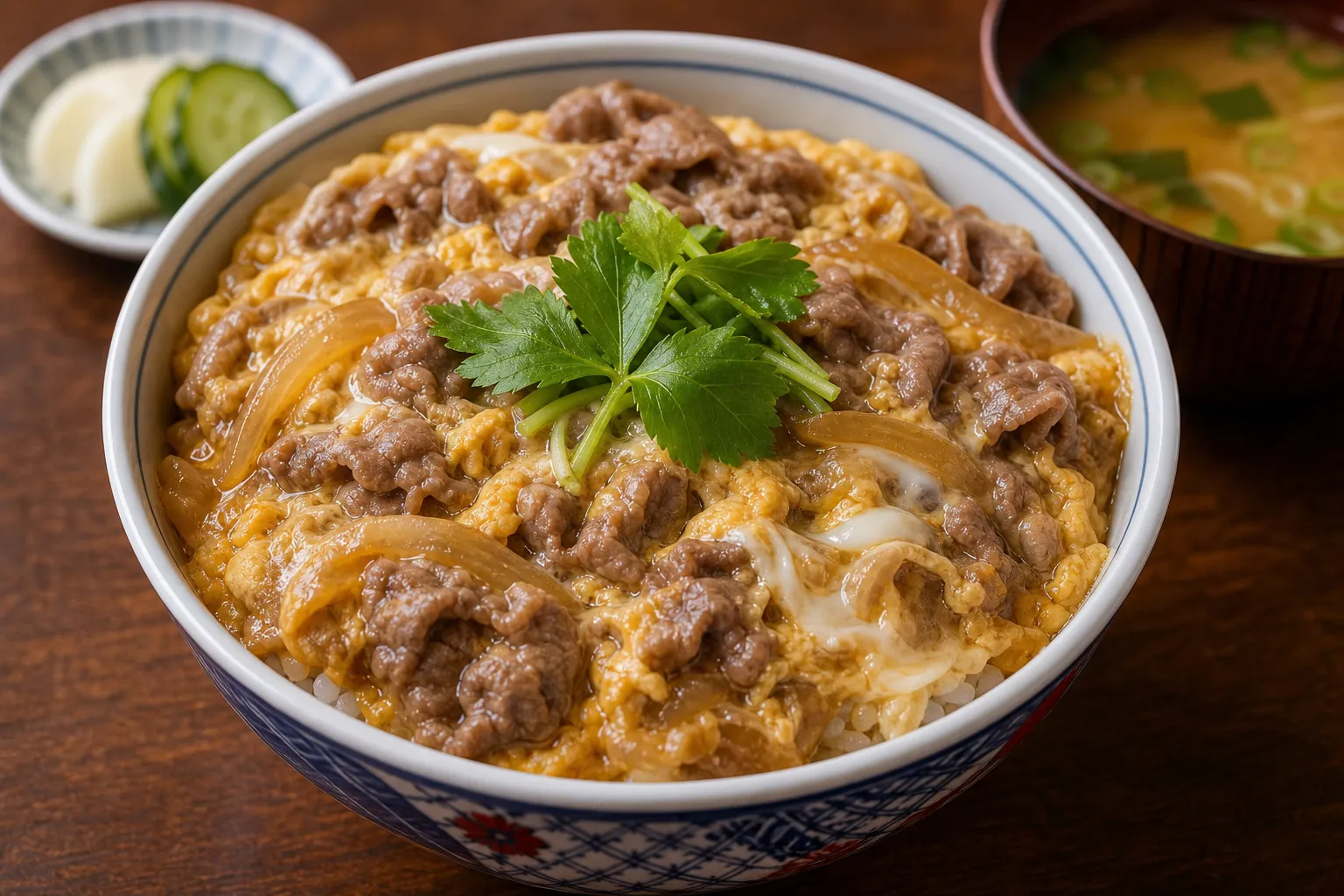
Japanese FoodOsaka, Kansai
Tanindon (他人丼)
Beef and egg who've never met, thrown together in sweet dashi over rice — the cheeky Kansai bowl with the best name in Japan. Oyakodon's troublemaker cousin, and quietly just as good.
July 9, 2026