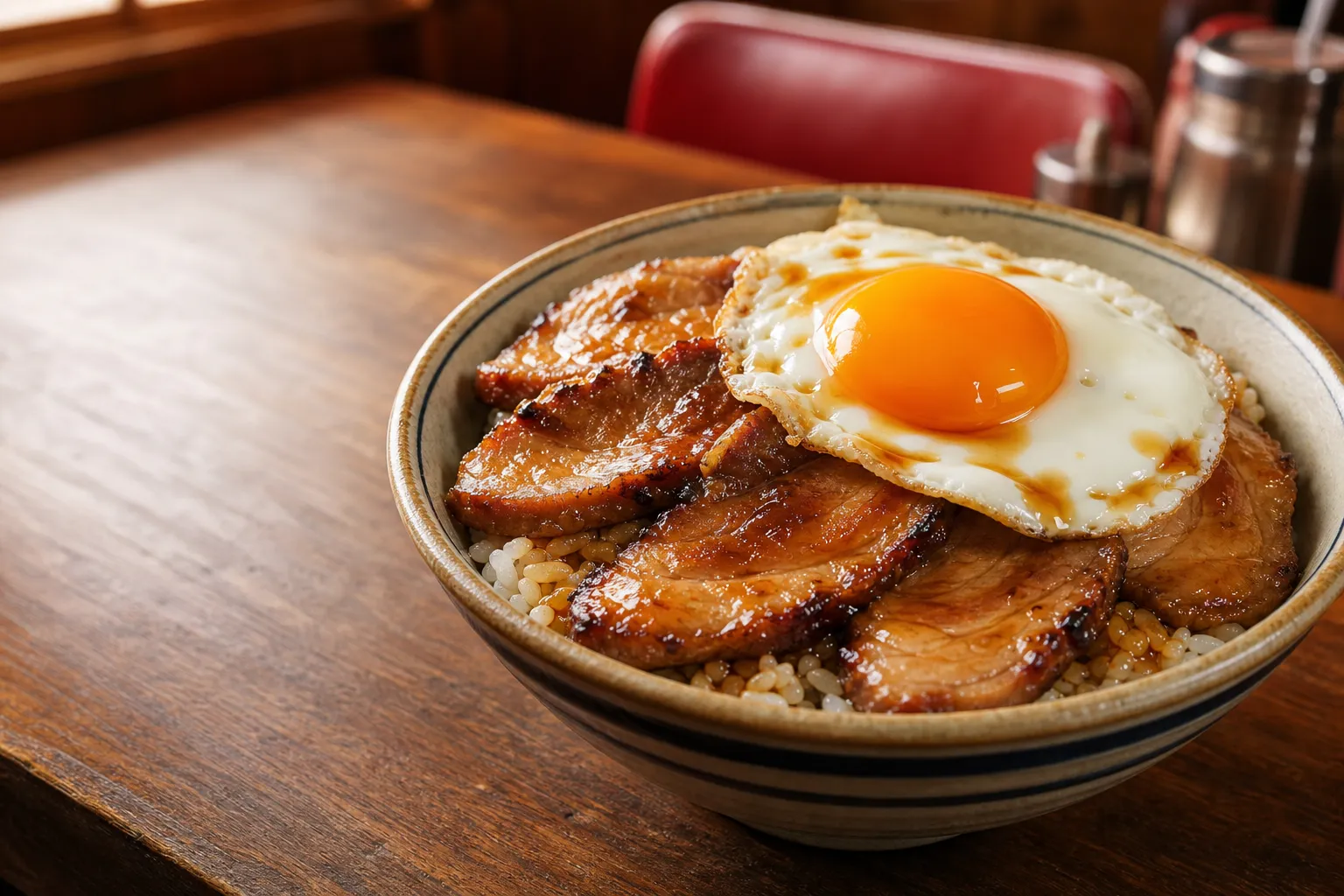
Break the yolk. That's the move. That's the whole religion. I pierced the runny sunny-side-up egg with the edge of my spoon and watched the yolk come pouring out, gold over the dark slices of roast pork, over the glossy sweet-savory sauce, down into the hot rice — and I made a sound in a Chinese restaurant in Imabari that I will not attempt to transcribe. It is possibly the most straightforwardly joyful bowl of food I ate on the whole island of Shikoku.
Share this dish


I broke the yolk and watched it slide down over the roast pork and the glossy sauce and the rice, and I understood, in that exact second, why an entire town claims this bowl as its own.
🍜 Planning a food trip to Ehime?Add this dish to my Food Trip →
 Add this dish to my Food Trip →
This is yakibuta tamago meshi (焼豚玉子飯, "roast pork and egg rice"), the pride of Imabari in Ehime Prefecture. The build is almost aggressively simple: hot rice, slices of yakibuta (char siu — the same glossy roast pork you'd find in ramen), a runny fried egg or two on top, and a lacquer of sweet-savory sauce over the whole thing. That's it. That's the dish. It sounds like something you'd invent at midnight and it eats like something a town spent decades perfecting — because that's more or less exactly what happened.
Born in a Chinese restaurant, adopted by a whole town
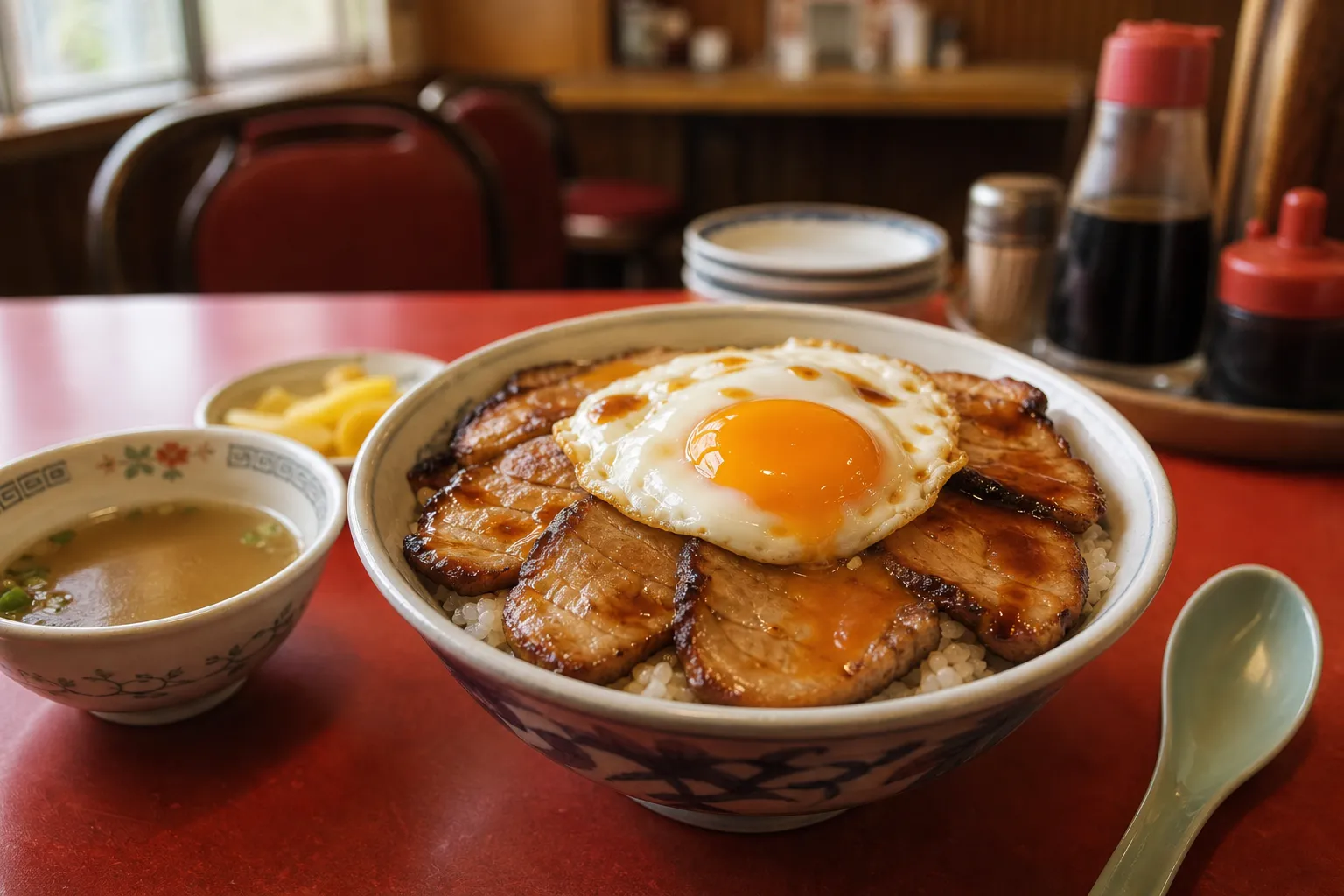
The origin story is wonderfully humble: it comes out of Imabari's Chinese restaurants, where the tale goes that busy cooks wanted a fast, filling staff meal — so they took the char siu they already had, laid it over rice, slid a couple of fried eggs on top, and glossed it with the sweet roast-pork sauce. Kitchen-staff fuel. The stuff cooks make for themselves when nobody's watching. Then customers caught sight of it, wanted it too, and a back-of-house shortcut climbed onto the actual menu and never left.
Imabari — a city more famous internationally for producing extremely nice towels — took this bowl and ran with it, turning it into a genuine local-gourmet banner dish, the kind a town rallies around and promotes with real affection. I find that arc deeply satisfying. The best soul food so often starts as something practical and unglamorous — feed the workers, use what's here, do it fast — and becomes beloved precisely because it never lost that honesty. This bowl has zero pretension and I trust it completely.
Why this dumb-simple bowl is so good
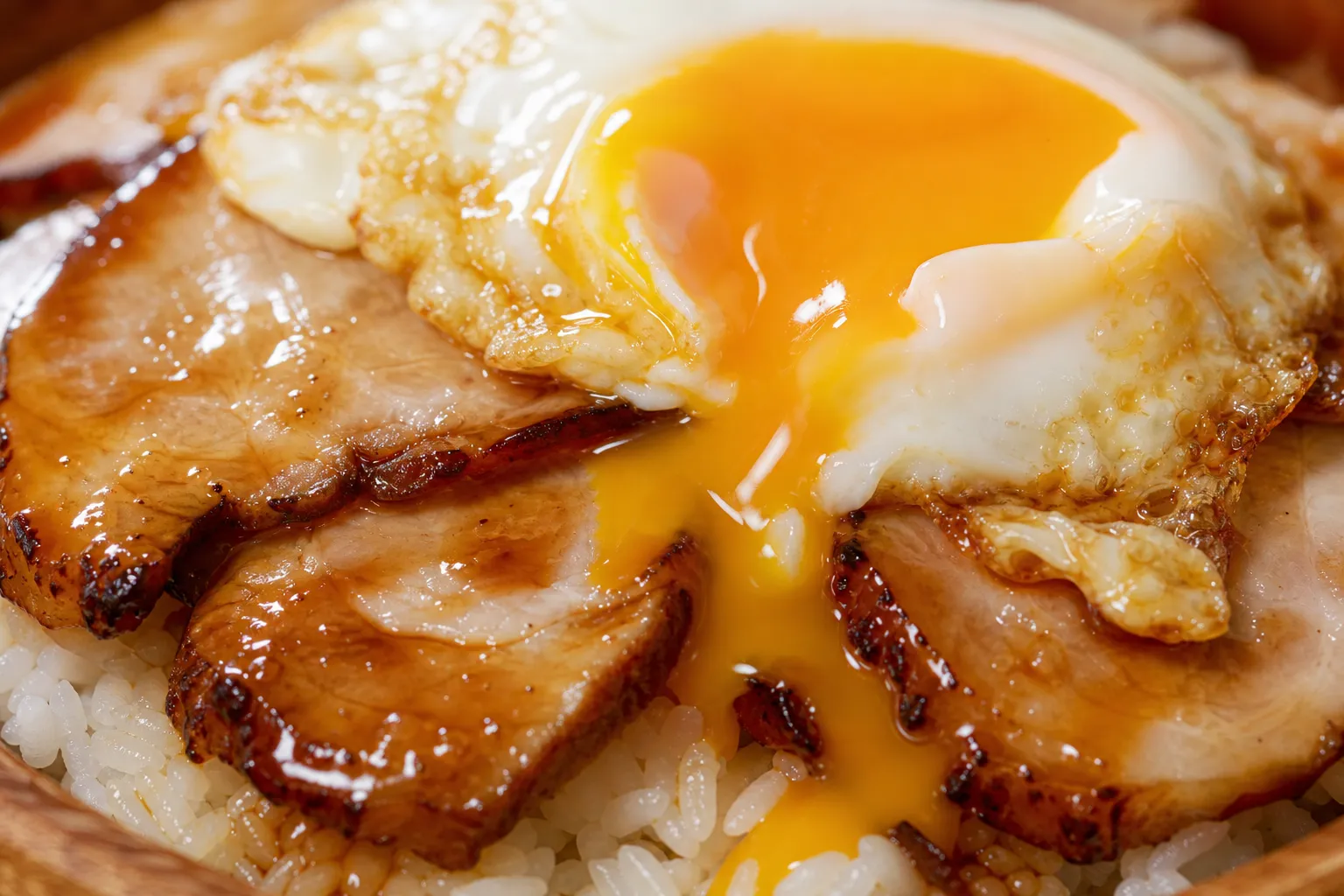
Let's account for what's actually happening in the bowl, because the sum is bigger than the four parts. The char siu brings savory, faintly sweet, tender depth. The sauce — glossy, soy-sweet, clinging — soaks into the rice so no grain is left plain. And then the runny egg yolk, once you break it, turns the whole thing into a rich, golden, self-saucing situation where pork, sauce, egg, and rice all fuse into one warm, cohesive, deeply comforting mouthful.
It's not spicy. It's not weird. It's not a dare. It's just right — salty-sweet-rich comfort food operating at a very high level. This is the bowl I'd hand to a nervous first-timer who thinks they don't like "adventurous" Japanese food, because there is nothing here to be nervous about and everything to love. I ate mine embarrassingly fast and immediately understood the appeal of a second one.
How yakibuta tamago meshi is made
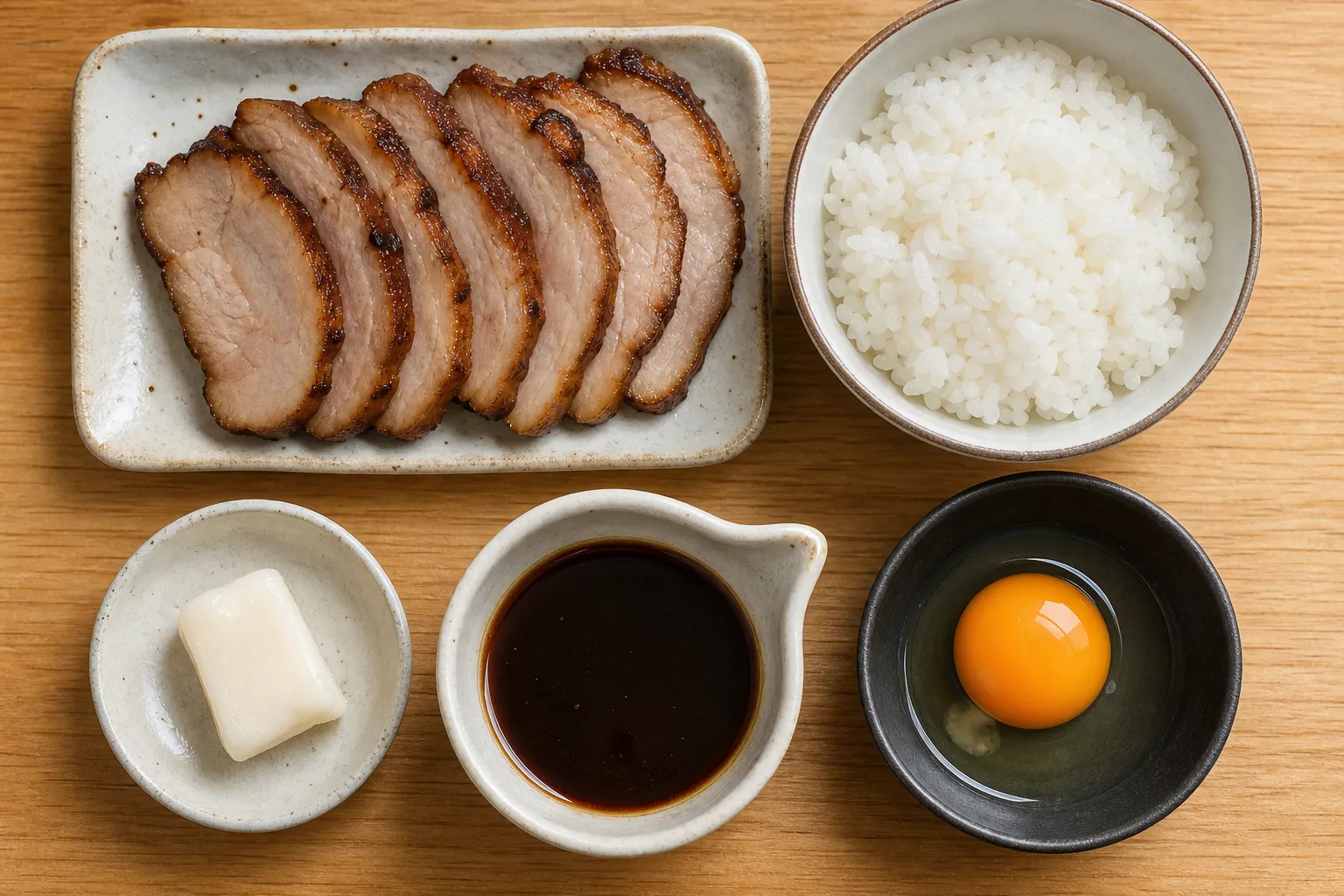
- Char siu (yakibuta) roast pork is prepared and sliced — the same glossy, sweet-savory pork used in ramen
- A sweet-savory sauce (soy, sugar, the pork's own roasting juices) is simmered until glossy and thick
- A bowl is filled with hot rice, and the sliced roast pork is laid over the top
- One or two eggs are fried sunny-side-up, kept runny, and set on the pork
- The whole bowl is glazed with the sweet-savory sauce and served hot — you break the yolk yourself and let it flood everything
Before you go — break the yolk immediately
Your questions, answered honestly
"How do I actually eat it?" — Break the yolk first, before anything else, and let it run over the pork and rice. Then mix a little so every bite carries pork, sauce, egg, and rice together. Do not eat the egg neatly on the side like a polite guest. Ruin it. That's the correct way.
"Is this just chashu ramen without the noodles?" — Same roast pork, completely different dish. Ramen is a noodle soup; this is a rice bowl — no broth, no noodles, just pork, egg, sauce, and rice. If you loved the chashu in your ramen, this is that flavor, concentrated over rice.
"One egg or two?" — Many places let you choose. Two eggs means more golden yolk to flood the bowl, which is rarely a mistake. If you're hungry, get two.
"Is it spicy or heavy?" — Not spicy at all — it's sweet-savory and rich. It is filling, thanks to the pork, egg, and glazed rice, so maybe don't order it right after a big bowl of udon. (Shikoku will tempt you to. Pace yourself.)
What the staff will ask you
| You'll hear | Romaji | Meaning | Just say |
|---|---|---|---|
| 卵は一つですか、二つですか? | Tamago wa hitotsu desu ka, futatsu desu ka? | "One egg or two?" | Futatsu de onegaishimasu (two, please) |
| ご飯の量はどうしますか? | Gohan no ryō wa dō shimasu ka? | "What rice portion?" | Futsū de onegaishimasu (regular, please) |
| スープはお付けしますか? | Sūpu wa otsuke shimasu ka? | "Add a soup with it?" | Onegaishimasu (yes, please) |
To order, just say "Yakibuta-tamago-meshi o kudasai" (焼豚玉子飯をください) — "The roast pork and egg rice, please."
Where to eat it
- Imabari, Ehime — the home of the dish; Chinese restaurants around the city (including the long-running establishments credited with originating it) and local diners are where to look.
- Imabari city center and station area — a practical base; look for shops flagging 焼豚玉子飯 on their signs or menus.
- Ehime local-gourmet spots — as an official local specialty, it also turns up at food events and regional restaurants beyond Imabari itself.
Which shops serve it, their hours, and one-egg-or-two options vary place to place, so check current details before you go.
Soul Score
Local Roots4/5
First-Timer Friendly5/5
Adventure Level3/5
Comfort Level5/5
Travel Worthy4/5
These scores are one obsessed eater's gut feeling — not a verdict. A low number isn't a bad mark, just a different kind of adventure.
Know someone planning Japan?
← All Articles
Local Food · Imabari, Ehime
Still hungry?
Eat more from Ehime
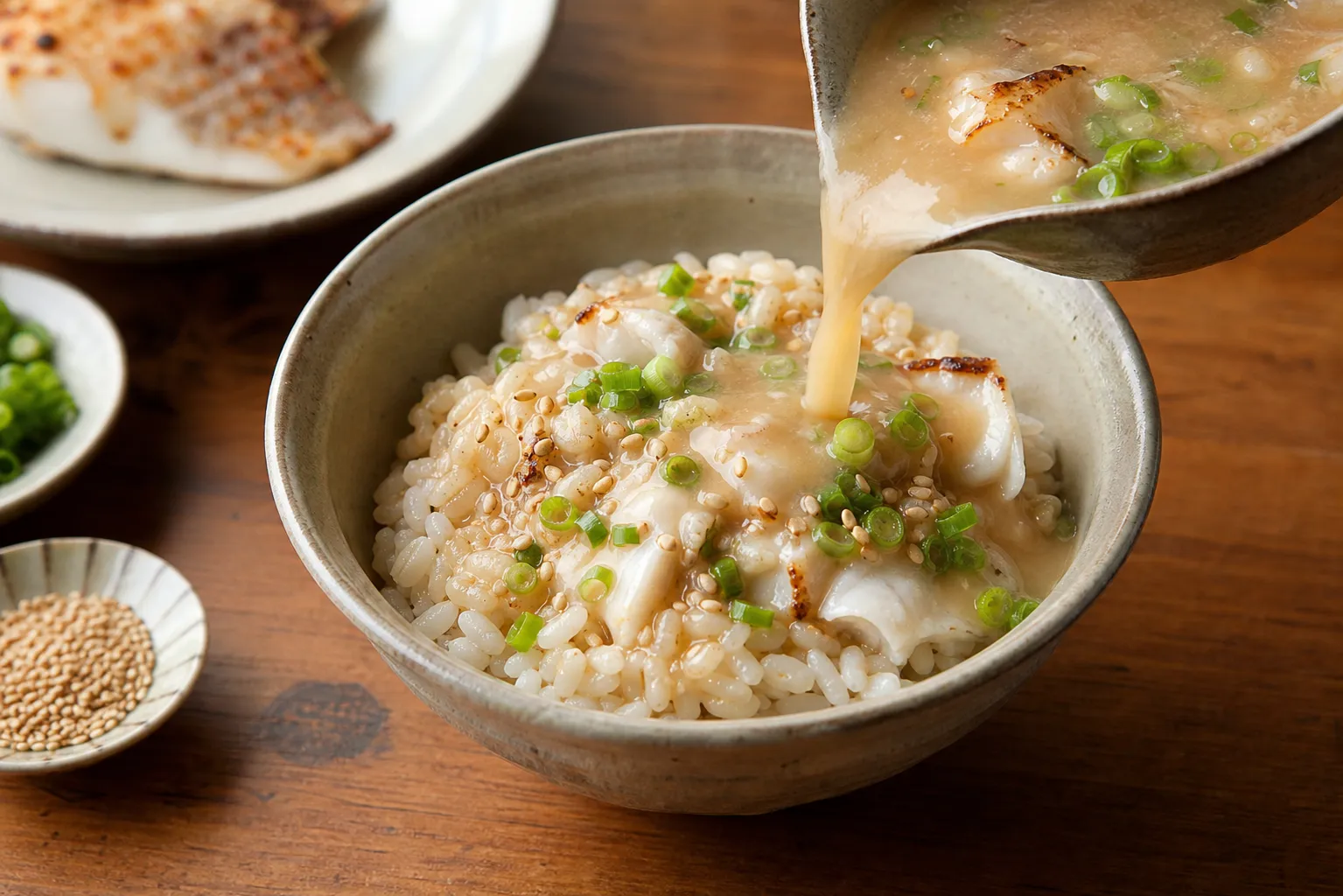
Local FoodUwajima, Ehime
Uwajima Satsuma (宇和島さつま)
Grilled white fish pounded into miso, thinned with dashi, and poured cold over hot rice — a Uwajima fisherman's trick that turns a bowl of rice into the most savory, slurpable thing on the table.
July 12, 2026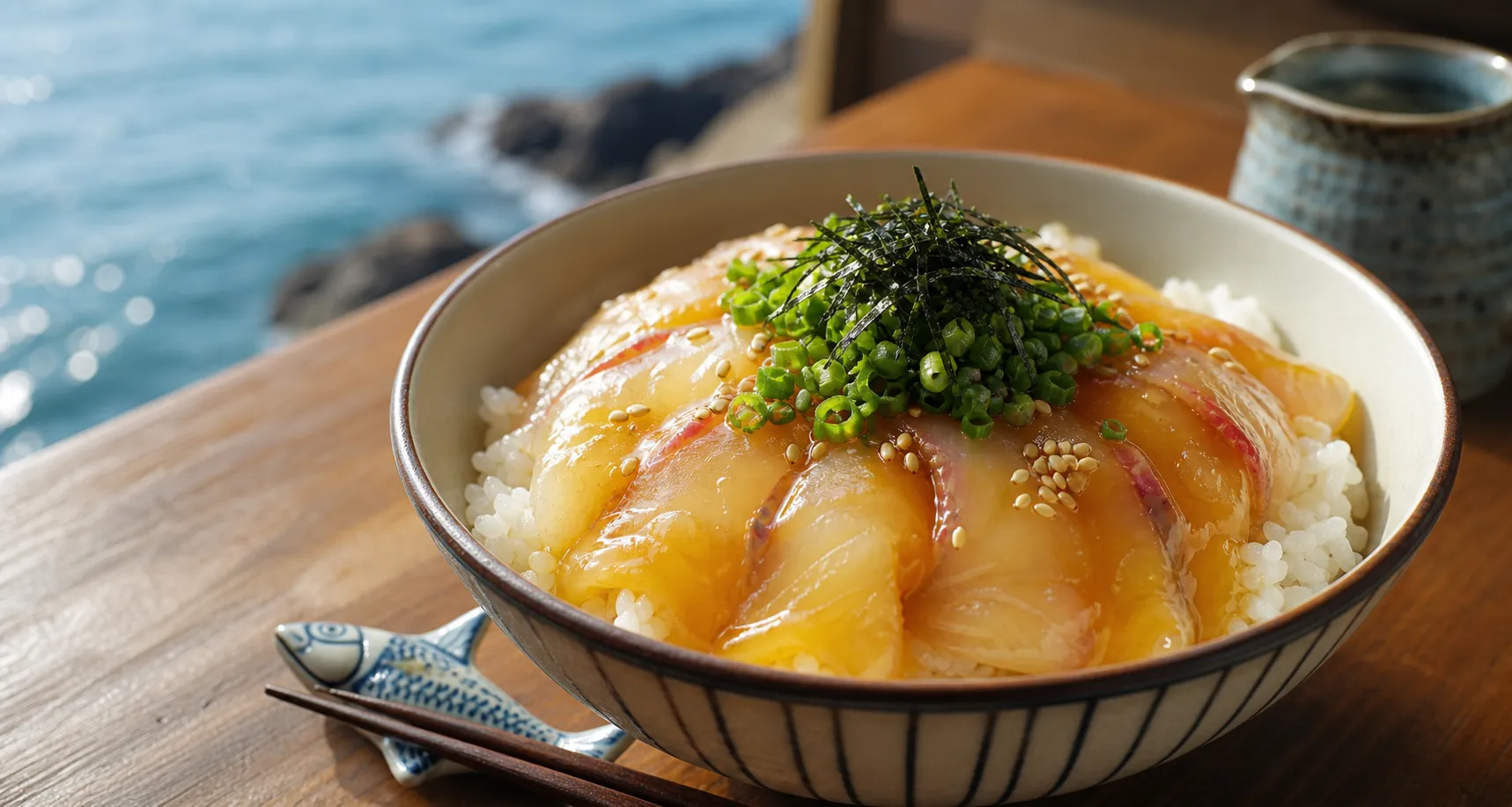
Local FoodUwajima, Ehime
Uwajima Taimeshi (宇和島鯛めし)
You crack a raw egg into your rice, drown it in sea-bream sashimi and a soy-dashi sauce, and mix like nobody's watching — Uwajima's version of taimeshi has nothing to do with the cooked rice dish everyone assumes it is.
July 4, 2026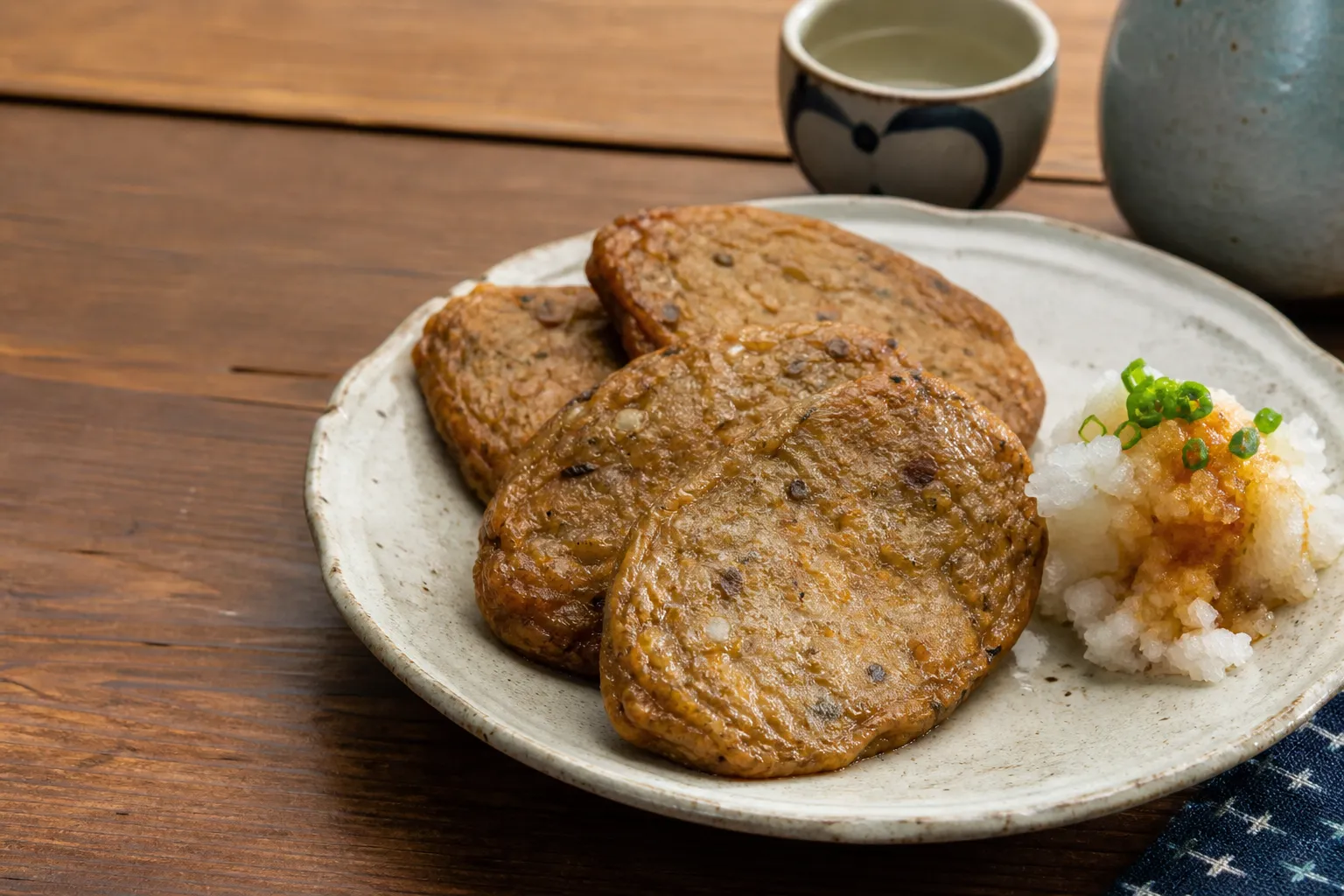
Local FoodUwajima, Ehime
Jakoten (じゃこ天)
A rough little fried fish cake made from whole small fish — bones, skin and all — minced and griddled till golden. Humble, fishy in the best way, and weirdly addictive. Ehime's honest snack.
June 27, 2026