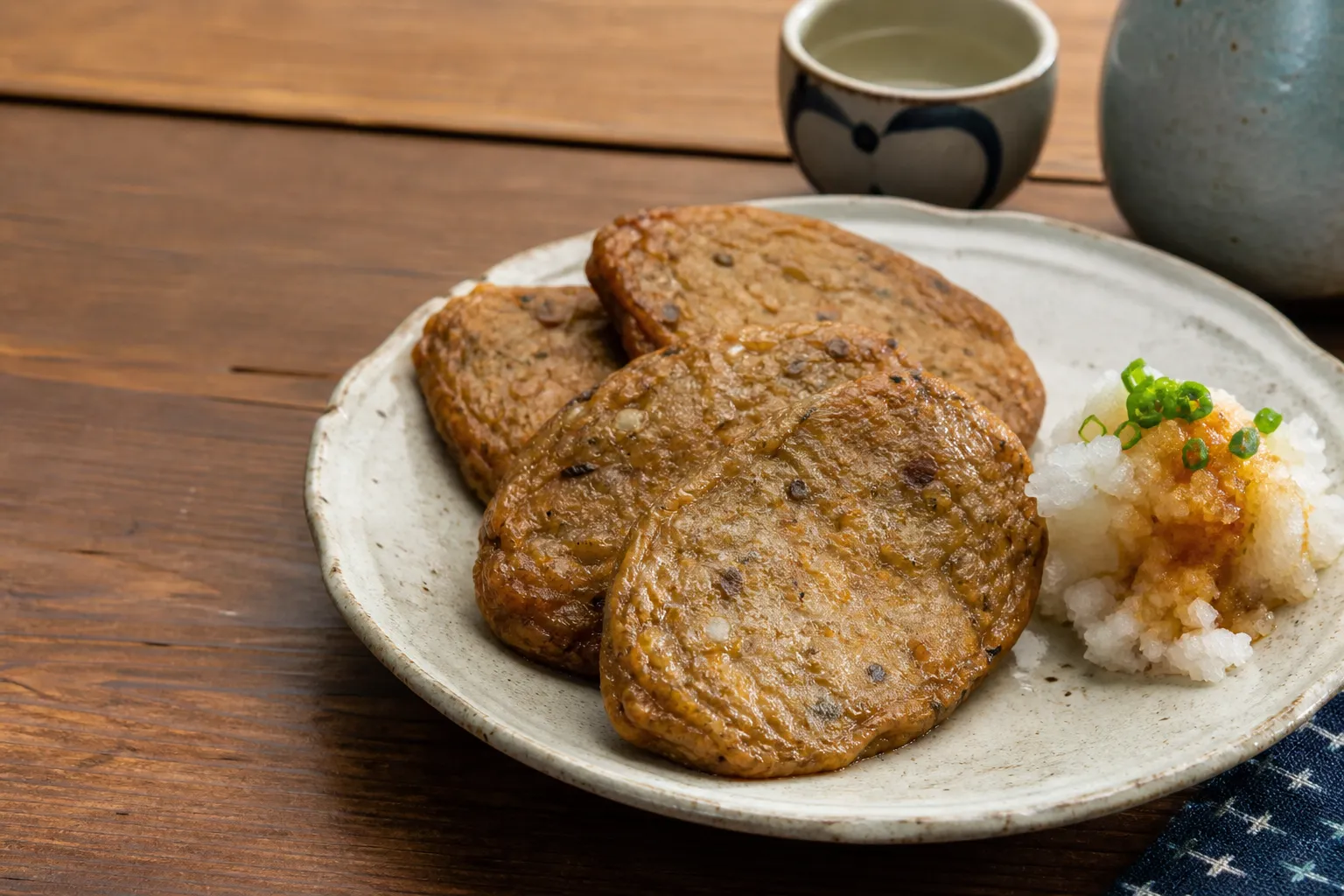
I bit into this rough, grey-brown little oval expecting bland and got the sea — deep, savory, properly fishy, with a springy chew and a faint gritty richness I couldn't place until someone told me: it's the whole fish. Bones and all. Ground up and fried. I looked at the half left in my hand and thought, oh, I'm going to eat a lot of these. I did.
Share this dish


A rough little fried fish cake made from whole small fish — bones, skin and all — minced and griddled till golden. Humble, fishy in the best way, and weirdly addictive. Ehime's honest snack.
🍜 Planning a food trip to Ehime?Add this dish to my Food Trip →
 Add this dish to my Food Trip →
This is jakoten, the everyday pride of Uwajima in southern Ehime. It's a fried fish cake — but not the smooth, pale, refined kind. Jakoten is made from small whole fish minced coarse, skin and bones included, so it's darker, rougher, and far fishier than your average kamaboko. It's humble, it's cheap, and it is genuinely hard to stop eating.
A fishing town's no-waste genius
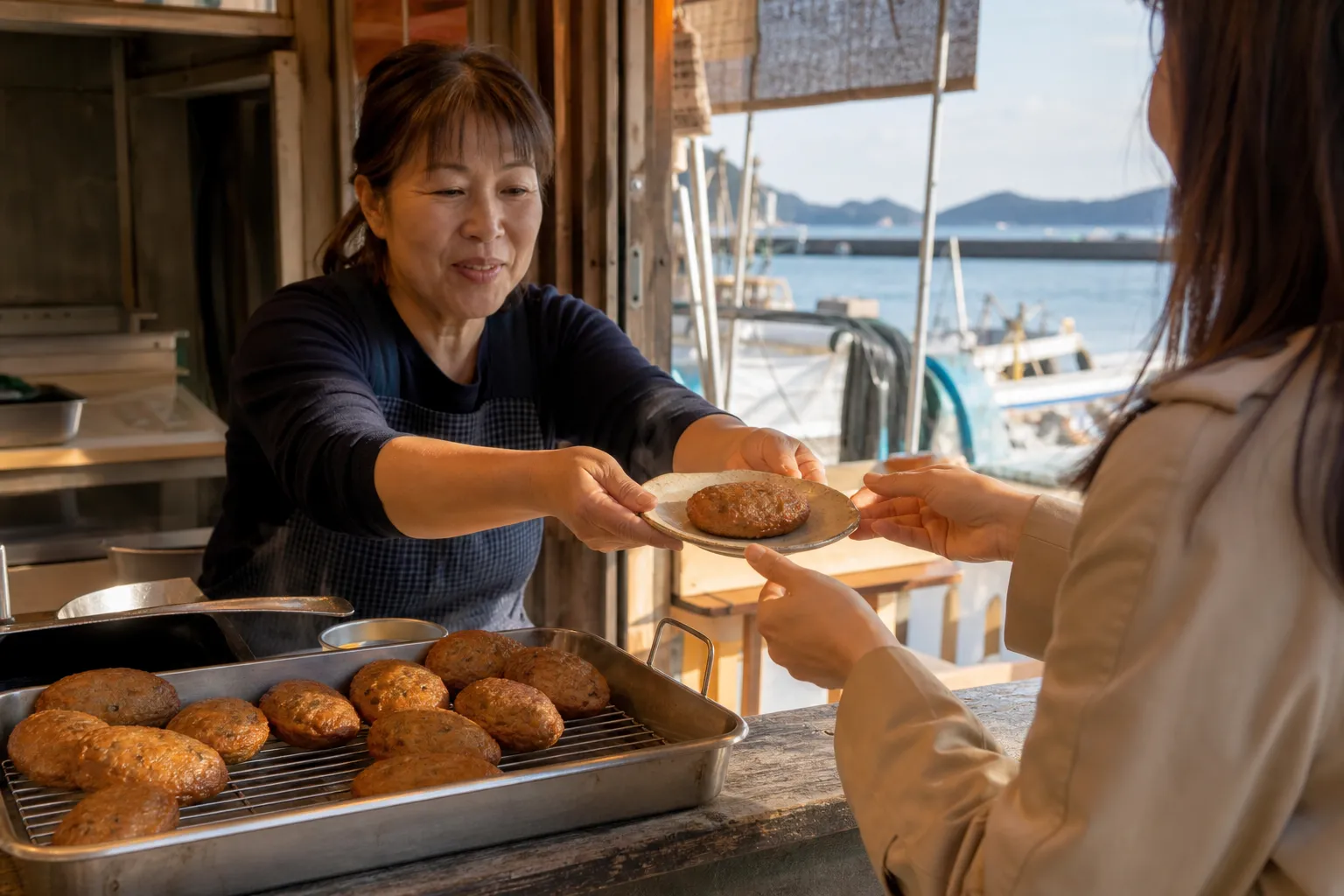
Uwajima sits on a deeply indented coastline on the Uwa Sea, a fishing region with more small fish than it knew what to do with. Jakoten is the brilliant, frugal answer: take the little fish too small or too bony to sell as fillets — hotarujako and other small reef fish — and instead of wasting them, mince them whole, skin, bones, and all, into a paste and fry it. Nothing thrown away, everything turned into something delicious. The local feudal lords, the Date clan of Uwajima, are often credited with encouraging the craft.
I find that deeply satisfying — a food born entirely out of don't waste the fish, that ended up tasting better than the "nicer" version it was a workaround for. The bones are the secret: ground fine, they add calcium, a faint crunch, and a depth that smooth surimi just doesn't have. It's a humble dish with an honest backstory, and you can taste both.
Rough, fishy, and better warm
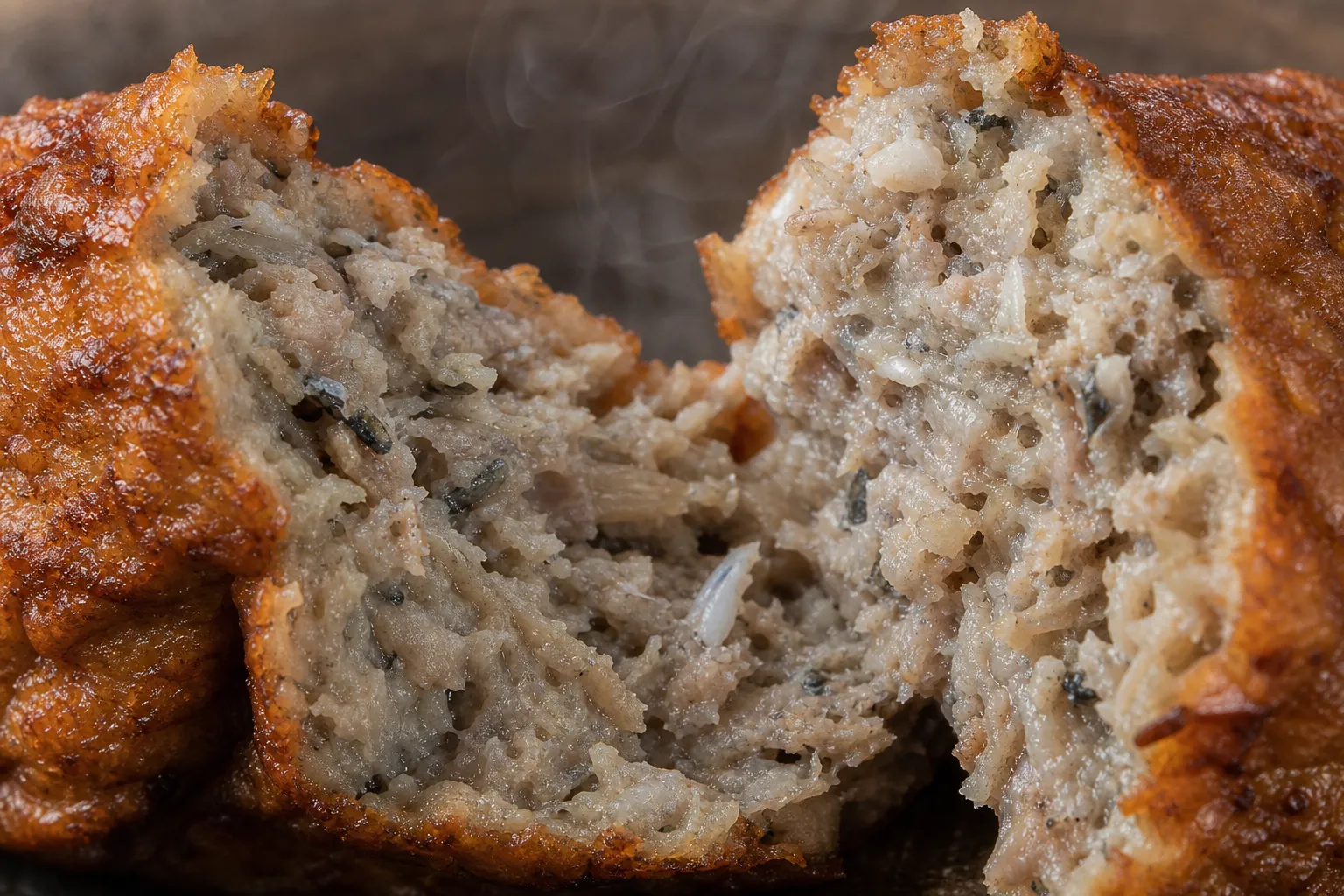
Tear a jakoten in half and you see why it's different: the inside is a dense, greyish-brown, slightly fibrous fish paste flecked with tiny bits of bone and skin, wrapped in a rough, golden, blistered fried surface. The texture is springy and a little coarse — chewier and more rustic than the bouncy smoothness of factory fish cake. The flavor is straight-up fish, savory and full, with a saltiness that makes it a perfect drinking snack.
Eat it warm if you possibly can — a quick re-griddle or grill wakes up the surface and the aroma. A little grated daikon, a few drops of soy, a squeeze of citrus, maybe a dab of mustard, and a cold beer, and you're set. It's also brilliant dropped into udon (Uwajima loves jakoten-udon). I ate three standing up at a market counter and then bought a pack to take with me. They didn't survive the train ride.
How it's made
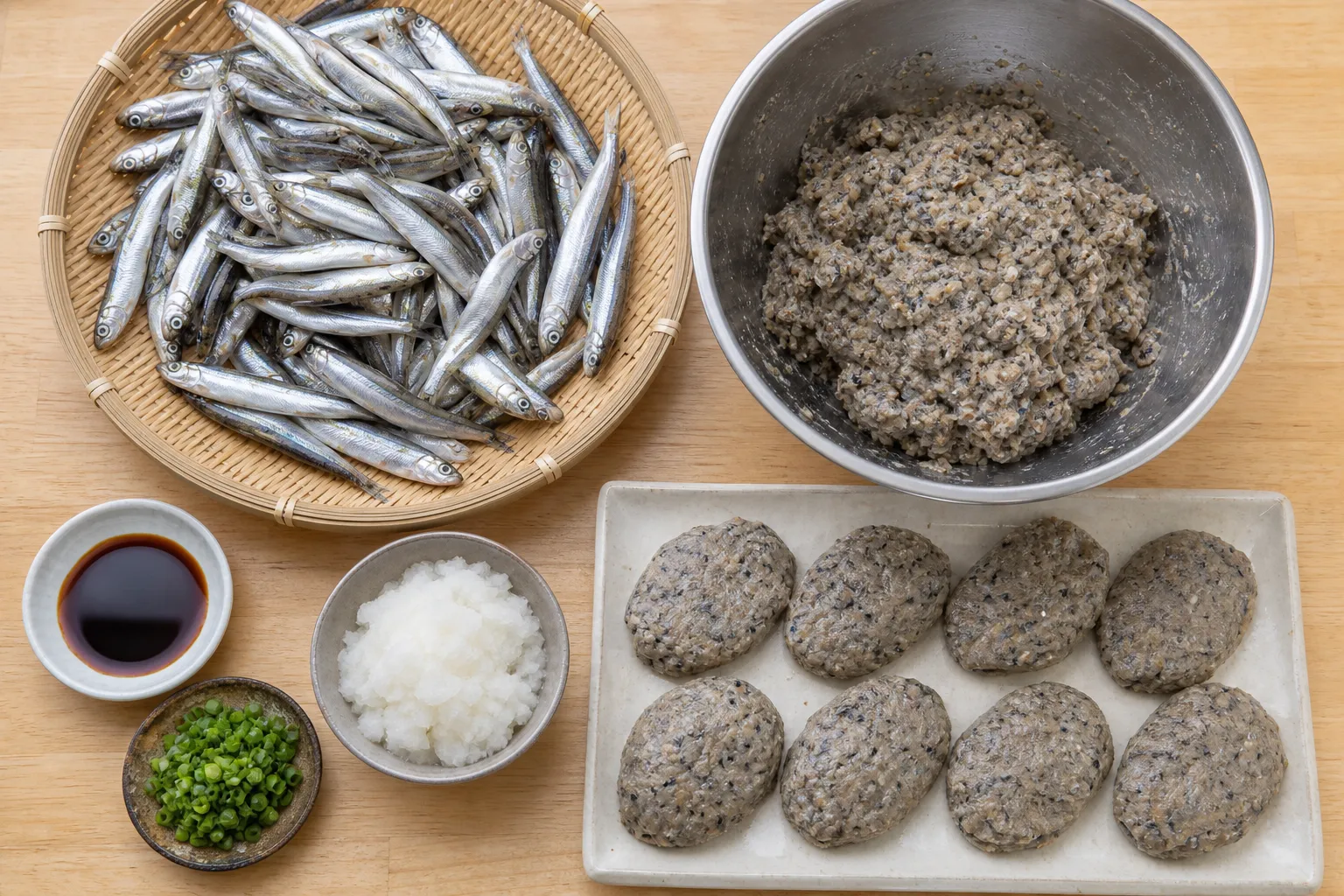
- Use small whole fish (hotarujako and other small reef fish), fresh from the Uwa Sea
- Mince them whole — flesh, skin, and bones together — into a coarse paste, seasoned simply with salt
- (Some makers grind finer or coarser; the bones staying in is the defining feature)
- Shape into small flat ovals
- Deep-fry until the surface is rough and golden-brown and the inside is set and springy
- Eat warm — best re-griddled or grilled — with grated daikon, soy, and citrus, or drop into udon
Before you go — for the fish-curious
Your questions, answered honestly
"Bones and all — is that going to be weird?" — Not in a bad way. The bones are ground fine, so you don't crunch into a skeleton — you get depth, a faint texture, and extra savoriness. If you like fish, you'll like this. It's far more approachable than it sounds.
"How is it different from kamaboko or satsuma-age?" — It uses whole small fish (bones, skin included) rather than refined white fish paste, so it's darker, rougher, and much fishier. More rustic, more flavorful, less bouncy-smooth.
"Hot or cold?" — It's sold ready-to-eat and is fine cold, but it's noticeably better warm — a quick grill or griddle revives the surface and smell. Ask if they can heat it, or eat it fresh from the fryer at the source.
"How should I eat it?" — As-is with a little soy and grated daikon, with a squeeze of citrus and a beer, or sliced into udon. All correct. Start plain to taste the fish, then dress it up.
What the staff will ask you
| You'll hear | Romaji | Meaning | Just say |
|---|---|---|---|
| 温めますか? | Atatamemasu ka? | "Shall I heat it up?" | Hai, onegaishimasu — yes please |
| 何枚にしますか? | Nan-mai ni shimasu ka? | "How many pieces?" | San-mai kudasai (three) — or your number |
| お持ち帰りですか? | Omochikaeri desu ka? | "To take away?" | Hai (yes) or koko de tabemasu (eating here) |
To order, just say "Jakoten kudasai" (じゃこ天ください) — "Jakoten, please."
Where to eat it
- Uwajima, Ehime — the home of jakoten; long-running fish-cake makers sell it fresh (often fried to order) and many shops will grill it for you on the spot. The best place to taste it warm at the source.
- Matsuyama & across Ehime — markets, izakayas, and udon shops around the prefecture serve jakoten and jakoten-udon; an easy try if you're based in the Ehime capital.
- Ehime antenna shops & department-store food halls nationwide — vacuum-packed jakoten is a popular souvenir and travels reasonably well; reheat before eating. Confirm shelf life if you're carrying it far.
Soul Score
Local Roots5/5
First-Timer Friendly5/5
Adventure Level3/5
Comfort Level4/5
Travel Worthy4/5
These scores are one obsessed eater's gut feeling — not a verdict. A low number isn't a bad mark, just a different kind of adventure.
Know someone planning Japan?
← All Articles
Local Food · Uwajima, Ehime
Still hungry?
Eat more from Ehime
Local FoodUwajima, Ehime
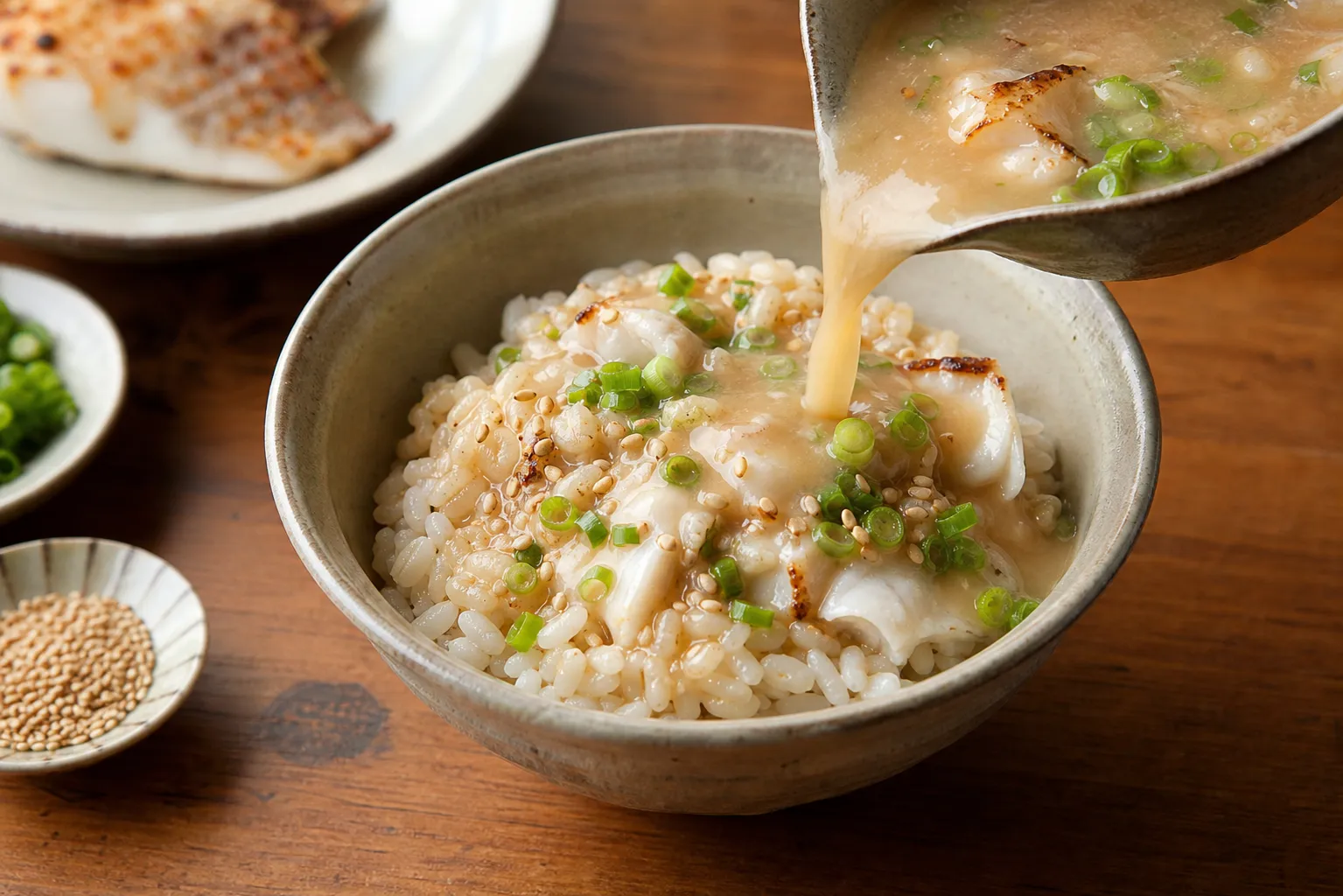
Uwajima Satsuma (宇和島さつま)
Grilled white fish pounded into miso, thinned with dashi, and poured cold over hot rice — a Uwajima fisherman's trick that turns a bowl of rice into the most savory, slurpable thing on the table.
July 12, 2026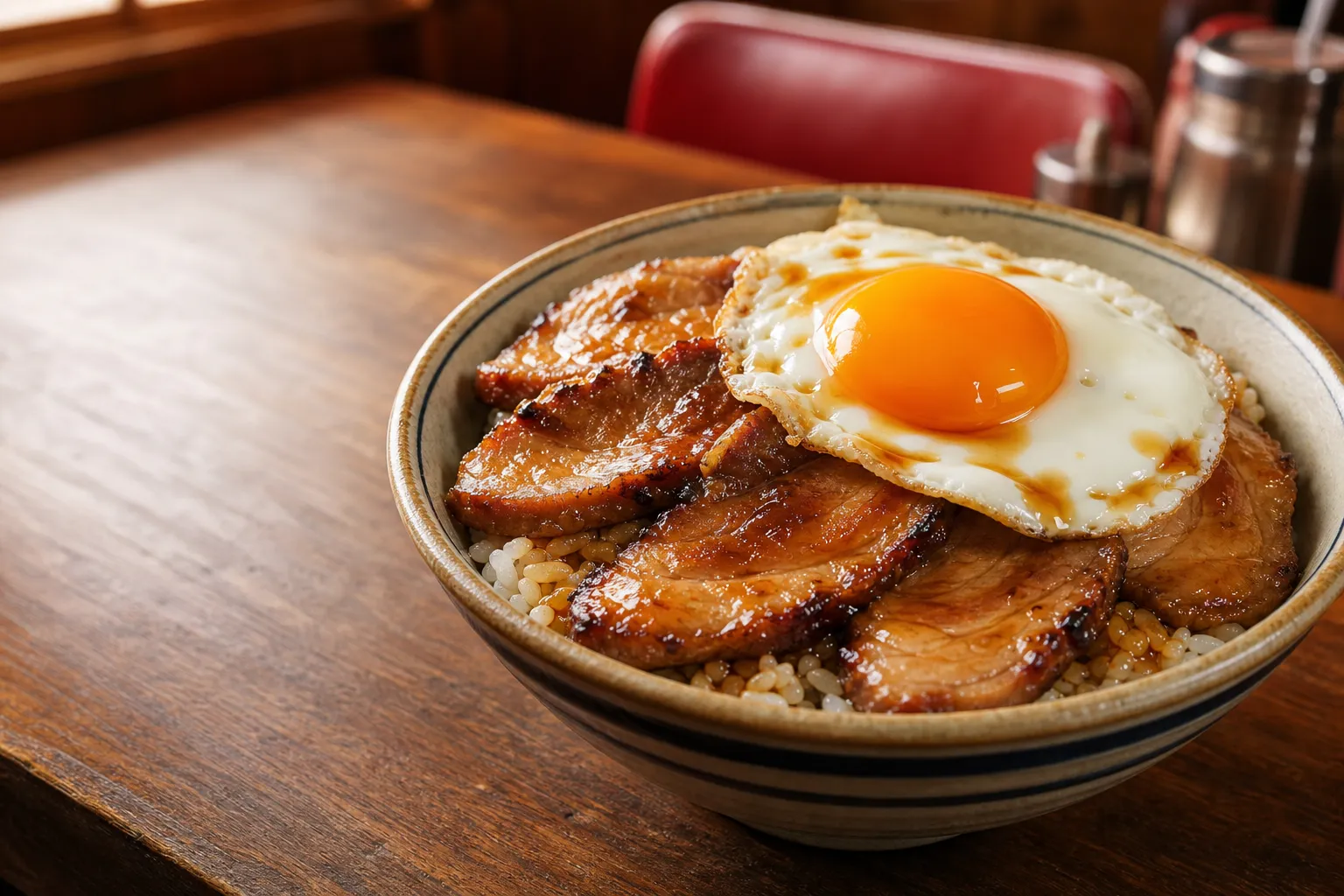
Local FoodImabari, Ehime
Imabari Yakibuta Tamago Meshi (今治焼豚玉子飯)
I broke the yolk and watched it slide down over the roast pork and the glossy sauce and the rice, and I understood, in that exact second, why an entire town claims this bowl as its own.
July 5, 2026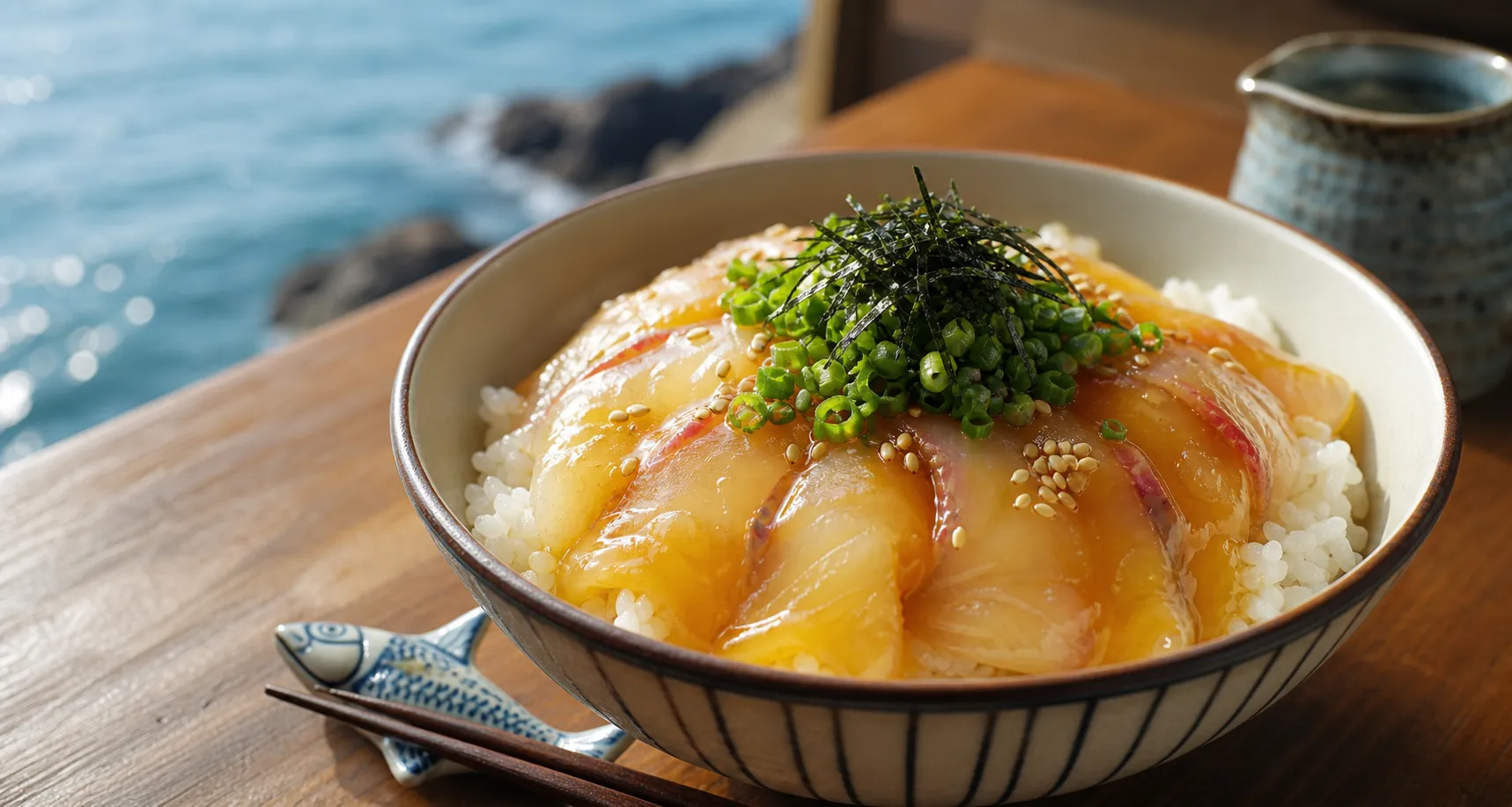
Local FoodUwajima, Ehime
Uwajima Taimeshi (宇和島鯛めし)
You crack a raw egg into your rice, drown it in sea-bream sashimi and a soy-dashi sauce, and mix like nobody's watching — Uwajima's version of taimeshi has nothing to do with the cooked rice dish everyone assumes it is.
July 4, 2026