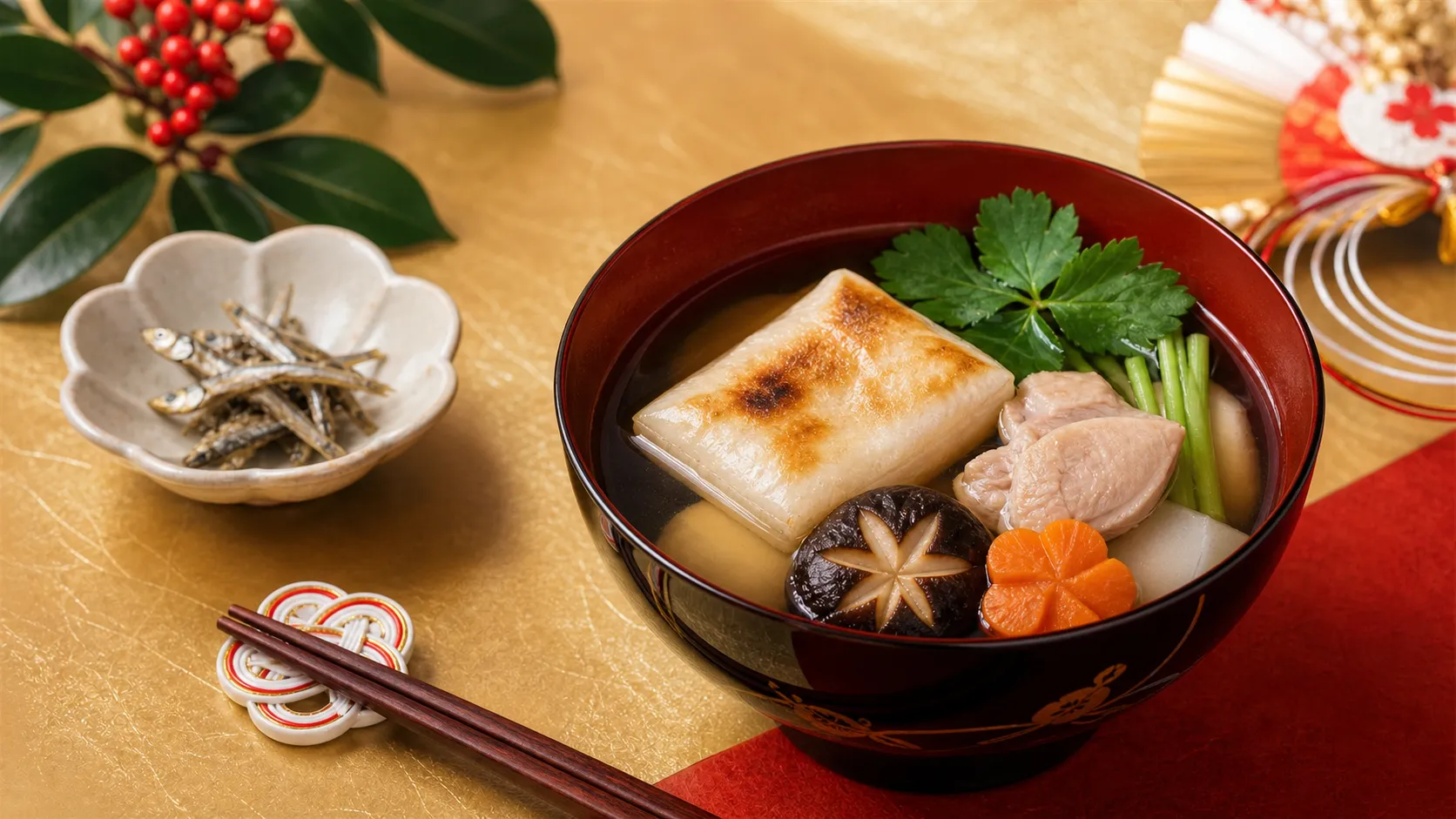
It's the morning of January 1st, everyone's a little slow from the night before, and a bowl of soup appears — steam curling up, a piece of mochi settling at the bottom, greens and a bit of chicken floating in a broth that smells like every New Year of someone's childhood. You take a spoonful, then work a stretchy piece of mochi loose with your chopsticks, and it's warm and savory and gentle and it tastes, unmistakably, like starting over. That's ozoni, the mochi soup that Japan wakes up to on New Year's Day — and no two bowls are quite the same.
Share this dish


The mochi soup Japan eats on New Year's morning — a bowl so personal that its broth, its mochi shape, and its toppings change from region to region and even house to house, making it the most intimate dish in the country.
Here's the beautiful thing: ozoni (お雑煮) is a New Year soup with mochi (rice cake) at its heart, but everything else about it changes depending on where you are and whose kitchen you're in. In eastern Japan (Kanto), it's typically a clear dashi-soy broth with a grilled square mochi; in Kyoto and much of Kansai, it's a sweet white-miso broth with a round mochi; and there are countless regional and family versions with chicken, seafood, specific vegetables, even sweet red-bean mochi. Mochi in a New Year broth, in your region's style: that's what makes it ozoni — a dish defined less by a recipe than by belonging.
One dish, a thousand hometowns
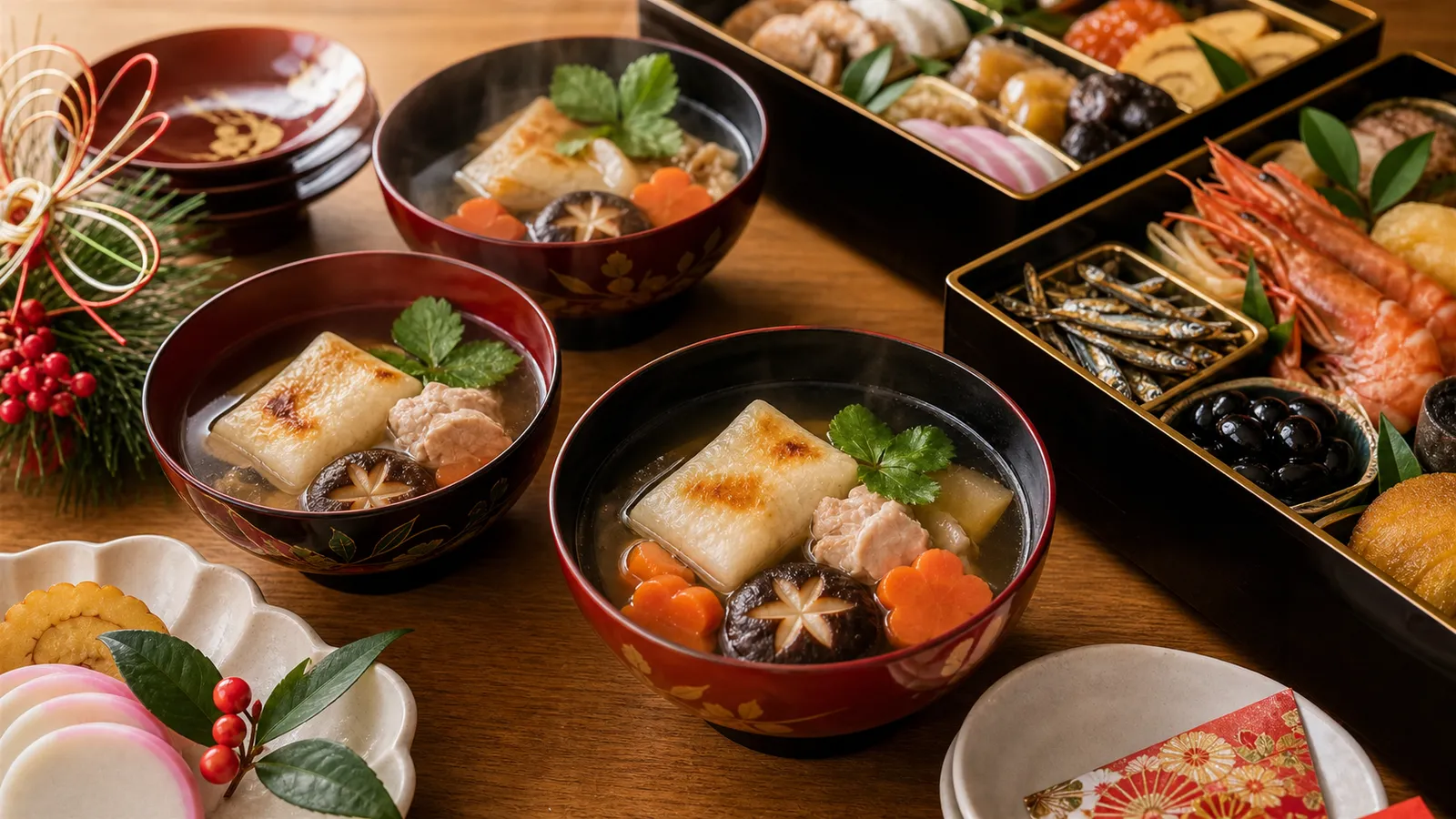
Ozoni is eaten to celebrate the New Year, and it's probably the most regionally and personally variable dish in all of Japanese cooking. The broth splits famously along an east–west line — clear soy in the Kanto east, sweet white miso in the Kyoto/Kansai west — but it goes far deeper than that: the mochi is square and grilled in the east, round and boiled in the west; some regions add chicken, some seafood, some a particular local green; a few places even use mochi coated in sweet kinako or red bean. Ask ten Japanese people about their ozoni and you'll get ten different, deeply-held answers.
That's exactly why I find it so moving. Ozoni isn't a restaurant dish you chase — it's a home dish, made the way one specific family in one specific place has always made it, carried down through generations. It's the taste of a particular household's New Year, and asking someone about their ozoni is one of the most intimate food questions you can ask in Japan. It's less a recipe than a fingerprint — proof that the deepest food traditions live not in famous restaurants but around family tables.
What makes the eating experience different
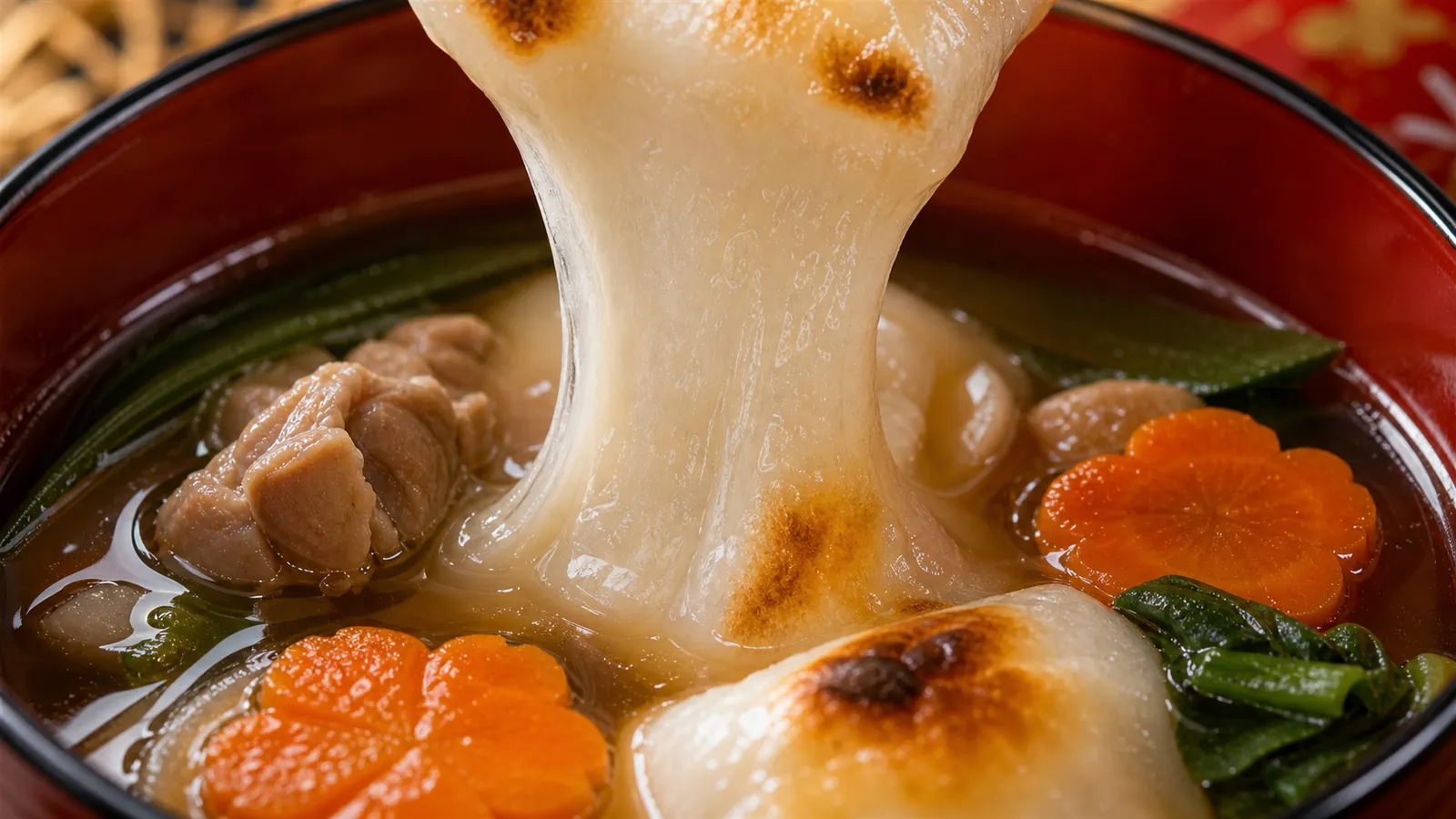
- The mochi is the anchor — soft, stretchy, chewy, comforting — grilled-and-crisp-edged in the east or gently boiled-soft in the west
- The broth defines the region: clean, savory dashi-soy (Kanto) or rich, gently sweet white miso (Kyoto/Kansai)
- Toppings tell you where you are — chicken and mitsuba greens, or specific regional vegetables, seafood, or fish cake
- It's a warm, gentle, celebratory bowl — comfort food with the weight of ritual behind it
- Because it varies so much, every bowl is a little window into a place or a family's history
How it's made
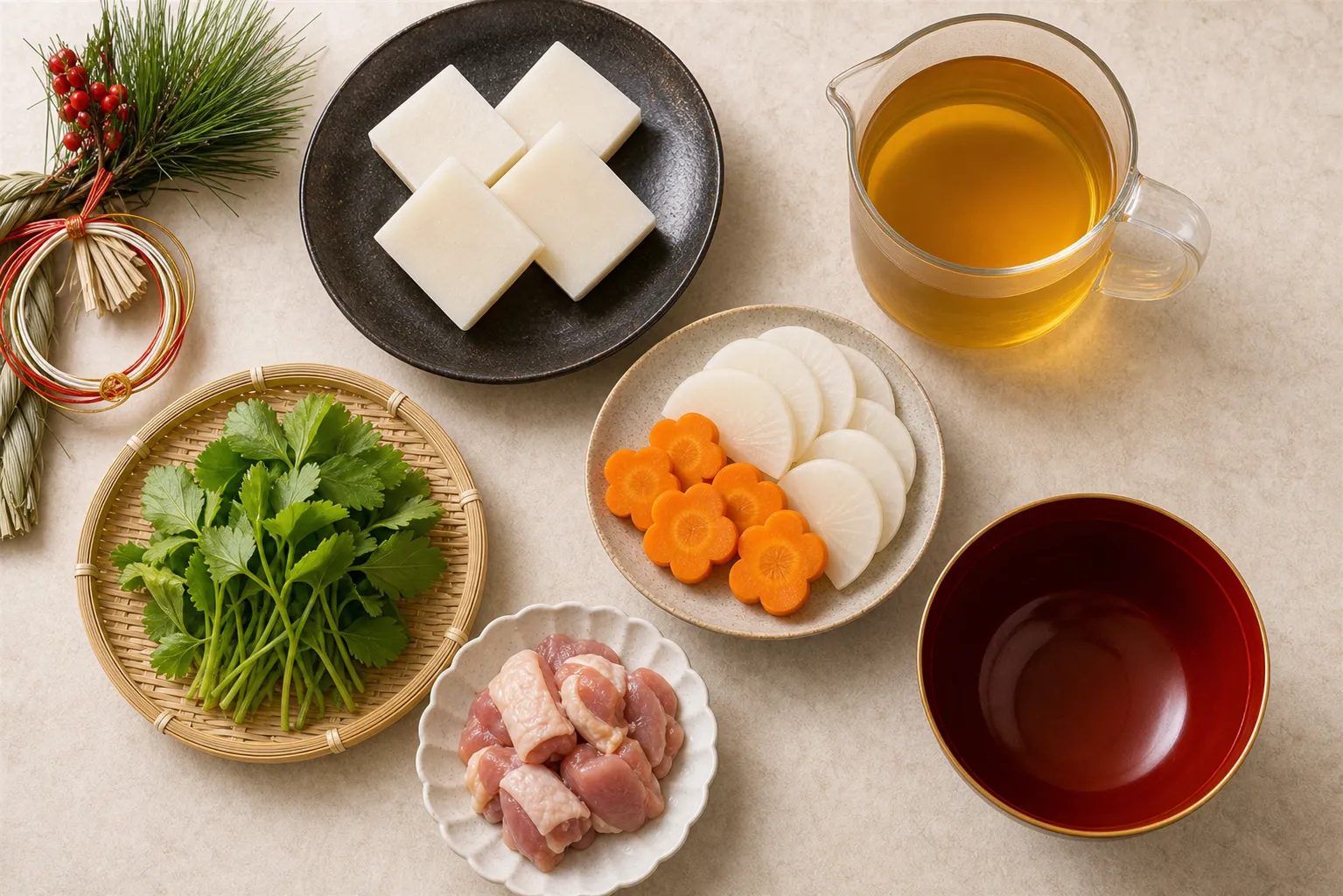
- Make the broth (your region's way). Either a clear dashi seasoned with soy (Kanto-style) or a dashi enriched with sweet white miso (Kansai-style).
- Prep the mochi. Square mochi is typically grilled until puffed and crisp-edged (east); round mochi is gently boiled until soft (west).
- Cook the fillings. Simmer the region's ingredients — daikon and carrot, chicken, mitsuba greens, seafood, fish cake — depending on the tradition.
- Assemble the bowl. Place the mochi in the bowl, ladle over the hot broth, and arrange the toppings.
- Serve on New Year's morning. Eat it warm, ideally to ring in the year — carefully, in small bites, because mochi is dense and sticky.
There's no single "correct" ozoni — the "recipe" is whatever your family and region do. That's the whole point: the method is inherited, not looked up, which is what makes it special.
Before you go — ask someone about their ozoni
Your questions, answered honestly
"Why does everyone's ozoni look different?" — Because it genuinely is different everywhere. The broth (clear soy vs sweet white miso), the mochi (square-grilled vs round-boiled), and the toppings all change by region and family. There's no single national recipe — ozoni is defined by local and family tradition, which is exactly what makes it fascinating.
"When can I eat it?" — It's a New Year dish, eaten around January 1st, so it's genuinely seasonal. Outside the New Year period it's much harder to find in restaurants, though some places serve it in early January. If you're in Japan for New Year, it's a wonderful, meaningful thing to seek out.
"Is the mochi dangerous?" — Mochi is dense, sticky and chewy, and every year there are cautionary reminders in Japan to eat it carefully — especially for the very young and elderly. Just take small bites, chew well, and don't rush, and you'll be fine. It's worth the care.
"Which style should I try?" — If you can, try the two big ones: Kanto-style (clear soy broth, grilled square mochi) and Kyoto/Kansai-style (sweet white miso, round mochi). They're strikingly different, and comparing them is a great way to taste the east–west divide in Japanese food.
What the staff will ask you
| You'll hear | Romaji | Meaning | Just say |
|---|---|---|---|
| お餅はおいくつにしますか? | O-mochi wa o-ikutsu ni shimasu ka? | "How many pieces of mochi?" | Hitotsu de / Futatsu de (one / two, please) |
| 関東風と関西風、どちらになさいますか? | Kantō-fū to Kansai-fū, dochira ni nasaimasu ka? | "Kanto or Kansai style?" | Osusume de (your recommendation) |
| お餅はお気をつけて召し上がってください | O-mochi wa o-ki o tsukete meshiagatte kudasai | "Please eat the mochi carefully" | Hai, arigatō (yes, thanks) |
To order, just say "Ozoni o kudasai" (お雑煮をください) — "Ozoni, please."
Where to eat it
- At a Japanese home over New Year — the true home of ozoni; if you're invited to a family's New Year table, you'll taste the real, personal version.
- Traditional restaurants and inns around the New Year — many serve their regional ozoni in the early-January period, and ryokan New Year meals often include it.
- Kyoto for white-miso style, Tokyo for clear-soy style — a great way to taste the famous east–west split is to try each in its home region during the season.
Ozoni is a New Year dish whose broth, mochi and toppings vary enormously by region and family; it's largely seasonal, so seek it out around New Year — and eat the mochi carefully.
Soul Score
Local Roots5/5
First-Timer Friendly3/5
Adventure Level3/5
Comfort Level5/5
Travel Worthy3/5
These scores are one obsessed eater's gut feeling — not a verdict. A low number isn't a bad mark, just a different kind of adventure.
Know someone planning Japan?
← All Articles
Japanese Food · Nationwide
Still hungry?
You might also like
Japanese FoodNationwide
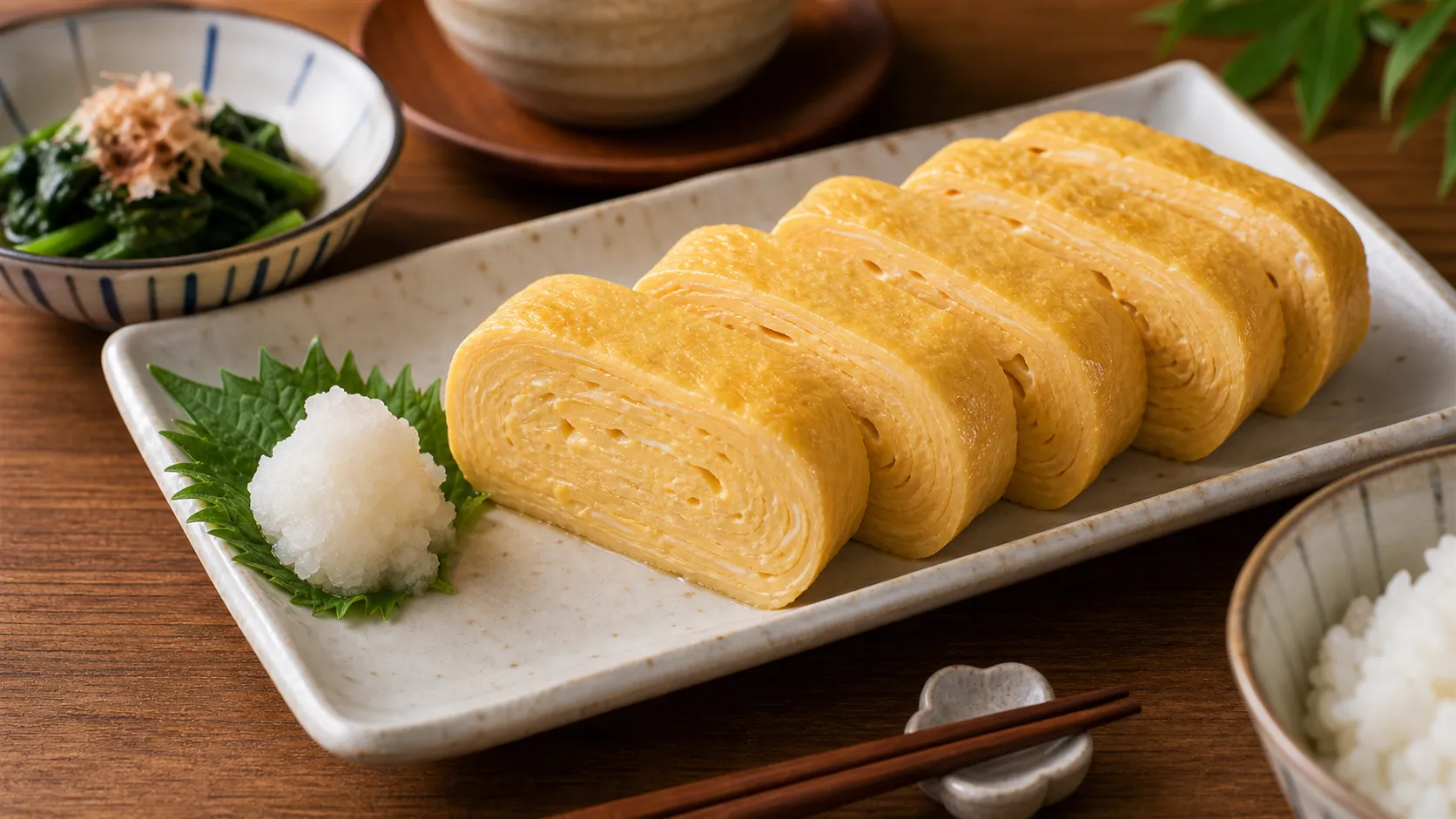
Dashimaki-tamago (だし巻き卵)
A rolled omelette so soft it almost trembles, layered fold over fold and soaked with dashi so that biting in releases a little warm rush of savory broth — the deceptively simple egg dish that Japanese chefs spend years perfecting.
July 11, 2026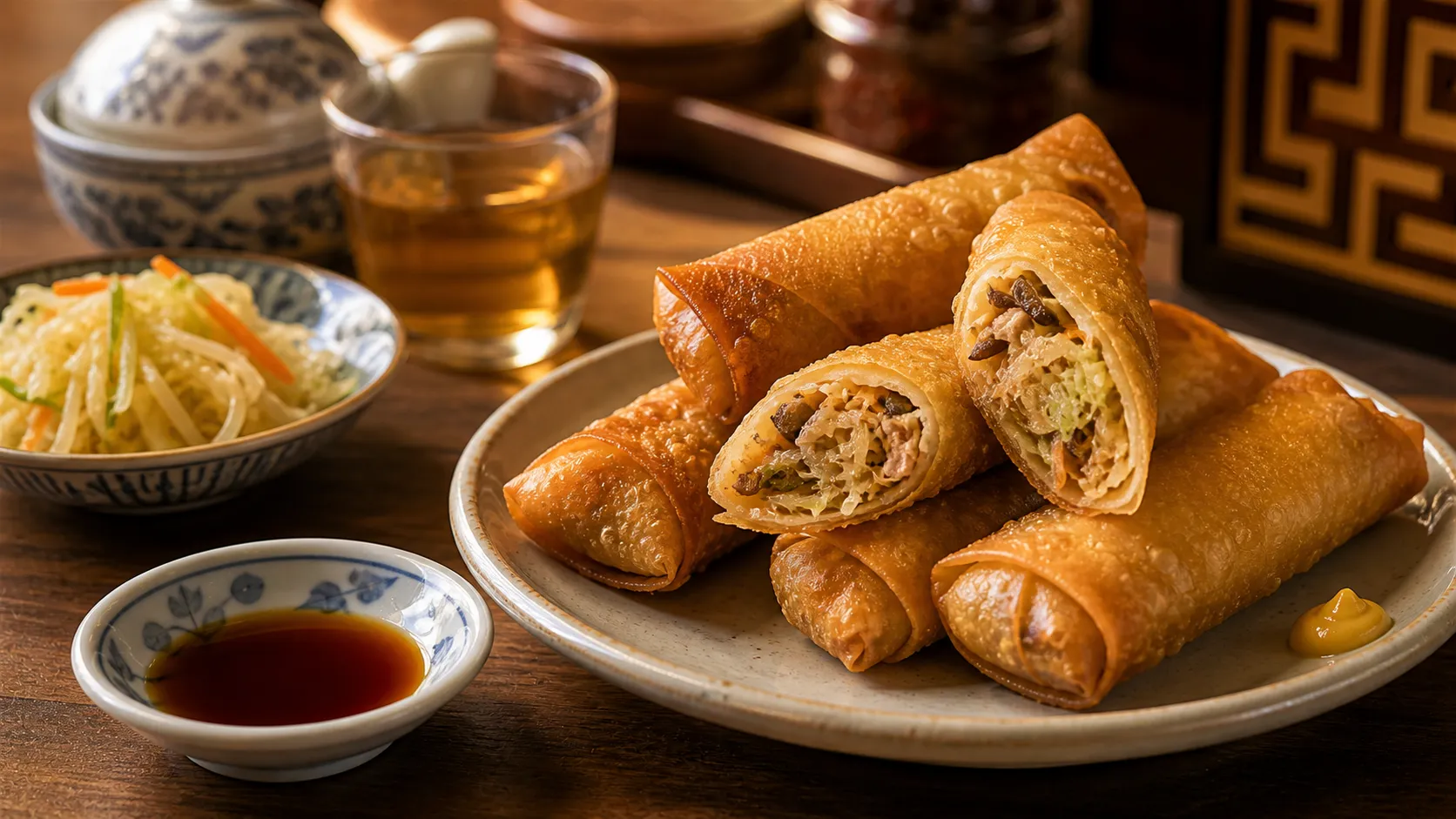
Japanese FoodNationwide
Harumaki (春巻き)
The Japanese spring roll — a shatteringly crisp golden tube that gives way to a hot, savory tangle of pork, cabbage and bamboo shoot, best eaten the second it's cool enough not to burn your mouth (you will not wait that long).
July 11, 2026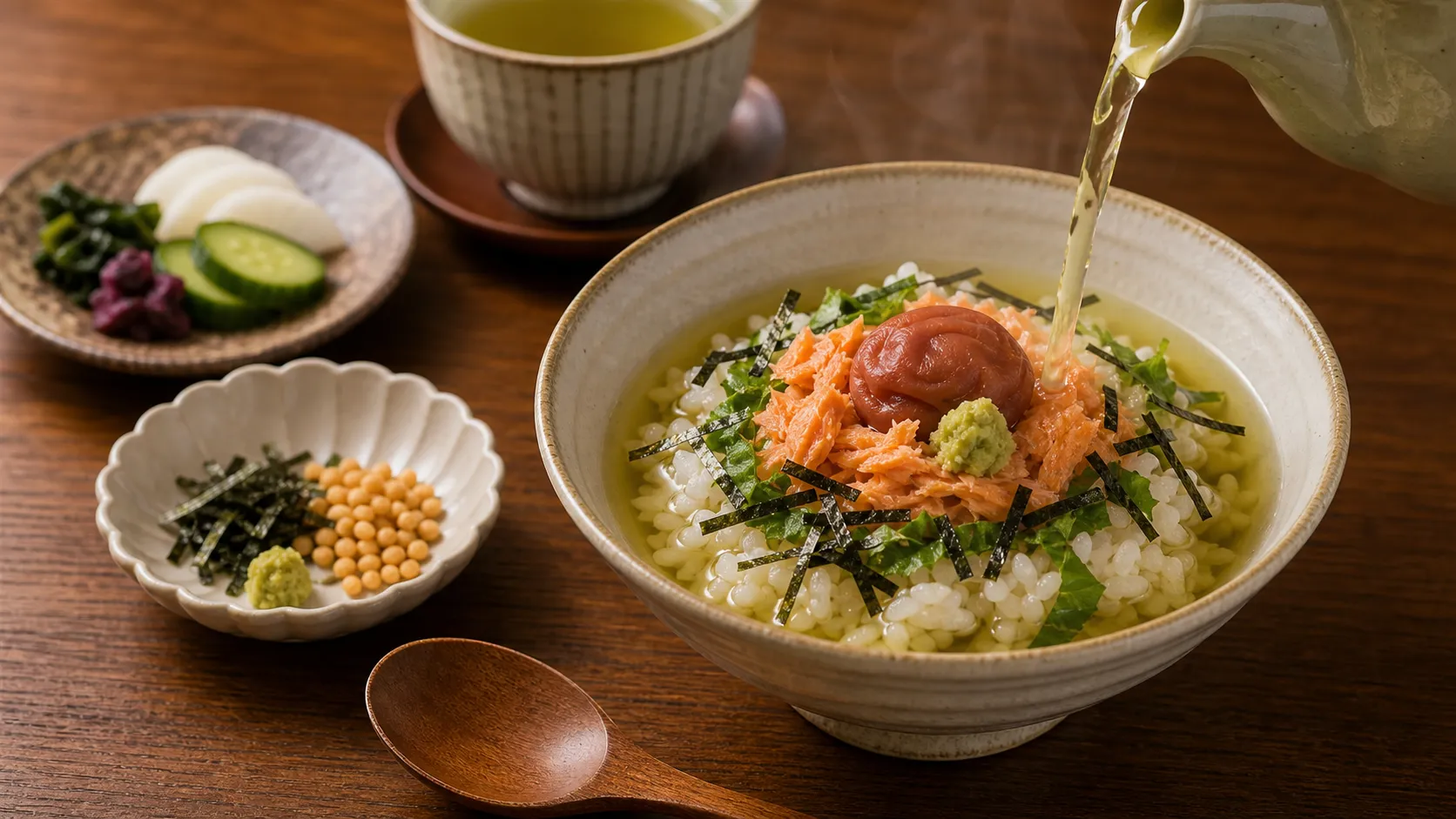
Japanese FoodNationwide
Ochazuke (お茶漬け)
Pour hot green tea or dashi over a bowl of rice, scatter something savory on top, and eat — the gentlest, most quietly restorative dish in Japan, the one you reach for late at night when you just need a warm bowl to make everything okay.
July 11, 2026