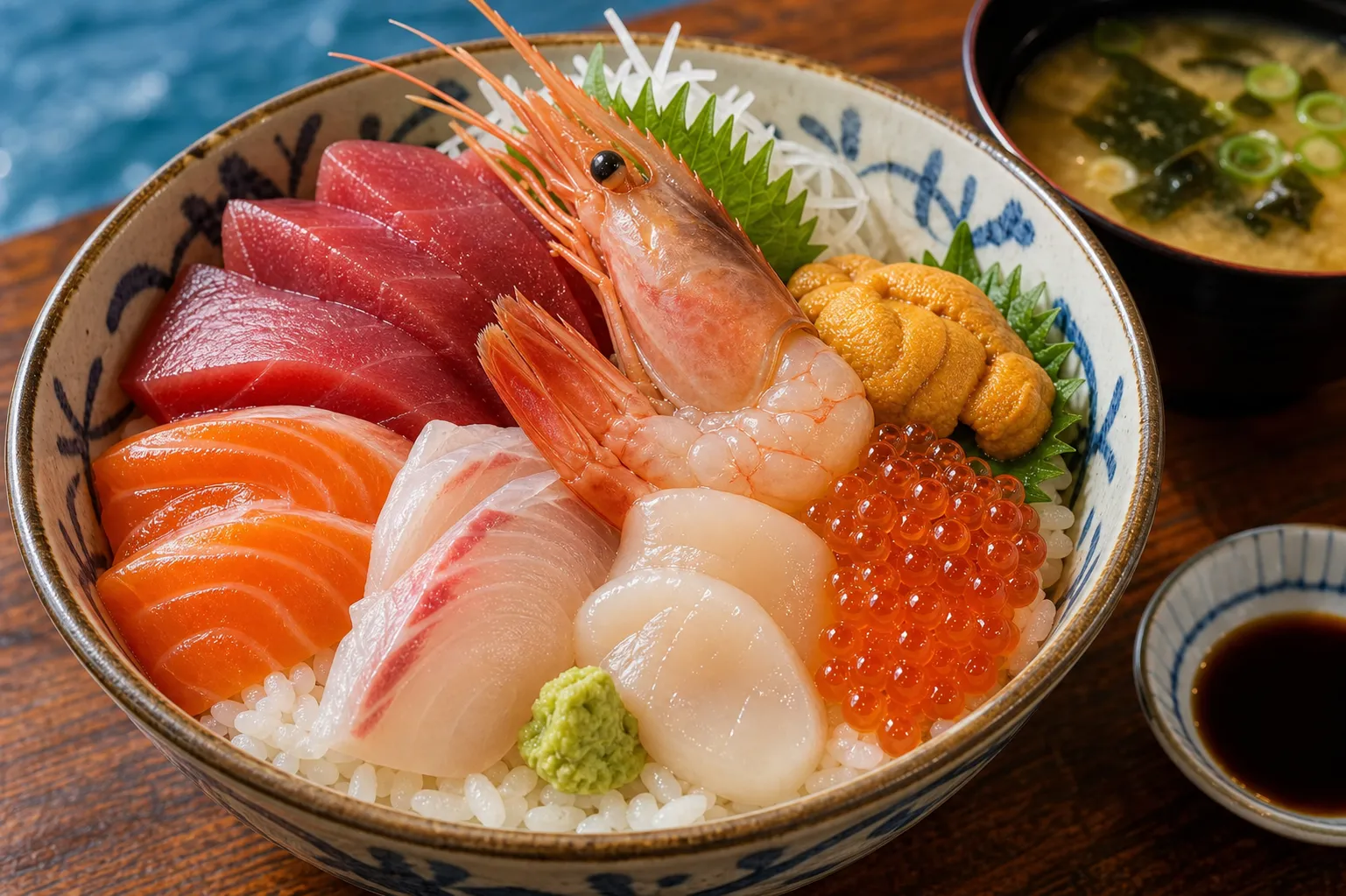
I have eaten a lot of beautiful food in Japan, but nothing has ever made me actually gasp out loud like the first kaisen-don slid in front of me at a Hokkaido market counter at seven in the morning. Ruby tuna. Coral salmon. Scallops so glossy they looked wet with light. A crown of ikura beading orange over everything. I just sat there like an idiot with my phone out, not eating, because it felt rude to wreck something that gorgeous.
Share this dish


A whole ocean, sliced and fanned over rice — tuna, salmon, scallop, sweet shrimp, a golden slick of ikura. The greediest, most gorgeous bowl in Japan, and I'd cross a country for the good ones.
Then I wrecked it, obviously. Kaisen-don (海鮮丼) is a "seafood bowl": an assortment of raw sashimi — tuna, salmon, scallop, sweet shrimp, squid, ikura, sometimes a lobe of golden uni — fanned over a bowl of vinegared or plain rice. It's sashimi's greedy, generous cousin, the luxury feast that comes in a bowl instead of on a fancy plate.
And the best part? You don't need a reservation or a suit. You need a fishing port, an empty stomach, and about twelve dollars.
A bowl born where the boats come in
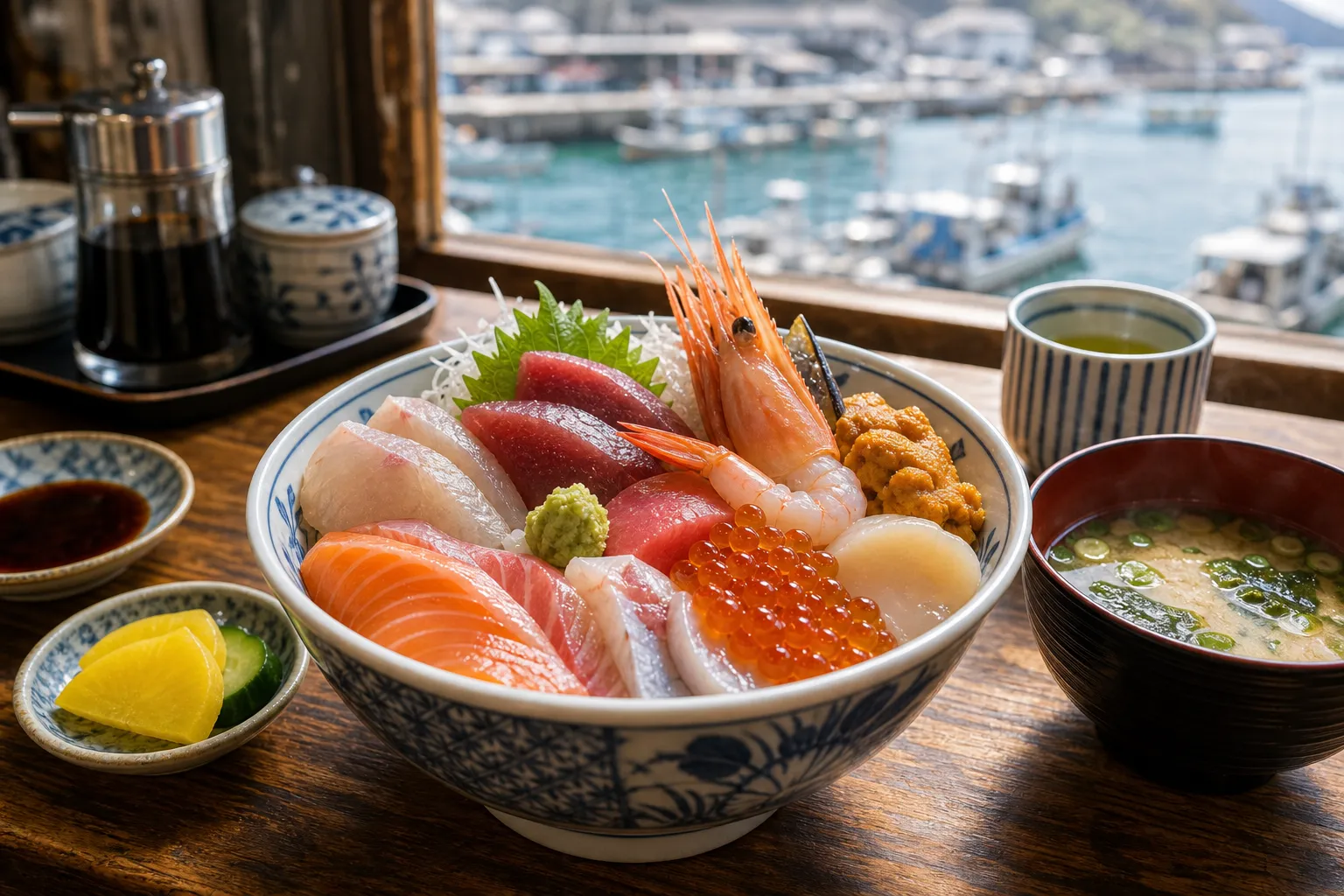
Kaisen-don grew up exactly where you'd hope: at the markets and harbors where the fish is landed. When you're standing next to that much impossibly fresh seafood, the logic writes itself — pile the best of the morning's catch over rice and eat it right there. Market stalls and port-town diners made it a working breakfast long before it became a bucket-list splurge.
Hokkaido treats it as a birthright, especially around the Hakodate and Sapporo markets, and Kanazawa's Omicho market has built a whole pilgrimage around it. I love that a dish this luxurious never lost its scruffy, plastic-stool, "eat it before it warms up" soul. It's fancy and totally unpretentious at the same time, which is my favorite kind of food.
Why one bowl beats a dozen sushi
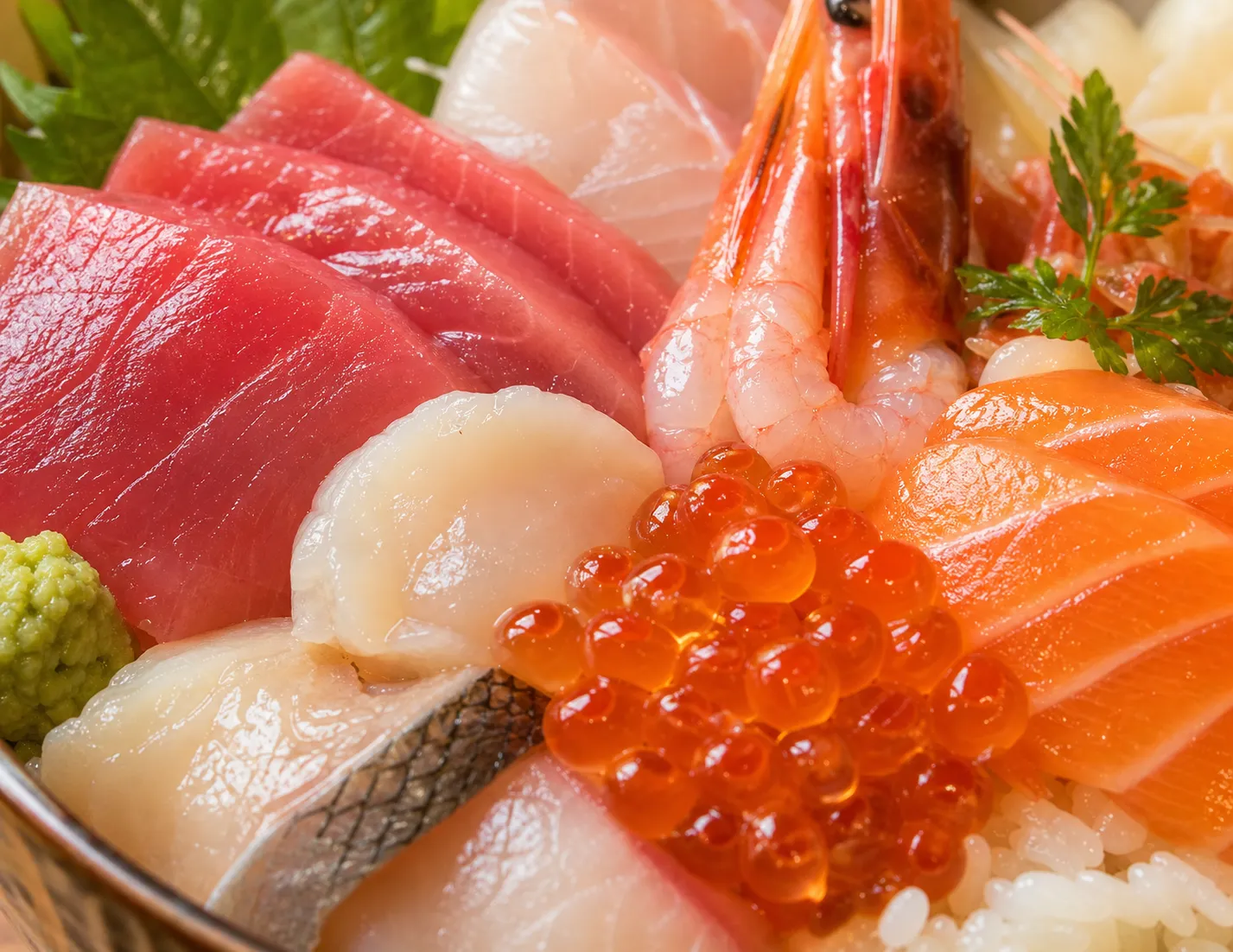
Here's the thing sushi can't do: give you everything at once. A great kaisen-don is a chord, not a single note — the clean sweetness of scallop, the fatty melt of tuna, the briny snap of ikura, the almost creamy richness of uni, all in one loaded chopstick-full if you're bold enough. Every bite is a slightly different combination, and you get to be the composer.
Texture is half the joy. Silky, firm, springy, popping — it's all in there. And it rides on warm, faintly vinegared rice that ties the whole thing together, so it feels like a meal instead of a beautiful snack. When the fish is genuinely market-fresh, it barely needs the soy. Just enough to say hello.
How it's made
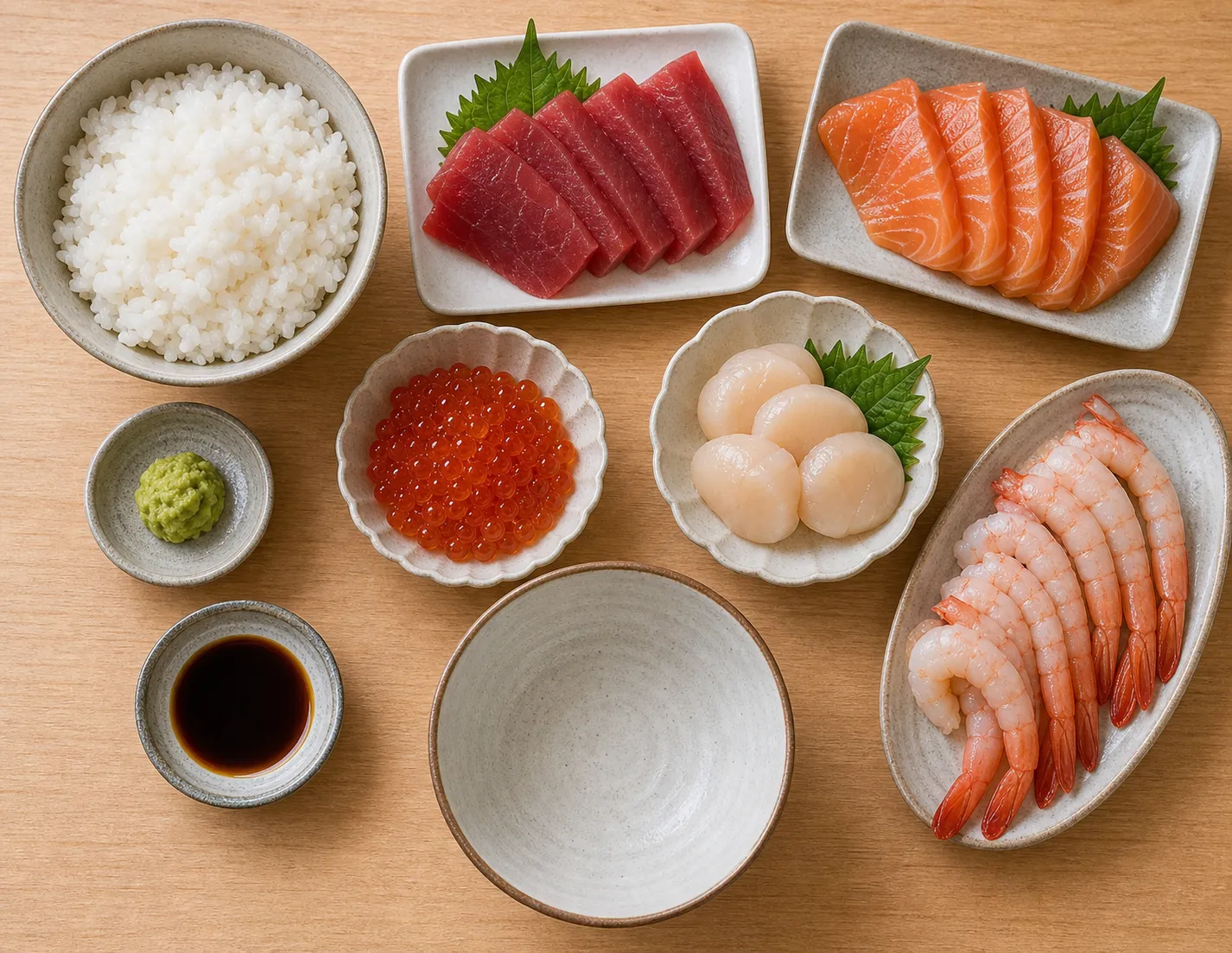
- Cook rice and, if using sushi rice, fold in a little vinegar-sugar-salt seasoning; let it cool to warm
- Slice the day's best fish — tuna, salmon, white fish, squid — into clean sashimi pieces
- Prep the toppers: scallops, sweet shrimp (amaebi), a spoon of ikura, sometimes uni
- Fan and pile everything over the rice so each piece stands out, colors alternating
- Finish with shiso, shredded daikon, a dab of wasabi, and serve with soy on the side
Before you go — chase the fresh stuff
Your questions, answered honestly
"Isn't raw fish for breakfast weird?" — In a port town it's the most normal thing in the world, and honestly the fish is never fresher than first thing in the morning. Lean in. A market kaisen-don at 7am is one of travel's great flexes.
"Kaisen-don vs chirashi-zushi — same thing?" — Close cousins. Chirashi is a sushi-shop dish on properly seasoned sushi rice, often a bit more composed. Kaisen-don is the market-style, pile-it-high version and sometimes uses plain warm rice. In practice the menus blur — order either and be happy.
"How much soy sauce and where does it go?" — On the fish, not the rice, and lightly. Some shops pre-dress the bowl; taste first before you drown it. Great fish wants a whisper of soy, not a bath.
"Is it worth the splurge?" — At a real fishing port or top market, absolutely — it's a fraction of what the same seafood costs abroad. Away from the coast, quality gets unpredictable, so save your big kaisen-don for somewhere near the water.
What the staff will ask you
| You'll hear | Romaji | Meaning | Just say |
|---|---|---|---|
| ご飯少なめにしますか? | Gohan sukuname ni shimasu ka? | "Less rice?" | Futsū de (normal) / Sukuname de (less) |
| わさびは付けますか? | Wasabi wa tsukemasu ka? | "Wasabi on the side?" | Hai, onegaishimasu (yes please) |
| 醤油はかけますか、別ですか? | Shōyu wa kakemasu ka, betsu desu ka? | "Soy poured on, or separate?" | Betsu de (on the side) |
To order, just say "Kaisen-don hitotsu kudasai" (海鮮丼一つください) — "one seafood bowl, please."
Where to eat it
- Hakodate Morning Market, Hokkaido — the classic pilgrimage; dozens of stalls serving bowls steps from the boats.
- Omicho Market, Kanazawa — the Kansai-coast holy land for kaisen-don, buzzing from morning on.
- Toyosu Market, Tokyo — the successor to old Tsukiji, with restaurant rows plating some of the freshest bowls in the country.
- Any fishing-port town on the coast — often cheaper and better than the big cities, straight off the boats.
Market restaurants open early and sell out early, and hours and stalls change constantly, so check before you go — and go hungry.
Soul Score
Local Roots4/5
First-Timer Friendly4/5
Adventure Level4/5
Comfort Level4/5
Travel Worthy5/5
These scores are one obsessed eater's gut feeling — not a verdict. A low number isn't a bad mark, just a different kind of adventure.
Know someone planning Japan?
← All Articles
Japanese Food · Nationwide
Still hungry?
You might also like
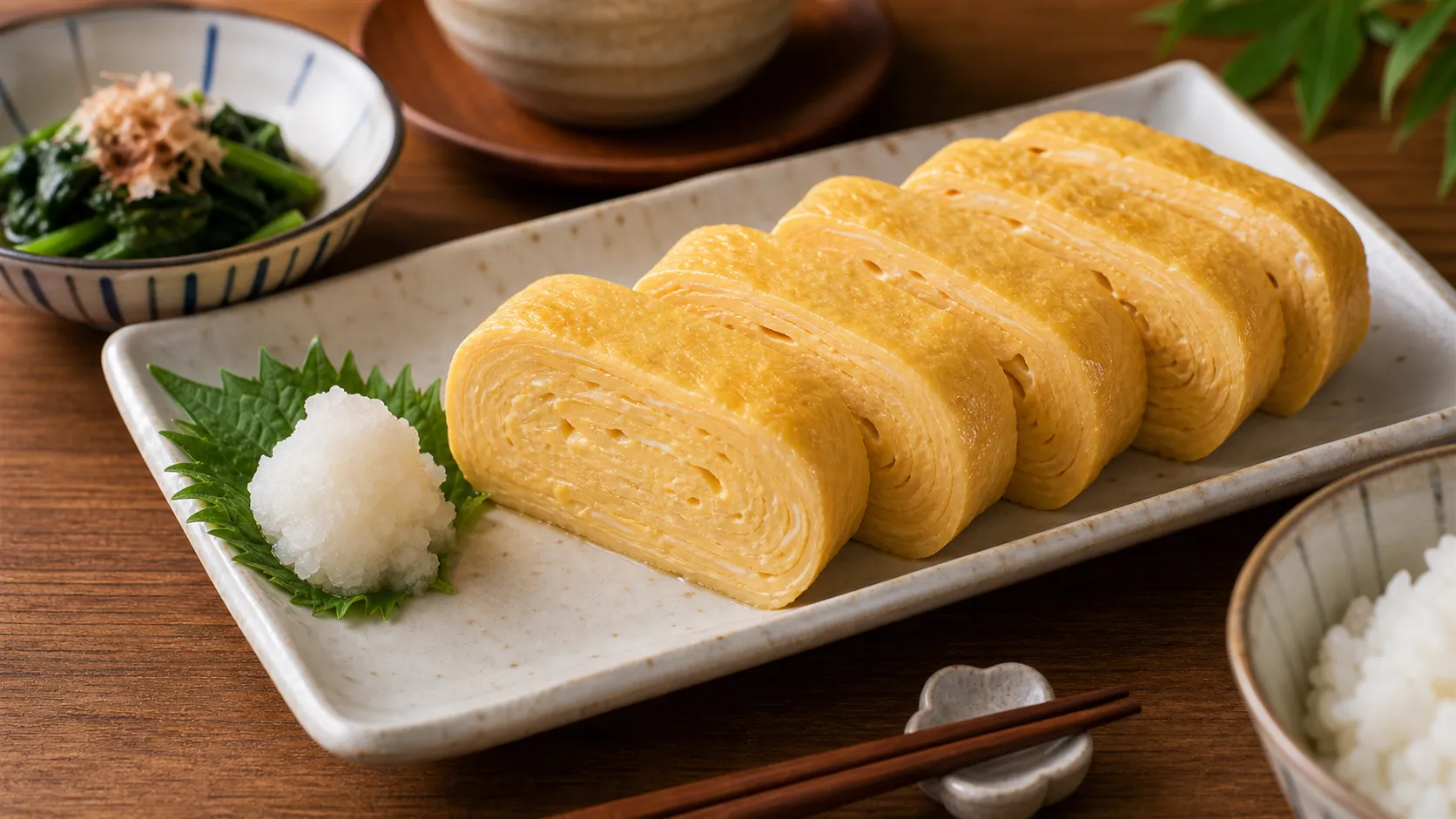
Japanese FoodNationwide
Dashimaki-tamago (だし巻き卵)
A rolled omelette so soft it almost trembles, layered fold over fold and soaked with dashi so that biting in releases a little warm rush of savory broth — the deceptively simple egg dish that Japanese chefs spend years perfecting.
July 11, 2026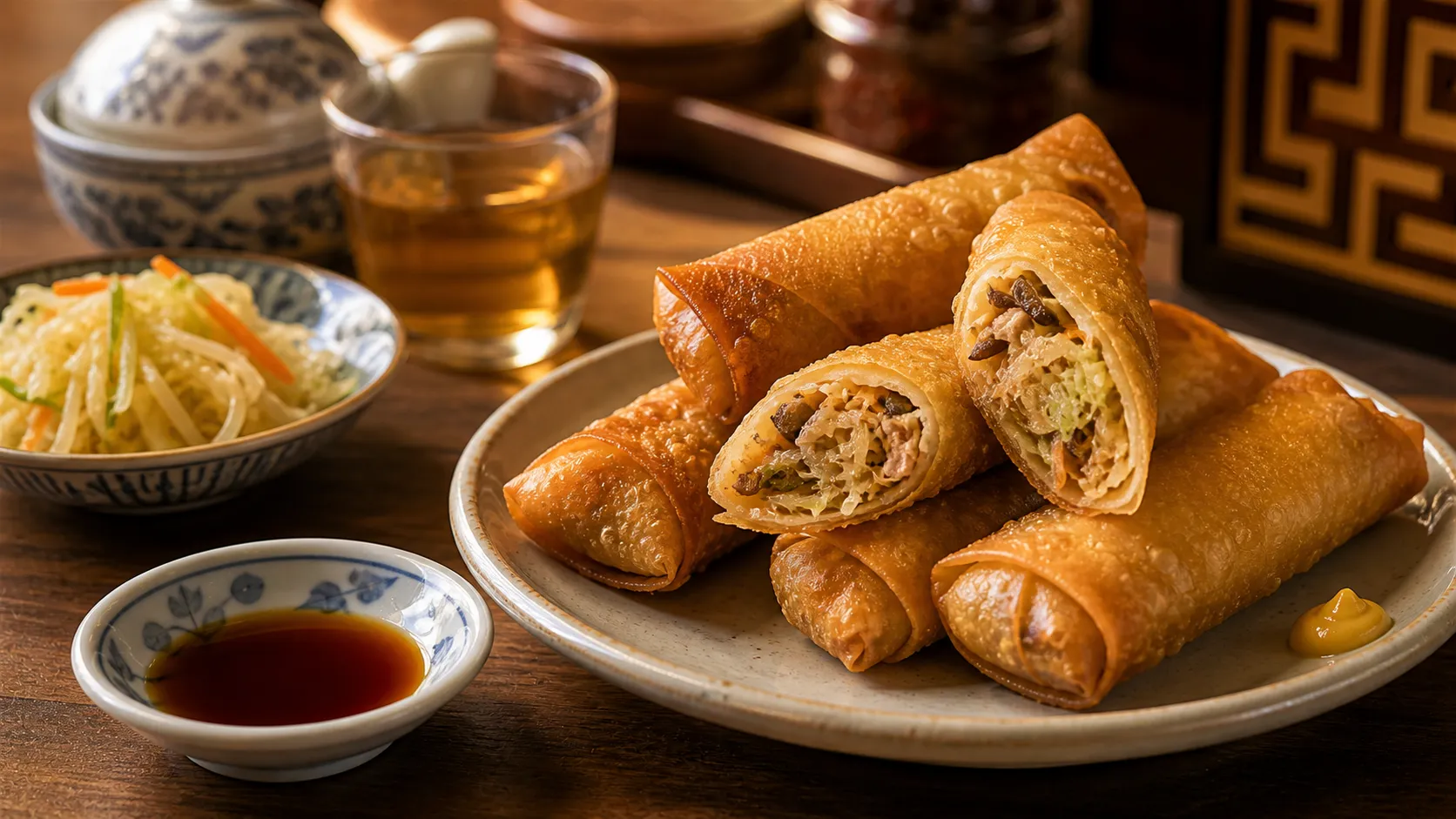
Japanese FoodNationwide
Harumaki (春巻き)
The Japanese spring roll — a shatteringly crisp golden tube that gives way to a hot, savory tangle of pork, cabbage and bamboo shoot, best eaten the second it's cool enough not to burn your mouth (you will not wait that long).
July 11, 2026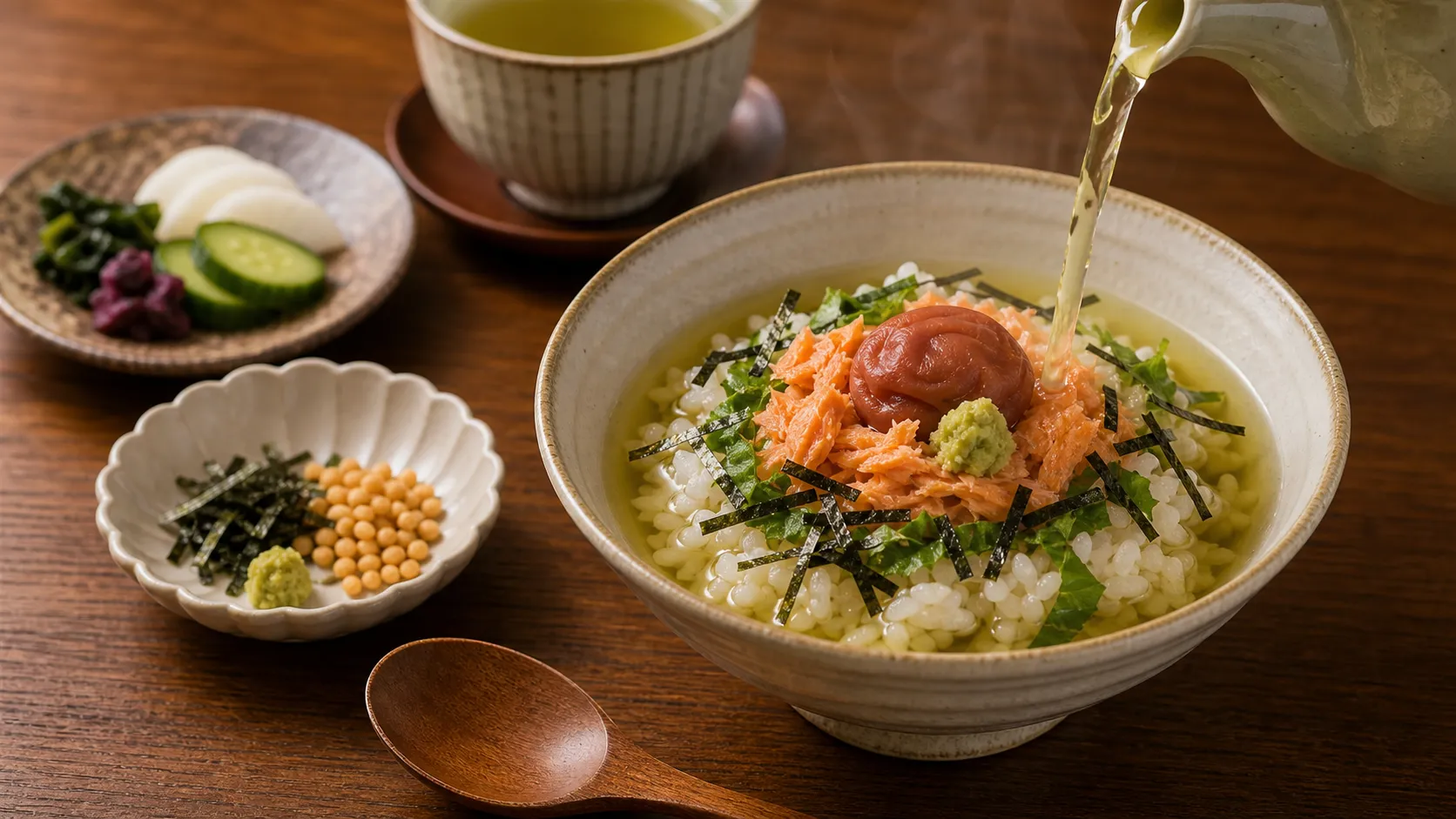
Japanese FoodNationwide
Ochazuke (お茶漬け)
Pour hot green tea or dashi over a bowl of rice, scatter something savory on top, and eat — the gentlest, most quietly restorative dish in Japan, the one you reach for late at night when you just need a warm bowl to make everything okay.
July 11, 2026