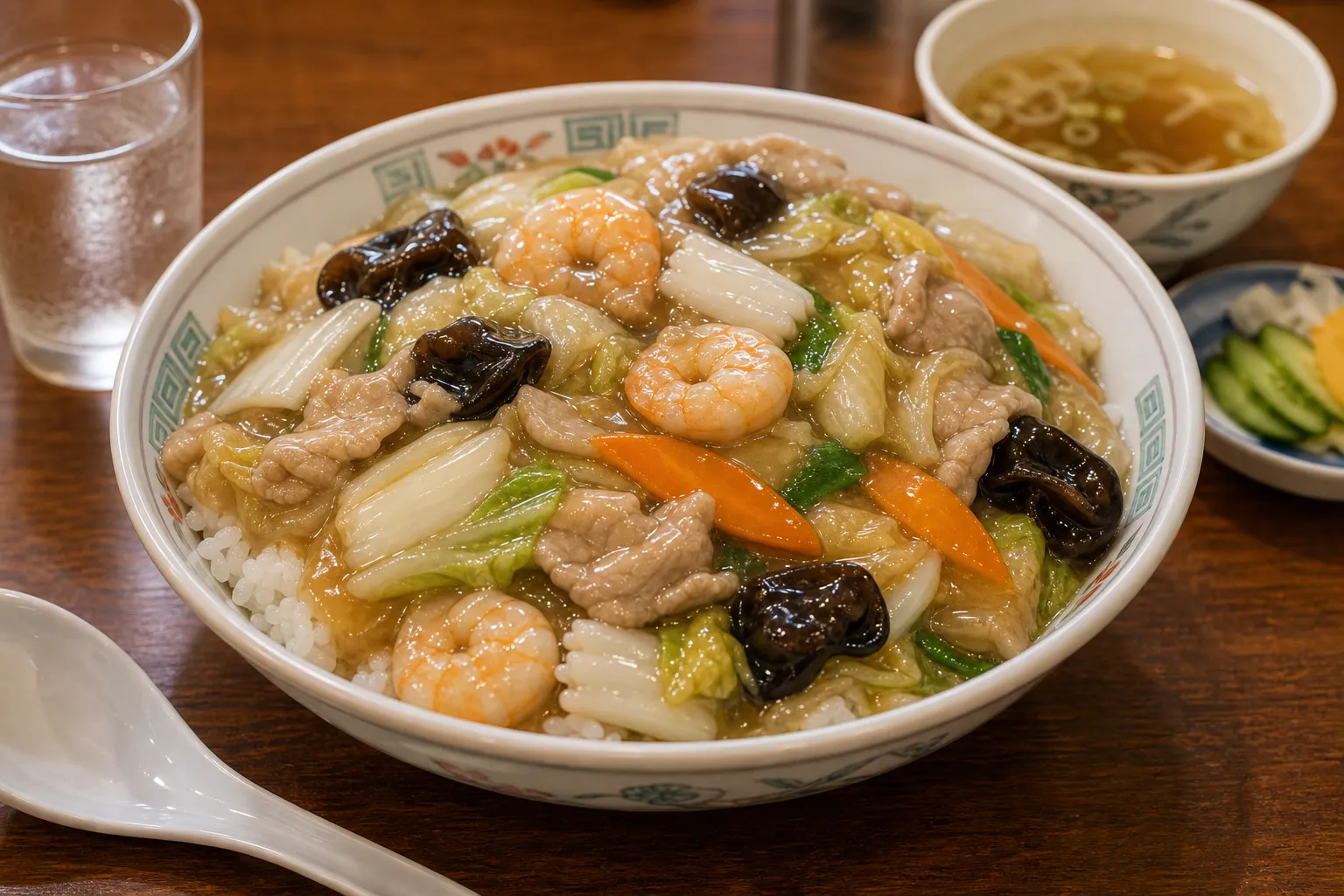
Come in out of the cold, sit at a wobbly counter in a steamed-up neighborhood Chinese joint, and let a bowl of chukadon fix whatever's wrong with your day. There is a specific kind of tired that only this cures — the sauce comes out glossy and glistening, still bubbling faintly, pork and cabbage and a little quail egg peeking out of a thick amber slick, and the first spoonful lands warm and heavy and right. I have never once regretted ordering it.
Share this dish


A glossy landslide of stir-fried pork and vegetables under a thick, glistening ankake sauce, poured steaming over rice. Cheap, hot, and hearty — the town-Chinese diner's answer to a bad day.
Chukadon (中華丼) means "Chinese-style bowl," and it's exactly what a town Chinese diner does with a wok and some rice: stir-fried pork, cabbage, carrot, mushroom, shrimp or squid, maybe a quail egg, all bound in a glossy, thick, starchy ankake sauce and poured steaming over a bowl of rice. Cheap, hot, hearty. Not raw, not delicate, not fancy — just deeply comforting.
Here's the twist nobody warns you about: despite the name, it isn't actually from China. It was invented in Japan. Which is my favorite kind of dish — one that's honest about being a beautiful mongrel.
The bowl the town Chinese diner built
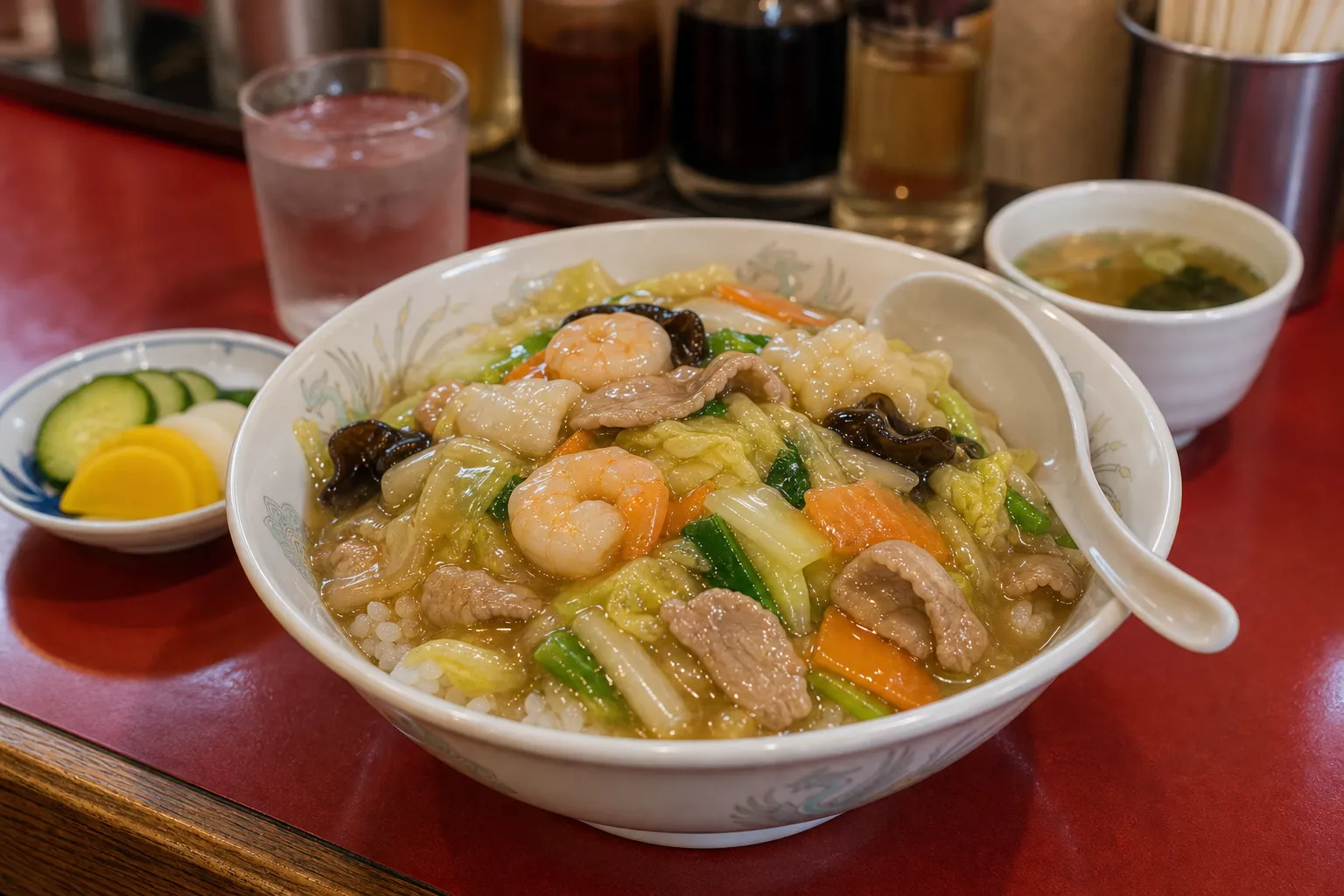
Chukadon is pure machi-chuka — the humble "town Chinese" restaurants that spread across Japan in the twentieth century, run by families cooking a Japanized, deeply local version of Chinese food. The most-told origin story has it improvised in one of these kitchens, ladling the vegetable-and-pork stir-fry (the topping known as happosai) straight over rice for a hungry cook or customer. Genius born of "just put it on rice."
That's the whole spirit of the genre, honestly, and I love it for that. This is food with no pretensions and no ancestral village in China to answer to — a Japanese invention wearing a Chinese name, sold for pocket change, feeding students and salarymen and taxi drivers on cold nights for generations. It's not trying to be authentic anything. It's just trying to feed you, fast and warm.
Why the ankake sauce is the magic
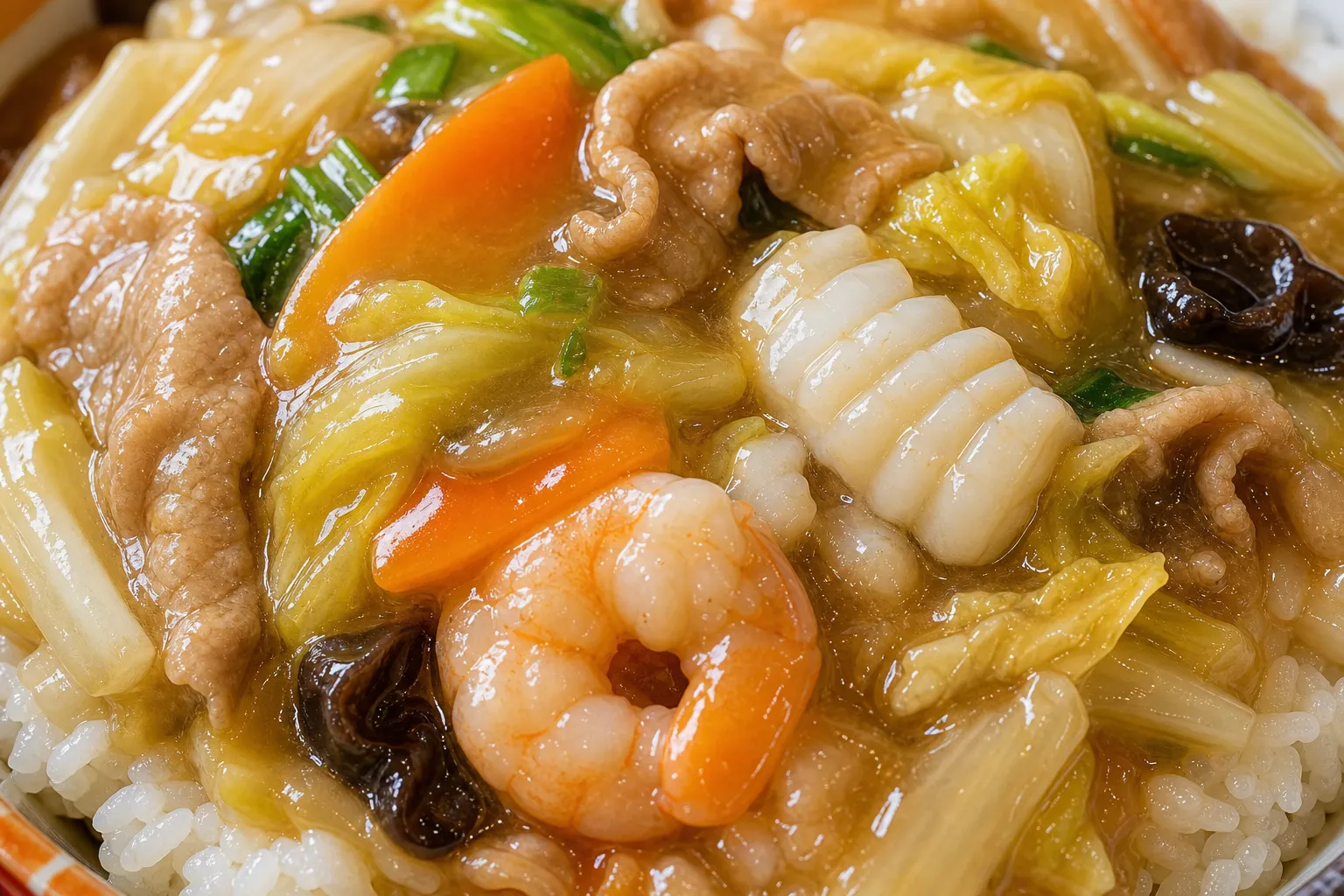
The soul of chukadon is that thick, glossy ankake sauce — a savory broth of chicken or pork stock, soy, sesame oil and a whisper of sweetness, thickened with potato starch into a glistening blanket that clings to everything. It does two brilliant things: it carries flavor into every corner of the bowl, and it traps heat, so the whole thing stays steaming-hot right down to the last bite.
That heat-trapping is also a gentle warning — the sauce holds its temperature like it's got something to prove, so your first spoonful can be lava even when the surface looks calm. Underneath it all is a generous jumble of textures: tender pork, sweet cabbage, snappy vegetables, springy shrimp or squid, that little quail egg like a bonus prize. It's a full, balanced, one-bowl meal that feels like someone cooked for you.
How it's made
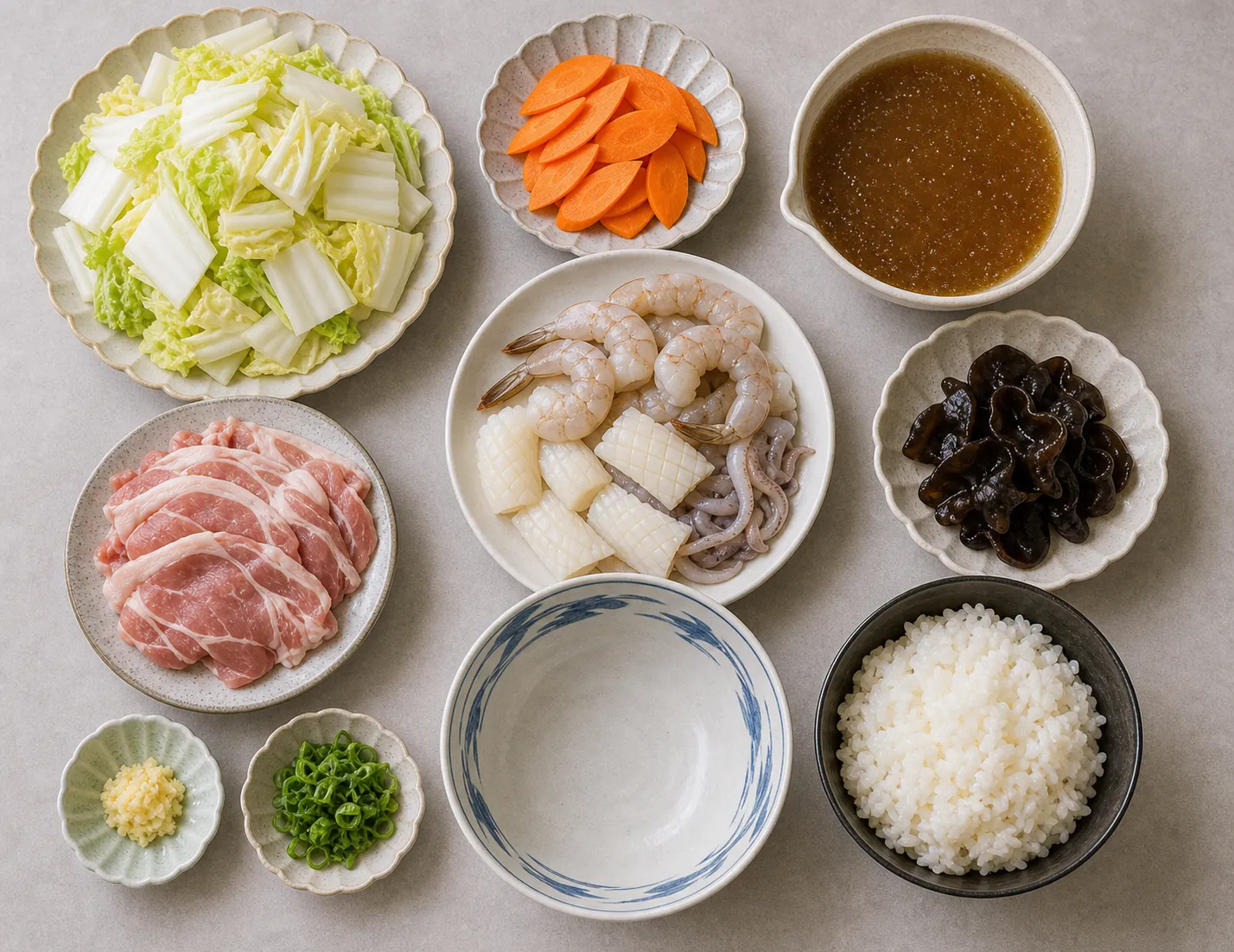
- Stir-fry thin pork slices in a hot wok, then add hard vegetables — carrot, onion, mushroom
- Toss in cabbage, shrimp or squid, and a few quail eggs; keep the heat high
- Pour in a savory broth of stock, soy sauce, oyster sauce, sesame oil and a little sugar
- Stream in a potato-starch slurry and stir until the sauce turns thick and glossy
- Ladle the whole glistening mixture over a bowl of hot rice and serve immediately
Before you go — the comfort order
Your questions, answered honestly
"Is it spicy or challenging at all?" — Not even slightly. Chukadon is gentle, savory comfort food — no chili, no raw anything, nothing intimidating. It's one of the safest, coziest orders on any machi-chuka menu, which is exactly why locals lean on it.
"So it's not real Chinese food?" — Correct, and that's the fun of it. It was invented in Japan and doesn't exist in China under this name. It's Japanese-Chinese comfort food — its own beloved genre, not a knockoff of anything.
"Chukadon vs tenshin-han vs mabo-don?" — All rice bowls from the same town-Chinese world. Chukadon is the stir-fry-and-ankake one. Tenshin-han is a crab omelette over rice; mabo-don is mapo tofu over rice. If you want the pork-and-veg landslide, chukadon's your bowl.
"Where's the best version?" — An old, slightly worn machi-chuka diner beats any chain. The ones with plastic food in the window and a griddle that's seen decades — that's where the sauce is right.
What the staff will ask you
| You'll hear | Romaji | Meaning | Just say |
|---|---|---|---|
| ご飯大盛りにしますか? | Gohan ōmori ni shimasu ka? | "Large rice?" | Futsū de (normal) / Ōmori de (large) |
| 熱いのでお気をつけて | Atsui node oki o tsukete | "It's very hot, careful" | Hai, arigatō (yes, thanks) |
| 餃子もいかがですか? | Gyōza mo ikaga desu ka? | "Gyoza too?" | Onegaishimasu (yes please) / Daijōbu desu (no thanks) |
To order, just say "Chukadon hitotsu kudasai" (中華丼一つください) — "one chukadon, please."
Where to eat it
- Machi-chuka (town Chinese) diners anywhere in Japan — the natural home; look for the old family-run places.
- Ramen shops with rice-bowl sets — many list chukadon as a hearty side or lunch combo.
- Chinese-Japanese chains like Bamiyan or Osho — reliable, cheap, and everywhere if you can't find a local spot.
Family-run diners keep their own quiet hours and some close midweek, so check before you go.
Soul Score
Local Roots3/5
First-Timer Friendly5/5
Adventure Level3/5
Comfort Level5/5
Travel Worthy3/5
These scores are one obsessed eater's gut feeling — not a verdict. A low number isn't a bad mark, just a different kind of adventure.
Know someone planning Japan?
← All Articles
Japanese Food · Nationwide
Still hungry?
You might also like
Japanese FoodNationwide
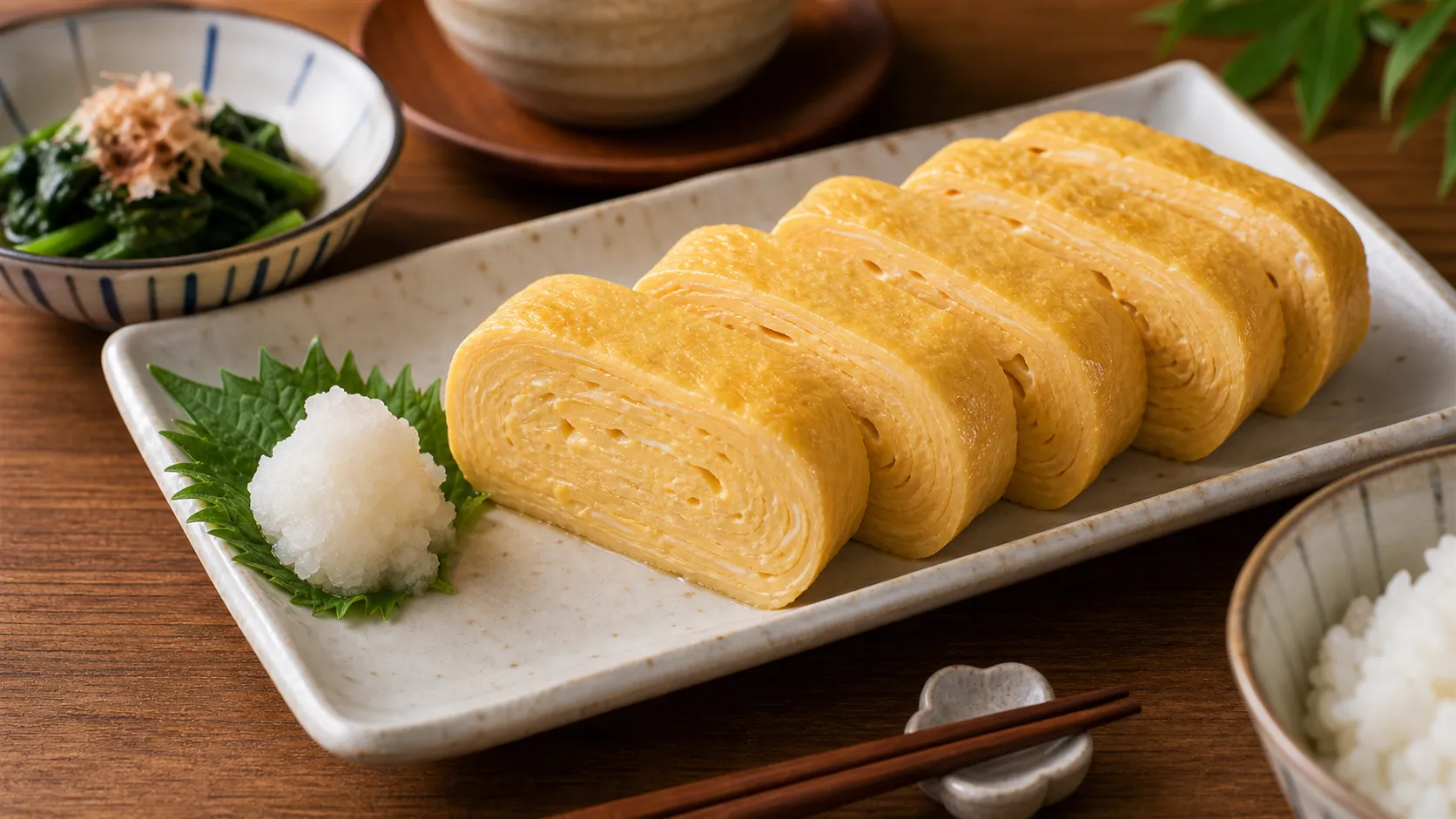
Dashimaki-tamago (だし巻き卵)
A rolled omelette so soft it almost trembles, layered fold over fold and soaked with dashi so that biting in releases a little warm rush of savory broth — the deceptively simple egg dish that Japanese chefs spend years perfecting.
July 11, 2026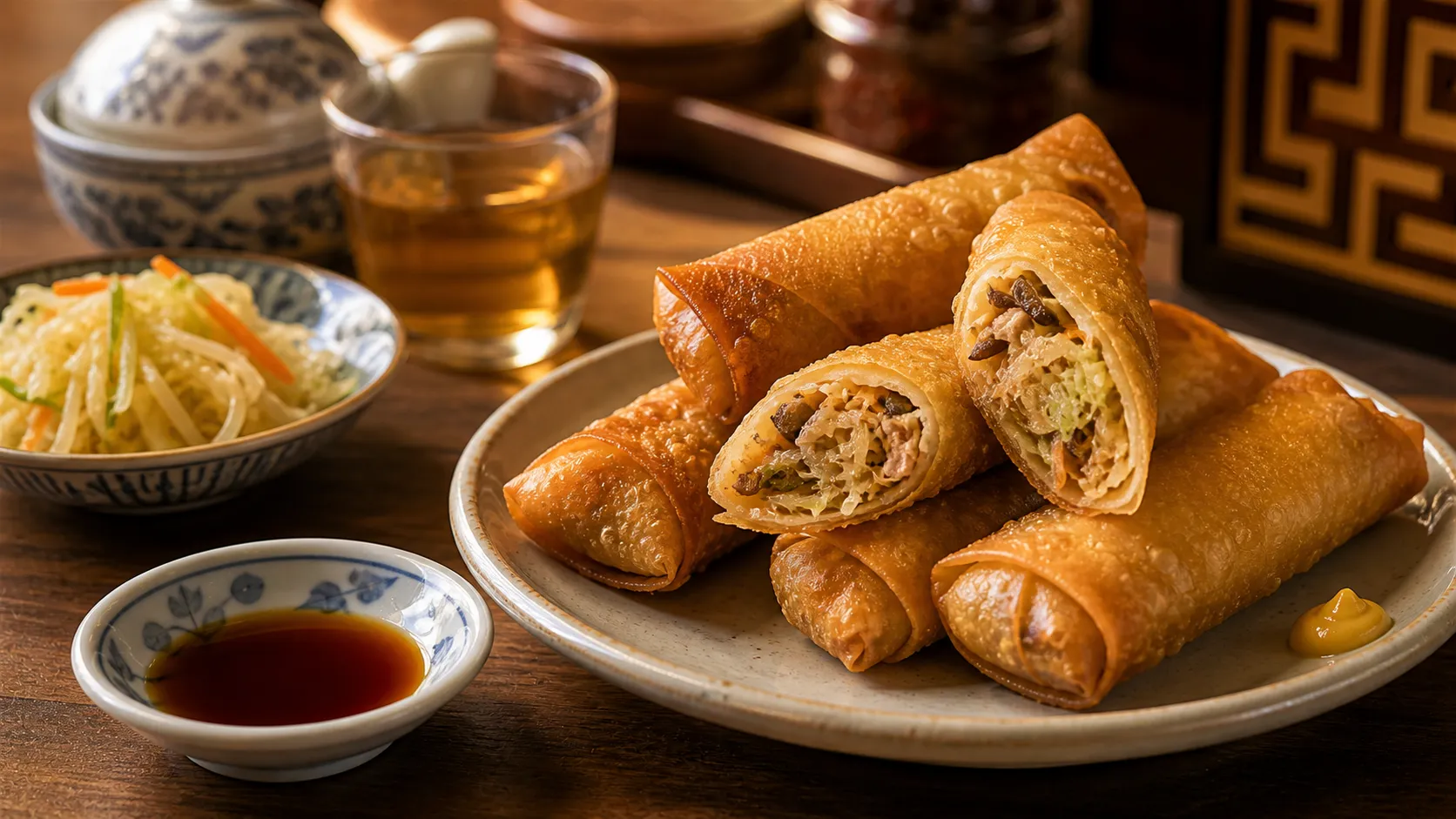
Japanese FoodNationwide
Harumaki (春巻き)
The Japanese spring roll — a shatteringly crisp golden tube that gives way to a hot, savory tangle of pork, cabbage and bamboo shoot, best eaten the second it's cool enough not to burn your mouth (you will not wait that long).
July 11, 2026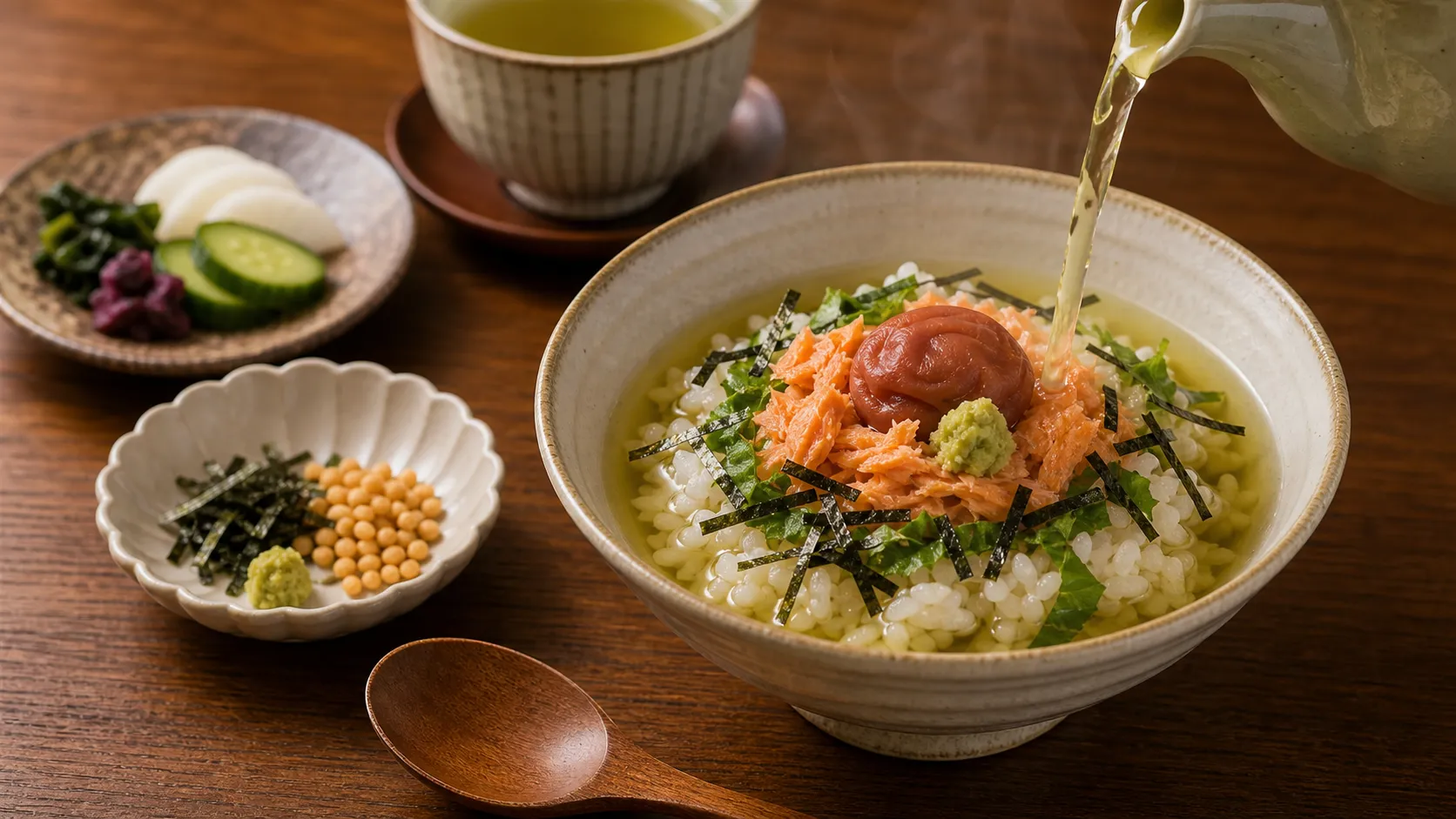
Japanese FoodNationwide
Ochazuke (お茶漬け)
Pour hot green tea or dashi over a bowl of rice, scatter something savory on top, and eat — the gentlest, most quietly restorative dish in Japan, the one you reach for late at night when you just need a warm bowl to make everything okay.
July 11, 2026