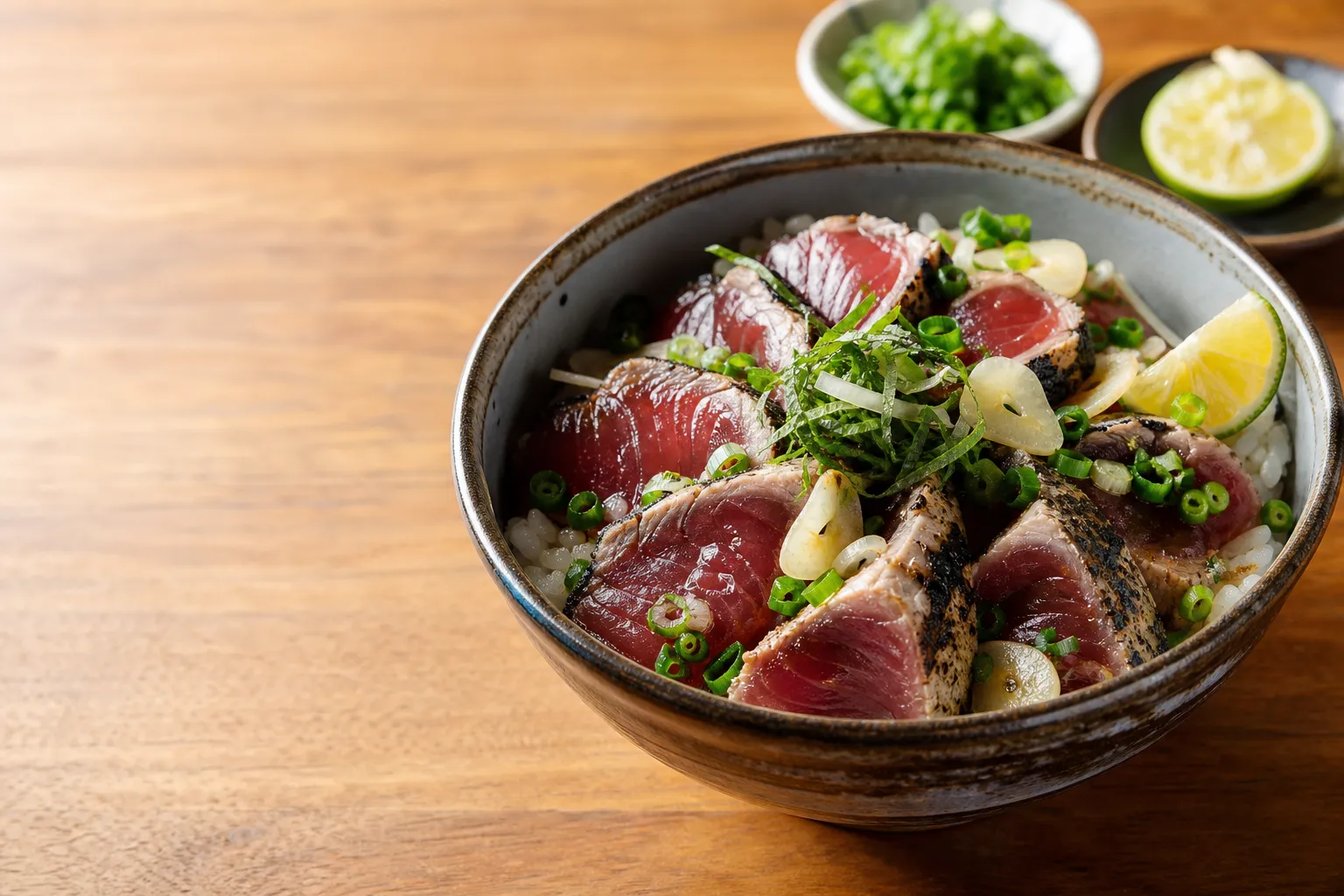
The fish caught fire. On purpose. A cook in Kochi took a block of bonito, skewered it, and shoved it straight into a roaring column of burning rice straw — flames taller than his arm — and just held it there while I stood too close and felt my eyebrows reconsider their life choices. A minute later that same block was sliced, the outside charred and smoky, the inside still deep ruby-red, laid over a bowl of hot rice with garlic and green onion and a squeeze of citrus. I ate the first bite and genuinely lost the thread of the conversation I was having.
Share this dish


Straw fire, three feet high, a slab of fish blackening in the flames — and then somehow that same fish is on my rice, smoky-edged and ruby-red in the middle, and I forget how to talk for a second.
🍜 Planning a food trip to Kochi?Add this dish to my Food Trip →
 Add this dish to my Food Trip →
That bowl is katsuo-meshi (かつおめし, "bonito rice") — Kochi's answer to the question "what if the greatest thing about this coast, seared bonito, came on rice so you could eat it like a proper meal." Kochi (old Tosa) sits on the Pacific, and bonito — katsuo — is basically the prefecture's soul in fish form. Katsuo no tataki, that seared-outside, raw-inside preparation, is the local religion. Pile it over a donburi with sharp aromatics and you get katsuo-meshi: smoke, sea, raw garlic, and rice, all at once.
Tosa, the Pacific, and a fish worth setting on fire
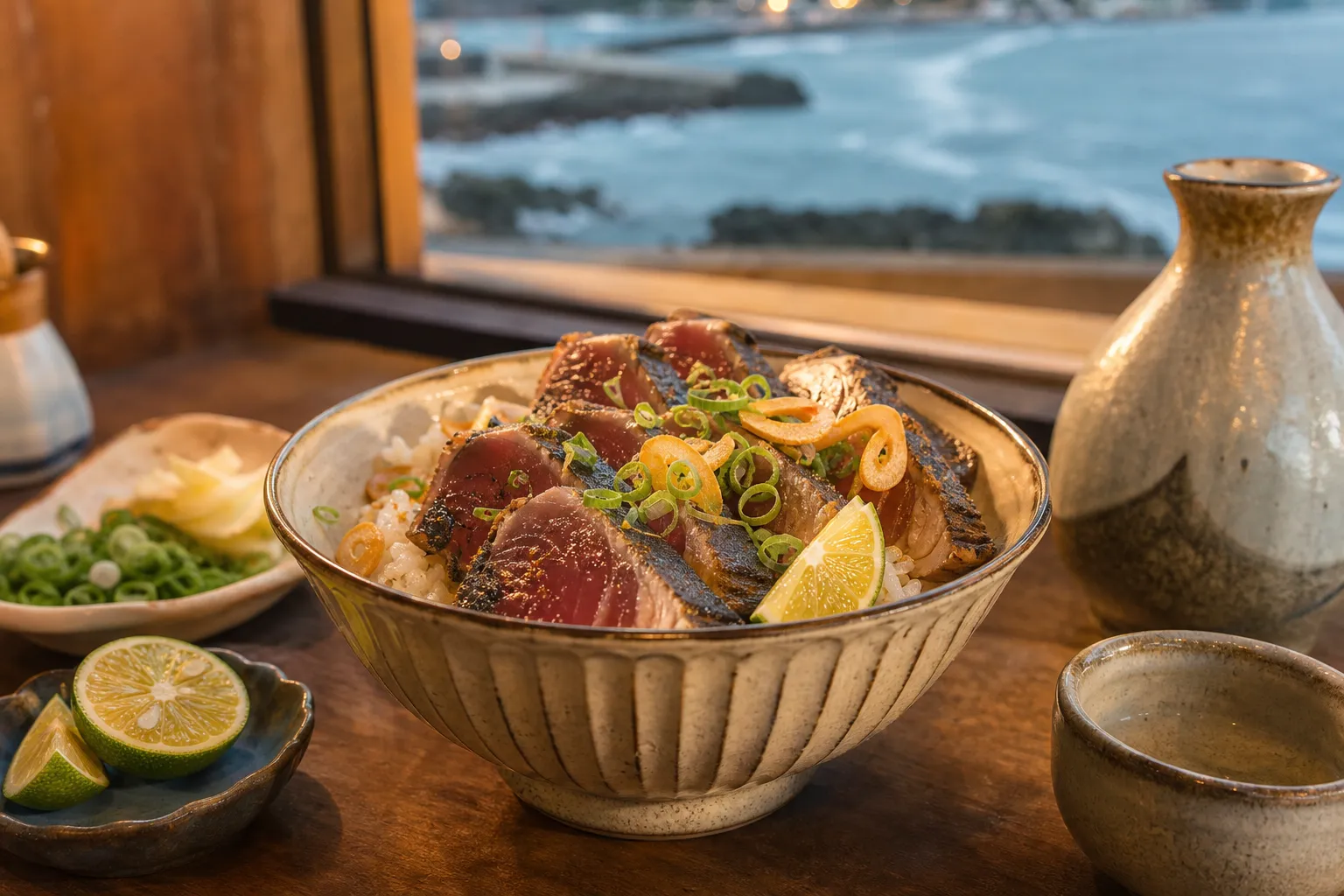
Kochi faces the open Pacific, and its whole food culture leans into that — bold, generous, a little wild. Bonito migrate up this coast in huge numbers, and the local method of searing them over blazing rice-straw fire (warayaki) isn't just for show, though it absolutely is a show. The straw burns hot and fast, scorching the surface and smoking it lightly in seconds while leaving the inside raw and cool. It's a technique built around a fish that's at its best barely cooked.
There's a swagger to Tosa food culture I completely fell for. Kochi people are famous across Japan for their generous drinking and their big, unfussy hospitality, and katsuo tataki is the edible version of that personality: direct, smoky, no apologies. Turning it into a rice bowl — katsuo-meshi — is just the practical, hungry, delicious next step. Why eat it off a plate with sake when you can eat it over rice and call it lunch? I have no counterargument. I'm not looking for one.
Why the seared-raw thing works so well
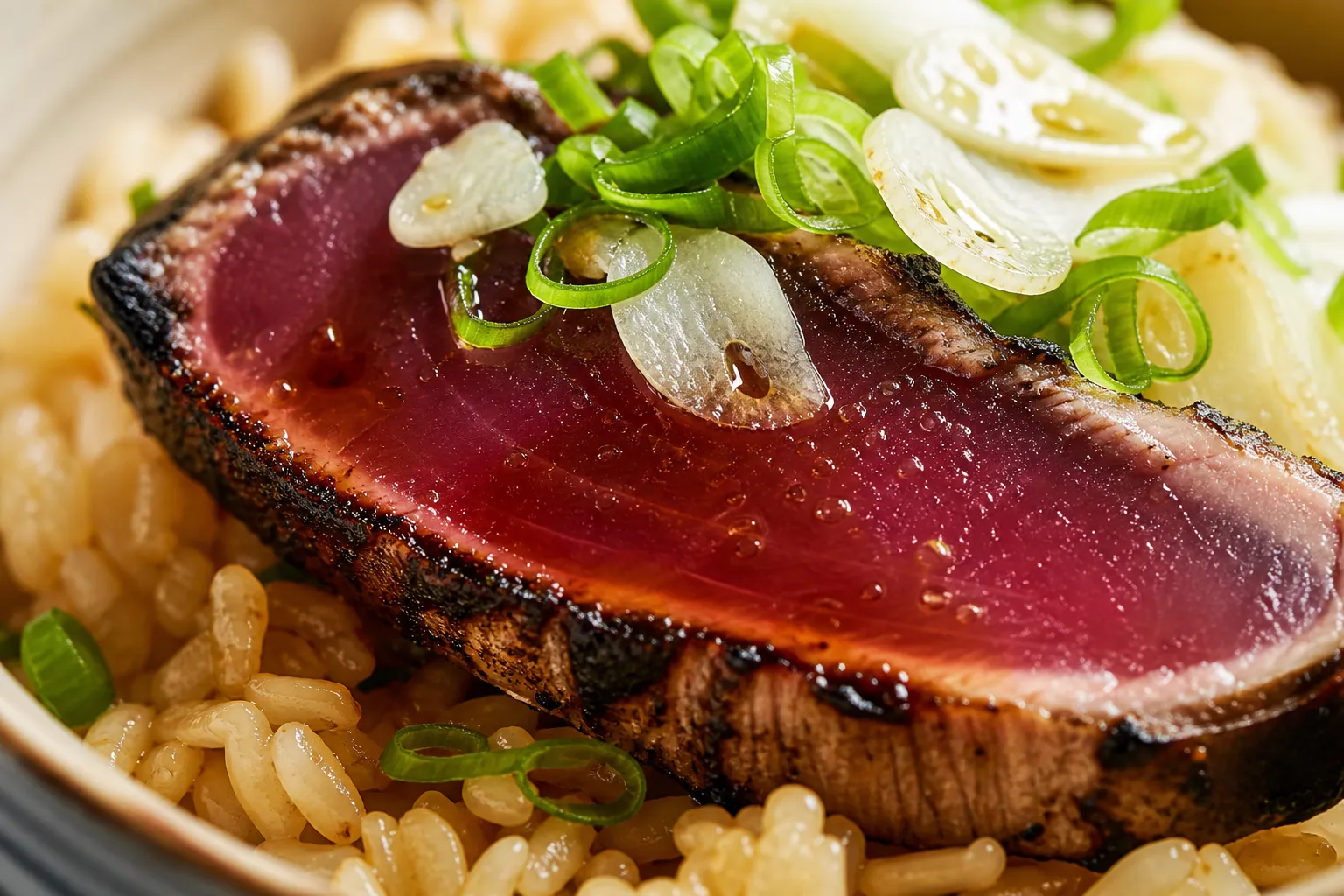
The magic is the contrast, and it's all happening in one slice. The seared surface is smoky, savory, a little firm, carrying that toasted rice-straw char. A few millimeters in, the flesh turns cool, soft, and iron-rich — clean and deeply of-the-sea in a way cooked fish never quite is. Then the aromatics go to work: raw sliced garlic (yes, raw — lean in), sharp green onion, and a squeeze of sudachi or yuzu citrus cutting through the richness. Underneath, hot rice soaks up the juices and ties the whole thing together.
It is not subtle. It's not trying to be. Katsuo-meshi is loud and coastal and alive, and the raw garlic in particular will follow you around for the afternoon. I regret nothing. I would set my eyebrows near a straw fire again tomorrow.
How katsuo-meshi is made
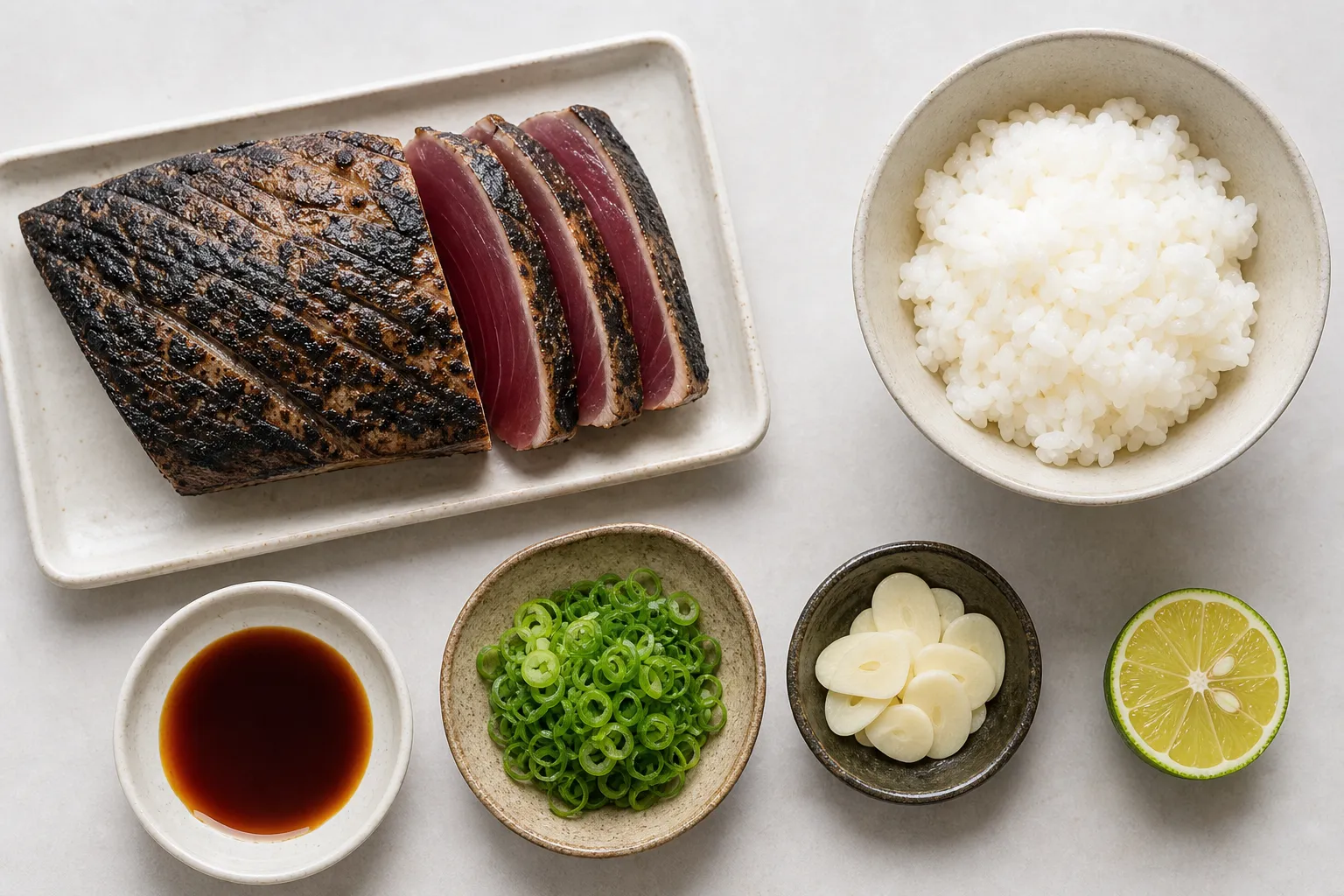
- A fresh block of bonito (katsuo) is skewered and seared hard over a blazing rice-straw fire, charring the surface in seconds while the inside stays raw
- The seared block is sliced into thick pieces — dark, smoky edge; ruby-red center
- A donburi bowl is filled with hot rice
- The bonito slices are fanned over the rice, then topped with sliced raw garlic, green onion, and sometimes grated ginger
- It's finished with a squeeze of local citrus and a light splash of soy or ponzu, and eaten straight away while the rice is still warm
Before you go — eat it like a Tosa local
Your questions, answered honestly
"Wait, is the fish raw?" — The outside is seared and smoky; the inside is essentially raw, cool and red. That contrast is the dish. If seared-outside/raw-inside fish sounds good to you, you'll love it. If fully-raw fish is a hard no, this one's only halfway toward you.
"Do I really eat the raw garlic?" — Locals do, and it's fantastic — that sharp bite is a huge part of the flavor. If you're worried about the aftermath, use less, but don't skip it entirely. It's the point.
"Tataki on a plate or on rice — what's the difference?" — Same star fish, different format. Katsuo tataki is often served alone as a dish to drink with; katsuo-meshi puts it over rice as a proper bowl-meal. If you want a full lunch, ask for the meshi (rice) version.
"When is bonito best?" — Bonito has two seasons here — the lean, bright spring "first bonito" and the richer, fattier autumn "return bonito." Both are wonderful; locals argue about which is better, which tells you everything.
What the staff will ask you
| You'll hear | Romaji | Meaning | Just say |
|---|---|---|---|
| にんにくは入れてよろしいですか? | Ninniku wa irete yoroshii desu ka? | "Is raw garlic okay?" | Onegaishimasu (yes, please) |
| 塩とタレ、どちらになさいますか? | Shio to tare, dochira ni nasaimasu ka? | "Salt or sauce (ponzu-style)?" | Osusume de onegaishimasu (whichever you recommend) |
| ご飯は大盛りにしますか? | Gohan wa ōmori ni shimasu ka? | "Would you like a large rice portion?" | Futsū de onegaishimasu (regular, please) |
To order, just say "Katsuo-meshi o kudasai" (かつおめしをください) — "The bonito rice bowl, please."
Where to eat it
- Hirome Market, Kochi City — a lively covered market of stalls and counters where seared bonito is a headline act; a great, casual place to try katsuo in its home territory.
- Kochi City izakaya — bonito, tataki, and katsuo-meshi turn up all over the city's drinking-and-eating spots, often with the straw-searing done right in front of you.
- The Pacific coast (e.g. toward Kuroshio and the fishing towns) — coastal restaurants near the bonito grounds serve it about as fresh as it gets.
Menus, seasons, and whether a given shop serves it as a rice bowl or a plate change place to place, so check current details before you go.
Soul Score
Local Roots5/5
First-Timer Friendly3/5
Adventure Level4/5
Comfort Level4/5
Travel Worthy4/5
These scores are one obsessed eater's gut feeling — not a verdict. A low number isn't a bad mark, just a different kind of adventure.
Know someone planning Japan?
← All Articles
Local Food · Kochi
Still hungry?
Eat more from Kochi
Local FoodKochi
Inaka Zushi (田舎寿司)
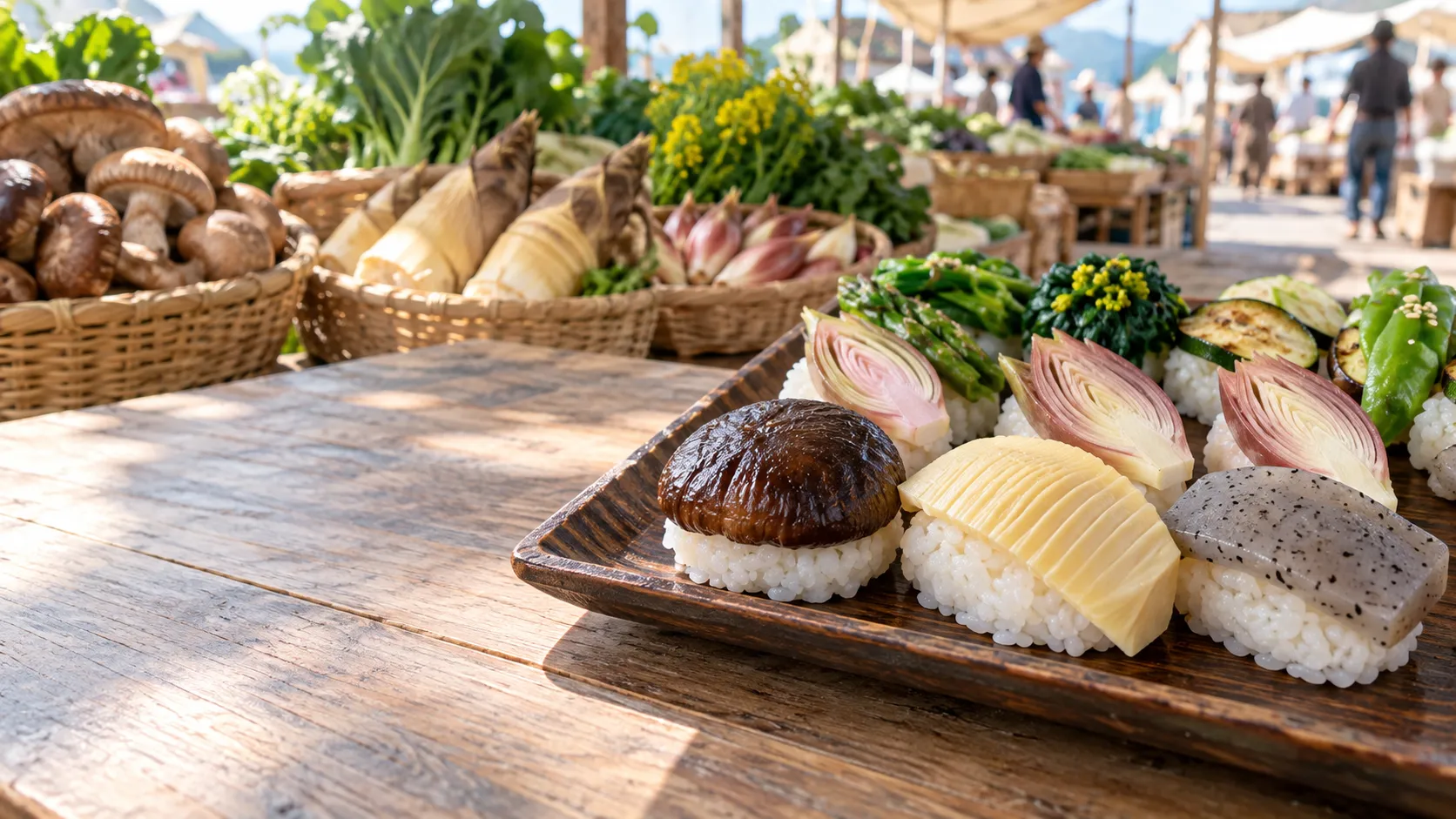
I bought what I thought was a box of ordinary sushi at a street market in Kochi. There was no fish in it anywhere, and that turned out to be the best thing about it.
September 26, 2026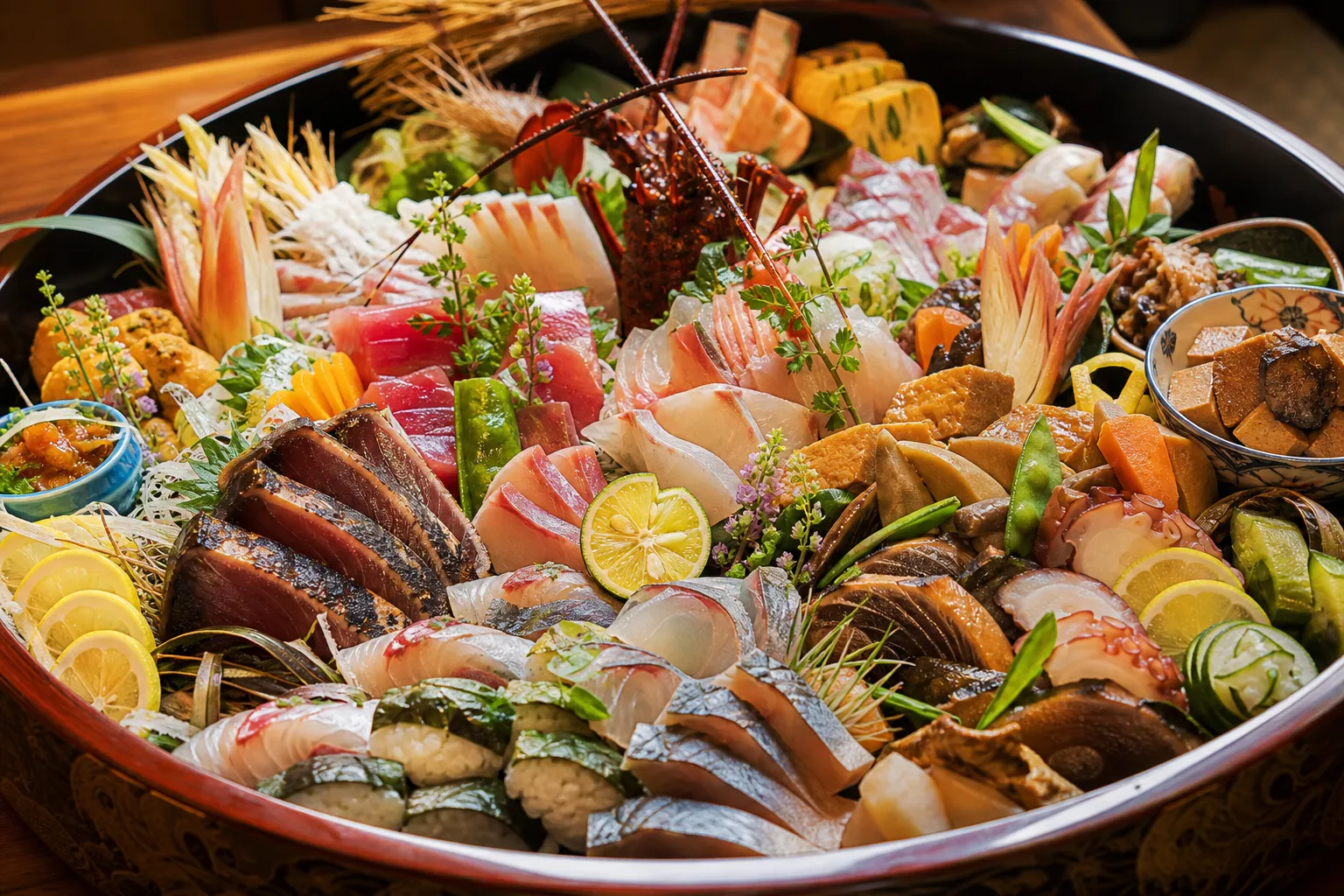
Local FoodKochi
Sawachi-ryori (皿鉢料理)
One enormous platter, piled sky-high with sashimi, sushi, seared bonito, simmered dishes and fruit — Kochi's answer to the party, where nobody serves you and everybody digs in.
July 12, 2026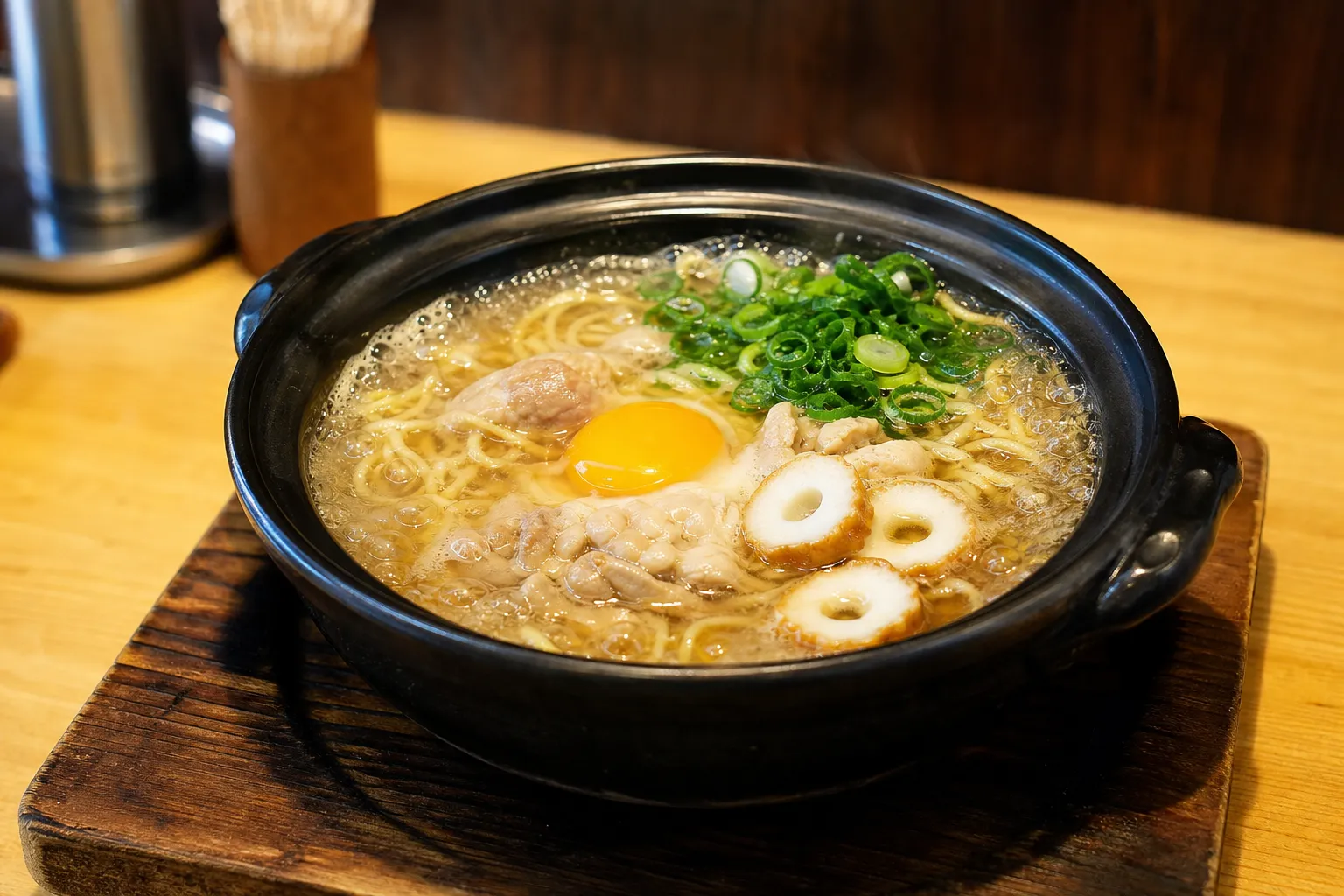
Local FoodSusaki, Kochi
Nabeyaki Ramen (鍋焼きラーメン)
It arrives still boiling, in the clay pot it was cooked in, an egg cracked on top going from raw to soft-set right in front of you — this is not a bowl of ramen, it's a tiny pot of lava with noodles in it.
July 4, 2026