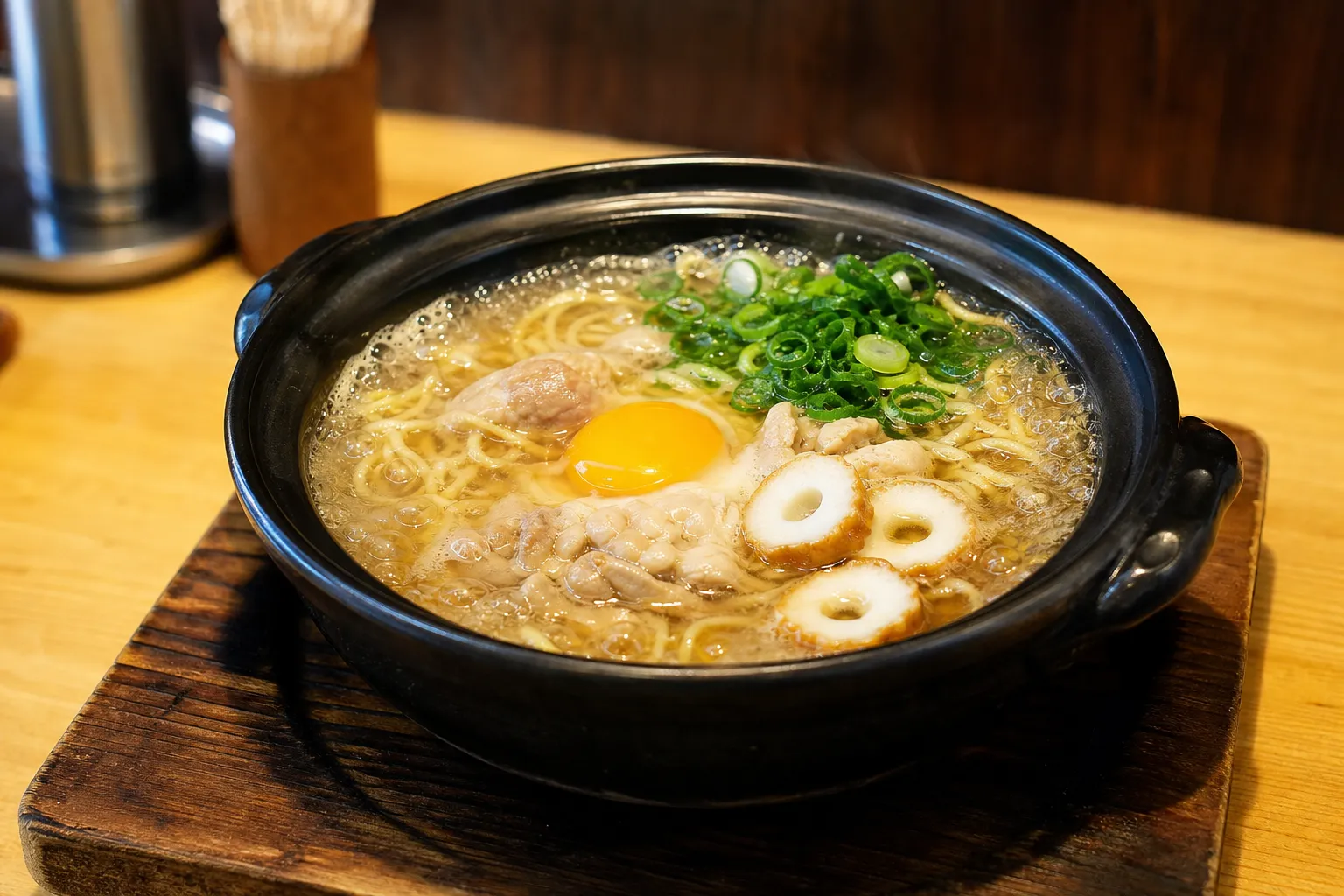
The broth was still bubbling when it hit the table. Actually bubbling, little pockets breaking the surface around a raw egg yolk that was visibly cooking as I watched it, sitting there with my chopsticks hovering because I genuinely could not tell if it was safe to touch the pot yet. (It was not. I touched it anyway.) I have eaten a lot of ramen in a lot of bowls. I had never once eaten ramen that was, technically, still on the stove.
Share this dish


It arrives still boiling, in the clay pot it was cooked in, an egg cracked on top going from raw to soft-set right in front of you — this is not a bowl of ramen, it's a tiny pot of lava with noodles in it.
🍜 Planning a food trip to Kochi?Add this dish to my Food Trip →
 Add this dish to my Food Trip →
This is nabeyaki ramen (鍋焼きラーメン), Susaki City's very specific, very stubborn contribution to Japan's ramen map — a bowl of noodles served bubbling hot inside the small clay donabe pot it was cooked in, never transferred to a regular bowl. Thin, noshi-style noodles sit in a chicken-based shoyu broth alongside pieces of chicken, a whole raw egg cracked in to cook gently in the residual heat, a scatter of green onion, and a couple of rounds of chikuwa fish cake. It looks almost small and modest next to a giant tonkotsu bowl elsewhere, then it arrives still actively cooking and suddenly commands the whole table.
A late-night bowl built for shift workers
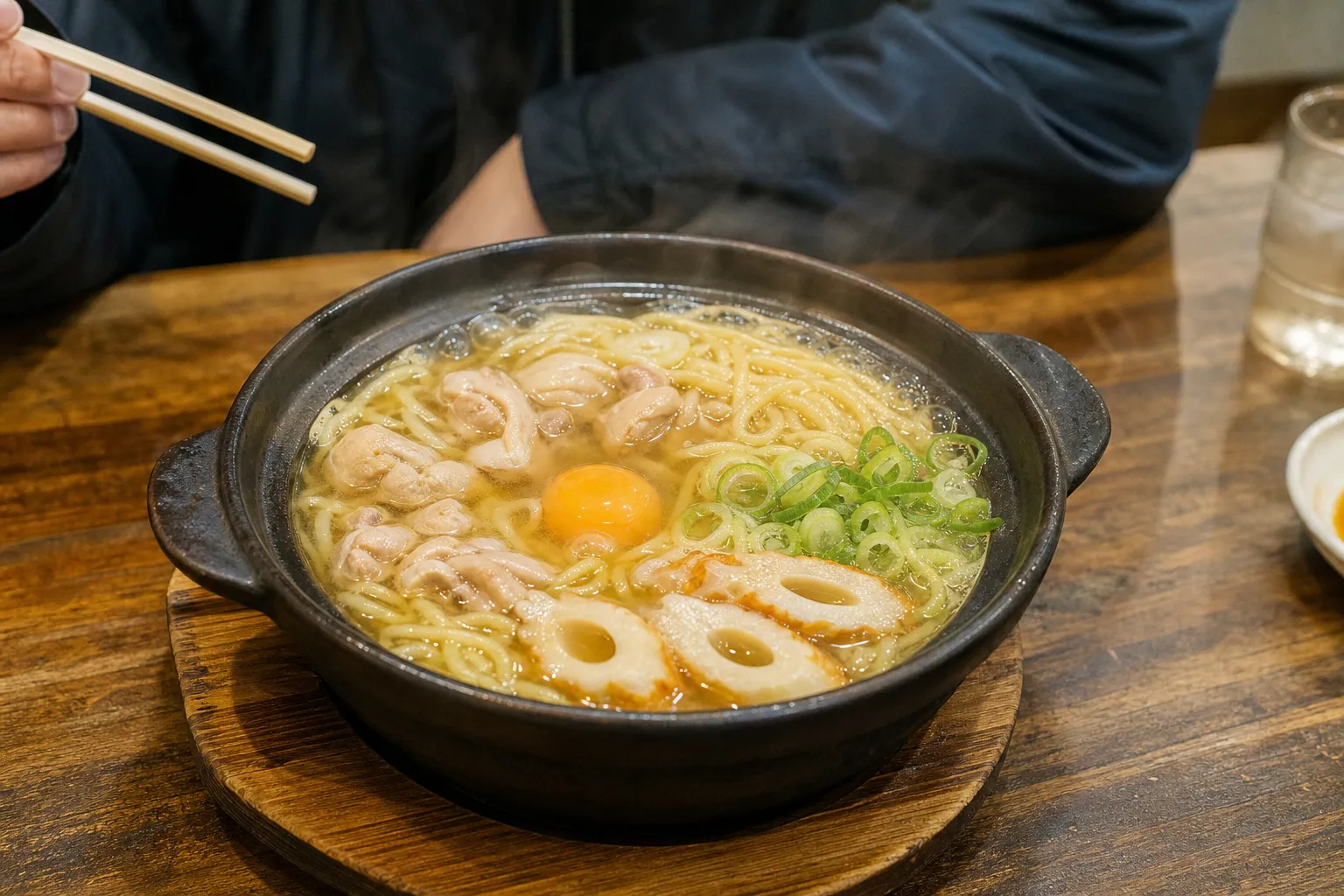
Susaki, a port town on Kochi's Pacific coast, built this dish around the rhythms of its fishing and manufacturing workers, who needed something hot, fast, and satisfying at odd hours — the story goes that local eateries started serving the noodles straight in the cooking pot so the dish would stay piping hot through a long, late meal, no reheating needed, no heat lost to a transfer. It's a dish designed by people thinking about logistics as much as flavor, and I respect that enormously. Somebody, decades ago, looked at the problem of ramen going lukewarm and solved it by simply never taking it off the heat source. Genius, in a very unglamorous way.
It's stayed a proud, hyper-local specialty ever since — Susaki is a small city, and nabeyaki ramen is very much its dish, distinct from the more famous regional ramens of Kyushu or Hokkaido. Eating it felt like being let in on something the rest of the country mostly hasn't caught up to yet.
Thin noodles, a clear broth, and an egg doing slow, quiet work
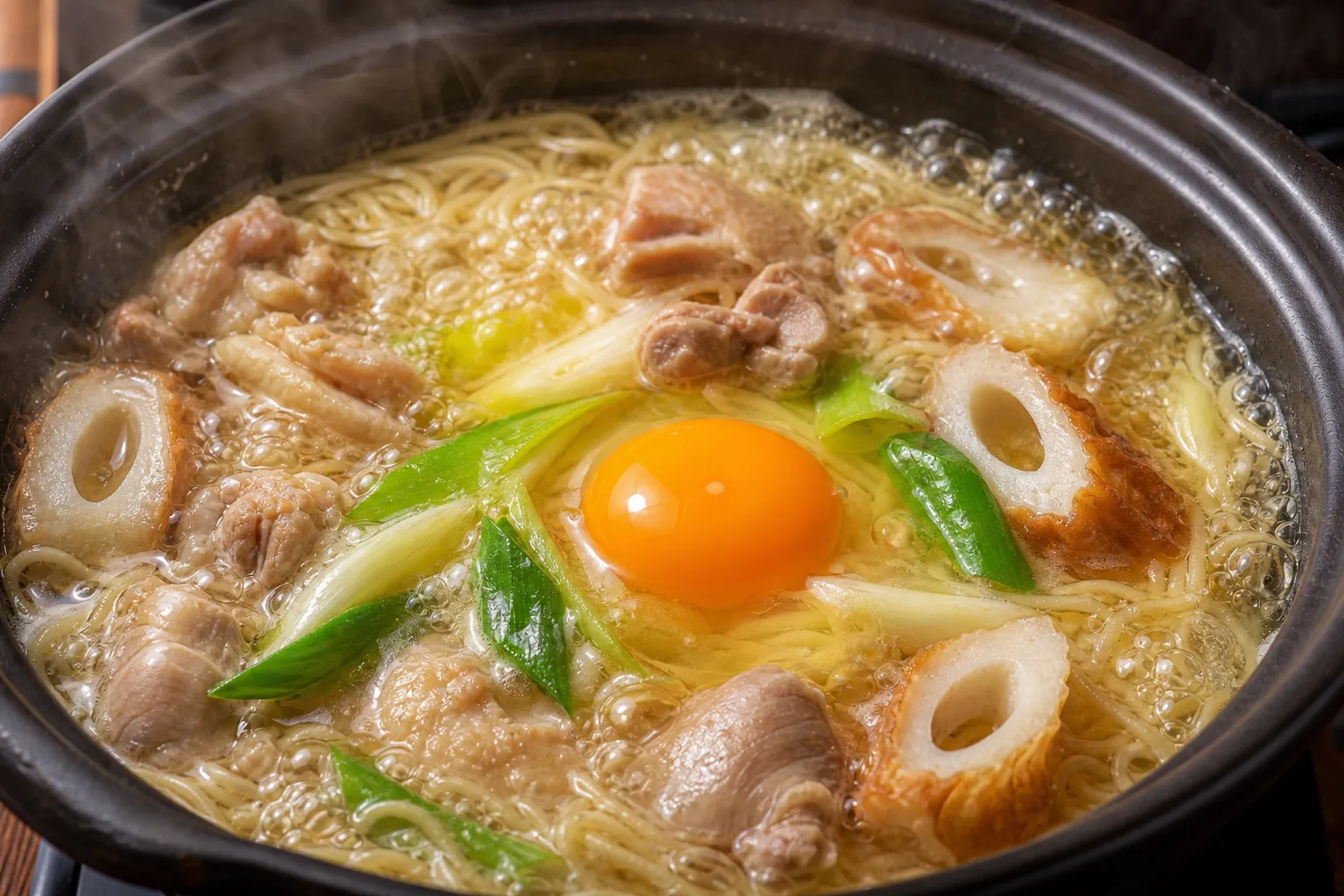
The broth is lighter and clearer than you'd expect — a chicken-based shoyu soup, savory and clean rather than heavy, closer to a good chicken soup with ramen ambitions than the thick pork bone broths that dominate ramen's international reputation. The noodles are thin, slightly curly, cooked directly in that broth rather than boiled separately, so they pick up flavor as they sit. And the egg — cracked in raw at serving — keeps softly cooking the entire time you eat, the white firming at the edges while the yolk stays loose in the middle if you're quick, or sets further the longer you take your time. Every few minutes it's a slightly different dish. I found myself eating faster than I meant to, purely to catch the egg at its best moment.
The chikuwa adds a chewy, faintly smoky bite, the chicken pieces are tender rather than dry, and the whole bowl carries real heat retention — this is still noticeably hot by the time you're scraping the pot, which is not something I can say for most ramen bowls twenty minutes in.
How it's made
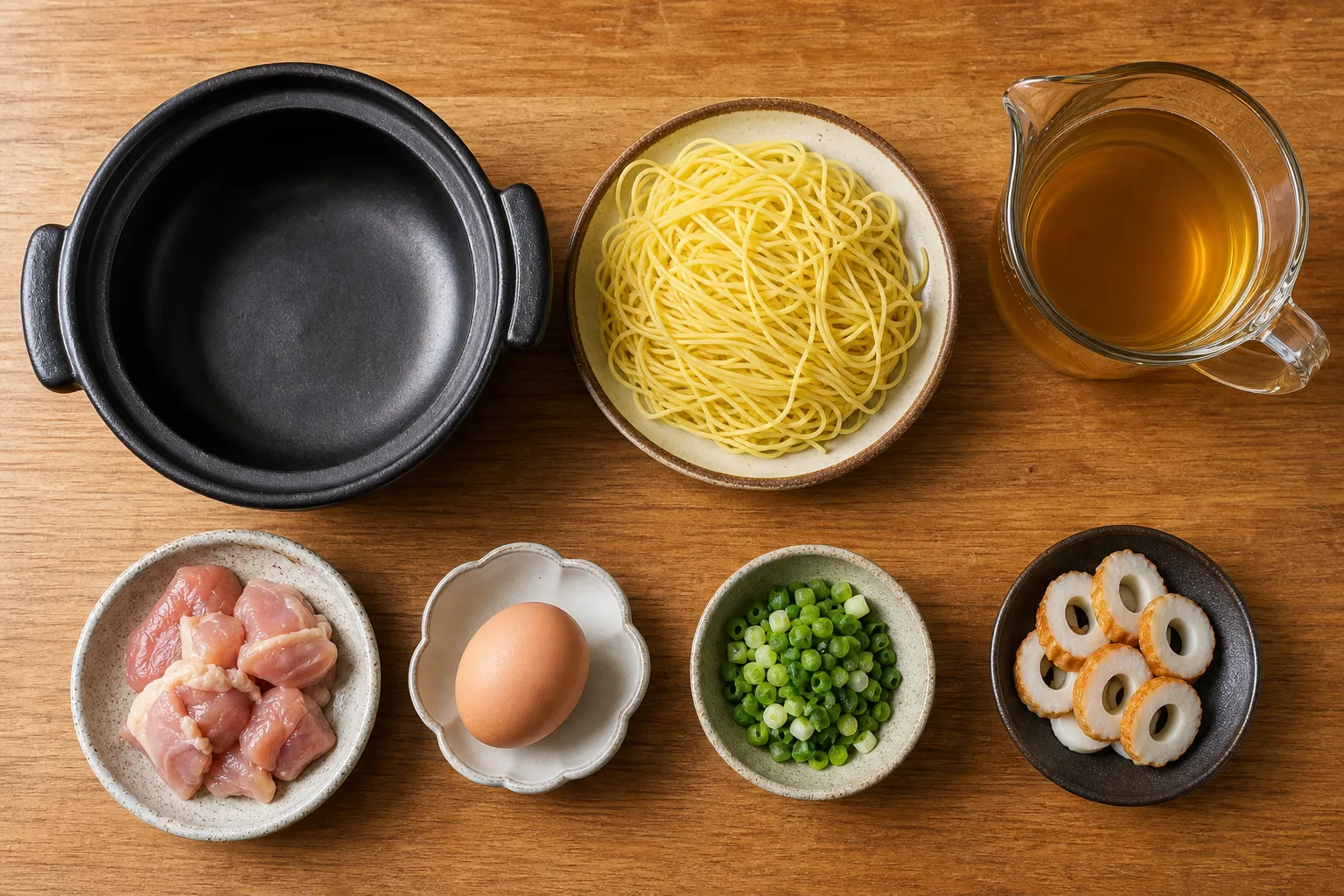
- Simmer a light chicken-and-shoyu broth, kept clear rather than cloudy or rich
- Cook bite-sized chicken pieces directly in the broth inside an individual clay donabe pot
- Add thin, curly noshi-style noodles straight into the simmering pot
- Slide in a couple of rounds of chikuwa (fish cake tube) and a scatter of green onion
- Crack a raw egg directly into the center just before serving
- Bring the whole pot to the table still bubbling, so the egg keeps cooking at the table
Before you go — for the still-boiling curious
Your questions, answered honestly
"Is this the same as nabeyaki udon?" — No — different noodle entirely. Nabeyaki udon uses thick wheat udon noodles and is common all over Japan; nabeyaki ramen uses thin ramen-style noodles and is specifically Susaki's dish. Don't order one expecting the other.
"Isn't it too hot to eat right away?" — Yes, genuinely — give it a minute or two before diving in, especially around the pot's edges and the broth itself. The noodles closer to the surface cool fastest; start there.
"Is the egg safe raw?" — It's cracked in raw but continues cooking in the residual heat of the pot at the table, so by the time you eat it, it's at least partially set — closer to soft-poached than fully raw. Japan's raw egg handling standards are strict, so this is standard practice here.
"Do I drink the broth?" — Yes, it's meant to be drunk, unlike some dipping-style ramens — it's light and savory enough to sip straight from the pot once it's cooled a bit.
What the staff will ask you
| You'll hear | Romaji | Meaning | Just say |
|---|---|---|---|
| 麺は普通でよろしいですか? | Men wa futsū de yoroshii desu ka? | "Regular noodles okay?" | Hai, daijōbu desu (Yes, that's fine) |
| 卵は入れますか? | Tamago wa iremasu ka? | "Should we add the egg?" | Hai, onegaishimasu (Yes, please) |
| 熱いのでお気をつけください | Atsui node oki o tsukete kudasai | "It's hot, please be careful" | Arigatō gozaimasu (Thank you) |
| ネギは多めにしますか? | Negi wa ōme ni shimasu ka? | "Extra green onion?" | Futsū de daijōbu desu (Regular is fine) |
To order, just say "Nabeyaki ramen kudasai" (鍋焼きラーメンください) — "Nabeyaki ramen, please."
Where to eat it
- Susaki City, Kochi — the dish's hometown; long-running local shops around the city center serve it as their signature item, often late into the night for shift workers, exactly as the tradition began.
- Kochi City — some ramen shops in the prefectural capital serve Susaki-style nabeyaki ramen for travelers who can't make it all the way out to Susaki.
- Local shopping streets near Susaki Station — small family-run noodle shops in the area are the most authentic bet.
- Check before you go — many of the classic shops keep unusual or late hours built around their original shift-worker customers; confirm current opening times before making the trip out.
Soul Score
Local Roots5/5
First-Timer Friendly4/5
Adventure Level3/5
Comfort Level5/5
Travel Worthy4/5
These scores are one obsessed eater's gut feeling — not a verdict. A low number isn't a bad mark, just a different kind of adventure.
Know someone planning Japan?
← All Articles
Local Food · Susaki, Kochi
Still hungry?
Eat more from Kochi
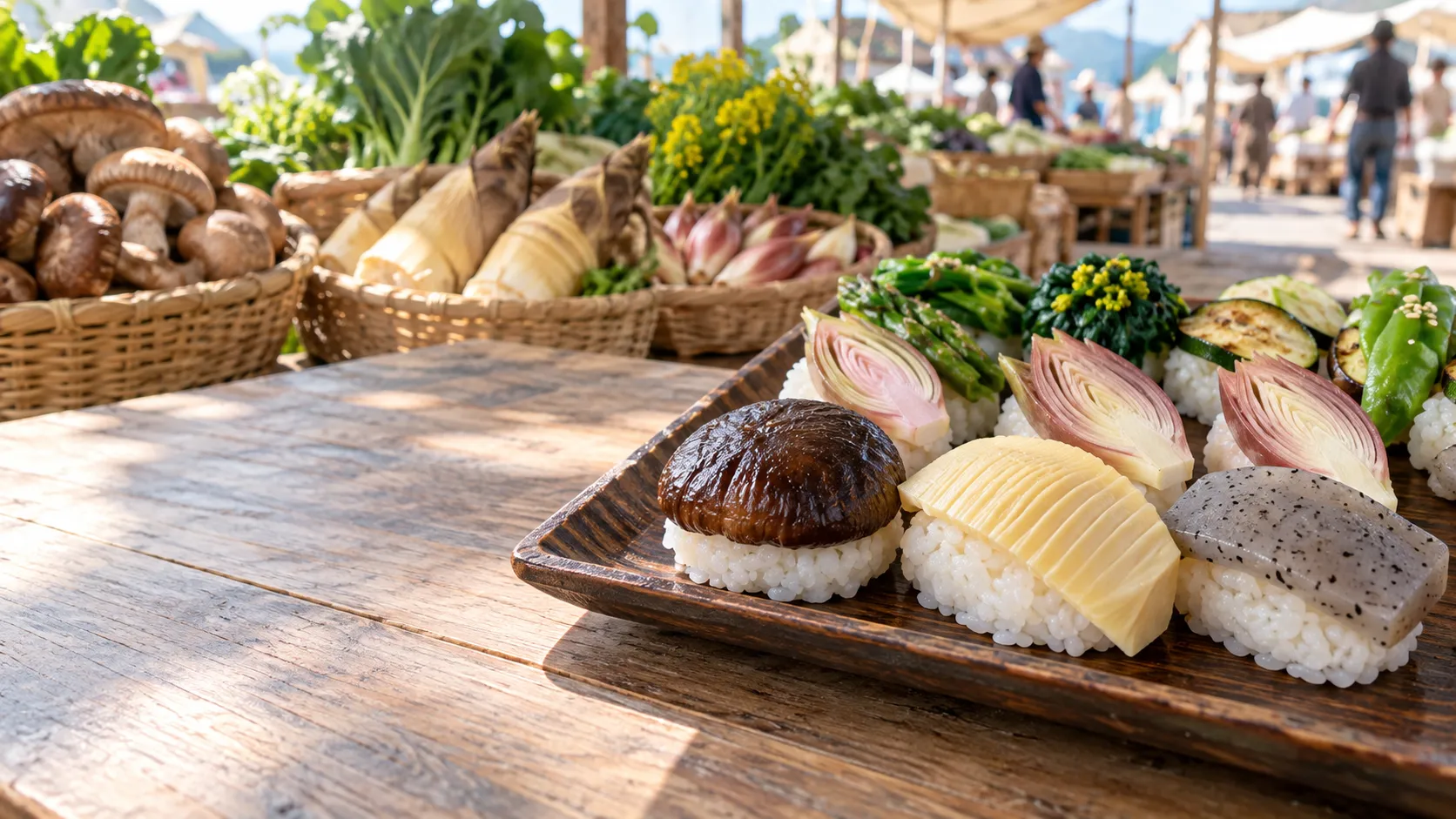
Local FoodKochi
Inaka Zushi (田舎寿司)
I bought what I thought was a box of ordinary sushi at a street market in Kochi. There was no fish in it anywhere, and that turned out to be the best thing about it.
September 26, 2026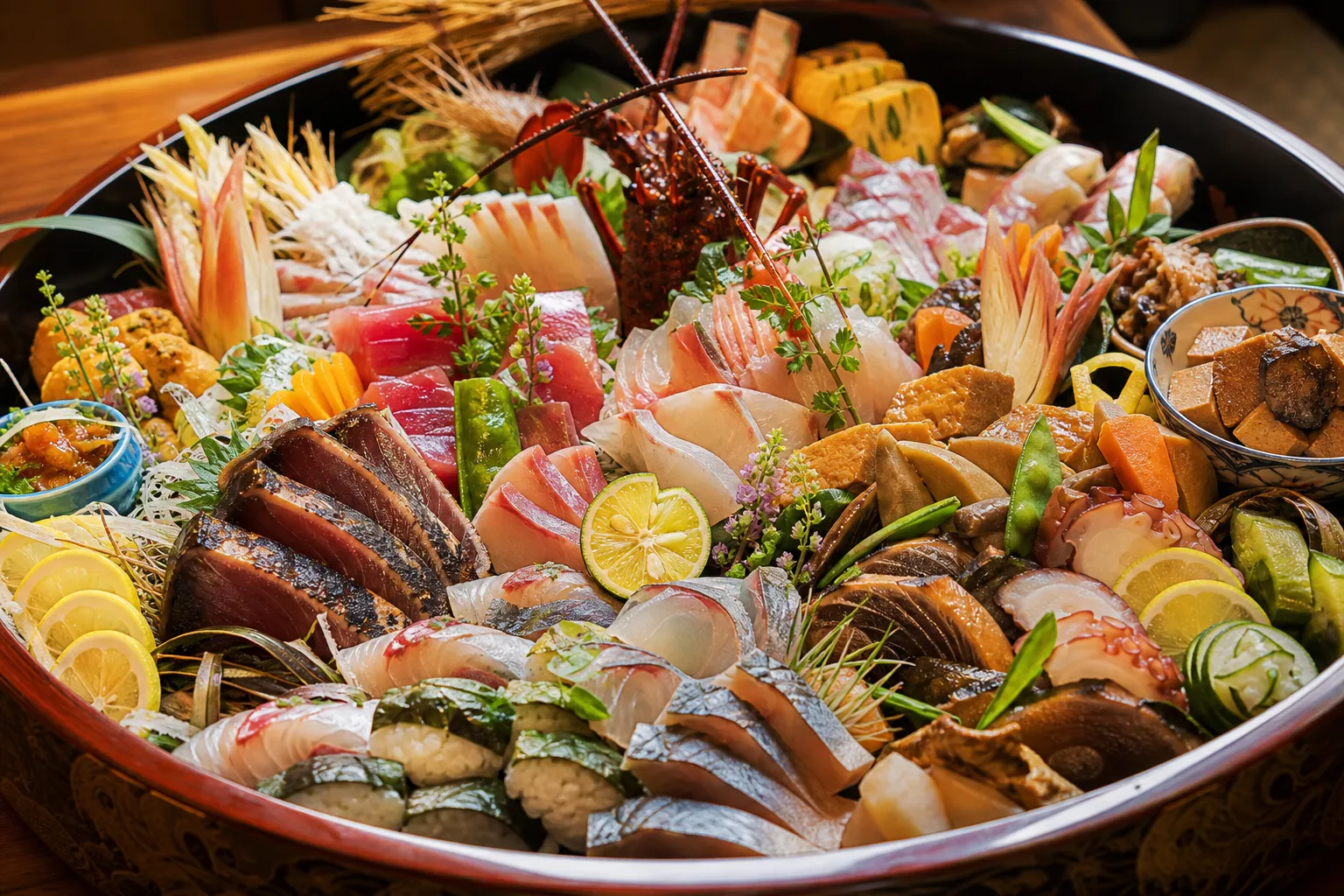
Local FoodKochi
Sawachi-ryori (皿鉢料理)
One enormous platter, piled sky-high with sashimi, sushi, seared bonito, simmered dishes and fruit — Kochi's answer to the party, where nobody serves you and everybody digs in.
July 12, 2026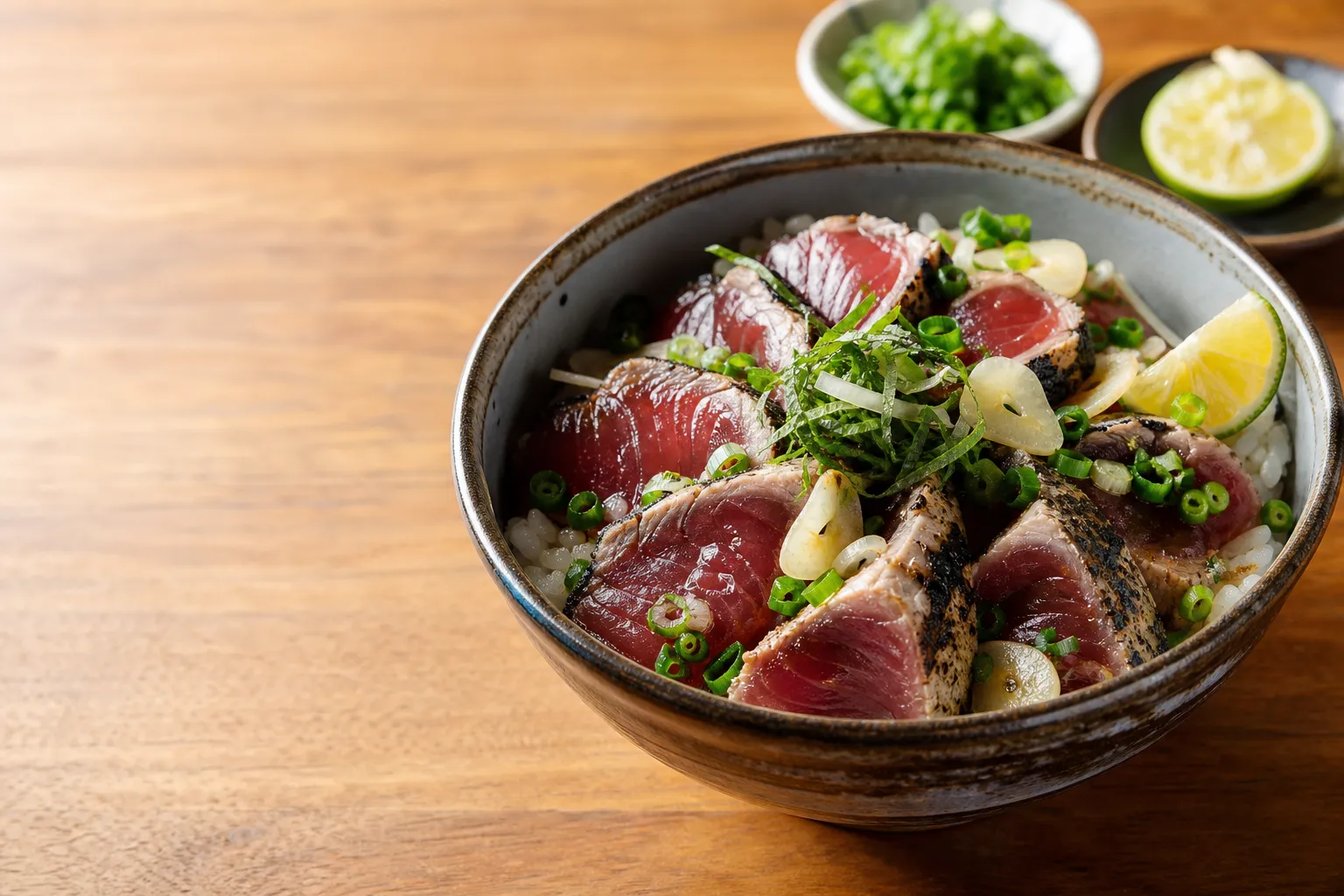
Local FoodKochi
Katsuo-meshi (かつおめし)
Straw fire, three feet high, a slab of fish blackening in the flames — and then somehow that same fish is on my rice, smoky-edged and ruby-red in the middle, and I forget how to talk for a second.
July 5, 2026