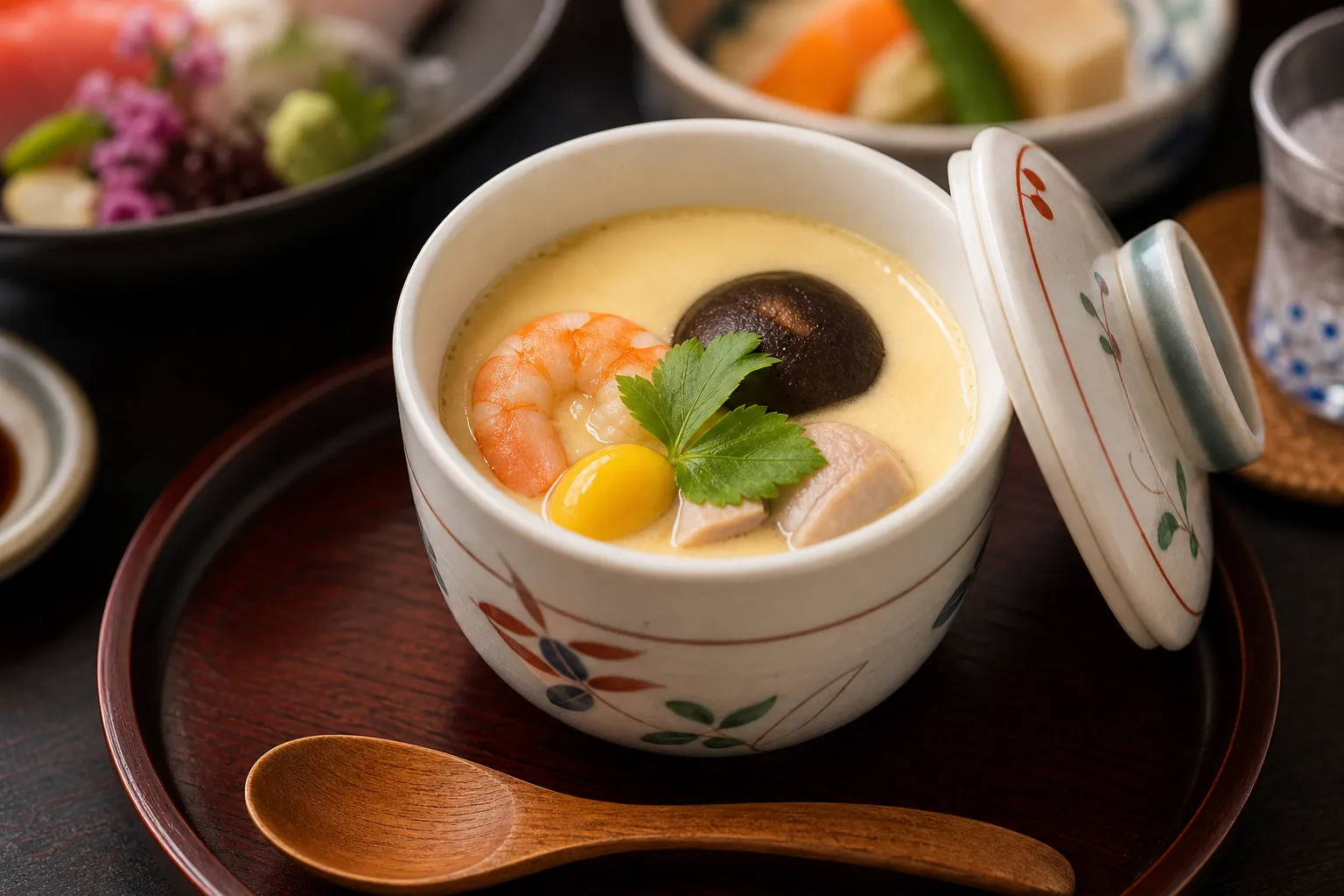
I lifted the little lid, steam curled up, and my brain said dessert — pale, wobbling, custard-smooth. Then the first spoonful hit and it was savory, deeply so, this warm rush of dashi, and my spoon bumped into a whole shrimp waiting at the bottom like a prize. I actually said "oh!" out loud. It's a tiny cup of food that pulls a small, quiet trick on you, and I fall for it happily every single time.
Share this dish


It arrives in a little lidded cup looking like custard — then the spoon sinks in and it's savory, warm, and hiding treasure at the bottom.
This is chawanmushi (茶碗蒸し), which translates literally to "tea-cup steam" — an egg custard, yes, but a savory one, built on dashi instead of sugar and cream. Beaten egg is loosened with that smoky-sweet kelp-and-bonito stock, poured into a lidded cup over little hidden treasures — shrimp, a slice of shiitake, a chunk of chicken, a single ginkgo nut — and gently steamed until it sets into something barely holding its own shape. Custardy in texture, but it belongs firmly with the soup course, not the sweets. Once your mouth stops expecting sugar, it's one of the most soothing things you can eat in Japan.
An old dish that came in through the port
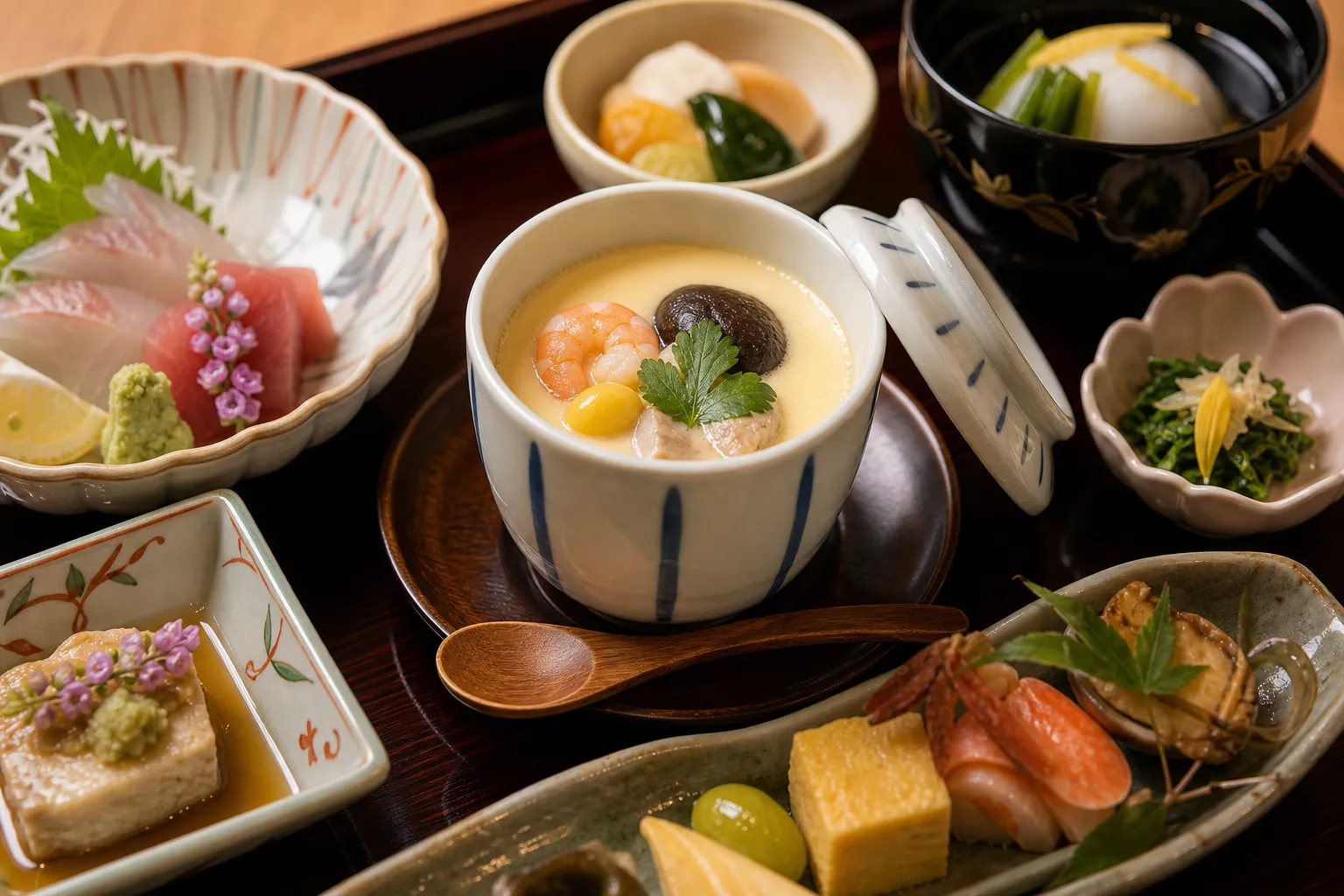
Chawanmushi is usually linked to Nagasaki, the port city that was Japan's window to the outside world during its centuries of near-isolation. It's often described as part of shippoku cuisine — a Chinese- and Dutch-influenced banquet style that flourished there — and from that cosmopolitan table it spread across the whole country until it became a totally standard part of Japanese dining. I love that this feather-light, deeply "traditional Japanese" cup actually arrived through international trade. The most delicate thing on the tray has a passport.
It also happens to be one of the few dishes served across every register of Japanese eating. You'll meet it in a two-thousand-year-old-feeling kaiseki ryokan dinner and on the touchscreen at a cheap sushi chain, and it's genuinely good in both. Not many foods hold their dignity across that whole range. Chawanmushi just quietly does.
Why the wobble matters so much
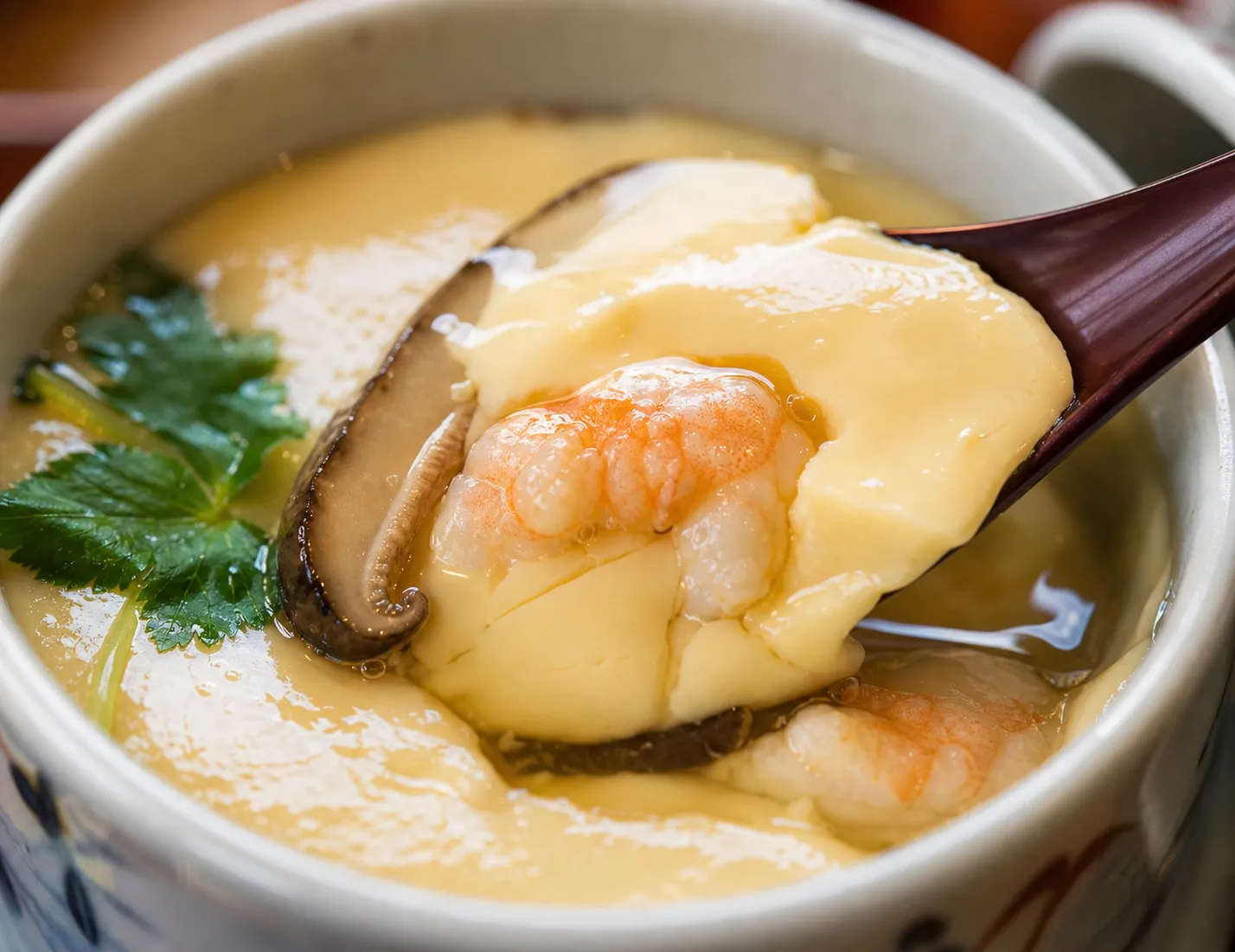
The whole art is in the texture. Done right, chawanmushi is barely set — smooth as flan, trembling when you nudge the cup, with no bubbles or curdled bits, because it was steamed low and slow. Your spoon should glide straight through with almost no resistance. That silkiness is the entire point; a rubbery, over-steamed chawanmushi is a genuine tragedy, and once you've had a perfect one you'll understand why chefs are so precious about the heat.
And the flavor is all restraint. The dashi does the talking — gentle, savory, warming — and the hidden ingredients give you little textural surprises as you spoon down: the snap of shrimp, the earthiness of shiitake, the slight bitterness of a ginkgo nut that some people love and some people quietly leave. It's warm and soft and unchallenging in the best way. I ate one on a cold night once and felt personally comforted, like the cup knew.
How it's made
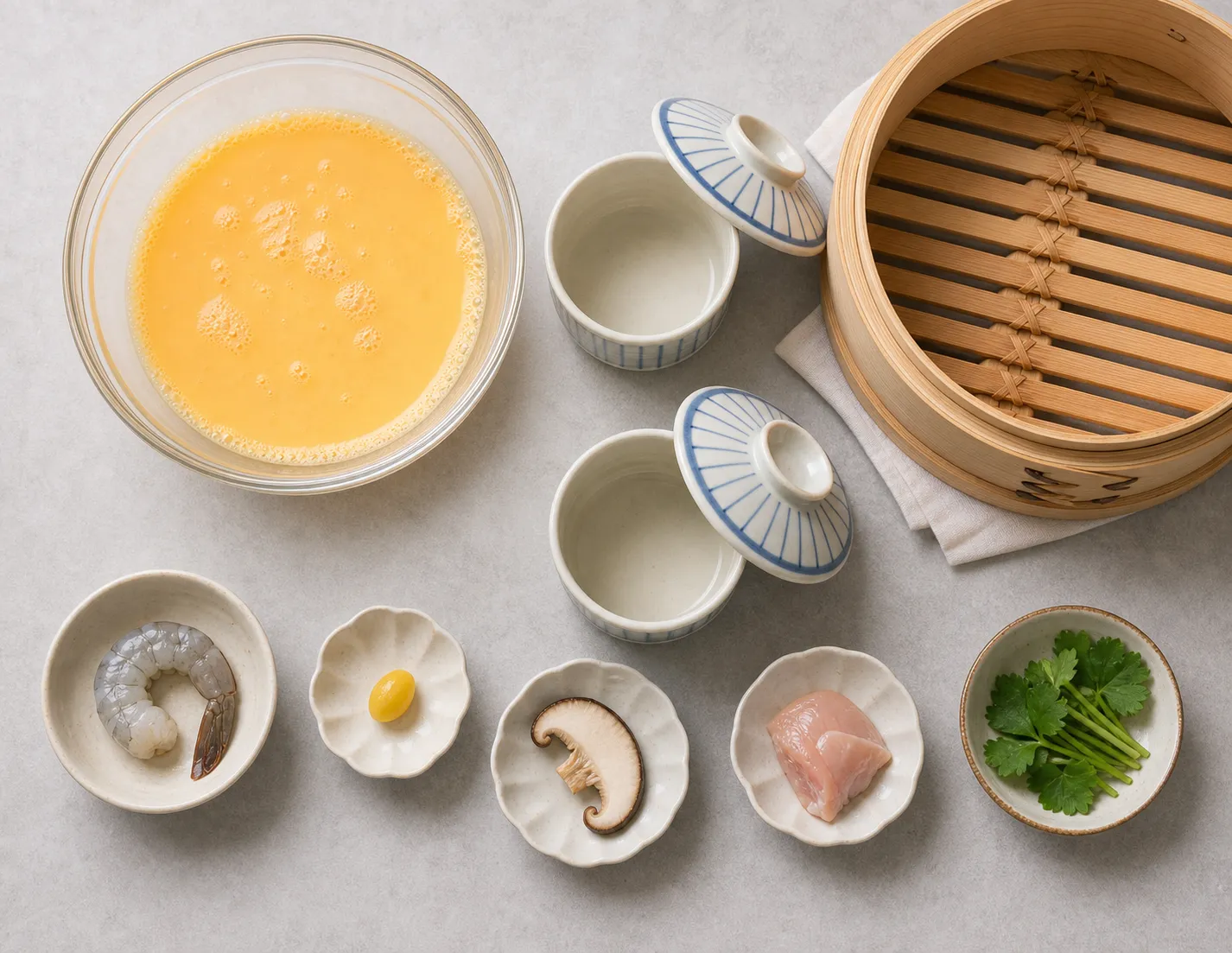
- Make a good dashi (kelp and bonito stock), season it lightly with soy sauce, mirin, and salt, and let it cool a little
- Beat eggs gently — you want them mixed but not frothy — and combine with the dashi, then strain the mixture for maximum smoothness
- Place the fillings into each cup: shrimp, sliced shiitake, a piece of chicken, a ginkgo nut, sometimes kamaboko fish cake
- Pour the egg-and-dashi mixture over the fillings and put the lid on each cup
- Steam gently over low, even heat until just set and still trembling — too hot or too long and it turns bubbly and firm
Before you go — the savory custard, decoded
Your questions, answered honestly
"Is it sweet? It looks like pudding." — No. This is the number-one surprise, so brace for it: chawanmushi is savory, built on dashi stock. Go in expecting a warm, delicate egg soup-custard, not dessert, and you'll love it. Go in expecting sugar and you'll be very confused for one spoonful.
"Hot or cold?" — Usually warm to hot, and that's when it's best. There are chilled summer versions, but the default you'll meet is served warm, often with its little lid still on. Lift the lid carefully — real steam comes off.
"What's the little nut at the bottom?" — Probably a ginkgo nut (ginnan) — slightly bitter, chewy, a bit divisive. It's traditional and totally fine to eat, but nobody will judge you if you set it aside. The shrimp and shiitake, though, are the reward you're digging for.
"How do I eat it — spoon or drink it?" — Spoon. It comes with a small spoon; work your way down, scooping custard and treasures together. It's soft enough that you barely chew. Don't rush it — it's a slow, warm little course.
What the staff will ask you
| You'll hear | Romaji | Meaning | Just say |
|---|---|---|---|
| 温かいのと冷たいの、どちらにしますか? | Atatakai no to tsumetai no, dochira ni shimasu ka? | "Warm or chilled?" | Atatakai de onegaishimasu (warm, please) |
| アレルギーはありますか? | Arerugī wa arimasu ka? | "Any allergies?" (often re: shrimp) | Ebi wa daijōbu desu (shrimp is fine) or Arimasen (none) |
| おひとつでよろしいですか? | Ohitotsu de yoroshii desu ka? | "Just one?" | Hai, hitotsu de (yes, just one) |
To order, just say "Chawanmushi o kudasai" (茶碗蒸しをください) — "Chawanmushi, please."
Where to eat it
- Izakaya (Japanese pubs) — one of the most common and cheapest places to meet it; it's a classic side to order between drinks and skewers.
- Sushi restaurants, including conveyor-belt chains — chawanmushi is a standard non-sushi item on almost every sushi menu, and it's a genuinely good one even at budget chains.
- Kaiseki restaurants and ryokan dinners — the high end, where the custard is at its silkiest and the fillings most refined; often served as one small, beautiful course among many.
Fillings, prices, and hot-vs-cold offerings vary by restaurant and season, so check current details before you go — and mention any shellfish allergy, since shrimp is a very common ingredient.
Soul Score
Local Roots4/5
First-Timer Friendly4/5
Adventure Level3/5
Comfort Level5/5
Travel Worthy3/5
These scores are one obsessed eater's gut feeling — not a verdict. A low number isn't a bad mark, just a different kind of adventure.
Know someone planning Japan?
← All Articles
Japanese Food · Nationwide
Still hungry?
You might also like
Japanese FoodNationwide
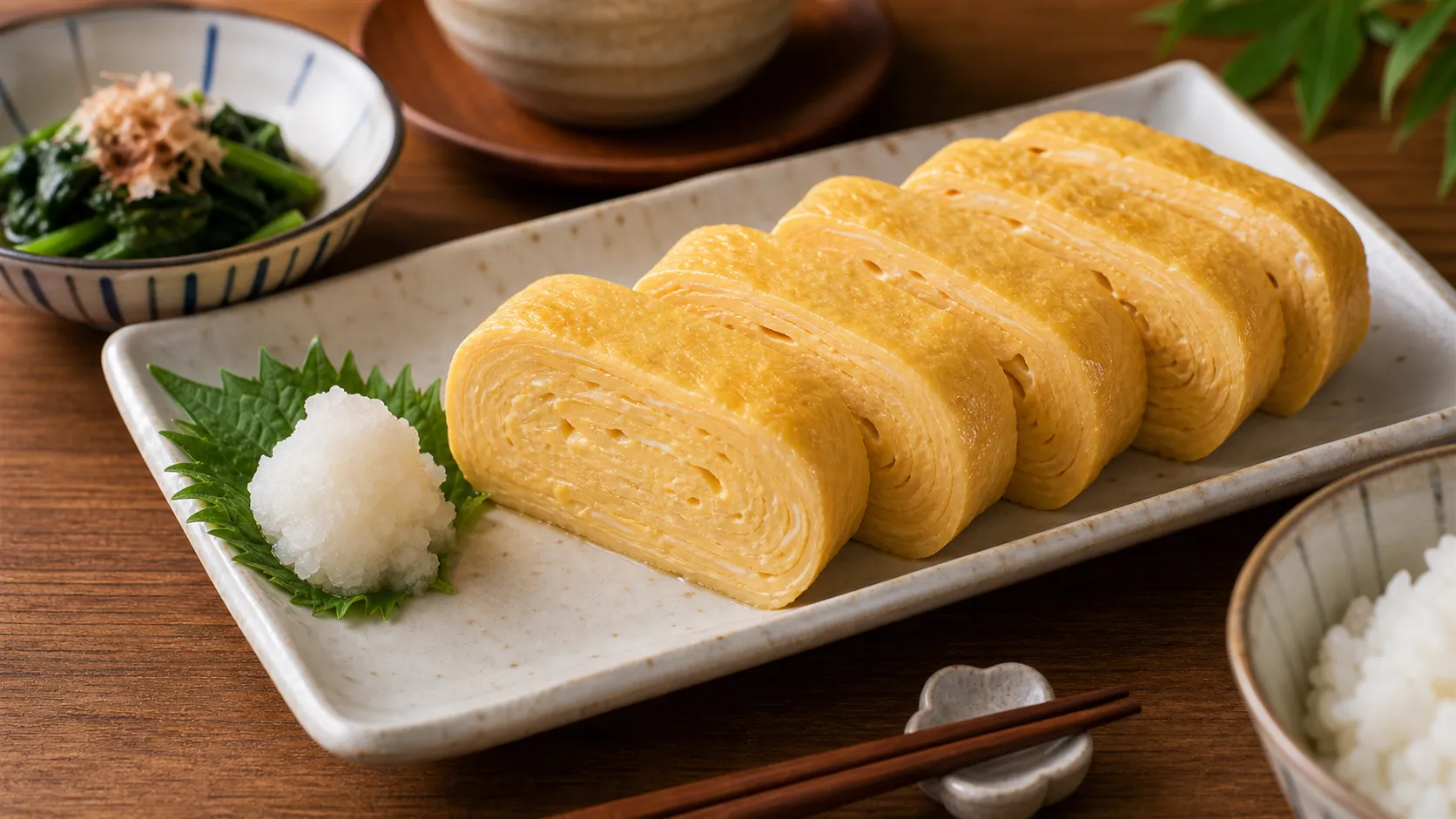
Dashimaki-tamago (だし巻き卵)
A rolled omelette so soft it almost trembles, layered fold over fold and soaked with dashi so that biting in releases a little warm rush of savory broth — the deceptively simple egg dish that Japanese chefs spend years perfecting.
July 11, 2026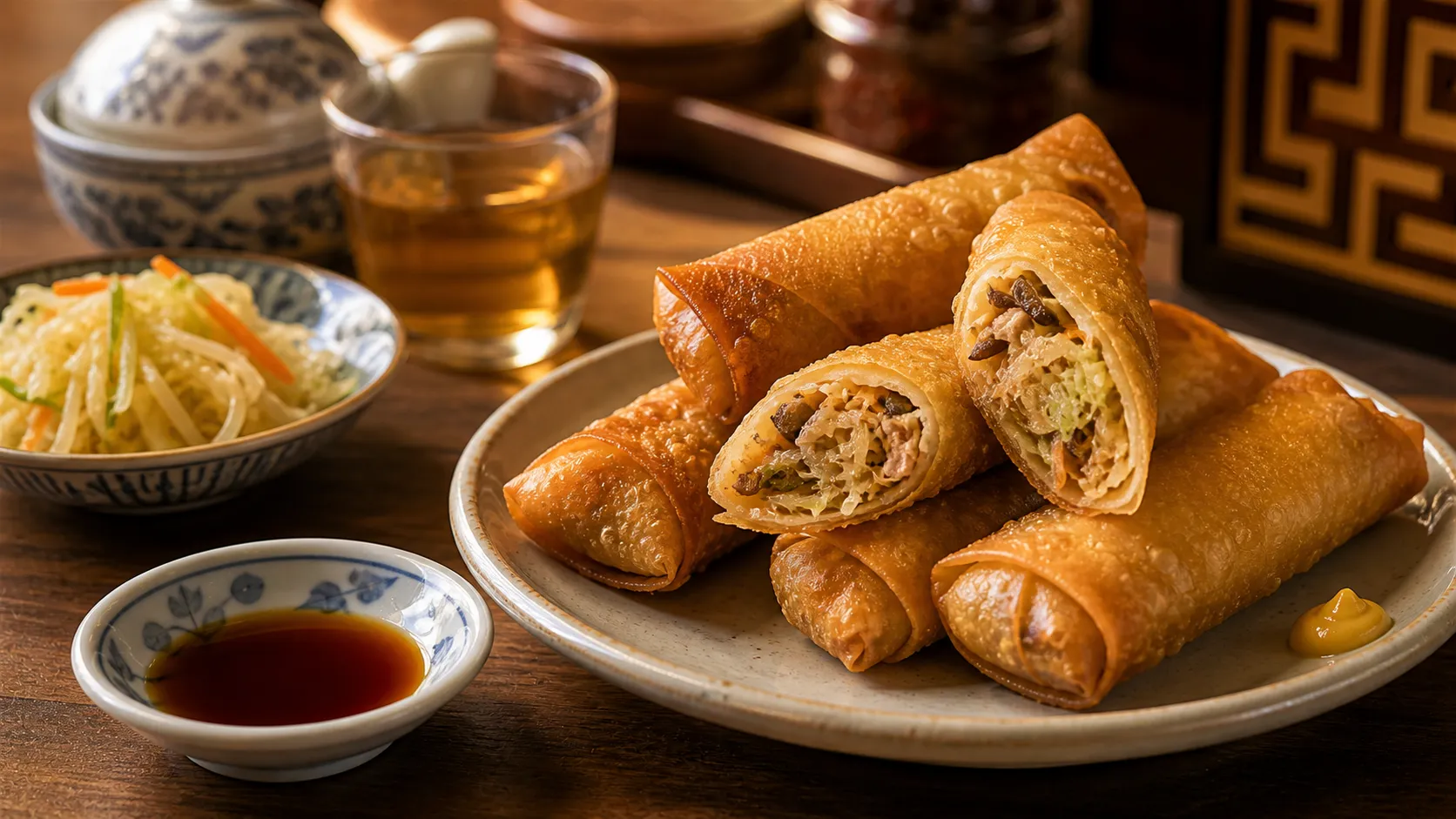
Japanese FoodNationwide
Harumaki (春巻き)
The Japanese spring roll — a shatteringly crisp golden tube that gives way to a hot, savory tangle of pork, cabbage and bamboo shoot, best eaten the second it's cool enough not to burn your mouth (you will not wait that long).
July 11, 2026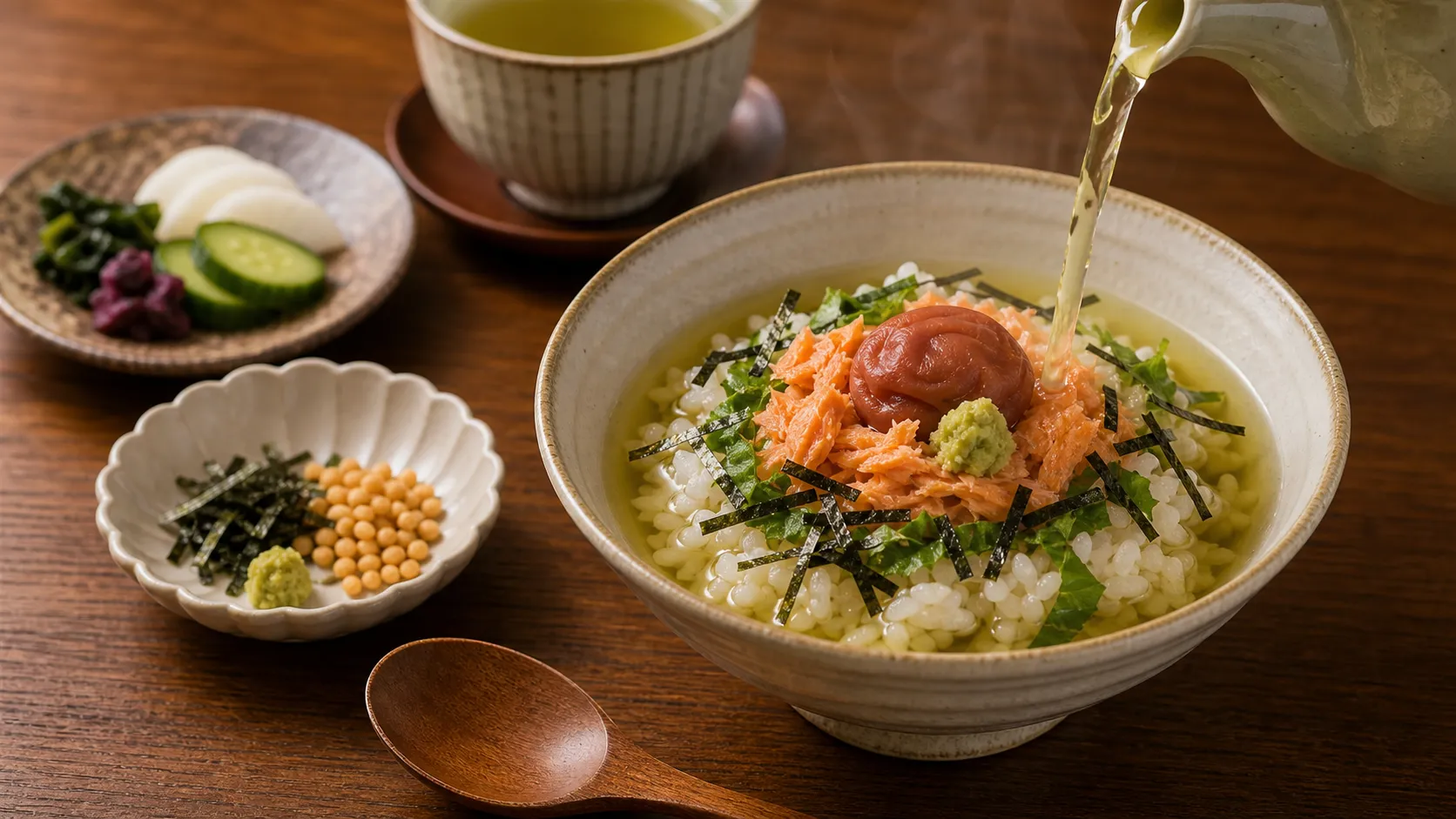
Japanese FoodNationwide
Ochazuke (お茶漬け)
Pour hot green tea or dashi over a bowl of rice, scatter something savory on top, and eat — the gentlest, most quietly restorative dish in Japan, the one you reach for late at night when you just need a warm bowl to make everything okay.
July 11, 2026