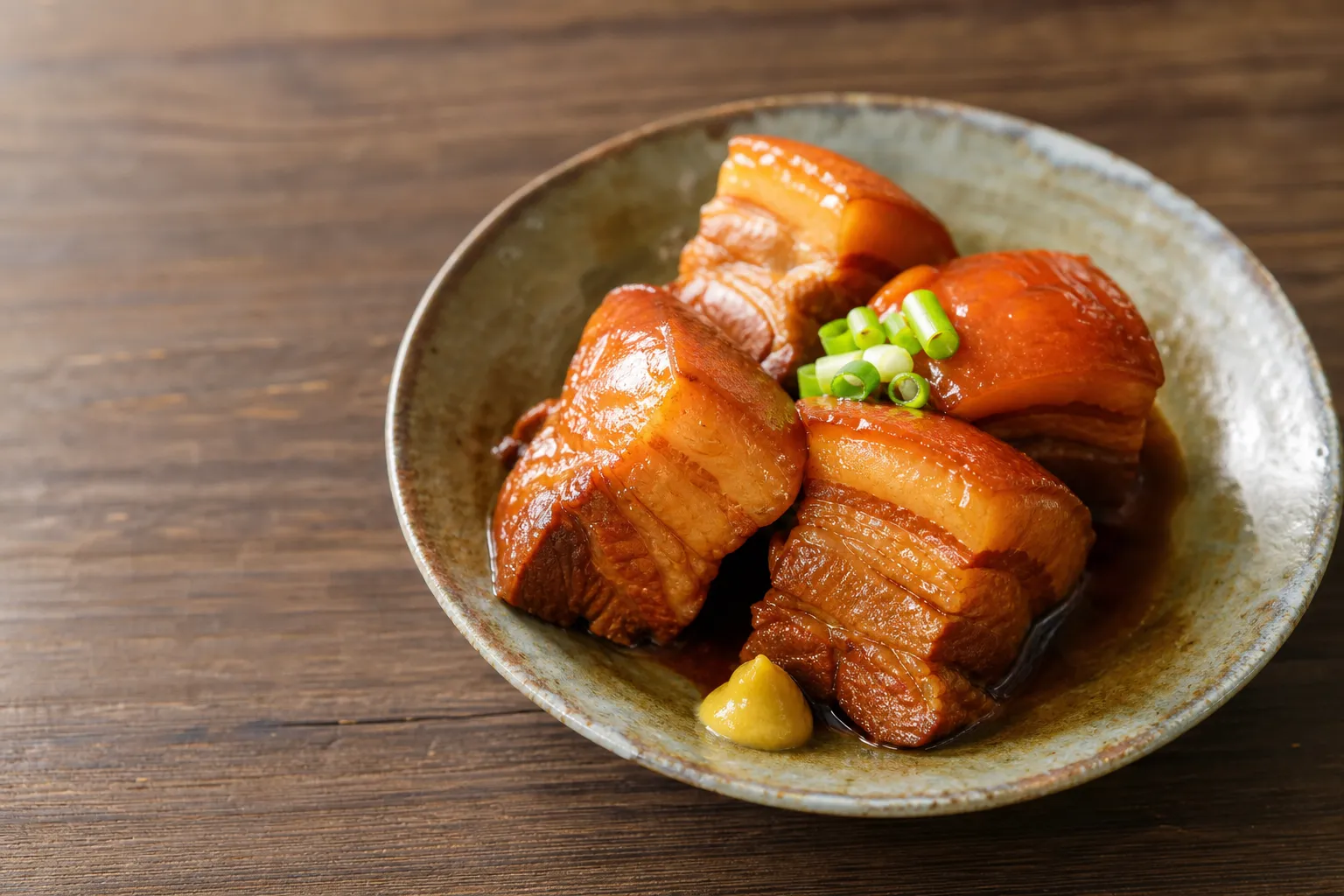
It didn't need a knife. I pressed down with my chopsticks and they just... sank through it, layer after glossy layer, skin and fat and meat giving way without any resistance at all. Then the taste — deep, sweet-savory, a little something warm and boozy underneath. I put my chopsticks down for a second just to appreciate what had happened.
Share this dish


It didn't need a knife. The chopsticks just sank through it. Okinawa's slow-braised pork belly, glossy and melting, simmered in island liquor until it barely holds together.
🍜 Planning a food trip to Okinawa?Add this dish to my Food Trip →
 Add this dish to my Food Trip →
This is rafute (ラフテー), Okinawa's masterpiece of patience: skin-on pork belly slow-simmered for hours in awamori (the islands' distilled rice liquor), soy sauce, and sugar until it turns deep caramel-brown, glossy, and meltingly tender. Okinawa treats pork with a seriousness bordering on reverence, and rafute is where that reverence reaches its soft, wobbling peak.
Okinawa's love letter to pork
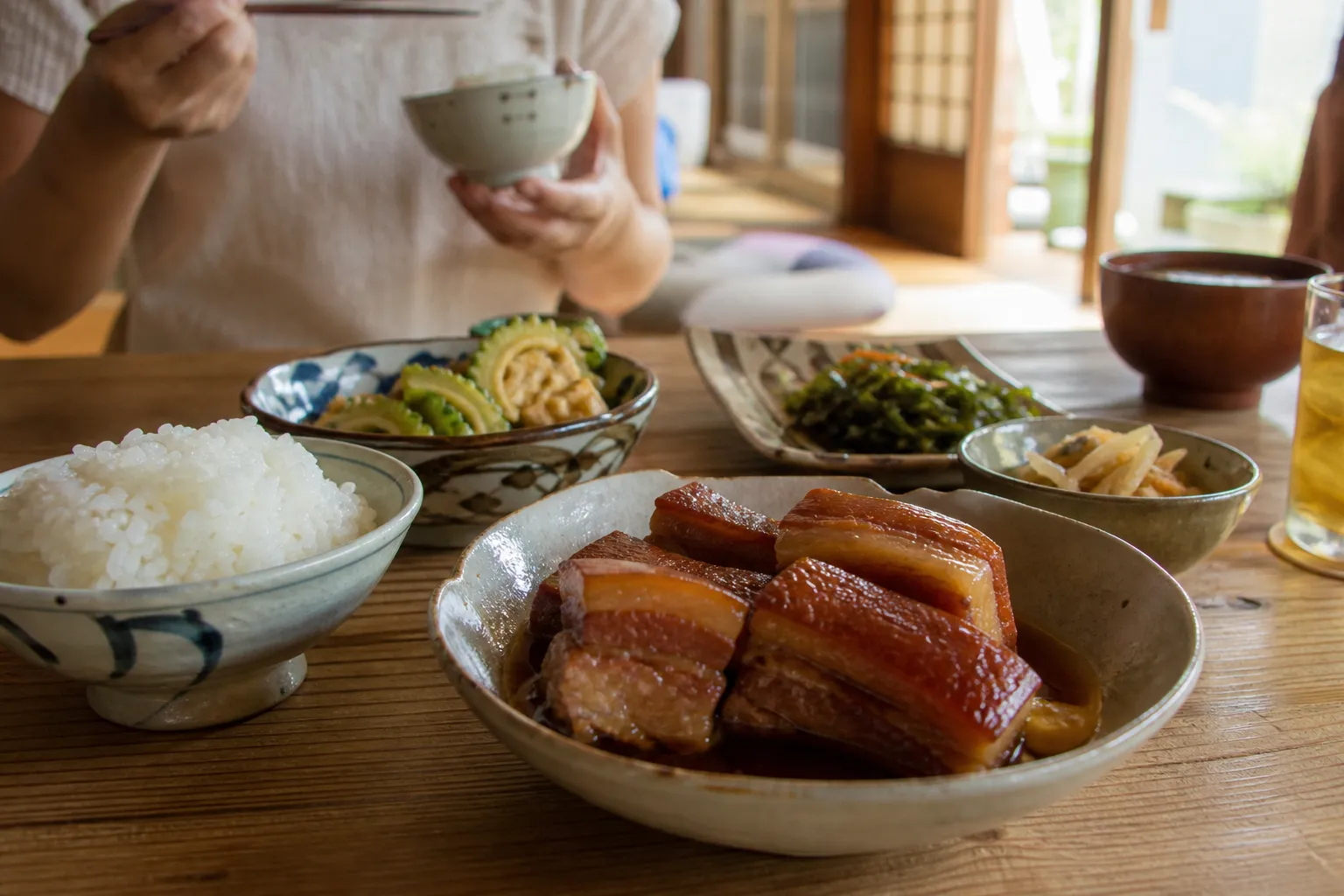
They say in Okinawa people eat every part of the pig "except the squeal," and rafute is the crown of that philosophy. It has roots in the old Ryukyu Kingdom's court cuisine — a dish once served to royalty and envoys, refined over centuries into this glossy, tender block of belly. That it's now a casual izakaya staple you can order with a drink makes it feel even more special: palace food, democratized.
I find that lineage genuinely moving. You're eating something with a few hundred years of "let's make this even better" behind it, and it shows in every melting layer. I ate rafute slowly, on purpose, the way you'd read something you didn't want to end. Awamori on the side optional, but thematically correct.
Why the slow braise works
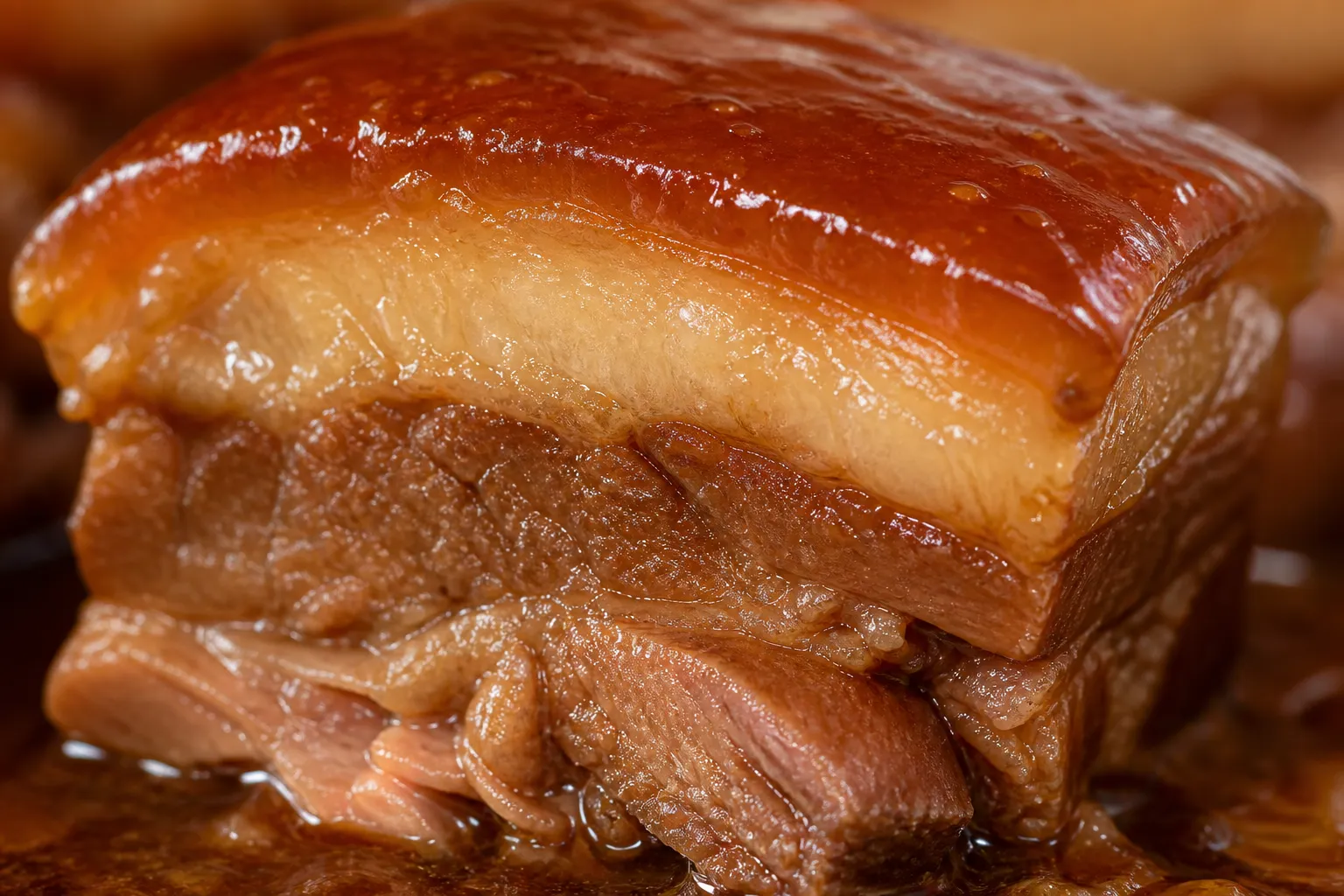
Time is the entire recipe. Hours of gentle simmering render the fat until it's silky instead of heavy, soften the skin into something gelatinous and lush, and drive the sweet-savory braising liquid deep into the meat. The awamori does quiet, crucial work — cutting richness, adding a mellow depth, keeping the whole thing from being merely fatty.
The result is a study in layers: glistening skin, melting fat, tender meat, all lacquered in a sticky reduced sauce that's equal parts soy-savory and gently sweet. It's rich, so a few cubes go a long way, and it's spectacular with plain white rice to carry it. I alternated bites of rafute and rice and briefly considered moving to Okinawa.
How it's made
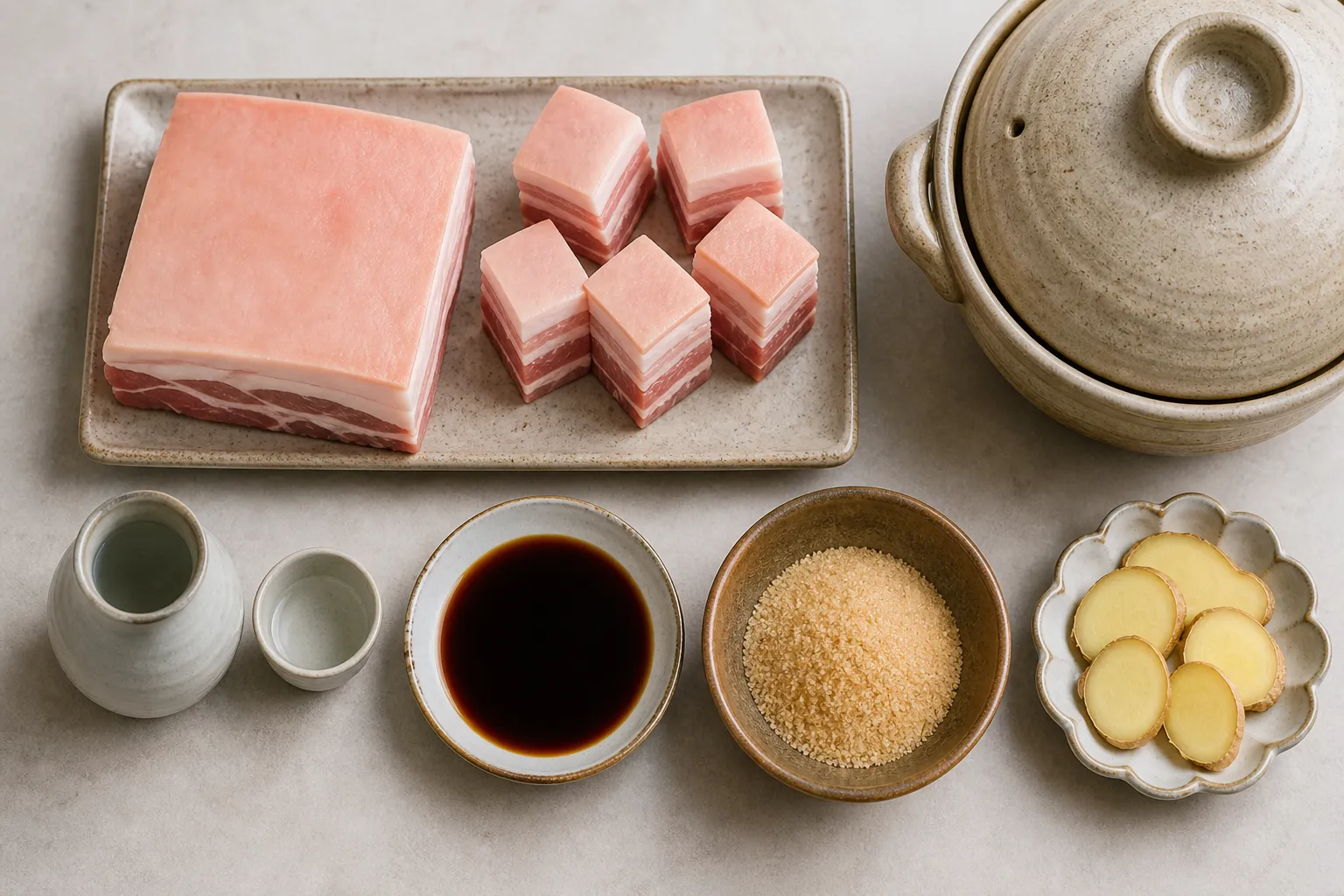
- Blanch and pre-cook skin-on pork belly to firm it up and render some fat
- Cut into thick cubes, skin left on
- Simmer low and slow in a mix of awamori, soy sauce, sugar, and often dashi
- Keep the heat gentle for a long time so the fat and skin turn tender, not tough
- Reduce the liquid into a glossy, sticky sauce that coats each piece
- Serve a few cubes with a little sauce, garnished simply, alongside rice
Before you go — for the pork-curious
Your questions, answered honestly
"Isn't skin-on pork belly too fatty?" — The long braise transforms it — the fat goes silky and the skin turns tender and gelatinous rather than chewy or greasy. It's rich, yes, but in a melting, refined way, not a heavy one. A small portion satisfies.
"What does the awamori do?" — Awamori is Okinawa's distilled rice liquor. In the braise it cuts the richness and adds a mellow depth; most of the alcohol cooks off. It's a big part of why rafute tastes distinctly Okinawan.
"Is it spicy?" — No. It's sweet-savory and deeply umami, not hot.
"How should I eat it?" — With plain white rice, which balances the richness perfectly, and it pairs naturally with a drink at an izakaya. It contains pork, so skip it if you avoid pork.
What the staff will ask you
| You'll hear | Romaji | Meaning | Just say |
|---|---|---|---|
| ご飯は付けますか? | Gohan wa tsukemasu ka? | "Add rice?" | Hai, onegaishimasu (yes please) |
| お飲み物はいかがですか? | Onomimono wa ikaga desu ka? | "Anything to drink?" | Awamori de (awamori) / Ocha de (tea) |
| 単品にしますか、定食にしますか? | Tanpin ni shimasu ka, teishoku ni shimasu ka? | "Alone or as a set?" | Teishoku de (the set) |
To order, just say "Rafute kudasai" (ラフテーください) — "Rafute, please."
Where to eat it
- Okinawa — a staple at izakaya and Okinawan restaurants across the islands, often listed among the classic Ryukyu dishes. One of the essential things to eat on a first trip.
- Naha — easy to find at izakaya around the city, especially those serving Okinawan set meals and awamori.
- Check before you go — restaurants keep their own hours and rafute can sell out at popular spots; confirm timing for well-known places.
Soul Score
Local Roots5/5
First-Timer Friendly4/5
Adventure Level3/5
Comfort Level5/5
Travel Worthy4/5
These scores are one obsessed eater's gut feeling — not a verdict. A low number isn't a bad mark, just a different kind of adventure.
Planning what to eat in Okinawa?🌺 Okinawa Food Guide: Soba, Taco Rice, Chanpuru, Sweets, and Island Comfort Food →
Know someone planning Japan?
← All Articles
Local Food · Okinawa
Still hungry?
Eat more from Okinawa
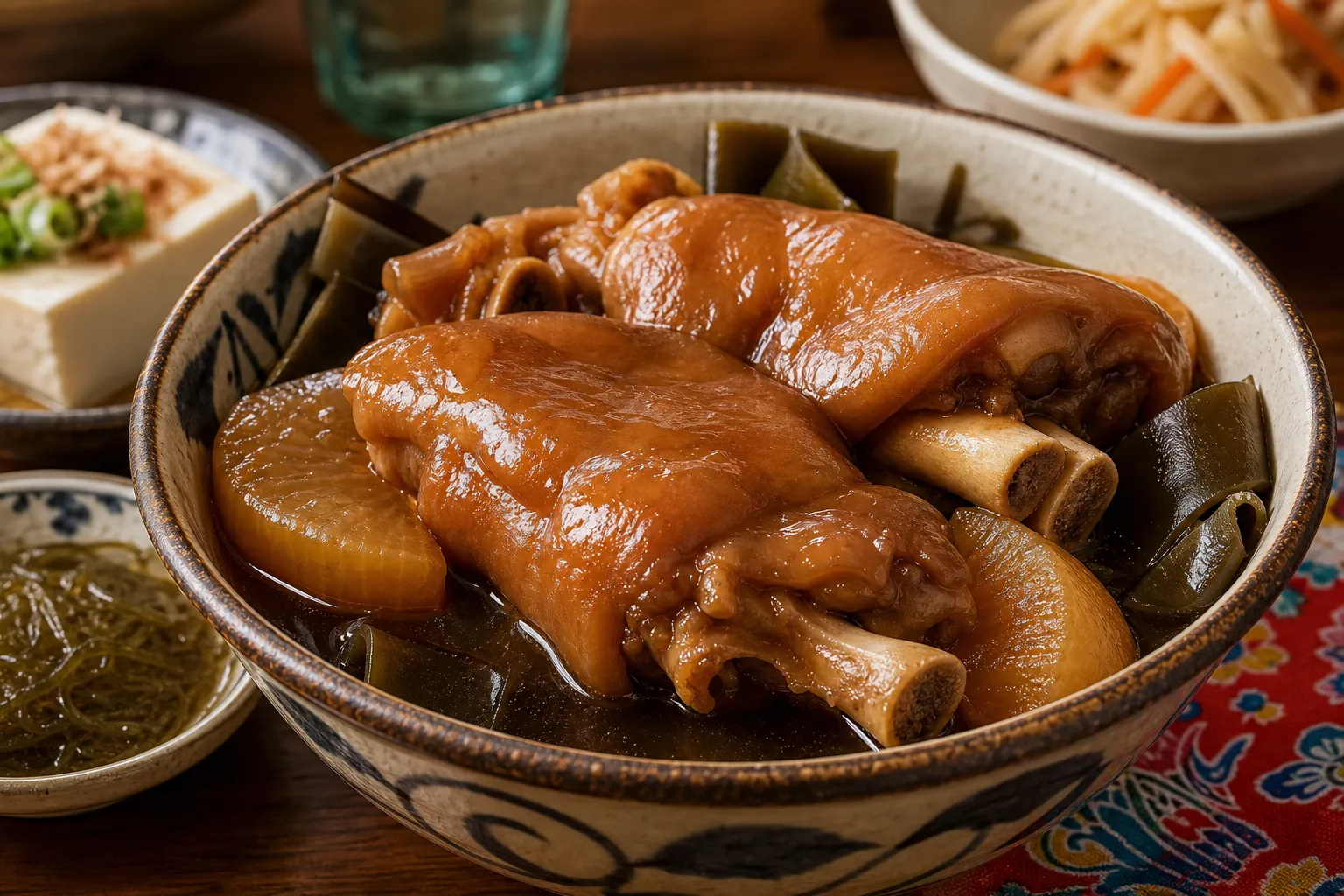
Local FoodOkinawa
Tebichi (てびち)
It wobbled when the bowl hit the table — actually jiggled — and I hesitated for one honest second before the first bite dissolved into warm, savory collagen and I understood why Okinawans swear by it.
July 5, 2026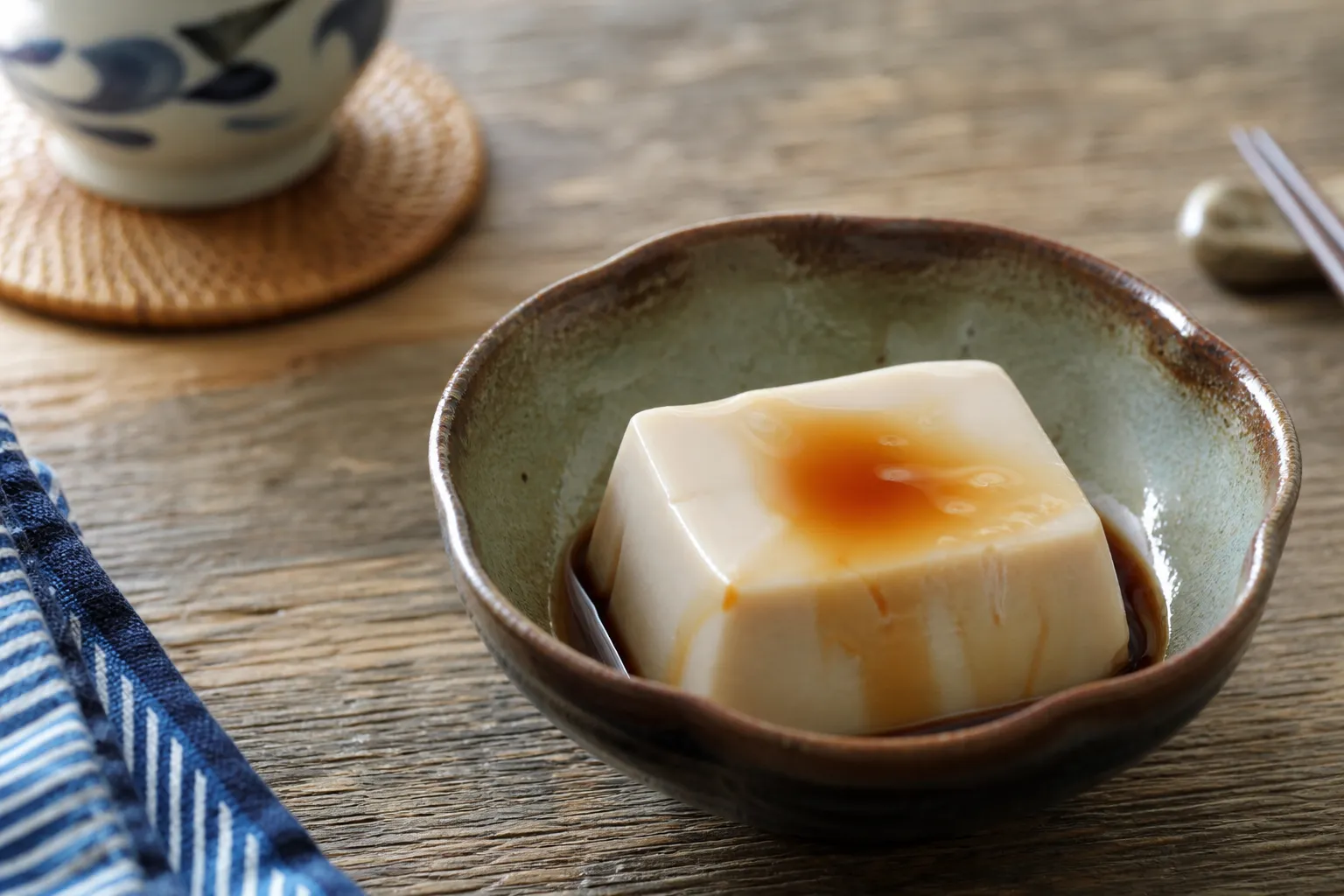
Local FoodOkinawa
Jimami Tofu (じーまーみ豆腐)
It jiggles like tofu, it tastes like peanuts, and it took me three spoonfuls to accept that both of those things were happening in my mouth at the same time.
July 4, 2026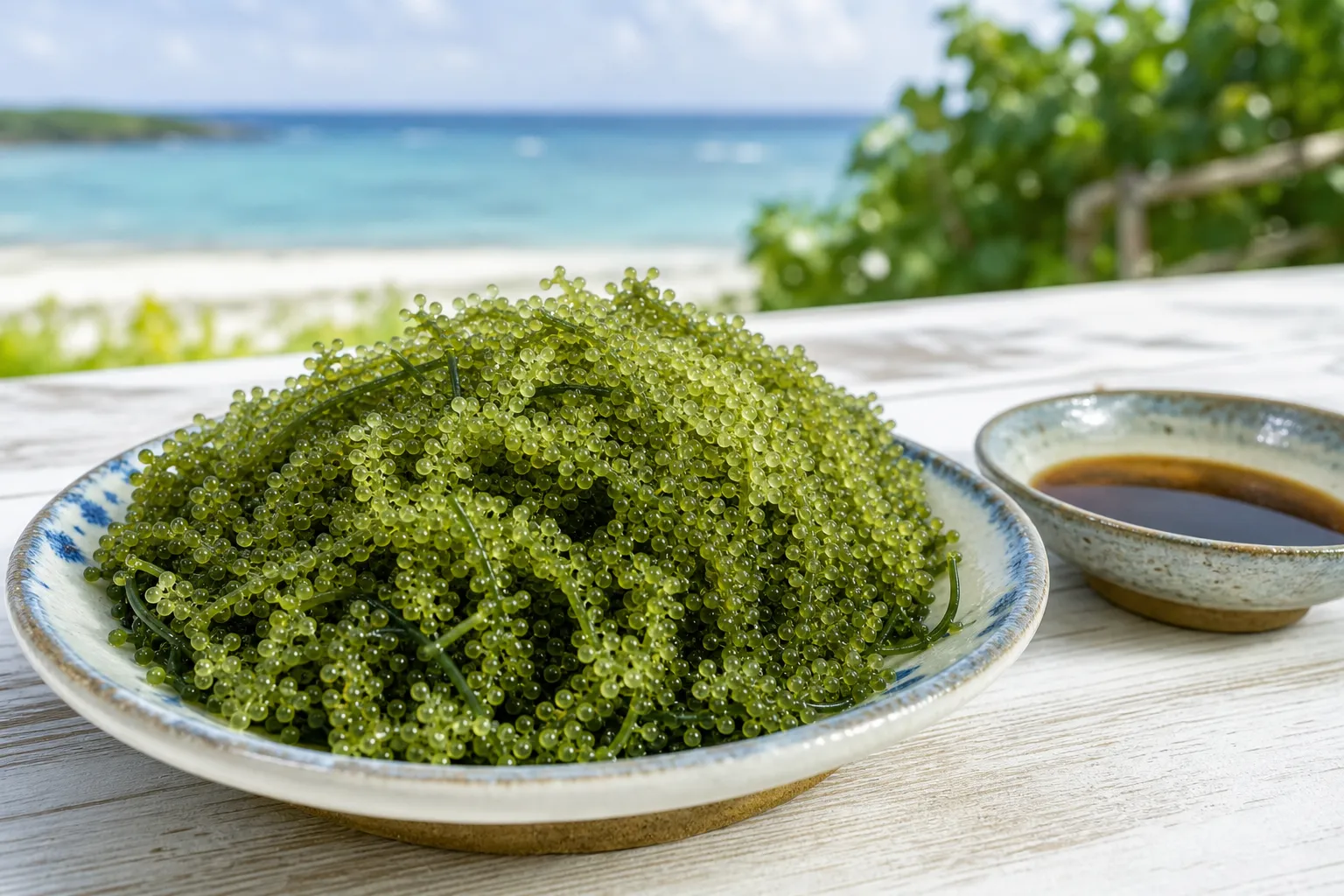
Local FoodOkinawa
Umibudo (海ぶどう)
Tiny green beads burst between my teeth, one after another, like the ocean somehow figured out how to make caviar out of a salad.
July 4, 2026