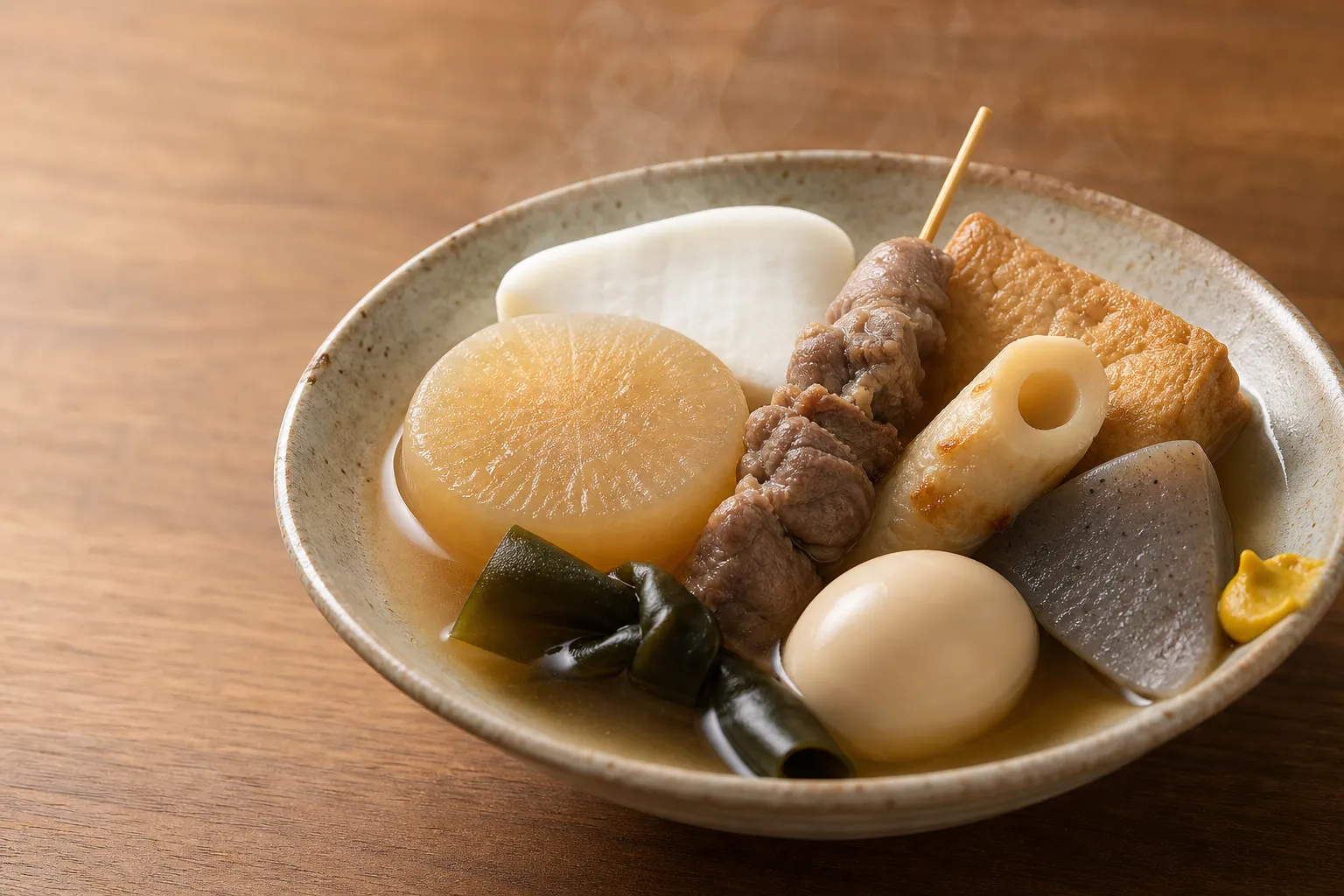
Winter, a convenience store near midnight, and that smell hit me before I even saw it — warm, savory dashi drifting from a steaming tray by the register. I pointed: a fat disc of daikon, a whole boiled egg, a chewy triangle of konnyaku. The clerk fished them out of the simmering broth into a cup, dabbed on some mustard, and handed it over. It cost almost nothing. It was the most comforting thing I ate all trip.
Share this dish


Winter, a convenience store at midnight, and that smell — warm dashi drifting from a steaming tray by the register. Point at a daikon, an egg, a triangle of konnyaku. Cheapest comfort in Japan.
This is oden (おでん), Japan's great cold-weather simmer: an assortment of ingredients — daikon radish, boiled egg, konnyaku, fish cakes like chikuwa and hanpen, tofu, sometimes octopus or beef tendon — gently stewed in a light, clear dashi-soy broth until they're soft and soaked through with flavor. You pick the pieces you want, the broth does the rest, and somehow a tray of humble simmered things becomes deeply, almost emotionally satisfying.
The simmer that warms a whole country
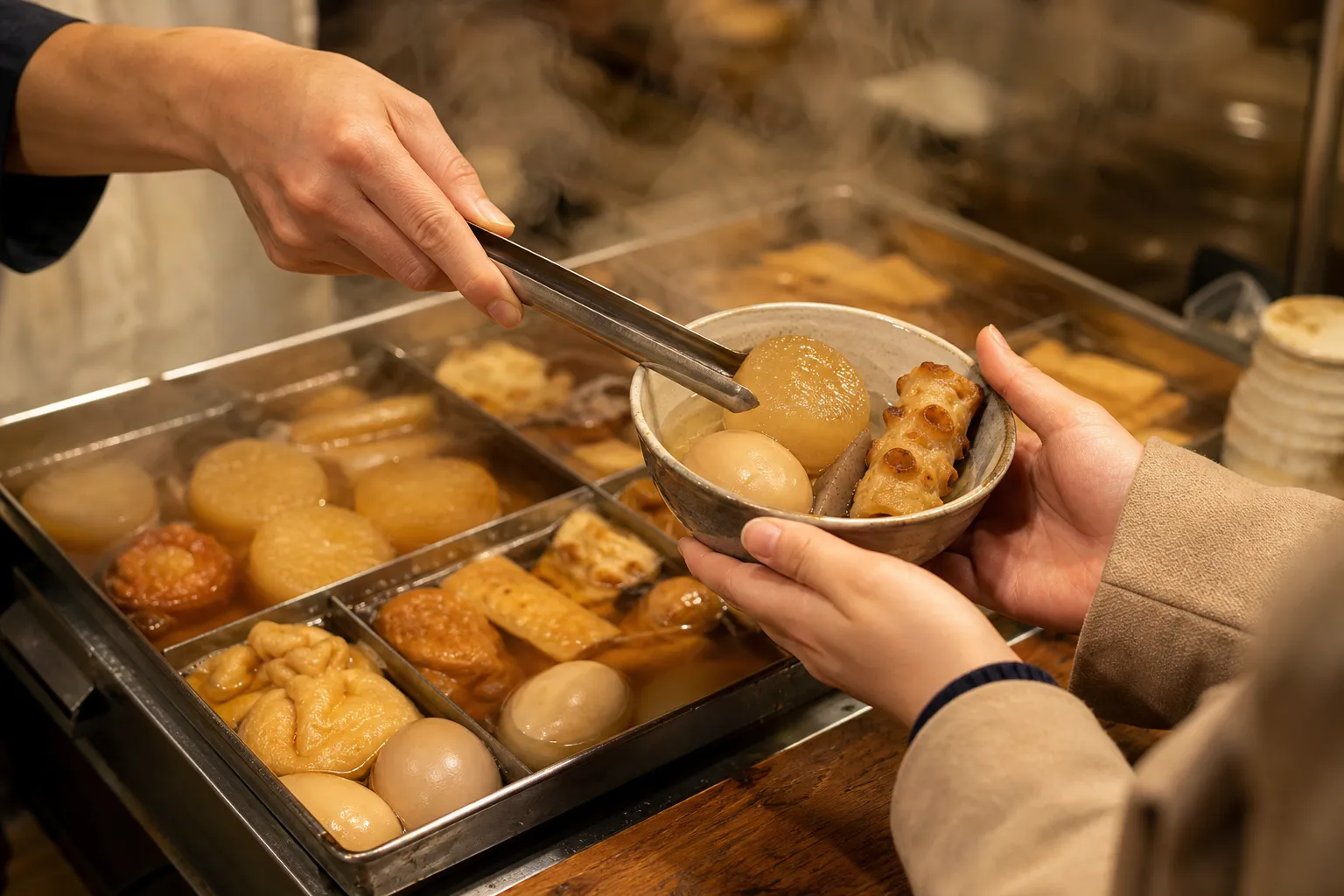
Oden is everywhere in winter — bubbling away in convenience stores, izakaya, festival stalls, and specialist shops — and it shifts personality by region. The broth leans lighter in the west, darker and soy-stronger in the east, and every area (and every household) has its must-have pieces. It's less a single recipe than a warm, communal idea: throw good things in good dashi and let time do the work.
I find it genuinely moving that the cheapest food in the konbini is also one of the most comforting. There's no flex here, no spectacle — just soft daikon that's drunk up an entire pot of dashi, an egg gone amber at the edges, a country quietly agreeing that this is how you survive February. I went back for konbini oden more nights than I'll admit.
Why the clear broth works
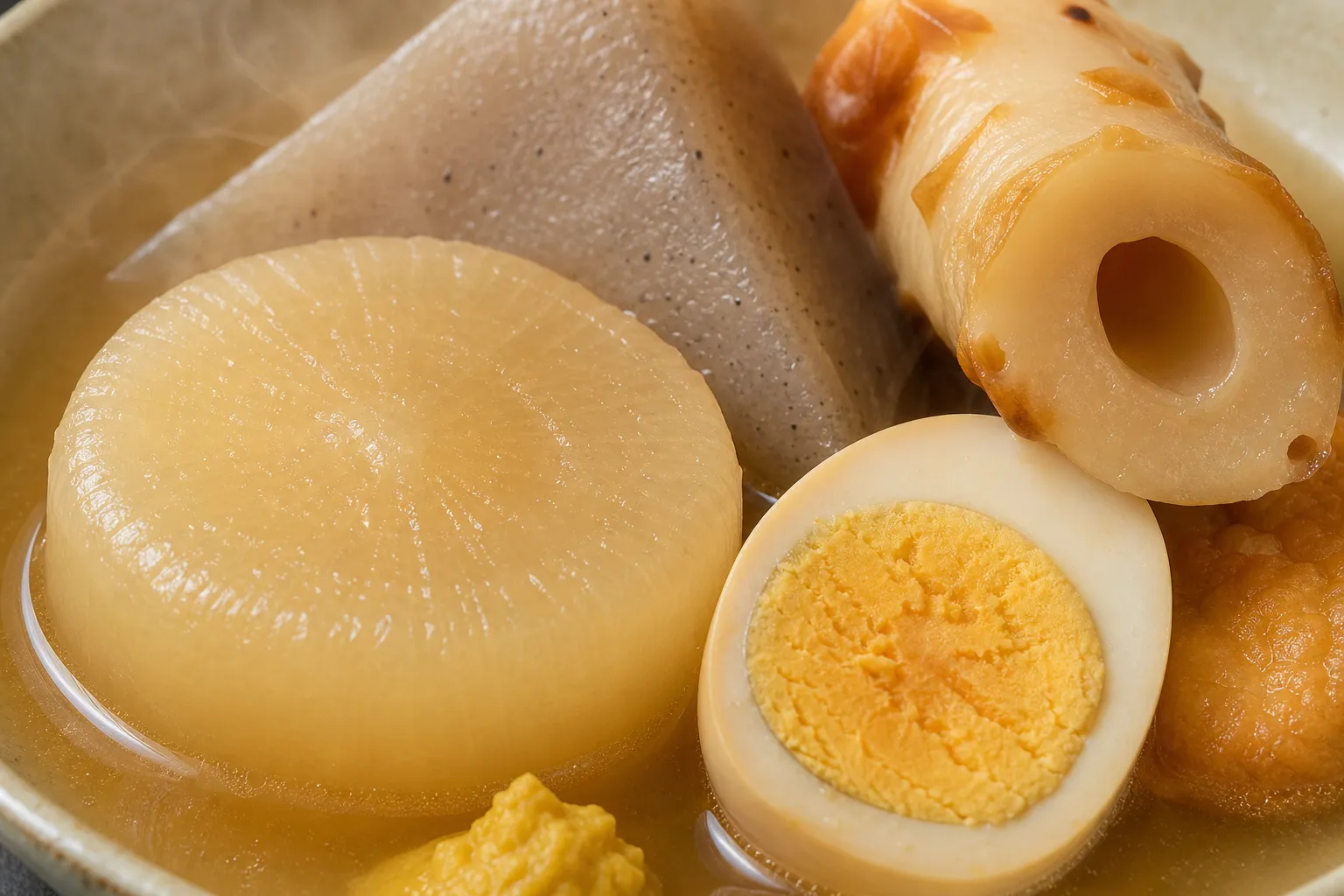
The genius is in the patience. The dashi-soy broth is light and clean — you could drink it straight — but the long, gentle simmer pushes it deep into everything. Bite the daikon and it gives instantly, releasing a mouthful of pure savory broth. The egg is silky, the konnyaku bouncy, the fish cakes springy and a little sweet. Each piece is the same broth expressed through a different texture.
A smear of karashi (hot mustard) on the side is the classic counterpoint — sharp against all that gentle warmth. Don't expect a rich, meaty hot pot; oden is subtle, and that's the point. It's the rare dish that tastes like being taken care of. I drank the leftover broth from the cup standing on a cold street corner and felt completely fine about my life.
How it's made
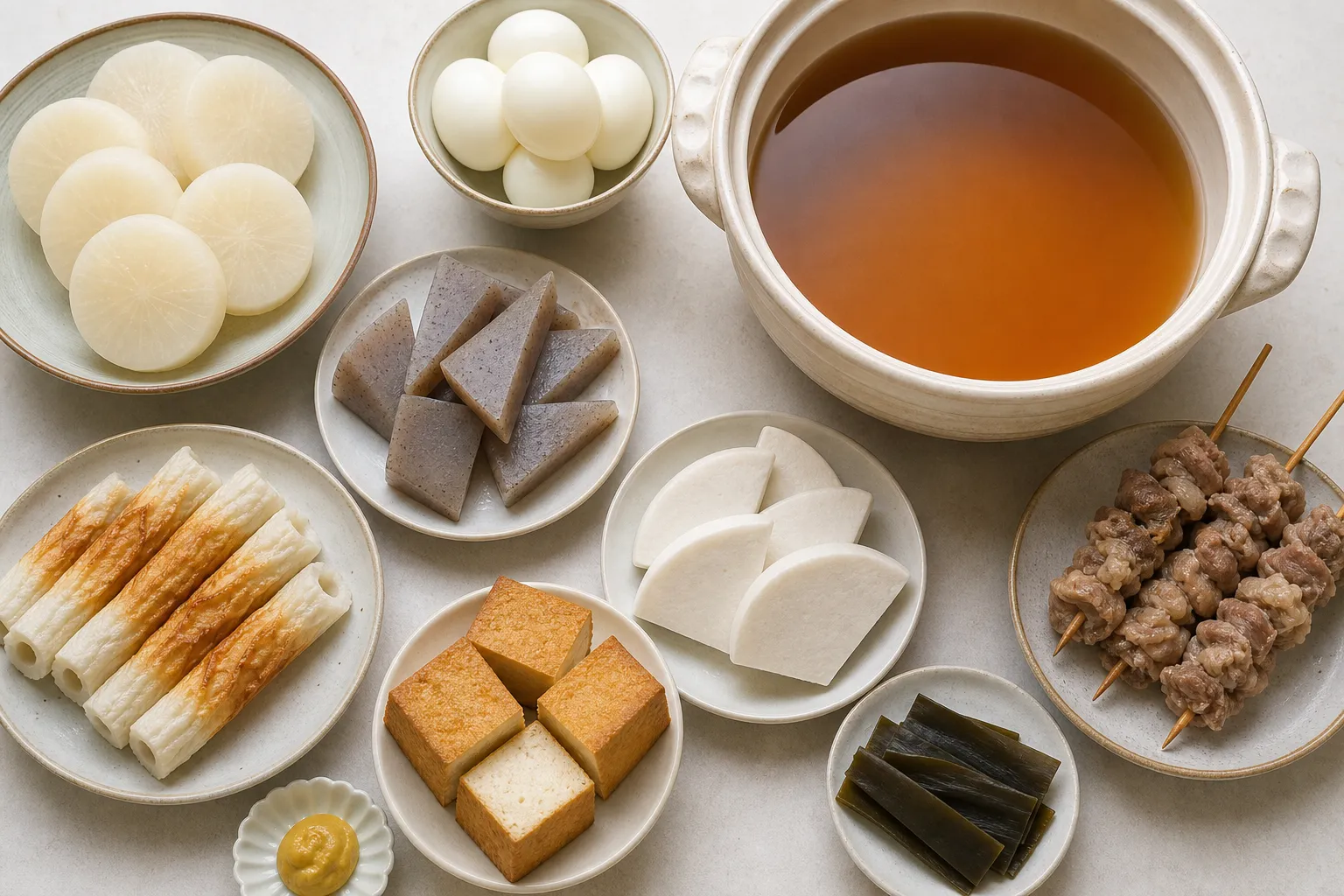
- Build a light, clear broth from dashi (kombu and bonito) with soy and mirin
- Prep the pieces — peel and pre-cook daikon, boil eggs, score konnyaku, ready the fish cakes
- Add the longer-cooking items first (daikon, egg, konnyaku) and simmer gently
- Add fish cakes and delicate items later so they don't fall apart
- Let everything simmer low and slow until soaked through with broth
- Serve the pieces you want in the broth, with karashi mustard on the side
Before you go — for the simmer-curious
Your questions, answered honestly
"How do I order at a convenience store?" — Just point at the pieces you want in the tray by the register; the clerk scoops them into a cup with broth. You pay per piece — it's one of the easiest, cheapest things to order in Japan.
"What should a first-timer try?" — Daikon (soaks up the most broth), boiled egg, and chikuwa are the friendly classics. Konnyaku is fun if you like a bouncy, neutral bite.
"Is it spicy?" — No. Add a dab of karashi (hot mustard) on the side for a sharp kick if you like.
"Is it filling / a full meal?" — A few pieces are a great snack; a bigger selection (plus rice at a shop) makes a light meal. It's gentle, not heavy.
What the staff will ask you
| You'll hear | Romaji | Meaning | Just say |
|---|---|---|---|
| どれにしますか? | Dore ni shimasu ka? | "Which ones?" | Kore to kore (this and this), pointing |
| からしはお付けしますか? | Karashi wa otsuke shimasu ka? | "Add hot mustard?" | Hai (yes) / Iie de (without) |
| つゆは多めにしますか? | Tsuyu wa ōme ni shimasu ka? | "Extra broth?" | Hai, onegaishimasu (yes please) |
To order, just say "Oden kudasai" (おでんください) — "Oden, please."
Where to eat it
- Convenience stores (in winter) — 7-Eleven, Lawson, and FamilyMart run oden by the register in the cold months. The easiest, cheapest entry point — just point.
- Izakaya and oden specialists — for a sit-down version with a wider range of pieces and regional broths; great with a drink on a cold night.
- Check before you go — konbini oden is seasonal (mainly autumn–winter) and varies by store; specialist shops keep their own hours.
Soul Score
Local Roots4/5
First-Timer Friendly5/5
Adventure Level3/5
Comfort Level5/5
Travel Worthy3/5
These scores are one obsessed eater's gut feeling — not a verdict. A low number isn't a bad mark, just a different kind of adventure.
Know someone planning Japan?
← All Articles
Japanese Food · Nationwide
Still hungry?
You might also like
Japanese FoodNationwide
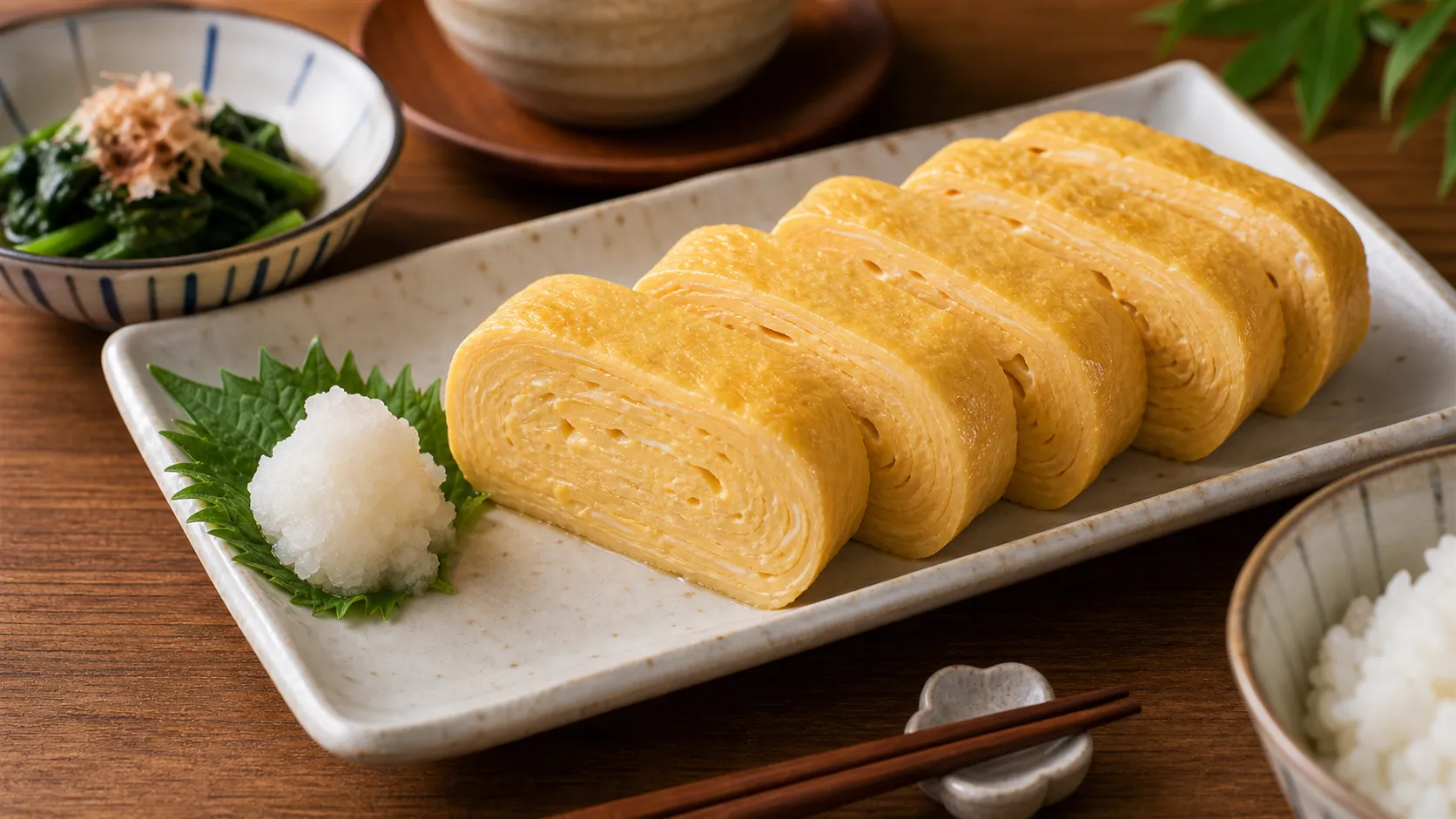
Dashimaki-tamago (だし巻き卵)
A rolled omelette so soft it almost trembles, layered fold over fold and soaked with dashi so that biting in releases a little warm rush of savory broth — the deceptively simple egg dish that Japanese chefs spend years perfecting.
July 11, 2026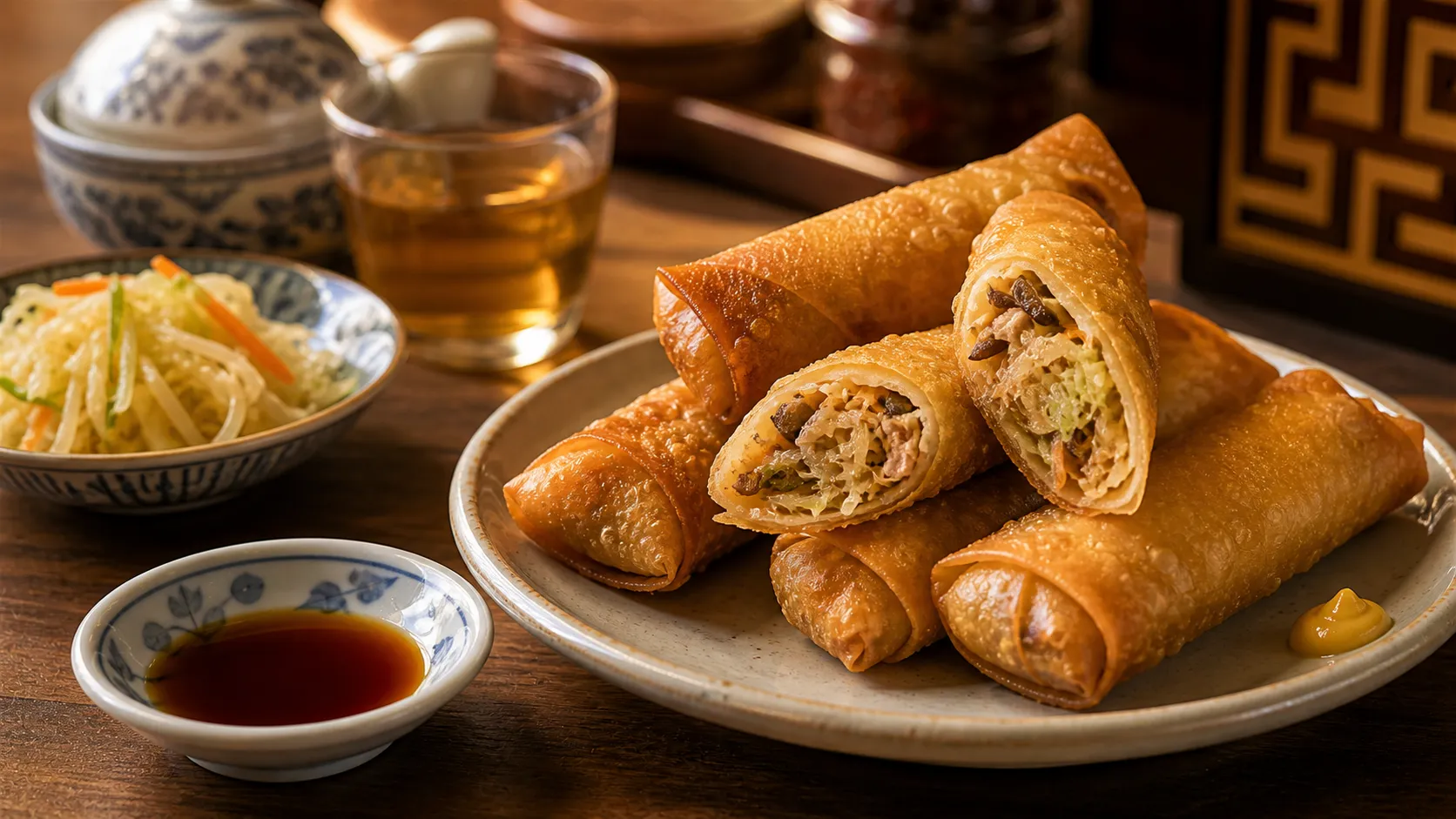
Japanese FoodNationwide
Harumaki (春巻き)
The Japanese spring roll — a shatteringly crisp golden tube that gives way to a hot, savory tangle of pork, cabbage and bamboo shoot, best eaten the second it's cool enough not to burn your mouth (you will not wait that long).
July 11, 2026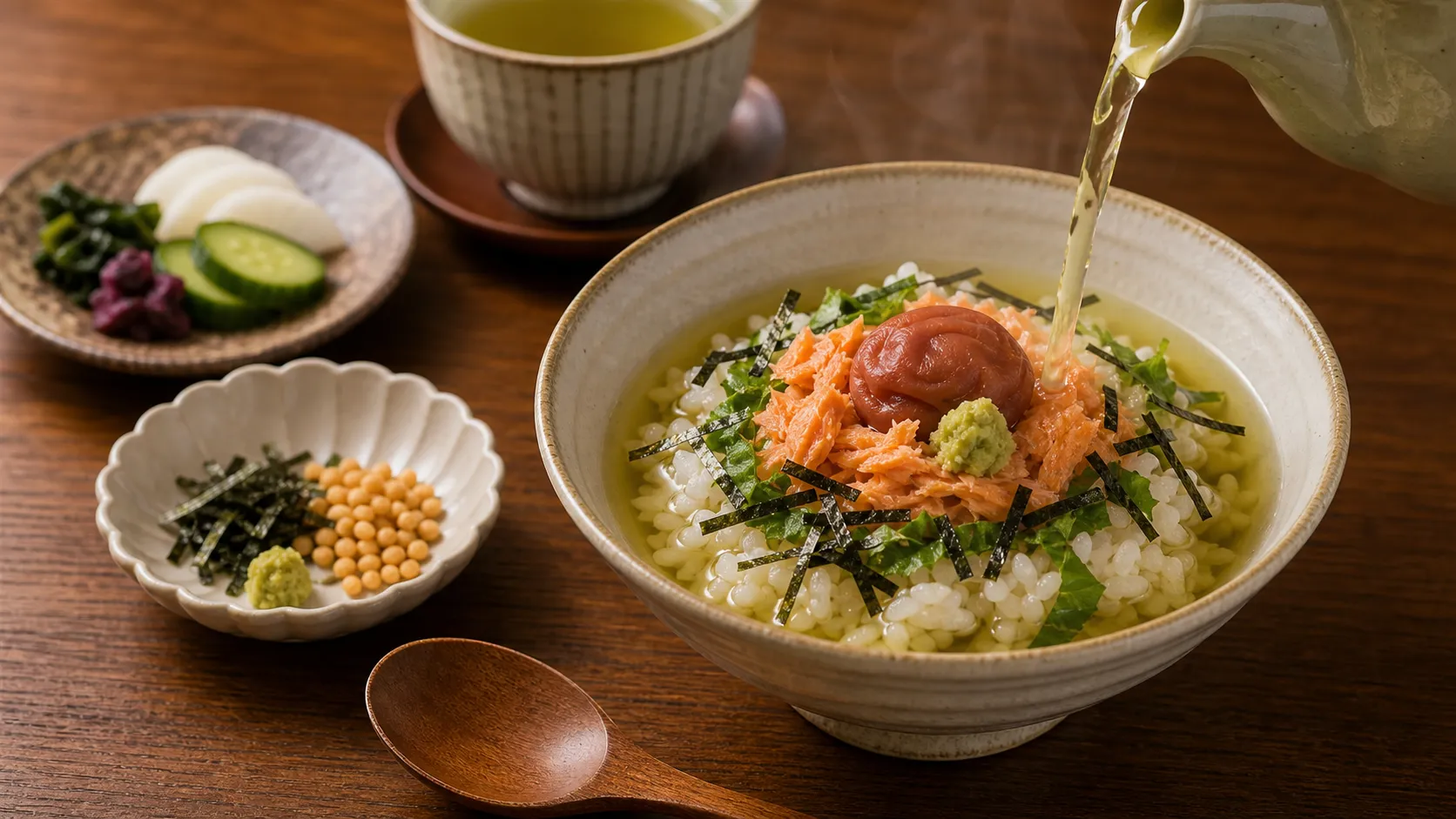
Japanese FoodNationwide
Ochazuke (お茶漬け)
Pour hot green tea or dashi over a bowl of rice, scatter something savory on top, and eat — the gentlest, most quietly restorative dish in Japan, the one you reach for late at night when you just need a warm bowl to make everything okay.
July 11, 2026