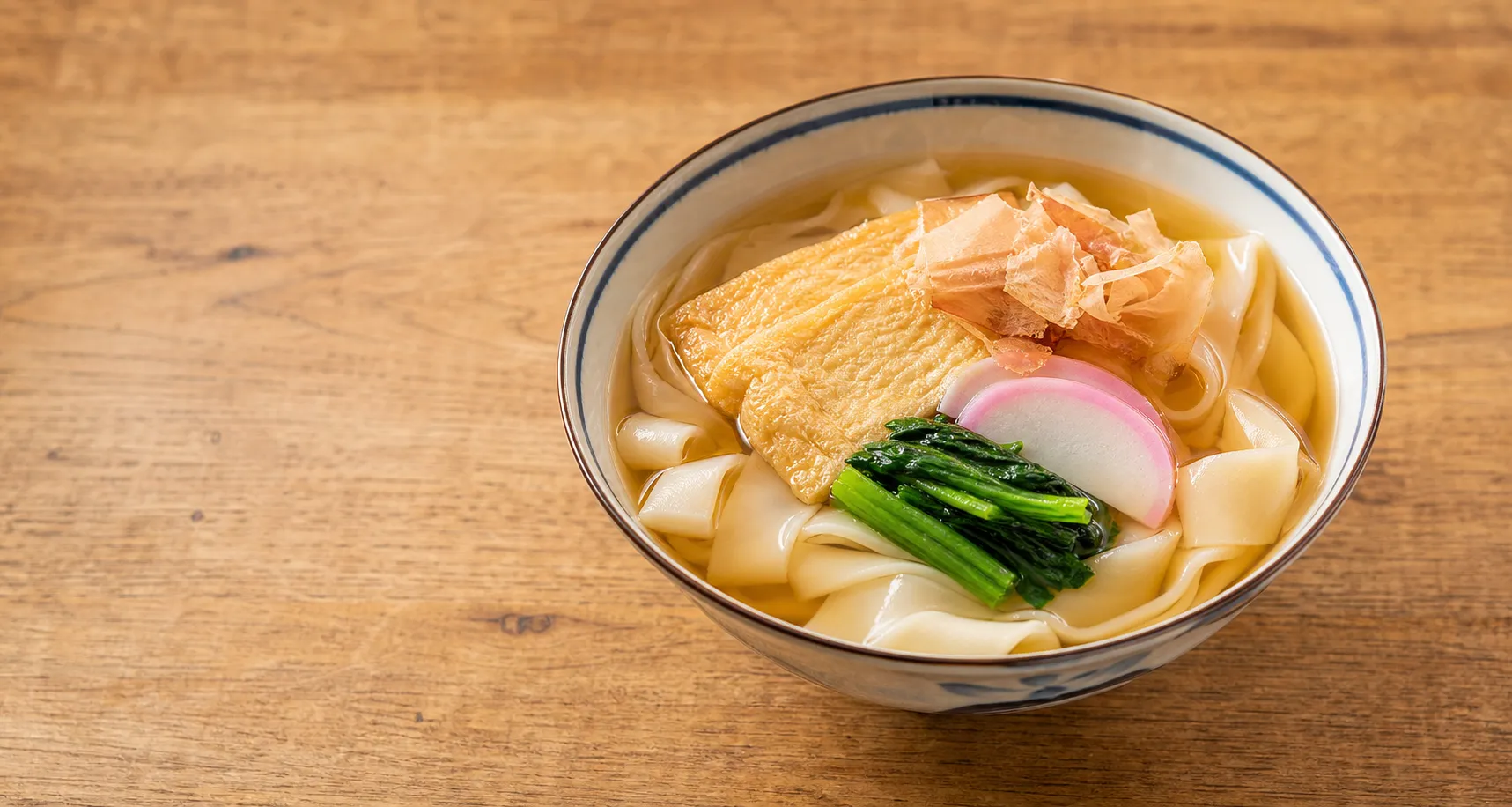
Flat noodles. That was the first thing — they came up off the chopsticks wide and thin and slippery, like tiny silk ribbons that had somewhere better to be, sliding right back into the broth before I could get them to my mouth. I was standing at a platform counter in Nagoya Station with about four minutes to spare, and I spent all four of them chasing noodles and grinning at a bowl. I missed the train I actually wanted. No regrets.
Share this dish


Silky ribbons of udon, wide and thin, slipping through a clear golden dashi before you can even aim your chopsticks. Nagoya's flat-noodle bowl is the quiet, addictive one you inhale standing up at the station.
🍜 Planning a food trip to Aichi?Add this dish to my Food Trip →
 Add this dish to my Food Trip →
This is kishimen (きしめん), Nagoya's flat-noodle pride: wide, thin, ribbon-like udon floating in a light, clear soy-dashi broth, topped with sweet fried tofu (aburaage), a little pile of greens, pink-and-white kamaboko, and a fistful of bonito flakes that literally dance in the steam. It is not round thick udon, it is not brown buckwheat soba, it is not a heavy sauce, and it is absolutely not ramen. It is its own quiet, elegant thing — and it is one of the easiest, gentlest first bowls in all of Japan.
Born on the platform
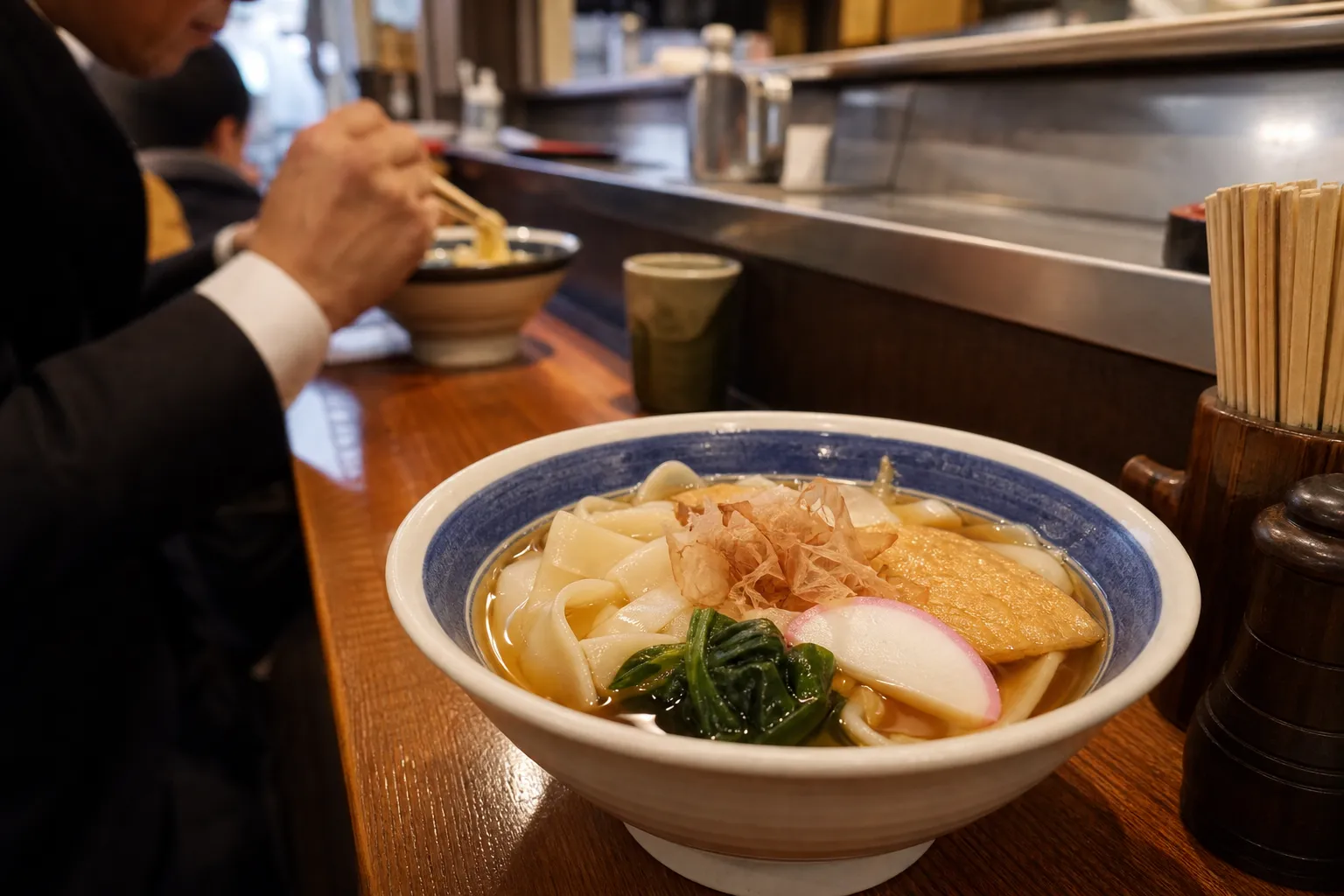
Kishimen belongs to Nagoya, and it feels like Nagoya: unfussy, efficient, quietly proud of doing one thing extremely well. You find it most famously at the stand-and-eat noodle counters on train platforms — you step off the concourse, hand over a few coins, and a bowl appears in the time it takes to say thank you. Salarymen, students, grandmothers with shopping bags: everyone leans in, slurps, and is gone in three minutes.
I find that genuinely moving. There is a whole culinary tradition here built not around a fancy restaurant but around people who have a train to catch. The flat shape isn't decoration — a thin, wide noodle cooks fast and cools fast, so you can actually eat a hot bowl in the small window before your train arrives. This is comfort food engineered by commuters. I love it for that alone.
Why flat noodles win
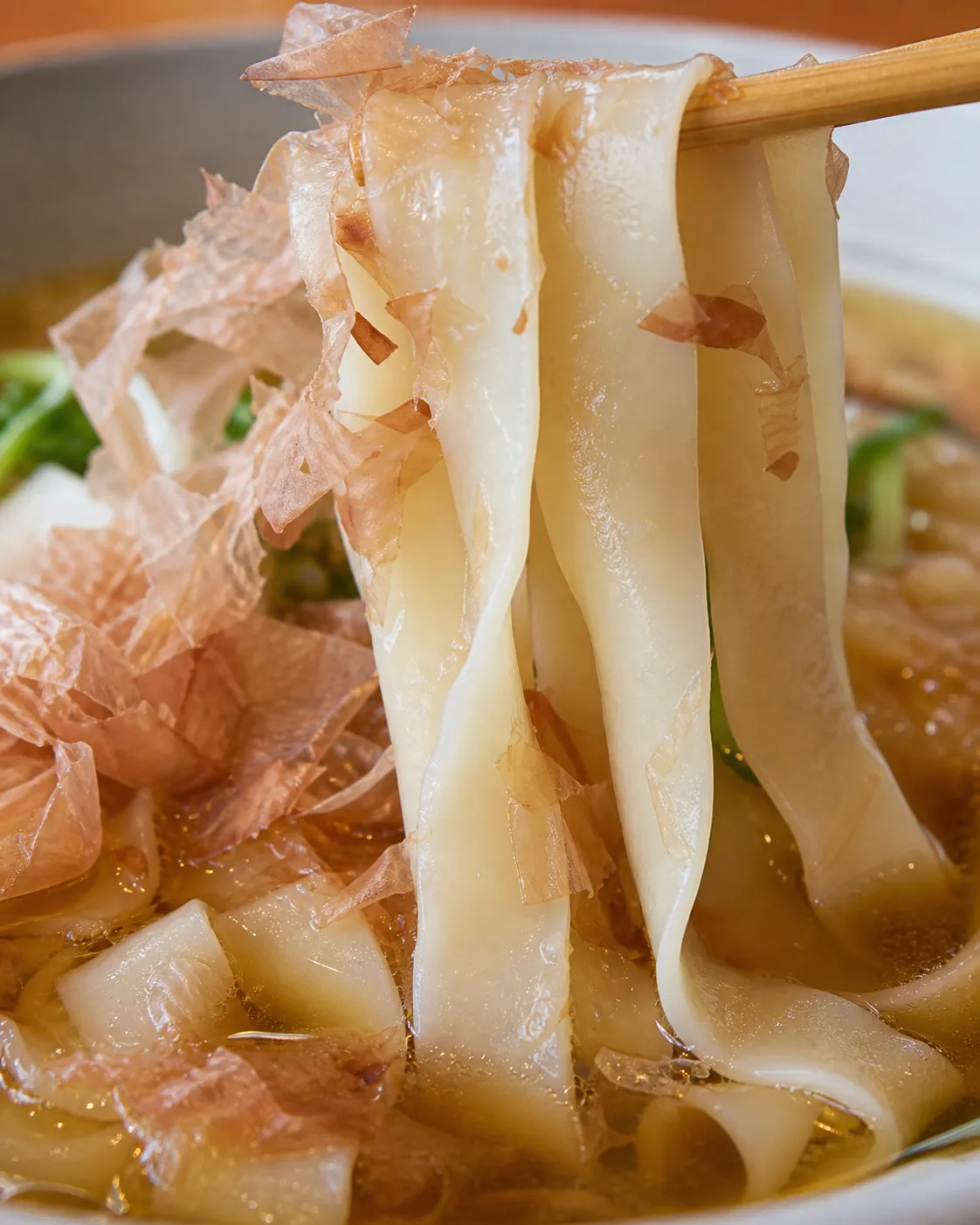
Here is the whole magic, and it is all about geometry. A round udon noodle is chewy and chewy is great — but a flat kishimen noodle is silky. All that surface area means the light dashi clings to every ribbon, so each mouthful arrives already seasoned, glossy, and smooth. The bite is softer, more slippery, less of a workout for your jaw. It slides.
And the broth stays light on purpose. This is a clear soy-dashi — bonito and kelp, a whisper of soy, nothing heavy or cloudy — so nothing fights the noodle. Then the toppings do their gentle work: sweet aburaage soaking up soup, greens for freshness, kamaboko for a sweet springy bite, and those bonito flakes waving in the heat like the bowl is saying hello. I sat there watching the flakes dance and honestly forgot to eat for a second. Then I remembered, and did not stop.
How it's made
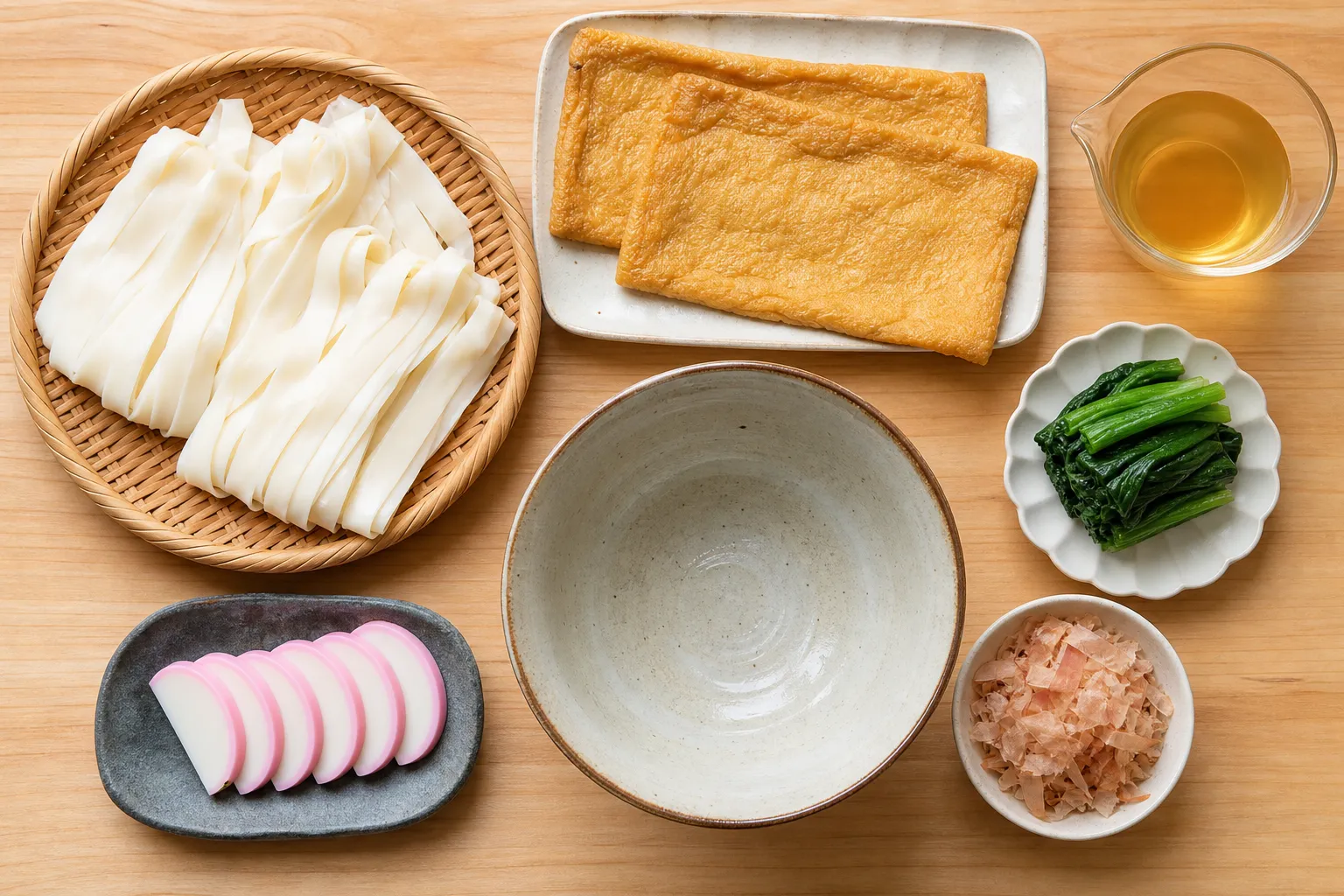
- Roll wheat-flour udon dough out thin and cut it into wide, flat ribbons
- Boil the flat noodles until just tender — they cook fast because they're thin
- Build a light, clear dashi from bonito flakes and kelp, seasoned with soy and a little mirin
- Drain the noodles and settle them into a bowl of the hot dashi
- Top with sweet simmered aburaage, a small pile of spinach or komatsuna, and slices of pink-and-white kamaboko
- Finish with a generous shower of bonito flakes so they dance in the rising steam
Before you go — for the noodle-curious
Your questions, answered honestly
"Is this just udon?" — Same family, different shape, different feeling. Kishimen is flat, wide, and thin, so it's silkier and more slippery than round chewy udon. If you liked udon, you'll like this — it's just a smoother ride.
"Is it like soba?" — No. Soba is brown buckwheat and nutty; kishimen is pale wheat-flour udon. Don't let the "flat noodle in dashi" picture fool you — totally different noodle.
"Is the broth heavy?" — The opposite. It's a light, clear soy-dashi, clean and gentle. This is one of the least intimidating bowls you can order in Japan. No spice, no funk, no surprises.
"Those flakes are moving — is that okay?" — Yes! The bonito flakes "dance" because they're paper-thin and the steam moves them. It's the mark of a fresh, hot bowl. Eat them.
What the staff will ask you
| You'll hear | Romaji | Meaning | Just say |
|---|---|---|---|
| 温かいのと冷たいの、どっち? | Atatakai no to tsumetai no, docchi? | "Hot or cold?" | Atatakai de (hot) / Tsumetai de (cold) |
| 大盛りにしますか? | Ōmori ni shimasu ka? | "Want a large?" | Futsū de (regular) / Ōmori de (large) |
| 天ぷら入れますか? | Tenpura iremasu ka? | "Add tempura?" | Hai, onegaishimasu (yes please) / Sono mama de (as is) |
To order, just say "Kishimen kudasai" (きしめんください) — "Kishimen, please."
Where to eat it
- Nagoya Station — the classic move. The stand-and-eat soba/udon counters on and around the platforms at Nagoya Station serve kishimen fast and cheap; step up, order, slurp, go. This is the real, everyday way locals eat it.
- Atsuta area — the neighborhood around Atsuta Shrine in southern Nagoya is another long-standing home of kishimen, worth pairing with a shrine visit.
- Check before you go — platform stands and small shops keep their own hours and can be busiest at commuter rush; times and stalls change, so confirm locally before making a special trip.
Soul Score
Local Roots4/5
First-Timer Friendly5/5
Adventure Level3/5
Comfort Level4/5
Travel Worthy3/5
These scores are one obsessed eater's gut feeling — not a verdict. A low number isn't a bad mark, just a different kind of adventure.
Planning what to eat in Nagoya?🍤 Nagoya Food Guide: What to Eat, Where to Start, and How to Order →
Know someone planning Japan?
← All Articles
Local Food · Nagoya, Aichi
Still hungry?
Eat more from Aichi
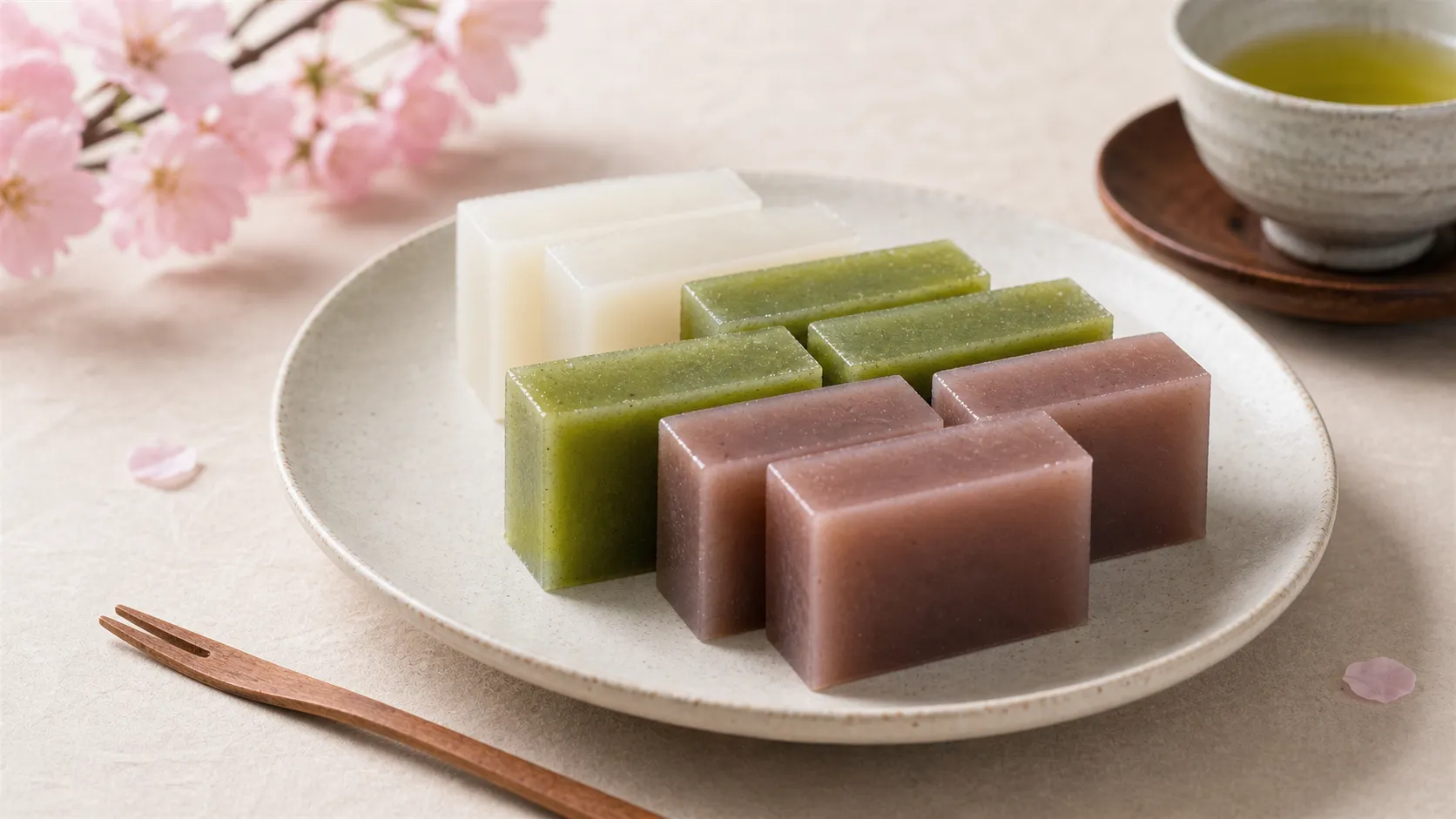
Sweets & SnacksNagoya, Aichi
Uiro (ういろう)
A steamed cake of rice flour and sugar that's somehow both chewy and clean, mild and moreish — Nagoya's understated, faintly wobbly sweet that grows on you until you can't stop buying it at the station.
July 10, 2026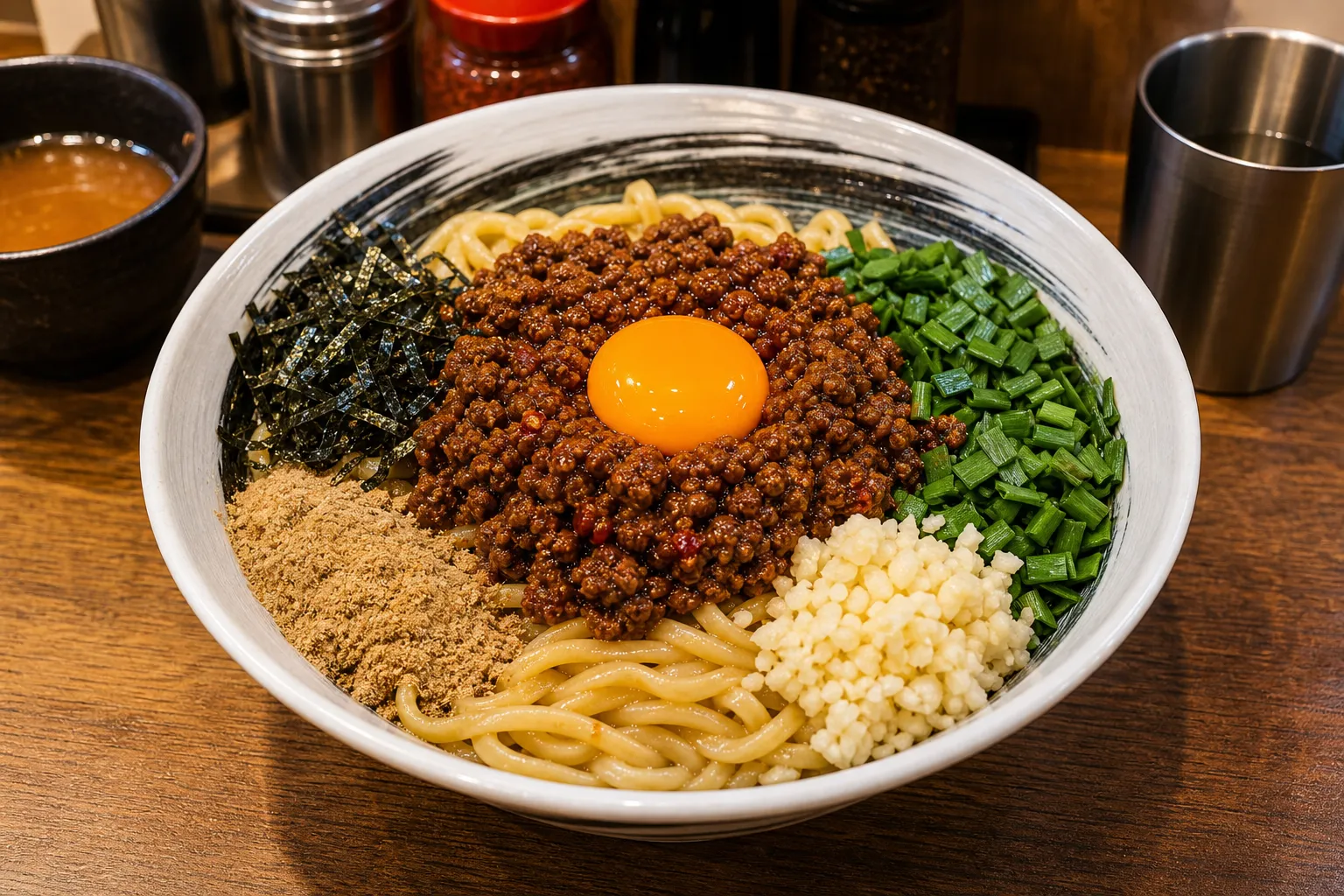
Local FoodNagoya
Taiwan Mazesoba (台湾まぜそば)
Break the egg yolk, plunge in, and mix like you're furious — this brothless Nagoya bomb of spicy pork, raw garlic and chives doesn't reveal itself until it's a chaotic, glorious mess.
July 9, 2026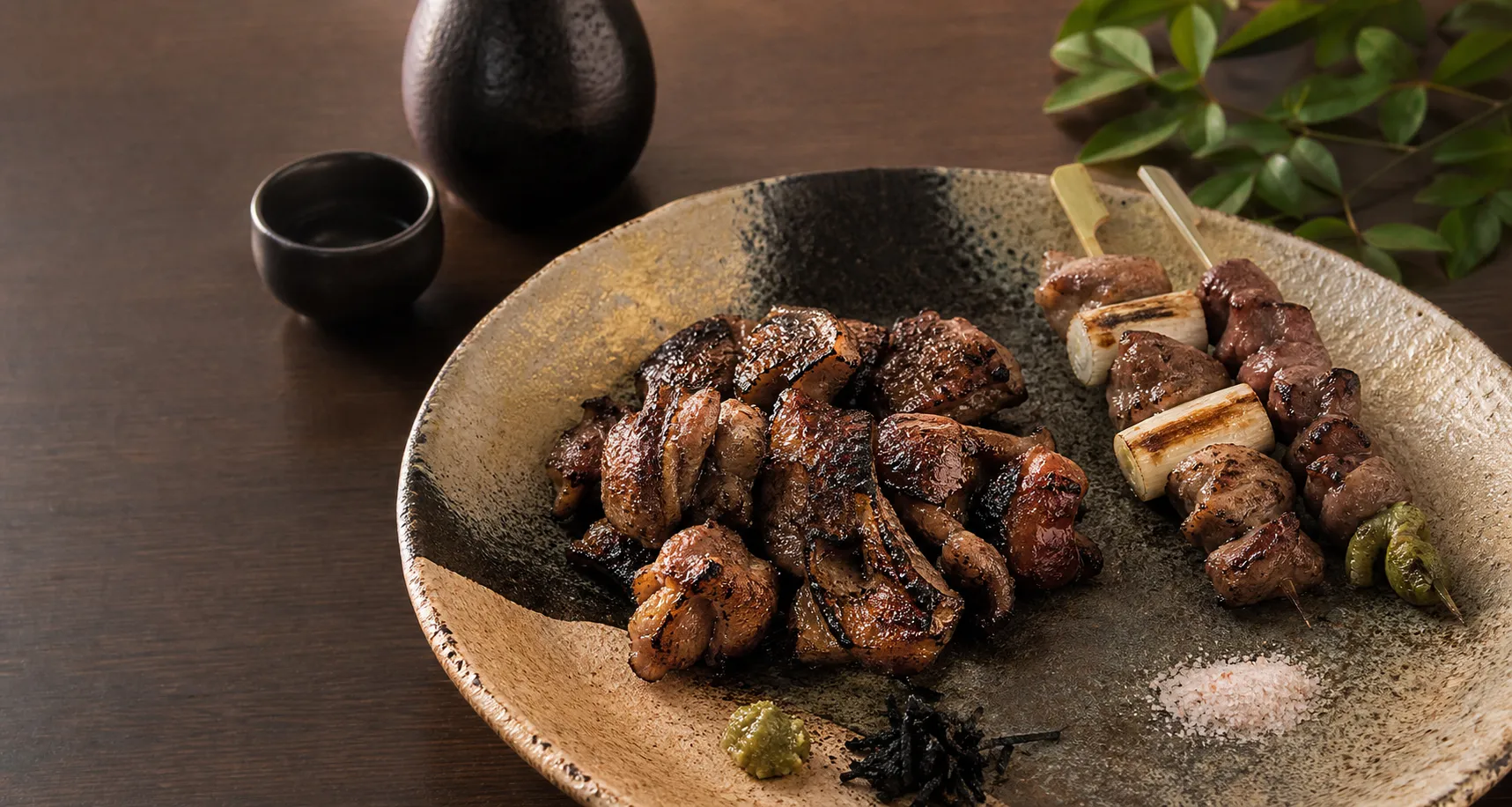
Local FoodNagoya, Aichi
Nagoya Cochin (名古屋コーチン)
Everyone warns you about the chewiness like it's a flaw — but that first spring-back bite of charcoal-grilled thigh is exactly the point, and I get it now.
July 5, 2026